
桂林码头清晨的雾,教我别把山水只当背景 | Morning Mist at a Guilin Pier Taught Me Not to Treat Landscape as Background
桂林码头清晨的雾,教我别把山水只当背景 | Morning Mist at a Guilin Pier Taught Me Not to Treat Landscape as Background
到桂林的第二天,我在天还没有完全亮的时候走到码头。街灯像刚醒的人,光线软软地贴在湿石板上,江面被雾收得很近,远处的山只露出一点轮廓,好像有人用淡墨把它们先试着勾了一遍,还没有决定要不要落笔。我原本只是想赶一班早船,心里想着船票、时间、座位和相机电量,直到站在栈道边,看见一位船工把绳子从木桩上慢慢解开,我才意识到自己来得太匆忙。这里不是一张等待我按下快门的明信片,而是一处正在呼吸、正在开工、正在把夜色一点点交给白天的地方。
On my second morning in Guilin, I walked to the pier before the sky had fully opened. The streetlights looked newly awake, their pale glow lying gently on the wet stone, while mist pulled the river close and left only the faint outlines of the karst hills in the distance. I had come with practical concerns in mind: tickets, departure time, seats, and camera battery. Then I saw a boatman loosen a rope from a wooden post, slowly and without drama, and I realized I had arrived too quickly. This was not a postcard waiting for my shutter. It was a place breathing, working, and handing the last of the night over to the morning.
我以前看山水,常常把它们放在照片的后半部分:前景是人,背景是山;前景是船,背景是水;前景是一杯米粉,背景是城市。旅行久了,这种看法会变得很顺手,顺手到你以为自己已经懂了一个地方。可在桂林码头,雾把所有层次都打乱了。山不是站在远处替我装饰画面,水也不是平整地铺在脚下等我路过。它们把声音变低,把动作放慢,把人的脚步、船的晃动、竹篙碰到水面的轻响都收进同一口气里。那一刻,我发现山水不是背景,它们是现场的语法。
I used to treat landscapes as the rear half of a picture: people in front, mountains behind; boats in front, water behind; a bowl of rice noodles in front, a city behind it. After enough trips, that habit becomes so convenient that it can feel like understanding. But the mist at the Guilin pier disturbed every layer. The hills were not standing far away to decorate my frame, and the river was not a flat surface laid out for me to pass over. They lowered the volume, slowed the movements, and gathered footsteps, swaying boats, and the soft knock of a pole against water into one breath. In that moment, I understood that landscape was not background; it was the grammar of the scene.
码头的早晨没有旅游宣传片里那种干净利落的开场。卖早餐的人把蒸笼掀开,白汽和江雾混在一起,谁也分不清哪一缕来自锅里,哪一缕来自水上。有人提着塑料袋赶船,有人蹲在台阶边系鞋带,有人低声问船什么时候开。每个人都像被雾轻轻包了一层,轮廓不清,却并不模糊。模糊的是我最初的期待:我以为清晨的桂林会把山峰整齐地摆出来,让我从容欣赏;实际上,它先让我看见码头怎样醒来,看见山水怎样参与一群普通人的早班。
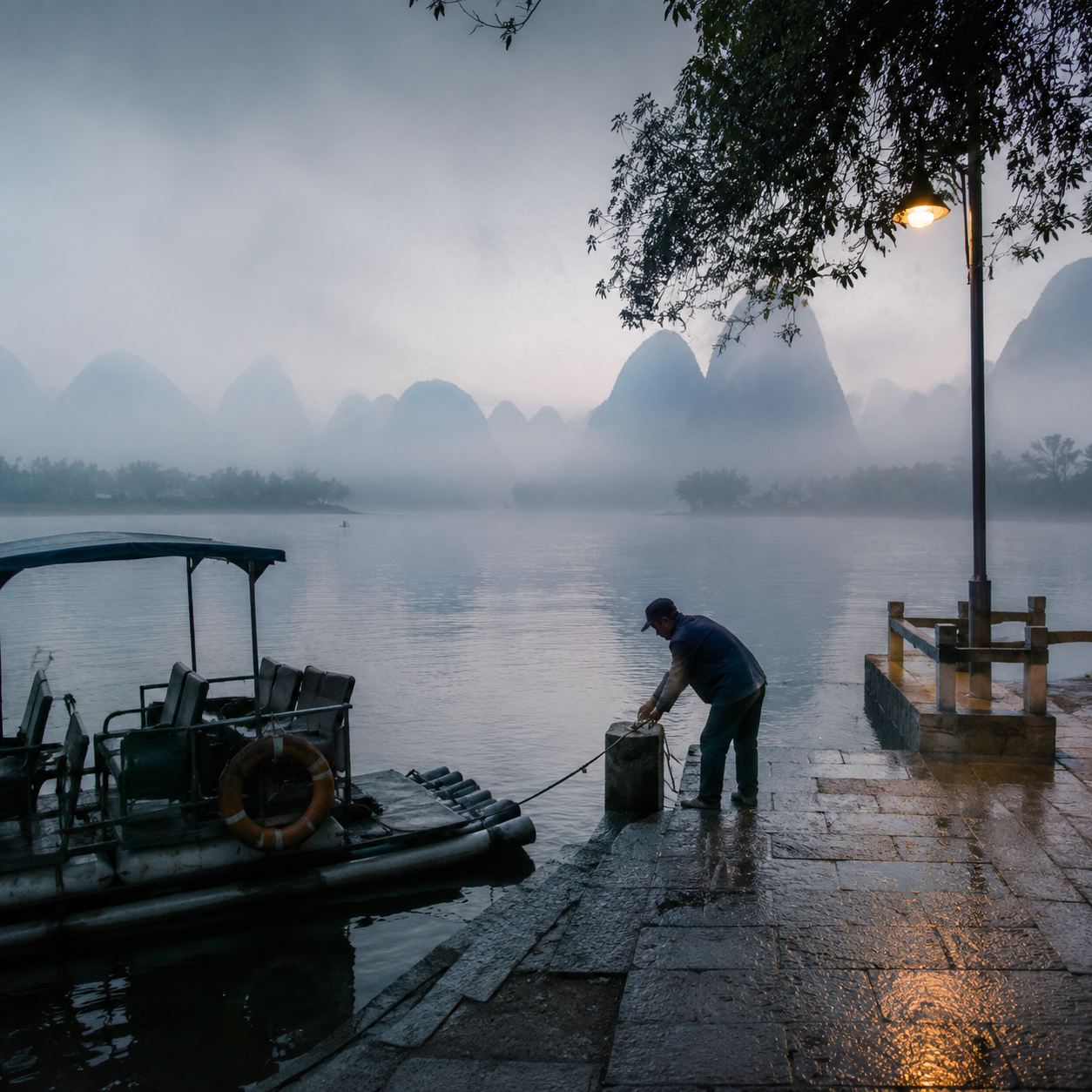
The morning at the pier did not begin with the clean, polished opening of a travel film. A breakfast vendor lifted the lid from a steamer, and the white vapor mixed with river mist until it was impossible to tell which strand came from the pot and which from the water. Some people hurried toward the boat with plastic bags, some crouched on the steps to tie their shoes, and some asked in low voices when the boat would leave. Everyone seemed lightly wrapped by fog, their outlines softened but not erased. What blurred was my original expectation. I thought early Guilin would arrange its peaks neatly for my appreciation. Instead, it first showed me how a pier wakes up and how the landscape joins an ordinary morning shift.
船还没有开,水面已经开始讲述行程。它不是用宏大的方式讲,而是用细节一点点提醒我:一只空瓶被推到岸边,又被涟漪带回去;一片叶子贴着船身漂过,像在寻找更安静的地方;对岸的树影被雾拆散,再慢慢拼回去。人站在码头上,容易以为自己是观察者,可江水并不让这种身份太稳定。它把你脚下的木板轻轻托动,把你的视线往低处拉,让你不得不承认,自己也只是这场清晨里被移动的一小部分。
Before the boat had departed, the river had already begun telling the journey. It did not speak grandly; it relied on details. An empty bottle was nudged toward the bank and then carried back by ripples. A leaf slid along the side of a boat as if searching for a quieter place. The reflection of trees across the water came apart in the fog and slowly assembled itself again. Standing on a pier, a traveler can easily believe he is an observer, but the river does not let that role stay firm. It shifts the boards under your feet, pulls your gaze downward, and makes you admit that you are also a small part being moved by the morning.
我坐上船后,发动机的声音先是轻轻咳了一下,接着变成连续的低响。船离岸的速度很慢,慢到码头上的人还来得及和船上的人多说两句话。有人挥手,有人只是点头,有人把手机举起来拍,却很快又放下,因为雾里的画面并不听从手机屏幕的边界。山峰从白色里退出来,又隐回去,像不愿一次性把自己交给游客。船头向前,景色却不是迎面扑来,而是像旧电影的慢镜头,一层一层地显影。
After I sat down on the boat, the engine first coughed softly, then settled into a continuous low vibration. We left the bank so slowly that people on the pier still had time to exchange a few more words with people onboard. Some waved, some only nodded, and some raised phones to take pictures but lowered them quickly, because the scene in the mist refused the borders of a screen. Peaks withdrew from the whiteness and slipped back again, as if unwilling to hand themselves over all at once. The bow moved forward, yet the scenery did not rush toward us. It developed layer by layer, like a slow motion sequence in an old film.
这一段水路让我第一次认真看见“慢”不是耽误。慢有时是一种安排,让你来得及把注意力从结果挪回过程。若是天气晴朗,我大概会急着辨认哪座山像骆驼,哪道峰像笔架,哪片倒影最适合拍照。可雾把名字遮住,把形状揉开,也把我心里那些急着分类的念头按住。没有清楚的标签之后,我反而开始注意船夫怎样判断水流,注意同船老人怎样把手搭在栏杆上,注意一个孩子看见山影时没有喊叫,只是睁大眼睛。
This stretch of water taught me to see slowness as something other than delay. Sometimes slowness is an arrangement that gives attention time to move from outcome back to process. Had the weather been clear, I might have rushed to identify which hill looked like a camel, which peak resembled a brush rack, and which reflection was best for a photograph. But the mist hid names, softened shapes, and pressed down the thoughts in me that wanted to classify everything. Without clear labels, I began to notice how the boatman read the current, how an elderly passenger rested his hand on the rail, and how a child did not shout when a mountain shadow appeared, but simply widened his eyes.
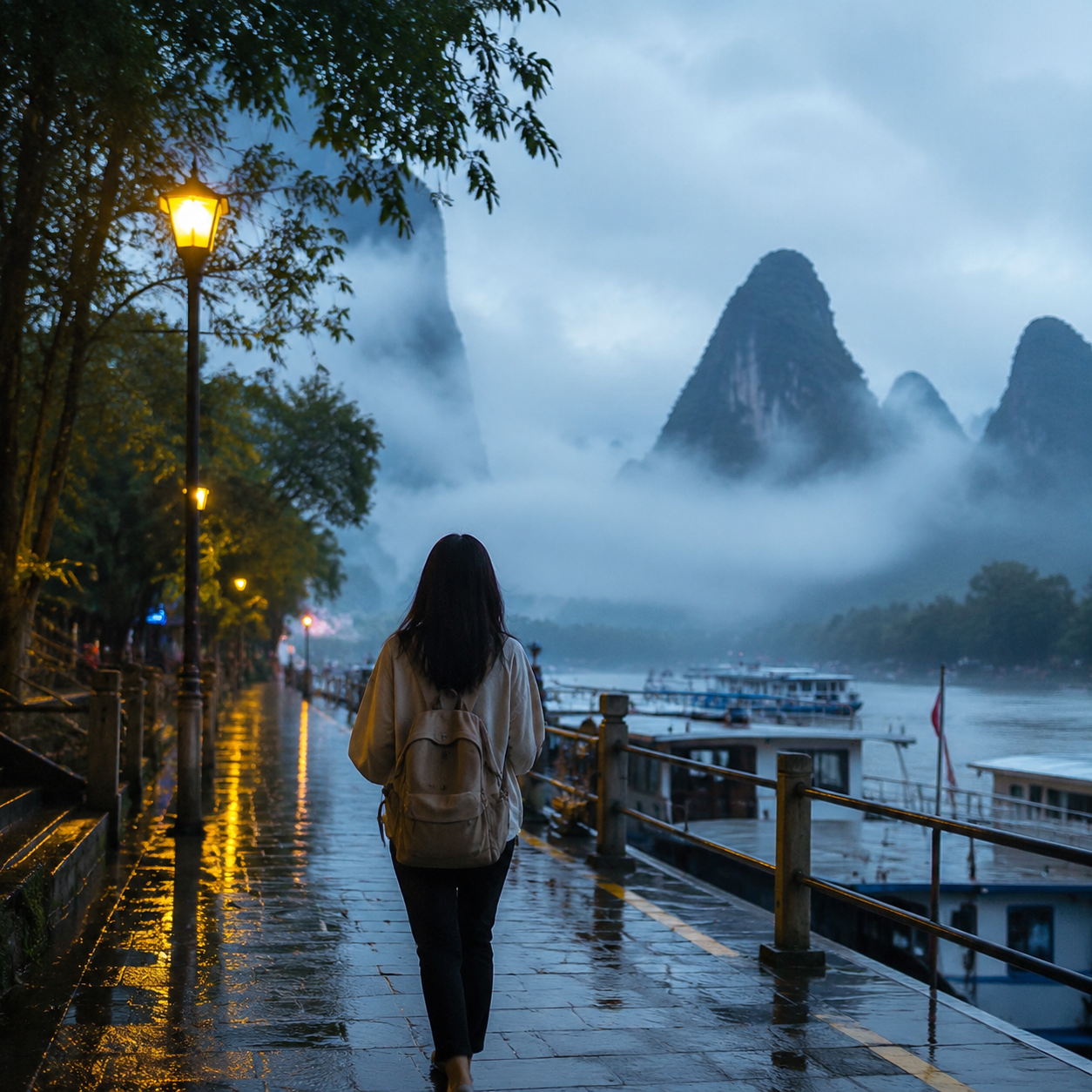
桂林的山常被称作奇、秀、险、清,这些词并没有错,只是太容易把山水变成陈列品。真正坐在江上时,我感到这些词还少了一点生活的重量。山的秀气里有湿气,有船漆的味道,有早餐袋里的热豆浆,有游客压低声音后的惊叹;水的清里也有机油的淡味,有竹篙划过留下的痕,有岸边人家的洗涤声。山水并不是脱离日常才显得珍贵,它们和日常互相沾着,才让人觉得可信。
Guilin’s hills are often described as strange, graceful, steep, and clear. Those words are not wrong, but they can too easily turn landscape into an exhibit. Sitting on the river, I felt that such words lacked the weight of daily life. The grace of the hills included dampness, the smell of boat paint, hot soy milk in a breakfast bag, and the lowered wonder of passengers. The clarity of the water included a faint scent of engine oil, marks left by bamboo poles, and the sound of washing from riverside homes. The landscape was not precious because it escaped daily life. It felt believable because it touched daily life everywhere.
雾最浓的时候,前方的船只只剩一盏小灯。那盏灯并不亮,却足够让后面的船知道方向。船夫没有表现出任何紧张,他只是偶尔侧头,看一眼水面,再看一眼岸线。我问他这样的雾是不是常见,他说冬春交界时常有,开慢一点就行。那句话说得平常,却让我想了很久。许多旅行经验都在教人怎样更快到达、怎样不错过、怎样把一天排满;可码头上的雾告诉我,有些地方需要的不是更快,而是愿意承认看不清,然后把速度放到能看见的程度。
When the mist thickened, the boat ahead of us was reduced to a small light. It was not bright, but it was enough for the boat behind to understand direction. The boatman showed no anxiety. He only turned his head from time to time, glancing at the water and then at the line of the bank. I asked whether fog like this was common. He said it often appeared between winter and spring, and that one simply needed to go slower. The sentence was ordinary, but it stayed with me. Many travel tips teach people how to arrive faster, miss less, and fill a day completely. The mist at the pier taught something else: some places do not ask for more speed, but for the willingness to admit unclear vision and move only as fast as seeing allows.
我在船上没有拍到一张特别锋利的照片。照片里的山都像隔着纱,水面也没有那种明信片式的蓝绿。起初我有点遗憾,后来翻看时却觉得它们比清晰照片更接近那天早晨。因为雾中的桂林本来就不是让人一眼占有的。它让人停在半懂不懂之间,让人把“好看”这个简单判断往后放一放,先问自己:谁在这里生活?谁在这里工作?这条水路每天怎样被使用?山峰在别人眼里,是否也只是上班路上的方向标?
I did not take a single sharp photograph on the boat. The hills in my pictures all seemed veiled, and the water lacked the postcard blue-green I had expected. At first I felt a little disappointed, but when I reviewed the images later, they seemed closer to that morning than clearer pictures would have been. Guilin in mist was never something to possess at one glance. It kept me between understanding and not understanding, asking me to postpone the simple judgment of beauty and first ask: Who lives here? Who works here? How is this water route used every day? In someone else’s eyes, are these peaks also just markers on the way to work?
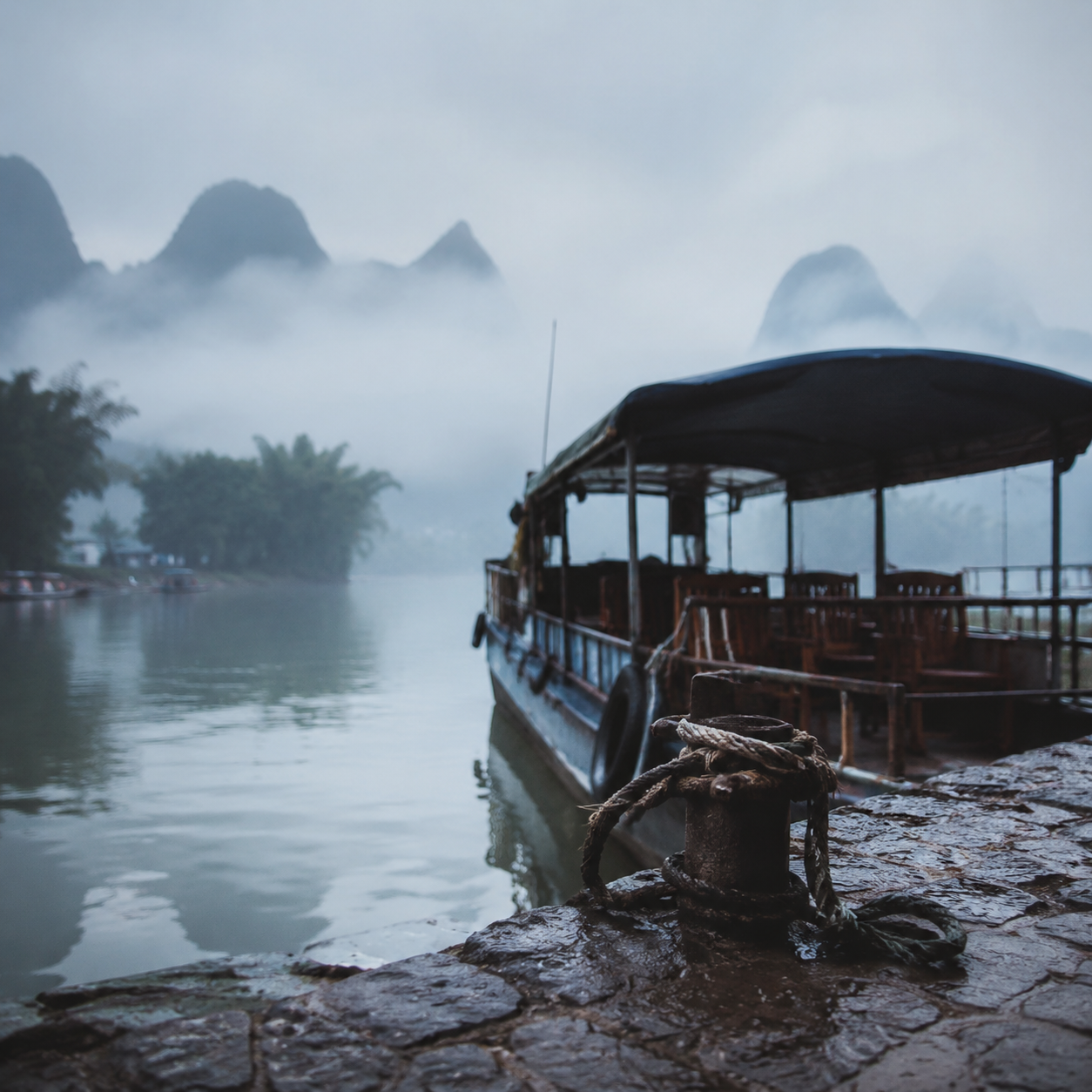
靠近一个小渡口时,船停了一会儿。岸边有人把货物从三轮车上搬下来,纸箱外面套着塑料布,防着潮气。一个女人站在台阶上喊人名,声音被雾吃掉一半,又被水面送回来一点。游客们安静了,像是突然意识到自己经过的不是纯粹的景区,而是别人的日程表。山水在这一刻也不再高高挂在审美的位置上,它们变成了路、天气、收入、等待和交换。风景不是离生活越远越纯粹,很多时候,风景正是在生活的用力处显出深度。
Near a small ferry stop, our boat paused for a while. On the bank, people unloaded goods from a three-wheeled cart; plastic sheets covered the cardboard boxes to keep out dampness. A woman stood on the steps calling someone’s name. The mist swallowed half her voice, and the water returned a little of it. The tourists grew quiet, as if suddenly aware that we were not passing through a pure scenic zone but through other people’s schedules. At that moment, the landscape was no longer suspended in an aesthetic position. It became route, weather, income, waiting, and exchange. Scenery does not become purer by moving farther from life. Often, it gains depth exactly where life is exerting itself.
我开始明白,所谓“人在画中游”如果只理解成漂亮,就会少掉一半意思。人在画中,不只是因为四周好看,也因为人会改变画的节奏。船夫的手、早餐摊的蒸汽、岸边人的喊声、乘客的沉默,都会让这幅画持续变化。没有这些,山仍然是山,水仍然是水,却少了一个早晨真正的温度。我以前总想等画面里没有杂物、没有路人、没有电线、没有生活痕迹,再拍一张干净的风景。那天我才觉得,所谓杂物也许正是地方向我说明自己的方式。
I began to understand that the phrase “traveling inside a painting” loses half its meaning if it is understood only as prettiness. People are inside the painting not merely because the surroundings are beautiful, but because people change the painting’s rhythm. The boatman’s hands, steam from breakfast stalls, calls from the bank, and passengers’ silence all keep the picture in motion. Without them, hills would still be hills and water would still be water, but the morning would lack its temperature. I used to wait for a scene without clutter, strangers, wires, or traces of use before taking a clean landscape photo. That day I felt that what I called clutter might be the very way a place explains itself.
雾散得很慢。它不是一下子被太阳推开,而是先在山腰处变薄,再从水面上升起,最后留在树梢和屋顶之间。随着能见度提高,游客们重新活跃起来,手机快门声多了,导游开始介绍山名,船舱里有人讨论下一站吃什么。我也听,也看,却不再急着把这些信息变成清单。名字当然有用,路线也有用,但它们不该替代现场本身。一个地方最有力量的部分,往往不是你记住了多少介绍,而是你有没有被它改变观察的顺序。
The mist dispersed slowly. It was not pushed away all at once by sunlight. It first thinned around the waists of the hills, then rose from the water, and finally lingered between treetops and roofs. As visibility improved, the tourists became lively again. Phone shutters clicked more often, the guide began naming the peaks, and someone in the cabin discussed what to eat at the next stop. I listened and looked, but I no longer hurried to turn the information into a checklist. Names are useful, and routes are useful, but they should not replace the scene itself. The most powerful part of a place is often not how much introduction you remember, but whether it changes the order in which you observe.
下船以后,我在码头边站了几分钟。太阳已经把雾照得很薄,江面露出更清楚的颜色,刚才显得神秘的地方开始变得日常。有人清理船舱,有人把空杯子收进袋子,有人招呼下一批客人上船。我忽然觉得,这种从神秘回到日常的过程,比任何一个固定角度都更值得记住。桂林的山水不是只在最美的一秒存在,它们也存在于售票口的排队声里,存在于湿滑台阶上的小心提醒里,存在于船靠岸时那一下轻微的碰撞里。
After getting off the boat, I stood beside the pier for a few minutes. The sun had thinned the mist, the river showed a clearer color, and the places that had seemed mysterious began to look ordinary. Some people cleaned the cabin, some gathered empty cups into a bag, and some called the next group of passengers aboard. I suddenly felt that this return from mystery to daily life was more worth remembering than any fixed angle. Guilin’s landscape does not exist only in its most beautiful second. It also exists in the sound of queuing at the ticket window, in cautious warnings on wet steps, and in the slight bump of a boat touching the bank.
如果有人问我桂林清晨的码头该怎样看,我不会先推荐某个机位。机位会让人安心,却也可能让人太早决定答案。我更愿意说,先站一会儿,不要急着举起相机。听水声怎样和人声混在一起,看雾怎样改变距离,看船夫怎样在看似相同的江面上找到路。等你发现山水并不只是站在远处等你赞美,而是在每个细小动作里影响现场,你再拍照也不迟。那时照片未必更清楚,却可能更诚实。
If someone asks me how to see a Guilin pier in the morning, I would not begin by recommending a camera position. A camera position can make a traveler feel secure, but it can also decide the answer too early. I would rather say: stand for a while first, and do not raise the camera too soon. Listen to how water mixes with voices, watch how mist changes distance, and notice how the boatman finds a route on a river that appears nearly the same everywhere. When you realize that the landscape is not merely waiting far away for praise but shaping the scene through every small movement, then you can take a photograph. It may not be clearer, but it may be more honest.
那天离开码头时,我没有觉得自己完成了一个景点,反而像刚刚学会一种更慢的读法。桂林把山水放在眼前,却不急着解释;它让雾先出来,把人的自信磨掉一点,再让船、岸、早餐、喊声和水纹一起补全意思。旅行中最难的也许不是找到美,而是承认美不是孤立存在的。它有劳动的背景,有天气的脾气,有地方人的节奏,也有外来者需要重新调整的目光。清晨的雾没有遮住桂林,它只是阻止我太快地把桂林看扁。
When I left the pier that day, I did not feel that I had completed a sight. I felt as if I had just learned a slower way to read. Guilin placed its landscape before my eyes without rushing to explain it. It let the mist appear first, wearing down my confidence a little, and then allowed boats, banks, breakfast, calls, and ripples to complete the meaning together. Perhaps the hardest part of travel is not finding beauty, but admitting that beauty does not exist alone. It has the background of labor, the temperament of weather, the rhythm of local people, and the gaze of outsiders who must adjust themselves. The morning mist did not hide Guilin; it stopped me from flattening Guilin too quickly.
回想起来,我最记得的不是哪座山最像传说,也不是哪一段江面最适合拍照,而是船离岸时那种几乎察觉不到的移动。码头还在身后,人声还没有散,雾还压着水面,山影还没有完全站稳,可旅程已经开始了。那种开始不是宣布式的,而是渗透式的。它让我明白,一个地方进入你,并不总靠壮观,有时靠的是一点潮气、一声低咳的发动机、一道看不清尽头的水路,以及你终于愿意把背景看成主角的那个瞬间。
Looking back, what I remember most is not which hill resembled which legend, nor which stretch of river was best for photography, but the almost imperceptible movement when the boat left the bank. The pier remained behind us, the voices had not yet dispersed, the mist still pressed on the water, and the mountain shadows had not fully steadied themselves, yet the journey had begun. It was not a declared beginning, but a permeating one. It taught me that a place does not always enter you through grandeur. Sometimes it enters through damp air, a low cough from an engine, a waterway whose end cannot be seen, and the moment when you finally allow the background to become the subject.
- 在中国打车这件事,没你想的那么难 | Ride-Hailing in China: Easier Than You Think
- 中国节假日全解:春节、黄金周与调休制度 | Chinese Holidays Explained: Spring Festival, Golden Week & the Adjusted Schedule System
- 澳门找零钱的三次停顿,让我重新安排过关路线 | Three Change-Making Stops Rebuilt My Macao Route
- 我在中国景区接驳车排队时,第一次学会先看阴凉处而不是先冲最前面 | At a Chinese Scenic Shuttle Queue, I First Learned to Look for Shade Instead of Charging to the Front
- 中国自驾游完全攻略 | Complete Self-Drive Travel Guide in China
- 中国十大旅游路线 | Top 10 Travel Routes in China
- 网络变慢那一分钟,让我知道截图有多重要 | One Slow Network Minute Taught Me the Value of Screenshots
- 支付失败怎么办:来华游客应急指南 | Payment Failed? A Visitor's Emergency Guide
- 早上七点,广州人已经喝了两轮茶 | Morning Tea in Guangzhou: A Ritual Before the Rest of China Wakes Up
- 中国住宿避坑指南:酒店民宿青旅怎么选 | Accommodation in China: Hotels, B&Bs & Hostels
Comments (0)