
带第一次来中国的朋友逛北京,我故意不赶景点:一条更像本地生活课的路线 | I Guided a First-Time Visitor in Beijing Without Rushing Sights: A Route That Felt Like a Local Life Lesson
带第一次来中国的朋友逛北京,我故意不赶景点:一条更像本地生活课的路线 | I Guided a First-Time Visitor in Beijing Without Rushing Sights: A Route That Felt Like a Local Life Lesson
导语 | Lead
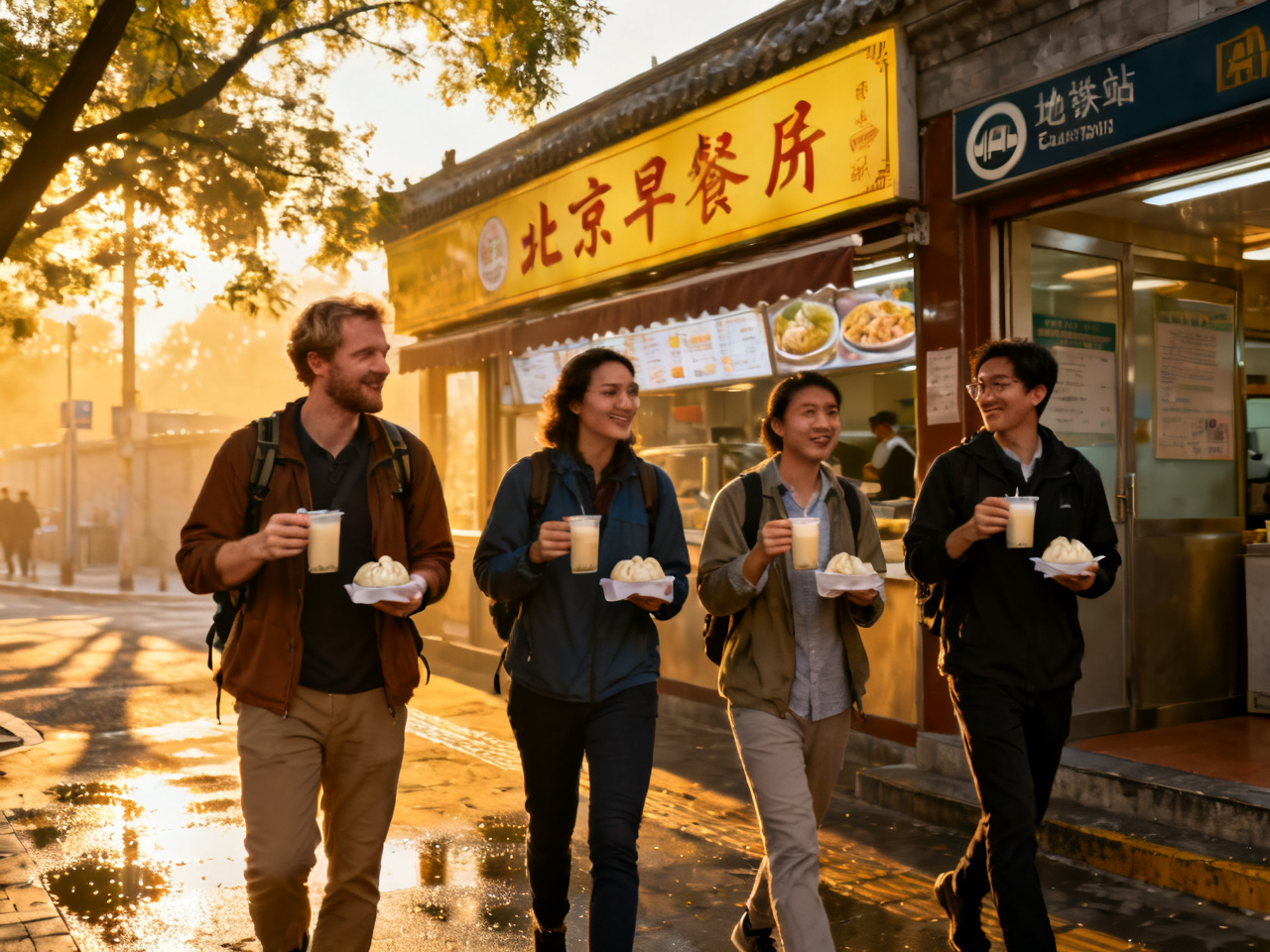
早上八点半,雍和宫大街的风还有一点凉。我和第一次来中国的朋友站在一家早餐店门口,他手里拿着刚出炉的包子,另一只手还不太习惯地攥着手机,生怕支付页面忽然跳掉。街边共享单车已经排到路口,地铁站口不时有人快步进去,豆浆店的蒸汽和门外的晨光混在一起。我朋友抬头看了看街道,第一句话不是“北京好大”,而是:“我们今天能去多少景点?”
It was 8:30 in the morning, and the wind on Yonghegong Street still carried a little coolness. I was standing outside a breakfast shop with a friend visiting China for the first time. He held a fresh steamed bun in one hand and his phone in the other, gripping it cautiously as if the payment page might disappear at any moment. Shared bicycles lined the curb. People kept stepping briskly into the metro entrance. Steam from the soy milk stall mixed with the pale morning light. My friend looked up at the street and asked not, “How big is Beijing?” but, “How many sights can we fit in today?”
我故意没有直接回答。我知道这是很多第一次来北京、第一次来中国的人会有的直觉:一定要把景点塞满,故宫、长城、三里屯、天坛、王府井,仿佛少去一个就亏了。但我在中国待得越久,越不想用“景点数量”来衡量一天值不值。特别是带第一次来的人,我更在意的是:他今天能不能把地铁进站、早餐点单、胡同步行、上厕所、找位子、看路牌、过马路这些小事过顺。一旦这些小事顺了,大城市就不会显得咄咄逼人,景点也才真正进得去。
I deliberately did not answer right away. I knew that this is the instinct many first-time visitors to Beijing—and to China more broadly—have: fill the day with famous places, as if missing one sight means losing value. But the longer I have lived in China, the less I want to measure a day by how many attractions it contains. Especially when guiding someone for the first time, I care more about whether the person can smoothly handle the small things: entering the metro, ordering breakfast, walking hutongs, finding toilets, locating seats, reading signs, crossing roads. Once those small things run smoothly, the big city stops feeling aggressive, and the attractions themselves become easier to receive.
所以那天我设计的,不是一条“暴走北京打卡线”,而是一条更像本地生活课的路线:早餐—地铁—慢速步行—中午休整—下午再看一个重点区域。它听起来不“豪华”,但对第一次来的朋友来说,非常有效。
So the route I designed that day was not a “power tour of Beijing,” but something more like a lesson in local urban life: breakfast, metro, slow walking, a midday reset, and then one key afternoon area. It may not sound glamorous, but for a first-time visitor, it was extremely effective.
第一站:先在早餐店把节奏放稳 | Stop One: Stabilize the Day at a Breakfast Shop
我们没有一早冲去热门景点门口排大队,而是先站进一家街边早餐店。店不大,玻璃柜里整齐摆着包子、烧麦、茶叶蛋,门口有两位上班族一边看手机一边喝豆浆。老板娘动作很快,问我们要什么时几乎不抬头。我朋友一下有点紧张,小声问我:“这里是先付钱还是先拿东西?”
We did not rush first thing to the entrance of a major attraction to join a massive queue. Instead, we stepped into a street-side breakfast shop. It was small. Inside the glass case were neat rows of buns, shaomai, and tea eggs. Two office workers stood near the entrance, drinking soy milk while checking their phones. The owner moved quickly and barely looked up when asking what we wanted. My friend became tense immediately and whispered, “Do we pay first here or take food first?”
我没有替他全包,而是让他先看前面那位本地人怎么做。那个人先报要几样,再扫码,再拿小票去旁边取。我朋友观察完,立刻就懂了。轮到我们时,他自己说:“两个肉包,一个豆浆,一个茶叶蛋。”发音不完美,但完全够用。拿到早餐后,他很开心,说:“原来我能跟上。”
I did not take over the whole interaction for him. I asked him to watch the local customer ahead of us first. That person named the items, scanned to pay, then took the receipt to the side counter. My friend watched one full cycle and understood immediately. When our turn came, he ordered on his own: “Two meat buns, one soy milk, one tea egg.” The pronunciation was imperfect, but fully functional. Once he had the breakfast in hand, he smiled and said, “So I actually can keep up.”
这是我带第一次来中国的人时非常在意的一步:不要急着证明你看了很多景点,先让他在最基础的生活场景里获得一次小成功。 这种成功会直接改变后面一整天的精神状态。
This is a step I care deeply about when guiding a first-time visitor in China: do not rush to prove how many attractions they saw. First let them experience one small success in an ordinary life scene. That kind of success changes the psychological tone of the whole day.
如果对北京行程完全没概念,其实也可以先看一眼北京三日线,建立整体框架。但真正落地时,我更愿意把节奏调慢一点,先把人放进城市,而不是先把人塞进景点。
If someone has no overall sense of Beijing at all, it is useful to first glance at 北京三日线 for the bigger structure. But when it comes to actually moving through the city, I prefer to slow the pace and place the person inside the city first, rather than stuffing the person into attractions.
第二站:地铁不是障碍,是最好的生活课堂 | Stop Two: The Metro Is Not an Obstacle, but the Best Urban Classroom
吃完早餐,我们从雍和宫附近进地铁。我朋友一开始对安检和闸机有点手忙脚乱,尤其怕自己站错位置、挡到别人。我告诉他,不用急,先看三件事:别人什么时候拿出二维码、过闸后会不会立刻停下、站台上大家怎么排队。
After breakfast, we entered the metro near Yonghegong. My friend was clumsy at first around the security check and the gates, especially worried that he might stand in the wrong place or block people behind him. I told him not to rush. Just watch three things first: when people take out their QR codes, whether they stop immediately after passing the gate, and how people queue on the platform.
他很快发现,北京地铁里最重要的不是“快”,而是“别在关键节点停住”。安检前提前准备,过闸后往前走几步,站在扶梯旁别挡出口,车门开了先让下后再上。明白了这些,他的紧张感一下少了一半。
He quickly noticed that the most important thing in the Beijing metro is not raw speed, but not freezing at key pressure points. Prepare before security. Step forward after the gate. Don’t block the escalator exit. Let people get off before boarding. Once he understood those patterns, half of his anxiety disappeared.
我后来常觉得,带外国朋友第一次来中国,地铁其实比景点更能解释这座城市。它把秩序、节奏、效率、耐心都压缩在十几分钟里。关于这一点,我自己以前也从中国城市通勤怎么选里得到过启发:别把通勤理解成单纯移动,它也是理解城市规则的最快入口。
I often feel that for a foreign friend visiting China for the first time, the metro explains the city better than a monument does. It compresses order, rhythm, efficiency, and patience into fifteen minutes. I had once learned something similar from 中国城市通勤怎么选: commuting is not just movement; it is one of the fastest ways to understand how a city works.
第三站:胡同步行,比赶场更能让人喜欢北京 | Stop Three: Walking Hutongs Creates Attachment Better Than Rushing Between Highlights
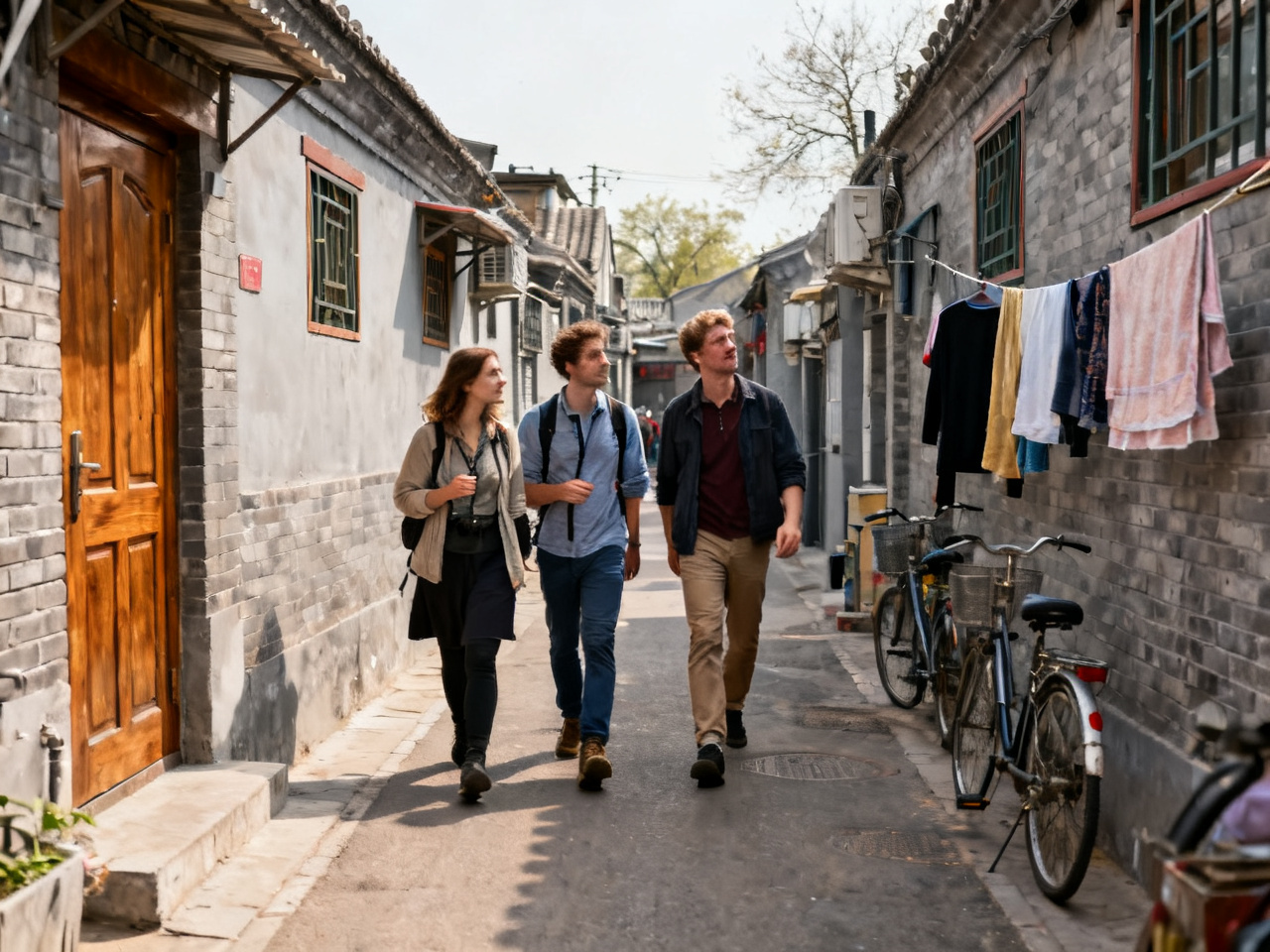
出站后,我没有马上带他冲进下一个“必须打卡”的地方,而是先沿着一段胡同慢慢走。太阳已经升高了,墙根下停着几辆电动车,早点铺子门口还有人端着碗站着吃,几位老人坐在小凳子上聊天,一只灰猫从院门缝里钻出来,踩过半块碎光。
After leaving the station, I did not drag him straight into the next “must-see” attraction. We first walked slowly through a hutong stretch. The sun had climbed higher. Several electric scooters were parked along the wall. Outside a breakfast stall, people were still eating from bowls while standing. A few elderly residents sat on small stools chatting. A gray cat slipped out through a courtyard gate and stepped across a patch of broken light.
朋友一开始还有点不解:“我们不是应该多看几个地方吗?”我说:“你现在看的,其实就是北京。”他安静了几分钟,后来自己拿出手机拍了一张晾衣绳和红门的照片,说:“这个比我想象的更有生活。”
At first my friend seemed confused: “Shouldn’t we try to see more places?” I said, “What you’re looking at now is also Beijing.” He went quiet for a few minutes, then took out his phone and photographed a clothesline and a red gate. “This feels more alive than I expected,” he said.
我很相信一件事:第一次来中国的人,不一定会因为景点规模而立刻爱上一座城市,却常常会因为生活纹理而真正记住它。胡同里行走的节奏、早餐店门口的热气、路边共享单车的摆放方式、行人过马路时自然形成的秩序,这些都在悄悄帮一个人建立“我理解这里一点了”的感觉。
I strongly believe one thing: a first-time visitor to China does not always fall in love with a city because of scale, but often remembers it because of texture. The rhythm of walking through hutongs, the steam at breakfast-shop doors, the way shared bicycles are parked, the natural order of pedestrians crossing streets—these quietly build the feeling of “I understand this place a little now.”
第四站:中午一定要安排“休整”,不是浪费,是保护体验 | Stop Four: A Midday Reset Is Essential, Not Wasteful
很多失败的一日游,不是因为路线设计差,而是因为没有给人留恢复空间。第一次来中国,信息量本来就大:支付、导航、扫码、安检、菜单、厕所标识、地铁换乘,每一件都在消耗注意力。如果中午还硬顶着暴走,下午的情绪通常会明显下降。
Many failed day itineraries do not fail because the route is terrible, but because there is no recovery space. A first-time visitor in China is already processing a huge amount of information: payment, navigation, scanning, security checks, menus, restroom signs, metro transfers. Each one consumes attention. If you keep pushing through lunch without relief, the mood often declines sharply by afternoon.
所以中午我故意把我们带到一家有明确座位、点单逻辑简单、洗手间好找的餐馆。朋友坐下后长出一口气,说:“终于可以不用边走边判断了。”我笑他说,这就是我今天最想给你的东西——不是更多景点,而是更多“可预测”。
So at noon I deliberately took us to a restaurant with clear seating, simple ordering logic, and easy-to-find restrooms. When my friend sat down, he let out a long breath and said, “Finally, I don’t have to keep making decisions while walking.” I laughed and said that this was exactly what I most wanted to give him today—not more attractions, but more predictability.
点餐时我也没有完全替他决定,只是帮他过滤难度。他想试北京本地一点的东西,我就选了炸酱面、一个凉菜、一个热菜和一份汤,避免桌上出现过多他完全不知道怎么处理的食物。第一次来中国,不需要每顿饭都追求“最正宗、最刺激、最复杂”,先把用餐节奏建立起来更重要。支付和点餐方面,如果完全没有准备,其实也很值得提前看看来华支付第一课,很多尴尬会提前消失。
When ordering, I still did not make every decision for him. I simply reduced the complexity. He wanted to try something local to Beijing, so I chose zhajiangmian, one cold dish, one hot dish, and a soup—enough variety without loading the table with items he had no idea how to handle. For a first trip to China, not every meal needs to be the most authentic, extreme, or complicated. Establishing a smooth eating rhythm matters more. And for payment and ordering, anyone totally unprepared would benefit from reading 来华支付第一课 in advance; it removes many avoidable awkward moments.
第五站:下午只选一个重点区域,反而更进得去 | Stop Five: Choose Only One Main Afternoon Area and You Actually Experience It Better
午饭后,我们没有贪心。我只带他去一个下午重点区域,让他能把体力和注意力集中起来。这样做还有一个额外好处:你不需要一直陷在“赶下一个点”的焦虑里,可以真的停下来读说明、看建筑、等一阵风,或者在树荫下坐几分钟。
After lunch, we did not become greedy. I chose only one main area for the afternoon so that he could focus his energy and attention. This approach has another advantage: you do not stay trapped in the anxiety of “rushing to the next stop.” You can actually pause to read signs, look at architecture, wait for a breeze, or sit under a tree for a few minutes.
朋友后来自己承认,如果按他原本设想,把一天塞满,他大概到下午三点就会彻底疲惫,然后对北京只剩“人多、路大、信息复杂”的印象。可那天走到下午,他反而说:“我没有想象中累,而且我开始知道怎么在这里行动了。”这句话让我很满意。因为对第一次来中国的人来说,最珍贵的不是“我今天看了多少”,而是“我明天还敢自己出门”。
Later my friend admitted that if we had followed his original plan and packed the day full, he probably would have been exhausted by 3 p.m. and left Beijing with only three impressions: lots of people, big roads, and too much information. But that afternoon he said instead, “I’m not as tired as I expected, and I’m starting to understand how to move here.” That sentence made me very happy. For a first-time visitor to China, what matters most is not “how much I saw today,” but “whether I’ll dare to go out on my own tomorrow.”
在路线上学融入:我刻意安排的三种“第一次” | Learning Integration on the Route: The Three First-Times I Deliberately Included
其实我还故意安排了第四种“第一次”,只是它看上去没那么像行程设计:第一次在北京不着急。我让朋友在路口等红灯时不要一边抱怨浪费时间,而是看看身边人怎么站、车流怎么停、自行车道怎么分;我让他在午饭后不要马上催着去下一个地方,而是先坐两分钟,把水喝完,把手机电量确认一下。旅行里这种“慢一拍”,常常比多去一个景点更能保护体验。
In fact, I deliberately included a fourth “first time” too, though it looked less like itinerary design: the first time not rushing in Beijing. At intersections, I asked my friend not to complain that the red light was wasting time, but to watch how people positioned themselves, how traffic paused, and how the bicycle lane was separated. After lunch, I asked him not to push immediately toward the next place, but to sit for two minutes, finish his water, and check his phone battery. This kind of slowing down often protects the experience better than adding one more attraction.
第一次自己完成早餐点单 | First Time Ordering Breakfast Alone
这是最轻量、最容易成功的一次练习。成功后会立刻提升信心。
This is the lightest and most achievable exercise, and success here boosts confidence immediately.
第一次自己过北京地铁的关键节点 | First Time Handling the Key Pressure Points of the Beijing Metro
不是让他背整张线路图,而是学会安检、亮码、进站、换边、出站这些核心动作。
The goal was not to memorize the full metro network, but to learn the core actions: security check, code scanning, entering, switching sides, and exiting.
第一次在胡同里慢慢走而不急着找“目的地” | First Time Walking Slowly Through a Hutong Without Chasing a Destination
这一步最容易被忽略,但最能让人开始喜欢北京。
This is the step most easily neglected, but it is often the one that makes people begin to love Beijing.
安全、交通和用餐节奏:为什么我宁可少去一个景点 | Safety, Transit, and Meal Rhythm: Why I’d Rather Skip One Attraction
我现在越来越坚定地认为,第一次来中国的路线设计,安全感和秩序感比“饱和度”重要。原因很简单:一个人如果一直处在紧张状态,再好的景点也只能被匆忙消费。相反,只要他知道怎么进站、怎么吃饭、怎么休息、怎么在街上判断方向,哪怕只看两个区域,这一天也会非常充实。
I have become more and more convinced that when designing a first-time route in China, safety and rhythm matter more than saturation. The reason is simple: if someone stays tense all day, even the best attractions are only consumed in a hurry. But if the person knows how to enter stations, eat meals, rest, and judge direction in the street, then even two well-chosen areas can make for a very full day.
这和我自己以前旅行方式的变化也有关系。我以前总怕错过,后来才知道,真正的错过不是少看一个景点,而是因为赶路过度,什么都没真正吸收进去。带朋友逛北京那天,我其实是在把自己后来学到的教训提前送给他。
This also reflects how my own travel style changed over time. I used to be afraid of missing out. Later I realized that real loss does not come from seeing one fewer attraction. It comes from rushing so much that nothing actually enters you. The day I guided my friend through Beijing, I was really handing him lessons I had learned the hard way myself.
结尾:一条不赶的路线,反而更像真正的北京 | Ending: The Unhurried Route Felt More Like the Real Beijing
如果明天还有第二天、第三天,北京当然可以继续展开:更大的博物馆、更长的步行线、更正式的景区预约、更复杂的交通切换都能慢慢加上去。可第一天最重要的,从来不是“证明北京值得来”,而是“证明你在北京也能把一天过顺”。一旦这个基础建立起来,后面的城市经验几乎都会更好。
If there is a second day and a third day, Beijing can of course keep unfolding: larger museums, longer walking routes, more formal attraction reservations, and more complicated transport changes can all be added gradually. But on day one, the most important thing is never to prove that Beijing is worth visiting. It is to prove that you can successfully live through a day in Beijing. Once that foundation is in place, almost every later city experience becomes better.
傍晚时我们坐在路边,朋友把最后一口饮料喝完,看着前面经过的人流,对我说:“我本来以为今天会像考试,结果更像学会生活一天。”这句话让我觉得,路线设计成功了。
By evening, we were sitting by the roadside. My friend finished the last sip of his drink, watched the flow of people ahead of us, and said, “I thought today would feel like an exam. Instead it felt like learning how to live here for a day.” That sentence told me the route had worked.
北京当然有很多必须一看的地方,经典路线也永远有价值。但如果你带的是第一次来中国的人,我真心建议你别急着炫耀自己能塞多少景点。先让他在早餐店里完成一次点单,在地铁里顺利通过一次安检,在胡同里安静地走二十分钟,在中午舒服地坐下来吃一顿饭。等这些都发生了,景点自然会长出分量。
Beijing of course has many places worth seeing, and classic itineraries will always matter. But if you are guiding someone visiting China for the first time, I sincerely suggest not showing off how many attractions you can cram in. Let them first complete one breakfast order, pass one security checkpoint smoothly in the metro, walk quietly through a hutong for twenty minutes, and sit down comfortably for lunch. Once those things happen, the attractions themselves gain weight.
那天回酒店路上,朋友已经开始自己看地铁换乘,甚至主动说第二天想一个人去附近转转。我听到这句话,比听到他说“北京真好看”还高兴。因为一个城市真正被喜欢,往往不是因为它一开始多么震撼,而是因为你突然发现:原来我也可以在这里过得很顺。
On the way back to the hotel that night, my friend had already started checking metro transfers on his own. He even said he wanted to wander around nearby by himself the next day. Hearing that made me happier than hearing “Beijing is beautiful.” A city is often truly loved not because it overwhelms you at first glance, but because one day you suddenly realize: I can actually move through this place with ease.
如果以后还有朋友第一次来中国,我大概还是会用同样的方法带他认识北京:先从一顿不慌的早餐开始,先从一次顺利的进站开始,先从一段能听见自己脚步声的胡同步行开始。因为对初来者来说,真正珍贵的从来不只是风景本身,而是风景和生活终于接上了线。那条线一旦接上,北京就不再只是地图上的首都,而会变成一个你愿意再走进去的城市。
If another friend visits China for the first time in the future, I will probably introduce Beijing the same way again: begin with an unhurried breakfast, begin with one smooth station entry, begin with a hutong walk quiet enough that you can hear your own footsteps. For a newcomer, what is most precious is never the scenery by itself, but the moment when scenery finally connects with daily life. Once that connection is made, Beijing is no longer just the capital on a map. It becomes a city you are willing to walk back into.
- 比“中国哪里最好玩”更重要的,是有人先把来华准备讲明白了 | More Important Than “Where to Go in China” Is Having Someone Explain the Preparation First
- 中国白酒与黄酒:送礼自饮怎么选 | Chinese Baijiu & Huangjiu: Gift & Tasting Guide
- 佛山醒狮:一头狮子背后的江湖 | Foshan Lion Dance: The Martial World Behind a Lion
- 北京三日线:第一次来中国,怎么走才不赶路 | Beijing in 3 Days: A First-Time Route Without Rush
- 扬州雨后最动人的,不是园子名气,而是鞋底碰到湿石板的那一下 | In Rainy Yangzhou, the Most Moving Thing Is Not a Famous Garden but the Sound of Shoes on Wet Stone
- 我在扬州瘦西湖边躲五月小雨,才知道一个人旅行也可以很热闹 | Hiding from a May Shower by Slender West Lake, I Learned Solo Travel Can Still Feel Full of Company
- 我在武汉学会先看早餐店的节奏,再决定要不要排队 | In Wuhan I Learned to Read the Breakfast Rhythm Before Joining the Line
- 把中国拍成高铁大线以后,最值钱的内容其实藏在换乘和转场里 | Once China Becomes a High-Speed Rail Arc on Camera, the Real Value Hides in Transfers and Transitions
- 熟食店玻璃柜前那句“几个人吃”,让我第一次学会在中国别只按克数点菜 | The Question “How Many People Are Eating?” at a Deli Counter Taught Me Not to Order Only by Weight in China
- 西安夜市排队课:别盲追最长队伍 | A Xi’an Night Market Lesson: Don’t Chase the Longest Queue Blindly
Comments (0)