
十个值得你慢下来的中国古镇 | Ten Chinese Ancient Towns Worth Slowing Down For
十个值得你慢下来的中国古镇 | Ten Chinese Ancient Towns Worth Slowing Down For
笔者曾在一年之内走访了二十多个中国古镇。坦率讲,其中不少已经被过度商业化——满街义乌批发的旅游纪念品,每家店门口都摆着同款臭豆腐锅。但仍有一些地方,推开沿河老屋的木门,看到八十岁的阿婆在天井里洗菜,会让你突然觉得时间慢了。
Over the course of one year, this writer visited more than twenty ancient towns across China. Frankly, many have been over-commercialized — streets lined with wholesale tourist trinkets from Yiwu, every storefront fronted by the same stinky tofu fryer. Yet some places remain where, pushing open a wooden door of a riverside old house and finding an eighty-year-old grandmother washing vegetables in the courtyard, you suddenly feel time decelerating.
下面这十个,是笔者筛选后真心推荐的——标准只有一个:走进去之后,你不会想掏出手机看时间。
The following ten are my genuine recommendations after filtering — with a single criterion: once you walk in, you won't want to pull out your phone to check the time.
1. 乌镇西栅 · 浙江
一条从戏台流出的光,一桶刚打上来的井水。西栅值得待到天黑。
乌镇的东栅和西栅是两种体验。东栅早上六点前免票,一两个小时就能走完;西栅是过夜的地方。民宿沿着运河两岸排开,每一家的窗口对着水面,晚上河里的灯亮起来,整个镇子变成了一幅不太真实的画。笔者住过一家叫"似水年华"的客栈——没有空调,吊扇呼呼转,半夜被蛙声吵醒,推窗看到月光铺在石桥上。
Wuzhen's East Gate and West Gate are two different experiences. East Gate is free before 6 AM and walkable in an hour or two; West Gate is where you stay the night. Guesthouses line both sides of the canal, every window facing water. At night, lanterns glow along the river and the whole town transforms into a slightly unreal painting. I stayed at a place called "In the Mood for Love" — no AC, just a ceiling fan whirring, woken at midnight by frogs, opening the window to see moonlight pooled on the stone bridge.
到达方式: 上海/杭州出发高铁到桐乡站(30-60分钟),转公交K282直达。
How to get there: High-speed rail from Shanghai/Hangzhou to Tongxiang station (30–60 min), then bus K282 directly to the town.
2. 宏村 · 安徽
很多人在宏村只待半天拍照就走了。这是个错误。
宏村的精华不在那个被拍了几百万次的南湖倒影,而在村子深处那些没有游客的小巷。笔者在一条完全没人的巷子里遇到一位老先生在门口练毛笔字。他让我坐下喝茶,聊了一个下午,讲了这个村子四百年的宗族故事。那种经历是走马观花永远得不到的。
Most people spend half a day at Hongcun taking photos and leave. This is a mistake. Hongcun's real treasure isn't the South Lake reflection that's been photographed millions of times — it's the deserted alleys deep inside the village. I found an old gentleman practicing calligraphy outside his door in a completely empty lane. He invited me to sit and drink tea, and we talked all afternoon about four hundred years of clan history. That kind of experience is something drive-by sightseeing will never deliver.
住宿建议: 住在村内的徽派老宅改造民宿,200-400元/晚。清晨五六点起来,南湖只有你和几个晨练的老人。
Accommodation tip: Stay in a converted Hui-style old house guesthouse inside the village, 200–400 yuan/night. Wake at 5–6 AM and the South Lake belongs to just you and a few elderly morning exercisers.
3. 凤凰古城 · 湖南
凤凰是中国古镇里争议最大的一个。有人说它商业化到了极致,有人说它依然是湘西最美的地方。两种说法都对。
沱江两岸的吊脚楼在白天确实被酒吧和商店占满了,但如果你凌晨四五点出来走,整个古城是安静的。江面上飘着薄雾,偶尔有一个早起的渔民划着竹筏经过。沈从文笔下的那个凤凰,只在这个时间段能看到。
The stilted houses along the Tuojiang River are indeed filled with bars and shops during the day, but if you step out at 4 or 5 AM, the entire ancient city is silent. Thin mist floats over the river, and occasionally an early-rising fisherman paddles by on a bamboo raft. The Fenghuang that Shen Congwen wrote about only appears during this window.
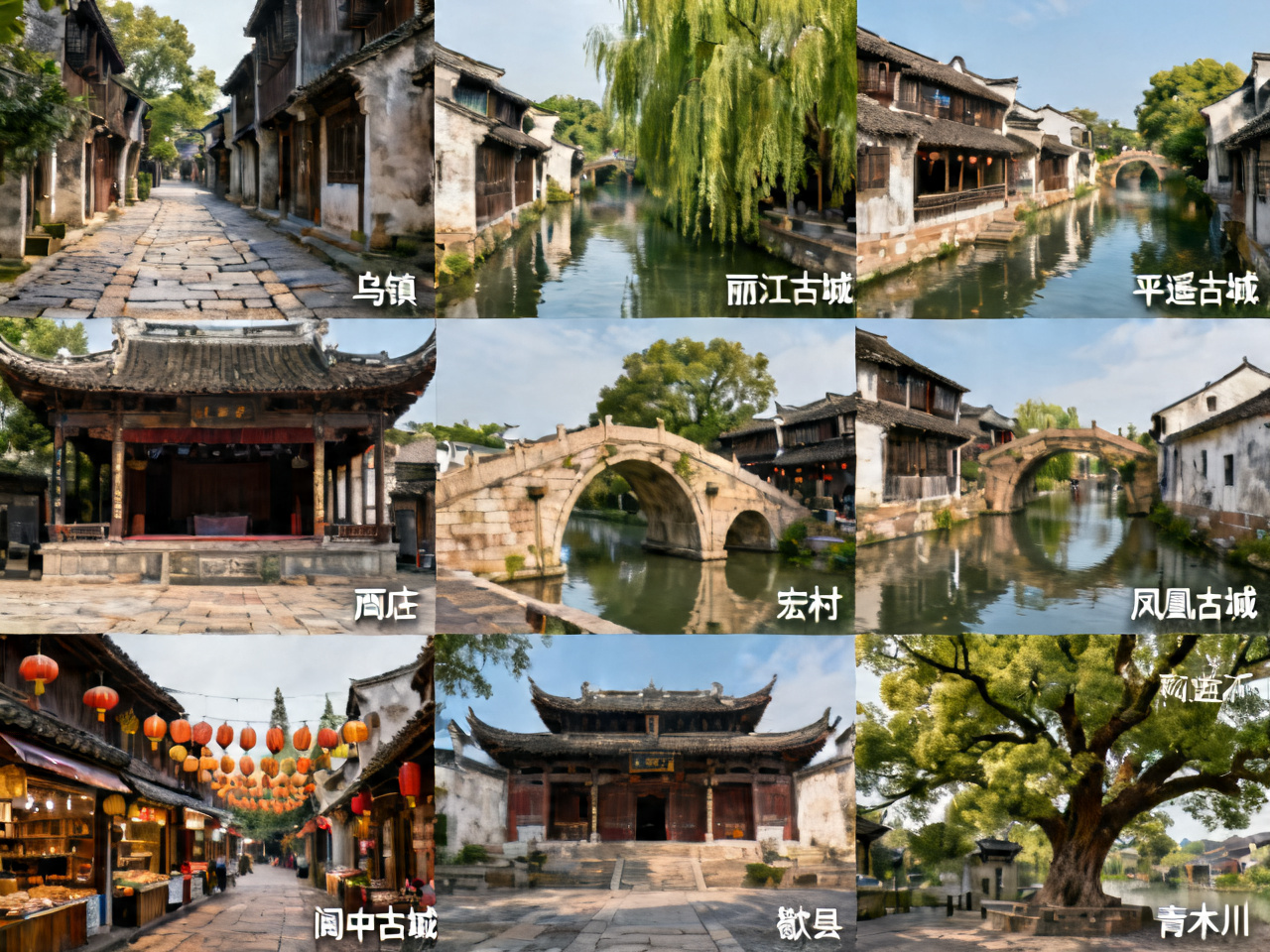
关键贴士: 从长沙坐大巴约 5.5 小时(或高铁到怀化再转车)。古城本身不大,一天足够,但值得多住一晚看清晨和入夜两个极端。
Key tip: About 5.5 hours by bus from Changsha (or high-speed rail to Huaihua then transfer). The ancient city itself isn't large — one day is enough to walk it, but an extra night is worth it to see both the dawn and the nightfall extremes.
4. 大理喜洲 · 云南
大理双廊被旅行博主们推了太多年,现在人满为患。喜洲不一样。
喜洲的白族扎染在巷子里的老奶奶手上还活着——不是景区里表演性质的那种,是她真的在帮邻居染一块桌布。白族民居的照壁和飞檐是中国乡土建筑里最精致的一类。笔者采访过一位喜洲的老建筑师,他说:"我们白族的房子是'三坊一照壁',每一面墙都对着苍山。这不是设计,是活了几百年的规矩。"
Xizhou's Bai-ethnic tie-dye is still alive in the hands of grandmothers in the alleys — not the performative kind in tourist zones, but an old woman actually dyeing a tablecloth for a neighbor. The screen walls and upturned eaves of Bai residences are among the most exquisite in Chinese vernacular architecture. I interviewed an elderly Xizhou architect who said: "Our Bai houses follow the 'three wings and one screen wall' pattern — every wall faces Cangshan Mountain. It's not design; it's a rule that's been alive for centuries."
怎么去: 大理古城北 18 公里,骑电动车 40 分钟。租一辆小电驴是大理最正确的交通选择。
How to get there: 18 km north of Dali Old Town, 40 minutes by electric scooter. Renting an e-bike is the single best transport decision in Dali.
5. 镇远 · 贵州
如果只能选一个"游客最少但质量最高"的古镇,笔者选镇远。
舞阳河从镇子中间穿过,两岸是明清时期的徽派建筑——没错,这里的建筑风格和安徽几乎一样,因为明代大量安徽商人移居到此。晚上坐在河边吃酸汤鱼(贵州特色),一条鱼才四五十块,旁边的大叔在喝自酿的米酒。没有酒吧街,没有灯光秀,只有一个正常生活着的小城。
The Wuyang River runs through the center, flanked by Ming-Qing Hui-style buildings — yes, the architecture here looks almost identical to Anhui's, because large numbers of Anhui merchants settled here during the Ming Dynasty. At night, sit by the river eating sour soup fish (a Guizhou specialty), a whole fish for just 40–50 yuan, while the man at the next table drinks homemade rice wine. No bar street, no light show — just a small city living its normal life.
交通: 贵阳高铁到镇远站只需 1.5 小时,非常方便。
Transport: High-speed rail from Guiyang to Zhenyuan takes just 1.5 hours — very convenient.
6. 南浔 · 浙江
在乌镇和西塘之间,南浔被夹成了"透明"。但那些去过三个的人几乎都说同一句话:南浔最好。
因为安静。因为原住民还住在里面。因为那些丝商大宅不是博物馆,旁边的弄堂里还有人在烧饭、打牌、晒被子。笔者在小莲庄门口坐了一个小时,只有三组游客经过。同一时间段在乌镇?大概三百组。
Nestled between Wuzhen and Xitang, Nanxun has been squeezed into "invisible." But those who've visited all three almost always say the same thing: Nanxun is the best. Because it's quiet. Because original residents still live there. Because those grand silk merchant mansions aren't museums — in the alleys next door, people are still cooking, playing cards, drying quilts. I sat outside Xiao Lianzhuan garden for an hour; only three groups of tourists passed. Same time slot in Wuzhen? Probably three hundred.
7. 平遥 · 山西
平遥不算"小镇"——它是一座完整保存的古代县城,城墙围起来的面积有 2.25 平方公里。
但笔者把它放进来是因为:如果你只去一个古城了解中国古代的商业和金融史,平遥是唯一选择。中国第一家票号(相当于银行)"日升昌"就在这里。走进去看到的账房、金库、密码暗语系统,会让你对中国人的商业头脑产生全新认识。
I include it here because: if you're going to visit just one ancient city to understand Chinese commercial and financial history, Pingyao is your only choice. China's first draft bank (equivalent to a modern bank), "Rishengchang," is right here. Walking in and seeing the accounting room, vault, and coded cipher system will give you an entirely new appreciation for the Chinese business mind.
最佳季节: 冬天。雪落在城墙上,游客最少,古城最像古城。
Best season: Winter. Snow on the city walls, fewest tourists, the ancient city looks most like an ancient city.
8. 芙蓉镇 · 湖南
挂在瀑布上的千年古镇。这不是比喻——镇子的主街就建在瀑布旁边,走在路上能感受到水雾扑面。
一碗米豆腐让这个镇子出了名(刘晓庆主演的电影《芙蓉镇》),但真正让人记住的是那种"被水声包围"的感觉。晚上住在临瀑布的客栈里,开着窗户睡觉,白噪音全是水声。笔者从来没有在别的地方睡得那么好过。
A thousand-year-old town hanging on a waterfall — this isn't a metaphor. The main street is built right beside the cascade; walking along it, you feel the mist on your face. A bowl of rice tofu made this town famous (from the movie "Hibiscus Town" starring Liu Xiaoqing), but what truly stays with you is the sensation of being enveloped by the sound of water. Sleep in a guesthouse overlooking the falls with the window open — the white noise is all water. I've never slept that well anywhere else.
9. 黄姚 · 广西
黄姚藏在广西贺州的大山里,交通不便是它最好的保护。
九百多年历史的石板街还在用。不是"修旧如旧"的那种用,是真的有拖拉机在上面开过的那种用。巨大的古榕树从石墙缝里长出来,树根和墙已经分不清边界。夜晚没有路灯,只有民宿透出的灯光和满天的星星。
900-year-old flagstone streets are still in use. Not the "restored to look old" kind — the kind where tractors actually drive over them. Massive ancient banyan trees grow out of cracks in stone walls, roots and masonry indistinguishable. At night there are no streetlights, just the glow from guesthouses and a sky full of stars.
适合人群: 想彻底断网发呆的人。手机信号时有时无(这是优点)。
Best for: People who genuinely want to disconnect and zone out. Cell signal comes and goes (this is a feature, not a bug).
10. 甪直 · 江苏
念 Lù Zhí。大部分中国人也不认识这个字。
甪直离苏州市区只有 25 公里,但游客量大概是周庄的十分之一。桥特别多——据说原来有 72 座半,现在还留着 40 多座。笔者在一座没有名字的小石桥上坐了很久,桥下有人在洗衣服,对岸的老房子窗户里传出评弹(苏州方言说唱),那一刻所有的打卡焦虑都消失了。
Lùzhí is only 25 km from Suzhou city center, but tourist volume is roughly one-tenth of Zhouzhuang. It's especially bridge-rich — reportedly once home to 72 and a half bridges, with over 40 still standing. I sat for a long time on a small unnamed stone bridge, someone washing clothes in the water below, pingtan (Suzhou-dialect storytelling) drifting from an old house window across the canal. In that moment, all check-in anxiety evaporated.
最后一句话: 去古镇最大的错误是赶行程。如果你把三个古镇塞进两天,那你看到的只是门票和纪念品。挑一个,住两晚,什么攻略都不看,随便走。那才是对的打开方式。
One last word: The biggest mistake at ancient towns is rushing the itinerary. If you cram three towns into two days, all you'll see is ticket booths and souvenir shops. Pick one, stay two nights, forget all travel guides, just wander. That's the right way to open them.
延伸阅读 / Related Reads
- 华东五城10日经典环线 | 10-Day East China Five-City Loop
- 丽江古城深度游:纳西文化与雪山美景 | Lijiang Old Town: Naxi Culture & Snow Mountain Views
- 张家界玻璃桥与天门山攻略 | Zhangjiajie Glass Bridge & Tianmen Mountain Guide
- 桂林漓江山水游全攻略 | Guilin Li River Scenic Tour Complete Guide
- 春季赏花地图:全国最美花海 | Spring Bloom Map: China's Most Beautiful Flower Fields
- 从大连到湛江:中国沿海城市的海鲜吃法 | Seafood Along China's Coast: From Dalian to Zhanjiang
- 我第一次在中国用公共洗衣房,才发现洗衣这件小事也有一套共享秩序 | The First Time I Used a Public Laundry Room in China, I Realized Even Washing Clothes Has a Shared Order
- 中国旅游网络与上网指南 | Internet & Connectivity Guide for China Travel
- 重阳登高:全国最美山岳推荐 | Chongyang Hiking: China's Most Beautiful Mountains
- 合浦老街那块没来得及拍照的月饼 | The Mooncake on Hepu Old Street That I Never Managed to Photograph
- 孔氏南宗家庙门口的豆腐脑,让我重新认识衢州的早晨 | A Bowl of Tofu Pudding Outside the Southern Confucius Temple Changed How I Saw Quzhou Mornings
- 外国人在中国用高铁:从订票到进站全流程 | China High-Speed Rail for Foreign Travelers: End-to-End Guide
- 共享单车不是难用,难的是先看停车区 | Shared Bikes Are Not Hard; the Hard Part Is Checking Parking Zones First
- 南京早餐摊前的队伍,让我第一次看懂城市早晨 | A Breakfast Queue in Nanjing Helped Me Read a City’s Morning
- 扎染工作坊:我第一次把一块白布慢慢等成风景 | Tie-Dye Workshop: The First Time I Waited for a White Cloth to Become a Landscape
Comments (0)