
成都茶馆里的一下午,比三个景点更让我记住这座城 | An Afternoon in a Chengdu Teahouse Stayed With Me More Than Three Attractions
成都茶馆里的一下午,比三个景点更让我记住这座城 | An Afternoon in a Chengdu Teahouse Stayed With Me More Than Three Attractions
我到成都的第一天,行程表上写着三个名字:一处博物馆,一条老街,一个夜景不错的公园。它们都不远,按地图规划,下午完全可以串起来。可是在午饭后,我经过一间临街茶馆,看见竹椅一排排摆在树荫下,茶碗盖子轻轻搭着,几个人正把时间放得很慢。那一刻,我忽然不想再赶去下一个地方。我走进去,要了一杯盖碗茶,坐下时还带着游客常有的内疚感,好像把景点从清单上划掉是一种浪费。直到天色变暗,我才明白,那一下午并没有被浪费,它反而替我打开了成都。
On my first day in Chengdu, my schedule listed three places: a museum, an old street, and a park known for its night view. They were close enough that, according to the map, I could easily connect them in one afternoon. But after lunch I passed a street-side teahouse and saw rows of bamboo chairs under the trees, lids resting lightly on gaiwan cups, and several people letting time loosen around them. In that moment, I no longer wanted to hurry to the next stop. I went in, ordered a cup of covered-bowl tea, and sat down with the familiar guilt of a traveler, as if removing attractions from a list were a kind of waste. Only when the sky grew dim did I understand that the afternoon had not been wasted; it had opened Chengdu for me.
茶馆并不华丽。门口的招牌有点旧,木桌边缘被手肘磨得发亮,墙上贴着菜单和几张褪色的活动通知。院子里有两棵树,枝叶把阳光筛成碎片,落在茶杯、瓜子壳和人的肩膀上。服务员提着长嘴铜壶穿过桌子之间,壶嘴一倾,热水就准确落进茶碗里,像一段每天重复却仍然好看的动作。旁边一桌老人正在下棋,棋子落下去的时候,周围的人会很自然地凑近一点,又很自然地退回自己的沉默。这里没有人要求我立刻理解什么,茶馆只是给了我一把椅子和一段空出来的时间。
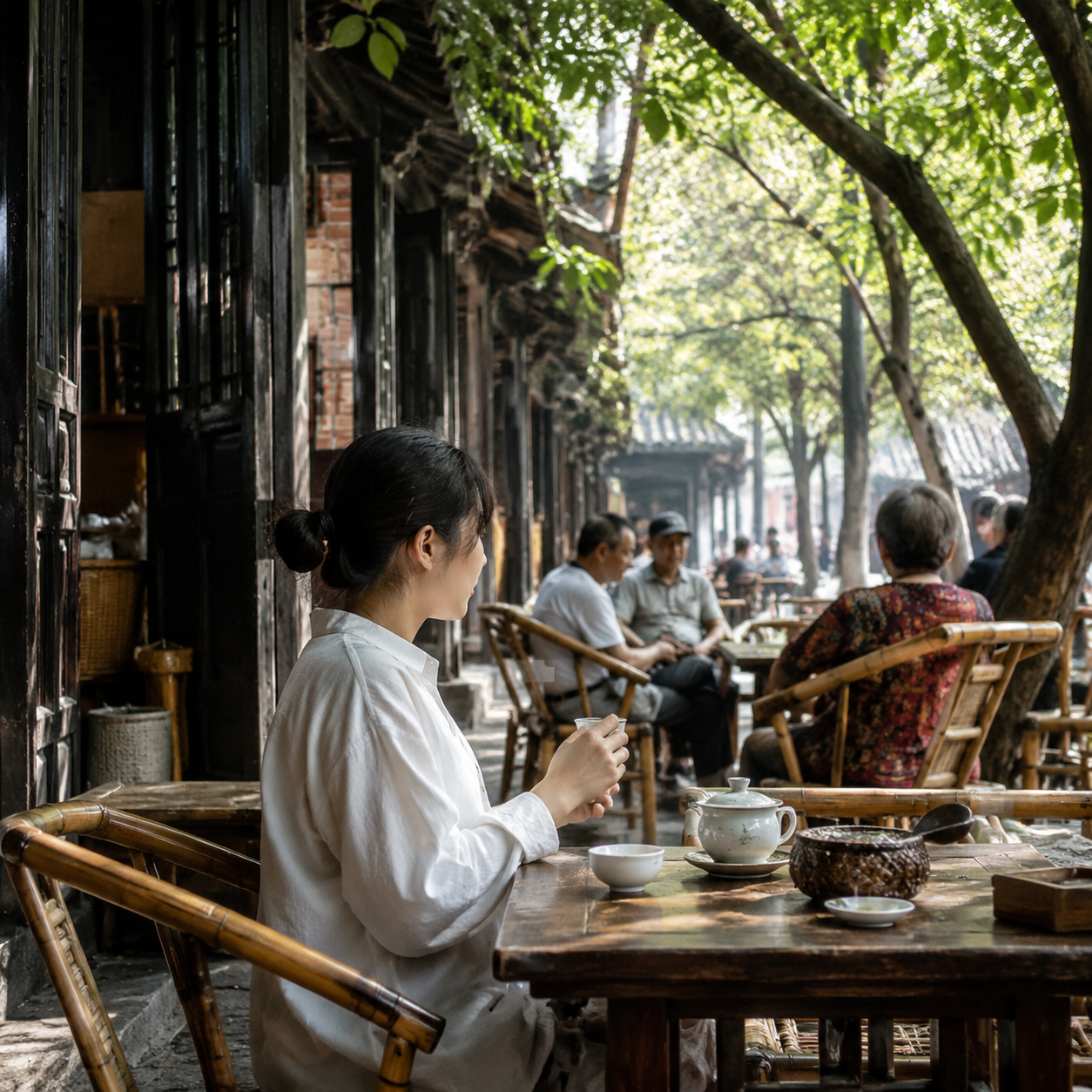
The teahouse was not elegant in a polished way. Its sign was a little old, the edges of the wooden tables had been shined by elbows, and the wall held a menu beside several faded notices. Two trees stood in the courtyard, their leaves sifting sunlight into fragments that fell on teacups, sunflower-seed shells, and shoulders. A server moved between tables with a long-spouted copper kettle; when the spout tilted, hot water landed precisely in the bowl, a daily repetition that still looked graceful. At the next table, elderly men were playing chess. Whenever a piece landed, people nearby leaned in naturally, then drifted back into their own quiet. No one asked me to understand anything at once. The teahouse simply offered me a chair and a stretch of time.
刚坐下的前半小时,我其实不太会待着。手机拿起来又放下,地图打开又关掉,脑子里不断计算如果现在离开还能赶上哪一个景点。盖碗茶的第一口有点烫,茶香不急着冒出来,先是热气贴着脸,然后才有清苦的味道留在舌根。对面的阿姨剥花生剥得很稳,一边剥一边和朋友聊家里的猫;左边的年轻人带着电脑,却半天没有敲键盘,只是看树影从屏幕上移过去。我慢慢意识到,在这里坐着不是“什么都没做”,而是在学习一种我不熟悉的速度。
For the first half hour, I did not really know how to stay. I picked up my phone and put it down, opened the map and closed it, constantly calculating which attraction I could still reach if I left immediately. The first sip of gaiwan tea was a little too hot. The fragrance did not rush out; first came steam against my face, then a clean bitterness lingering at the back of the tongue. Across from me, a woman shelled peanuts with steady hands while talking to a friend about her cat. To my left, a young man had brought a laptop but did not type for a long time; he only watched tree shadows move across the screen. Gradually I realized that sitting here was not “doing nothing.” It was learning a speed I did not yet know.
成都的茶馆有一种特别的包容性。一个人坐着不会显得孤单,两个人沉默也不会尴尬,很多人围在一起说话也不显得吵。声音像被茶水泡软了:麻将声、棋声、聊天声、街上的车声,全都在同一个温度里起伏。有人把杯盖轻轻掀开,拨开浮叶;有人把报纸折成四分之一大小,贴近眼前看;有人叫服务员续水,语气像叫一个熟人。对游客来说,城市常常是由需要辨认的符号组成的;可是在这个茶馆里,成都先不是符号,而是一种可以被旁听的日常。
Chengdu's teahouses have a special kind of tolerance. A person sitting alone does not look lonely. Two people sharing silence do not seem awkward. A group talking together does not necessarily feel noisy. The sounds seem softened by tea: mahjong tiles, chess pieces, conversation, and traffic from the street rise and fall at the same temperature. Someone lifts a lid slightly to push aside floating leaves. Someone folds a newspaper into a quarter of its size and brings it close to his eyes. Someone calls for more hot water in the tone used for an acquaintance. For travelers, a city often becomes a collection of symbols to identify. In this teahouse, Chengdu was not first a symbol, but an everyday life that could be overheard.
我原本打算下午去的博物馆,或许能让我更系统地理解成都;老街会给我适合拍照的门面;公园的夜景大概也不会差。但茶馆给我的东西更缓慢,也更不容易被替代。它让我看见本地人如何安排一个普通下午:不是把时间填满,而是给时间留出缝隙。两位老人为了一步棋争了十分钟,最后笑着推翻重来;一个父亲带孩子来写作业,孩子写三行字就抬头看一次邻桌打牌;一位穿西装的男人接完电话,重新坐下时长长呼了一口气。每个人似乎都知道外面的事情很多,却也知道此刻可以先喝一口茶。
The museum I had planned to visit might have given me a more systematic understanding of Chengdu. The old street would have offered photogenic façades. The park's night view would probably have been pleasant too. But the teahouse gave me something slower and harder to replace. It showed me how local people arranged an ordinary afternoon: not by filling time completely, but by leaving gaps inside it. Two elderly men argued over one chess move for ten minutes, then laughed and reset the board. A father brought his child to do homework; after every three lines of writing, the child looked up to watch cards at the next table. A man in a suit finished a phone call and sighed deeply as he sat down again. Everyone seemed to know there were many things outside to handle, yet also knew that for now they could take a sip of tea first.
茶续到第三次水时,我开始不再频繁看时间。茶味淡了一点,反而更适合慢慢喝。桌上的瓜子壳堆成小山,服务员路过时顺手扫进簸箕,动作干净利落。阳光从院子另一边斜过来,照到墙上的旧照片:有人在茶馆门口合影,有人端着茶杯笑,照片里的衣服样式已经过时,但坐姿和表情与眼前的人很像。那一瞬间,我觉得这间茶馆像一条细细的线,把许多普通下午串在一起。它不靠纪念碑式的庄重,而靠重复、熟悉和可停顿的生活维持自己的重量。
By the third refill, I stopped checking the time so often. The tea had become lighter, which made it better for slow drinking. Sunflower-seed shells formed a small hill on the table, and when a server passed, she swept them neatly into a dustpan. Sunlight slanted from the other side of the courtyard and touched old photographs on the wall: people posing at the teahouse entrance, people smiling with cups in hand. The clothing in the photos was outdated, but the postures and expressions resembled the people before me. For a moment, the teahouse felt like a thin thread stringing together many ordinary afternoons. It did not rely on monumental solemnity; it carried weight through repetition, familiarity, and a life that allowed pauses.
坐久了以后,我也开始被茶馆里的小规则接住。杯盖斜放,表示还要喝;水壶靠近时,把身体稍微让开;别人看棋时不要插太多话;如果椅子挡了路,往里收一点。没有人正式教我,可是这些规则在眼前一遍遍发生,我自然就学会了一点。旅行中最让人开心的时刻之一,就是你不再只是看一个地方,而是短暂地参与了它的节奏。那天下午,我没有成为成都人,当然也不可能凭一杯茶就懂得这座城市,但我确实从旁观者的位置往里挪了一小步。
After sitting long enough, I began to be held by the teahouse's small rules. A tilted lid meant the tea was not finished. When the kettle approached, you moved your body slightly aside. When others watched a chess game, you did not offer too many opinions. If a chair blocked the path, you pulled it inward. No one formally taught me, but these rules happened again and again before my eyes, and I learned a little by watching. One of the happiest moments in travel is when you stop merely looking at a place and briefly join its rhythm. That afternoon, I did not become a Chengdu local, and of course no one understands a city through one cup of tea. But I did move a small step inward from the position of an observer.
傍晚前,茶馆里换了一批人。上班族下班路过,坐下喝一杯再回家;几个游客进来,小声讨论点什么茶;老人们的棋局还没结束,只是围观的人变了。街上的光变成橘色,树叶影子拉长,服务员把几张空桌擦干净,又把椅子摆正。我忽然想起下午没去成的三个景点,心里没有遗憾。不是因为它们不值得去,而是因为我终于承认,认识一座城市并不总要靠完成清单。有时候,你需要把一下午交给一个地方,让它用不显眼的方式慢慢告诉你它是谁。
Before evening, the teahouse changed its crowd. Office workers stopped by after work for a cup before going home. A few tourists came in and quietly discussed what tea to order. The elderly men's chess game had not ended, though the onlookers had changed. The street light turned orange, tree shadows grew longer, and the server wiped several empty tables before straightening the chairs. I suddenly remembered the three attractions I had missed, and I felt no regret. Not because they were unworthy, but because I finally admitted that knowing a city does not always require completing a list. Sometimes you need to give an afternoon to one place and let it tell you, in unobvious ways, who it is.
离开时,我把茶钱压在小碟旁,站起来才发现自己坐得太久,腿有点发麻。门口的街道已经进入晚高峰,车流和人声重新变得密集,但我心里反而安静。那间茶馆没有给我一个可以炫耀的故事,没有惊险的转折,也没有必须推荐给所有人的招牌项目。它给我的只是一个下午:热水一遍遍注入茶碗,树影从桌面移到地上,陌生人的谈话在身边起落。可正是这种不戏剧化的停留,让成都从地图上的目的地变成了一个有呼吸、有耐心、有余地的地方。
When I left, I placed the tea money beside the small dish and stood up, only then realizing that my legs were slightly numb from sitting too long. The street outside had entered the evening rush, with traffic and voices growing dense again, yet my mind felt quiet. The teahouse had not given me a story to boast about, no dramatic turn, and no signature item that had to be recommended to everyone. It had given me only an afternoon: hot water poured into the bowl again and again, tree shadows moving from tabletop to ground, strangers' conversations rising and falling nearby. But this undramatic stay was exactly what turned Chengdu from a destination on a map into a place with breath, patience, and room.
如果再去成都,我当然还会去博物馆、逛街巷、看夜景。那些地方构成城市明亮的轮廓,值得花时间走近。只是我会先给茶馆留出一段不被安排的下午,不把它当作歇脚点,也不把它当作民俗表演,而是把它当成理解成都的一种入口。点一杯茶,坐在树下,看人来人往,允许自己不立刻总结。很多旅行记忆会随着照片一起变淡,但那天下午的茶水、竹椅、棋声和慢下来的呼吸,反而在我离开后越来越清楚。对我来说,成都最先留下的,不是被抵达的景点,而是一个被好好坐过的下午。
If I return to Chengdu, I will certainly still visit museums, wander through lanes, and look for night views. Those places form the city's bright outline and deserve time. But I will first leave an unscheduled afternoon for a teahouse, not treating it as a rest stop or a folk performance, but as an entrance to understanding Chengdu. Order a cup of tea, sit under a tree, watch people come and go, and allow yourself not to summarize too quickly. Many travel memories fade along with their photographs, but the tea water, bamboo chair, chess sounds, and slowed breathing of that afternoon have become clearer after I left. For me, what Chengdu first preserved was not an attraction reached, but an afternoon properly sat through.
- 第一次去中国,你可能准备错了 | First Trip to China: You're Probably Preparing for the Wrong Things
- 木偶戏后台的一晚:我第一次知道“线”也能有性格 | One Night Behind a Puppet Theatre: The First Time I Learned That Strings Can Have Personality
- 在中国看病 | How to See a Doctor in China as a Foreigner
- 七月去青岛,我才真正学会用「反方向」看海边城市 | I Only Understood Qingdao in July After Learning to Use a Seaside City Backwards
- 那本被果汁弄湿的拼音本,让本人第一次学会声调不是唱歌,而是方向 | A Pinyin Notebook Spilled with Juice Taught Me That Tones Are Not Singing but Direction
- 在中国打车这件事,没你想的那么难 | Ride-Hailing in China: Easier Than You Think
- 开元路那盏旧灯亮起来时,我才走进厦门的夜里 | I Entered Xiamen’s Night When That Old Lamp Lit Up on Kaiyuan Road
- 北京最怕第一次来的人一上来就把所有重量景点挤在同一天 | Beijing Is Hardest on First-Time Visitors When They Pack All the Heaviest Sights into One Day
- 在泉州老城听见海风的回声 | Hearing the Sea Wind in Quanzhou's Old Town
- 我在中国学会外卖自取礼貌,不是学会说哪句话,而是先别挡住别人的流程 | Learning Takeout Pickup Etiquette in China Was Not About Memorizing a Phrase, but About Not Blocking Other People’s Flow First
Comments (0)