
菜市场早餐和街边小吃的点单经验 | What I Learned Ordering Breakfast and Street Snacks Beside a Chinese Wet Market
菜市场早餐和街边小吃的点单经验 | What I Learned Ordering Breakfast and Street Snacks Beside a Chinese Wet Market
我第一次认真在菜市场旁边吃早餐,不是为了寻找网红店,而是想看看本地人的早晨怎样运转。市场门口的摊位很密:包子蒸汽往外冒,卖豆浆的人一边封杯一边收钱,煎饼锅上已经摊开面糊。站在这样的地方,点单不是一句“我要这个”就结束,它包括看队伍、听问题、确认价格、选择口味、拿餐具,也包括别挡住后面的人。
The first time I paid close attention to breakfast beside a Chinese wet market, I was not hunting for a famous shop. I wanted to see how local mornings worked. Stalls crowded the entrance: steam rose from buns, soy milk was sealed while payments were collected, and jianbing batter was already spreading on hot pans. In that setting, ordering is not just saying, “I want this.” It means reading the line, hearing the questions, confirming the price, choosing flavors, finding tableware, and not blocking the next customer.
我的第一条经验是先站到旁边观察。很多摊位看起来没有队伍,其实有两条线:一条负责点单付款,一条负责等餐取餐。不要直接挤到蒸笼前,也不要站在收款码正前方研究菜单。我会看老板把食物递给谁、向谁收钱、谁已经拿着小票或号码牌。半分钟的观察,常常能避免一次尴尬的插队。
My first lesson is to stand aside and observe. Many stalls look unorganized, but there may be two lines: one for ordering and paying, another for waiting and pickup. Do not move straight to the steam baskets, and do not stand in front of the payment code while studying the menu. I watch who receives food, who pays, and who already has a receipt or number. Half a minute of observation can prevent an awkward cut-in.
点包子、烧卖、馒头这类蒸食时,句子越短越好。早高峰里,老板没时间听长问题。我通常说:“肉包两个,豆浆一杯,带走。”如果看不懂馅料,就指着牌子问“这个什么馅?”听到“菜肉”“豆沙”“香菇青菜”后再报数量。想确认价格,可以直接问“这些一共多少?”老板报完价再付款,心里也更稳。
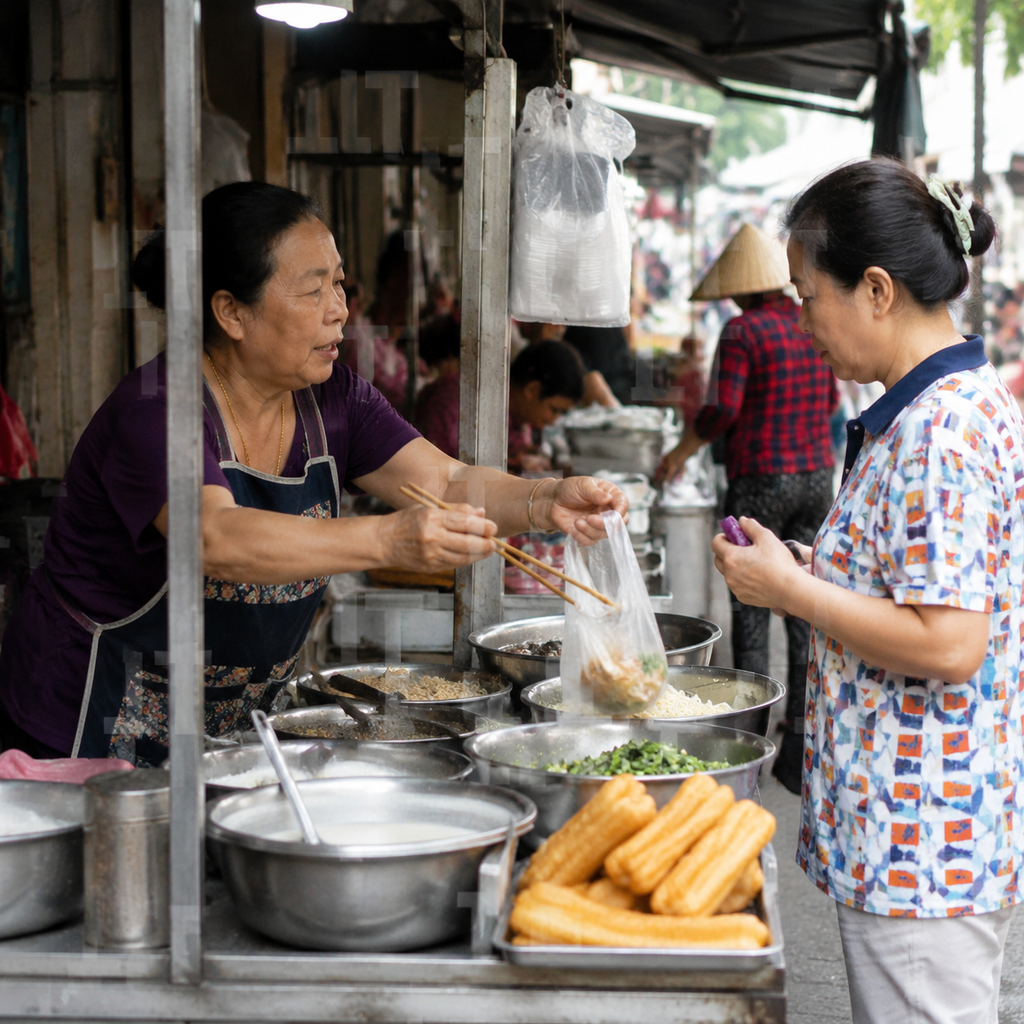
For steamed foods such as buns, shumai, and mantou, shorter sentences work better. During the rush, vendors do not have time for long questions. I usually say, “Two pork buns, one soy milk, takeaway.” If I cannot read the filling, I point to the sign and ask what it is. After hearing vegetable-pork, red bean, or mushroom greens, I give the quantity. To confirm the price, I ask, “How much altogether?” Paying after hearing the total makes the exchange clearer.
煎饼果子的点单更像快速选择题。老板可能连续问:要薄脆吗,加不加肠,辣不辣,葱和香菜要不要。第一次我每个问题都慢半拍,后来就提前准备答案:“要薄脆,不加肠,微辣,葱要,香菜不要。”如果不会完整表达,记住几个词也够用:不辣、少辣、微辣、不要香菜、加蛋、打包。
Ordering jianbing feels like a fast checklist. The vendor may ask whether you want crispy cracker, sausage, chili, scallions, and cilantro. At first I answered every question late. Later I prepared the whole response: “Crispy cracker yes, no sausage, lightly spicy, scallions yes, no cilantro.” If you cannot say a full sentence, a few words still help: not spicy, less spicy, lightly spicy, no cilantro, add egg, takeaway.
有汤的早餐,比如馄饨、米粉、小面,要先看菜单结构。通常先选主食,再选大小,最后选辣度和加料。比较清楚的说法是:“牛肉粉,小碗,少辣,加煎蛋。”加蛋、加肉、加豆皮很多时候另收费,所以我会问“加蛋一共多少?”这样既确认价格,也确认老板听懂了加料。
For soup breakfasts such as wontons, rice noodles, or small noodles, read the menu structure first. Usually you choose the dish, then the size, then spice level and extras. A clear order is: “Beef rice noodles, small bowl, less spicy, add a fried egg.” Eggs, meat, or tofu skin often cost extra, so I ask, “How much with the egg?” That confirms both the price and the order.
口味不要逞强。很多地方的“微辣”对外地人已经很明显,“正常甜”也可能偏甜。第一次在陌生摊位,我会保守一点:少辣、无糖、少盐、汤少一点。不要把“不要辣”和“少辣”混在一起,前者是不放,后者是放一点。摊主每天听很多要求,清楚说出口比吃到不合适再后悔好。
Do not be heroic about taste. In some places, “lightly spicy” is already strong for outsiders, and normal sweetness can be quite sweet. At a new stall, I order conservatively: less chili, unsweetened, less salt, or less soup. Do not confuse “no chili” with “less chili”; the first means none, the second means a little. Vendors hear taste requests all day. Saying it clearly is better than regretting the meal later.
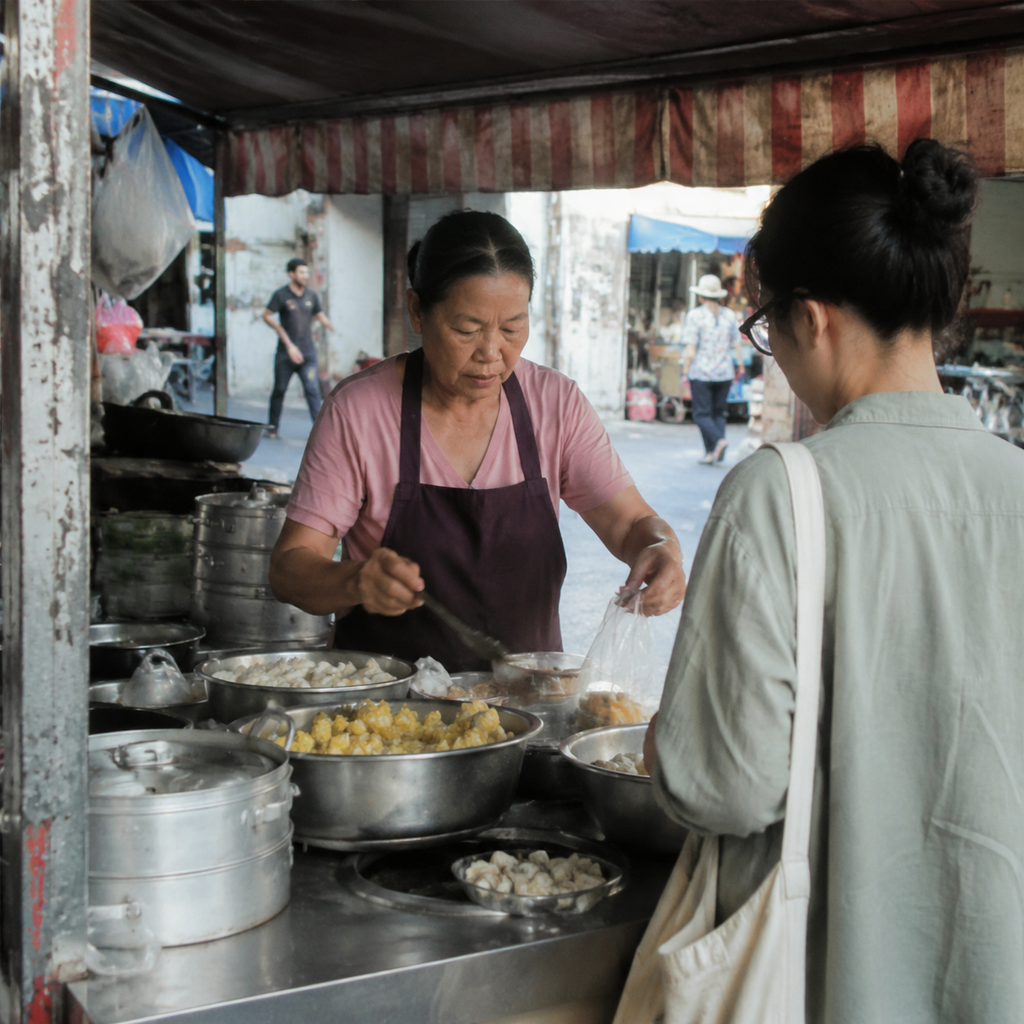
称重小吃最需要提前问价。烤红薯、糖炒栗子、卤味、炸串都可能按斤、按串或按份算。我会问“多少钱一斤?”或者“这块大概多少钱?”如果只想尝尝,就说“十块钱的”或“够一个人吃”。“来一点”太模糊,老板理解的一点,可能比你的胃口大很多。
Weighed snacks require price questions before purchase. Roasted sweet potatoes, fried chestnuts, braised snacks, and skewers may be priced by weight, stick, or portion. I ask, “How much per jin?” or “About how much is this piece?” If I only want to taste it, I say “ten yuan’s worth” or “enough for one person.” “Just a little” is too vague; the vendor’s little may be far larger than your appetite.
买炸串时,先看夹子是不是给客人用的。有的摊位自己夹,有的摊主帮你拿,别直接用手碰食材。交给老板后,他可能问酱料和辣椒。我常说:“甜酱一点,辣椒少点,孜然要。”不确定时,可以指着别人那份问“跟这个一样吗?”或者说“跟他一样,但少辣”。
At fried skewer stalls, first check whether customers are supposed to use the tongs. Some stalls let you choose; others have the vendor pick the food. Do not touch ingredients with your hands. After handing over the skewers, the vendor may ask about sauce and chili. I often say, “A little sweet sauce, less chili, cumin yes.” If unsure, point to another order and ask for the same, but less spicy.
餐具也有规则。小店不一定每桌都有筷子和纸巾,筷子可能在消毒柜里,勺子可能放在取餐口,纸巾可能要单独买。拿到汤粉后,我会先找筷筒、勺盒、醋和辣椒油。一次性筷子拆了就用,不要拆开又换;用过的勺子也不要放回公共桶。吃完后,很多店需要自己把碗放到回收处。
Tableware has its own rules. Small shops may not place chopsticks or tissues on every table. Chopsticks may be in a sterilizing cabinet, spoons near the pickup area, and tissues sold separately. After receiving noodles, I look for chopsticks, spoons, vinegar, and chili oil. Once you open disposable chopsticks, use them; do not open one pair and take another. Do not return a used spoon to a public container. Many shops expect customers to return bowls after eating.
排队礼貌不只是说谢谢,而是让流程继续。背大包时侧身站,拍菜单时退到旁边,扫码后先让开再确认支付成功。如果听不懂老板的问题,不要沉默太久,可以说“麻烦再说一遍”,也可以重复关键词确认:“是加肉吗?”短句在早高峰最有效,因为摊主和后面的人都在等一个明确答案。
Courtesy in line is not only saying thank you; it is keeping the flow moving. Stand sideways with a large bag, step aside to photograph the menu, and move away after scanning before checking payment success. If you do not understand a question, do not stay silent too long. Say, “Please say it again,” or repeat the keyword: “Do you mean add meat?” Short sentences work best in the morning rush because everyone needs a clear answer.
我有一次买烧饼,老板问咸的要不要肉,我只听到“肉”字,以为肉味卖完了,就摇头,结果拿到素咸烧饼。它不难吃,但不是我想点的。那次以后,我遇到没听清的问题都会复述:“加肉吗?”“这是甜的吗?”“一共十八吗?”复述不是麻烦别人,而是在付款和制作前把误会拦住。
Once I bought flatbread and the vendor asked whether I wanted meat in the savory one. I only caught the word “meat,” thought the meat version was sold out, and shook my head. I received a vegetarian savory bread. It tasted fine, but it was not what I intended. Since then, when I miss a question, I repeat it: “Add meat?” “Is this sweet?” “Altogether eighteen?” Repeating is not bothering people; it stops mistakes before cooking and payment.
如果和同伴一起买早餐,最好排队时就统一口味。不要轮到自己才回头问每个人要什么。可以提前问好谁不吃辣、谁要热豆浆、谁要加蛋,然后一次说完:“两碗小面,一碗不辣一碗微辣;豆浆三杯,两杯无糖一杯甜。”这样老板容易记,后面的人也不会等得烦。
If you are ordering with companions, agree on tastes while waiting. Do not reach the front and then turn around to ask everyone what they want. Check who avoids chili, who wants hot soy milk, and who wants an egg, then say everything at once: “Two bowls of noodles, one not spicy and one lightly spicy; three soy milks, two unsweetened and one sweet.” It is easier for the vendor and kinder to the line.
菜市场旁边的早餐好吃与否,当然看运气;但能不能顺利点到,更多靠观察和确认。我的小清单是:先看队伍,决定堂食或打包,问清口味,称重先问价,加料问总价,餐具自己找,付款后让路,听不懂就复述关键词。这样做不一定点到最惊艳的一餐,却很容易得到一份价格清楚、口味合适、吃得安心的早晨。
Whether breakfast beside a wet market tastes amazing depends partly on luck, but ordering it smoothly depends more on observation and confirmation. My checklist is simple: read the line, decide dine-in or takeaway, state the flavor, ask prices before weighed purchases, confirm the total with extras, find tableware yourself, step aside after payment, and repeat keywords when confused. These habits may not guarantee the most spectacular meal, but they often bring a clear, suitable, comfortable morning.

- 我在西安学会先看城墙边的风,再决定傍晚走多远 | In Xi’an I Learned to Feel the Wind by the City Wall Before Deciding How Far to Walk at Dusk
- 中国园林美学:苏州拙政园到北京颐和园 | Chinese Garden Art: Suzhou to Beijing's Summer Palace
- 广州最厉害的地方,是你很难说清自己到底是在逛街,还是已经坐进了一顿饭里 | Guangzhou’s Gift Is That You Can Hardly Tell Whether You Are Walking the City or Already Sitting Inside a Meal
- 盐业历史博物馆的楼梯声,把自贡的地下记忆带到了地面 | The Sound of Wooden Stairs Brought Zigong’s Underground Memory to the Surface
- 海南环岛自驾7天:三亚万宁博鳌 | 7-Day Hainan Island Drive: Sanya, Wanning & Boao
- 中国凉菜:一桌好饭从凉菜开始 | Chinese Cold Dishes: Every Great Meal Starts Here
- 上海外滩与弄堂文化探索 | Shanghai: The Bund & Longtang Culture
- 在成都点微辣,我才知道辣度不是翻译能完全解决的 | Ordering Mild Spice in Chengdu Taught Me Translation Cannot Fully Explain Heat
- 我们在西塘的雨夜里分着一把伞走散又重逢,那一晚比酒吧更像青春 | Sharing One Umbrella in Xitang Rain, We Got Lost and Found Again in a Night That Felt More Like Youth Than Any Bar
- 从零下20度到四季如春:中国南北气候差有多离谱 | Minus 20 to Eternal Spring — China's North-South Climate Gap Is Wild
Comments (0)