
Long Time No See——那些偷偷混进英语的中式表达 | Chinese Expressions That Snuck Into English When Nobody Was Looking
Long Time No See——那些偷偷混进英语的中式表达 | Chinese Expressions That Snuck Into English When Nobody Was Looking
2018年,"add oil"被收录进了《牛津英语词典》。我在办公室看到这条新闻时,差点把咖啡喷出来——因为我当时正好在跟一个英国同事解释"add oil是加油的意思,不是让你去加汽油"。他那天早上还在困惑为什么中国同事发消息说"add oil for your presentation"。
In 2018, "add oil" was added to the Oxford English Dictionary. When I saw the news at the office, I nearly spat out my coffee — because at that exact moment I was explaining to a British colleague that "add oil means encouragement, not a trip to the petrol station." He'd been confused all morning about why a Chinese coworker had messaged "add oil for your presentation."
这件事让我开始研究一个很有意思的语言现象:有多少中式英语(Chinglish)实际上已经悄悄地、合法地、进入了英语世界?答案比大多数人想象的要多得多。
This got me investigating a fascinating linguistic phenomenon: how many Chinglish expressions have actually, quietly, legitimately, entered the English-speaking world? The answer is far more than most people imagine.
"Long time no see"——全世界最成功的语法错误
"Long time no see"可能是中式英语最伟大的胜利。按英语语法,这句话应该是"It has been a long time since we last met"或者至少"I haven't seen you for a long time"。但"long time no see"没有主语、没有谓语、没有时态——纯粹是中文"好久不见"的逐字翻译。
"Long time no see" is probably Chinglish's greatest triumph. Grammatically, it should be "It has been a long time since we last met" or at least "I haven't seen you for a long time." But "long time no see" has no subject, no predicate, no tense — it's a word-for-word calque of the Chinese 好久不见 (hǎojiǔ bújiàn).
这个表达最早的书面记录出现在1900年左右的美国西部,来自华人移民的口语。一百多年后的今天,每个英语母语者都在用这句话——大多数人甚至不知道它来自中文。从"错误"到"标准用法"只花了一代人的时间。语言就是这样:用的人多了,错的也变成对的了。
The earliest written record of this expression dates to around 1900 in the American West, originating from Chinese immigrant speech. Over a century later, every native English speaker uses this phrase — and most have no idea it comes from Chinese. It took just one generation to go from "error" to "standard usage." That's how language works: when enough people use it, wrong becomes right.
加油!——从运动场喊到了牛津词典
回到"add oil"的故事。这个词的英语化过程跟"long time no see"完全不同。"Long time no see"是自然渗透了一百年;"add oil"是被一件具体的事推上去的——2018年一位香港学者向牛津词典提交了收录申请,附上大量在国际社交媒体上的使用证据。词典编辑审核后认为,这个表达已经在英语语境中被广泛理解和使用,尤其是在亚洲英语圈。
Back to the "add oil" story. Its path into English was entirely different from "long time no see." The latter naturally permeated over a century; "add oil" was pushed in by a specific event — in 2018, a Hong Kong scholar submitted an inclusion application to the Oxford English Dictionary, backed by extensive evidence of usage on international social media. The editors determined that the expression was already widely understood and used in English-language contexts, particularly in Asian English circles.
有意思的是,"add oil"的字面意思在英语里是完全不通的。Oil在英语语境里联想到的是石油、机油、烹饪油——没有人会把"加油"跟"鼓励"联系在一起。但这恰恰是它的魅力:它带着一种不可翻译的文化质感进入了英语。就像日语的"umami(鲜味)"进入英语后,没有人试图把它翻译成"delicious taste"——因为翻译会丢失那种精确性。
Interestingly, "add oil" makes zero literal sense in English. Oil in English evokes petroleum, motor oil, cooking oil — no one would connect "adding oil" with "encouragement." But that's precisely its charm: it entered English carrying an untranslatable cultural texture. Much like when Japanese "umami" entered English, nobody tried translating it to "delicious taste" — because translation would destroy that precision.
那些"丢人的"中式英语,其实有些根本不丢人
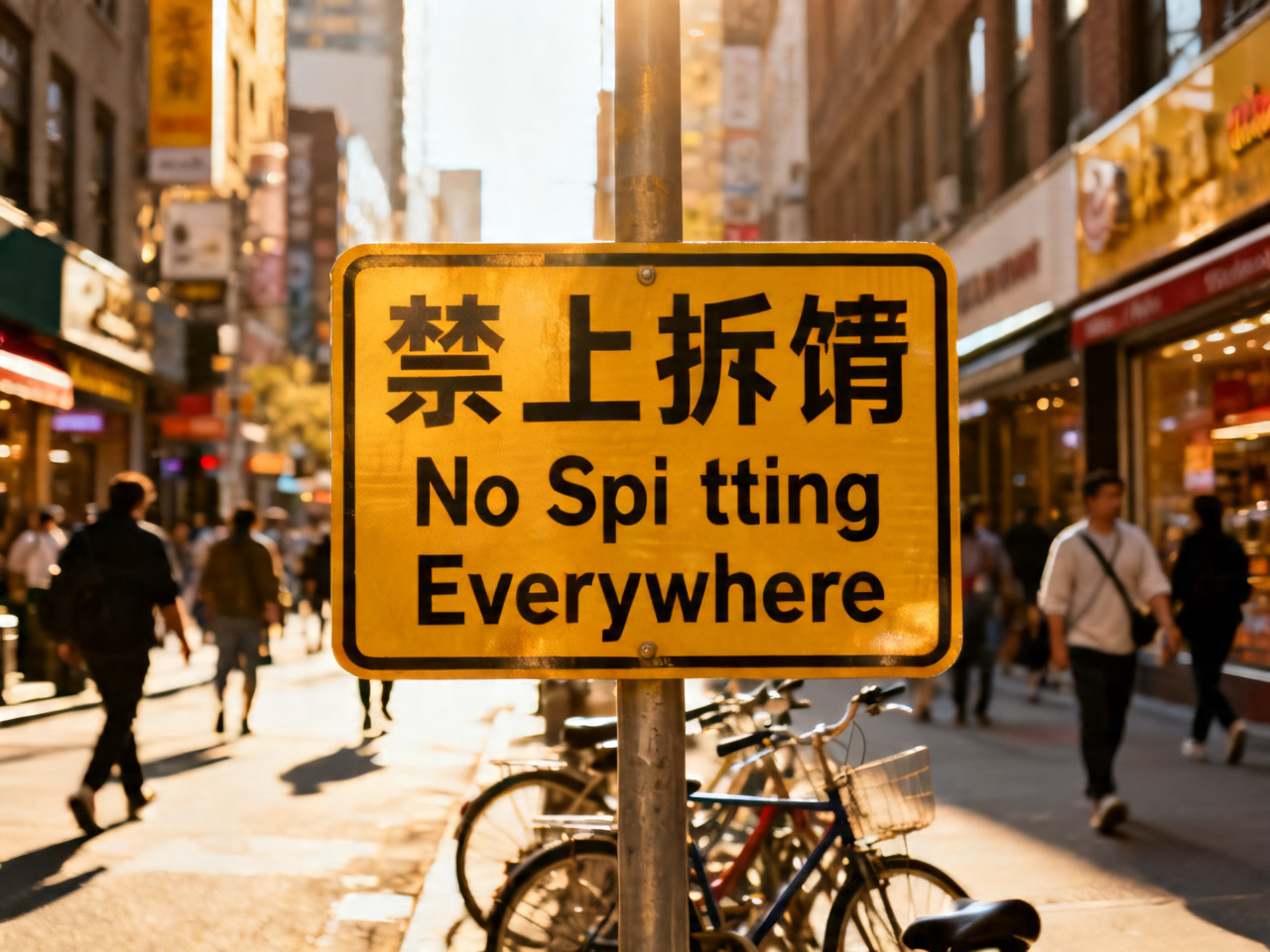
中国互联网上有个经典段子合集叫"Chinglish大赏",收集各种公共场所的翻译事故:"小心滑倒"翻成"Slip Carefully"、"一次性用品"翻成"A Time Sex Thing"、"干货区"翻成"Fuck Goods Area"。这些确实是翻译错误,但它们之所以能让人笑,恰恰说明了中英文之间存在着巨大的概念鸿沟——而不仅仅是"中国人英语差"。
There's a classic collection on the Chinese internet called the "Chinglish Hall of Fame," documenting translation disasters in public spaces: "小心滑倒 (Caution: Slippery)" rendered as "Slip Carefully," "一次性用品 (Disposable Items)" as "A Time Sex Thing," "干货区 (Dried Goods Section)" as "Fuck Goods Area." These are genuine translation errors, but the reason they're funny reveals the enormous conceptual chasm between Chinese and English — not merely that "Chinese people are bad at English."
比如"people mountain people sea(人山人海)",这个直译在语法上是错误的,但它的表达力极强——任何英语母语者第一次听到都能立刻理解它的意思,甚至会觉得这个说法比"extremely crowded"更生动。我在Reddit上见过老外用"people mountain people sea"来形容音乐节的人群,评论区没有一个人纠正他的语法。
Take "people mountain people sea" (人山人海). The calque is grammatically wrong, but its expressive power is immense — any native English speaker immediately grasps its meaning upon first hearing, and might even find it more vivid than "extremely crowded." I've seen Westerners on Reddit use "people mountain people sea" to describe festival crowds, with not a single grammar correction in the comments.

不止是搞笑:中式英语背后的语言学
语言学里有个概念叫语言接触(language contact)——两种语言的使用者长期共存时,语言之间会互相渗透。中式英语不是一个bug,而是中英文接触的自然产物。
There's a concept in linguistics called language contact — when speakers of two languages coexist over time, the languages inevitably permeate each other. Chinglish isn't a bug; it's the natural product of Chinese-English contact.
英语本身就是一种"混血语言"——日耳曼语底子上堆了拉丁语、法语、古北欧语、印度语的词汇。"Typhoon"来自粤语"大风","ketchup"来自闽南语"鲑汁","tea"来自闽南语"tê"。中文对英语的影响不是新事物,只是大多数人没注意到。
English itself is a "mixed-blood language" — Germanic foundations layered with Latin, French, Old Norse, and Hindi vocabulary. "Typhoon" comes from Cantonese "大风 (daai fung)," "ketchup" from Hokkien "鲑汁 (kê-tsiap)," "tea" from Hokkien "tê." Chinese influence on English isn't new — most people just haven't noticed.
随着中国的全球影响力扩大,可以预见更多中文表达会进入英语。"Guanxi(关系)"已经是商业英语的常用词;"wok(锅)"、"dim sum(点心)"、"kung fu(功夫)"早就是英语词汇。下一个会是什么?我赌"内卷(involution)"——虽然involution是个现成的英文词,但它在中文语境里的特殊含义(恶性竞争、无效努力)正在通过社交媒体向英语世界扩散。
As China's global influence expands, more Chinese expressions will predictably enter English. "Guanxi" is already common in business English; "wok," "dim sum," and "kung fu" have long been English words. What's next? My bet is on "neijuan (involution)" — although involution already exists in English, its special Chinese meaning (destructive competition, futile effort) is spreading to the English-speaking world via social media.
语言从来不是一堵墙,而是一条河。它永远在流动,永远在接纳新的支流。下次你说"Long time no see"的时候,记得你正在说一句一百多年前从某个中国移民嘴里蹦出来的"错误"英语——而今天,全世界都在用它。
Language was never a wall; it's always been a river. It's constantly flowing, constantly accepting new tributaries. Next time you say "Long time no see," remember you're speaking a piece of "incorrect" English that tumbled out of a Chinese immigrant's mouth over a century ago — and today, the whole world uses it.
- 签证与入境要求 | Visa and Entry Requirements
- 苏州运河边的一碗早面 | A Morning Bowl Beside a Suzhou Canal
- 第一次进广州,最先扑到脸上的往往不是景点感,而是早餐摊那股热气 | When You First Enter Guangzhou, What Hits Your Face Is Often Not Landmark Energy but the Heat from Breakfast Stalls
- 苏州夜里最会骗人的,不是方向,而是那种“看着很轻松”的安静 | What Misleads Most at Night in Suzhou Is Not Direction but the Quiet Ease It Seems to Promise
- 我在中国县城汽车站学会先看人群走向,再找检票口 | I Learned at a Chinese County Bus Station to Watch Where People Flow Before Looking for the Gate
- 苹果园门口那双沾泥的鞋,让我走进昭通的劳动节奏 | Muddy Shoes at an Apple Orchard Led Me into Zhaotong’s Work Rhythm
- 在地铁口停好共享单车那一刻,我才明白锁车并不等于结束 | The Moment I Properly Parked a Shared Bike Outside the Metro, I Understood That Locking It Is Not the End
- 罗平没有油菜花的那天,我还是走上了田野公路 | I Took Luoping’s Country Road Even Without the Canola Blooms
- 中国旅游语言障碍解决方案 | Overcoming Language Barriers in China
- 五月在南浔陪孩子看雨落到河面,我们全家第一次接受“今天少去一个景点也没关系” | Watching Rain Touch the Canal in Nanxun, Our Family Finally Accepted That One Less Stop Could Still Mean a Full Day
Comments (0)