
去承德看山庄和寺庙之前,我先把手机训练成一天的领路人 | Before Seeing Chengde’s Mountain Resort and Temples, I Trained My Phone to Lead the Day
在承德出门前,我把手机准备做得更笨也更稳 | Before Going Out in Chengde, I Made My Phone Setup Simpler and Safer
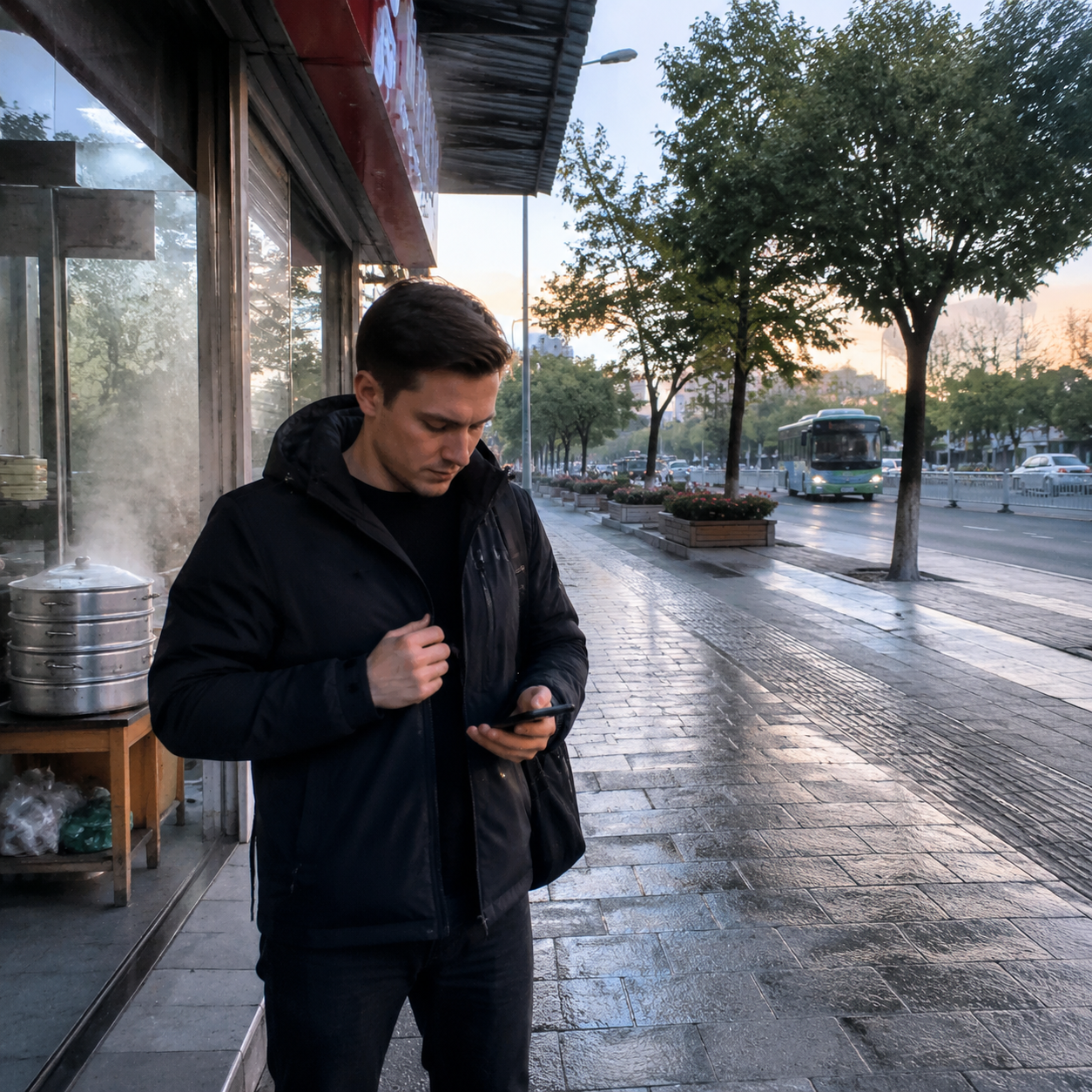
2025年9月的一天早上六点四十,我站在承德一家小旅馆的门口,一只手扣着外套拉链,一只手把手机从内袋里拿出来。天刚亮,街边早餐店已经开始冒热气,蒸饺笼屉叠在门口,远处传来公交车低低的刹车声。我来自匈牙利布达佩斯,前一天坐火车到承德,计划今天先去避暑山庄,再看外八庙里的几处寺庙。旅馆老板昨晚提醒我,承德的景点范围不算小,园林里走路多,寺庙之间还要坐车或打车,早晚温差也明显。于是出门前,我没有急着打开相机,而是站在门口,把手机重新检查了一遍。我希望它少一点花哨,多一点可靠,因为这一天它不只是拍照工具,更是票夹、地图、翻译器、天气站、支付工具和求助入口。
At 6:40 on a morning in September 2025, I stood at the entrance of a small hotel in Chengde, one hand fastening my jacket zipper and the other taking my phone from an inner pocket. Dawn had just arrived. Breakfast shops along the street were already giving off steam, bamboo steamers of dumplings stacked at the door, and the low braking sound of a bus came from the distance. I come from Budapest, Hungary, and had arrived in Chengde by train the previous day. My plan was to visit the Mountain Resort first, then see several temples among the Eight Outer Temples. The hotel owner had reminded me the night before that Chengde’s sights were not small in area, that the garden required a lot of walking, that the temples required rides between them, and that the temperature difference between morning and evening was noticeable. So before leaving, I did not hurry to open the camera. I stood at the doorway and checked my phone again. I wanted it to be less fancy and more dependable, because that day it was not only a camera. It was a ticket pouch, map, translator, weather station, payment tool, and emergency entrance.
我先看的不是社交软件,而是电量。手机昨晚充到百分之百后,我把充电器拔掉,早上还有百分之九十七。充电宝放在背包侧袋里,短线缠好,接口朝外,方便排队或坐车时不用把包翻乱。我打开省电模式,关闭自动下载、云端同步和不必要的后台刷新,只保留天气、地图、支付、翻译、电话和票据相册。以前旅行时,我总把手机当作移动办公室,邮件、聊天、新闻提醒和照片同步全都开着。可在承德出门前,我决定让它变笨一点:首页只留下当天真正需要的六个图标,让每次点亮屏幕都有明确目的,而不是被无关消息拉走注意力。
The first thing I checked was not social media but battery. After charging the phone to one hundred percent the night before, I unplugged it, and in the morning it still showed ninety-seven percent. The power bank was in the side pocket of my backpack, with a short cable coiled neatly and the connector facing outward so I would not have to mess up the bag while queuing or riding in a car. I turned on battery saver mode and disabled automatic downloads, cloud sync, and unnecessary background refresh, keeping only weather, maps, payment, translation, phone, and the ticket album. On earlier trips, I had treated my phone like a mobile office, with email, chat, news alerts, and photo sync all running. But before going out in Chengde, I decided to make it a little dumber: only six icons truly needed for the day remained on the home screen, so every time I lit the screen there would be a clear purpose rather than attention pulled away by unrelated messages.
天气是第二项。承德的早晨有一点凉,和我前一天在北京换乘时感到的闷热不一样。天气应用显示上午气温上升不快,中午阳光会强,下午有风,傍晚可能明显降温。我没有只看一个应用,而是把国内天气应用、景区公告和旅馆老板发来的截图放在一起对照。手机里保存了一张当天小时预报的截图,我用标记圈出中午日照强的时段和傍晚降温的时间。这样做不是为了让自己紧张,而是为了在没有网络或不方便打开应用时也知道什么时候该喝水、什么时候该找阴凉、什么时候该把外套拿出来。承德的景色很容易让人忘记身体,可走园林和上台阶都需要身体一直可靠。
Weather was the second item. Chengde’s morning felt a little cool, different from the stuffy heat I had felt while transferring in Beijing the previous day. The weather app showed that the temperature would rise slowly in the morning, that sunlight would be strong at noon, that wind would appear in the afternoon, and that evening could become noticeably cooler. I did not rely on one app alone. I compared a Chinese weather app, scenic-area notices, and a screenshot sent by the hotel owner. I saved an hourly forecast screenshot and marked the period of strong midday sun and the time when evening cooling would begin. The point was not to make myself anxious. The point was to know, even without internet or when it was inconvenient to open an app, when to drink water, when to find shade, and when to take out my jacket. Chengde’s scenery can easily make a person forget the body, but walking through gardens and climbing steps both require the body to remain reliable.
地图准备不能只靠在线定位。避暑山庄里面湖区、平原区、山峦区的路径很多,外八庙又分散在不同方向。出门前,我把承德市区、避暑山庄几个主要入口、博物馆位置、普宁寺、小布达拉宫、普陀宗乘之庙停车点和回旅馆路线都下载成离线地图。下载完以后,我关掉移动网络测试了一次,确认地名、收藏点和步行路线还能显示。我还在离线备忘录里写下当天的保守计划:上午山庄,下午只选两处寺庙,不临时加太远的点;如果下午四点还没离开第二处寺庙,就直接回城吃饭。这个规则看起来死板,却能在疲惫和兴奋同时出现时替我做决定。
Map preparation could not depend only on live positioning. Inside the Mountain Resort, there are many paths through the lake area, plain area, and hill area, while the Eight Outer Temples are scattered in different directions. Before leaving, I downloaded offline maps for Chengde’s urban area, several main entrances of the Mountain Resort, the museum location, Puning Temple, the Little Potala Palace area, the parking point for Putuo Zongcheng Temple, and the route back to the hotel. After the download finished, I turned off mobile data and tested once to confirm that place names, saved points, and walking routes still appeared. I also wrote a conservative plan into an offline note: the Mountain Resort in the morning, only two temples in the afternoon, no last-minute addition of distant stops; if I had not left the second temple by four in the afternoon, I would return to town for dinner. The rule looked rigid, but it could make decisions for me when fatigue and excitement appeared at the same time.
票据和身份信息我没有只放在一个应用里。景区预约二维码、购票记录、护照信息页、旅馆地址、当天要去的入口、几个寺庙的开放时间和可能需要出示的证件信息,我全部截屏,放进一个名为“承德当天”的本机相册。每张截图我都提前放大看过,确认姓名、日期、入口和二维码清楚。为了防止相册在弱网时加载云端内容,我把这些图片设为本机保存,并在飞行模式下打开测试。护照照片没有发到公共聊天群里,只存在加密相册里。这样的准备听起来笨,却能减少在检票口、售票窗口和出租车上临时翻找信息的慌乱。
I did not keep tickets and identity information in only one app. I took screenshots of scenic reservation QR codes, purchase records, the passport information page, the hotel address, the entrance for the day, opening hours of several temples, and document information that might need to be shown, then placed them in a local album named “Chengde Today.” I enlarged each screenshot beforehand to confirm that the name, date, entrance, and QR code were clear. To prevent the gallery from trying to load cloud-only files under weak signal, I made sure the images were stored locally and opened them once in airplane mode. Passport photos were not sent into public chat groups; they stayed only in an encrypted album. This preparation sounded plain, but it reduced the panic of searching for information at ticket gates, service windows, and inside taxis.
支付准备也要保守一点。承德市区移动支付很方便,但在景区入口、停车点、小摊和山庄深处,有时网络会变慢。我确认支付宝和微信支付都能打开,常用银行卡状态正常,也在钱包里放了少量现金,夹在防水袋里。手机里我没有保存完整银行卡照片,只在离线备忘录里写了发卡行客服电话和卡片尾号,便于需要时联系。为了减少误触,我把免密支付额度调低,出门后不再连接陌生免费网络。手机平时放在外套内袋,拍照和付款时才拿出来。承德的古建筑和山水很适合拍照,但在排队、过马路和上车时,我更愿意让手机安静地待在固定位置。
Payment preparation also needed to be conservative. Mobile payment is convenient in Chengde’s urban area, but at scenic entrances, parking points, small stalls, and deeper inside the resort, the network can sometimes slow down. I confirmed that Alipay and WeChat Pay both opened, that my usual bank card was active, and that I had a small amount of cash in my wallet inside a waterproof pouch. I did not store full bank card photos on the phone. Instead, I wrote the bank customer-service number and the last digits of the card into an offline note, in case I needed to contact them. To reduce accidental payment, I lowered the no-password payment limit and decided not to connect to unfamiliar free Wi-Fi after leaving. The phone usually stayed in the inner pocket of my jacket and came out only for photos and payment. Chengde’s ancient buildings and landscapes are very suitable for photography, but while queuing, crossing roads, and boarding vehicles, I preferred the phone to stay quietly in one fixed place.
翻译和语言设置我也提前调整。我的系统语言是英文,但我把常用地图和支付应用里的地区设置确认了一遍,避免在售票或检票页面突然出现我看不懂的提示。翻译应用下载了中文和英文离线包,还提前收藏几句话:请问这个入口能进避暑山庄吗、去普宁寺在哪里坐车、这里能不能打车、最近的游客中心在哪里、我需要帮助但没有受伤。把这些句子放进收藏夹,比现场在风声、人声和车声里临时输入可靠。旅馆老板听我读这些句子,笑着纠正了两个发音,说这样工作人员更容易懂。我把改好的语音也录了一份,存在手机里。
I also adjusted translation and language settings in advance. My system language is English, but I checked the region settings in the map and payment apps to avoid sudden prompts I could not understand on ticket or entry pages. The translation app downloaded offline Chinese and English packs, and I saved several sentences in advance: whether this entrance could be used for the Mountain Resort, where to take a ride to Puning Temple, whether taxis were available here, where the nearest visitor center was, and that I needed help but was not injured. Keeping these sentences in favorites was more reliable than typing them on site amid wind, voices, and traffic. The hotel owner listened to me read the sentences, laughed, and corrected two pronunciations, saying staff would understand more easily that way. I also recorded the corrected audio and saved it on the phone.

联系安排不能只依赖即时消息。我把旅馆电话、景区服务热线、旅行保险电话、一个在北京的朋友号码和匈牙利家人的紧急联系方式都存在本机通讯录里,而不是只放在聊天记录中。我把当天路线发给北京朋友,告诉他如果晚上八点还没有收到我的报平安信息,可以先打电话给旅馆。我还在手机壳背面贴了一张小纸条,写着我的名字、旅馆电话和朋友号码,外面用透明胶封住。这样即使手机没电,别人捡到后也有机会联系到我。手机最怕的不是暂时没有信号,而是所有求助线索都被锁在一块黑屏里。
Contact planning could not rely only on instant messages. I saved the hotel phone number, scenic-area service hotline, travel insurance number, the number of a friend in Beijing, and emergency family contacts in Hungary directly in the phone address book, not only inside chat history. I sent the day’s route to the friend in Beijing and told him that if he had not received my safe-arrival message by eight in the evening, he could call the hotel first. I also attached a small paper label to the back of my phone case with my name, the hotel number, and my friend’s number, sealing it under clear tape. That way, even if the phone ran out of battery, someone who found it would have a chance to contact me. The biggest danger for a phone is not a temporary lack of signal, but when every clue for help is locked inside a black screen.
为了让手机更稳,我让它少说话。通知声音关掉,震动保留;娱乐软件从首页移走;新闻、短视频和邮件都不在后台刷新。相机放在锁屏快捷入口,但我关闭了自动云同步。这样做有两个原因:一个是省电,另一个是减少分心。避暑山庄里有很多临水小路、台阶和树根,寺庙里也有坡道和石阶。如果人的注意力一直被消息提醒拉走,很容易忽略脚下。我不想在看湖面、宫墙和山影的时候不断被手机叫住,也不想在台阶上为了回复一条不紧急的信息停下来。那天手机需要服务行程,不需要指挥我的注意力。
To make the phone more reliable, I made it speak less. Notification sounds were turned off, vibration remained, entertainment apps were removed from the home screen, and news, short videos, and email no longer refreshed in the background. The camera stayed available from the lock screen, but automatic cloud sync was disabled. I did this for two reasons: battery life and attention. Inside the Mountain Resort there are many waterside paths, steps, and tree roots, and the temples also have slopes and stone stairs. If attention is constantly pulled away by message alerts, it becomes easy to miss what is underfoot. I did not want the phone to keep calling me back while I looked at lake surfaces, palace walls, and mountain shadows, and I did not want to stop on steps to answer a non-urgent message. That day, the phone needed to support the journey, not command my attention.
在旅馆门口检查完以后,我走向早餐店。吃小米粥和蒸饺时,我做了最后一次离线测试:打开票据相册,打开离线地图,打开翻译收藏句,打开通讯录里的景区电话。每一项都能在没有移动网络的情况下显示。早餐店老板看见我认真得像检查登山包,笑着说承德不急,园子大,慢慢走。我点头,把手机放回内袋,拉上拉链。她的话提醒我,准备手机不是为了更长时间盯着手机,而是为了把必须依赖手机的时间缩短。真正进了园子,我希望自己更多用眼睛看路、看树、看水,而不是在应用之间来回切换。
After finishing the check at the hotel entrance, I walked toward a breakfast shop. While eating millet porridge and steamed dumplings, I did one final offline test: opening the ticket album, offline map, saved translation sentences, and the scenic-area phone number in contacts. Each item appeared without mobile data. The breakfast shop owner saw me checking as carefully as if inspecting a hiking pack and laughed, saying Chengde was not to be rushed because the garden was large and should be walked slowly. I nodded, put the phone back into my inner pocket, and zipped it closed. Her words reminded me that preparing the phone was not about staring at it longer. It was about shortening the time I had to depend on it. Once inside the garden, I wanted to use my eyes more to look at paths, trees, and water, not switch back and forth between apps.
进避暑山庄时,第一个考验就来了。入口人不少,旅行团旗子、检票提示音和游客说话声混在一起,手机信号从满格掉到两格。我没有急着刷新票务页面,而是直接打开本机相册里的预约截图,再准备好护照信息页。工作人员看了一眼,提醒我当天有一处区域临时维护,建议先走湖区再去平原区。我马上拍下公告牌,又在离线地图上给维护点加了星标。这个动作只花了不到一分钟,却避免了后来听到不同说法时犹豫。手机在这里没有变聪明,只是把清楚的信息留住,不让它被人群和弱网冲散。
The first test came when entering the Mountain Resort. There were quite a few people at the entrance, with tour-group flags, ticket-check sounds, and visitors’ voices mixed together. The phone signal dropped from full bars to two. I did not try to refresh the ticket page. I directly opened the reservation screenshot stored in the local album and prepared the passport information page. A staff member glanced at it and reminded me that one area was under temporary maintenance that day, suggesting I walk through the lake area first and then the plain area. I immediately photographed the notice board and added a star to the maintenance point on the offline map. The action took less than a minute, but it prevented hesitation later if I heard different explanations. The phone did not become smarter there. It simply kept clear information from being scattered by crowds and weak signal.

走进湖区后,我更能体会到“笨一点”的好处。许多游客边走边拍视频,边查哪个角度最像古装剧画面,网络页面时不时转圈。我没有打开社交软件,也没有搜索临时攻略,只看提前保存的路线:从丽正门附近进入,沿湖慢走,看几处主要建筑,再找阴凉处休息。每到一个岔路口,我先看实体指示牌,再看离线地图,不让手机蓝点替我做全部判断。湖边风轻,树影很好看,如果一直低头等定位刷新,就会错过水面上缓慢移动的光。手机准备得越稳,我反而越能把它收起来。
After entering the lake area, I appreciated the benefit of making the phone simpler. Many visitors walked while filming videos and searching which angle most resembled a historical drama scene, with web pages spinning from time to time. I did not open social apps or search for last-minute guides. I looked only at the route saved in advance: enter near Lizheng Gate, walk slowly along the lake, see several main buildings, then find a shaded place to rest. At each fork, I first read physical signs, then checked the offline map, not allowing the blue location dot to make every judgment for me. The wind by the lake was light, and the tree shadows were beautiful. If I kept lowering my head to wait for positioning to refresh, I would miss the slow movement of light on the water. The steadier the phone preparation was, the more able I was to put the phone away.
中午阳光强起来时,提前保存的天气截图派上了用场。我知道这一小时不适合硬走太久,就在一处亭子旁坐下,喝水,吃背包里的饼干,同时把手机接上充电宝充了十几分钟。充电时我没有把手机放在滚烫的石凳上,而是放进包里的小布袋,避免过热。旁边一位北京来的叔叔看我认真给手机休息,笑着说人也该休息。我才意识到,电量管理和体力管理其实很像:不是为了把数字保持得漂亮,而是为了在真正需要判断、联系或买票时有余量。承德的园子很大,逞强走路和随意耗电一样,都会在下午变成麻烦。
When the sunlight grew strong at noon, the saved weather screenshot became useful. I knew that this hour was not suitable for forcing myself to walk too long, so I sat beside a pavilion, drank water, ate biscuits from my bag, and connected the phone to the power bank for more than ten minutes. While charging, I did not place the phone on the hot stone bench. I put it into a small cloth bag inside my backpack to avoid overheating. An uncle from Beijing nearby saw me carefully letting the phone rest and laughed, saying people should rest too. I then realized that battery management and energy management are actually similar: the goal is not to keep the number beautiful, but to have a margin when judgment, contact, or ticket purchase is truly needed. Chengde’s garden is large, and forcing oneself to walk too much is like wasting battery carelessly; both become trouble in the afternoon.
下午准备去寺庙时,手机的角色又变了。避暑山庄内部主要靠步行,出园后去外八庙则需要确认交通。我没有在门口临时搜索一堆说法,而是打开离线备忘录里的顺序:先去普宁寺,再视体力决定是否去小布达拉宫。出租车司机问我是不是要把几处都跑完,我没有马上答应包车,而是按计划说先到普宁寺。手机里保存的地址让沟通变得简单,我把中文地点给他看,他点头就开车。这样做少了一点灵活,却多了一点稳定。旅行中最难的不是找到更多选择,而是在选择太多时知道先不加码。
In the afternoon, when I prepared to visit temples, the phone’s role changed again. Inside the Mountain Resort, walking was the main method, but after leaving the garden, visiting the Outer Temples required confirming transportation. I did not search many different opinions at the gate. I opened the sequence in my offline note: Puning Temple first, then decide whether to visit the Little Potala Palace based on energy. The taxi driver asked whether I wanted to cover several places. I did not immediately agree to a chartered route. I followed the plan and said Puning Temple first. The saved address on the phone made communication simple. I showed him the Chinese place name, and he nodded and drove. This approach reduced flexibility a little but added stability. The hardest part of travel is not finding more options, but knowing not to add more when there are already too many.
到普宁寺时,风比城里更明显,台阶上有人停下来整理帽子和围巾。我把天气截图重新看了一遍,确认傍晚会降温,于是把外套拉链拉高。寺庙里需要安静,我把手机调到震动,拍照前先看有没有禁止拍摄的提示,不在殿内随意举起镜头。翻译应用此时不常用,但我把几个礼貌句子留在收藏夹里,比如请问这里可以拍照吗、请问出口在哪里、谢谢提醒。手机在寺庙里的最好状态,是能帮助我少打扰别人,而不是让我拍到更多。准备得越充分,越知道什么时候不使用它。
At Puning Temple, the wind was more obvious than in the city, and people stopped on the steps to adjust hats and scarves. I checked the weather screenshot again, confirmed that evening would cool down, and pulled my jacket zipper higher. Temples require quiet, so I set the phone to vibration. Before taking photos, I checked whether photography was prohibited and did not raise the lens casually inside halls. The translation app was not often needed here, but I kept several polite sentences in favorites, such as asking whether photos were allowed, where the exit was, and saying thank you for the reminder. The best state for a phone inside a temple is helping me disturb others less, not helping me take more pictures. The more prepared it is, the more one knows when not to use it.
有一次我差点走错出口。寺庙侧门附近人流分成两边,手机定位停在原地,蓝点像被墙挡住一样不动。我没有凭感觉往前走,也没有在通道中间停很久,而是走到边上,打开提前收藏的句子,向一位工作人员确认去停车点的方向。她很快指给我看,又提醒我那边台阶高,慢点下。我回头把出口路牌拍下来,并在离线地图上做了一个短备注。这个小插曲让我更确信,手机最可靠的用法不是假装它永远知道答案,而是在它不确定时帮助我更清楚地问人。
At one point I almost went toward the wrong exit. Near a side gate of the temple, the flow of people split in two directions, and the phone location froze in place, the blue dot unmoving as if blocked by walls. I did not choose by instinct, and I did not stand for long in the middle of the passage. I stepped aside, opened a saved sentence, and confirmed the direction to the parking point with a staff member. She quickly pointed it out and reminded me that the steps there were high and that I should descend slowly. I turned back, photographed the exit sign, and added a short note to the offline map. That small moment made me more certain that the most reliable use of a phone is not pretending it always knows the answer, but helping me ask a clearer question when it does not.
电量管理到下午四点变得关键。许多人这时已经拍了大量照片,手机发热,相册同步、导航和短视频一起消耗电量。我看了一眼自己的手机,还有百分之六十一,充电宝也还剩很多。这个数字让我有余地处理返程:查看回城路线、确认附近能否打车、给北京朋友发消息说我大概几点回旅馆。消息发出后,我等它显示已送达,再截了一张聊天记录,避免网络回跳时误以为没有发出。剩下的时间里,我只在必要时拿手机,尽量让屏幕保持关闭。电量不是越省越好,而是要留给真正需要判断和联系的时刻。
Battery management became important around four in the afternoon. Many people had already taken large numbers of photos by then, and phones were heating up while gallery sync, navigation, and short videos consumed power together. I checked my phone and still had sixty-one percent, with plenty left in the power bank as well. This number gave me room to handle the return: checking routes back to town, confirming whether taxis were available nearby, and sending my friend in Beijing a message about roughly when I would return to the hotel. After sending the message, I waited until it showed delivered, then took a screenshot of the chat record to avoid later thinking it had not gone out if the network jumped backward. For the remaining time, I took out the phone only when necessary and kept the screen off as much as possible. Battery is not something to save for its own sake; it should be reserved for moments when judgment and contact are truly needed.
傍晚回到市区时,风已经凉了许多。我在一家小饭馆吃了热汤面,坐下后才发现自己一天没有因为手机慌过。没有在入口找不到票,没有在园子里等地图转圈到烦躁,没有在寺庙里因为翻译临时输入而挡路,也没有在下午担心电量见底。手机并没有变得更先进,只是被我提前整理成了一个可靠的小工具。它该安静时安静,该显示时显示,该离线时仍然有内容。这样的准备看起来不聪明,甚至有点笨,但正是这种笨,让一天变得更稳。
When I returned to the city in the evening, the wind had become much cooler. I ate hot noodle soup in a small restaurant, and only after sitting down did I realize that I had not panicked because of the phone all day. I had not failed to find tickets at the entrance, had not become irritated waiting for maps to load inside the garden, had not blocked the way inside temples while typing into a translator, and had not worried in the afternoon that the battery was about to die. The phone had not become more advanced. I had simply organized it in advance into a reliable small tool. It stayed quiet when it should be quiet, displayed things when it should display them, and still had content when offline. This preparation did not look clever, and even seemed a little dumb, but exactly that dumbness made the day steadier.
晚上回到旅馆,我把当天拍的照片接上电源备份,但没有立刻发到社交平台。我先删掉几张重复的门票截图,保留维护公告、出口路牌和几张真正喜欢的湖边照片。旅馆老板问我今天顺不顺,我说很顺,因为手机没有拖后腿。他笑着说,来承德就是要慢,不要让手机催你。我点头,觉得这句话很准确。出门前把手机准备做得更笨也更稳,并不是为了控制旅行的每一个细节,而是为了让它在关键处可靠,在大部分时间里退到背景。这样我才能真正记住承德的风、湖面、红墙和傍晚变凉的街道,而不是只记住自己在屏幕上找了多少次答案。
Back at the hotel that night, I connected the phone to power and backed up the day’s photos, but I did not immediately post them on social media. I first deleted several duplicate ticket screenshots and kept the maintenance notice, exit sign, and a few lakeside photos I truly liked. The hotel owner asked whether the day had gone smoothly. I said it had, because the phone had not held me back. He smiled and said that coming to Chengde meant going slowly and not letting the phone hurry me. I nodded and felt the sentence was accurate. Making the phone simpler and safer before going out was not about controlling every detail of the journey. It was about making it reliable at key moments and letting it retreat into the background most of the time. Only then could I truly remember Chengde’s wind, lake surface, red walls, and evening streets turning cool, instead of remembering only how many times I searched for answers on a screen.
- 中国高铁乘车全攻略(境外游客版) | Complete HSR Guide for Foreign Tourists
- 和爸爸在周庄躲雨的半天,我第一次发现他其实比我更会旅行 | A Rainy Half Day in Zhouzhuang with My Father Showed Me He Was Better at Traveling Than I Was
- 深圳夜里的便利店,让我看见中国城市的另一种安全感 | A Convenience Store at Night in Shenzhen Showed Me Another Kind of Urban Safety
- 中国高铁出行完全指南 | Complete Guide to China's High-Speed Rail
- 天黑了才是正片开始 | When the Sun Sets, the Real Show Begins — China's Night Economy
- 香包制作:我第一次发现香气也可以被一针一线缝起来 | Scented Sachet Making: The First Time I Realized Fragrance Could Be Sewn Together with Needle and Thread
- 我在夜里的重庆,学会把害怕也当成风景 | In Chongqing at night, I learned to treat fear as part of the view
- 中国饮品文化:从功夫茶到网红奶茶 | Chinese Drink Culture: From Kung Fu Tea to Viral Milk Tea
- 银川清晨的羊肉汤,让我重新理解“清淡”和“厚重” | A Morning Bowl of Mutton Soup in Yinchuan Changed How I Understand Light and Rich
- 重庆火锅不需要你懂,它只需要你坐下来 | Chongqing Hotpot Doesn't Need You to Understand It — Just Sit Down
Comments (0)