
深圳夜里的便利店,让我看见中国城市的另一种安全感 | A Convenience Store at Night in Shenzhen Showed Me Another Kind of Urban Safety
深圳夜里的便利店,让我看见中国城市的另一种安全感 | A Convenience Store at Night in Shenzhen Showed Me Another Kind of Urban Safety
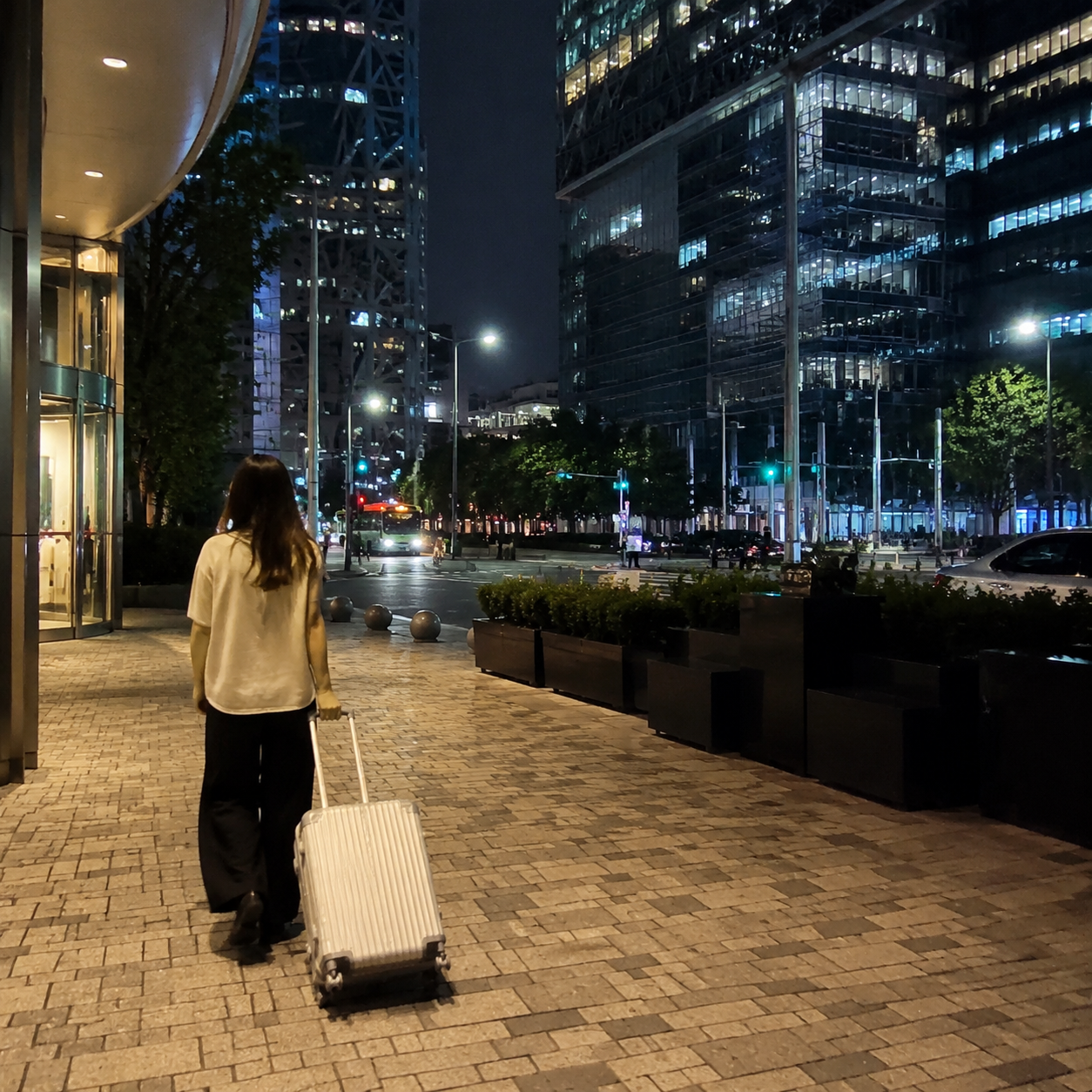
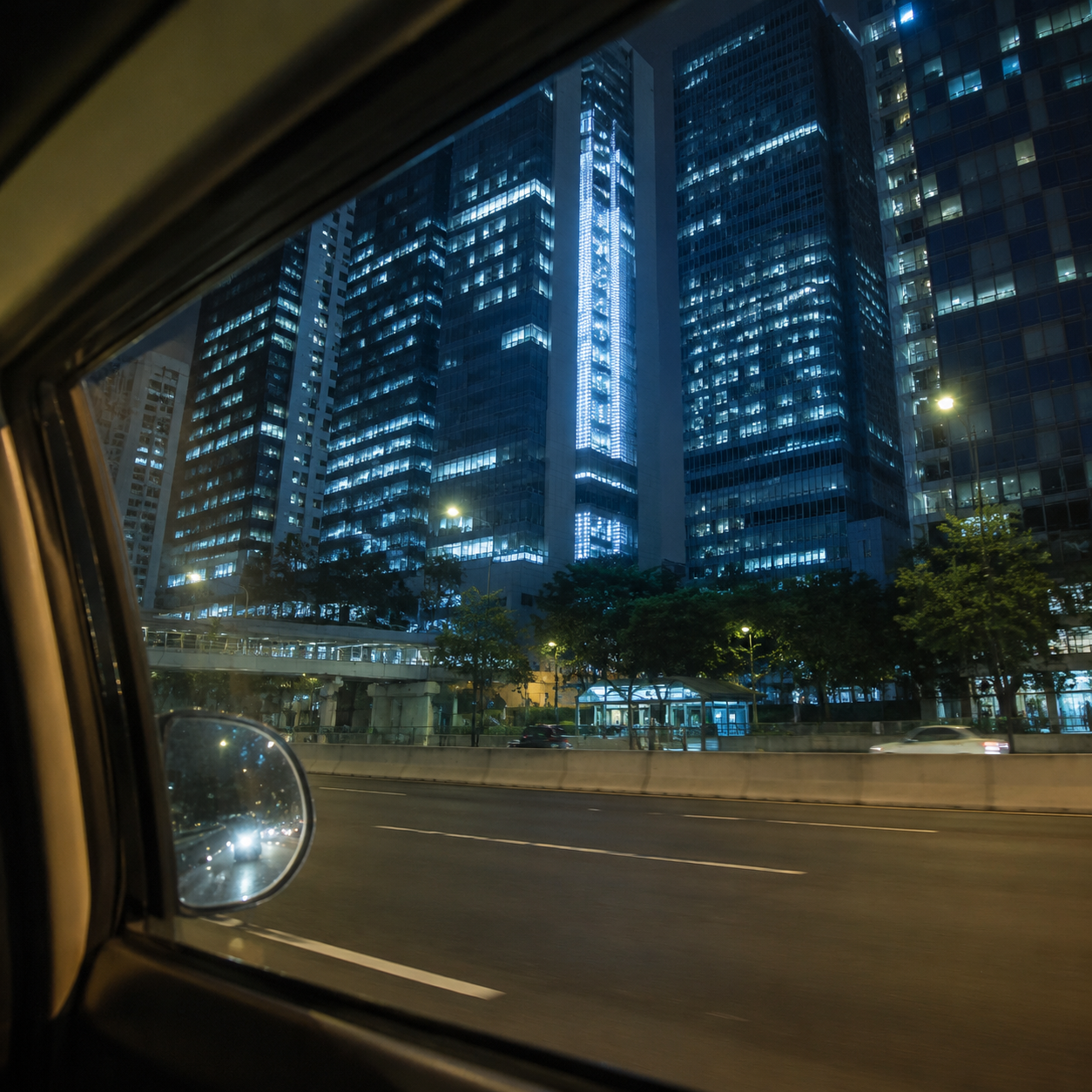
我到深圳的那天,航班落地已经接近午夜。出租车从机场高速拐进城区,车窗外的楼群像一片还没有合上的屏幕,玻璃幕墙反着路灯、广告牌和偶尔掠过的红色尾灯。我原本以为夜深之后,陌生城市会把人推回酒店房间,让人尽快洗澡、关灯、睡觉。可是行李箱轮子在酒店门口停下时,我忽然发现自己还很清醒,甚至有点饿。前台告诉我,转过街角就有一家便利店,二十四小时开着,走路三分钟。
I landed in Shenzhen close to midnight, when the city should have been folding itself into sleep. Instead, the taxi window showed towers still lit like vertical screens, reflecting street lamps, billboards, and the red tails of passing cars. I had assumed that a new city at that hour would send me straight into the hotel: shower, curtain, bed. But when my suitcase stopped at the lobby door, I realized I was wide awake and hungry. The receptionist said there was a convenience store around the corner, open twenty-four hours, only three minutes away on foot.
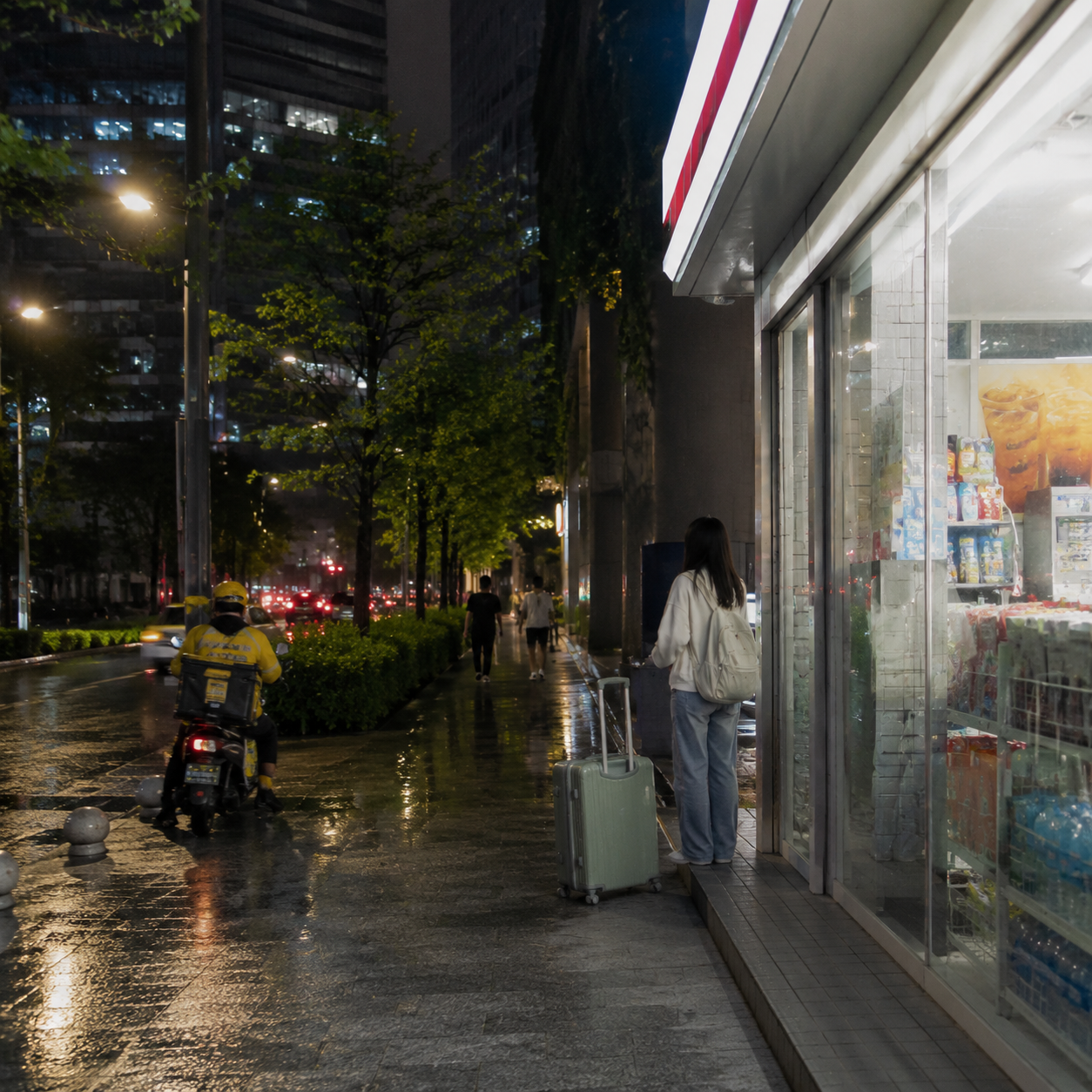
那三分钟后来成了我对深圳夜晚最早的记忆。路并不宽,沿街有几栋写字楼,门口的闸机已经安静下来,保安坐在椅子上刷手机。外卖骑手从我身边经过,车筐里装着还冒热气的餐盒。人行道被雨后的湿气擦得发亮,树叶上有水滴,路灯把影子压得很短。我拖着箱子走得慢,心里却没有那种夜路常见的紧绷感。不是因为这里热闹到像白天,而是因为它有一种清醒的秩序:有人在工作,有人在回家,有人在等车,城市没有睡死。
Those three minutes became my first real memory of Shenzhen at night. The road was not wide. Office buildings stood along it, their turnstiles quiet, their security guards sitting with phones in hand. Delivery riders passed me with warm food containers in their baskets. The sidewalk shone after rain, leaves held small drops of water, and the streetlights pressed every shadow close to the ground. I walked slowly with my suitcase, yet I did not feel the usual tension of a late-night street. It was not because the place was as crowded as daytime. It was because the city seemed awake in an orderly way: some people working, some going home, some waiting for rides, and no corner abandoned entirely.
便利店的门一推开,空调的凉气和关东煮的热气同时迎过来。门口感应器响了一声,店员抬头说欢迎光临,声音不高,却像是在确认我已经进入一个明亮的小范围。货架并不神奇,饭团、矿泉水、酸奶、纸巾、充电线,都是每座城市便利店里常见的东西。但在那一刻,它们被灯光照得格外可靠。一个穿衬衫的男人在微波炉前等便当,一个女生抱着电脑包挑口香糖,两个骑手站在收银台旁边核对订单。大家没有互相打扰,却都让这个空间变得有人气。
When I pushed open the door, cool air from the air conditioner met the steam of oden at the entrance. The sensor chimed, and the clerk looked up with a quiet welcome, as if confirming that I had stepped into a small bright zone. Nothing on the shelves was extraordinary: rice balls, bottled water, yogurt, tissues, charging cables. Every city has these things. Yet under the fluorescent lights they looked unusually dependable. A man in a shirt waited for his boxed meal at the microwave. A young woman with a laptop bag chose gum. Two riders stood by the cashier checking order numbers. Nobody bothered anyone, but everyone added presence to the room.
我先去拿了一瓶水,又站在熟食柜前犹豫。鱼丸、萝卜、海带结在汤里慢慢浮着,旁边还有热豆浆和茶叶蛋。那种香味并不高档,却有很强的安抚作用,好像它知道夜里赶路的人不需要被惊艳,只需要被照顾。我买了一份饭团、一串鱼丸和一杯热豆浆,店员把小票递给我,又提醒我微波炉在左边,如果要加热可以自己用。她说得很自然,像是在说这里的夜晚本来就应该为陌生人留一盏灯。
I took a bottle of water first, then hesitated in front of the hot-food counter. Fish balls, radish, and knots of kelp floated slowly in broth. Beside them were warm soy milk and tea eggs. The smell was not fancy, but it was deeply calming, as if it understood that people traveling at night did not need to be impressed; they needed to be cared for. I bought a rice ball, a skewer of fish balls, and a cup of hot soy milk. The clerk handed me the receipt and pointed to the microwave on the left in case I wanted to heat anything. She said it so naturally that it sounded as though the night had always kept a light on for strangers.
我坐在靠窗的高脚椅上吃东西,窗外的深圳继续流动。网约车停下又开走,骑手把头盔扣紧,写字楼门口有人边打电话边快步出来。便利店的玻璃把这些画面框起来,让我像看一部没有情节冲突的城市纪录片。安全感不是一个很适合旅行笔记的词,它太抽象,也太容易被说成口号。可是那晚我突然明白,有些安全感并不来自宏大的叙述,而来自很具体的东西:一扇透明的门,一排明亮的灯,一个能加热饭团的微波炉,一个会回应你的店员。
I sat on a high stool by the window and ate while Shenzhen kept moving outside. Ride-hailing cars stopped and left. Delivery riders fastened helmets. Someone came out of an office building while speaking quickly into a phone. The convenience store glass framed these scenes like a city documentary without dramatic conflict. Safety is not an easy word for travel writing; it can become abstract or slogan-like too quickly. Yet that night I understood that some forms of safety do not come from grand explanations. They come from precise things: a transparent door, a row of lights, a microwave that can warm your food, and a clerk who answers when you speak.
在很多旅行里,夜晚常被写成冒险的背景。人们喜欢说某条巷子多有味道,某个酒吧多隐秘,某座城市凌晨的街头多刺激。但深圳给我的第一课不是刺激,而是可预期。可预期听起来不浪漫,却非常重要。你知道转角有店,知道店里有热水和插座,知道手机没电时可以买到线,知道饿了不必硬撑到天亮。一个城市如果能在深夜提供这些普通的确定性,就会让人的身体先放松下来,然后才有心情去喜欢它。
In many travel stories, night is used as a stage for adventure. People praise alleys for atmosphere, bars for secrecy, and streets after midnight for excitement. Shenzhen’s first lesson to me was not excitement but predictability. Predictability may not sound romantic, but it matters. You know there is a store around the corner. You know it has hot water and outlets. You know you can buy a cable if your phone is dying. You know hunger does not have to wait until morning. When a city can offer these ordinary certainties after dark, your body relaxes first, and only then do you have room to like the place.
我注意到店里的人进出很快,却都保留着一点礼貌。有人买烟,扫完码就走;有人给手机充电,站在角落回消息;有人拿着两瓶运动饮料,像刚结束加班或训练。店员在货架间补货,把空纸箱压平,动作熟练又安静。没有人把这里当景点,也没有人想在这里留下纪念照。正因为这样,它反而让我看见旅行中常被忽略的一面:一座城市真正接住你的时刻,往往不是在地标前,而是在你疲惫、饥饿、方向感变差的时候。
I noticed that people entered and left quickly, yet most kept a small courtesy. Someone bought cigarettes and left after paying. Someone charged a phone in the corner while answering messages. Someone carried two sports drinks, looking as if overtime or training had just ended. The clerk restocked shelves, flattened empty cartons, and moved with practiced quietness. Nobody treated this place as an attraction. Nobody tried to make it into a memory with a photo. That was why it revealed something travel often misses: the moment a city truly catches you is often not in front of a landmark, but when you are tired, hungry, and less sure of your direction.
第二天白天,我去了福田和南山,看到了更像旅游文章里会出现的深圳。高楼、口岸、商场、地铁、海边公园,所有元素都说明这是一座速度很快的城市。可是我心里一直惦记着前一晚那家便利店。白天的深圳展示能力,夜里的便利店展示底盘。它让我知道,在那些耀眼的楼宇和产业叙事下面,还有一层细密的日常网络:便利店、地铁站、保安亭、共享单车、外卖系统、夜班员工。它们不抢镜,却让城市在非标准时间里依然可使用。
The next day I visited Futian and Nanshan and saw the Shenzhen that appears more easily in travel articles: towers, checkpoints, malls, metro lines, and seaside parks. Everything suggested a fast city. Yet I kept thinking about the convenience store from the previous night. Daytime Shenzhen displayed capability; the nighttime store displayed the base layer. Under the dazzling buildings and industrial narratives was a dense everyday network: convenience stores, metro stations, security booths, shared bikes, delivery systems, night-shift workers. They do not compete for attention, but they keep the city usable outside standard hours.
这种可使用性,对旅行者尤其珍贵。初到一地,人最怕的不是不知道哪里好玩,而是不知道出问题时怎么办。行李太重、胃太空、手机快没电、酒店地址看不懂、天气突然下雨,这些小麻烦不会写在宣传册上,却会决定你对一座城市的第一判断。深圳夜里的便利店没有替我解决什么大问题,它只是让我在一个陌生时间段里不必逞强。它把复杂城市缩小成一个可以理解的房间:门在哪里,水在哪里,食物在哪里,人在哪里。
This usability is especially precious to travelers. When you arrive somewhere new, the first fear is not always missing the best sights. It is not knowing what to do when something small goes wrong. The suitcase is too heavy, the stomach too empty, the phone nearly dead, the hotel address confusing, the rain sudden. These problems rarely appear in brochures, but they shape your first judgment of a city. The Shenzhen convenience store did not solve a grand problem for me. It simply allowed me not to pretend to be tougher than I was. It reduced a complex city into a room I could understand: where the door was, where the water was, where the food was, where the people were.
我也想到,便利店里的安全感并不是凭空出现的。它背后有物流补货,有夜班排班,有道路照明,有移动支付,有足够密集的人流和商业需求。旅行者看到的是一杯热豆浆,城市运行者承担的是让这杯豆浆在凌晨仍然可买到的整个系统。深圳常被描述为年轻、效率、创新,这些词当然没有错。但那一晚,我更愿意用另一个词描述它:在线。不是网络意义上的在线,而是城市服务始终没有完全掉线。
I also realized that the store’s sense of safety did not appear from nowhere. Behind it were supply routes, night shifts, street lighting, mobile payment, and enough foot traffic and commercial demand. The traveler sees a cup of warm soy milk; the city’s operators support the system that makes the cup available at midnight. Shenzhen is often described with words such as young, efficient, and innovative. Those words are not wrong. But that night I preferred another description: connected. Not merely connected to the internet, but connected in the sense that urban service had not gone offline.
坐久了之后,我开始听见更多细节。冰柜轻轻响,门口的提示音隔几分钟响一次,微波炉完成加热时发出短促的蜂鸣。店员和骑手讨论订单号,语速很快,却没有烦躁。有人问有没有创可贴,店员从柜台下拿出来;有人问附近地铁几点开,旁边顾客顺口回答。这样的互助非常轻,不足以被称作温情故事,却刚好构成一种低强度的可靠。它不要求人们彼此熟悉,只要求公共空间维持基本的善意和功能。
After sitting for a while, I began to hear more details. The refrigerator hummed softly. The door chime sounded every few minutes. The microwave gave a short beep when heating was done. The clerk and riders discussed order numbers quickly but without irritation. Someone asked for bandages, and the clerk took them from under the counter. Someone asked when the nearby metro opened, and another customer answered casually. This kind of help was too light to become a sentimental story, yet it formed a low-intensity reliability. It did not require people to know one another. It only required public space to keep basic kindness and function intact.
我以前理解城市安全,常从宏观角度出发:治安、监控、制度、规则。那些当然重要,可旅行中的身体感受还会被更细碎的场景影响。你走进一家店,灯光是否刺眼但稳定;你问一句话,对方是否愿意回答;你坐下吃东西,会不会觉得自己挡路;你深夜经过路口,是否还能看到其他普通人也在做普通事。安全感有时不是没有风险的承诺,而是风险没有被孤独放大。深圳那晚给我的,正是这种没有被孤独放大的夜路。
I used to think about urban safety in broad terms: public order, cameras, institutions, rules. Those are important, of course. But a traveler’s body is also shaped by smaller scenes. You enter a shop: is the light harsh but steady? You ask a question: does someone answer? You sit down to eat: do you feel in the way? You pass an intersection late at night: can you still see ordinary people doing ordinary things? Safety is not always a promise that risk is absent. Sometimes it means risk is not enlarged by loneliness. That Shenzhen night gave me exactly that: a night road not magnified by being alone.
后来几天,我又在不同时间走进过几家便利店。早晨有人买咖啡和包子,中午有人买便当,傍晚学生买冰淇淋,深夜则轮到赶路的人、加班的人、骑手和像我这样的外地人。每个时段的便利店都有不同表情,但共同点是它们把城市的缝隙填上了。饭点错过了,有替代;雨突然大了,有伞;酒店房间太安静,有一个可以短暂停留的亮处。它们不承诺惊喜,只承诺继续营业。
Over the next few days, I entered several convenience stores at different hours. In the morning people bought coffee and buns. At noon they bought boxed lunches. In the evening students bought ice cream. Late at night the customers became travelers, overtime workers, riders, and outsiders like me. Each hour gave the store a different expression, but all of them filled the gaps of the city. If you missed mealtime, there was an alternative. If rain grew heavy, there were umbrellas. If the hotel room felt too quiet, there was a bright place to pause. These stores did not promise surprise. They promised to remain open.
这让我重新理解“便利”两个字。它不只是速度快、距离近、付款方便,也是一种情绪上的缓冲。人在陌生城市里很容易把小事想大,因为每个选择都牵连着不熟悉的路、不确定的价格、不知道是否麻烦别人的语言。便利店把选择缩小,让你用最少的社交成本获得最基本的补给。你不必解释自己为什么这个时间还在外面,不必证明自己懂当地规矩,也不必把一次简单购买变成一次谈判。你只要推门进去,选东西,付款,坐一会儿。
This made me rethink the word convenience. It is not only speed, proximity, and easy payment; it is also an emotional buffer. In an unfamiliar city, small matters can grow large because every choice is tied to unfamiliar roads, uncertain prices, and the worry of bothering someone. A convenience store reduces the scale of choice. With minimal social cost, you get basic supplies. You do not have to explain why you are outside at this hour. You do not have to prove that you understand local rules. You do not have to turn a simple purchase into a negotiation. You push the door open, choose something, pay, and sit for a while.
当然,我并不想把一间便利店浪漫化到失真。夜班工作辛苦,城市服务的稳定常常建立在许多人的疲惫之上。店员的耐心、骑手的奔波、清洁工的清扫、保安的值守,都不是为了让游客写出好看的感受。正因为如此,我更觉得这种安全感值得被认真看见。它不是风景的附属品,而是城市生活的基础设施。旅行者享受它时,也应该意识到它来自具体劳动,而不是城市气质自动生成的背景音乐。
Of course, I do not want to romanticize a convenience store into something unreal. Night shifts are hard, and the stability of urban service often rests on many people’s fatigue. A clerk’s patience, a rider’s rush, a cleaner’s work, a guard’s watchfulness—none of these exist so that visitors can write beautiful feelings. That is why this sense of safety deserves serious attention. It is not an accessory to scenery; it is infrastructure for urban life. When travelers benefit from it, we should recognize that it comes from concrete labor, not from a city’s atmosphere playing automatically in the background.
离开深圳前的最后一晚,我又路过最初那家店。那次我没有进去,只在门口停了一下。玻璃门开合,灯光洒到人行道上,一位骑手把饮料塞进车筐,店员低头整理收银台。街角没有发生任何值得拍摄的大事,可我突然觉得,这种没有大事发生的夜晚,本身就是一种城市能力。让人顺利买到水,顺利走回酒店,顺利结束一天,听起来太普通了。但旅行久了才知道,普通的顺利并不普通。
On my last night in Shenzhen, I passed the first convenience store again. This time I did not go in. I only stopped outside for a moment. The glass door opened and closed. Light spilled onto the sidewalk. A rider tucked a drink into his basket. The clerk lowered her head to arrange the counter. Nothing happened at that corner that deserved a photo, yet I suddenly felt that a night with nothing dramatic happening was itself an urban capability. Letting someone buy water smoothly, return to the hotel smoothly, and end the day smoothly sounds too ordinary. After enough travel, you learn that ordinary smoothness is not ordinary at all.
如果有人问我深圳夜里最让我难忘的地方,我可能不会先说天际线,也不会先说某个商场。我会想起那家便利店,想起窗边的高脚椅、热豆浆的纸杯、微波炉的蜂鸣和雨后发亮的人行道。它们没有把深圳变成一座温柔到不真实的城市,却让我相信,在这座高速运转的城市里,陌生人也能找到一个短暂、明亮、可依靠的停靠点。对我来说,这就是另一种城市安全感:不是被隆重欢迎,而是在深夜仍然被正常对待。
If someone asks what I remember most about Shenzhen at night, I may not begin with the skyline or a famous mall. I will remember that convenience store: the high stool by the window, the paper cup of warm soy milk, the microwave beep, and the wet sidewalk shining after rain. They did not turn Shenzhen into an unrealistically gentle city. They made me believe that in a city running at high speed, a stranger could still find a brief, bright, dependable place to stop. For me, that is another kind of urban safety: not being welcomed with ceremony, but being treated normally even late at night.
- 来华支付第一课:现金、银行卡、移动支付怎么搭配 | Payment Setup for China: Cash, Cards, and Mobile Wallets
- 中文入门基础 | Chinese Language Basics
- 把重庆说成超大城市很容易,难的是教人第一晚从哪层开始不慌 | Calling Chongqing Massive Is Easy; Showing a Visitor Where to Begin on the First Night Without Panic Is Harder
- 在中国打车这件事,没你想的那么难 | Ride-Hailing in China: Easier Than You Think
- 我怎么把自己练成一个“半个中国人”:从排队、问路到饭桌节奏的融入笔记 | How I Trained Myself into a Half-Local in China: Notes on Queues, Directions, and Table Rhythm
- 新疆最容易拍出大片,可真正决定一条线能不能走顺的是那些留白路段 | Xinjiang Is Easy to Film Spectacularly, but the Blank Stretch Between Highlights Determines Whether the Route Works
- 雨季旅游攻略:雨中别有风味 | Rainy Season Travel: Beauty in the Rain
- 在成都点微辣,我才知道辣度不是翻译能完全解决的 | Ordering Mild Spice in Chengdu Taught Me Translation Cannot Fully Explain Heat
- 在中国生活:完整指南 | Living in China: A Complete Guide
- 我在中国学会求助,不是因为无助,而是因为这里的回应速度太真诚 | I Learned to Ask for Help in China Not Because I Was Helpless, but Because People Responded So Honestly
Comments (0)