
孩子在北京地铁里第一次自己问路 | When My Child Asked for Directions Alone on the Beijing Subway
孩子在北京地铁里第一次自己问路 | When My Child Asked for Directions Alone on the Beijing Subway
那天早上,北京的风有一点硬,吹在脸上并不疼,只是把人吹得很清醒。我和儿子从酒店出来的时候,他背着一个蓝色小书包,拉链头上挂着一只小熊,走路时一晃一晃。我们要去故宫,路线其实不算复杂,可一到地铁站,他就突然安静了,像是一下子被那一大片站牌、箭头和人流压住了。
That morning in Beijing, the wind felt brisk but not harsh. It woke us up more than it bothered us. My son walked out of the hotel with a small blue backpack, a teddy bear charm bouncing on the zipper. We were heading to the Forbidden City, and the route was not especially difficult. But the moment we stepped into the subway station, he grew quiet. The signs, arrows, and moving crowd seemed to press down on him all at once.
北京地铁站里的人很多,脚步声密,广播一遍遍提醒乘客先下后上。儿子平时在家很爱说话,可一看到密密麻麻的汉字和换乘图,他就下意识往我身后站了一点,小声说:“妈妈,你来问吧。”那句话说得并不丢人,反而很真实。很多孩子到了陌生环境里,第一反应不是好奇,而是先把自己缩小一点。
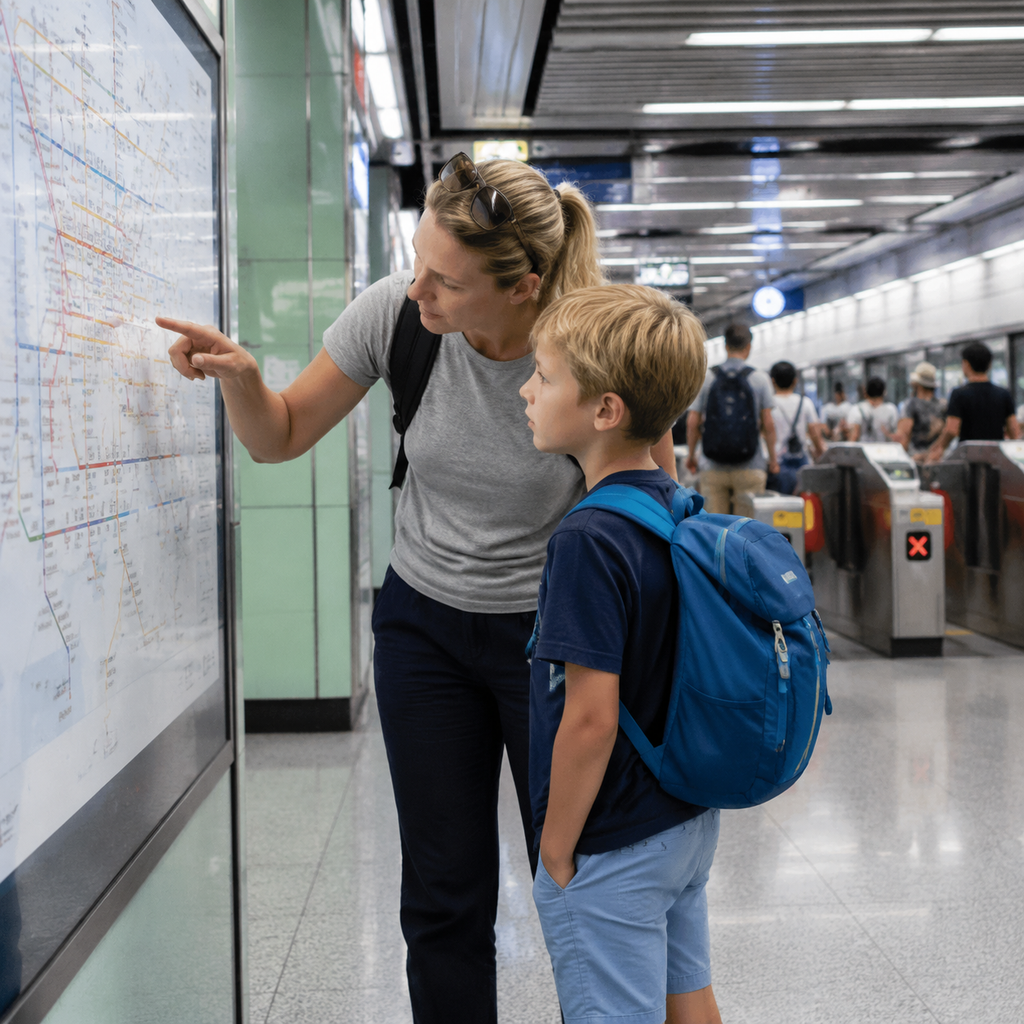
The station was full of people. Footsteps came in quick waves, and the announcements kept repeating the usual reminder to let passengers exit first. At home, my son is talkative. But once he saw the packed Chinese characters and transfer map, he stepped slightly behind me and whispered, “Mom, can you ask?” It was not embarrassing at all. It was honest. In a new environment, many children do not become curious first. They become small first.
我没有立刻接过来,只是蹲下来跟他说:“你先试一下,哪怕只说四个字也行。”他抿着嘴,没有马上答应。我看见旁边有一位穿深灰色外套的阿姨正低头看手机,样子很温和,就轻轻提醒他:“你可以问,阿姨,请问故宫怎么走?”他先在嘴里练了一遍,声音卡住了,第二遍才真正说出口。
I did not take over immediately. I crouched down and told him, “Try first. Even if you only manage a few words, that is enough.” He pressed his lips together and did not answer right away. Nearby, a woman in a dark gray coat was looking at her phone. She seemed gentle, so I quietly suggested, “You can ask her: Auntie, excuse me, how do we get to the Forbidden City?” He practiced once under his breath. The words got stuck. On the second try, he finally said them aloud.
那位阿姨马上抬起头,没有一点不耐烦,反而把手机收起来,认真地给他指路:“你们先坐这一条线,到东四站换车,再出来走一小段。你说得很好呀。”儿子原本绷着的肩膀一下就松了。他认真重复“东四站换车”,又点头,又说“谢谢阿姨”。我在旁边看着,突然觉得这比我们等会儿看见什么宫殿都重要。因为孩子学到的不是一个地名,而是一次完整的沟通路径:先开口,别人会回应;先表达,世界才会慢慢打开。
The woman looked up right away. There was not a trace of impatience in her face. She even put her phone away and gave careful directions. “Take this line first, transfer at Dongsi, and then walk a short distance after you come out. You asked very well.” My son’s shoulders relaxed at once. He repeated “transfer at Dongsi,” nodded seriously, and said thank you. Watching him, I suddenly felt that this mattered more than any palace we were about to see. He was not only learning a station name. He was learning the full shape of communication: if you speak, someone may respond; if you try, the world begins to open.

后来到了故宫,他反而没有一进门就冲着大殿拍照。他站在午门前,先问我:“这里以前是不是很多人都要排队进去?”我点头,他就自己往旁边站,让后面的人先通过。那动作很小,却明显是刚才在地铁里学到的——看路、看人、给别人留空间。我越来越觉得,中国很适合带孩子来的地方,不只是因为景点多,而是因为很多公共空间都在悄悄教孩子秩序、表达和观察。
When we reached the Forbidden City, he did not run straight toward the grand halls for photos. Instead, he stood by the Meridian Gate and asked, “Did lots of people line up here in the past too?” I nodded, and he instinctively stepped aside to let others pass first. It was a tiny gesture, but it clearly came from what he had just learned underground: watch the path, watch the people, leave room for others. I kept thinking that China is such a rewarding place to travel with children not only because there are so many famous sights, but because so many public spaces quietly teach order, expression, and awareness.
中午我们在故宫附近吃面。他一边吃,一边用筷子比划着刚才那段路线,认真复述:“先问好,再说请问,再把关键站名记住。”说到最后,他自己都笑了,像完成了一件很大的事。旁边卖饮料的阿姨听见了,还顺口夸他:“你讲得很清楚。”这句夸奖又让他高兴了半天。孩子就是这样,一句来自陌生人的认可,常常比父母说十遍“你真棒”更有力量。
At lunch near the Forbidden City, he reenacted the route with his chopsticks while eating noodles. “First say hello, then say excuse me, then remember the key station name,” he repeated with great seriousness. By the end, he laughed as if he had finished something important. A woman selling drinks nearby overheard him and casually said, “You explained it very clearly.” That single compliment carried him for the rest of the meal. Children are like that. One sincere word from a stranger can sometimes do more than ten rounds of parental praise.
下午我们去景山,风从树梢掠过去,天色有点灰蓝。儿子把手插进衣兜里,忽然说:“下次我还可以自己问别的路。”那句话让我记了很久。亲子旅行真正珍贵的地方,不只是看见了多大的世界,而是孩子开始愿意自己往世界那边走一步。很多父母带孩子出来,总想把每一段都安排得很稳妥,但有时候,故意留一个小任务给孩子,反而会让旅行更完整。

In the afternoon we walked up Jingshan. The wind skimmed across the treetops, and the sky had turned a muted gray-blue. My son put his hands into his pockets and suddenly said, “Next time I can ask for another route by myself.” I remembered that sentence for a long time. The real value of family travel is not only that children see a larger world. It is that they begin to take one step toward that world on their own. Parents often want to make every part of a trip smooth and safe, but sometimes leaving one small task for a child makes the whole trip more complete.
如果带孩子来北京,我很建议父母别把所有环节都包办掉。可以给孩子一个很小、很具体的任务:自己问路、自己看站名、自己去买一瓶水、自己对服务员说谢谢。中国的大城市里,这种练习尤其有价值,因为地铁、景区、书店、餐馆都在提供真实又安全的交流场景。孩子不是在做考试,他是在练习怎样进入社会。
If you travel in Beijing with a child, I strongly suggest not handling every single step for them. Give them one small and specific task: ask for directions, read a station name, buy a bottle of water, or say thank you to a staff member. In China’s large cities, these practices are especially valuable because subways, attractions, bookstores, and restaurants all provide real but relatively safe places to communicate. A child is not taking an exam. A child is practicing how to enter society.
旅行里可以这样做:出发前先教孩子三句最常用的话——“请问”“谢谢”“我们要去……”。到大景点前,先让他完成一个小交流任务,不要怕他说得慢。只要他开口了,这次旅行就已经开始教他成长了。
Here is one practical way to do it on a trip: teach your child three useful phrases before leaving the hotel—“Excuse me,” “Thank you,” and “We are going to...” Before entering a major attraction, let them complete one small communication task. Do not worry if they speak slowly. The moment they try, the trip has already started teaching them how to grow.
- 我在公寓快递架前学会的第一课,是别把自己的方便放在别人通道中间 | The First Lesson I Learned at My Apartment Delivery Shelf Was Not to Put My Convenience in Other People’s Way
- 孩子在北京地铁里第一次自己问路 | When My Child Asked for Directions Alone on the Beijing Subway
- 中国武术文化体验:太极拳少林功夫 | Chinese Martial Arts: Tai Chi & Shaolin Kung Fu
- 签证与入境要求 | Visa and Entry Requirements
- 武汉热干面摊前的队伍,让我学会看城市的脾气 | A Queue for Hot Dry Noodles in Wuhan Taught Me to Read a City’s Temper
- 从贵阳到荔波的慢线 | The Slow Line from Guiyang to Libo
- 冬季冰雪旅游完全指南 | Complete Guide to Winter Ice & Snow Tourism
- 中国丝绸制品 | Silk Products from China
- 景德镇陶瓷伴手礼选购指南 | Jingdezhen Ceramics Souvenir Buying Guide
- 雨停以后,我在武夷山把茶路走成了溪边慢线 | After the Rain Stopped, I Turned Wuyi Mountain’s Tea Road into a Streamside Walk
Comments (0)