
中国烧烤江湖地图 | The Great BBQ Map of China
中国烧烤江湖地图 | The Great BBQ Map of China
凌晨一点,锦州南站对面那条街还亮着灯。塑料凳子摆到人行道上,烤炉里的炭火把师傅的脸映得通红。一个东北大哥扯着嗓子喊:"老板,再来二十串小肉筋,蘸料多放!"——这就是中国烧烤最原始的样子:深夜、街头、陌生人拼桌,几串肉就能聊成兄弟。
At one in the morning, the street across from Jinzhou South Station is still lit up. Plastic stools spill onto the sidewalk while charcoal turns the pitmaster's face a deep red. A local guy hollers: "Boss, twenty more tendon skewers, extra dipping sauce!" This is Chinese BBQ in its most primal form: late night, street-side, strangers sharing tables, a few skewers enough to make you friends.
中国烧烤不是一道菜,而是一整套江湖规矩。每个城市都有自己的烧烤暗语。锦州人把烤串当城市名片——据统计,这座三百万人口的辽宁小城拥有超过两万家烧烤店,密度堪称全国第一。锦州烧烤的灵魂不在肉上,而在那碟蘸料里:芝麻酱、辣椒面、孜然粉、花生碎,四味混合,刷在刚离火的羊肉串上,滋滋作响。
Chinese BBQ isn't a single dish — it's an entire underworld with its own codes. Every city has its own secret language. Jinzhou locals treat skewers as their city's calling card. By one count, this Liaoning city of three million has over 20,000 BBQ joints, arguably the highest density in the country. The soul of Jinzhou BBQ isn't the meat itself but the dipping sauce: sesame paste, chili flakes, cumin, and crushed peanuts — four flavors blended and brushed onto lamb skewers fresh off the flame, sizzling on contact.
西北:红柳签上的丝路余韵
往西走两千公里,烧烤的画风彻底变了。新疆的烤肉用红柳枝做签子,每串肉块大如拳头,肥瘦相间,撒上粗粒盐和孜然直接架在馕坑边的炭火上。在乌鲁木齐的五一星光夜市,一串红柳烤肉标价十五元,肉香混着红柳木的清苦气息飘出半条街。维吾尔族师傅烤肉时不急不躁,翻面的节奏像某种古老的仪式——这串肉从丝绸之路上走来,带着中亚的粗犷和大漠的辽阔。
The Northwest: Silk Road Echoes on Red Willow Skewers
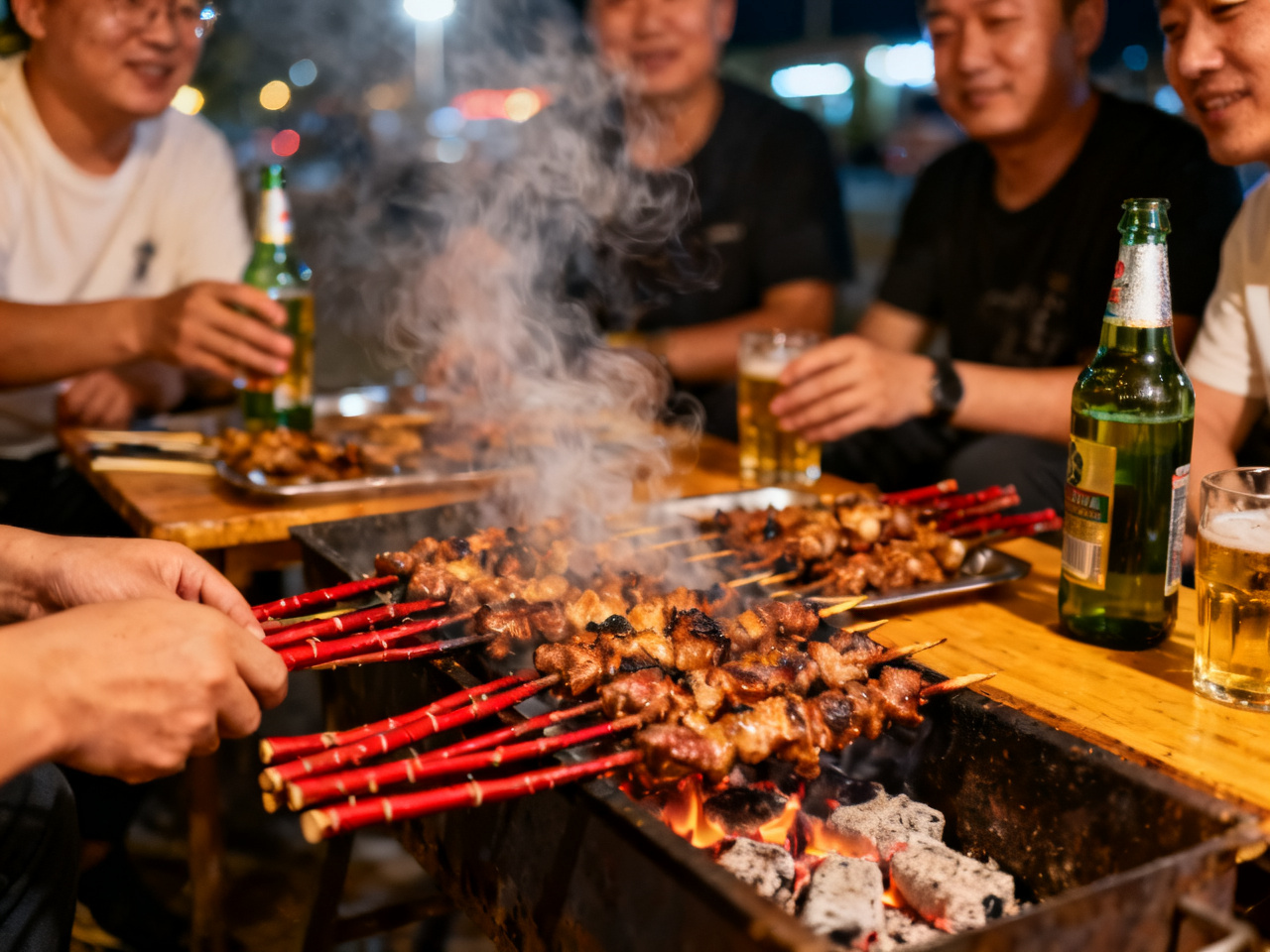
Travel two thousand kilometers west and the BBQ landscape transforms completely. Xinjiang kebabs use red willow branches as skewers, each chunk of meat fist-sized, fat marbled with lean, dusted with coarse salt and cumin, then grilled over coals beside a naan pit. At Urumqi's May First Starlight Night Market, one red willow skewer goes for fifteen yuan, its aroma — smoky meat mingled with the bitter-sweet scent of red willow wood — drifting half a block. Uyghur pitmasters never rush; their flipping rhythm resembles an ancient ritual. These skewers traveled down the Silk Road, carrying the ruggedness of Central Asia and the vastness of the desert.
西南:万物皆可烤
四川人和云南人对烧烤的理解更加野性。在西昌,火盆烧烤是标配——不用烤炉,直接把铁网架在炭盆上,小肉串密密麻麻排开,刷上重庆火锅同源的红油辣椒。昭通小串更夸张:一串只有指甲盖大小的肉粒,靠的是数量取胜,一个人吃三百串是入门水平。而在云南建水,烤豆腐才是深夜主角。巴掌大的小块豆腐在炭火上慢慢鼓起,外皮焦脆内心绵软,蘸干辣椒和薄荷吃,一口下去满嘴都是发酵的鲜香。
The Southwest: Everything Can Be Grilled
Sichuan and Yunnan folks take a wilder approach to BBQ. In Xichang, fire-basin grilling is standard — no fancy equipment, just a wire rack over a charcoal basin, tiny skewers packed tight, brushed with the same red chili oil that fuels Chongqing hotpot. Zhaotong mini-skewers are even more extreme: each skewer holds a morsel no bigger than a fingernail, and eating three hundred in one sitting is considered beginner level. In Jianshui, Yunnan, grilled tofu rules the late night. Palm-sized blocks puff up slowly over coals, crispy outside and pillowy inside, dipped in dried chili and mint — one bite floods your mouth with fermented umami.
东南:海鲜遇上炭火
沿着海岸线南下,烧烤开始拥抱海洋。湛江的炭烤生蚝年消耗量超过十亿只,烤蚝摊从街头排到巷尾。蒜蓉、豆豉、剁椒三种口味三分天下。从广州一路吃到潮汕,你会发现广东人烤海鲜讲究的是食材本身的鲜味,调味反而克制。而到了台湾和福建,烧烤又多了酱油膏和九层塔的甜香气息。
The Southeast: Seafood Meets Charcoal
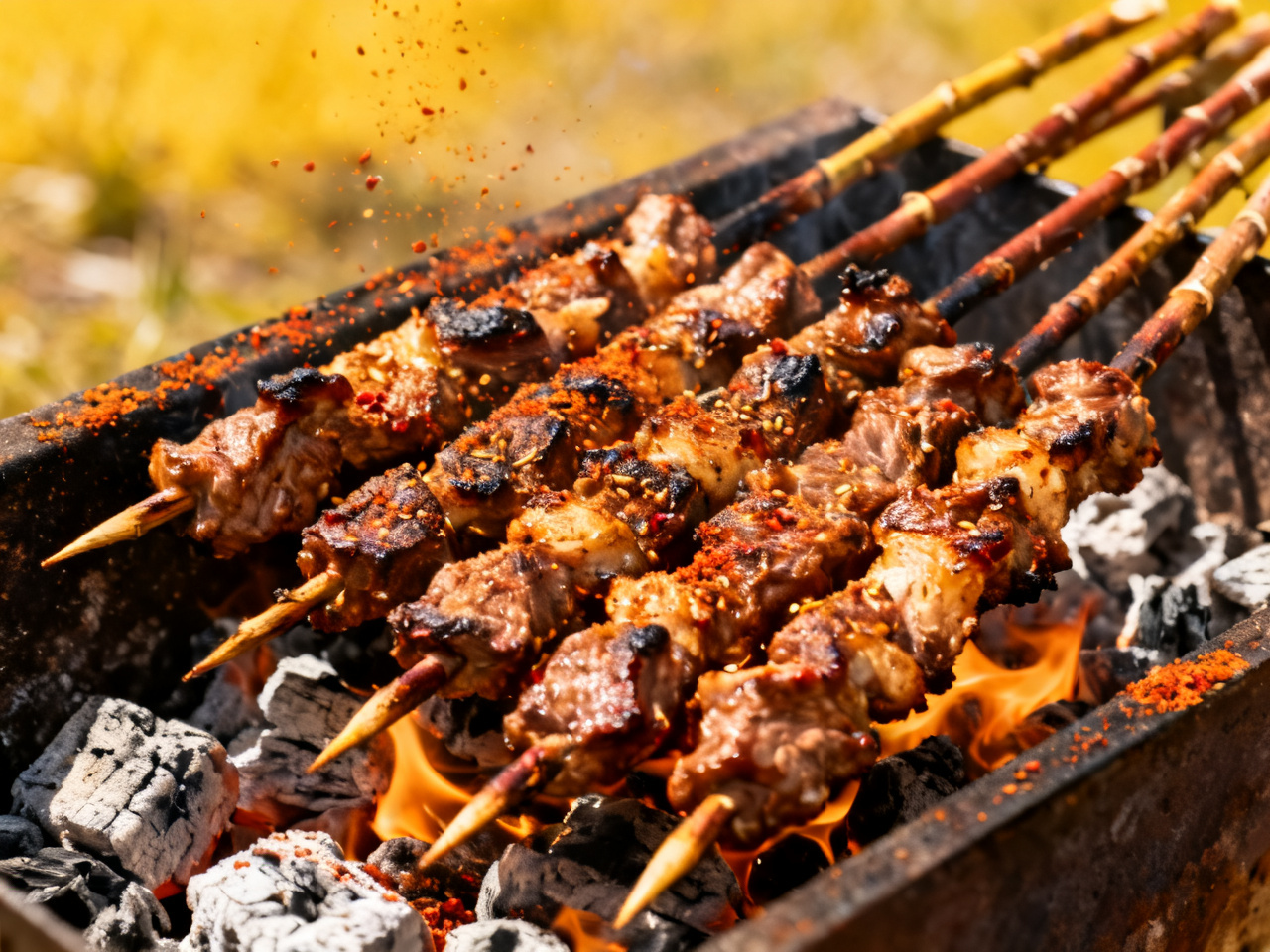
Head south along the coastline and BBQ embraces the ocean. Zhanjiang's charcoal-grilled oysters consume over a billion shells annually, with oyster stalls stretching from street corners deep into alleyways. Garlic, black bean, and chopped chili — three flavors divide the kingdom equally. Eating your way from Guangzhou to Chaoshan, you'll notice Cantonese seafood grilling prizes the ingredient's natural sweetness, keeping seasoning restrained. Cross into Taiwan and Fujian, and BBQ picks up the sweet fragrance of soy paste and Thai basil.
烧烤经济学:一门深夜生意
中国烧烤产业规模在2023年已突破两千亿元人民币。据《中国餐饮大数据》报告,烧烤是中国夜间餐饮消费排名第一的品类,超过火锅和小龙虾。有意思的是,烧烤消费的高峰不在夏天——数据显示东北地区冬季烧烤订单量反而高出夏季百分之十五。零下二十度的哈尔滨街头,人们裹着羽绒服站在露天烤炉旁等串,哈出的白气和烤烟混在一起,这画面本身就是一种中国烧烤文化的隐喻:再冷的夜,一串肉就能点燃人间烟火。
BBQ Economics: A Late-Night Business
China's BBQ industry surpassed 200 billion yuan in 2023. According to China's restaurant big-data reports, BBQ ranks as the number-one late-night dining category nationwide, beating hotpot and crayfish. Interestingly, peak BBQ consumption isn't in summer — data shows winter orders in the northeast actually exceed summer ones by fifteen percent. On Harbin streets at minus twenty degrees, people in puffy down jackets huddle around open-air grills waiting for their skewers, breath clouds mingling with grill smoke. The image itself is a metaphor for Chinese BBQ culture: no matter how cold the night, a single skewer can ignite the warmth of human life.
烧烤是中国人的深夜教堂。没有菜单上的规矩,没有餐桌上的拘谨,只有炭火、肉串和啤酒构成的平等世界。下次你到一座陌生的中国城市,别急着找网红餐厅——先问本地人:"你们这儿,哪条街的烧烤最野?"
BBQ is China's late-night cathedral. No menu formalities, no table manners to observe — just charcoal, skewers, and beer composing an egalitarian world. Next time you arrive in an unfamiliar Chinese city, don't rush to find influencer-approved restaurants. Ask the locals first: "Which street here has the wildest BBQ?"
- 街头那碗热气,才是中国城市的真实体温 | Street Steam: The Real Pulse of Chinese Cities
- 腾冲:火山热海之间的边地温度 | Tengchong: A Borderland Journey Between Volcanoes and Hot Springs
- 中国新年:传统与习俗 | Chinese New Year: Traditions and Customs
- 剪纸日记|在红纸与窗光之间学习耐心 | Paper-Cutting Diary | Learning Patience Between Red Paper and Window Light
- 五月第一次去北京,我是怎么把暴走行程改成舒适慢线的 | My First Beijing Trip in May: How I Turned an Exhausting Route into a Gentle Slow-Paced Plan
- 拉萨的雨停以后,连水洼边的小停顿都像一种进入方式 | After Rain in Lhasa, Even a Pause Beside a Puddle Felt Like a Way of Entering the City
- 我在中国黄昏公园里学会一个人坐着,不急着把空白填满 | In a Chinese Park at Dusk, I Learned to Sit Alone Without Rushing to Fill the Silence
- 少数民族服饰巡礼:苗族藏族彝族 | Ethnic Minority Costumes: Miao, Tibetan & Yi
- 广州夜里最好走的那条线,往往不是最热闹的,而是最知道什么时候该坐下的 | Guangzhou’s Best Night Route Is Rarely the Loudest One but the One That Knows When to Sit Down
- 陶艺课上的半天:我第一次知道一团泥为什么也有“火后的性格” | Half a Day in a Pottery Workshop: The First Time I Learned That Clay Has a Personality After Fire
Comments (0)