
到了郑州才明白,一顿不必介绍来历的晚饭也能让人放松下来 | In Zhengzhou, I Learned That an Unpretentious Dinner Can Let the Body Unclench
郑州那顿普通晚饭,比攻略里的招牌菜更真 | One Ordinary Dinner in Zhengzhou Felt More Real Than Any Famous Dish
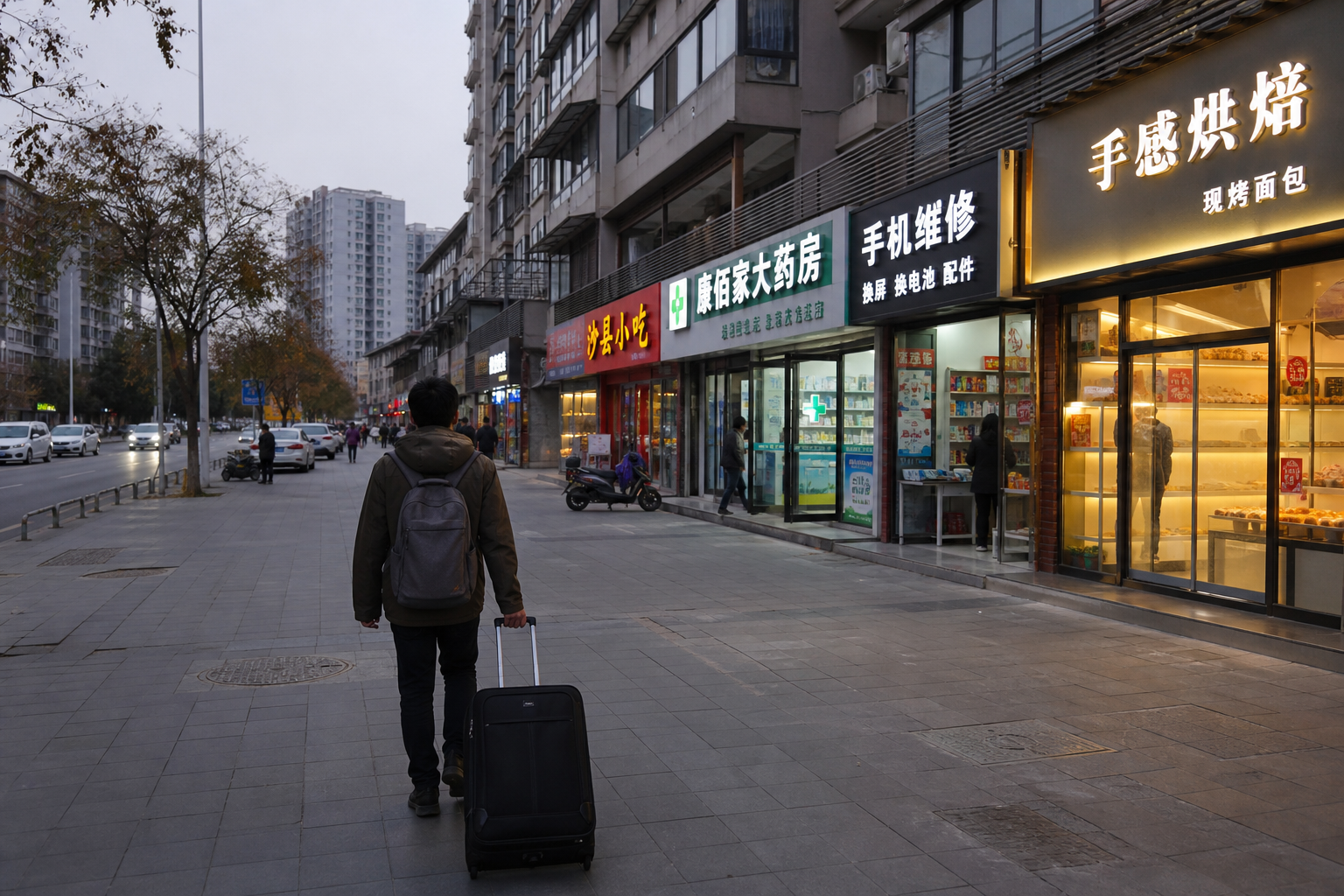
傍晚到郑州的时候,天色已经从亮白慢慢转成灰蓝。车站外面的风不大,却带着一点北方城市常见的干爽,吹在脸上没有潮气,只让人觉得一天终于落到了可以停下来的地方。我没有给这顿晚饭安排什么特别的目标,也没有提前收藏哪一家必须排队的店,只是把行李放好,沿着住处附近的街慢慢走。郑州的夜色不是一下子亮起来的,它像一盏盏普通灯泡被人顺手打开,便利店、药房、小饭馆、修车铺、面包房,各自从玻璃门里透出稳定的光。
When I arrived in Zhengzhou in the evening, the sky had already shifted from pale brightness into a grayish blue. The wind outside the station was not strong, but it carried the dry clarity often found in northern cities. It touched my face without humidity, only making me feel that the day had finally landed somewhere I could stop. I had not planned anything special for dinner, nor had I saved a famous restaurant that required a queue. I simply put down my luggage and walked slowly along the streets near my lodging. Zhengzhou’s night did not light up all at once; it came on like ordinary bulbs switched by ordinary hands, with convenience stores, pharmacies, small restaurants, repair shops, and bakeries sending steady light through their glass doors.
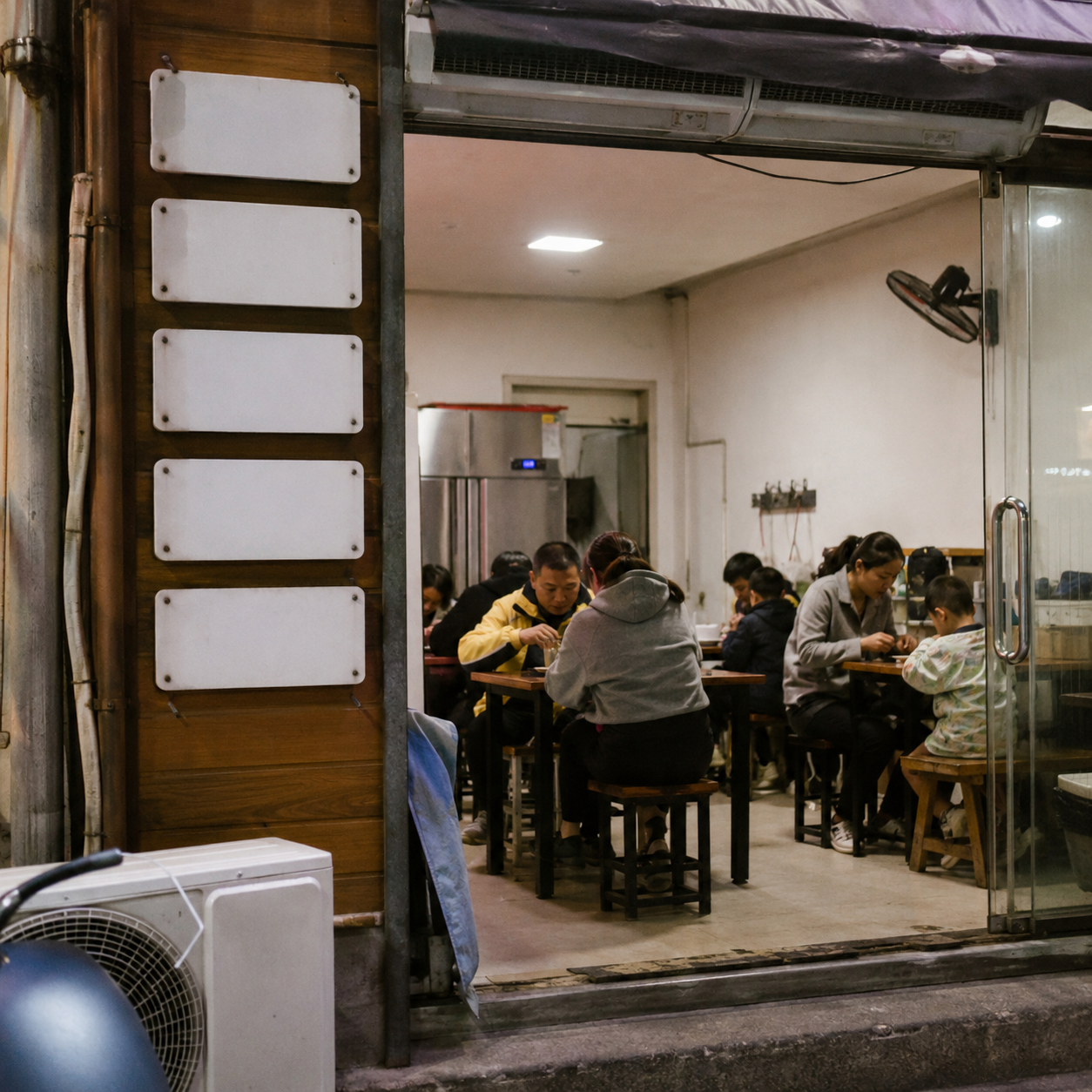
我想吃一顿普通晚饭,普通到不需要介绍来历,也不必拍照证明自己来过。路边有家小店,门口挂着几张菜单牌,字写得很大,烩面、炒面、盖饭、凉菜、羊肉汤,价格也写得明白。店里坐着几桌人,有穿工装的师傅,有背书包的学生,有一对带孩子的夫妻。大家都在吃自己的饭,说自己的话,谁也不急着把这一刻变成什么故事。我站在门口看了一会儿,觉得这就是我今晚需要的地方。
I wanted an ordinary dinner, so ordinary that it needed no origin story and no photograph to prove I had been there. A small shop by the road had several menu boards hanging at the entrance, with large clear characters: stewed noodles, fried noodles, rice plates, cold dishes, mutton soup, and prices written plainly. Inside, several tables were occupied: workers in uniforms, students with backpacks, a couple with a child. Everyone was eating their own meal and saying their own words, and no one seemed eager to turn the moment into a story. I stood at the doorway for a while and felt that this was exactly the place I needed tonight.
老板娘从柜台后面抬头问我吃啥,语气熟练,却不冷淡。我点了一碗烩面,又要了一小盘凉拌黄瓜。她把单子递进后厨,回头指了指空桌,让我随便坐。我选了靠墙的位置,墙上贴着褪色的饮料海报,旁边还有一张提示:先付款,少浪费。桌面擦得很干净,但仍能看见长期使用留下的细小划痕。那种划痕让我安心,因为它说明这里不是专门为游客准备的布景,而是真的每天有人来吃饭。
The woman at the counter looked up and asked what I wanted to eat. Her tone was practiced but not cold. I ordered a bowl of stewed noodles and a small plate of cucumber salad. She passed the order into the kitchen, then pointed to the empty tables and told me to sit anywhere. I chose a seat against the wall. A faded beverage poster hung nearby, along with a notice that said: pay first, waste less. The tabletop had been wiped clean, but tiny scratches from long use were still visible. Those scratches comforted me because they showed that this place was not a set arranged for visitors; it was somewhere people truly came to eat every day.
等面的时间里,我听见后厨传来锅铲碰锅的声音,清脆而短促。门口不时有人进来,有人打包带走,有人坐下就喊一声“还是老样子”。这种“老样子”很有力量,它意味着一个人在城市里有固定的口味、固定的路径,也有一个可以被店家记住的身份。我只是过路人,没有“老样子”,但坐在他们中间,反而觉得自己短暂地借到了一点本地人的稳定。
While waiting for the noodles, I heard the spatula striking the wok in the kitchen, sharp and brief. People came in from time to time; some took food away, while others sat down and called out, “the usual.” That phrase carried a quiet strength. It meant a person had a fixed taste in the city, a fixed route, and even an identity remembered by the shop. I was only passing through and had no “usual,” but sitting among them made me feel as if I had borrowed a little of the locals’ stability for a short while.
烩面端上来时,碗很大,热气把眼镜片熏得发白。汤面上浮着几片羊肉和青菜,宽面在汤里弯弯绕绕,像刚从一段长路里被捞出来。第一口汤有盐味、肉味和面香,谈不上惊艳,却非常实在。凉拌黄瓜切得粗,蒜味明显,酸味把热汤后的口腔轻轻拉回来。我一边吃,一边看窗外。路灯下,电动车从门口滑过,外卖员停下来看手机,孩子隔着玻璃冲里面的人笑。
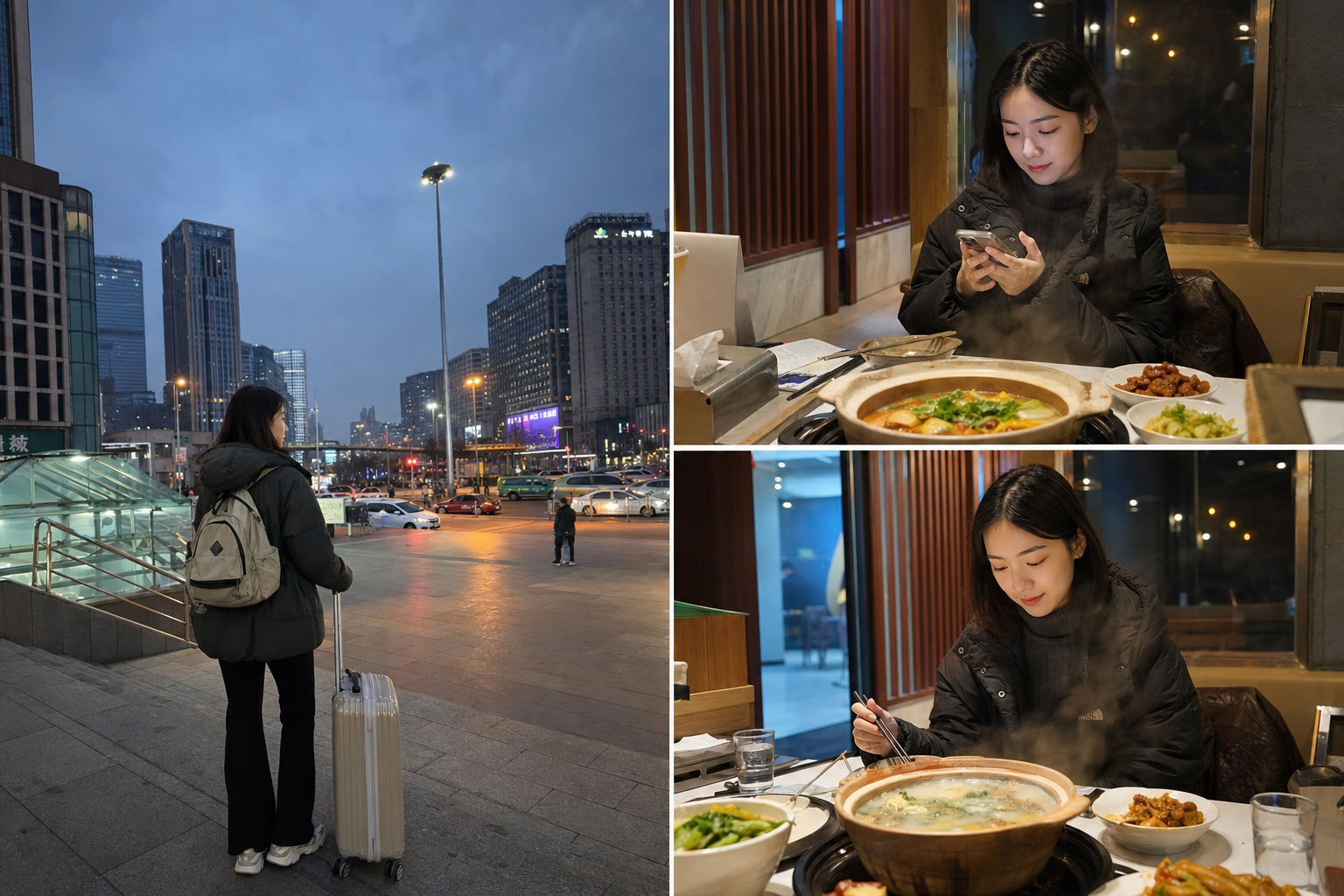
When the stewed noodles arrived, the bowl was large, and the steam turned my glasses white. A few slices of mutton and greens floated on the soup, while the broad noodles curled through it as if lifted from a long road. The first sip tasted of salt, meat, and wheat. It was not stunning, but it was deeply solid. The cucumber salad was roughly cut, with a clear garlic smell, and its sourness gently pulled my mouth back after the hot soup. I ate while watching the window. Under the streetlight, electric scooters slipped past the door, a delivery rider stopped to check his phone, and a child smiled through the glass at someone inside.
这顿饭让我想起很多城市里相似的晚上。旅途中,人总会被景点、攻略、车票、路线牵着走,好像只有完成了某些项目,才算真正抵达。但晚饭不同,它把人从计划里拽出来,放回身体里。肚子饿了,汤要趁热喝,面不能泡太久,筷子夹起的那一瞬间,所有宏大的叙述都会退后。郑州在这一刻不再是地图上的交通枢纽,也不是被概括成几句印象的城市,它只是我面前这只热碗和窗外这一条街。
This dinner reminded me of many similar evenings in many cities. During travel, people are often pulled along by sights, guides, tickets, and routes, as if only by completing certain items can one truly arrive. But dinner is different. It drags a person out of planning and returns them to the body. Hunger matters, soup must be drunk while hot, noodles should not soak too long, and in the instant chopsticks lift a bite, all grand narratives step back. Zhengzhou, in that moment, was no longer a transport hub on a map, nor a city reduced to a few impressions. It was simply the hot bowl before me and the street outside the window.
旁边那桌的师傅们聊着工地上的事,话题从材料涨价转到孩子考试,又转到明天可能下雨。没人说得特别完整,常常一句话被另一句打断,但彼此都懂。小店里的电视开着,声音不大,新闻和广告交替出现,像背景里一条不太重要的河。老板娘忙完一轮,坐到柜台边喝水,看到我碗里的汤少了,问我够不够咸。我说正好,她点点头,又去给别人装打包盒。
The workers at the next table talked about a construction site. Their topic moved from rising material prices to a child’s exam, then to the possibility of rain tomorrow. No one spoke in a complete or polished way; one sentence was often interrupted by another, but they understood one another. The television in the shop was on at a low volume, with news and advertisements alternating like an unimportant river in the background. After a busy round, the woman at the counter sat down to drink water. Seeing that the soup in my bowl had gone down, she asked whether it was salty enough. I said it was just right. She nodded and went to pack food for someone else.
吃到一半,我忽然觉得旅行里最难写的其实就是这种普通。名胜有历史,老街有典故,博物馆有展签,山水有形容词,可一顿正常晚饭只有热气、价格、筷子、桌椅、客人和灯光。它不急着向你展示意义,也不要求你赞叹。但人离开一座城市以后,最先淡掉的往往是那些被反复拍摄的风景,留下来的却可能是某个不知名小店的味道,是晚饭后走回住处时,鞋底踩过人行道砖的声音。
Halfway through the meal, I suddenly felt that the hardest thing to write about in travel is precisely this kind of ordinariness. Famous sites have history, old streets have anecdotes, museums have labels, landscapes have adjectives, but a normal dinner only has steam, prices, chopsticks, tables, chairs, customers, and light. It does not rush to display meaning, nor does it demand admiration. Yet after leaving a city, the views photographed again and again often fade first, while what remains may be the taste of an unnamed little restaurant, or the sound of one’s shoes stepping on sidewalk bricks on the way back after dinner.
我把面吃完,汤没有全喝掉,因为碗实在太大。结账时老板娘说我刚才已经付过了,我才想起进门时用手机扫过码。她笑了一下,说外地来的吧,慢点走。我问附近有没有可以买水果的地方,她指向路口,说往前过一个红绿灯,右手边有家超市,门口还摆摊卖橘子。这个指路很普通,却比任何导航都有人情味。它不是从地图算法里来的,而是从一个人对自己街区的熟悉里来的。
I finished the noodles but did not drink all the soup because the bowl was truly large. When I went to pay, the woman reminded me that I had already paid earlier, and only then did I remember scanning the code when I entered. She smiled and said, “You’re from out of town, right? Walk slowly.” I asked whether there was a place nearby to buy fruit. She pointed toward the intersection and said that after one traffic light, on the right, there was a supermarket with people selling oranges at the entrance. The directions were ordinary, yet warmer than any navigation app. They came not from a map algorithm, but from a person’s familiarity with her own neighborhood.
走出店门,夜色已经完全落稳。空气里有汤面、烤串、汽车尾气和水果摊混在一起的味道。郑州的街道宽,车流不断,但在小店门口这一小片地方,时间像被饭菜压慢了。我没有马上回去,而是按老板娘说的方向走到路口。超市门口果然有橘子,摊主把橘子堆成小山,灯泡照得橘皮发亮。我买了几个,装进塑料袋里,拎在手上,有一种晚饭之后才会出现的满足。
When I stepped out of the shop, night had fully settled. The air carried a mixture of noodle soup, grilled skewers, car exhaust, and fruit stalls. Zhengzhou’s roads were wide and traffic kept moving, but in the small area in front of the restaurant, time seemed slowed by food. I did not return immediately. Instead, I followed the direction the woman had given me and walked to the intersection. There were indeed oranges at the supermarket entrance. The vendor had piled them into a small hill, and the light made their peels shine. I bought a few, put them in a plastic bag, and carried them in my hand, feeling the kind of satisfaction that only appears after dinner.
回住处的路上,我经过几家还亮着灯的店。有人在理发店里吹头发,有人在彩票店门口研究号码,有年轻人靠在电动车旁聊天,也有老人牵着狗慢慢过马路。我忽然明白,所谓普通晚饭并不是缺少内容,而是内容太靠近日常,以至于很容易被忽略。它没有纪念碑的高度,却有生活的厚度。它不告诉你城市应该被怎样理解,只让你在吃饱之后,愿意多看一眼街边的人和灯。
On the way back, I passed several shops still lit. Someone was having their hair dried in a salon, someone studied numbers at the entrance of a lottery shop, young people leaned against electric scooters and chatted, and an old person led a dog slowly across the road. I suddenly understood that an ordinary dinner is not empty of content; its content is simply so close to daily life that it is easy to overlook. It does not have the height of a monument, but it has the thickness of living. It does not tell you how the city should be understood; it only makes you, after being fed, willing to look once more at the people and lights along the street.
回到房间,我把橘子放在桌上,洗了手,打开窗户透气。楼下还有车声,远处偶尔传来喇叭声,但都被窗帘和墙壁过滤得柔和。手机里有很多白天拍的照片,我翻了几张,又很快放下。真正让我记住郑州这个晚上的是那碗面,是老板娘问的那句够不够咸,是别人喊出的“老样子”,是饭后手里那袋橘子的重量。这些细节没有宏大的开场,却把一座城市轻轻放进了我的身体里。
Back in the room, I placed the oranges on the desk, washed my hands, and opened the window for air. There were still sounds of cars downstairs, and a horn occasionally came from far away, but the curtains and walls softened everything. My phone held many photos from the day. I flipped through a few, then put it down. What truly made me remember this Zhengzhou evening was that bowl of noodles, the woman asking whether it was salty enough, the phrase “the usual” called out by others, and the weight of the bag of oranges after dinner. These details had no grand opening, yet they gently placed a city inside my body.
后来我想,如果有人问我郑州有什么特别的晚饭,我也许说不出一个响亮的名字。我只会说,在一个普通街口,有一家普通小店,烩面很热,黄瓜很脆,灯光很稳,人们吃得很踏实。对旅行来说,这已经足够。并不是每一站都需要惊喜,有时候,一座城市最好的款待,就是让一个陌生人在晚上坐下来,像本地人一样吃完一顿饭,再慢慢走回去。
Later, I thought that if someone asked me what special dinner Zhengzhou offered, I might not be able to give a famous name. I would only say that at an ordinary intersection, there was an ordinary small restaurant where the stewed noodles were hot, the cucumber was crisp, the light was steady, and people ate with calm certainty. For travel, that is already enough. Not every stop needs surprise. Sometimes the best hospitality a city can offer is to let a stranger sit down at night, finish a meal like a local, and then walk slowly back.
- 我在夜里的重庆,学会把害怕也当成风景 | In Chongqing at night, I learned to treat fear as part of the view
- 我在中国小区楼下听懂收废品吆喝后,第一次不再把它当噪音 | After I Learned to Understand the Scrap Collector’s Call Below My Chinese Apartment, I Stopped Hearing It as Noise for the First Time
- 天津海河边的傍晚,不适合用打卡速度走完 | An Evening by Tianjin’s Haihe River Is Not for Check-In Speed
- 中国社交礼仪速成:称呼、送礼与餐桌文化 | Chinese Social Etiquette: Greetings, Gifts & Dining
- 四月江南烟雨游 | April in Jiangnan: Misty Rain and Ancient Water Towns
- 中国签证申请全流程 | Complete China Visa Application Guide
- 在成都公园里,孩子跟下棋爷爷聊了二十分钟 | My Child Spent Twenty Minutes Talking with Elder Chess Players in a Chengdu Park
- 一顿家常饭把我教会了中国式礼貌:什么时候该夹菜,什么时候别急着说不 | One Home-Style Meal Taught Me Chinese Politeness: When to Accept Food and When Not to Refuse Too Fast
- 低价团不是不能报,但合同要比宣传页更重要 | Cheap Tours Are Not Always Bad, but the Contract Matters More Than the Brochure
- 我们一家在上海去朱家角的五月雨天里学会,短途旅行也能像长假一样松弛 | A Rainy Day Trip from Shanghai to Zhujiajiao Taught Our Family That Even a Short Outing Can Feel Spacious
Comments (0)