
贵阳晚饭最先把人叫醒的,往往不是招牌菜,而是那口酸汤 | In Guiyang, What Wakes You at Dinner Is Often Not a Signature Dish but the Sour Broth
贵阳那顿普通晚饭,比攻略里的招牌菜更真 | One Ordinary Dinner in Guiyang Felt More Real Than Any Famous Dish
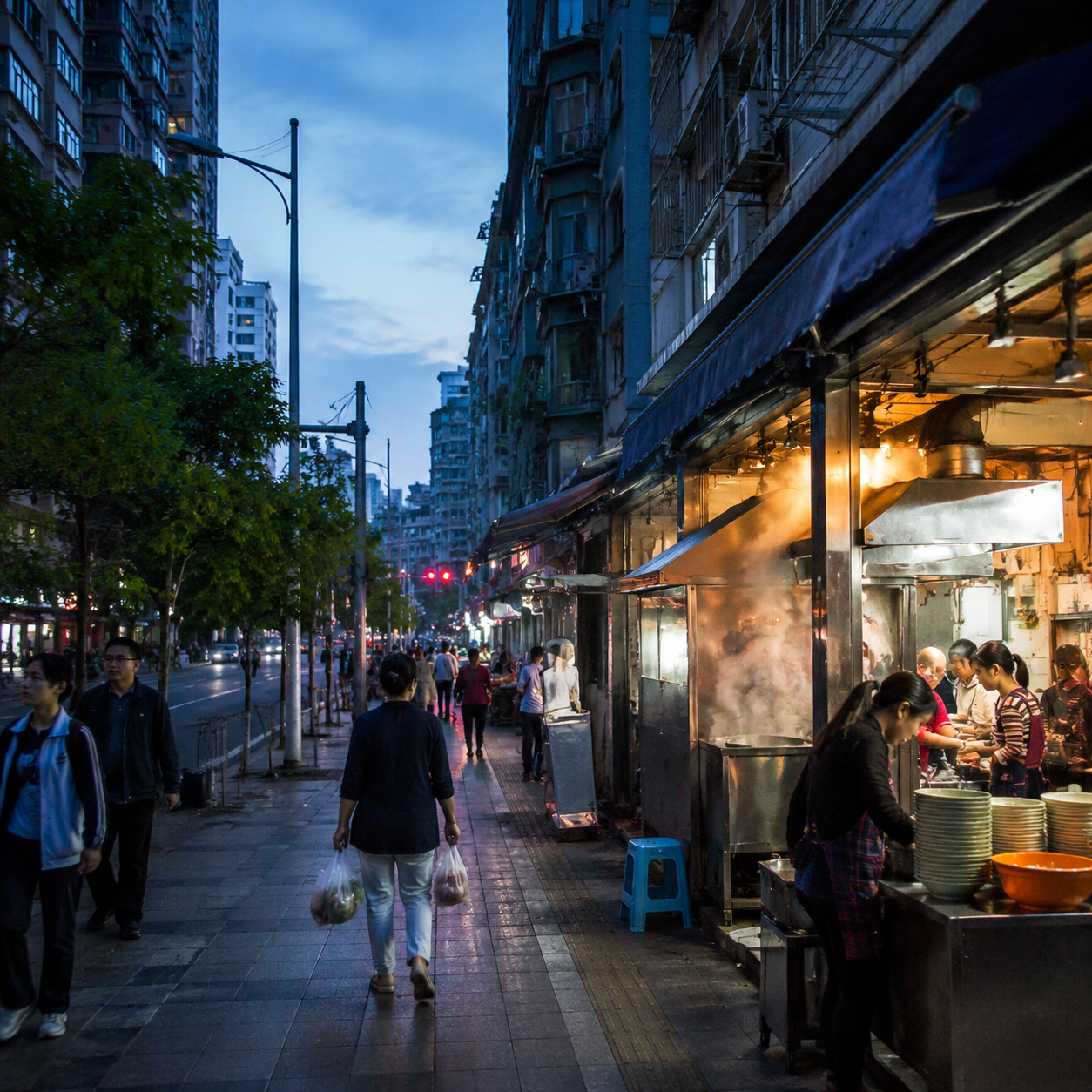
傍晚六点半,贵阳的天色还没有完全暗下来,楼缝之间留着一层潮润的蓝。白天的热气被山风慢慢推散,路边树叶上像挂着看不见的水汽。普通晚饭就是在这样的时刻开始的,不需要预约,也不需要特别的理由。下班的人从公交站走出来,学生背着书包经过粉店门口,买菜回来的老人把塑料袋换到另一只手里。街角小馆的灯一盏盏亮起,油烟从排风口钻出来,混着折耳根、糟辣椒和米饭的气味,让人还没坐下,就先觉得胃里空出一块地方。
At half past six in the evening, the sky in Guiyang has not gone fully dark, and a damp blue still remains between the buildings. The heat of the day is slowly pushed away by mountain wind, while the roadside leaves seem to hold invisible moisture. An ordinary dinner begins at just such a moment, without a reservation and without a special reason. People off work step out from bus stops, students with backpacks pass the doorway of noodle shops, and older residents returning from the market shift plastic bags from one hand to the other. Lamps in small corner restaurants turn on one by one. Cooking smoke slips from exhaust vents and mixes with the smells of fish mint, fermented chili, and rice, making the stomach feel empty before one has even sat down.
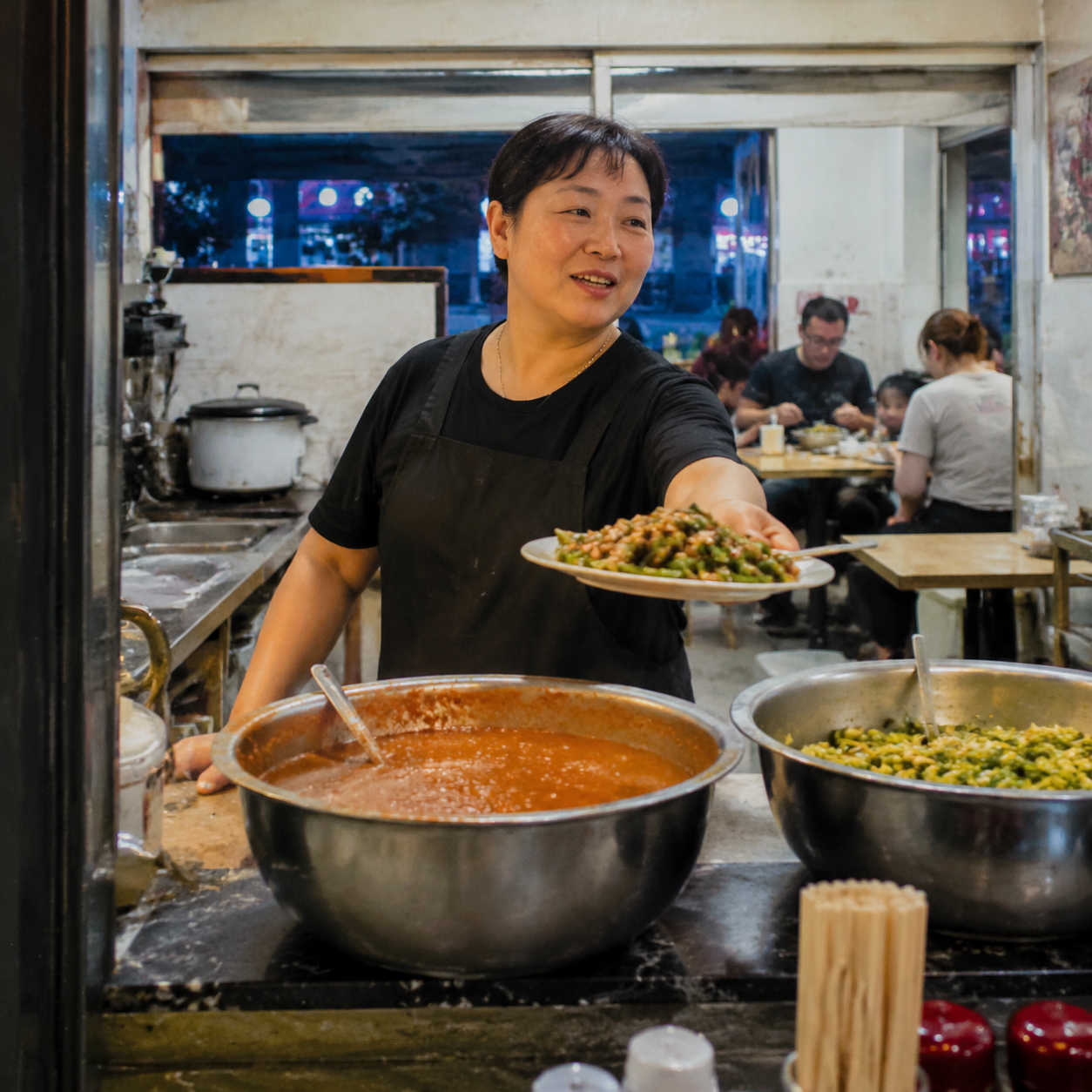
我走进一家临街的小饭馆,门脸不大,玻璃门上贴着几张褪色的菜单照片。店里有六七张桌子,桌面被擦得发亮,靠墙的位置放着电饭煲和一排不锈钢调料罐。老板娘一边招呼客人,一边把刚炒好的青椒肉丝端到窗口,声音不高,却足够穿过锅铲声。贵阳的普通晚饭往往不是精致的摆盘,而是热、快、准:一碗饭要软硬合适,一盘菜要有锅气,一勺辣椒要能把一天的疲惫提起来。坐下以后,人会很自然地放松肩膀,好像城市允许你暂时不用表现得精神。
I enter a small restaurant facing the street. Its storefront is modest, and several faded menu photos are pasted on the glass door. Inside are six or seven tables, their surfaces wiped bright, while an electric rice cooker and a row of stainless-steel condiment tins stand against the wall. The owner calls to customers while carrying a fresh plate of shredded pork with green peppers to the serving window. Her voice is not loud, but it crosses the sound of spatulas easily. An ordinary Guiyang dinner is rarely about elegant plating; it is about being hot, fast, and accurate: rice must be properly tender, a dish must carry wok heat, and a spoonful of chili must lift the fatigue of the day. After sitting down, one naturally relaxes the shoulders, as if the city permits you not to look energetic for a while.
菜单上写着许多熟悉的名字:酸汤豆腐、辣子鸡、炒空心菜、素瓜豆、回锅肉、番茄鸡蛋汤。它们不像旅游攻略里的招牌菜那样被反复强调,却更像贵阳人每天真正会点的东西。我点了一份酸汤豆腐、一盘折耳根拌黄瓜,又要了一碗白米饭。隔壁桌两位上班族点了辣子鸡和青菜,边吃边讨论明天要交的表格;靠门的一家三口给孩子点了不太辣的番茄蛋汤,父亲把肉夹到孩子碗里,母亲提醒他先吹一吹。普通晚饭的好处就在于,它把每个人的生活放在同一个热气里,却不要求他们相互解释。
The menu lists many familiar names: sour-soup tofu, spicy chicken, stir-fried water spinach, simple squash and beans, twice-cooked pork, and tomato egg soup. They are not emphasized like famous dishes in travel guides, but they are closer to what Guiyang people actually order every day. I choose sour-soup tofu, a plate of fish mint mixed with cucumber, and a bowl of plain rice. At the next table, two office workers have spicy chicken and greens while discussing a form due tomorrow. Near the door, a family of three orders tomato egg soup that is not too spicy for the child; the father places meat into the child’s bowl, and the mother tells him to blow on it first. The beauty of an ordinary dinner is that it places everyone’s life inside the same steam without requiring them to explain themselves to one another.
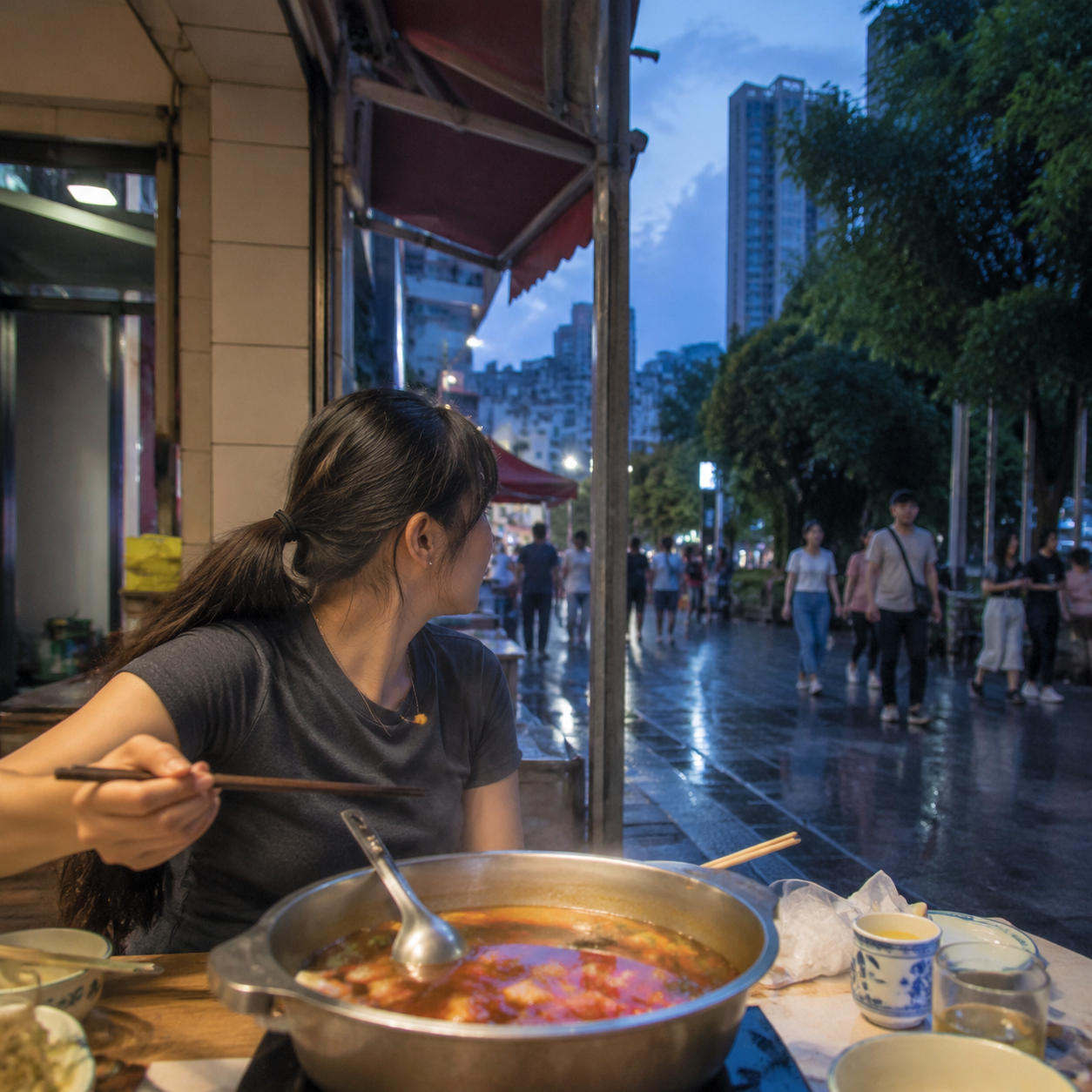
酸汤豆腐端上来时,碗边还在冒泡。汤色不是浓重的红,而是带着番茄和发酵味道的明亮酸香,豆腐在里面轻轻晃动,像被晚风推着。第一口喝下去,酸味先把舌头叫醒,随后才是辣意慢慢铺开。贵阳的酸不像单纯的刺激,更像潮湿天气里的一扇窗,让人从闷里透出来。豆腐很嫩,夹起来容易碎,所以要连汤一起舀进饭上。白米饭吸了酸汤,变得有颜色,也有了性格。这样的饭菜不需要讲究顺序,饿的人会知道怎么吃:先喝一口汤,再扒一口饭,最后用筷子夹起一片折耳根。
When the sour-soup tofu arrives, bubbles still rise along the rim of the bowl. The broth is not a heavy red but a bright sour fragrance carrying tomato and fermentation. The tofu trembles lightly inside it, as if moved by evening wind. With the first sip, the sourness wakes the tongue before the heat slowly spreads. Guiyang’s sour flavor is not mere sharpness; it is more like a window opened in humid weather, letting a person breathe out of stuffiness. The tofu is tender and breaks easily, so it should be spooned over rice together with the soup. Plain rice absorbs the sour broth and gains both color and personality. Food like this does not need a refined order. A hungry person knows how to eat it: first a sip of soup, then a mouthful of rice, finally a slice of fish mint lifted with chopsticks.
折耳根是贵阳晚饭里很有态度的配角。外地人常常需要一点时间接受它,本地人却能把它吃得很平常。它和黄瓜一起拌,放酱油、醋、糊辣椒和一点蒜,入口先是清脆,然后才有那种像泥土、青草和雨后墙根混在一起的气味。有人说它冲,有人说它香,可在贵阳的晚饭桌上,它不需要辩解。它就是这座城市湿润性格的一部分,像阴天里不会准时落下的雨,像山坡上突然出现的雾。吃一口酸汤,再吃一口折耳根,人的味觉好像也变得更能理解这里的天气。
Fish mint is a side character with strong attitude at a Guiyang dinner. Visitors often need time to accept it, while locals eat it as something entirely ordinary. Mixed with cucumber, soy sauce, vinegar, roasted chili, and a little garlic, it first tastes crisp, and then releases a smell like soil, grass, and the foot of a wall after rain. Some people call it pungent, others call it fragrant, but at a Guiyang dinner table it does not need to defend itself. It is part of the city’s damp temperament, like rain that does not fall exactly on time on a cloudy day, or mist that suddenly appears on a slope. Take one mouthful of sour soup and another of fish mint, and the sense of taste seems better able to understand the local weather.
店里最热闹的时候,所有桌子几乎都坐满了。门口不断有人探头问还有没有位置,老板娘会抬眼看一圈,说等两分钟,马上有人吃完。贵阳人吃晚饭不一定拖很久,尤其是普通工作日。大家有话就说,有菜就夹,吃到热起来时把外套拉链松开,吃完后用纸巾擦嘴,扫码付款,推门出去。桌子很快被重新擦过,下一拨客人坐下,筷子和碗发出清脆的碰撞声。城市的节奏就在这样重复的动作里延续:有人结束一天,有人刚开始夜班,有人还要去接孩子,有人只想回家洗澡。
At the busiest moment, nearly every table is full. People keep leaning in through the doorway to ask whether seats are available, and the owner looks around before saying, wait two minutes, someone is almost finished. Guiyang people do not necessarily linger long over dinner, especially on an ordinary workday. They speak if there is something to say, pick up food when it arrives, unzip jackets when the meal warms them, wipe their mouths after eating, scan to pay, and push the door open to leave. The table is quickly wiped again, the next guests sit down, and chopsticks strike bowls with a clear sound. The city’s rhythm continues through these repeated motions: someone ends a day, someone is about to begin a night shift, someone still has to pick up a child, and someone simply wants to go home and shower.
我注意到贵阳普通晚饭的声音也很丰富。锅铲刮过铁锅,电饭煲盖子被打开时冒出一阵蒸汽,冰柜门关上时轻轻一响,客人用方言问老板能不能少放辣,手机支付成功后传出短促提示音。外面的车流不算安静,电动车在门前停下又离开,偶尔有雨点落在遮阳棚上,像有人用手指敲塑料板。可这些声音并不吵,它们像是晚饭的背景乐,证明食物正在被做出来,生活正在被照料。人坐在里面,会觉得自己不是独自面对夜晚,而是被一整条街的烟火气包围着。
I notice that the sound of an ordinary Guiyang dinner is also rich. A spatula scrapes a wok, steam rises when the rice cooker lid opens, the freezer door clicks shut, a customer asks in dialect whether the chili can be reduced, and a short alert announces successful mobile payment. Traffic outside is not quiet. Electric bikes stop and leave in front of the door, and occasional raindrops hit the awning like fingers tapping plastic. Yet these sounds are not noisy. They are the background music of dinner, proof that food is being made and life is being tended. Sitting inside, one feels not alone before the night, but surrounded by the warmth of an entire street.
贵阳的晚饭常常离不开辣椒,但这里的辣并不只有一种。油辣椒有香气,糊辣椒带着被火烤过的干爽,糟辣椒有发酵后的酸甜,蘸水里的辣又被葱花、香菜和花椒分成许多层。老板娘问我要不要蘸水时,我点头,她便拿来一个小碟,里面红亮亮的,表面浮着一点油光。我把豆腐夹进去轻轻滚一圈,入口时先是酸汤的清,再是蘸水的厚。普通晚饭之所以让人记得住,往往不是因为用了昂贵食材,而是因为味道之间有这种层次:便宜、直接,却认真。
Guiyang dinners often cannot be separated from chili, but the heat here is not a single thing. Oil chili has fragrance, roasted chili has a dry fire-touched aroma, fermented chili carries sour sweetness, and the heat in dipping sauce is divided into layers by scallions, cilantro, and Sichuan pepper. When the owner asks whether I want dipping sauce, I nod, and she brings a small saucer, bright red with a little oil shining on the surface. I roll a piece of tofu through it gently. In the mouth comes first the clearness of sour soup, then the thickness of the dip. An ordinary dinner is often memorable not because expensive ingredients are used, but because the flavors have such layers: inexpensive, direct, and serious.
吃到一半,外面下起了细雨。贵阳的雨有时不像正式的天气,更像空气忽然决定变得更湿。路人没有明显慌张,有人把帽子往下压,有人走到屋檐下等一会儿,也有人像没看见一样继续骑车。饭馆里的人只是抬头看了一眼,随后继续吃。雨声让灯光显得更暖,玻璃门上出现细小水痕,街对面水果摊把塑料布往前拉了拉。这样的雨最适合继续吃饭,因为它把外面的世界稍微隔远了一点。碗里的热气升上来,手边的筷子还干燥,眼前的菜还够两三口,心里就会生出一种简单的满足。
Halfway through the meal, a fine rain begins outside. Guiyang rain sometimes feels less like formal weather than like the air suddenly deciding to become wetter. Passersby do not panic. Some lower their hats, some wait under eaves for a while, and others continue riding as if nothing has happened. People in the restaurant merely glance up and then keep eating. The sound of rain makes the lights seem warmer, small water lines appear on the glass door, and the fruit stall across the street pulls its plastic sheet forward. This kind of rain is perfect for continuing dinner because it pushes the outside world slightly farther away. Steam rises from the bowl, the chopsticks at hand remain dry, the food before the eyes still has a few bites left, and a simple satisfaction appears in the heart.
我想,普通晚饭最重要的地方也许就是“不特别”。它没有节日的仪式,没有宴席的客套,没有必须拍照记录的压力。它只是一天里的一个落点,让漂浮的事情慢慢沉下来。白天被催促的邮件、公交上的拥挤、没有完成的计划、忽然变冷的天气,都可以暂时放在桌边。人只需要面对饭菜,面对对面的人,或者面对自己。贵阳的小饭馆懂得这种不特别的价值,所以它们不把灯开得太亮,不把音乐放得太响,也不催人立刻开心。它们只把热饭端上来,让人有地方恢复。
Perhaps the most important quality of an ordinary dinner is precisely that it is not special. It has no holiday ritual, no banquet politeness, and no pressure to be photographed and recorded. It is simply a landing point within the day, allowing floating matters to settle slowly. The rushed emails of daytime, the crowding on buses, unfinished plans, and weather that suddenly turned cool can all be placed beside the table for the moment. A person only needs to face the food, the person across from them, or themselves. Guiyang’s small restaurants understand the value of this unspecialness, so they do not make the lights too bright, do not play music too loudly, and do not urge anyone to be cheerful at once. They simply bring hot rice and give people a place to recover.
吃完以后,我没有马上离开,而是把碗底最后一点酸汤喝掉。雨已经小了,街面被洗得发亮,车灯在水里拖出红色和白色的线。老板娘收走隔壁桌的空盘,顺手问我吃得惯不。我说很好吃,她笑了一下,说我们这里就是酸辣开胃,下雨天更适合。她说得很平常,像在说一件谁都知道的事情。可对一个路过的人来说,这句话像是给贵阳晚饭盖了一个印章:不是为了惊艳谁,只是诚实地照顾胃口,照顾天气,也照顾人从一天走向夜晚的那段路。
After finishing, I do not leave immediately. Instead, I drink the last bit of sour soup from the bottom of the bowl. The rain has weakened, the street surface has been washed bright, and car lights drag red and white lines through the water. The owner clears empty plates from the next table and casually asks whether the food suits me. I say it is very good, and she smiles, saying that here sour and spicy flavors open the appetite and are especially suitable on rainy days. She says it plainly, as if stating something everyone knows. Yet for a passerby, the sentence places a seal on Guiyang dinner: it is not designed to astonish anyone, but to honestly care for appetite, weather, and the road a person takes from day into night.
走出饭馆时,空气里仍有辣椒和雨水的味道。街边的灯映在湿地上,年轻人撑着伞去买奶茶,老人提着剩菜慢慢往小区门口走,外卖骑手把餐箱扣好,重新钻进细雨里。我回头看了一眼那家小店,里面又坐下了新的客人,锅声重新响起。贵阳的普通晚饭就是这样,不会因为一个人的离开而结束,也不会因为一个人的到来而刻意开始。它像城市每天固定升起的一阵热气,平凡,却可靠。只要有人饿了,有人愿意开火,有人愿意在雨里推门进来,这顿晚饭就会继续。
When I step out of the restaurant, the air still smells of chili and rainwater. Street lamps reflect on the wet ground, young people carry umbrellas to buy milk tea, an older person walks slowly toward a residential gate with leftovers, and a delivery rider closes the food box before entering the drizzle again. I look back at the small shop. New customers have already sat down, and the sound of the wok begins again. An ordinary Guiyang dinner is like this: it does not end because one person leaves, and it does not deliberately begin because one person arrives. It is like a fixed cloud of steam rising from the city every day, plain yet reliable. As long as someone is hungry, someone is willing to light the stove, and someone is willing to push open the door in the rain, this dinner will continue.
后来想起贵阳,我不一定先想起某个景点,反而会先想起那碗酸汤豆腐。它没有复杂的故事,却把城市的性格放得很近:潮湿、爽快、带一点辣,也带一点温柔。普通晚饭让人明白,认识一座城市不必总从宏大的地方开始。坐进一家小馆,听一会儿锅声,看一会儿门外的雨,吃一碗能让额头微微出汗的饭,就已经触到它很真实的一面。贵阳在山之间生活,也在一张张晚饭桌上生活。那些桌子不大,却每天稳稳接住许多人的疲惫、胃口和回家的心。
When I later think of Guiyang, I may not first remember a scenic spot. Instead, I may first remember that bowl of sour-soup tofu. It has no complicated story, yet it places the city’s character very close: damp, direct, slightly spicy, and also somewhat gentle. An ordinary dinner teaches that understanding a city does not always need to begin from grand places. Sit in a small restaurant, listen for a while to the wok, watch the rain outside the door, and eat a bowl of food that makes the forehead sweat slightly; one has already touched a very real side of it. Guiyang lives among mountains, and it also lives at dinner tables one after another. Those tables are not large, but every day they steadily receive many people’s fatigue, appetite, and desire to go home.
- 水果摊前站了十五分钟,我才学会在中国买水果不是只看价格 | Fifteen Minutes at a Fruit Stall Taught Me That Buying Fruit in China Is About More Than Price
- 鸡鸣寺到城墙下那一段夜路,让我读懂南京为什么适合慢慢看 | The Night Stretch from Jiming Temple to the Foot of the Wall Showed Me Why Nanjing Rewards Slow Looking
- 广东早茶:不只是吃,是一种生活方式 | Cantonese Morning Tea: More Than a Meal, It's a Way of Life
- 把天气留在行程里:秋天去喀纳斯的公路节奏 | Leave Weather in the Itinerary: An Autumn Road Rhythm for Kanas
- 苏州园林不是用来赶场的,我在一扇漏窗前停了十分钟 | Suzhou Gardens Are Not for Rushing; I Stopped Ten Minutes Before One Lattice Window
- 沙漠变电站:中国西部的太阳能版图 | From Sand to Power: China's Solar Empire in the Western Desert
- 我在成都住满一周后,才学会不慌不忙地过日子 | After a Week in Chengdu, I Finally Learned How to Live Without Rushing
- 外国人在中国买东西被拒收现金怎么办? | What To Do When a Chinese Shop Refuses Your Cash
- 五月的苏州雨丝落进园林时,我一个人学会把行程放轻一点 | In Suzhou's May Drizzle, I Learned to Travel Alone with a Lighter Grip
- 南昌第一碗拌粉还没吃完,我就先看懂了这座城路口的脾气 | Before Finishing My First Bowl of Rice Noodles in Nanchang, I Had Already Read the Temper of Its Crossings
Comments (0)