
海河风正冷的时候,一家小馆先把我的天津安顿下来了 | On a Cold Haihe Evening, a Small Eatery Settled Me into Tianjin
64# 天津那顿普通晚饭,比攻略里的招牌菜更真 | One Ordinary Dinner in Tianjin Felt More Real Than Any Famous Dish
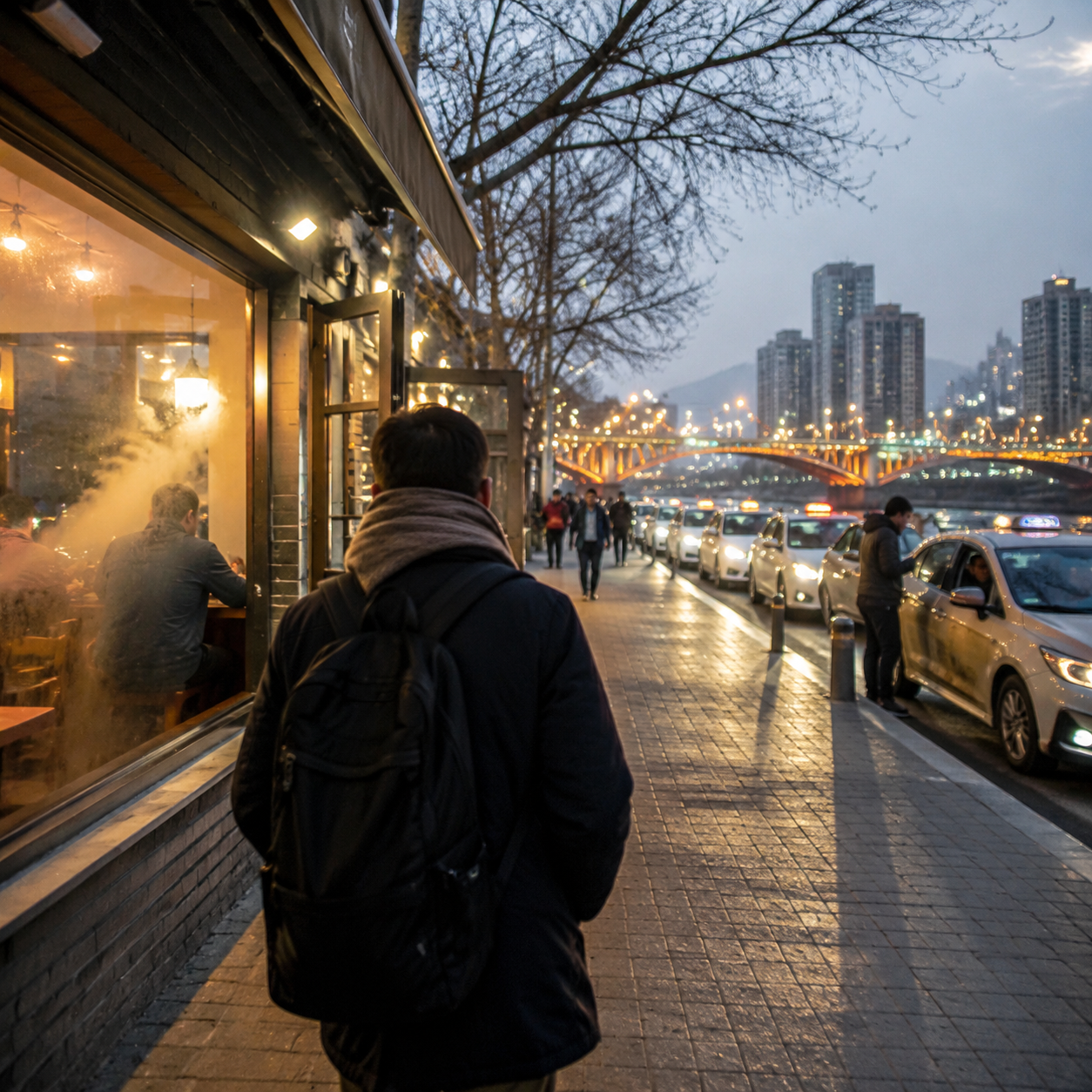
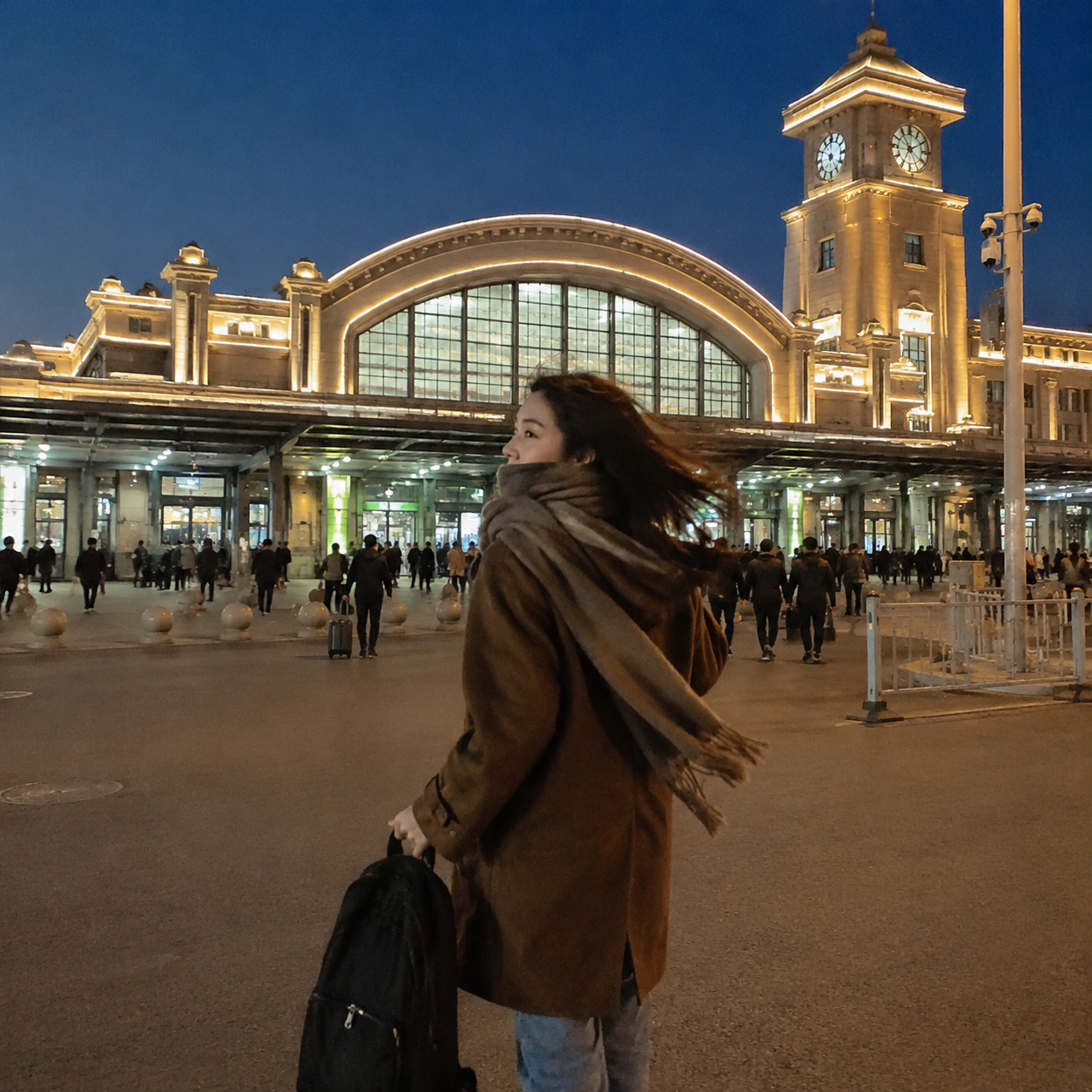
2024年11月6日傍晚六点十五分,我从天津站出来,手里拎着一个黑色背包,围巾被海河边的风吹得不停往脸上贴。天还没有完全黑,桥上的灯已经亮了,出租车在路边排成一列,司机摇下车窗招呼乘客。我是从西班牙来的,第一次到天津,手机里存着几家被反复推荐的餐厅,可我没有立刻去找那些名字。走到一条离酒店不远的街上时,我看见一家小馆门口冒着热气,玻璃门上贴着手写菜单,里面只有六七张桌子。一个穿深色毛衣的老板正把一盆刚炒好的土豆丝端到靠窗那桌,动作利落,嘴里还用天津口音和邻桌说笑。我停下脚步,决定把晚饭交给这个普通的门口。
At 6:15 in the evening on November 6, 2024, I came out of Tianjin Railway Station with a black backpack in my hand, my scarf blown against my face by the wind from the Haihe River. The sky was not completely dark yet, but the bridge lights were already on. Taxis lined up by the road, and drivers rolled down windows to call to passengers. I had come from Spain, and it was my first time in Tianjin. My phone held several restaurants recommended again and again, but I did not go looking for those names right away. When I walked onto a street not far from my hotel, I saw steam rising from the doorway of a small eatery. A handwritten menu was taped to the glass door, and there were only six or seven tables inside. The owner, wearing a dark sweater, was carrying a plate of freshly fried shredded potatoes to the table by the window, moving briskly while joking with the neighboring table in a Tianjin accent. I stopped and decided to entrust dinner to this ordinary doorway.
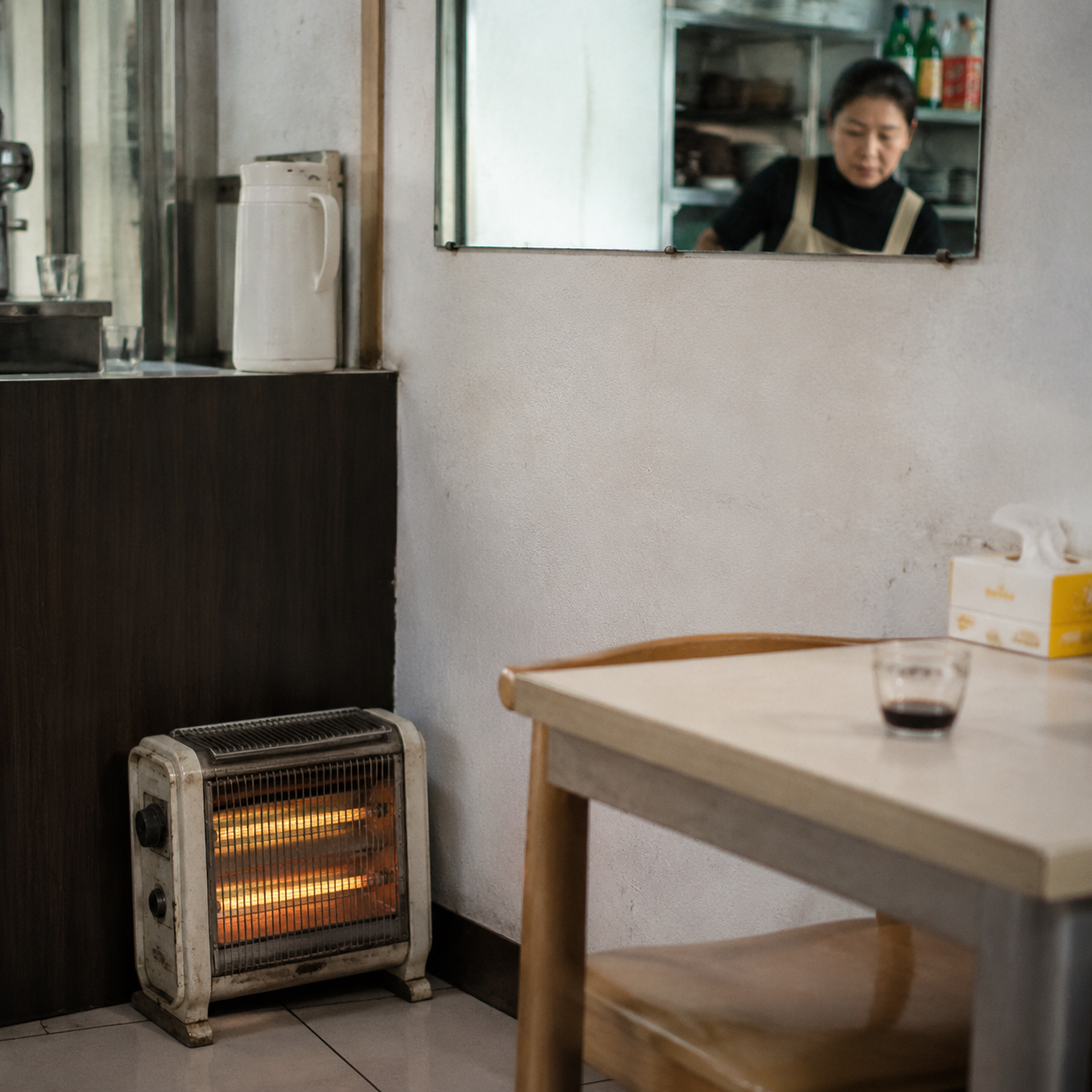
推门进去时,门上的塑料帘子擦过我的肩膀,带进一阵冷风。老板娘站在柜台后面,抬头看了我一眼,问我几个人。我说一个人,她立刻指向靠墙的小桌,说那儿暖和,别坐门口。我坐下后才发现暖和来自脚边一个小电暖器,外壳有些旧,却把桌下烤得很舒服。墙上贴着菜单:锅塌里脊、虾仁独面筋、老爆三、醋溜白菜、米饭、疙瘩汤。旁边还有一张纸写着今晚有煎饼果子,不过不是早摊那种,是老板娘自己给熟客做着解馋的。我原本以为天津晚饭应该从某道招牌开始,可这里的菜单像一张家庭备忘录,先问你冷不冷,再问你饿不饿。
When I pushed the door open, the plastic curtain brushed my shoulder and brought in a gust of cold air. The owner’s wife stood behind the counter, looked up at me, and asked how many people. I said one, and she immediately pointed to a small table against the wall, saying it was warmer there and that I should not sit by the door. Only after sitting down did I realize the warmth came from a small electric heater near my feet. Its casing was a little old, but it made the space under the table comfortable. The menu on the wall listed dishes such as pot-fried pork tenderloin, shrimp with gluten, laobao san, vinegar cabbage, rice, and dough-drop soup. Beside it, another sheet said that jianbing guozi was available tonight, not the morning-stall version, but something the owner’s wife made for regulars when they craved it. I had thought a Tianjin dinner should begin with a signature dish, but this menu felt like a family note: it first asked whether you were cold, and then whether you were hungry.
我点了一份醋溜白菜、一碗疙瘩汤,又犹豫着问能不能要半套煎饼果子。老板娘笑了,说半套不好摊,给我做小一点就行。她没有像服务员那样重复菜名,而是朝厨房喊了一声,把我的口味和份量一起说清楚。厨房里有人应了一声,铁锅很快响起来。油遇到白菜的声音清脆,醋香在几秒钟后冲出来,和蒸汽一起飘到店里。坐在我斜对面的两个大叔正在喝啤酒,其中一个听见我口音不熟,转过来问我从哪儿来。我说西班牙,他点点头,像听见一个很远但并不需要惊讶的地方,只说:“那你今儿算来对地方了,冷天就得吃口热乎的。”
I ordered vinegar cabbage and a bowl of dough-drop soup, then hesitated and asked whether I could have half a jianbing guozi. The owner’s wife laughed and said half was hard to spread on the griddle, but she could make a smaller one for me. She did not repeat the dish names like a waiter; instead she called toward the kitchen and explained both my taste and portion size at once. Someone answered from inside, and the wok soon began to ring. The sound of oil meeting cabbage was crisp, and the aroma of vinegar rushed out a few seconds later, drifting through the eatery with the steam. Two uncles sitting diagonally across from me were drinking beer. One heard that my accent was unfamiliar, turned around, and asked where I was from. I said Spain. He nodded, as if hearing of a place very far away but not requiring surprise, and said, “Then you came to the right place today. On a cold day you need something hot.”
那碗疙瘩汤先上来,碗沿烫得我不敢立刻端。汤里有西红柿、鸡蛋花、细碎的青菜和大小不完全一样的面疙瘩。它不是为了拍照好看而存在的,颜色朴素,热气诚实。我用勺子舀起第一口,舌头先被烫了一下,然后尝到番茄的酸和面疙瘩的软韧。老板路过时看见我吹汤,笑着说慢点,天津话的尾音往上扬,像一句话后面还挂着一个小钩子。我听不懂所有词,却能听出那种不把客气说得太满的关照。它没有让人尴尬,只把陌生人和本地人的距离往近处推了一点。
The bowl of dough-drop soup arrived first, and the rim was too hot for me to hold immediately. Inside were tomatoes, ribbons of egg, finely chopped greens, and little dough lumps of uneven size. It did not exist to look good in photographs; its colors were plain and its steam was honest. I took the first spoonful, burned my tongue slightly, and then tasted the acidity of tomato and the soft chew of the dough. When the owner passed by and saw me blowing on the soup, he smiled and told me to take it slowly. The final sound of his Tianjin speech rose upward, like a small hook hanging at the end of the sentence. I did not understand every word, but I could hear a kind of care that did not overstate politeness. It did not make anyone awkward; it simply moved the distance between stranger and local a little closer.
醋溜白菜上桌时,盘子边缘还有一点油光。白菜帮保持着脆,叶子吸满酸香,蒜末粘在边角上。我吃了几口,才意识到这道菜的好不在特别,而在准。火候准,酸度准,咸淡准,份量也准,刚好让一个冷得有些发僵的晚上恢复过来。邻桌一家三口点了锅塌里脊和米饭,孩子把筷子摆成两根火车轨道,被妈妈轻轻拍了一下手背。爸爸一边给孩子夹菜,一边和老板讨论明天会不会降温。这样的谈话没有任何旅行手册会记录,可它让我感到自己坐进了天津的晚饭时间,而不是坐进一家等待被评价的餐厅。
When the vinegar cabbage arrived, a little sheen of oil remained along the edge of the plate. The cabbage stems stayed crisp, the leaves were full of sour fragrance, and minced garlic clung to the corners. After a few bites, I realized the goodness of the dish was not in being unusual but in being exact. The heat was exact, the acidity exact, the saltiness exact, and the portion exact, just enough to revive a cold evening that had made my body stiff. At the neighboring table, a family of three ordered pot-fried pork tenderloin and rice. The child arranged chopsticks into two train tracks and was gently tapped on the back of the hand by his mother. The father served the child food while discussing with the owner whether the temperature would drop tomorrow. No travel guide would record such conversation, but it made me feel that I had sat down inside Tianjin’s dinner hour, not inside a restaurant waiting to be rated.
小煎饼果子是在我吃到一半时端来的。老板娘说她给我少放了点酱,怕我第一次吃觉得咸,又加了一点葱花,说这样香。薄饼卷着果箅儿,边缘还有刚离开鏊子的脆。它和我在网上见过的整齐照片不太一样,形状有点随意,纸袋也没有漂亮图案,但咬下去时,鸡蛋、面香、酱香和果箅儿的碎裂声一起出现。我旁边的大叔看我吃得小心,忍不住笑,说这东西别太斯文,趁热大口咬。我照他说的做,酱差点沾到手套上,他笑得更响,像这才算吃对。
The small jianbing guozi arrived when I was halfway through the meal. The owner’s wife said she had used a little less sauce because she was afraid it might taste too salty for my first time, and she had added scallions because they made it fragrant. The thin pancake wrapped around the crispy fried cracker, and its edge still held the crunch of having just left the griddle. It did not look quite like the neat photos I had seen online. Its shape was a little casual, and the paper bag had no pretty design, but when I bit into it, egg, flour aroma, sauce, and the shattering sound of the cracker all appeared together. The uncle beside me saw that I was eating cautiously and could not help laughing. He said this was not something to eat too elegantly; I should take big bites while it was hot. I did as he said, and the sauce almost touched my glove. He laughed louder, as if only then had I eaten it correctly.
店里的电视开着,声音不大,屏幕上正播本地新闻。新闻结束后换成相声片段,两个演员一句接一句地抖包袱,店里有几个人跟着笑。笑声不是爆发式的,而是很熟悉的那种,像听见自家亲戚又讲了一个旧笑话。老板一边擦桌子一边接话,邻桌大叔也跟着补了两句,我听懂的部分有限,却被语气带着笑了起来。天津的幽默在那一刻不是舞台上的表演,而是晚饭桌边顺手递出来的调料。它不需要解释笑点,只需要一个合适的停顿、一个上扬的尾音、一个大家都懂的眼神。
The television in the eatery was on, but not loud. A local news program was playing on the screen. After the news, it switched to a xiangsheng comedy clip, and the two performers delivered lines one after another. Several people in the shop laughed along. The laughter was not explosive; it was familiar, like hearing a relative tell an old joke again. The owner wiped tables while adding a line, and the uncle at the next table followed with two comments. I understood only part of it, but the tone carried me into laughter. At that moment, Tianjin humor was not a stage performance. It was a seasoning casually passed along beside the dinner table. It did not need the joke explained; it needed only the right pause, a rising final tone, and a look everyone understood.
吃饭中途,一个骑电动车送货的年轻人进来取饭。他把头盔摘下来夹在胳膊下,先对老板娘说路上有点堵,又问自己的菜好了没有。老板娘说还差两分钟,让他先坐暖和一下。他没有坐实,只靠着门边的小凳子,把手机屏幕亮给同伴发语音:“我在这儿等会儿,马上走。”那句话说得很普通,却把城市夜晚的另一层生活带进来。有人在店里慢慢吃,有人在等着把热饭带走;有人把晚饭当作停靠点,有人把晚饭当作下一段工作的起点。小馆的门一开一合,冷风和饭香轮流进出。
Halfway through the meal, a young delivery rider on an electric bike came in to pick up food. He took off his helmet and tucked it under his arm, first telling the owner’s wife that traffic had been a bit jammed, then asking whether his order was ready. She said it needed two more minutes and told him to sit and warm up first. He did not fully sit down; he only leaned against a small stool near the door and lit up his phone screen to send a voice message to a coworker: “I’ll wait here for a moment and leave right away.” The sentence was ordinary, yet it brought another layer of the city’s night inside. Some people slowly ate in the shop, while others waited to carry hot meals away. Some treated dinner as a place to pause, and others treated dinner as the starting point of another stretch of work. The small eatery’s door opened and closed, letting cold wind and food aroma take turns entering.
我想起下午在海河边走路时,看见很多游客举着手机拍桥和楼,也看见本地人提着菜从他们身后经过。那时我还分不清自己该看哪一边。到了这顿饭,我才明白天津不是只在河岸、洋楼和名店里,它也在一碗疙瘩汤的热气里,在老板娘给陌生客人调淡一点的酱里,在邻桌关于天气的抱怨里。旅行时人很容易被“必须吃什么”牵着走,好像错过某道菜就错过城市。可这家小馆没有让我完成清单,它让我停在清单之外,看见人们每天怎样把胃口、工作、寒冷和玩笑放在同一张桌上。
I remembered walking along the Haihe River in the afternoon, seeing many tourists holding phones to photograph bridges and buildings, while local people walked behind them carrying groceries. At that moment I had not known which side I should look at. During this dinner, I understood that Tianjin was not only on riverbanks, in old foreign-style buildings, or in famous restaurants. It was also in the steam of a bowl of dough-drop soup, in the owner’s wife making the sauce lighter for a stranger, and in the neighboring table’s complaints about the weather. When traveling, it is easy to be pulled along by the idea of what one must eat, as if missing a dish means missing the city. But this little eatery did not help me complete a checklist. It made me stop outside the checklist and see how people place appetite, work, cold weather, and jokes on the same table every day.
老板过来问我吃得惯不惯。我说很好吃,尤其是汤。他没有立刻说谢谢,而是认真看了看碗,说你这还剩点,别浪费,凉了就不好喝了。我被他说得有点不好意思,赶紧又喝了几口。他笑了一下,拿起空盘子往厨房走。这样的直接如果发生在别处,我可能会觉得被催促,可在这里,它像一种熟人之间的提醒。我不是被当成需要特别照顾的外国游客,也不是完全透明的路人,而是一个坐在店里吃饭的人。老板关心的不是我会不会写评价,而是这碗汤热的时候有没有被喝完。
The owner came over and asked whether the food suited my taste. I said it was very good, especially the soup. He did not immediately say thank you; he looked seriously at the bowl and said I still had some left and should not waste it, because it would not taste good once cold. I felt a little embarrassed and quickly drank a few more spoonfuls. He smiled and carried the empty plate toward the kitchen. If such directness had happened elsewhere, I might have felt rushed, but here it felt like a reminder between familiar people. I was not treated as a foreign tourist needing special care, nor as a completely invisible passerby, but as a person eating in the shop. The owner did not care whether I would write a review; he cared whether the soup had been finished while it was hot.
结账时,老板娘用计算器按了几下,又把煎饼果子的小份少收了几块钱。她说本来就给我做小了,不能按整份算。我坚持说没关系,她摆摆手,说天津人做买卖也得讲个实在。旁边的大叔插话,说你让他下次再来不就行了。老板娘笑着回他:“人家从国外来的,下次还不知道啥时候呢。”这句话让我心里一动。旅行里的“下次”常常很轻,像一句礼貌话,可当它从小馆的柜台后面说出来时,忽然有了重量。它承认我可能不会很快回来,却还是把这顿饭做得认真。
When I paid, the owner’s wife tapped the calculator several times and charged a few yuan less for the smaller jianbing guozi. She said she had made it smaller, so she could not count it as a full portion. I insisted it was fine, but she waved her hand and said people in Tianjin had to do business honestly. The uncle nearby cut in and said she could simply tell me to come back next time. She laughed and replied, “He came from abroad. Who knows when next time will be?” That sentence moved me. In travel, “next time” is often light, like a polite phrase. But when it came from behind the counter of a small eatery, it suddenly gained weight. It admitted that I might not return soon, yet still treated this meal with seriousness.
我走出小馆时,街上的风更冷了。玻璃门在身后合上,屋里的笑声被关成模糊的一团。对面水果店把橘子堆成小山,旁边的理发店有人刚洗完头,湿发搭在毛巾上。一个老人拎着保温桶慢慢走过,两个中学生在路灯下分一串糖葫芦。那条街没有任何让我必须拍照的标志,可我走得很慢,因为刚吃完的晚饭把周围的细节都照亮了。我能闻到油烟、烤红薯、湿冷的路面和水果摊的甜味,它们混在一起,不漂亮,却很真实。
When I walked out of the eatery, the wind on the street had grown colder. The glass door closed behind me, turning the laughter inside into a muffled cloud. Across the street, a fruit shop stacked oranges into small hills, and in the hair salon next door, someone had just had their hair washed, wet strands resting on a towel. An elderly person slowly passed with a thermal food container, and two middle school students shared a stick of candied hawthorn under a streetlamp. The street had no landmark that I had to photograph, but I walked slowly because the dinner I had just eaten lit up all the surrounding details. I could smell cooking smoke, roasted sweet potatoes, the damp cold road, and the sweetness of the fruit stand. They mixed together, not prettily, but truthfully.
回酒店的路上,我经过一家还开着的小窗口,里面有人在摊煎饼果子。铁板上的面糊被木刮子推开,鸡蛋磕上去,葱花撒下去,动作比我想象中更快。排队的人没有很多,却都很安静,一个年轻妈妈给孩子拉上帽子,一个穿西装的男人把公文包夹在胳膊下腾出手付款。我已经吃饱了,却仍然站在旁边看了一会儿。白天我把煎饼果子当成天津的一个符号,晚上才发现它也是很多人赶路时的热量、下班后的安慰、孩子手里的香味。符号被咬开以后,里面才是生活。
On the way back to the hotel, I passed a small window that was still open, where someone was making jianbing guozi. Batter was spread across the iron griddle with a wooden scraper, an egg was cracked on top, scallions were scattered, and the movements were faster than I had imagined. There were not many people in line, but they were quiet. A young mother pulled her child’s hat up, and a man in a suit tucked his briefcase under his arm to free a hand for payment. I was already full, yet I stood beside the window and watched for a while. During the day I had treated jianbing guozi as a symbol of Tianjin. At night I discovered it was also calories for people on the move, comfort after work, and fragrance in a child’s hand. Only after a symbol is bitten open does life appear inside.
第二天我按计划去了几家有名的地方,也吃了被推荐很多次的菜。它们当然好,环境整洁,摆盘讲究,服务也周到。可我发现自己总会拿前一晚的小馆作比较。那些名菜像清楚的答案,而那顿普通晚饭像一个慢慢展开的问题:为什么老板会记得熟客少放辣,为什么邻桌能自然加入对话,为什么一碗汤比漂亮的餐具更让人安心。旅行不是只寻找最好的味道,有时是寻找味道背后的人怎样生活。天津给我的这部分答案,不在最亮的门头下,而在一张靠墙的小桌、一个旧电暖器和一碗没有被浪费的汤里。
The next day I went to several well-known places as planned and ate dishes that had been recommended many times. They were certainly good, with clean environments, careful plating, and thoughtful service. Yet I found myself comparing them with the little eatery from the previous night. Those famous dishes were like clear answers, while that ordinary dinner was like a question slowly unfolding: why the owner remembered that regular customers wanted less chili, why neighboring tables could naturally join a conversation, and why a bowl of soup could feel more reassuring than beautiful tableware. Travel is not only the search for the best flavor. Sometimes it is the search for how people live behind that flavor. The part of the answer Tianjin gave me was not under the brightest signboard, but at a small table against the wall, beside an old electric heater, and inside a bowl of soup that was not wasted.
离开天津前的早晨,我又走到那条街,可小馆还没开门。卷帘门拉着,门口堆着几箱白菜和一袋面粉,像晚饭还在睡觉。我站了几秒,给朋友发了一条消息,说如果以后来天津,别只追着名店跑,要留一顿晚饭给普通街口。发完以后我把手机收起来,没有拍照。那家店对我来说已经不需要成为照片证据,它更像一个温度记忆:塑料帘子擦过肩膀,电暖器烤着鞋底,天津口音在锅气里拐弯,一口热汤把陌生的晚上慢慢安放好。
On the morning before leaving Tianjin, I walked back to that street, but the eatery had not opened yet. The rolling shutter was down, and several boxes of cabbage and a bag of flour were stacked at the entrance, as if dinner were still asleep. I stood there for a few seconds and sent a message to a friend, saying that if they came to Tianjin in the future, they should not only chase famous restaurants but should leave one dinner for an ordinary street corner. After sending it, I put my phone away and did not take a photo. That shop no longer needed to become photographic proof for me. It had become a memory of temperature: a plastic curtain brushing my shoulder, an electric heater warming my shoe soles, Tianjin accents turning inside wok steam, and a mouthful of hot soup slowly settling a strange evening into place.
在火车启动的时候,我看见窗外的站台慢慢往后退。车厢里有人打开早餐袋,葱花和面香短暂地飘过来。我想到那位老板娘说的“讲个实在”,也想到邻桌大叔教我大口咬煎饼果子的样子。天津没有用一顿豪华宴席迎接我,而是用一顿普通晚饭让我坐下来,听人说话,看人进出,学着把热汤喝完。对一个第一次来的外国人来说,这比任何被放大的招牌都更真。因为招牌告诉你哪里有名,普通晚饭告诉你一座城市怎样在夜里照顾自己的胃、嘴和心情。
When the train started moving, I watched the platform outside slowly slide backward. Someone in the carriage opened a breakfast bag, and the fragrance of scallions and flour drifted over briefly. I thought of the owner’s wife saying that business should be honest, and I thought of the uncle teaching me to take big bites of jianbing guozi. Tianjin did not welcome me with a luxurious banquet. It invited me to sit down through an ordinary dinner, to listen to people talk, to watch people come and go, and to learn to finish hot soup. For a foreigner visiting for the first time, that felt more real than any enlarged signboard. A signboard tells you where something is famous; an ordinary dinner tells you how a city cares for its stomach, its mouth, and its mood at night.

- 桂林喀斯特山水:自然之美 | Guilin Karst Mountains: Nature at Its Best
- 第一次在中国水果店买西瓜,我学会先说想现场切还是带走 | The First Time I Bought Watermelon in a Chinese Fruit Shop, I Learned to Say Whether I Wanted It Cut to Eat Now or Taken Home
- 一场突来的雨,让我在中国学会把屋檐下当成一种临时公共空间 | A Sudden Rain in China Taught Me to See the Eaves as Temporary Public Space
- 中国烧烤江湖地图 | The Great BBQ Map of China
- 签证与入境要求 | Visa and Entry Requirements
- 我在成都住满一周后,才学会不慌不忙地过日子 | After a Week in Chengdu, I Finally Learned How to Live Without Rushing
- 摊位编号不重要,重要的是你站在哪座城市 | The Stall Number Doesn't Matter — What Matters Is Which City You're Standing In
- 在北京一节低年级语文课后,作者终于明白小朋友为什么总先学量词 | After a Beijing Language Class, I Finally Understood Why Kids Learn Measure Words So Early
- 清晨到达北京,我才知道第一天行程不能排太满 | Arriving in Beijing at Dawn Taught Me Not to Overpack the First Day
- 我在和田河边捡了一块石头,然后掉进了八千年的坑 | I Picked Up a Stone by the Hetian River and Fell Into an 8,000-Year Rabbit Hole
Comments (0)