
武汉热干面摊前的队伍,让我学会看城市的脾气 | A Queue for Hot Dry Noodles in Wuhan Taught Me to Read a City’s Temper
武汉热干面摊前的队伍,让我学会看城市的脾气 | A Queue for Hot Dry Noodles in Wuhan Taught Me to Read a City’s Temper
我第一次在武汉清晨排热干面,是在一条还没完全醒透的街上。天色灰亮,路边的卷闸门半开着,电动车从人缝里滑过去,早餐摊前已经排出一条歪歪斜斜的队。芝麻酱的香味先到,像一只手把人从困意里拽出来。摊主没有招呼谁,也没有解释流程,只是把面从锅里挑起,抖两下,放进碗里,浇酱、撒葱、加萝卜丁,动作快得像早就和这座城市约好了节拍。我站在队尾,忽然觉得自己不是在等一碗面,而是在等武汉给我一个进入它的方式。
The first time I queued for hot dry noodles in Wuhan, it was on a street that had not fully woken up. The sky was pale gray, rolling shutters along the road were half open, electric scooters slipped through gaps between people, and a crooked line had already formed in front of the breakfast stall. The aroma of sesame paste arrived before anything else, like a hand pulling people out of sleep. The vendor did not greet anyone or explain the process. He lifted noodles from the pot, shook them twice, dropped them into a bowl, added sauce, scallions, and diced pickled radish, moving as if he had long ago agreed on a rhythm with the city. Standing at the end of the line, I felt I was not merely waiting for a bowl of noodles. I was waiting for Wuhan to show me an entrance.
这条队伍和我在别的城市见过的不太一样。它不安静,也不混乱;不温柔,也不粗鲁。有人一边排队一边接电话,声音很大,却能在轮到自己时准确往前挪半步。有人替同事带三碗,先报口味,再报不要辣,最后补一句“快点哈”。后面的人听见了,也没有不耐烦,只是把身体往旁边让一点,让端面的人能出去。队伍像一条活的线,不是靠规则说明维持,而是靠所有人对空间、速度和脾气的共同判断维持。
This queue was different from queues I had seen in other cities. It was neither quiet nor chaotic, neither gentle nor rude. Someone talked loudly on the phone while waiting, yet moved forward by exactly half a step when his turn came. Someone bought three bowls for coworkers, stating the flavors first, then saying no chili, and finally adding, “make it quick.” People behind him did not look annoyed. They simply shifted aside so those carrying noodles could leave. The line felt alive. It was maintained not by posted instructions but by everyone’s shared reading of space, speed, and temper.
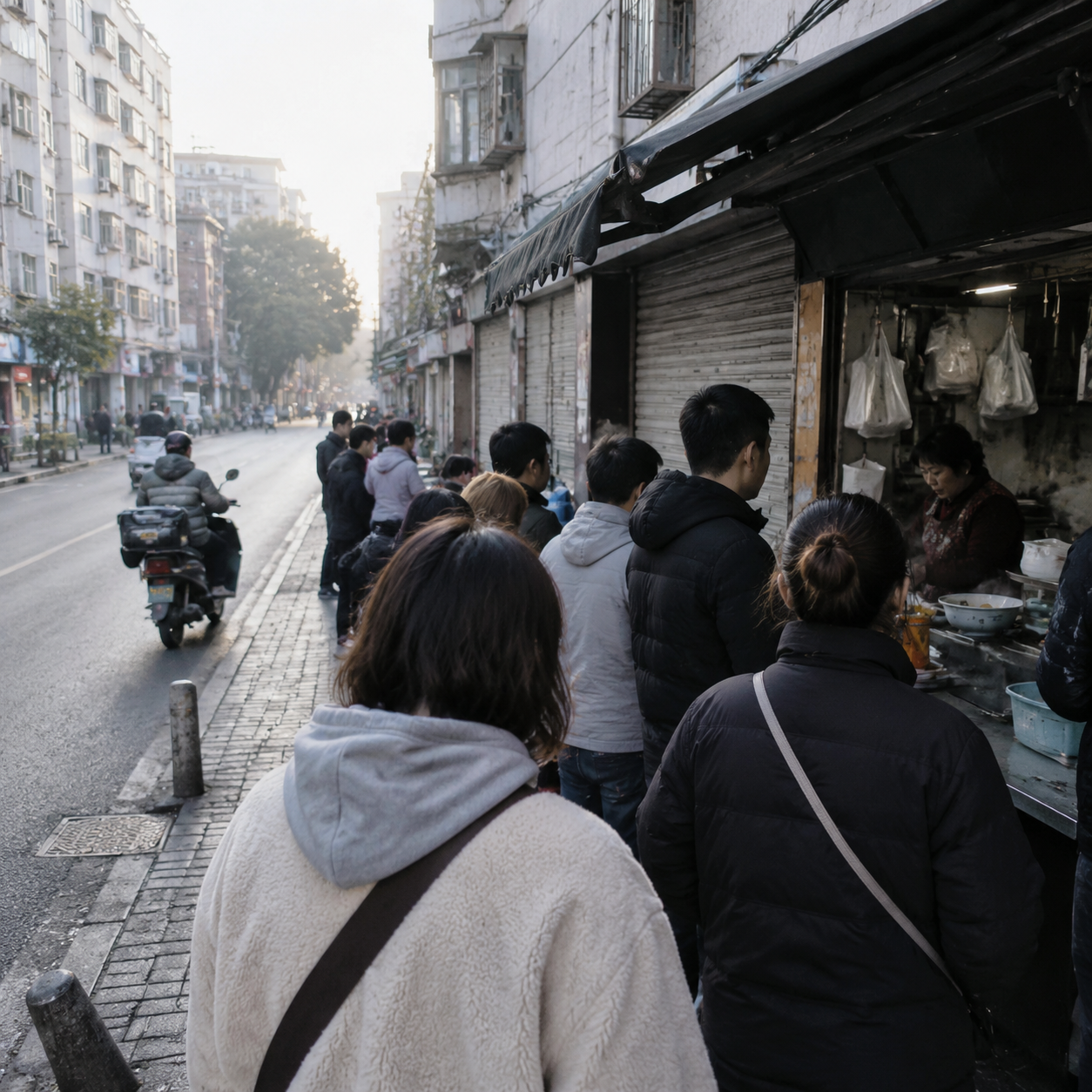
武汉的早餐摊让我很快明白,这座城市不太爱把事情包装得过分客气。它的热情常常带着直接的边角,像热干面里的芝麻酱,浓、粘、厚,必须趁热拌开。你若站在摊前犹豫太久,摊主可能会抬眼问你一句“要么事?”语气听起来像催促,其实只是把选择推到你面前。这里的关照不一定以柔软的方式出现,它可能是一句提醒你别挡路的话,一次把碗往你手边推近的动作,或者有人看你第一次吃,顺口说“拌匀点,不然底下咸”。
The breakfast stall quickly taught me that Wuhan is not a city that overpackages things in politeness. Its warmth often has direct edges, like the sesame paste in hot dry noodles: dense, sticky, and thick, needing to be mixed while hot. If you hesitate too long in front of the stall, the vendor may look up and ask what you want, sounding impatient when he is really pushing the choice into your hands. Care here does not always arrive softly. It may appear as a reminder not to block the way, a motion that pushes the bowl closer to your hand, or a stranger noticing your first attempt and saying, almost casually, “mix it well, or the bottom will be too salty.”
轮到我时,我因为没听清前面的人怎么点,迟疑了一秒。摊主看着我,我看着锅里的面,队伍在背后继续呼吸。我说要一碗普通的,他问加不加辣,我说一点点。他没有评价我的外地口音,只是把调料放得稳稳当当。碗递过来的时候,热气扑到脸上,我还没来得及找座位,就被后面的人提醒:“端走再看。”这句话没有恶意,却很武汉。它把效率放在面前,也把你从游客的慢半拍里拎出来。
When my turn came, I hesitated for a second because I had not clearly heard how the people ahead ordered. The vendor looked at me, I looked at the noodles in the pot, and the line kept breathing behind me. I asked for a regular bowl. He asked whether I wanted chili, and I said just a little. He did not comment on my nonlocal accent. He simply placed the seasonings with practiced steadiness. When the bowl came toward me, steam rose into my face. Before I had time to look for a seat, someone behind me said, “carry it away before you look.” There was no malice in it, but it felt very Wuhan. It put efficiency in front of me and pulled me out of the half-beat delay of a tourist.
我端着碗站到旁边的小桌前,才发现热干面的第一步不是吃,而是拌。筷子伸进去时阻力很明显,芝麻酱贴着面,像不愿轻易让开。周围的人都拌得很快,手腕一转,面条从碗底翻上来,酱色变得均匀,葱花和萝卜丁散在里面。我学着他们的样子用力,碗边被筷子敲出轻响。那一刻,我突然觉得热干面和武汉很像:它不负责让你轻轻松松地喜欢上它,它要求你参与,要求你用一点力气,才把香味真正放出来。
Holding the bowl, I moved to a small table nearby and realized that the first step with hot dry noodles was not eating but mixing. When I pushed my chopsticks in, the resistance was obvious. The sesame paste clung to the noodles as if unwilling to step aside easily. Everyone around me mixed quickly, turning the wrist so noodles rose from the bottom, the color became even, and scallions and pickled radish spread through the bowl. I copied them and used more force, my chopsticks tapping lightly against the rim. In that moment, hot dry noodles seemed much like Wuhan. It does not take responsibility for making you like it effortlessly. It asks you to participate, to apply some strength, before the aroma truly opens.
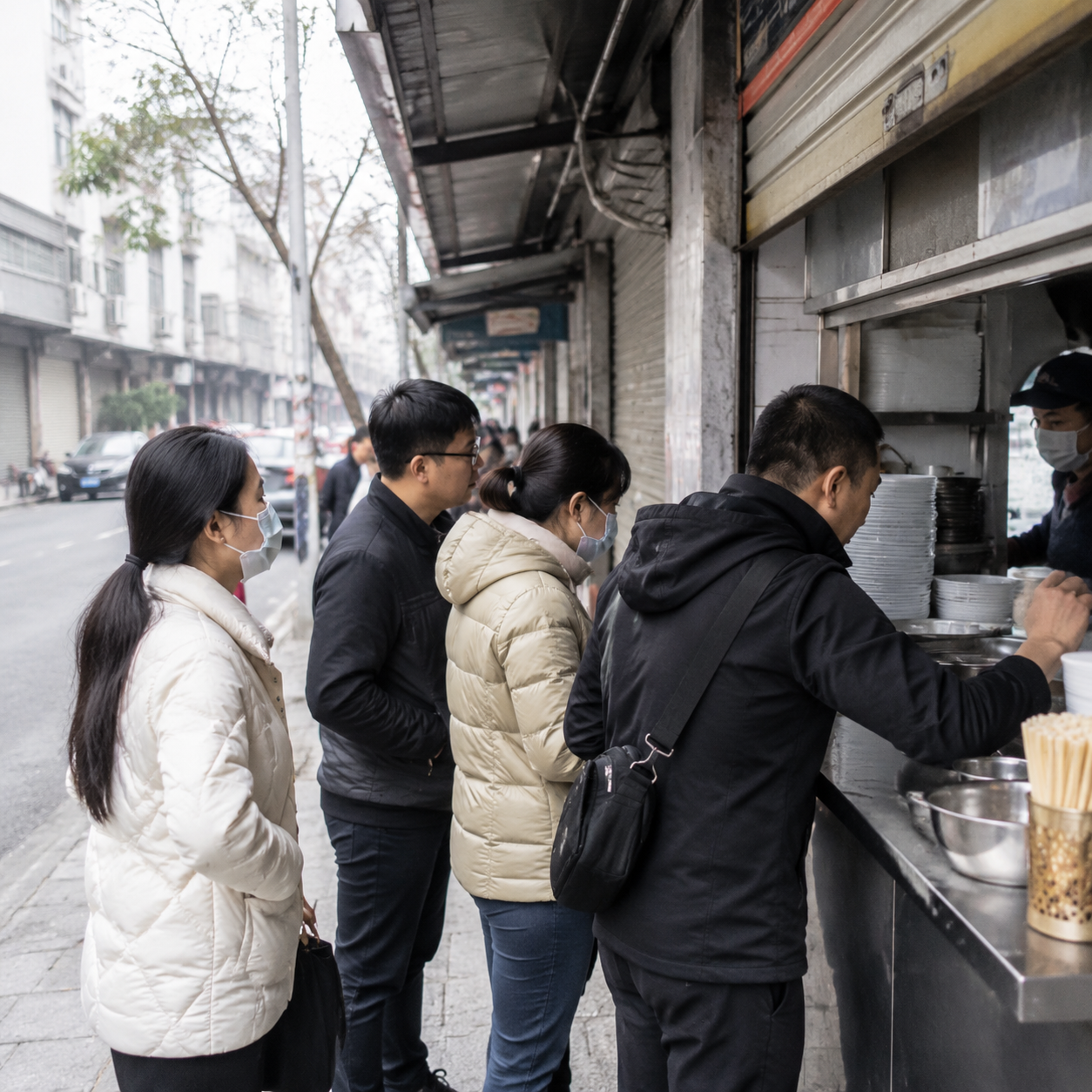
排队时我观察到一个小细节:武汉人似乎很会在急和松之间切换。买面的时候,大家动作利落,话少而准;端到桌边之后,又能突然放慢,边吃边聊,甚至为一句玩笑笑出很大的声音。城市的脾气就在这种切换里显出来。它不是一味赶,也不是一味闲。它在该快的时候快,在能停的时候也真停。对外地人来说,这种节奏起初有点硬,像还没拌开的面;可一旦跟上,就会发现里面有一种不做作的自在。
While queuing, I noticed a small detail: people in Wuhan seemed good at switching between urgency and ease. When buying noodles, everyone moved cleanly and spoke briefly but accurately. Once they reached the tables, they could suddenly slow down, eating and talking, even laughing loudly at a joke. The city’s temper showed itself in that switch. It was not always rushing, and it was not always relaxed. It moved fast when speed was needed and truly stopped when stopping was possible. For an outsider, the rhythm first felt a little hard, like noodles not yet mixed. But once I followed it, I found an unpretentious ease inside.
那条街并不漂亮。招牌有新有旧,地上有昨夜雨水留下的印子,早餐摊旁边堆着塑料凳,旁边店铺的音响播着不算清晰的广告。可我越来越喜欢这种不修饰的清晨。它没有把城市性格藏起来,反而把最真实的部分摆在你面前:赶早班的人、送孩子上学的人、开店前先来一碗的人、穿着拖鞋下楼买面的老人。每个人都带着自己的事情,却又在一口锅前短暂地排成同一条线。
The street was not pretty. Some signs were new and others old, the ground held marks from last night’s rain, plastic stools were stacked beside the stall, and a speaker from a nearby shop played a slightly distorted advertisement. Yet I liked this undecorated morning more and more. It did not hide the city’s character. It placed the most immediate parts in front of me: people hurrying to early shifts, parents taking children to school, shopkeepers eating a bowl before opening, and elderly residents in slippers coming downstairs for noodles. Everyone carried their own business, yet for a short time they formed the same line before one pot.
我以前理解一座城市,常常从景点、地铁线路和热门街区开始。那些当然有用,却也容易把城市变成一张被整理过的地图。武汉的热干面队伍让我看到另一种入口:看人们怎样等,怎样催,怎样让,怎样在不解释太多的情况下彼此配合。队伍里的秩序不是安静的秩序,而是带着声音和摩擦的秩序。有人插话,有人纠正,有人笑骂,有人帮忙递纸巾。表面上热闹,底下却有一套大家都懂的分寸。
I used to begin understanding a city through attractions, metro lines, and popular districts. Those are useful, but they can turn a city into an organized map too easily. The queue for hot dry noodles in Wuhan offered another entrance: watch how people wait, urge, make room, and cooperate without explaining too much. The order in the line was not a quiet order. It was an order with sound and friction. People interrupted, corrected, laughed, teased, and helped pass tissues. On the surface it was lively; underneath it ran a shared sense of measure.
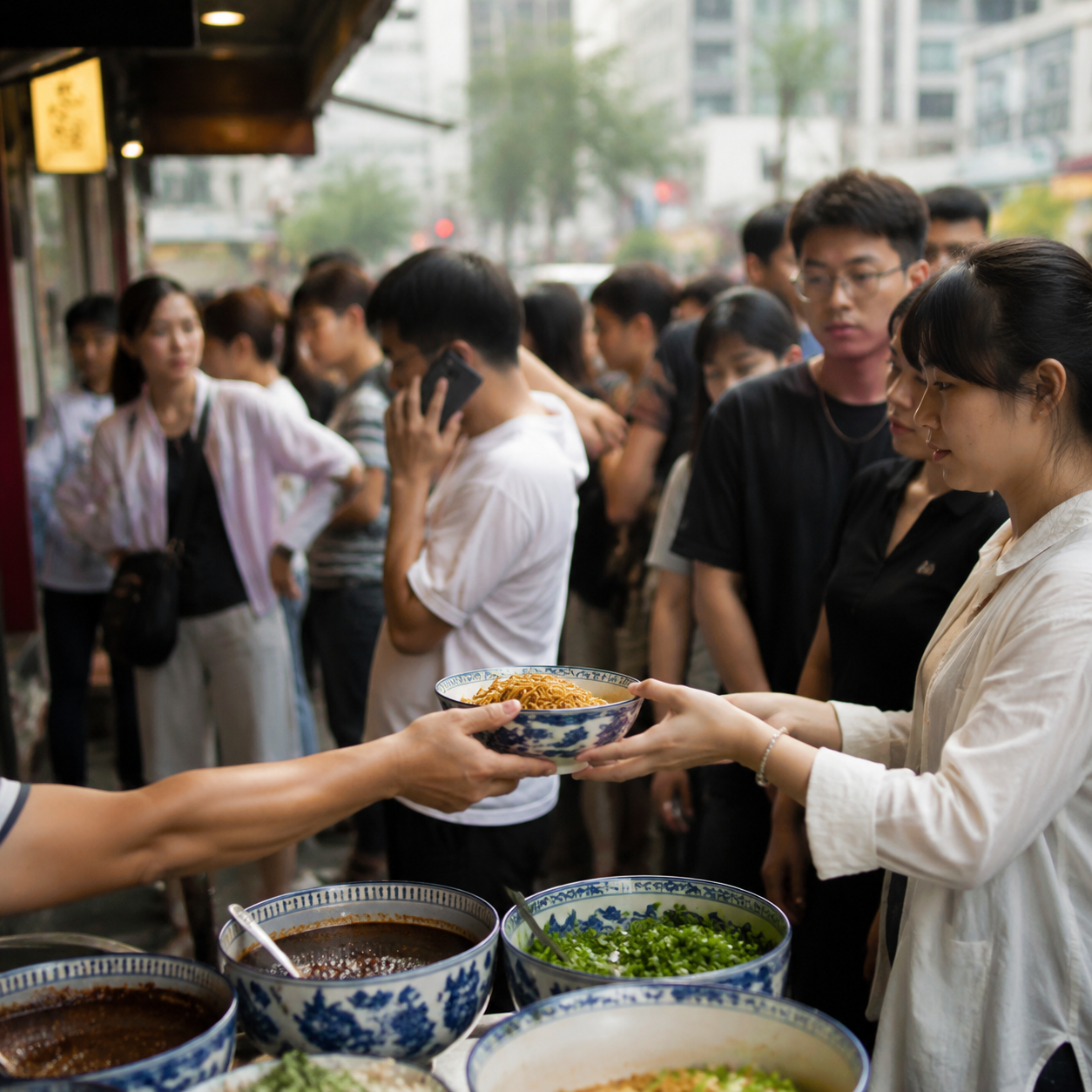
吃到一半时,我终于明白为什么热干面适合武汉的早晨。它够快,能跟得上上班和上学的节奏;它也够厚,能让人觉得一天有了底气。它不是那种让你慢慢欣赏摆盘的食物,也不靠精致姿态证明自己。它把碗递给你,要求你赶紧拌开,赶紧吃,吃完继续去做该做的事。可在这种快速里,它又不是敷衍的。芝麻酱、碱水面、辣椒油和小葱各有位置,少一样都不太对。
Halfway through the bowl, I understood why hot dry noodles suit a Wuhan morning. They are fast enough to keep pace with work and school, yet substantial enough to make a person feel grounded for the day. This is not food that asks you to slowly admire its plating, nor does it prove itself through delicate posture. It hands you a bowl, asks you to mix quickly, eat quickly, and continue with what you need to do. Yet within that speed, it is not careless. Sesame paste, alkaline noodles, chili oil, and scallions each have their place; remove one, and the balance feels wrong.
旁边一位大叔见我拌得仍不够熟练,指了指碗底,说要从下面翻,不要只在上面转。他说完就继续吃自己的,像完成了一件很小的事。我照着做,味道果然均匀许多。这个瞬间让我对武汉的直接多了一点理解。它不是为了显示自己强势,而是因为很多事情在这里不需要绕弯。你做得不对,有人就提醒;你挡住路,有人就叫你让;你需要帮助,也常常有人在一句硬邦邦的话后面把办法递过来。
An older man beside me noticed that I was still not mixing skillfully. He pointed to the bottom of the bowl and said I should lift from underneath, not just stir the top. Then he went back to eating his own noodles, as if he had completed a very small task. I followed his advice, and the flavor did become much more even. That moment gave me a better understanding of Wuhan’s directness. It is not direct in order to show dominance. Many things here simply do not require a roundabout path. If you do something wrong, someone reminds you. If you block the way, someone tells you to move. If you need help, someone may hand you a solution after a sentence that sounds blunt.
吃完面,碗底还剩一点芝麻酱的颜色。我把碗放回回收处,摊主已经在处理下一批面,队伍也换了一轮人。刚才和我一起排队的人散向不同方向,像一阵短暂聚集过的风。街上更亮了,公交车进站,店铺陆续开门,城市从早餐的速度里正式进入白天。我站在路边,看见新的队伍又排起来,忽然觉得这种重复并不单调。它像城市每天给自己的开机动作,简单、用力、准时。
After finishing, a trace of sesame color remained at the bottom of the bowl. I returned it to the collection area, while the vendor was already handling the next batch of noodles and the line had changed its people. Those who had queued with me scattered in different directions, like a brief gathering of wind. The street grew brighter, buses entered the stop, shops opened one after another, and the city moved from breakfast speed into the official day. Standing by the road, I saw a new line form and suddenly felt that the repetition was not monotonous. It was the city’s daily startup motion: simple, forceful, and punctual.
旅行里,我们常想找到一个地方最特别的符号。到武汉以前,我以为这种符号可能是长江大桥、黄鹤楼、江滩夜色,或者某条历史街巷。它们当然代表武汉的一部分,可热干面摊前的队伍给我的信息更贴近皮肤。它告诉我这座城市怎样处理早晨,怎样把人从睡意推向行动,怎样在拥挤里保留分寸,怎样用一碗并不华丽的面把共同生活的节奏拌出来。
When traveling, we often want to find the most distinctive symbol of a place. Before arriving in Wuhan, I thought that symbol might be the Yangtze River Bridge, Yellow Crane Tower, the night view along the riverfront, or a historic street. They certainly represent part of Wuhan. But the queue in front of the hot dry noodle stall gave me information closer to the skin. It showed how the city handles morning, how it pushes people from sleepiness toward action, how it keeps measure inside crowding, and how an unglamorous bowl of noodles mixes out the rhythm of shared life.
后来几天,我在不同街口吃过几次热干面。每家味道都有差别,有的酱更浓,有的辣椒更亮,有的萝卜丁更脆;队伍也各有气质,有的更熟人化,有的更像临时战场。但共同点始终在:没有人愿意把早晨浪费在过度解释上,也没有人真的把陌生人完全推开。武汉的脾气像它的早餐,热、直、重口,却并非没有细腻。它的细腻藏在速度里,藏在一句提醒、一点让位、一双帮你指向碗底的筷子里。
Over the next few days, I ate hot dry noodles at several different street corners. Each stall tasted different: some had thicker sauce, some brighter chili, some crunchier pickled radish. The queues had different personalities too. Some felt more neighborly, while others resembled temporary battlefields. But the common pattern remained: no one wanted to waste the morning on excessive explanation, and no one truly pushed strangers away completely. Wuhan’s temper is like its breakfast: hot, direct, heavy in flavor, but not without delicacy. Its delicacy hides inside speed, in a reminder, a small shift of space, or a pair of chopsticks pointing you toward the bottom of the bowl.
我离开武汉时,带走的不是某个完美攻略,而是一种看城市的方法。想知道一座城的脾气,不妨去看它清晨最普通的队伍:人们怎样排队,怎样点单,怎样对待慢半拍的人,怎样在同一口锅、同一个窗口、同一张小桌旁短暂相处。城市性格不总写在标语里,也不总藏在宏大的建筑里。它常常在早餐摊前,以一碗热干面的速度、温度和重量,直接递到你手上。
When I left Wuhan, I did not carry away a perfect itinerary. I carried a way of reading cities. To understand a city’s temper, watch one of its most ordinary morning queues: how people line up, order, treat someone who is half a beat slow, and briefly share the same pot, window, and small table. A city’s character is not always written in slogans, nor is it always hidden in grand buildings. Often, it stands at a breakfast stall and is handed directly to you through the speed, heat, and weight of a bowl of hot dry noodles.
- 中国早餐图鉴:从豆浆油条到肠粉米粉 | A Field Guide to Chinese Breakfast: From Soy Milk & Fried Dough to Rice Rolls & Noodles
- 打车前多看一眼上车点,能少走很多冤枉路 | Checking the Pickup Point Before Hailing a Ride Saves Many Steps
- 剪纸日记|在红纸与窗光之间学习耐心 | Paper-Cutting Diary | Learning Patience Between Red Paper and Window Light
- 中国武术文化体验:太极拳少林功夫 | Chinese Martial Arts: Tai Chi & Shaolin Kung Fu
- 保温杯没有拧紧的那一刻,我才懂宜春的温泉不是赶场项目 | When My Thermos Came Loose, I Understood That Yichun’s Hot Springs Are Not a Race
- 我在服务区吃到一碗热汤,才懂中国公路旅行的细节 | A Hot Soup at a Highway Service Area Showed Me the Details of Road Trips in China
- 本人在台州临海古城墙的五月雨雾里,第一次把“看景”变成了“听城” | In Linhai's May Mist, I Stopped Just Seeing the Scenery and Started Listening to the City
- 五月在婺源的雨后清晨,我跟着民宿老板去看一片刚亮起来的白墙黑瓦 | One Rain-Washed Morning in Wuyuan, I Followed a Guesthouse Owner Toward White Walls Just Beginning to Glow
- 南京最动人的地方,常常不是讲出来的历史,而是人今天还在怎么顺手用它 | What Moves Me Most in Nanjing Is Not History as Told but the Way People Still Use It Today
- 在广州早茶桌上学会点心 | Learning Dim Sum at a Guangzhou Morning Tea Table
Comments (0)