
在西安回民街吃一天,胃和钱包都很满足 | A Full Day of Eating on Xi'an Muslim Quarter
在西安回民街吃一天,胃和钱包都很满足 | A Full Day of Eating on Xi'an's Muslim Quarter — Your Stomach and Wallet Will Thank You
早上九点刚过,我们从北院门的牌坊下走进回民街,空气里已经翻滚着一层厚重的烟火气。炭火上的牛肉串滋滋作响,蒸笼掀开时白雾腾起,裹着八角和孜然的香味直往鼻子里钻。石板路两侧的摊贩已经忙开了,铁勺敲锅边的声音、揉面团拍案板的闷响、老板扯着嗓子喊"来咧来咧"——这条街从来不需要闹钟,食物的味道就是最好的起床号。
We stepped through the old stone archway at the north end of Beiyuanmen just after 9 AM, and the street was already alive. Charcoal smoke drifted between the narrow shopfronts, carrying the warm scent of cumin and star anise. Vendors slapped dough against wooden boards, steam erupted from bamboo baskets, and a man with a voice like a foghorn bellowed for customers. Xi'an's Muslim Quarter doesn't ease into the day — it hits you all at once.
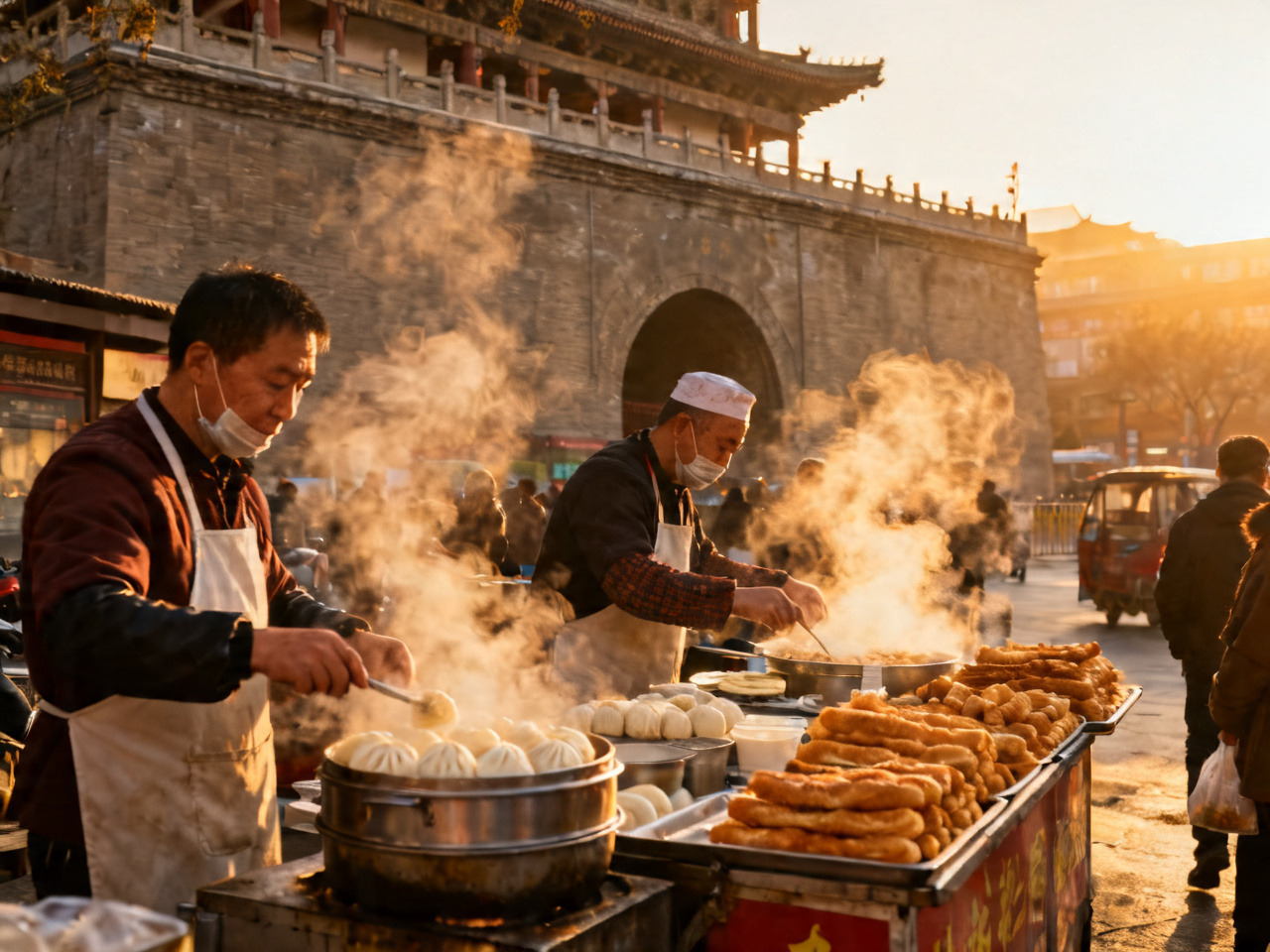
我们的第一站是老刘家胡辣汤,一碗胡辣汤八块钱。老板娘手脚麻利,从大铁锅里舀出浓稠的汤,牛肉丁、花生、豆腐皮、粉条在碗里堆得冒尖,最后浇一勺红油、几滴醋。汤入口是胡椒的辛和醋的酸在舌尖打架,喝到第三口才觉得浑身暖起来。说实话,这家的辣度对南方朋友可能偏猛,但配上刚出炉的托托馍(两块钱一个),掰碎了泡进去,粗粝的馍吸饱了汤汁,口感就柔和多了。
Our first stop: a bowl of hu la tang (spicy pepper soup) at Lao Liu's, ¥8. The owner ladled out a thick, rust-colored broth loaded with diced beef, peanuts, tofu skin, and glass noodles, then finished it with a spoonful of chili oil and a splash of vinegar. The pepper heat is real — it builds fast and lingers. Honestly, if you're not used to spice, this one might catch you off guard. The fix is a tuo tuo mo (¥2), a dense flatbread you tear into chunks and soak in the soup. The bread absorbs the broth and mellows everything out. A solid, no-frills breakfast for ¥10 total.
吃完早饭,我们沿街往南走。十点左右的回民街进入了一个奇妙的过渡期——早餐摊还没收,午饭的准备已经开始了。路过一家没有招牌的小铺子,一个大叔正在拉面,面团在他手里像变魔术一样越拉越细,最后甩成一把银丝挂面,动作行云流水。我们没忍住,站着看了五分钟。
Walking south along the street around 10 AM, we hit that in-between hour when breakfast stalls overlap with lunch prep. We stopped to watch a man pull noodles in a tiny shop with no sign — just a doorway and a flour-dusted counter. He stretched the dough, folded it, stretched again, each pull doubling the strands until they hung like silk threads from his raised hands. We stood there for five minutes, mesmerized. Not every moment on this street is about eating; sometimes it's about watching craft in motion.
十点半,我们在老米家大雨泡馍排了二十分钟的队。牛肉泡馍普通碗三十五元,服务员递来两个死面馍,让我们自己掰。掰馍是个耐心活——要掰成黄豆大小的碎粒,越小越好,这样馍才能充分吸收羊肉汤的鲜味。我们一边掰一边聊天,花了差不多十五分钟。掰好的馍送进后厨,师傅加入滚烫的羊肉汤、粉丝、木耳,端上来的时候碗大得像个小脸盆。汤头浓郁但不膻,馍粒软糯又不烂,牛肉炖得酥而不柴。这碗泡馍是我们当天吃到的最满意的一餐,三十五块钱,值。
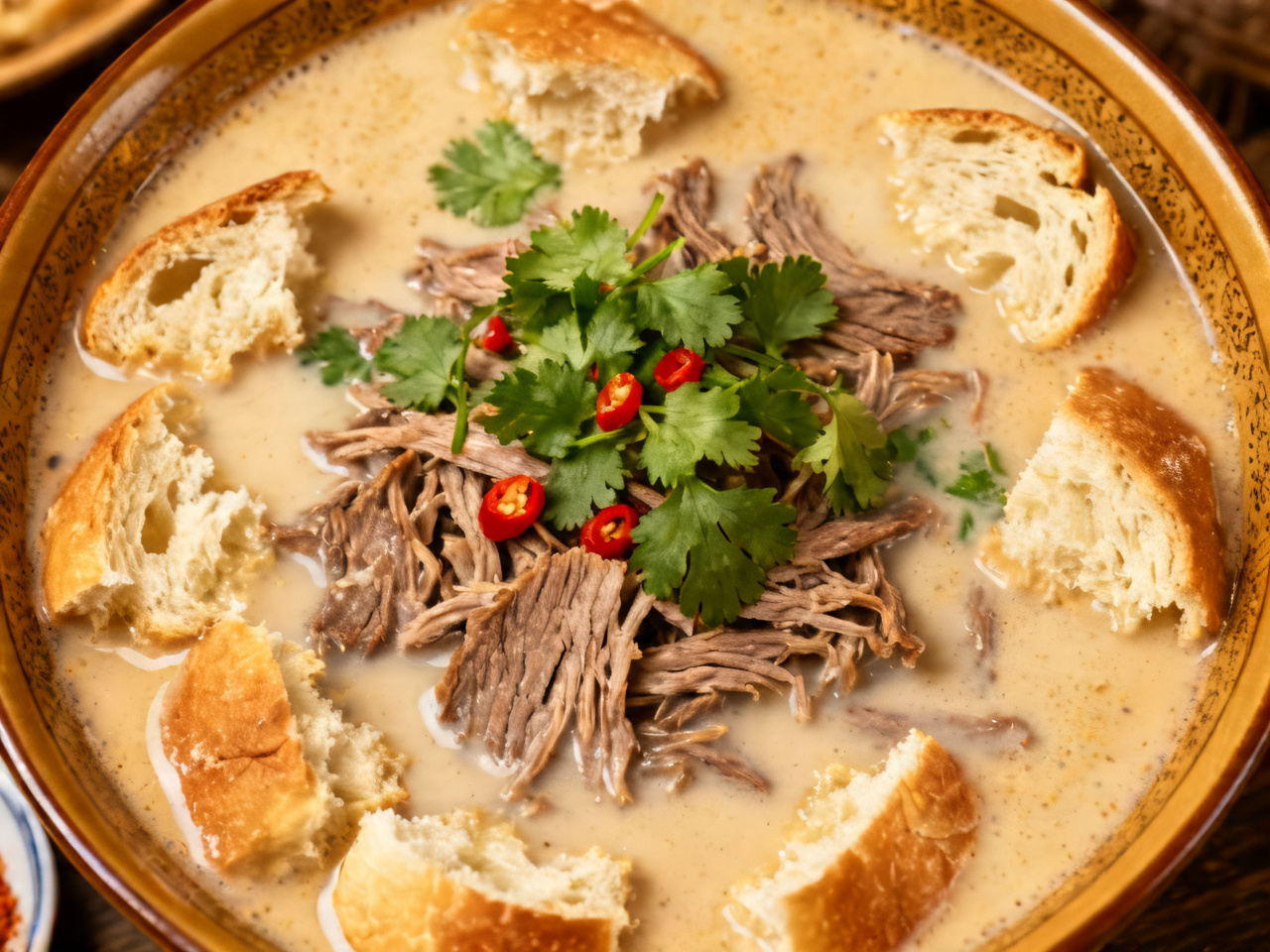
At 10:30 we joined the queue at Lao Mi's — about twenty minutes for a regular bowl of niu rou pao mo (bread-soaked beef soup), ¥35. The ritual starts before the cooking: you're handed two rounds of unleavened bread and told to tear them into tiny pieces, ideally no bigger than a soybean. We sat on plastic stools, ripping bread and chatting, for a good fifteen minutes. The bowl that came back was enormous — shredded beef, glass noodles, and wood ear mushrooms swimming in a rich, milky broth that had soaked into every crumb of bread. The soup was deeply savory without any gamey taste, and the bread held its texture perfectly. This was the best thing we ate all day. ¥35 well spent.
中午十二点,街上的人流量翻了一倍。我们在人群里挤着走,路过了好几家卖石榴汁的摊位。鲜榨石榴汁十块钱一杯,酸甜解腻,在吃了一上午重口味之后简直是救命水。不过要提醒一句:有些摊位的石榴汁兑了水,口感偏淡,建议挑那些当面现榨、能看到石榴籽的摊子买。
By noon the crowd had doubled. We squeezed through the flow and grabbed fresh pomegranate juice (¥10) from a stall where the vendor pressed the fruit right in front of us. Tart, sweet, and exactly what we needed after a morning of heavy food. A word of caution: some stalls water theirs down noticeably. Pick one where you can watch the fruit go into the press.
下午一点,我们决定挑战一下传说中的biangbiang面。在老李家面馆,一份油泼biangbiang面十八块钱。面条宽得像皮带,足有三指宽,上面铺着辣椒面、蒜末和葱花,最后一勺滚油浇上去,"刺啦"一声,辣椒的香气瞬间炸开。面条嚼起来筋道弹牙,油泼的香和辣椒的冲劲混在一起,吃得人额头冒汗。不过说句公道话,这家的面量很大,但调味偏咸,如果能少放半勺盐会更好。两个人点一份再加个小菜就够了。
At 1 PM we tackled the legendary biangbiang noodles at Lao Li's, ¥18 a bowl. The noodles are wide as a belt — literally three fingers across — topped with chili flakes, minced garlic, and scallions. The cook poured a ladle of smoking-hot oil over the top and it sizzled violently, releasing an explosion of roasted chili fragrance that made everyone nearby turn their heads. The noodles were chewy and satisfying, the chili oil coating every strand. Our honest take: the portion is huge but it's a touch too salty. Splitting one bowl between two people and adding a cold side dish is the move.
下午三点,我们的胃需要休息,但嘴巴不肯停。在街边买了一份桂花糕(五块钱三块),软糯的米糕上嵌着金黄的桂花,甜而不腻,带着淡淡的花香。又买了一袋绿豆糕(十块钱一袋),这个就一般了,口感偏干偏粉,不太推荐。
By 3 PM our stomachs needed a break but our hands kept reaching for snacks. We picked up osmanthus rice cakes (¥5 for three pieces) — soft, sticky, studded with tiny golden flowers, gently sweet with a floral perfume. Lovely. We also tried a bag of mung bean cakes (¥10) and... they were just okay. Dry, crumbly, nothing special. Skip those.
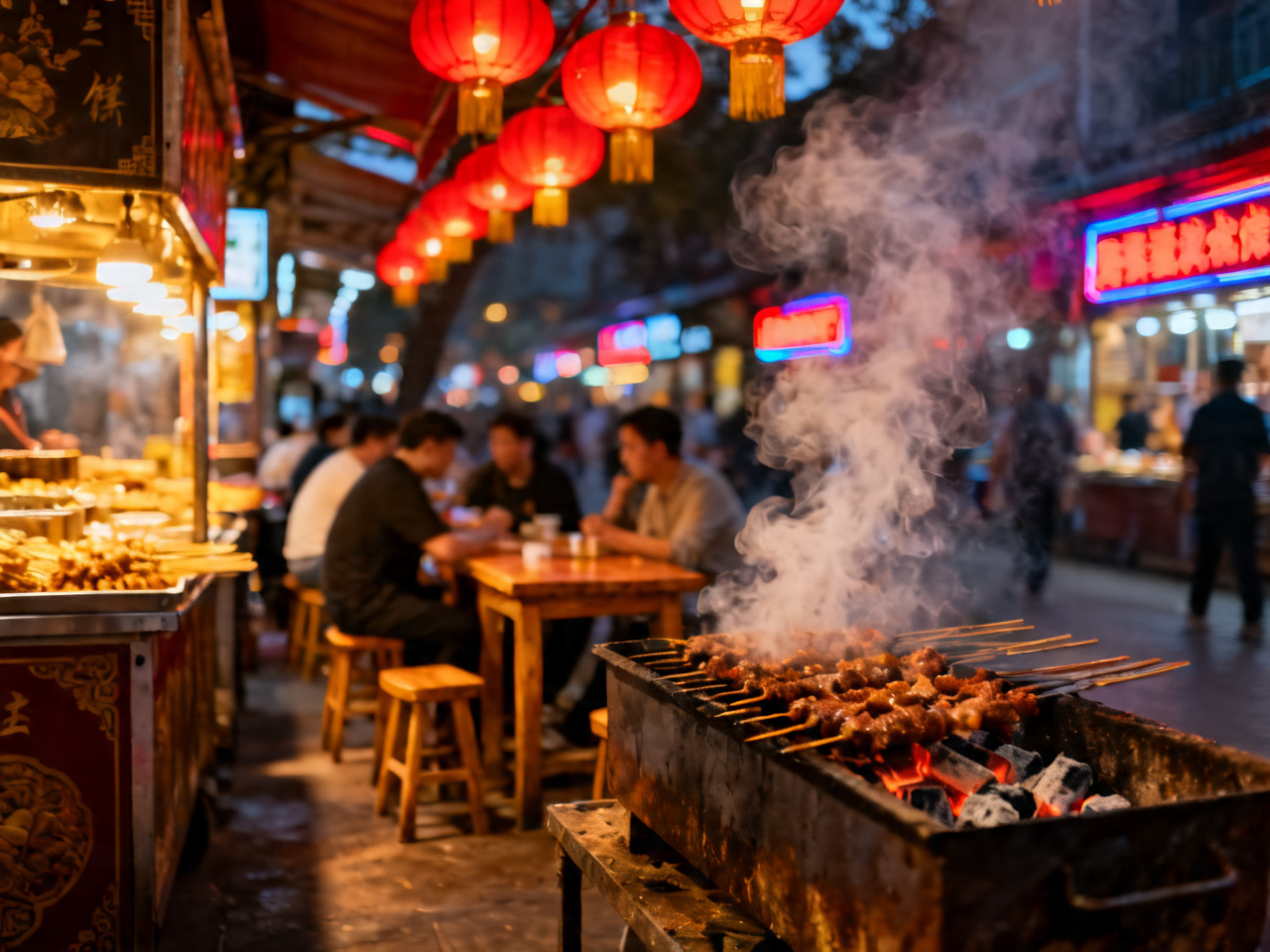
傍晚六点,华灯初上,回民街换了一副面孔。白天的烟火气变成了夜晚的霓虹和灯笼光,烤肉摊前的炭火映红了师傅的脸。我们在老金家烤肉摊坐下来,点了十串牛肉串(三块钱一串)和五串羊筋(四块钱一串)。牛肉串烤得外焦里嫩,孜然和辣椒面撒得大方,咬下去肉汁在嘴里迸开。羊筋更绝,软糯中带着弹性,每一口都能感受到炭火的烟熏味渗进了肉的纤维里。我们又加了两瓶冰峰汽水(三块钱一瓶),橘子味的甜碰上烤肉的咸香,这大概就是西安夏夜最正确的打开方式。
At 6 PM the street transformed. Lanterns and neon replaced daylight, and the charcoal grills glowed orange in the dusk. We sat down at Lao Jin's kebab stall and ordered ten beef skewers (¥3 each) and five lamb tendon skewers (¥4 each). The beef was charred on the outside, juicy inside, generously dusted with cumin and chili. The lamb tendon was the surprise hit — chewy, smoky, with a depth of flavor that only comes from slow grilling over real charcoal. We washed it all down with two bottles of Bing Feng soda (¥3 each), a local orange fizz that pairs with barbecue the way beer pairs with pizza. This is how you do a Xi'an evening.
晚上八点,我们用一碗甑糕收尾。在东南亚甑糕老铺,一份甑糕八块钱。糯米蒸得透亮,红枣和芸豆铺了厚厚一层,枣泥的甜渗进了每一粒米里。甑糕的口感介于年糕和八宝饭之间,黏而不粘牙,甜而不齁。这是一个温柔的句号,给这一整天的味觉冒险画上了圆满的结尾。
At 8 PM we closed out the day with zeng gao (steamed glutinous rice cake) from an old shop near the south end, ¥8. Layers of sticky rice, red dates, and kidney beans, steamed until the date paste melted into the rice. It's somewhere between mochi and eight-treasure rice pudding — sticky, naturally sweet, comforting. The perfect gentle ending to a day of bold flavors.
好了,算账时间。以下是我们两个人一整天的花费明细:
Time for the damage report. Here's what two of us spent across the full day:
- 胡辣汤 + 托托馍 ×2:¥20
- 鲜榨石榴汁 ×2:¥20
- 牛肉泡馍 ×2:¥70
- 油泼biangbiang面 ×1(两人分):¥18
- 桂花糕:¥5
- 绿豆糕:¥10
- 牛肉串 ×10:¥30
- 羊筋串 ×5:¥20
- 冰峰汽水 ×2:¥6
- 甑糕 ×2:¥16
两个人,从早吃到晚,总共花了二百一十五块钱。人均一百零七块五,折合大约十五美元。我们吃了八种不同的食物,喝了三种饮料,没有一顿饭超过三十五块钱。回民街不是每样东西都完美——有些摊位味道平平,有些排队太长——但这条街的魅力在于,你永远可以用很少的钱,吃到很多的满足。
Two people, eating from 9 AM to 8 PM, eight different foods and three drinks: ¥215 total. That's about ¥107.50 per person — roughly $15 USD for an entire day of eating. Not a single item cost more than ¥35. The Muslim Quarter isn't flawless — some stalls are mediocre, some lines are absurd — but the math doesn't lie. For the price of one mid-range restaurant meal back home, we ate our way through an entire day and walked away stuffed, happy, and with cash still in our pockets.
延伸阅读 / Related Reads
- 中国八大菜系全览 | The 8 Great Cuisines of China
- 第一口就着了魔:一个外乡人在成都的麻辣沉沦 | Spellbound at First Bite: A Stranger's Descent into Chengdu's Heat
- 街头那碗热气,才是中国城市的真实体温 | Street Steam: The Real Pulse of Chinese Cities
- 花椒档案:一个植物学者眼中的四川味觉地图 | The Peppercorn Dossier: Sichuan's Flavor Map Through a Botanist's Eyes
- 华东五城10日经典环线 | 10-Day East China Five-City Loop
- 我在成都学会把夜间抵达拆成一连串小判断 | In Chengdu I Learned to Break a Night Arrival into Small Judgments
- 华东五城10日经典环线 | 10-Day East China Five-City Loop
- 我在高铁站丢过方向,但没丢掉行程 | I Lost My Direction at a High-Speed Railway Station but Not My Trip
- 长沙一碗米粉的早晨,教我别只看招牌菜 | One Morning Bowl of Rice Noodles in Changsha Taught Me Not to Only Chase Signature Dishes
- 那些把中国拍得像特效片的博主,真正厉害的是懂得怎么给震撼留空拍 | The Creators Who Film China Like Special Effects Know How to Leave Space Between the Shocks
- 中国高铁乘车全攻略(境外游客版) | Complete HSR Guide for Foreign Tourists
- 手机支付失败后我学会准备备用方案 | After My Mobile Payment Failed, I Learned to Prepare a Backup Plan in China
- 中山装与唐装:男士传统服饰怎么穿 | Zhongshan Suit & Tang Suit: Men's Traditional Wear
- 福州鱼丸店门口那张小桌,让我记住了慢慢吃 | A Small Table Outside a Fuzhou Fish Ball Shop Taught Me to Eat Slowly
- 桂林喀斯特山水:自然之美 | Guilin Karst Mountains: Nature at Its Best
Comments (0)