
泉州古城的香火与街巷 | Incense and Lanes in Quanzhou Old City
泉州古城的香火与街巷 | Incense and Lanes in Quanzhou Old City
清晨六点四十,我从钟楼一侧拐进西街。卷帘门正被一扇扇推起,铁片摩擦出粗哑的响声,像整条街刚睡醒时清了清嗓子。卖面线糊的阿姨用长勺刮过锅底,白胡椒、炸葱头和骨汤的热气钻进潮湿空气里。我原以为西街只是通往开元寺的一条游客街,店铺醒来后便会立刻摆满纪念品;可眼前先出现的是提菜篮的老人、骑电动车送豆浆的年轻人,以及蹲在门槛上认真刷牙的小孩。
At 6:40 in the morning, I turned onto West Street from the side of the Bell Tower. Metal shutters were being pushed up one after another, their rough scraping sounding like the whole street clearing its throat after sleep. At a noodle-paste stall, an auntie dragged a long ladle across the bottom of a pot, releasing steam scented with white pepper, fried shallots, and bone broth into the damp air. I had assumed West Street was merely a tourist road leading to Kaiyuan Temple, ready to fill with souvenirs as soon as the shops opened. Instead, I first saw elderly residents carrying vegetable baskets, a young man delivering soy milk on an electric scooter, and a child squatting on a doorstep, brushing his teeth with great concentration.
我端着一碗面线糊站到窄桌边,起初把邻桌两位老人低声念叨的话当成了讨价还价。他们一个伸手压住零钱,一个把油条掰成两截,语气忽高忽低。摊主听见我问价,笑着摆手:“他们在争谁请客。”老人随即把半截油条推给我,筷子碰碗叮的一声。我尝到鲜甜汤底里突然冒出的胡椒辣,鼻尖发热,也为自己的误判有点脸红。这里的争执不是冲突,而是一顿早餐里不肯让对方破费的客气。
Holding a bowl of mianxianhu, I stood beside a narrow table. At first, I mistook the murmured exchange between two elderly men at the next table for bargaining. One pressed down on a few banknotes while the other broke a fried dough stick in half, their voices rising and falling. When I asked the price, the vendor laughed and waved her hand. “They’re arguing over who gets to pay.” One of the men then pushed half the dough stick toward me, his chopsticks striking the bowl with a clear ding. The sweet, savory broth suddenly bloomed with peppery heat, warming the tip of my nose, and I felt embarrassed by my assumption. Their argument was not a quarrel but the familiar courtesy of refusing to let a friend pay for breakfast.
再往西走,太阳还没越过屋脊,骑楼下却已有细碎脚步。一个穿校服的女孩追着祖母跑,鞋底拍在石板上;祖母停在香铺前,把她歪掉的红领巾重新掖好,又挑了几炷香。店里纸张、檀香和旧木柜混出一种干燥而微甜的气味。老板用竹夹整理香束,沙沙声很轻。我问他是不是逢节才这么早开门,他没抬头,只说:“附近人早上顺路来,寺和街,本来就分不开。”
Walking farther west, I found that the sun had not yet cleared the rooftops, though quick footsteps already scattered beneath the arcades. A schoolgirl ran after her grandmother, her soles slapping the stone pavement. The grandmother paused at an incense shop, tucked the girl’s crooked red scarf neatly into place, and chose several sticks of incense. Paper, sandalwood, and old wooden cabinets mingled into a dry, faintly sweet smell. The shopkeeper arranged bundles with bamboo tongs, making a soft rustle. I asked whether he opened this early only on festival days. Without looking up, he replied, “People nearby stop in on their morning route. The temple and the street were never separate.”
到开元寺门前时,我又犯了一个想当然的错误:见几个人提着成袋供品,便以为门内会庄严得不容停步。可他们进门后先在树下碰见熟人,笑声立刻散开;一位阿婆把香袋挂到手腕,腾出手替朋友拍掉肩上的落叶。木鱼声从殿里一阵一阵传来,间或夹着燕子的短鸣。烟并不浓烈,它贴着晨光慢慢上升,闻起来有木质的暖意,也带一点燃尽后的苦。
At the entrance to Kaiyuan Temple, I made another easy assumption. Seeing several people carrying bags of offerings, I expected the space inside to be so solemn that no one would dare linger. Yet the moment they met acquaintances under a tree, laughter spread through the courtyard. An elderly woman looped her incense bag around her wrist so she could brush a fallen leaf from her friend’s shoulder. The beat of a wooden fish came from the hall in measured waves, interrupted now and then by the brief calls of swallows. The smoke was not overpowering. It rose slowly through the morning light, carrying the warmth of wood and a slight bitterness from the ash.
我没有急着去双塔,而是沿着东塔旁的阴影慢慢绕。石地被昨夜的水汽润得发暗,扫地师傅握着竹扫帚,将香脚、落叶和细沙拢成小堆,刷、刷、刷,每一下都隔着差不多的距离。他见我仰头找最适合拍塔的位置,用扫帚朝后一点:“别只站正面,退到榕树边,能看见屋檐托住塔。”我照着后退,果然发现塔并非孤立地直插天空;飞檐、树冠、晾在邻家窗外的衣服,一层层把它接回日常。两个晨练的叔叔从镜头前走过,其中一个忽然停下,替同伴拉直衣领,随后才背手站好。他们让我帮拍合照,拍完凑近屏幕认真端详,又要求重来,因为第一张里“塔顶被树吃掉了”。
Instead of hurrying straight to the twin pagodas, I followed the shade beside the East Pagoda. Moisture from the night had darkened the stone paving. A groundskeeper held a bamboo broom and gathered incense ends, leaves, and fine sand into small piles—swish, swish, swish—each stroke evenly spaced. When he noticed me tilting my head in search of the best angle, he pointed behind me with the broom. “Don’t stay in front. Step back toward the banyan tree, and the eaves will seem to hold up the pagoda.” I did, and the tower no longer appeared to pierce the sky alone. Curved roofs, treetops, and laundry hanging outside a neighboring window layered it back into ordinary life. Two men doing their morning exercise crossed my frame. One suddenly stopped to straighten the other’s collar before they posed with hands behind their backs. They asked me to take their picture, studied the screen carefully, then requested another because in the first one “the tree had eaten the pagoda’s top.”
从寺里出来,西街已经比来时亮了许多。蒸笼盖被掀起,白雾扑到店主脸上;自行车铃、闽南话招呼声和瓷碗相碰的脆响挤在一起。一个送香烛的男人侧身让过婴儿车,又回头扶稳差点滑下车架的纸箱。我钻进旁边一条窄巷,墙脚留着雨水的凉腥味,楼上有人抖开床单,影子从我头顶掠过。巷口看得见塔的一角,却听不清寺中的木鱼,只剩早餐铺剁肉的笃笃声。我这才明白,清晨的开元寺周边并非一边是信仰、一边是生活。香火从店铺递到人的手中,人又带着它穿过买菜、上学和碰面寒暄的街巷;庄严也没有把笑声赶走。
When I stepped out of the temple, West Street was much brighter than when I had arrived. Bamboo steamer lids lifted, throwing white clouds into vendors’ faces, while bicycle bells, greetings in Minnan dialect, and the crisp knock of porcelain bowls crowded the air. A man delivering incense turned sideways to let a stroller pass, then reached back to steady a carton slipping from his bicycle rack. I entered a narrow lane nearby. Rainwater left a cool, earthy smell along the foot of the wall, and someone upstairs snapped open a bedsheet, its shadow sweeping over my head. A corner of a pagoda remained visible from the lane entrance, but the wooden fish inside the temple had faded beneath the thud-thud of a breakfast cook chopping meat. Only then did I understand that the area around Kaiyuan Temple was not divided into faith on one side and daily life on the other. Incense passed from shops into people’s hands, and they carried it through streets filled with grocery runs, school journeys, and morning greetings; solemnity had never required laughter to leave.
临走前,我回到那家面线糊摊。先前争着付钱的两位老人已经不在,桌上只留一圈碗底压出的水痕。阿姨把零钱拍进抽屉,问我:“寺看完啦?”我说看完了,又觉得这话不准确,便改口说只走了一早上。她笑了一声,把锅盖扣回去。蒸汽从盖沿细细漏出,远处寺门前的香烟也正越过屋瓦;两股白气在晨光里各走各的,却又像来自同一条街的呼吸。
Before leaving, I returned to the mianxianhu stall. The two men who had competed to pay were gone, leaving only pale rings of water beneath their bowls. The vendor slapped some change into her drawer and asked, “Finished seeing the temple?” I said yes, then felt the answer was inaccurate and corrected myself: I had only walked around for one morning. She laughed and put the lid back on the pot. Steam escaped in a thin line around its rim, while incense smoke beyond the rooftops rose from the temple gate. The two white trails followed separate paths through the morning light, yet seemed to belong to the same breathing street.
我本来准备在钟楼附近结束这次散步,面线糊阿姨却用湿布抹着桌面问:“你只看西边,不去涂门街?”她见我迟疑,干脆把手往东南一划,说沿中山路走,过几条巷便能到清净寺,若脚力还够,再去关岳庙。她把“清净寺”三个字说得像报一间常去的邻店,又提醒我别一路盯着导航,“看门牌,也看卖什么东西,走丢了就问人。”我把手机收进口袋,按她指的方向穿回人流。这个收手机的动作很小,却让路线从一根蓝色细线变成了可以听、可以闻、也可以开口确认的街。
I had planned to end my walk near the Bell Tower, but the noodle-stall auntie wiped the table with a damp cloth and asked, “You’ve only seen the west side. Aren’t you going to Tumen Street?” When I hesitated, she swept one hand southeast and told me to follow Zhongshan Road. After a few lanes I would reach Qingjing Mosque, and if my legs still felt good, I could continue to Guanyue Temple. She said “Qingjing Mosque” as casually as if naming a familiar neighborhood shop, then warned me not to stare at navigation the whole way. “Read the doorplates, see what people sell, and ask if you get lost.” I put my phone in my pocket and returned to the flow of pedestrians. It was a tiny action, yet the route stopped being a thin blue line and became a street I could hear, smell, and verify by speaking to people.
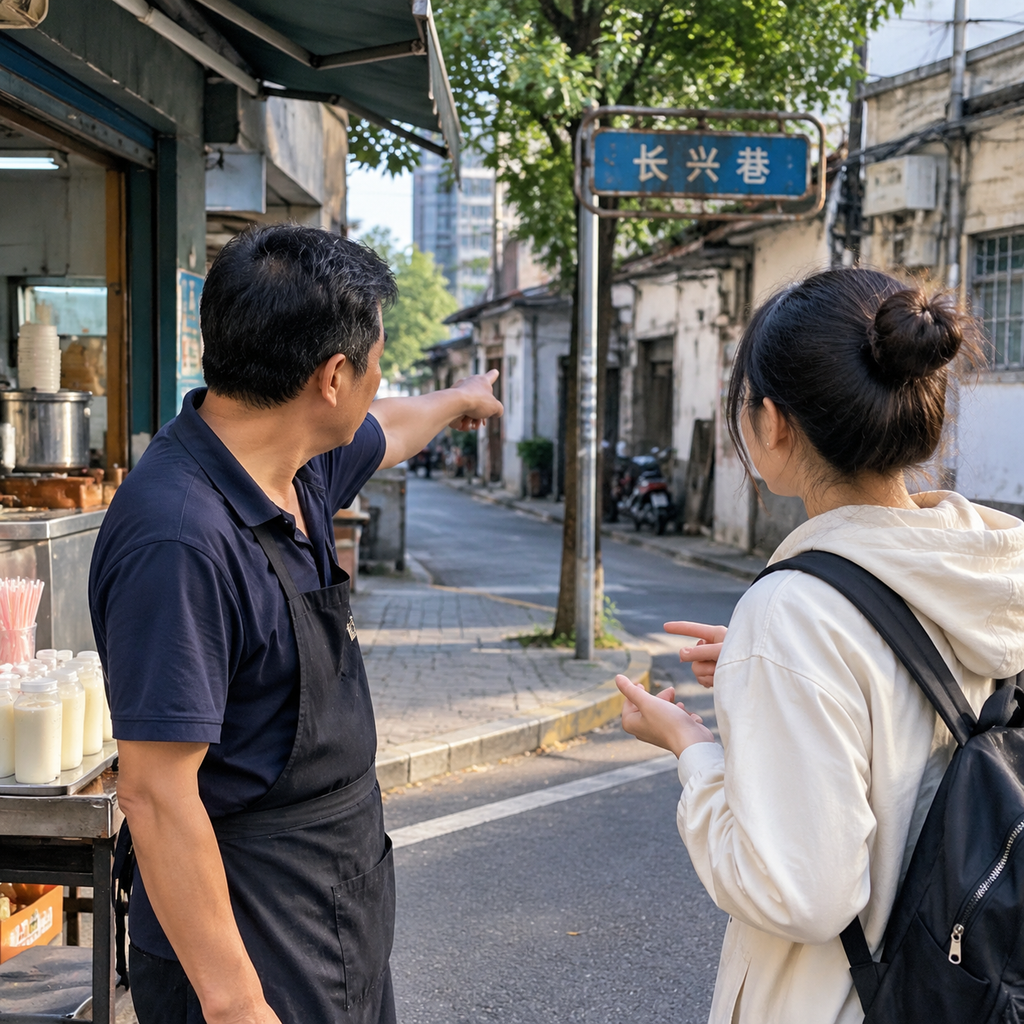
中山路的骑楼把阳光切成一格亮、一格暗。裁缝坐在门内踩缝纫机,针脚的哒哒声追着行人的脚步;隔壁五金店老板把一捆塑料水管拖出门,先抬高一端让抱孩子的母亲过去。走到一个岔口,我看见两位戴白帽的男人提着早餐,便自信地跟在他们后面,以为他们一定去清净寺。几分钟后,他们却推门进了一家布料铺,还回头问我找谁。我说出目的地,年长的一位笑着纠正:“不能看帽子认路。”他放下豆浆,走到街沿,替我指出挂着旧路牌的巷口,又让我复述一遍左右转法才肯回店。
The arcades of Zhongshan Road divided the sunlight into alternating panels of brightness and shade. A tailor worked a treadle sewing machine inside his doorway, the clatter of the needle chasing passing footsteps. Next door, a hardware-shop owner dragged out a bundle of plastic pipes, then lifted one end so a mother carrying a child could pass. At a fork I noticed two men in white caps carrying breakfast and confidently followed them, assuming they must be heading to the mosque. A few minutes later they entered a fabric shop and turned to ask whom I was looking for. When I named my destination, the older man laughed and corrected me: “You can’t read directions from a hat.” He set down his soy milk, stepped to the curb, pointed out a lane with an old street sign, and made me repeat the left and right turns before returning to his shop.
这句玩笑让我有些窘,也修正了另一个更隐蔽的误判。我此前把不同信仰想成不同装束、不同建筑,各自边界分明,仿佛只要辨认外观就能读懂一座城。可那两位男人真正教我的不是谁属于哪里,而是先问路、再听清、最后复述确认。往前走时,我也开始看那些不容易被镜头挑中的联系:卖香烛的铺子旁有人修拉链,清真食店门口停着送桶装水的车,骑楼柱下的老人把椅子挪开,让推货的小贩借一段阴凉。街巷没有要求谁先解释身份,大家先处理的是门口够不够宽、车能不能过、午饭来不来得及。
The joke embarrassed me, but it also corrected a subtler mistake. I had imagined different faiths as separate clothes and buildings with sharply marked boundaries, as though a city could be understood by recognizing appearances. Yet what the two men actually taught me was not who belonged where, but a practical sequence: ask first, listen carefully, then repeat the directions. As I continued, I began noticing connections that a camera might overlook. Beside a shop selling incense, someone repaired zippers. A water-delivery truck waited outside a halal eatery. Under an arcade column, an elderly man shifted his chair so a vendor pushing goods could borrow a strip of shade. The lanes did not demand that anyone explain an identity first. People dealt first with whether a doorway was wide enough, whether a cart could pass, and whether lunch would be ready on time.
临近涂门街,空气里的味道也在换。药铺晒出的陈皮有一股干涩的甜,炖肉店的锅盖边冒着油润热气,路边刚洗过的石面则返出潮湿气味。我在一间小食店前停下,以为玻璃柜里的褐色糕点是甜点,指着要了一块。店员没有立刻装袋,而是掰下一小角让我先尝。我咬下去才发现咸香里带孜然,表情大概很明显,她笑问:“你是不是当成糖糕了?”我点头,她便递来一杯温水,又用夹子把糕切成适合边走边吃的小块。她没有把我的错误说成不懂规矩,只用试吃和一杯水,让陌生味道有了退路。
Near Tumen Street, even the smells began to change. Dried tangerine peel outside a medicine shop carried an astringent sweetness, rich steam escaped around the lid of a braised-meat pot, and freshly washed paving stones released a damp mineral scent. I stopped at a small food shop and assumed the brown pastry in its glass case was sweet, pointing to ask for one. Instead of bagging it immediately, the clerk broke off a corner for me to taste. The first bite was savory and scented with cumin, and my surprise must have shown. “Did you think it was a sugar cake?” she asked with a laugh. I nodded. She handed me a cup of warm water, then used tongs to cut the pastry into pieces easy to eat while walking. She did not frame my mistake as ignorance of local custom; with a sample and a cup of water, she simply gave an unfamiliar flavor an easy way in.
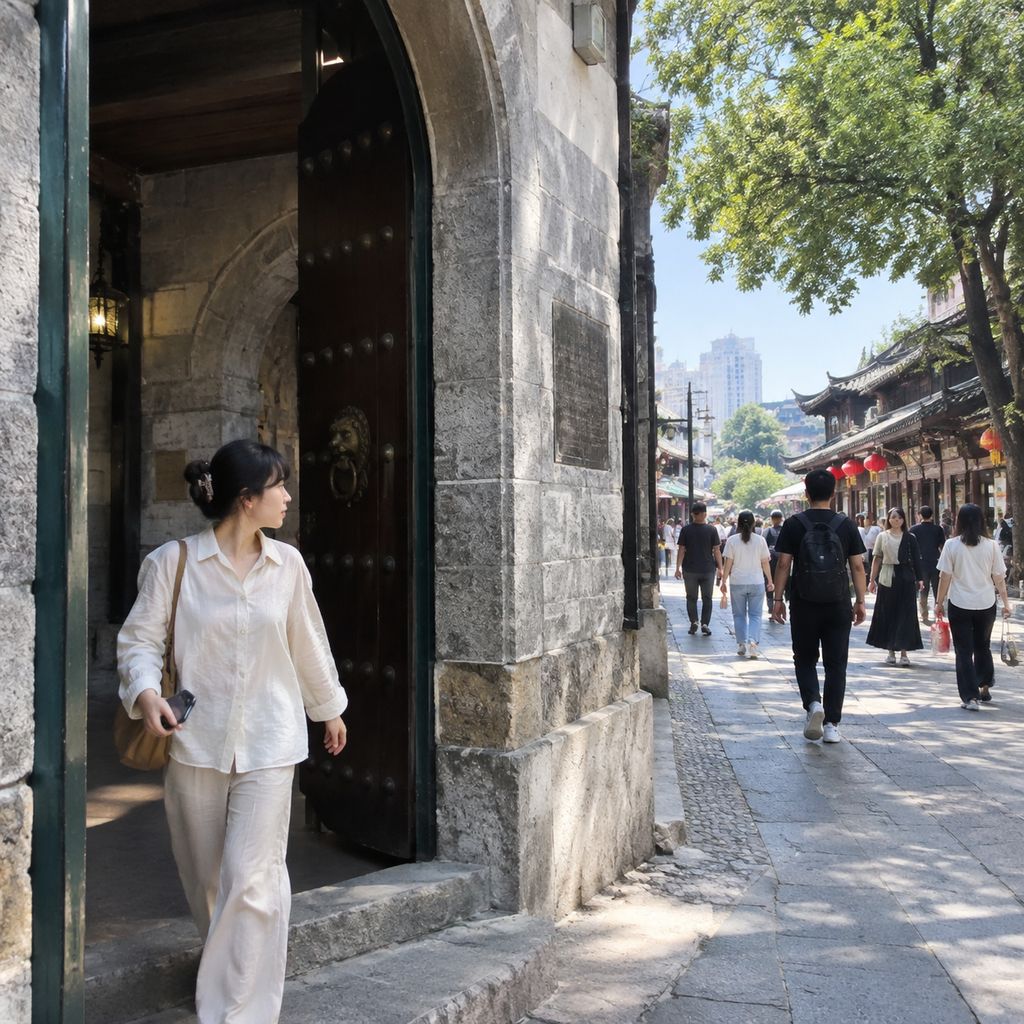
清净寺的石门出现在店招与电线之间时,我差点从它面前走过。它没有我预想中那种把街声隔绝在外的深院,门外电动车减速、外卖员核对地址,门内石墙却把光收得安静。一位带小孙子经过的阿伯见我站着不动,问我是不是嫌地方“小”。我承认自己原本期待更醒目的建筑。他抬手指了指石门,又转身指向街对面的铺面:“站久一点,不要只比大小。”孩子学着他的动作,把手里的风车先指向门内,再指向红绿灯。于是我退到墙边,收起相机,等了一个完整的信号灯周期。
When the stone gateway of Qingjing Mosque appeared between shop signs and overhead wires, I nearly walked past it. It did not have the deep courtyard I had imagined, one that would shut out the noise of the street. Electric scooters slowed outside and a delivery rider checked an address, while within the gate the stone walls gathered the light into stillness. An elderly man passing with his grandson asked whether I was disappointed that the place looked “small.” I admitted I had expected a more conspicuous building. He pointed at the gateway, then turned toward the storefronts opposite. “Stand a little longer. Don’t only compare sizes.” The child copied him, aiming his pinwheel first toward the gate and then toward the traffic light. I stepped back beside the wall, lowered my camera, and waited through one full change of the signal.
那几十秒里,门内外并没有被切成两个世界。有人轻声进去,也有人在外面接电话;校服少年跑过后放慢脚步,避开正搬箱子的店员;一位食客离店前把塑料凳塞回桌下,给门口腾出通道。我原先以为理解多元信仰,需要先记住许多宏大的历史结论。阿伯却用“站久一点”纠正了我:先看人怎样进门,怎样给别人让路,怎样把礼仪带回吃饭、送货和照看孩子的动作里。信仰的差异确实可见,但它们不是橱窗里的陈列品,而是和街坊共用一段路面、一片阴影与一天的时间。
During those few dozen seconds, the inside and outside did not split into separate worlds. Some people entered quietly, while another person took a phone call outside. A schoolboy ran past, then slowed to avoid a shop assistant carrying boxes. Before leaving a restaurant, a diner pushed a plastic stool beneath the table to clear the doorway. I had assumed that understanding multiple faiths required memorizing grand historical conclusions first. The old man corrected me with four simple words: stand a little longer. Watch how people enter, how they make room, and how courtesy returns to ordinary acts of eating, delivering goods, and caring for children. Differences in belief were certainly visible, but they were not exhibits behind glass. They shared the same stretch of pavement, the same patch of shade, and the same hours of the day with the neighborhood.
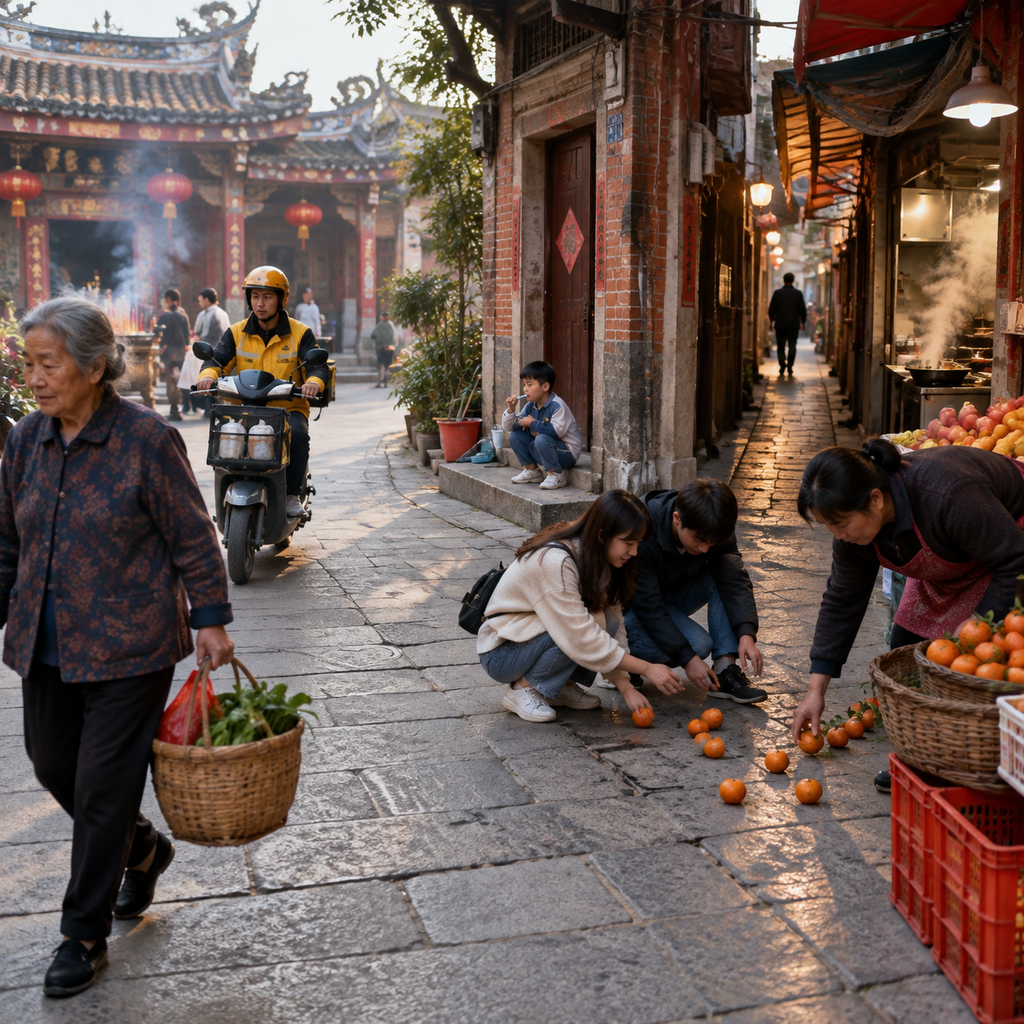
我继续向关岳庙方向走。还没看见屋脊,先闻到香气混进炒菜油烟,又听见掷杯落地的清响。门口一位水果摊主正把滚到路中的橘子逐个捡回筐里,两名刚上完香的年轻人蹲下帮忙,其中一人用鞋尖挡住最后一颗。我也弯腰捡起一颗,摊主接过后没有道谢套话,只说“放上面,压坏的先卖”,随即把几只碰伤的橘子摆到秤旁。庙里有人合掌,庙外有人称果,香客出来便顺手扶住被风吹歪的价签。这里的虔敬并未停在门槛内,它有时只是弯一次腰,挡住一颗橘子,或替陌生人的生意省下一点损耗。
I continued toward Guanyue Temple. Before its roofline came into view, incense had already mingled with cooking fumes, and I heard the sharp click of divination blocks striking the ground. At the entrance, a fruit vendor was retrieving oranges that had rolled into the road. Two young people who had just finished offering incense crouched to help, one stopping the last orange with the toe of his shoe. I bent down and picked up another. Taking it from me, the vendor skipped any formal thanks and simply said, “Put it on top; sell the bruised ones first,” then placed several damaged oranges beside the scale. Inside, hands were joined in prayer; outside, fruit was weighed. Worshippers emerged and casually straightened a price card tilted by the wind. Devotion did not end at the threshold. Sometimes it meant bending down once, stopping a rolling orange, or saving a stranger a little loss.
走到庙前,我没有再急着给建筑贴标签,也不再把香烟、白帽、石门或红墙当作解释泉州的捷径。我把剩下的咸糕装好,替一位推婴儿车的母亲拉住回弹的店门,又按早晨学到的方法向她确认回钟楼该往哪边走。她指完路,车里的孩子把一只袜子踢落,我捡起来放回毯子上。身后传来庙里的钟声,前方店家正喊人收晾在外面的衣服。两种声音在涂门街上相遇,没有谁盖过谁。我沿骑楼阴影往回走,口袋里的手机仍没有拿出来。
At the temple entrance, I no longer rushed to label the architecture, nor did I treat incense smoke, white caps, stone gateways, or red walls as shortcuts to explaining Quanzhou. I packed the remaining savory pastry, held a spring-loaded shop door for a mother pushing a stroller, and used the method I had learned that morning to confirm which way led back to the Bell Tower. After she pointed out the route, her child kicked off a sock; I picked it up and tucked it onto the blanket. A temple bell sounded behind me while shopkeepers ahead called for someone to bring in laundry drying outside. The two sounds met on Tumen Street without either drowning out the other. I walked back beneath the arcade’s shade, and the phone stayed in my pocket.
从清净寺走出来,门内石墙的冷静还留在眼里,门外涂门街已把人重新推回日常。电动车沿路缘一辆接一辆掠过,外卖员在车流空隙里侧身,游客则站在门前仰头辨认阿拉伯式门楼。卖水的阿姨把塑料凳挪进阴影,顺手提醒孩子别踩到台阶边缘。古迹没有把街道隔开,反而像一扇敞开的旧门,让祈祷、买卖和赶路的人在同一片声响里擦肩。
Stepping out of Qingjing Mosque, the cool restraint of its stone walls still lingers in the eye, but Tumen Street immediately returns the visitor to ordinary life. E-bikes skim past the curb, delivery riders lean through gaps in traffic, and tourists pause beneath the gate to study its Islamic arches. A woman selling bottled water drags her stool into the shade and warns a child away from the edge of the steps. The monument is not sealed off from the street; it stands like an old open door through which worship, commerce, and hurried errands pass within the same field of sound.
向东走,街面宽阔,真正耐看的却是两旁不断开合的小巷。修鞋摊只占一块檐下的地方,师傅低着头穿针,脚边摆着几双等取的凉鞋;隔壁海蛎煎的铁盘冒起白汽,老板娘用闽南话招呼熟客,不必问便知道要不要加辣。骑车来买菜的老人把一把青葱横放在车篮上,停下来同店主说了几句天气。这里的人彼此认得,短短一句招呼,就让陌生游客看见街坊生活的纹理。
Walking east, the avenue feels broad, yet the most revealing scenes appear in the narrow lanes opening and closing along either side. A cobbler occupies no more than a patch beneath an awning, threading his needle over several pairs of sandals waiting to be collected. Next door, steam rises from the griddle of an oyster omelet stall, where the owner greets regulars in Minnan dialect and already knows who wants chili. An elderly shopper parks a bicycle with spring onions laid across the basket and pauses to discuss the weather. People here recognize one another, and a brief greeting exposes to strangers the fine weave of neighborhood life.
越靠近关岳庙,空气里的气味越有层次:先是茶叶店焙火后的暖香,继而是熟食铺的卤味,最后混进香烛燃烧的烟。红墙前有人整理衣领,有人举着手机找角度,也有人拎着刚买的菜,经过时自然地停下拜一拜。一位年轻母亲牵着女儿,教她把香握直;旁边穿工装的男人闭眼片刻,安全帽夹在臂弯。愿望各不相同,动作却同样克制,热闹的街因此出现了一小段缓慢的节拍。
Closer to Guanyue Temple, the air gathers layers of scent: the warm roast of a tea shop, the soy-rich fragrance of braised foods, and finally the smoke of burning incense. Before the red wall, some people straighten their collars, some lift phones to frame a photograph, while others carrying fresh vegetables simply stop to bow as they pass. A young mother guides her daughter to hold the incense upright. Nearby, a man in work clothes closes his eyes for a moment, his hard hat tucked beneath one arm. Their wishes differ, but their gestures share the same restraint, giving the busy street a brief, slower rhythm.
庙门附近,卖香烛的铺子把金纸、红烛和小束鲜花排得整齐,店员一边找零,一边告诉外地人参拜的次序。门槛内外的人流并不分明:刚上完香的年轻人转身去买奶茶,送货司机靠墙核对地址,几个放学的学生追着笑声穿过人群。屋脊上的彩塑高高压住视线,地面却全是细碎现实,扫码声、车铃声、问路声彼此叠加。所谓古城的生命,并不只在建筑年代,也在这些没有排练过的相遇里。
Near the temple gate, incense shops arrange gold paper, red candles, and small bouquets in careful rows. A clerk makes change while explaining the order of worship to visitors from out of town. The flow of people scarcely divides at the threshold: young worshippers turn toward a milk-tea shop, a courier checks an address against the wall, and schoolchildren chase laughter through the crowd. Bright roof sculptures command the gaze overhead, while the ground remains crowded with small realities—the chime of mobile payments, bicycle bells, and requests for directions. The old city lives not only through the age of its buildings, but through these unrehearsed encounters.
回头看这段不长的路,清净寺的素石与关岳庙的浓彩像是两种截然不同的语气,街巷却把它们说进同一句泉州话里。沿途的人并不刻意展示“多元”:穆斯林老人从店里出来,香客在路边等车,游客向早餐摊老板问方向,谁都只是完成一天中的一件小事。正因如此,历史不再是牌匾上的说明,而成为可以步行丈量的关系。走完这几百米,记住的也许不是某个宏大结论,而是一座城市如何让不同的信仰、口音与生活彼此让路,又彼此照面。
Looking back along this short route, the pale stone of Qingjing Mosque and the brilliant colors of Guanyue Temple seem to speak in entirely different registers, yet the lanes fold both into a single Quanzhou sentence. No one makes a performance of “diversity”: a Muslim elder leaves a shop, worshippers wait by the road, and visitors ask a breakfast vendor for directions. Each person is merely carrying out one small task in the day. That ordinariness turns history from a plaque into a relationship measured on foot. After these few hundred meters, what remains is less a grand conclusion than the way a city lets different beliefs, accents, and routines make room for one another—and meet face to face.
我没有马上沿原路返回,而是从关岳庙侧边钻进一条后街。红墙只隔着几步,香烟的味道却很快淡下去,换成洗衣粉、晒鱼干和午后余热混在一起的气息。两户人家把竹竿横在楼间,衬衫和孩子的校服滴着水;一位阿婆坐在矮凳上剥豆,豆荚落进搪瓷盆,发出轻而脆的响声。她看我在巷口犹豫,没问我要找哪处古迹,只抬下巴说前面能通中山路,又提醒墙角刚冲过水,青砖滑。我扶墙绕过去时,才发现庙后最动人的并非另一个景点,而是祭拜结束之后,人们仍要晾衣、备菜、收拾一顿晚饭。
Instead of returning by the same route, I slipped into a backstreet beside Guanyue Temple. The red wall was only a few steps away, yet the smell of incense quickly thinned, replaced by laundry powder, drying fish, and heat lingering from the afternoon. Bamboo poles stretched between two homes, with shirts and school uniforms still dripping. An elderly woman sat on a low stool shelling beans, each pod landing in an enamel basin with a light, crisp tap. Seeing me hesitate at the lane entrance, she did not ask which monument I was seeking. She merely nodded toward the passage leading to Zhongshan Road and warned that the blue bricks by the wall had just been rinsed and were slippery. As I edged past with one hand against the wall, I realized that the most affecting sight behind the temple was not another attraction, but the return to laundry, cooking, and preparations for dinner after worship.
后街比庙前窄得多,生活也摆得更近。理发店里只亮着一根白灯管,师傅替客人刮后颈,收音机播着闽南语节目;对面杂货铺的冰柜盖一开一合,孩子拿硬币买走一支盐水冰棒。一个送煤气罐的男人推车经过,前方下棋的两位叔叔不必招呼,便同时提起小桌往墙边挪。车轮压过石缝后,他们又把棋盘摆回原处,其中一人捏着棋子,仍记得刚才走到哪一步。巷子里的秩序没有告示,也没有谁指挥,靠的是常年相处后形成的眼色:先让重物过去,再把没说完的话、没下完的棋接回来。
The backstreet was much narrower than the temple frontage, bringing daily life close enough to touch. A single white tube lit a barbershop where the barber shaved the back of a customer’s neck while a Minnan-language program played on the radio. Across the lane, the lid of a grocery freezer opened and shut, and a child bought a salted ice pop with coins. When a man pushing a gas cylinder approached, two uncles playing chess lifted their small table toward the wall without being asked. Once the wheels had crossed the stone joints, they returned the board to its place, and one man, still pinching a piece, remembered exactly where the game had paused. No signboard explained the lane’s order and no one directed it. Years of living together had taught everyone the same glance: let the heavy load pass first, then resume the unfinished sentence and the unfinished game.
回到中山路,骑楼下的阴影已经向街心伸长。白天看似端正的柱廊,此时露出更柔软的一面:卖衣服的店员把塑料模特搬回门内,药店伙计蹲着捆纸箱,住在楼上的人提一袋青菜从他们之间穿过。骑楼并不只是给游客拍照的旧建筑,它替等公交的老人挡住斜阳,也给临时停下回消息的骑手留一块不烫的地面。我在一家茶铺前歇脚,老板把试饮杯推来,说这是今天最后一泡。茶汤略涩,咽下后却有清甜;柱外车流被夕光照得发亮,柱内的人说话不必提高嗓门,仿佛这几米阴影替街道收住了声量。
Back on Zhongshan Road, the arcade shadows had lengthened toward the center of the street. The colonnade that looked formal by day now revealed a gentler purpose. Clothing clerks carried plastic mannequins indoors, a pharmacy worker crouched to tie up cartons, and an upstairs resident threaded between them with a bag of vegetables. The arcades were not merely old architecture for visitors to photograph. They shielded elderly people waiting for buses from the slanting sun and gave delivery riders a patch of cool pavement where they could stop to answer messages. I rested outside a tea shop, and the owner pushed over a tasting cup, saying it was the final brew of the day. The tea was slightly astringent, then sweet after I swallowed. Beyond the columns, traffic shone in the evening light; beneath them, no one needed to raise a voice, as though those few meters of shade gathered in the street’s volume.
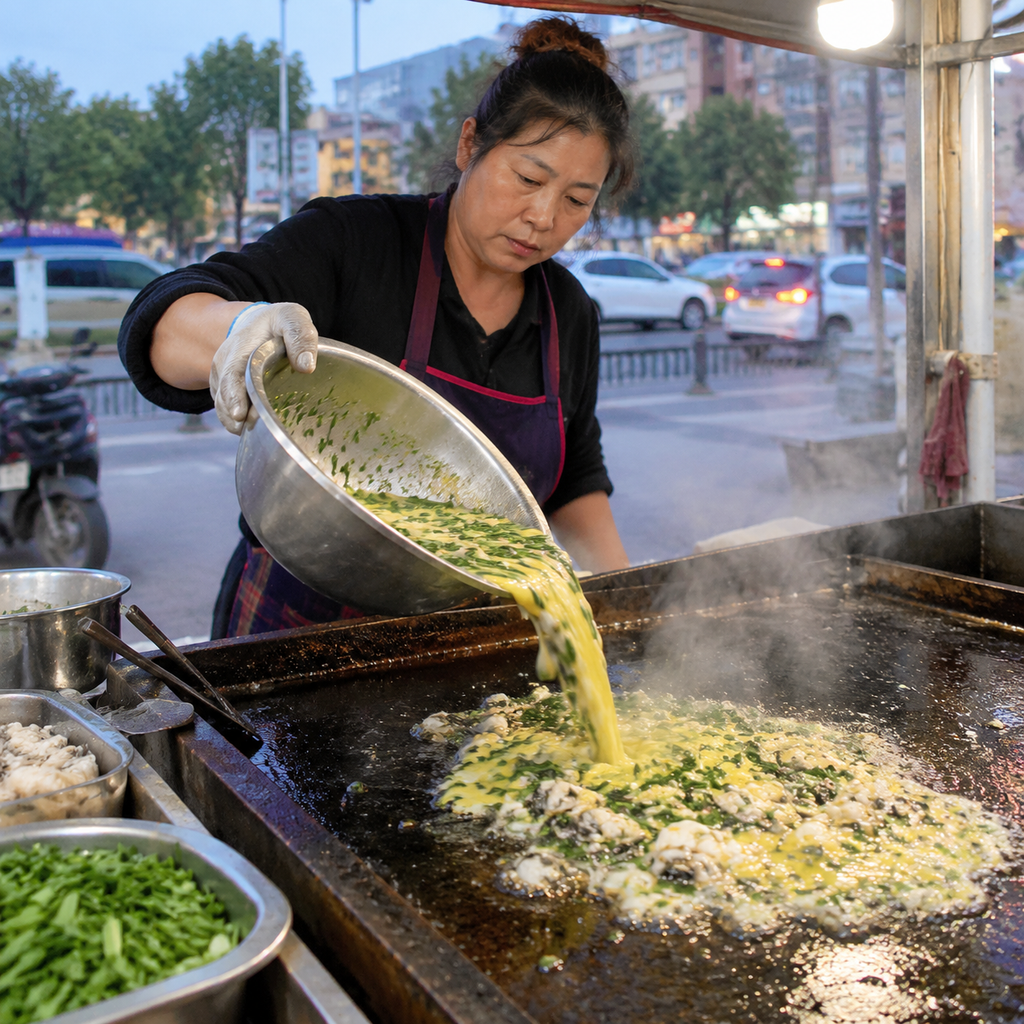
傍晚六点过后,涂门街的节奏悄悄换了班。放学的学生把书包甩到身后,在小吃摊前分一袋炸物;穿拖鞋的居民牵狗出来,经过熟人铺面便停下聊两句。卖海蛎煎的老板娘把第一锅晚市的蛋液倒上铁盘,油星噼啪跳起,蒜苗香盖过一阵汽车尾气。她一边翻面,一边用闽南话喊对街的人来拿预留的那份,对方隔着车流举手回应。游客看到的是一张摊位,街坊依靠的却是一整套无需写下的约定:谁下班晚,谁少放辣,谁会让孩子来取。
After six, Tumen Street quietly changed shifts. Schoolchildren swung their backpacks behind them and shared a bag of fried snacks beside a stall. Residents in slippers came out walking dogs and paused for a few words whenever they passed a familiar shop. At the oyster-omelet stand, the owner poured the first egg mixture of the evening onto the griddle. Oil crackled, and the scent of garlic chives briefly covered the exhaust from passing cars. While turning the omelet, she called in Minnan dialect to someone across the road to collect the portion she had saved; a hand rose in reply through the traffic. A visitor might see only a food stall, but the neighborhood relied on a whole unwritten system: who worked late, who wanted less chili, and whose child would come to pick up dinner.
我绕回关岳庙前时,天色由金黄沉成偏蓝的灰。白天清楚可见的屋脊彩塑慢慢退进暗处,檐下灯笼却一盏盏亮起来,红光落在电动车后视镜、雨棚边和香客的手背上。清洁工把散落的香脚扫拢,一位收摊的水果贩将没卖完的橘子装箱,先前热闹的门口并未突然安静,只是声音变低:木轮小车轧过路面,塑料袋窸窣,远处有人叫家人回去吃饭。我站在街对面,终于没有举起相机。几名刚买菜回来的居民从红墙前经过,有人停步合掌,有人只稍微点头,然后继续往亮着厨房灯的巷子里走。
When I circled back to Guanyue Temple, the sky had deepened from gold to a bluish gray. Roof sculptures that had been sharply visible by day receded into shadow, while lanterns beneath the eaves lit one after another. Their red glow touched e-bike mirrors, awning edges, and the backs of worshippers’ hands. A cleaner swept scattered incense stems into a pile, and a fruit vendor closing for the day packed unsold oranges into crates. The busy entrance did not suddenly become silent; its sounds merely softened—the wooden wheels of a handcart crossing the pavement, plastic bags rustling, someone in the distance calling a family member home for dinner. Standing across the street, I finally left my camera down. Several residents returning with groceries passed the red wall. One stopped to join their palms, another offered only a slight nod, and then each continued into a lane where a kitchen light was already glowing.
早晨我把泉州理解成几座需要依次看完的古迹,到了傍晚,记住的却是阿婆提醒湿滑的砖、棋桌为煤气罐让出的半步、老板娘隔街留住的一份晚饭。钟楼的光在前方亮起时,关岳庙的香气已经闻不到了,手中那杯茶却还留着一点回甘。古城的一天没有郑重收尾,它只是把人送回饭桌、巷口和各自亮灯的家。
In the morning, I had understood Quanzhou as a sequence of monuments to be completed. By evening, what remained were smaller things: an old woman warning me about wet bricks, a chess table shifted half a step for a gas cylinder, and a stall owner saving dinner for someone across the road. When the Bell Tower’s lights appeared ahead, I could no longer smell incense from Guanyue Temple, but the tea still left a faint sweetness in my mouth. The old city did not close its day with ceremony. It simply returned people to dinner tables, lane entrances, and homes switching on their lights.
七点将近,最后一拨香客从庙门里散出来。有人把香袋仔细折好塞进外套口袋。卖金纸的店员卸下挂钩上的样品,铁钩碰到卷帘门,发出两声清脆的当啷;对面肉摊的砧板则还在咚咚作响。香火退下去以后,街上并没有留下空白。锅铲刮铁锅的刺啦声、麻将牌从桌面推拢的哗啦声、家长催孩子洗手的喊声,一层接一层补了上来。我顺着声音走进一条刚亮灯的巷子,窗口飘出的不是檀香,而是姜片下油锅后的辛辣气味。
Close to seven, the last group of worshippers drifted out through the temple gate. One carefully folded an incense bag and slipped it into a coat pocket. At the joss-paper shop, a clerk took samples down from their hooks, and metal tapped against the shutter with two bright clangs. Across the road, a butcher’s chopping block still answered with steady thuds. When the incense traffic ebbed, it left no silence behind. The scrape of spatulas on woks, the rush of mahjong tiles being gathered across a tabletop, and parents calling children to wash their hands rose layer after layer. I followed those sounds into a newly lit lane, where the windows released not sandalwood but the sharp fragrance of ginger hitting hot oil.
巷里那位剥豆的阿婆还坐在原处,脚边的搪瓷盆已经满了。她儿媳从门内接过豆子,问她怎么还不进来吃饭;阿婆没回答,先指着我的鞋说:“你没滑倒吧?”我摇头,她才笑,把矮凳夹在腋下起身。她们家的纱门开了一瞬,电视新闻、碗筷相碰和孩子背课文的声音一起涌出来,随后又被门轻轻合住。隔壁理发师拍掉客人肩上的碎发,掀开围布说“好了”,客人摸摸后颈,约他下月再见。白天我总抬头看塔和屋脊,此刻却被一扇扇门里的小声响留住;它们短促、不整齐,却比钟声更准确地报出了晚饭时间。
The elderly woman who had been shelling beans was still in the lane, her enamel basin now full. Her daughter-in-law came to take it and asked why she had not gone inside for dinner. The woman did not answer at once. She pointed at my shoes and asked, “You didn’t slip, did you?” Only after I shook my head did she smile and rise with the low stool tucked beneath her arm. Their screen door opened for a moment, releasing television news, clinking bowls, and a child reciting a lesson, then closed softly again. Next door, the barber brushed loose hair from his customer’s shoulders, lifted away the cape, and said, “All done.” The man rubbed the back of his neck and promised to return next month. All day I had looked upward at pagodas and roof ridges; now the small sounds behind one doorway after another held me in place. Brief and uneven, they announced dinnertime more precisely than any bell.
茶铺老板也准备关门。他把杯子在水槽里冲净,将湿漉漉的杯沿朝下扣在木盘上,又递给我一个用旧报纸包着的小茶饼,说路上饿了就吃。我问多少钱,他摆摆手:“最后一泡都给你喝了,还算什么。”说完,他抬起半扇门板,等我跨出门槛,才把它嵌进门槽。我向他道别,他在门板后回了一句“慢慢行”,声音被木头挡住,显得低而近。走到街口,我又遇见早上替我指路的布店老人。他正把豆浆杯和几卷碎布装进塑料袋,听说我终于没再跟着帽子走,笑得弯下腰,随后指指回程方向:“这次不用你复述了,钟楼亮着,看灯走。”
The tea-shop owner was preparing to close as well. He rinsed the cup in the sink, placed it rim down on a wooden tray, and handed me a small tea cake wrapped in old newspaper, saying I could eat it if I became hungry on the way. When I asked the price, he waved the question away. “You already drank the last brew. What is there left to charge?” He lifted half of the wooden door panel and waited until I had crossed the threshold before fitting it into its groove. I said goodbye, and from behind the panel he answered, “Take it slowly,” his voice softened and brought close by the wood. At the next corner I met the fabric-shop elder who had corrected my route that morning. He was packing a soy-milk cup and fabric scraps into a plastic bag. When I told him I had managed not to follow any more hats, he bent over laughing, then pointed toward my way back. “No need to repeat it this time. The Bell Tower is lit—follow the light.”
我和他在岔口分开。他提着袋子往清净寺后的居民巷走,我朝钟楼方向走了几步,又听见他在身后喊:“明早面线糊要早点去!”我回头挥手时,他已经绕过修鞋摊,只剩塑料袋在路灯下晃了一下。这次告别没有交换姓名,也没有约定重逢,却并不潦草:一句早餐提醒,把陌生人安稳地送到了第二天。附近铺面陆续落锁,锁舌咔嗒,卷帘门哗啦下降;楼上的窗却接连推开,有人收衣服,有人把洗好的碗平码进橱柜。街道关掉的是生意,打开的是晚上的家常。
We parted at the fork. He carried his bag toward the residential lanes behind Qingjing Mosque, while I took several steps toward the Bell Tower. Then he called after me, “Go early for mianxianhu tomorrow morning!” I turned and waved, but he had already passed the cobbler’s stall; only his plastic bag swung once beneath the streetlamp. We had exchanged no names and made no promise to meet again, yet the farewell did not feel careless. A reminder about breakfast had placed a stranger safely into the following day. Shops locked one by one—the click of bolts, the rattle of shutters coming down—while upstairs windows opened in succession. Someone gathered laundry; someone stacked washed bowls neatly in a cupboard. The street was closing its businesses and opening its ordinary evening homes.
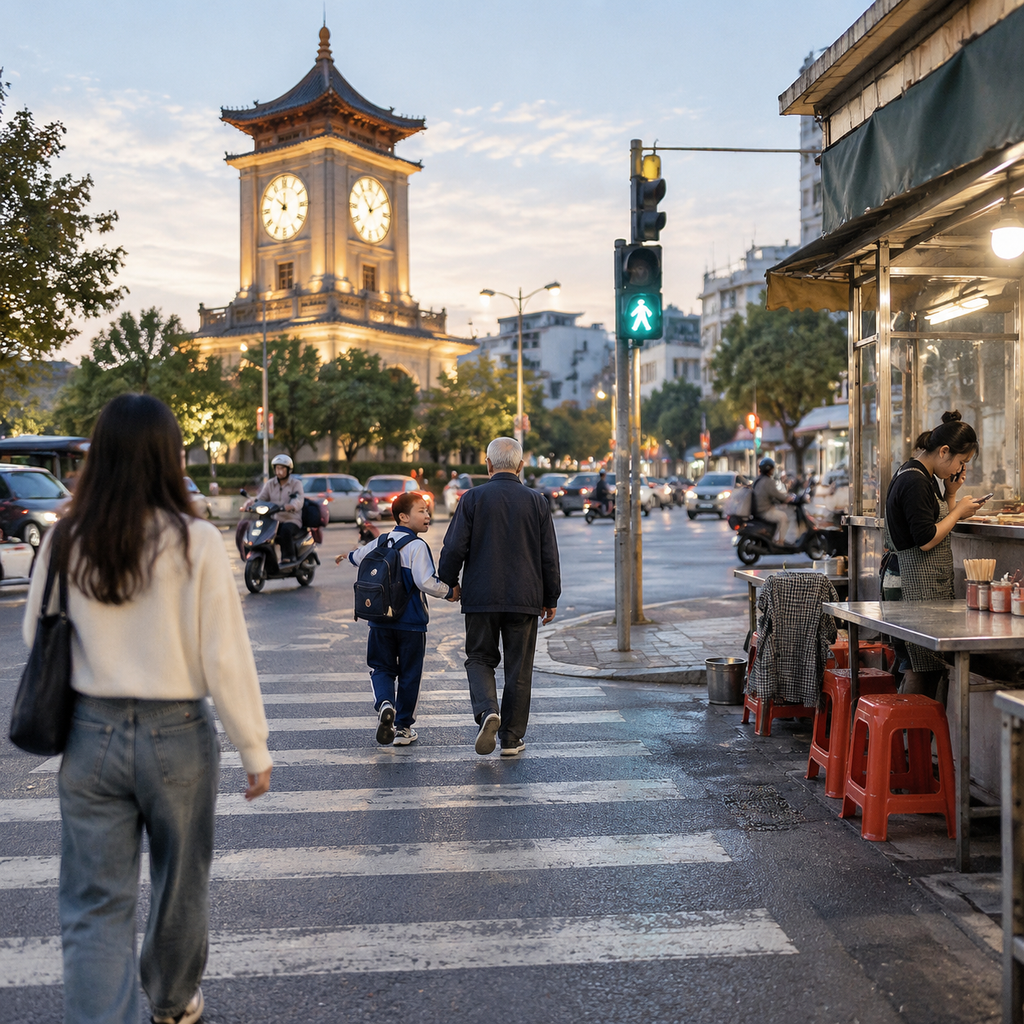
到了钟楼下,我没有立刻叫车,而是在路边等完一个红灯。钟楼四面的表盘浮在乳白色灯光里,电动车从下方穿过。绿灯亮起,一个穿校服的小男孩牵着祖父先走,走到路中央还回头催他快些;祖父嘴上说“不急”,脚步却赶了两下。我跟在他们后面过街,鞋底踩过此刻已经转凉的斑马线。对面的面线糊摊已洗净桌面,阿姨把围裙搭在椅背上,正低头给家人回语音。我没有再问“泉州看完了吗”,只朝她挥手。她认出我,抬起手机笑道:“明天再来。”
Beneath the Bell Tower, I did not call a car at once. I waited through an entire red light. The clock faces floated in milky illumination as e-bikes passed below. When the light changed, a schoolboy led his grandfather forward, then turned in the middle of the road and urged him to hurry. The grandfather said, “No rush,” but quickened his steps twice. I crossed behind them, my soles meeting the zebra stripes that had now turned cool. Across the street, the mianxianhu vendor had washed her tables. Her apron hung over a chair while she bent over her phone to answer a family voice message. I did not ask whether I had now “finished” Quanzhou. I simply waved. Recognizing me, she lifted her phone and laughed: “Come again tomorrow.”
公交车进站时,我坐到靠窗的位置,把茶老板送的小茶饼放在膝上。车子绕过钟楼,西街的灯牌便被屋檐一块块遮去;最后留在窗里的,是一家住户半开的木窗。窗台上晾着洗净的筷子,一个女人探身收回孩子的校服,屋里有人喊她吃饭。车一转弯,木窗消失,报站声随即响起。我拆开报纸,咬下一口微甜的茶饼。泉州的傍晚就停在这个具体瞬间:香烟已经散尽,钟楼落到身后,而“明天再来”跟着最后一口回甘,留在驶出古城的车厢里。
When the bus arrived, I took a window seat and set the tea cake from the shopkeeper on my knees. As the bus curved around the Bell Tower, signs along West Street disappeared one by one behind the eaves. The last image held by the window was a half-open wooden casement in someone’s home. Clean chopsticks dried on the sill, and a woman leaned out to gather a child’s school uniform while someone inside called her to dinner. The bus turned, the window vanished, and the next-stop announcement began. I opened the newspaper wrapping and bit into the faintly sweet cake. Quanzhou’s evening came to rest in that exact moment: the incense smoke had dispersed, the Bell Tower had fallen behind, and “come again tomorrow” remained in the departing bus, together with the final sweetness of tea.
车开出两站,我才发现把装咸糕的小纸袋忘在茶铺窗边。那并不值多少钱,可里面还夹着店员替我切好的竹签,我忽然舍不得让这一天以遗失收场。下一站下车后,我沿原路往回走。此时游客明显少了,夜里的骑楼像一道连续的屋檐,把零星行人护在灯影下面。青石路被刚拖过的水润得发亮,电动车驶过时,车灯在地面拖出一条短短的白线;楼上晾衣杆轻碰墙面,巷深处传来洗锅水泼进沟渠的哗声。
Two stops later, I realized that I had left the paper bag of savory cake beside the tea-shop window. It was worth very little, but the clerk had tucked in the bamboo picks she had cut for me, and I suddenly did not want the day to end with something lost. I got off at the next stop and walked back. Most visitors had gone. At night the arcades became one continuous roof, sheltering scattered pedestrians beneath pools of light. The bluestone pavement shone after being mopped; each passing e-bike drew a brief white streak across it. Upstairs, a laundry pole tapped lightly against a wall, and from deep in a lane came the splash of wok-washing water poured into a drain.
拐进一条白天没留意的小巷,我闻到夜来香、煤炉余火和潮墙的气味混在一起。门边坐着三个女人择菜,菜叶铺在旧报纸上,其中一人抬头问我是不是找厕所。我说明纸袋的事,她们立刻替我回忆:“茶铺刚关,老板往承天巷走了。”最年轻的女人让正在跳皮筋的女儿带我抄近路。女孩没问报酬,只把皮筋交给伙伴,提醒我跟紧;她穿过两处几乎一样的石门洞,每到转角都停一下,确认我没有被夜市的人流截住。
I turned into a lane I had barely noticed during the day. Night-blooming flowers, dying charcoal, and damp walls mingled in the air. Three women sat by a doorway sorting vegetables onto old newspaper. One looked up and asked whether I was searching for a toilet. When I explained about the paper bag, they immediately pieced together the shopkeeper’s route: “The tea shop just closed. He went toward Chengtian Lane.” The youngest woman asked her daughter, who had been playing elastic-band jumping, to show me a shortcut. The girl handed the band to her friends without asking for anything, told me to keep close, and led me through two nearly identical stone gateways. At every turn she paused to make sure the night-market crowd had not separated us.
承天巷口还有几张小桌没有收。一锅花生汤贴着炉边轻滚,甜香从白瓷碗上升起;两位夜班工人低头吃着,反光背心搭在椅背。女孩忽然指向前方,茶铺老板正骑一辆旧自行车缓缓过来,纸袋挂在车把上。他见我先是一愣,随即笑道:“就猜到你会回来。”原来他收门时发现纸袋,怕我折返扑空,便沿钟楼方向找了一段。我们三个站在路灯下各说了一遍事情经过,越说越觉得好笑,旁边卖花生汤的阿姨也跟着笑起来。
Several small tables were still open at the entrance to Chengtian Lane. Peanut soup trembled gently beside a stove, its sweetness rising from white porcelain bowls. Two night-shift workers ate with their heads lowered, reflective vests hanging over their chair backs. The girl suddenly pointed ahead. The tea-shop owner was approaching slowly on an old bicycle, my paper bag swinging from the handlebar. He stared for a moment, then laughed. “I guessed you would come back.” He had found the bag while closing and ridden toward the Bell Tower, afraid I might return to an empty shop. The three of us stood beneath the streetlamp, each retelling the story once. It grew funnier with every version, until the woman selling peanut soup began laughing too.
第二天清晨六点半,我还是循着那句提醒回到钟楼下。昨夜发亮的表盘已经淡进晨雾,街边卷帘门只开了半人高,送菜的三轮车贴着骑楼慢慢挪。面线糊摊前没有游客,只有刚下夜班的护士、提着菜篮的老人和两个把校服外套系在腰间的学生。我点了一碗,加醋时手抖多倒了一圈,阿姨认出我,笑着把一小撮炸葱重新撒在汤面上:“这样就不酸了。”热气扑上眼镜,我端着碗站到檐下,看她一边舀汤,一边准确记住谁不要胡椒、谁要多一块醋肉。昨晚听见的“明天再来”,原来不是客套,它在清晨已经替我留好了位置。
At half past six the next morning, I followed that reminder back beneath the Bell Tower. Its luminous clock faces from the night before had faded into the morning haze. Shutters along the street stood only waist-high, and produce tricycles edged slowly beneath the arcades. There were no sightseers at the mianxianhu stall—only a nurse coming off the night shift, elderly shoppers with baskets, and two students with uniform jackets tied around their waists. My hand slipped while adding vinegar, sending an extra circle into the bowl. The vendor recognized me, laughed, and scattered another pinch of fried shallot over the soup. “That will soften the sourness.” Steam clouded my glasses as I stood under the eaves, watching her ladle broth while remembering exactly who wanted no pepper and who wanted an extra piece of vinegar-marinated pork. “Come again tomorrow” had not been a polite phrase. By morning, it had already saved me a place.
吃完以后,我没有照地图走,而是把前一天经过的巷子倒着重走一遍。承天巷口昨夜的花生汤桌已经收起,石门洞旁摊着一块刚洗过的红色皮筋;白发阿婆将豆壳扫进簸箕,理发师用鸡毛掸子掸去门框灰尘。阳光越过屋脊,先照亮晾衣绳上的水珠,再落到青石板凹处。布店老人正在升门板,看见我便抬手指向正确方向,故意问:“今天还跟帽子走吗?”我也学着本地人的语气答:“看路,不看帽子。”他笑了一声,继续搬布卷。街巷没有因为我回来而表演什么,门照常打开,豆浆照常装袋,昨晚洗净的筷子也被一双手收回窗内。正因如此,重走才有意义:那些被夜色放大的温情,到了白天仍有各自踏实的去处。
After breakfast, I ignored the map and retraced the previous day’s lanes in reverse. The peanut-soup tables at Chengtian Lane had been put away, and a freshly washed red jumping band lay beside the stone gateway. The white-haired woman swept bean shells into a dustpan while the barber flicked dust from his doorframe with a feather duster. Sunlight crossed the roof ridge, catching droplets on a clothesline before reaching hollows in the bluestone. The fabric-shop elder was lifting his door panels. When he saw me, he pointed toward the correct turn and teased, “Following hats again today?” Borrowing his local cadence, I answered, “I’m watching the road, not the hats.” He laughed once and returned to moving bolts of cloth. The lanes staged nothing for my return. Doors opened as usual, soy milk went into bags as usual, and a hand drew last night’s clean chopsticks back through a window. That was precisely why the second walk mattered: the kindness enlarged by darkness still had solid, ordinary places to belong in daylight.
离开前,我又在关岳庙对街停了片刻。晨光里的红墙少了昨晚灯笼映出的浓艳,墙脚有新洒的水,扫帚留下半圆形湿痕。送孩子上学的父亲在庙门前减慢车速,孩子坐在后座打哈欠,仍把手里的半根油条举起来躲开风。绿灯亮后,我随着早班人流过街,没有回头寻找一张完整的古城照片。鞋底擦过微湿的石面,身后传来面线糊摊瓷勺碰碗的一声轻响。泉州留给我的最后画面不是空荡的古巷,而是一条已经醒来、正忙着把每个人送进普通一天的街。
Before leaving, I paused once more across from Guanyue Temple. In the morning light, the red wall had lost the saturated glow cast by lanterns the night before. Fresh water darkened its base, and a broom had left overlapping half-moons on the pavement. A father taking his child to school slowed at the gate. The child yawned on the back seat yet still held half a fried dough stick high to shield it from the wind. When the light changed, I crossed with the early commuters and did not turn around in search of one complete photograph of the old city. My soles brushed the damp stone, and behind me came the small chime of a porcelain spoon against a bowl at the mianxianhu stall. The last image Quanzhou gave me was not an empty historic lane, but a street already awake, busy carrying everyone into an ordinary day.
- 中国丝绸制品 | Silk Products from China
- 云南雨季反向玩法:人少、景美、预算可控 | Yunnan in Rainy Season: Fewer Crowds, Better Value
- 在中国穷游要花多少钱?每日预算全拆解 | How Much Does It Cost to Travel China on a Budget?
- 八月节庆旅游:赶上最热闹的庙会 | August Festival Travel: Catch the Liveliest Temple Fairs
- 春节期间最值得去的古镇 | Best Ancient Towns to Visit During Spring Festival
- 扬州早茶不是一张菜单:我在园林之间学会给一顿饭留时间 | Yangzhou Morning Tea Is Not Just a Menu
- 暑期汛期去旅行:那场山里暴雨教我的安全课 | A Mountain Rainstorm Taught Me the Real Safety Lesson of Summer Travel in China
- 中国茶文化 | Chinese Tea Culture
- 我带着一只行李箱在天津站外学会了先找节奏,再找景点 | Outside Tianjin Station I Learned to Find Rhythm Before Sights
- 老城汤馆门口那点热气,比洛阳夜景更早把人留下来 | The Steam Outside an Old-City Soup Shop Held Me Before Luoyang’s Nightscape Did
Comments (0)