
在泉州老城听见海风的回声 | Hearing the Sea Wind in Quanzhou's Old Town
在泉州老城听见海风的回声 | Hearing the Sea Wind in Quanzhou's Old Town
清晨六点,西街还没有被游客的脚步填满。骑楼檐下挂着昨夜收起一半的灯笼,雨水沿着石板缝慢慢退去,空气里有柴火、海盐和刚出锅的面线糊气味。卖花生汤的陈阿姨把木门推开,先用湿布擦柜台,再把一只旧收音机调到本地戏曲频道。她说,老城醒来不是从钟声开始,而是从锅盖碰响和第一辆送菜三轮车开始。
At six in the morning, West Street was not yet crowded with visitors. Half-folded lanterns hung beneath the arcades, and rainwater was retreating through the joints of the paving stones. The air carried woodsmoke, sea salt, and the warm smell of rice-flour soup with noodles. Aunt Chen, who sold peanut soup, opened her wooden door, wiped the counter, and tuned an old radio to a local opera station. She said the old town woke not with a bell, but with a pot lid and the first vegetable tricycle.
一位来自北方的年轻游客把西街看成一条适合拍照的老街。他举起手机,对准红砖墙、燕尾脊和骑楼的阴影,认定这里的生活只是在古建筑里保留的布景。陈阿姨听见这句话,没有立即反驳,只把一碗热汤推到他面前,提醒他先看汤面上的油花如何随着门外风向移动。那阵风带着潮湿的咸味,穿过街口,像从很远的海面赶来。
A young visitor from northern China saw West Street as a photogenic historic lane. He raised his phone toward the red brick walls, swallowtail roofs, and arcade shadows, assuming that daily life had merely been preserved as scenery inside old buildings. Aunt Chen did not argue at once. She pushed a bowl of hot soup toward him and asked him to watch how the oil on its surface moved with the wind outside. The damp, salty gust crossed the street as if it had come from a distant sea.
陈阿姨的摊子靠近一间做木雕的铺面,门槛被几十年鞋底磨出弧形。她的父亲曾在泉州港边搬运米袋和南洋来的杂货,后来在西街卖甜汤。她记得父亲不常谈“海上丝绸之路”这样的词,他只说某些客商带来的香料会粘在麻袋上,开袋时整条巷子都有胡椒、丁香和晒过的木头味。对她而言,贸易不是墙上的说明,而是家里衣柜里一件褪色的旧衫。
Aunt Chen’s stall stood beside a woodcarving shop, its threshold rounded by decades of footsteps. Her father had once carried rice sacks and goods from Southeast Asia near Quanzhou’s harbor before selling sweet soup on West Street. He never used grand phrases such as “the Maritime Silk Road.” He simply said spices from certain merchants clung to the hemp sacks, filling the lane with pepper, cloves, and sun-dried wood whenever they were opened. To her, trade was not an inscription on a wall but a faded shirt in a family wardrobe.
西街向东延伸时,开元寺的塔影会在不同时间落到不同屋檐上。八点前,街面还显得宽阔,骑楼柱脚的青苔像细小的地图。卖香的林叔把一捆捆线香摆在竹篮里,香灰落下时,他用拇指轻轻拨回灰缸。他说游客常问哪一座塔最值得看,却很少问寺门开启前,谁在扫那段被树影遮住的台阶。
As West Street stretches eastward, the shadow of Kaiyuan Temple’s pagodas falls on different roofs at different hours. Before eight, the street still felt spacious, and moss around the arcade columns resembled tiny maps. Uncle Lin, who sold incense, arranged bundles in bamboo baskets and brushed fallen ash back into the burner with his thumb. Visitors often asked which pagoda was most worth seeing, he said, but few asked who swept the steps hidden beneath the trees before the temple gates opened.
林叔每天先点一支香,不是为了许愿,而是为了确认风向。他把香插在门口的小铜炉里,观察烟线向左还是向右弯,再决定把纸盒放在柜台哪一侧。年轻游客原先以为这只是神秘的仪式,直到一阵突来的穿堂风吹倒了价格牌,林叔笑着说,香火也有自己的天气。那一刻,香并非抽象的虔诚,而成了老街最细微的气象仪器。
Uncle Lin lit one stick of incense each morning not to make a wish, but to read the wind. He watched whether the smoke bent left or right, then chose which side of the counter should hold the paper boxes. The young visitor had assumed it was a mysterious ritual, until a sudden cross-breeze knocked over a price sign. Uncle Lin laughed and said that incense had its own weather. In that moment, incense was not an abstraction of devotion; it was the street’s most delicate weather instrument.
开元寺山门前,香客的脚步有一种不急于抵达的节奏。有人提着水果,有人捏着写满名字的红纸,也有人只是站在石狮旁合掌片刻。来自马来西亚的许女士带着母亲来上香,她的普通话夹着闽南口音,祖母年轻时曾从泉州出发到槟城。她说家里保留着一只铜勺,勺柄上没有年份,只有几道磨亮的凹痕,像船在水面留下的航线。
In front of Kaiyuan Temple, worshippers walked with a rhythm that did not hurry toward arrival. Some carried fruit, some held red papers covered in names, while others simply stood beside the stone lions with their palms together. Ms. Xu, visiting from Malaysia with her mother, spoke Mandarin touched by a Minnan accent. Her grandmother had left Quanzhou for Penang when she was young. The family still kept a copper spoon whose handle bore no date, only polished dents that looked like routes left by a boat on water.
许女士最初把西街的红砖骑楼与槟城老城直接相提并论,觉得两地只是把同一种南洋怀旧摆在不同的街角。陪她走路的社区讲解员蔡先生却指出,泉州骑楼更像一种应对湿热、暴雨和商铺生活的连续屋檐。柱廊既遮雨,也让邻里能够在不进店的情况下交换消息。许女士摸着被雨打凉的柱身,承认自己把相似的外表误当成了相同的历史。
At first, Ms. Xu compared West Street’s red-brick arcades directly with the old quarter of Penang, thinking both places simply displayed the same kind of Southeast Asian nostalgia. Cai, a community guide walking with her, explained that Quanzhou’s arcades were also practical responses to heat, sudden rain, and shop-based life. Their covered walkways sheltered people while allowing neighbors to exchange news without entering a store. Touching a column cooled by rain, Ms. Xu admitted she had mistaken similar appearances for identical histories.
骑楼街巷最动人的部分往往不在正面,而在转弯之后。西街一条窄巷里,理发店把两张藤椅摆到门外,老师傅许国安用剃刀修一位老顾客的鬓角。镜子里映出半截屋脊和一辆倒着行驶的电动车,风把晒在竹竿上的床单吹得鼓起。许师傅说,街巷的尺度让人不得不相互让路,于是陌生人会先学会礼貌,才有机会成为熟人。
The most moving part of the arcades was often not the façade, but what appeared after a turn. In a narrow lane off West Street, a barber had placed two rattan chairs outside. Master Xu Guoan trimmed an old customer’s temples with a straight razor. The mirror reflected half a roof ridge and an electric scooter moving backward; wind puffed the sheets hung on a bamboo pole. He said the lane was narrow enough to force people to yield, so strangers learned courtesy before they had a chance to become acquaintances.
一名穿校服的女孩每天放学都经过理发店,她叫吴晓宁,手里常拎着装有鱼丸的塑料袋。她告诉蔡先生,自己曾以为老城居民不喜欢变化,因为许师傅拒绝把店面改成明亮的玻璃门。后来她发现,许师傅把玻璃门的钱拿去修了后墙,那里每逢台风就渗水。她的判断因此改变:守住旧门面,并不等于拒绝新生活。
A schoolgirl named Wu Xiaoning passed the barber shop every afternoon, often carrying fish balls in a plastic bag. She once assumed that old-town residents disliked change because Master Xu refused to replace his wooden storefront with a bright glass door. Later she learned that he had spent the money on repairing the rear wall, which leaked whenever a typhoon arrived. Her judgment changed: preserving an old frontage did not necessarily mean rejecting a new life.
中午之前,西街的声音逐渐叠起来。电动车铃声、铁锅铲碰撞、寺院里低沉的诵经声和店铺卷帘门的摩擦声混在一起,却没有真正互相覆盖。卖润饼菜的郑师傅把胡萝卜、花生碎、豆芽和香菜铺在薄饼上,动作快得像在折一张不断展开的地图。他说一张润饼包住的不只是菜,还包住了家里对甜、咸、脆、软的协商。
Before noon, the sounds of West Street layered themselves together. Bicycle bells, spatulas striking iron pans, low chanting from the temple, and rolling shutters rubbing against their tracks coexisted without fully drowning one another. Master Zheng spread carrot, crushed peanuts, bean sprouts, and coriander on a thin wrapper with the speed of someone folding a map that kept unfolding. A spring roll, he said, contained not only food but a family’s negotiation between sweet, salty, crisp, and soft.
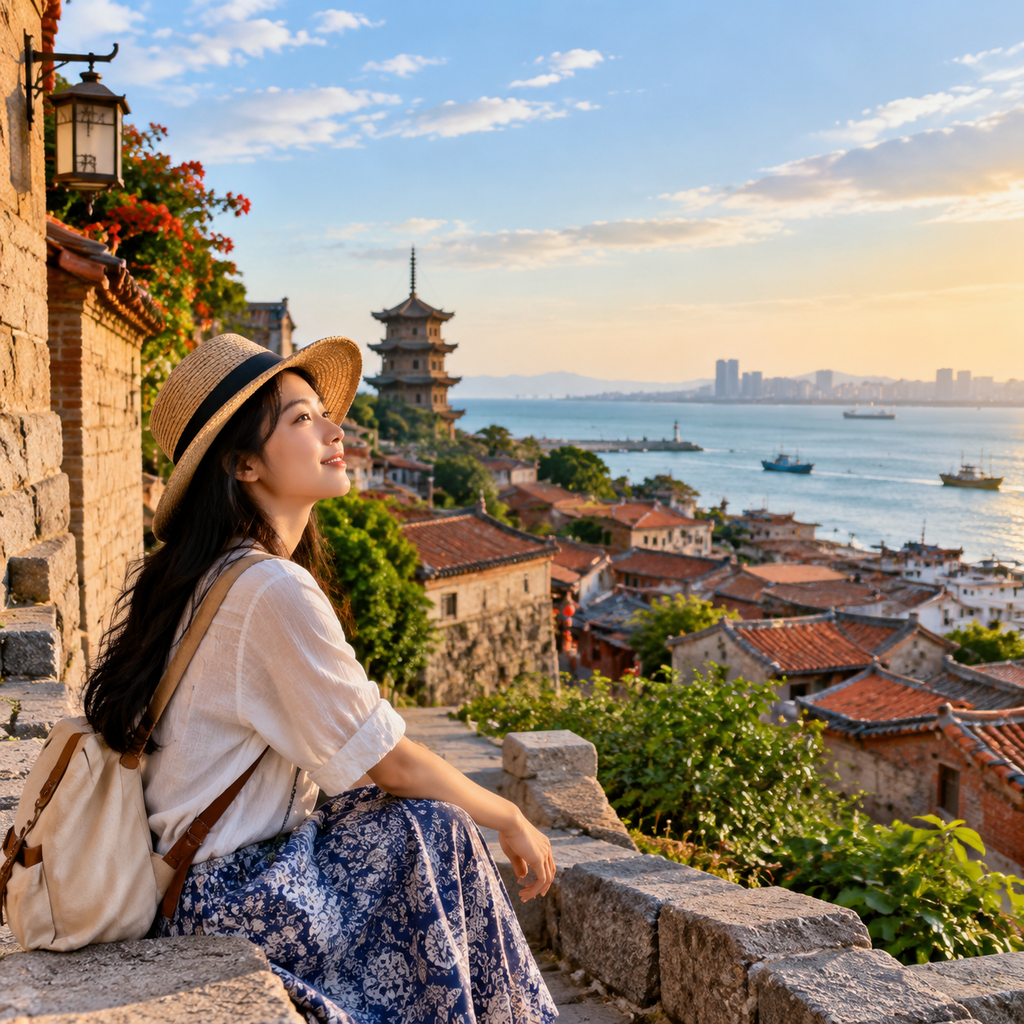
郑师傅的女儿在厦门工作,周末才回来帮忙。她建议把润饼切成标准大小,方便游客拍照,也方便线上配送。父亲起初认为这会损失手感,后来却同意先做两种尺寸:一种给附近居民,一种给赶时间的客人。几周后,他发现标准尺寸并没有消灭旧做法,反而让女儿学会了如何解释每种馅料的来源。改变被放进日常,便不再像一场拆除。
Master Zheng’s daughter worked in Xiamen and returned only on weekends. She suggested cutting the rolls to a standard size for photographs and delivery. Her father first feared that this would destroy the food’s tactile character, but agreed to offer two sizes: one for neighbors and one for hurried customers. After several weeks, he found the standard roll had not erased the old method; it had taught his daughter how to explain where each filling came from. Once change entered daily practice, it no longer felt like demolition.
下午的光线从骑楼一侧斜进来,红砖被照出深浅不一的颗粒。游客以为这些墙只是在展示闽南颜色,老泥瓦匠黄师傅却指给他们看砖缝里细细的灰白线条。那是海风和雨水长期作用后的盐霜,也是修补留下的痕迹。黄师傅说,墙不是一块完整的古董,它像人的手掌,伤口、茧子和新长出的皮肤都在说明它如何活下来。
In the afternoon, light entered obliquely beneath one side of the arcades, bringing out uneven grains in the red brick. Visitors thought the walls merely displayed Minnan color, but an old mason, Master Huang, pointed to fine gray-white lines in the joints. They were salt deposits left by years of sea wind and rain, along with marks from repairs. A wall was not a flawless antique, he said. Like a palm, it carried wounds, calluses, and new skin that showed how it had survived.
黄师傅带大家走到一处不显眼的门洞,那里嵌着一块来自旧商号的石匾。匾上的字被油烟熏暗,边角还有搬运时留下的缺口。讲解牌只写着店号和年代,黄师傅却说,旧商号的真正故事在门洞宽度里:当年骆驼、木箱和挑担必须轮流进出,掌柜会用敲木板的声音通知后院准备卸货。空间本身保存了动作。
Master Huang led the group to an unremarkable doorway containing a stone sign from an old trading house. Cooking smoke had darkened its characters, and a corner had chipped during some long-ago move. The plaque recorded only the shop name and date, but the mason said the real story lay in the doorway’s width. Camels, wooden crates, and shoulder poles once had to pass through in turns, while the shopkeeper knocked on a board to tell the rear courtyard to prepare for unloading. The space itself preserved those movements.
年轻游客这才放下手机,开始注意门槛的高度。他此前把海洋贸易想成远洋船只、香料和地图上的箭头,门洞却让他看到贸易也由弯腰、抬肩、等待和喊声组成。一个孩子从旁边跑过,鞋底溅起水珠,黄师傅侧身让路,手掌自然护住石匾。历史没有离开街道,它只是经常以避让的姿势出现。
Only then did the young visitor lower his phone and notice the threshold’s height. He had imagined maritime trade as ships, spices, and arrows on a map, but the doorway showed that trade was also made of bent backs, raised shoulders, waiting, and shouted instructions. A child ran past and splashed water; Master Huang stepped aside, instinctively shielding the stone sign with his palm. History had not left the street. It often appeared simply as the gesture of making room.
傍晚时分,开元寺的塔在暖光里显出沉稳的轮廓。寺旁卖茶的郭先生把乌龙茶倒进白瓷杯,茶汤有焙火香和一点近似海藻的回甘。他的祖父曾在港口做账房,家里留下几本账册,记录的不是传奇人物,而是米、糖、药材、布匹和船工工钱。郭先生说,城市的海洋记忆常常藏在最不起眼的数量里。
Toward evening, the pagodas of Kaiyuan Temple took on a steady outline in the warm light. Guo, who sold tea nearby, poured oolong into white porcelain cups. The tea carried a roasted fragrance and a finish faintly like seaweed. His grandfather had kept accounts at the harbor, leaving behind ledgers that recorded not heroes but rice, sugar, medicine, cloth, and sailors’ wages. A city’s maritime memory, Guo said, was often hidden in the least spectacular numbers.
郭先生曾经不愿给客人看账册,担心他们只把旧纸当成收藏品。一次,一位研究船运的学生发现账册里反复出现“风顺”“潮急”和“暂缓”的字样,便问这些词是否代表航行风险。郭先生重新翻阅后才意识到,祖父用极简的字记录了天气、潮汐和人与货物的等待。那本账册从家中旧物变成了一份关于耐心的证词。
Guo had once been reluctant to show the ledgers, fearing that guests would treat the old paper as a collectible. One day, a student studying shipping noticed the repeated words “fair wind,” “fast tide,” and “delay,” and asked whether they described navigational risks. Rereading the pages, Guo realized that his grandfather had recorded weather, tides, and the waiting of people and cargo in a few spare characters. The ledger changed from a household relic into testimony about patience.
夜市尚未开始,巷口的阿婆已经把一盆海蛎放在水边。她叫苏月娥,年轻时在渔船家庭里长大,后来嫁到城里经营小吃。她挑海蛎时不用秤,只凭手感判断肉是否饱满。游客问她泉州是不是“靠海所以人人都爱海鲜”,她摇头说,靠海也意味着要面对台风、涨价、离家和等船,喜爱从来不是单纯的享受。
The night market had not yet begun, but an elderly woman, Su Yue’e, had already placed a basin of oysters beside the water. She had grown up in a fishing family and later moved into the city to run a snack stall. She judged the oysters’ fullness by touch rather than a scale. When a visitor asked whether everyone in Quanzhou loved seafood simply because the city faced the sea, she shook her head. The sea also meant typhoons, rising prices, separation, and waiting for boats. Affection was never pure enjoyment.
苏阿婆说,家里祭拜时会把最普通的饭菜摆好,再添一小碟海蛎煎,并不是因为它贵,而是因为鸡蛋和海蛎都提醒人记得季节。她的孙子在厨房里打游戏,听见这话便笑她“又讲老故事”。不久后,孙子突然问起曾祖父出海的名字,苏阿婆停下翻锅的手,从抽屉里取出一张被油渍浸过的船票。老故事因此找到了新的听众。
Su said that during family offerings they set out ordinary rice and dishes, adding a small plate of oyster omelet not because it was expensive, but because eggs and oysters reminded them of the season. Her grandson played games in the kitchen and teased her for telling “old stories” again. A moment later he asked for his great-grandfather’s name, and she stopped turning the pan to take a ticket stained with cooking oil from a drawer. The old story had found a new listener.
巷子里的香火不只属于寺院。有人在自家门口的小神龛前换水,有人在店铺开门前把香插进红色陶炉,也有人路过时只用眼神确认神像仍在原处。社区志愿者蔡先生提醒游客,不要把这些动作都拍成异域风情。对居民来说,香火更接近一种日常秩序:提醒家人平安回家,也提醒店主今天仍要认真对待客人。
Incense in the lanes belonged to more than the temple. Some residents changed water before a household shrine, some placed incense in a red clay burner before opening a shop, and others merely checked with their eyes that the statue remained in place. Community volunteer Cai reminded visitors not to turn every gesture into exotic spectacle. For residents, incense was closer to an everyday order: a reminder for family to return safely and for shopkeepers to treat customers seriously.
一名摄影师曾把镜头贴近一位老人上香的手,试图捕捉“虔诚的瞬间”。老人转身后显得不悦,蔡先生便请摄影师先道歉,再解释拍摄用途。摄影师原以为对方只是忌讳,后来听见老人说自己手背有烧伤,不愿让陌生人把伤疤放大给别人看。他删掉照片,也重新理解了尊重:看见一个人,不等于拥有那个人的影像。
A photographer once brought his lens close to an elderly man’s hands while he offered incense, hoping to capture a “moment of devotion.” The man looked displeased afterward. Cai asked the photographer to apologize first and explain his purpose. The photographer had assumed the objection was religious taboo, but learned that the man had burn scars on his hands and did not want a stranger enlarging them for others to see. He deleted the image and reconsidered respect: seeing a person did not mean possessing that person’s image.
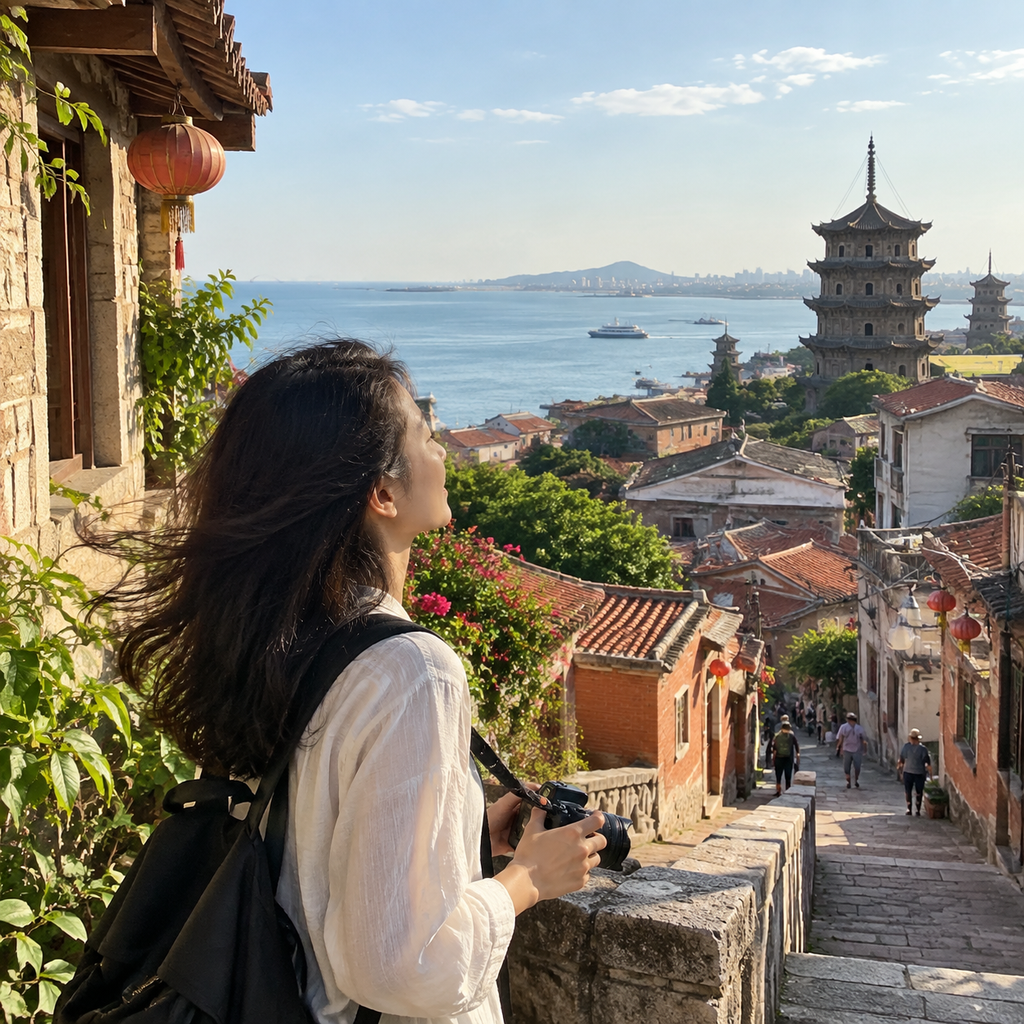
雨又在傍晚落下,骑楼立刻显出它的价值。店主们把纸箱往里挪,孩子们贴着柱廊跑,卖花的阿姨把塑料布压在花桶上。雨幕把西街切成一段段朦胧的空间,灯光落在湿砖上,像旧船舱里摇晃的铜色反光。年轻游客没有急着躲进咖啡馆,而是跟着陈阿姨帮忙把一箱矿泉水搬到高处。
Rain returned in the evening, and the arcades immediately revealed their purpose. Shopkeepers moved cartons inward, children ran close to the columns, and a flower seller weighted plastic covers over her buckets. The rain divided West Street into blurred compartments; light on the wet bricks resembled copper reflections rocking inside an old ship’s cabin. The young visitor did not hurry into a café. Instead, he helped Aunt Chen lift a case of bottled water onto a higher shelf.
陈阿姨因此问起他的家乡。他说那里冬天很干,街道宽,邻居不太会在屋檐下停留。她告诉他,泉州人的“慢”有时不是悠闲,而是等雨停、等潮退、等船期、等一家人把饭吃齐。游客此前把这种节奏理解成旅游体验中的松弛,听完后才明白,它也可能是环境和谋生方式共同训练出的耐性。
Aunt Chen asked where he was from. He said winters there were dry, the streets broad, and neighbors rarely lingered beneath shared eaves. She told him that what people called Quanzhou’s “slowness” was not always leisure. Sometimes it meant waiting for rain to stop, tide to fall, boats to arrive, or the whole family to sit down for a meal. He had understood the rhythm as a relaxed tourist experience; now he saw it as patience trained by weather and livelihood.
雨停后,西街地面留下细碎的水洼,倒映着开元寺的灯。蔡先生带游客走进一间做南音乐器的老铺,店主周伯正在给琵琶上弦。弦音一紧,木板便发出低低的共鸣,像有人在远处试着呼唤。周伯说,南音并不只是古老音乐,它也曾陪着离乡的人记住腔调、地名和家门口的风。
After the rain, small puddles remained on West Street, reflecting the lights of Kaiyuan Temple. Cai took the visitors into an old shop making Nanyin instruments, where Uncle Zhou was tightening the strings of a pipa. As a string rose in pitch, the wood answered with a low resonance, like a distant call being tested. Nanyin was not merely old music, Zhou said. It had accompanied people leaving home, helping them remember accents, place names, and the wind outside their door.
周伯年轻时也去过海外,在新加坡一家餐馆演奏过几年。他当时以为离开泉州就会失去故乡,后来却发现,异乡观众听不懂歌词,却会在某个拖腔处安静下来。那种沉默让他明白,文化不是封存在原地的物件,而是在人与人之间迁徙时不断调整音高的声音。回到西街后,他开始教邻里孩子识谱。
Uncle Zhou had spent several years playing in a restaurant in Singapore when he was young. He had thought leaving Quanzhou would mean losing his hometown, but audiences abroad, though unable to understand the lyrics, grew quiet at certain extended notes. Their silence taught him that culture was not an object sealed in one place; it was a sound that adjusted its pitch while moving between people. After returning to West Street, he began teaching music to neighborhood children.
街角的药店已经换成了明亮的招牌,但柜台后仍摆着一只木制抽屉柜。店员林小妹说,抽屉里过去放中药,现在放着居民寄存的钥匙和快递单。年轻游客再次以为这说明老店只是换了包装,林小妹却拿出一张老照片:同一个柜台前站着她的外祖母,身后是卖香料的外国商人。功能变了,替人保管生活的角色没有变。
A pharmacy at the corner had acquired a bright new sign, but a wooden drawer cabinet remained behind the counter. Lin Xiaomei said the drawers once held herbs and now held neighbors’ spare keys and delivery slips. The young visitor again thought this proved that an old shop had merely changed its packaging. Lin showed him a photograph of her grandmother behind the same counter, with foreign spice merchants standing behind her. The function had changed, but the role of safeguarding people’s daily lives had not.
接近午夜,仍有居民在街上吃面。摊主把猪骨汤煮得清亮,面条入口柔韧,蒜泥和胡椒在喉咙里留下短促的热意。有人谈孩子考试,有人谈台风路径,有人抱怨房租,也有人为隔壁桌多加了一勺醋。海洋贸易留下的开放,并不只表现在建筑和词汇里,也表现在一张桌子可以容纳多少种口音和心事。
Near midnight, residents were still eating noodles in the street. The vendor’s pork-bone broth was clear, the noodles springy, and garlic with pepper left a brief heat in the throat. People discussed children’s exams, typhoon tracks, rent, and whether the next table needed another spoonful of vinegar. The openness shaped by maritime trade appeared not only in architecture or vocabulary, but in how many accents and private worries one table could hold.
那位年轻游客最后回到陈阿姨的摊前,向她承认自己早上看错了。他说自己来泉州时只想寻找一张好看的老城照片,离开时却记住了油花、香烟、湿砖、旧船票和雨中搬水的手。陈阿姨没有把这句话当成赞美,只问他明早是否还要喝花生汤。游客说要,并决定不先举起手机。
The young visitor returned to Aunt Chen’s stall and admitted that he had misread the town that morning. He had come seeking a beautiful photograph of an old city, but would leave remembering floating oil, incense smoke, wet brick, an old boat ticket, and hands lifting water during rain. Aunt Chen did not treat this as a compliment. She only asked whether he would have peanut soup the next morning. He said yes, and decided not to raise his phone first.
第二天清晨,他在西街看见清洁工把昨夜的落叶扫成一条窄线,林叔在铜炉里换上新香,郑师傅的女儿把两种尺寸的润饼分开放好。开元寺的钟声从屋脊之间传来,海风仍旧没有露面,却把晾衣绳上的白布吹向同一个方向。游客忽然理解,所谓回声并不是某个过去的声音原样返回。
The next morning, he saw a cleaner sweep fallen leaves into a narrow line, Uncle Lin replace the incense in his copper burner, and Master Zheng’s daughter arrange the two sizes of spring rolls separately. The bell of Kaiyuan Temple traveled between the roof ridges. The sea wind itself remained unseen, yet it pushed every white cloth on the laundry lines in one direction. He suddenly understood that an echo was not the exact return of a past sound.
它更像一座城市把旧经验交给今天的人,再由今天的人用自己的手势回答。骑楼为雨留出的阴影、寺院前反复弯下的腰、账册里等待潮汐的几个字、家人围桌时保留下来的口味,都在回答那片海。泉州老城没有把记忆锁进博物馆,它让记忆继续参与买菜、修墙、上香、理发和分一张润饼。
It was more like a city handing old experience to people of the present, who answered it with gestures of their own. The shade made for rain beneath the arcades, backs repeatedly bent before a temple, a few words in a ledger waiting for the tide, and flavors preserved around a family table all answered the sea. Quanzhou’s old town had not locked memory in a museum; it let memory keep participating in shopping, repairing walls, offering incense, cutting hair, and sharing a spring roll.
离开前,游客走到西街尽头,没有寻找所谓最佳机位。他把相机收进包里,听见一辆送货车经过,车轮压过水洼,发出短促的啪嗒声;远处有人叫卖鱼丸,寺墙内传来木鱼,屋檐滴水一下一下落在石板上。风从巷口掠过,带来并不浓烈的盐味。他站了一会儿,才向正在关门的周伯道别。
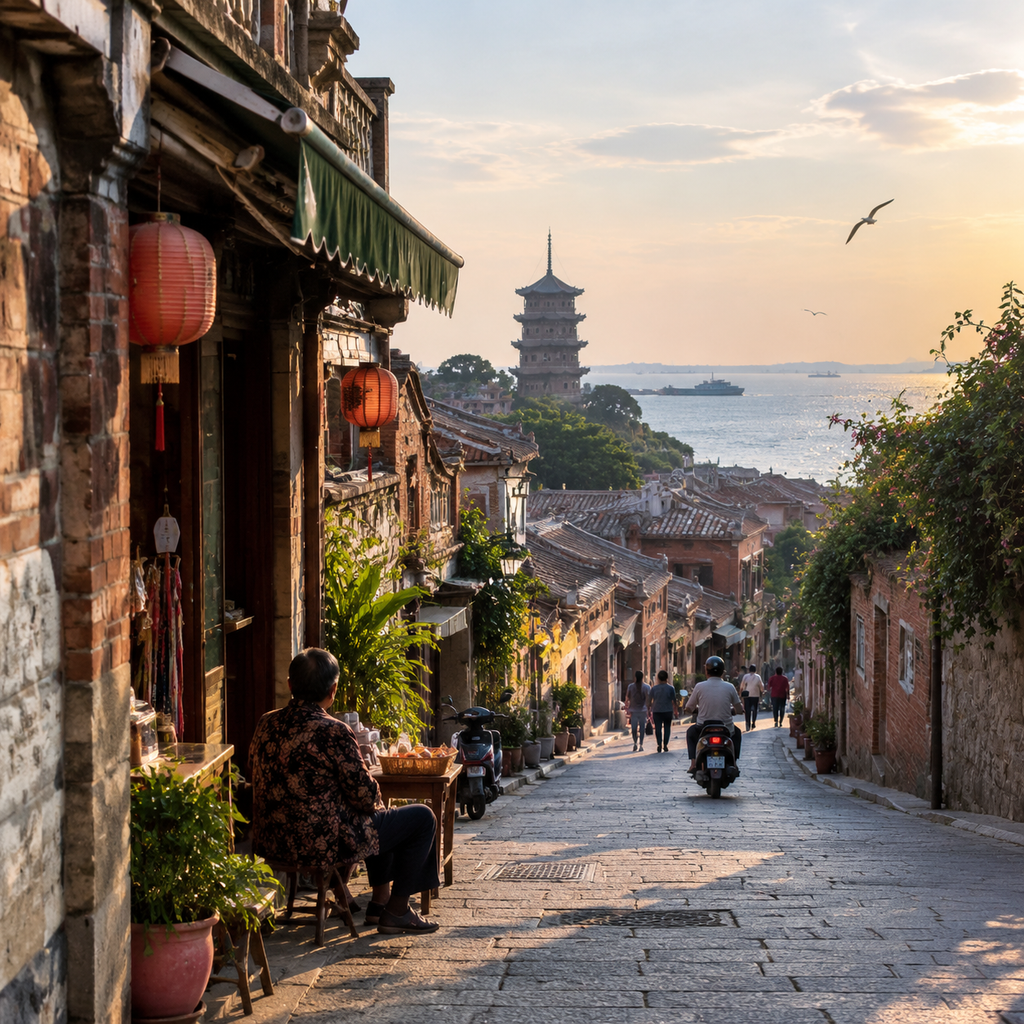
Before leaving, the visitor walked to the end of West Street without searching for a perfect viewpoint. He put his camera away and heard a delivery truck pass, its wheels making quick splashes through puddles. Someone called out about fish balls in the distance; a wooden fish sounded inside the temple; drops fell from the eaves onto stone at steady intervals. A faint saltiness crossed the lane. He stood for a while, then said goodbye to Uncle Zhou, who was closing his shop.
周伯把一枚刚换下的旧弦递给他,说留着也没有用,拿回去或许能提醒他听声音的方向。游客接过那根细弦,发现它轻得几乎没有重量,却在指尖留下粗糙的触感。当天傍晚,他在车站候车时没有立刻整理照片,而是在笔记里写下:泉州的海风不总是吹到脸上,它有时藏在一碗汤的热气里,藏在香灰弯曲的烟线里,也藏在一个人终于学会先问再拍的停顿里。
Uncle Zhou gave him an old string he had just replaced, saying it was useless to keep but might remind him to listen for the direction of sound. The visitor accepted it. It was almost weightless, yet rough against his fingertips. At the station that evening, he did not immediately sort his photographs. Instead he wrote: Quanzhou’s sea wind does not always touch the face. Sometimes it hides in the steam of a bowl of soup, in the bent line of incense smoke, and in the pause when a person finally learns to ask before taking a picture.
火车启动时,西街、开元寺和骑楼的灯光退到窗外,像被潮水慢慢收回的港口。那根旧弦躺在他的掌心,偶尔随着车厢震动轻轻颤动。他没有再把泉州概括成古城、寺庙或海丝遗址,而是记住了具体的人:陈阿姨的汤勺,林叔辨风的眼睛,黄师傅护住石匾的手,苏阿婆抽屉里的船票,以及周伯递来旧弦时那句平常得不能再平常的话。回声由此继续向远方传去。
As the train began to move, the lights of West Street, Kaiyuan Temple, and the arcades receded beyond the window like a harbor slowly reclaimed by the tide. The old string trembled lightly in his palm with each vibration of the carriage. He no longer reduced Quanzhou to an ancient town, a temple, or a Maritime Silk Road site. He remembered particular people: Aunt Chen’s spoon, Uncle Lin’s wind-reading eyes, Master Huang’s hand protecting the stone sign, Su’s boat ticket, and Uncle Zhou’s ordinary sentence as he handed over the string. The echo continued traveling into the distance.
回到北方后,他没有先发布照片,而是把周伯送的旧弦压在书桌玻璃下。第三天,他在网上查到社区公布的骑楼修缮招募,误以为只需要捐钱,便写信询问。对方回复说还缺会整理口述记录的人,他才发现自己能做的不是替老城下结论,而是把听见的细节准确留下。他打开笔记,逐句核对西街店家的姓名、称呼和闽南语发音,删掉了几处凭记忆补出的形容词。
After returning north, he did not post the photographs first. He placed Uncle Zhou’s old string beneath the glass of his desk. On the third day, he found an online call for volunteers to document arcade repairs and assumed that only money was needed, so he wrote to ask. The community replied that they needed someone to organize oral accounts. He realized that his task was not to conclude what the old town meant, but to preserve what he had actually heard. He reopened his notes, checked the shopkeepers’ names, forms of address, and Minnan pronunciations, and deleted several adjectives he had supplied from memory.
他给陈阿姨发去一段录音,先问能否使用她关于花生汤的说法。录音里,陈阿姨没有马上答应,只听见勺子碰碗的清脆声和炉火噼啪声。她后来回信纠正了一个词:她说的不是“醒来”,而是“起身”,因为泉州人先起身做事,城市才跟着有了声音。游客把这个改动记进文稿,第一次明白方言不只是口音,它会改变一个动作的重量。
He sent Aunt Chen a recording and first asked whether he could use her words about peanut soup. She did not agree immediately; the recording held only the clear tap of a spoon against a bowl and the crackle of the stove. Later she corrected one word. She had said “get up and begin,” not “wake,” because Quanzhou people first rise to work, and only then does the city acquire its sounds. He kept the change in his draft and understood for the first time that a dialect was not merely an accent; it could alter the weight of an action.
社区把他的整理稿退回两次。第一次,蔡先生指出他把开元寺附近所有香客写成“祈福者”,漏掉了替家人取药、给亡亲送纸和只来换水的人。第二次,林叔发现他把香灰落在炉外写成“随风飘散”,实际是林叔用竹签拨动后留下的弧线。游客原先以为细节越诗意越好,后来接受删改,把“烟雾像海浪”换成“竹签碰到炉底,发出一声轻响”。
The community returned his draft twice. Cai first pointed out that he had called every incense visitor near Kaiyuan Temple a “worshipper,” overlooking those collecting medicine for relatives, sending paper offerings to the dead, or merely changing water. Then Uncle Lin noticed that he had described ash outside the burner as “scattered by the wind,” when the curved marks came from Lin’s bamboo stick. The visitor had assumed that more poetic details were better. He accepted the edits and replaced “smoke like waves” with “the bamboo touched the burner’s bottom with a small click.”
为了补回被自己删掉的声音,他在夜里学着读一小段闽南语问候。手机里的陈阿姨录音先是模糊,接着传出她纠正声调的笑声。游客把“食饱未”读得像普通话,陈阿姨说听起来像在问天气,不像问人吃饱没有。他反复跟读,舌尖被陌生的音节绊住,最后只敢录下短短一句,再请她确认。屏幕上出现绿色勾号时,他没有转发,只把音频标进资料夹。
To restore the sounds he had deleted, he practiced a short Minnan greeting at night. Aunt Chen’s recording was muffled at first, then her laughter came through as she corrected his tones. He pronounced “Have you eaten?” as if it were Mandarin; she said it sounded like asking about the weather, not about a person’s meal. He repeated it until unfamiliar syllables caught on his tongue. In the end he recorded only one brief sentence and asked her to confirm it. When a green check appeared on the screen, he did not forward it; he filed the audio with the other materials.
一个月后,他再次来到西街,带着打印好的修订稿,却先去了开元寺外的香铺。林叔正在清理铜炉,手背沾着黑灰。他把稿子翻到海风那一页,问“香火也有自己的天气”是否可以保留。林叔看完摇头,指着炉沿一圈结硬的灰说,真正麻烦的是雨天香脚容易熄灭,店里要把备用炉搬到骑楼深处。游客删去那句漂亮话,补上搬炉时木轮卡住的吱声。
A month later, he returned to West Street with a printed revision, but first went to the incense shop outside Kaiyuan Temple. Uncle Lin was cleaning the copper burner, black ash marking the back of his hand. The visitor turned to the line about sea wind and asked whether “incense has its own weather” could remain. Lin shook his head and pointed to the hardened ring of ash: on rainy days, incense sticks went out, and the spare burner had to be moved deep beneath the arcade. The visitor removed the pretty sentence and added the squeak of a wooden wheel catching as the burner was moved.
这次他注意到开元寺山门旁一块被游客忽视的地砖。地砖中央有一道斜裂缝,雨水顺着裂缝流向排水口。游客以为那是年久失修的危险痕迹,蔡先生却说裂缝旁边的浅色部分刚补过,寺方暂时没有更换整块,因为施工会影响早课进出。他蹲下用手背试了试湿度,承认自己又把“旧”误认为“被遗弃”,于是把维修计划和实际通行一起写入记录。
This time he noticed a paving stone beside Kaiyuan Temple’s gate that most visitors ignored. A diagonal crack crossed its center, guiding rain toward a drain. He assumed it was a dangerous sign of neglect, but Cai explained that the pale strip beside it had just been repaired. The temple had not replaced the whole stone because construction would disrupt morning services. The visitor crouched and tested the dampness with the back of his hand. He admitted that he had again mistaken “old” for “abandoned,” and recorded both the repair plan and the need to keep the entrance open.
中午,他在骑楼柱廊下遇到吴晓宁。女孩已经读高中了,手里没有鱼丸袋,而是抱着一台借来的录音机。她说自己参加了社区声音地图,负责录下卷帘门、修墙电钻和南音练习。游客以为她会把老城做成一份怀旧作品,吴晓宁却打开文件夹,里面还有房东谈漏水、店员报库存和孩子抱怨校车迟到的录音。她说,声音地图如果只有古老,就不像生活。
At noon he met Wu Xiaoning beneath an arcade corridor. She was now in high school and carried a borrowed recorder instead of a bag of fish balls. She had joined a community sound map, recording rolling shutters, wall-repair drills, and Nanyin practice. He assumed she would turn the old town into a nostalgic project. Wu opened a folder containing recordings of a landlord discussing leaks, a shop assistant checking stock, and children complaining about a late school bus. A sound map with only the old, she said, did not resemble life.
她带他去听一段骑楼回声。录音时,一辆电动车从西街拐进来,车铃在柱廊之间连续弹了三下,随后被卖茶人的吆喝截断。游客起初把第三声当成设备杂音,吴晓宁让他回到现场站在同一根柱子旁。车铃再次响起,第三声正好被墙角反射回来。他修正标注,把“杂音”改成“回弹”,并在地图上画出声音折返的位置。
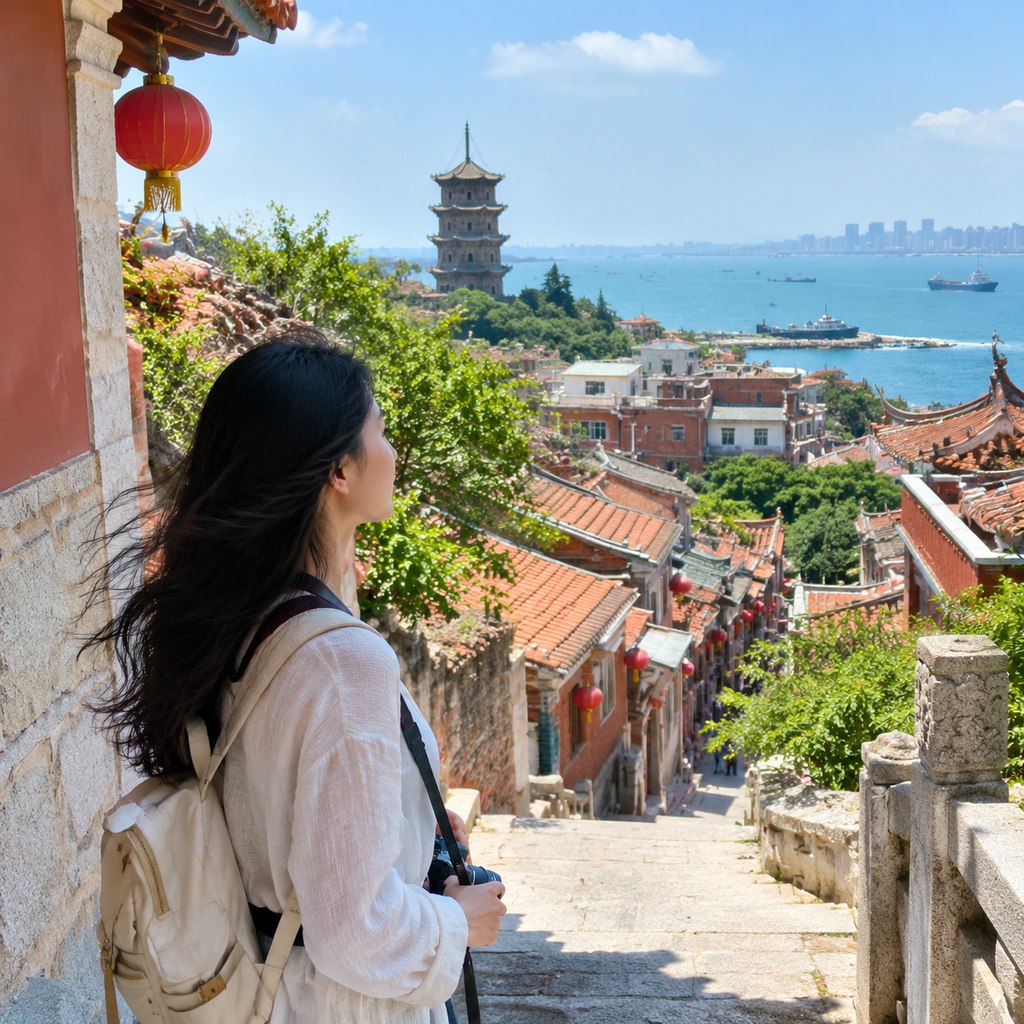
She took him to hear an arcade echo. During the recording, an electric scooter turned in from West Street; its bell bounced three times between the columns before a tea seller’s call cut it off. He first marked the third ring as equipment noise. Wu asked him to stand beside the same column and listen again. The bell sounded, and the third ring returned from the corner. He changed the label from “noise” to “rebound” and drew the point where the sound turned back on the map.
下午,黄师傅没有带他看石匾,而是让他帮忙递一把窄凿。修补骑楼砖墙时,黄师傅先用小锤敲掉松动灰浆,再把新灰压进缝里,动作很轻,怕震裂旁边的老砖。游客以为修缮就是把墙恢复得像新的一样,黄师傅却留出几道颜色不同的接缝,说以后的人要看得出哪里是旧砖、哪里是今天补的。新灰尚未干,指印清清楚楚留在墙面。
That afternoon Master Huang did not take him to the stone sign. He asked the visitor to pass a narrow chisel instead. Repairing an arcade wall, Huang first tapped away loose mortar, then pressed fresh mortar into the joint with care, afraid of cracking the old bricks nearby. The visitor had thought restoration meant making a wall look new. Huang left several differently colored joints so that future viewers could tell old brick from today’s repair. Before the new mortar dried, his fingerprints remained clearly visible on the wall.
傍晚,苏月娥的孙子把那张油渍船票装进透明袋,带到西街的临时展桌。他不再边打游戏边听祖母讲述,而是用手机查出船票上的目的地曾经属于另一套旧称,接着把查到的错误读音删掉。游客问他为什么不直接打印一张漂亮说明,他说祖母的船票已经够旧,不能再用不确定的字替它发言。展桌上的小灯照着票角,油斑像一片退潮后的暗礁。
Toward evening, Su Yue’e’s grandson placed the oil-stained ticket in a transparent sleeve and brought it to a temporary display table on West Street. He no longer played a game while listening to his grandmother. He searched the destination printed on the ticket and learned that it once had another name, then deleted a pronunciation he could not verify. The visitor asked why he did not simply print a polished explanation. The ticket was already old, the boy said; uncertain words should not speak over it. A small lamp lit the corner, where the grease mark looked like a reef after the tide had withdrawn.
周伯的新课在骑楼二层开始,五个孩子坐在旧木窗边,窗缝吹进油条和香灰混合的味道。游客站在楼梯口,原以为课堂会安静得像展馆,第一根弦刚拨响,楼下送货车便倒车鸣笛。孩子们笑成一片,周伯没有停,只把节拍改得更慢,让车声落进空拍里。游客把这段写进记录,标题只用了“倒车声经过时,南音没有停止”。
Uncle Zhou’s new class met on the second floor above the arcade. Five children sat beside an old wooden window, where the smell of fried dough mixed with incense ash drifting up from below. The visitor expected a room as quiet as a museum. As the first string sounded, a delivery truck beeped while reversing in the lane. The children burst out laughing. Zhou did not stop; he slowed the rhythm and let the truck occupy the empty beats. The visitor recorded it under a plain title: “Nanyin did not stop when the reversing truck passed.”
离开泉州前,他把整理好的声音地图交给吴晓宁,把修订稿交给蔡先生,并在陈阿姨摊前买了两罐花生酱。陈阿姨问他这回还会不会把西街拍成一条没有人居住的背景,他说不会,因为他已经知道镜头外还有炉火、漏水、错读的方言和被改正的句子。她把零钱数给他,多塞了一张写着闽南语问候的纸条。纸条边缘被汤汽熏软,字迹却没有化开。
Before leaving Quanzhou, he gave the completed sound map to Wu Xiaoning, the revised draft to Cai, and bought two jars of peanut paste from Aunt Chen. She asked whether he would again photograph West Street as a background without residents. He said no, because he now knew that beyond the frame were stove fires, leaks, misread dialect, and sentences corrected by the people who lived them. She counted his change and slipped in a note with a Minnan greeting. Steam from the soup had softened its edge, but the writing had not blurred.
车站候车厅里,他终于整理照片,却把最清楚的塔影放到最后。前面几张是模糊的:雨里搬水的手、铜炉边的灰、地砖裂缝、吴晓宁录音机上的红灯。列车进站广播响起时,他听见自己口袋里的旧弦轻轻碰到钥匙,发出细小的金属声。他没有抬头寻找象征性的远景,只把最后一张照片命名为“西街今天还在修补”,随后合上电脑,看见玻璃门外第一束晨光落在地面。
In the station waiting hall, he finally sorted his photographs, placing the clearest image of the pagoda last. The earlier images were less sharp: hands carrying water in rain, ash beside the copper burner, a crack in a paving stone, and the red light on Wu Xiaoning’s recorder. When the arrival announcement sounded, the old string in his pocket touched his keys with a tiny metallic note. He did not look up for a symbolic distant view. He named the final photograph “West Street Is Still Being Repaired Today,” closed the computer, and saw the first beam of morning light fall across the glass doors.
上午九点,观察者从西街东口折回骑楼下,遇见店主林秀真把门前的香品移进竹篮。她的店很窄,线香、檀木片和写着吉语的红纸挨着摆放,门槛被鞋底磨得发亮。她说,游客喜欢把西街拍成一条漂亮的旧街,可她每天先要进货、洗地、招呼熟客,还要替邻居收快递。观察者看着她把香灰扫进纸袋,第一次意识到香火不是悬在空中的景观,而是需要有人收拾、保存并让出通道的生活。 At nine in the morning, the observer turned back beneath the arcades at the eastern end of West Street and met Lin Xiuzhen, a shopkeeper moving her incense goods into a bamboo basket. Her narrow shop held joss sticks, sandalwood chips, and red papers with auspicious phrases, while the threshold had been polished by shoes. Visitors liked to photograph West Street as a beautiful old lane, she said, but her day began with receiving stock, washing the floor, greeting regulars, and accepting parcels for neighbors. Watching her sweep incense ash into a paper bag, the observer first understood that devotional smoke was not a floating spectacle. It belonged to a life that someone had to clean, preserve, and make room for.
午后,开元寺的钟声从院墙内缓慢传出。蔡文达老人没有带观察者去找最壮观的角度,而是让他看屋檐下新旧木构的接缝。蔡文达年轻时修过寺院,也替附近骑楼换过腐朽窗楣。他说,新木不能冒充老木,老木也不该为了整齐被全部刮平;修补留下的差异,反而让人看见时间如何经过。观察者原以为宗教空间主要靠宏大的仪式留住记忆,后来才发现,一根梁能否稳稳承重,一处榫口是否合适,同样需要近乎虔敬的耐心。 In the afternoon, a bell moved slowly out from inside Kaiyuan Temple. The elderly Cai Wenda did not take the observer to the grandest viewpoint. He showed him the seam between old and new timber beneath the eaves. Cai had repaired temple structures in his youth and replaced rotten lintels in nearby arcades. New wood, he said, should not pretend to be old, and old wood should not be scraped smooth merely for uniformity; the difference left by a repair allowed time to remain visible. The observer had assumed that religious places preserved memory mainly through grand ceremonies. He later saw that a beam’s ability to carry weight and a joint’s precise fit also required a patience close to devotion.
寺外供桌旁,十二岁的许安正在帮父亲许海生整理空瓶。有人只要三支短香,有人担心烟味太重,还有人从海边带回贝壳,想问能否用于供奉。许安起初把所有问题都回答成“这是传统”,父亲便提醒他先问来意、停留时间和家人的感受。孩子把一句笼统的话改成几个具体问题,观察者也随之修正了判断:宗教记忆并不只是被讲述的知识,它还包含对陌生人的尊重,以及在香火最旺时仍为别人留下呼吸空间的分寸。 Beside the offering table outside the temple, twelve-year-old Xu An was helping his father, Xu Haisheng, sort empty bottles. One person wanted only three short sticks of incense; another worried about strong smoke; someone else had brought shells from the coast and asked whether they could be used in an offering. Xu first answered every question with “That is tradition,” so his father told him to ask about the visitor’s purpose, length of stay, and family’s comfort. The boy replaced one vague reply with several precise questions. The observer corrected his own judgment as well: religious memory was not merely knowledge that people recited. It also included respect for strangers and the restraint to leave breathing room even when incense filled the air.
傍晚前,观察者在旧茶馆里听吴晓宁说闽南语。她把“吃了吗”说得短而轻,外孙女却把每个音节拖长,练习向外地客人解释菜单。三名从码头回来的船工谈潮水、货单和迟到的船,点单时才换成更容易听懂的说法。观察者曾误以为闽南语只适合怀旧表演,吴晓宁让他听见同一句问候在家人、熟客和陌生人之间怎样改变速度。语言没有被封存在展柜里,它仍在西街的桌边处理关系,也保存着旧码头的称呼。 Before evening, the observer sat in an old teahouse and listened to Wu Xiaoning speak Minnan. She said “Have you eaten?” briefly and softly, while her granddaughter lengthened each syllable as she practiced explaining the menu to visitors from elsewhere. Three boat workers returned from the wharf and discussed tides, cargo lists, and a delayed vessel, switching to clearer speech only when ordering. The observer had once thought Minnan belonged only to nostalgic performances. Wu let him hear how the same greeting changed speed among family, regulars, and strangers. The language was not sealed inside a display case; it still handled relationships beside tables on West Street and preserved the names of old docks.
海洋贸易的记忆也没有只藏在博物馆里。修表匠陈国祥从抽屉里拿出一张被油手摸薄的汇款单,解释说他年轻时在石井码头记账,许多家人靠远方寄回的钱过日子。旧信封上有南洋地址,也有已经改名的巷子;真正重要的不是纸张多珍贵,而是谁曾在雨天守着门等消息。观察者原以为贸易史需要船模、瓷器和航线图才能成立,陈国祥却让他看到一张折痕密集的纸如何连接码头、家庭和重新开门营业的时间。 The memory of maritime trade was not confined to museums. Watchmaker Chen Guoxiang took an oil-thinned remittance slip from a drawer and explained that, when young, he kept accounts at Shijing Wharf, where many families depended on money sent from far away. Old envelopes carried addresses in Southeast Asia and the names of lanes that no longer existed. Their importance lay not in the value of the paper, but in who had waited by a door on a rainy day for news. The observer had assumed that trade history required ship models, porcelain, and route maps. Chen showed him how a densely folded slip could connect a wharf, a household, and the moment a shop reopened.
西街的骑楼在午热里显出更实际的价值。卖青草茶的郑叔把塑料凳向里挪,免得学生骑车经过时撞上桌角;裁缝林婶把缝纫机放到檐下阴影里,借自然光看戏服上的金线。观察者过去只把骑楼理解为连续立面,郑叔却反问,如果没有人挪凳、收货、引雨水进沟,漂亮柱子还能算活着的街道吗?雨棚滴水落进旧盆,快慢不一,像一只不规则的节拍器。他终于明白,建筑的延续也包括人们每天为彼此调整半米空间。 West Street’s arcades revealed a more practical value in the midday heat. Uncle Zheng, who sold herbal tea, moved plastic stools inward so passing students would not hit the table corners. Tailor Aunt Lin placed her sewing machine in the shade beneath the eaves, using daylight to inspect gold thread on an opera costume. The observer had understood arcades only as continuous façades. Zheng asked whether beautiful columns still made a living street if nobody moved stools, received goods, or guided rainwater into the drain. Drops from the awning fell into an old basin at an uneven pace, like an irregular metronome. He finally understood that architectural continuity also included people adjusting half a meter of space for one another every day.
午餐时,蔡先生带他进一间只有六张桌子的面馆。招牌先写闽南语俗称,普通话解释挤在下面。观察者照习惯点了大份,老板娘庄慧敏却问他还要走多久,再建议换小碗,并放一碟腌萝卜缓和味道。他原以为地方饮食越浓烈越值得记录,吃到最后才承认,泉州的“正宗”也体现在店家愿意根据一个人的体力、天气和经验替他做判断。那碗汤慢慢凉下去,他对城市的理解反而热了起来。 At lunch, Cai took him to a noodle shop with only six tables. The sign gave the Minnan nickname first, with a Mandarin explanation squeezed beneath it. The observer ordered a large bowl out of habit, but the owner, Zhuang Huimin, asked how long he planned to keep walking before suggesting a smaller serving. She placed pickled radish beside it to soften the flavor. He had thought local food deserved attention when it was especially intense. By the end, he admitted that Quanzhou’s “authenticity” also appeared in a shopkeeper’s willingness to judge the right choice according to a person’s stamina, the weather, and experience. As the broth cooled, his understanding of the city grew warmer.
开元寺边门前,陈阿姨遇到一位拿着海外明信片的中年人。卡片上的地址使用旧巷名,问过几个人仍找不到。香铺年轻人先看邮戳旁的店号,陈阿姨又请修鞋的魏伯补充记忆,几个人沿骑楼逐间回想,最后在新漆门后找到旧门牌留下的钉孔。观察者原以为寻找历史必须安静得像档案室,事实却是几位居民在互相纠正中完成了定位。明信片没有找回原屋,却找回了它在邻里心中的位置。 At the side gate of Kaiyuan Temple, Aunt Chen met a middle-aged man holding a postcard from overseas. Its address used the former name of a lane, and he still could not locate it after asking several people. The young incense seller first examined the shop number near the postmark. Aunt Chen then asked Wei, the shoe repairer, to add what he remembered. Together they recalled the arcade shops one by one and found the nail holes left by an old sign behind a freshly painted door. The observer had assumed that searching for history required the silence of an archive. In reality, several residents located it by correcting one another. The postcard did not recover the original house, but it recovered the house’s place in neighborhood memory.
夜里九点以后,西街只剩收摊声、拖把擦过地砖的水响和开元寺远处的诵读。快递员黄志强把最后一个纸箱送上楼,住户用闽南语道谢,他虽听不全仍笑着点头;年轻香客把燃尽的香脚放进铁桶,又扶住差点踩空的老人。语言、香火、宗教、贸易、人物和建筑在这些小动作里接上了。观察者不再寻找一句漂亮总结,只在骑楼阴影里收好设备,听最后一扇铁门落锁,海风把潮湿的凉意推过西街。泉州的夜间收束不是结束,而是让这座老城把白天的记忆继续交给明天。 After nine at night, West Street held only the sounds of closing stalls, a mop washing over paving stones, and chanting from Kaiyuan Temple in the distance. Courier Huang Zhiqiang delivered the last cardboard box upstairs. The resident thanked him in Minnan; he could not catch every word, but he smiled and nodded. A young worshipper placed burned incense ends in a metal bin, then steadied an elderly person who nearly missed a step. Language, incense, religion, trade, people, and architecture joined through these small actions. The observer no longer searched for a beautiful concluding sentence. He put away his recorder beneath the arcade’s shadow and listened to the final metal door lock as sea air pushed its damp coolness through West Street. Quanzhou’s nighttime close was not an ending. It was the old town handing the day’s memory onward to tomorrow.
- 遵义老城坡道上,我把台阶数错了 | I Lost Count of the Steps on Zunyi’s Old-Town Slopes
- 二十四节气:中国人骨子里的时间密码 | The 24 Solar Terms: China's Ancient Calendar Hidden in Plain Sight
- 带爸妈游中国七日:一份不累不赶的行程单 | 7 Days in China with Aging Parents: A No-Rush Itinerary
- 清明踏青好去处:近郊自然游 | Qingming Outing: Nature Trips Near the City
- 中国城市的绿色脉络:那些被树荫覆盖的街道 | China's Green Veins: The Tree-Lined Streets That Define Its Cities
- 我在公寓快递架前学会的第一课,是别把自己的方便放在别人通道中间 | The First Lesson I Learned at My Apartment Delivery Shelf Was Not to Put My Convenience in Other People’s Way
- 熟食店玻璃柜前那句“几个人吃”,让我第一次学会在中国别只按克数点菜 | The Question “How Many People Are Eating?” at a Deli Counter Taught Me Not to Order Only by Weight in China
- 中国住宿避坑指南:酒店民宿青旅怎么选 | Accommodation in China: Hotels, B&Bs & Hostels
- 那张被擦亮的桌子,让我看见沙县小吃如何成为日常 | The Polished Table Showed Me How Shaxian Snacks Became Everyday Food
- 我在北京学会别把最后一班地铁当成唯一计划 | In Beijing I Learned Not to Treat the Last Metro as My Only Plan
Comments (0)