
中国城市的绿色脉络:那些被树荫覆盖的街道 | China's Green Veins: The Tree-Lined Streets That Define Its Cities
中国城市的绿色脉络:那些被树荫覆盖的街道 | China's Green Veins: The Tree-Lined Streets That Define Its Cities
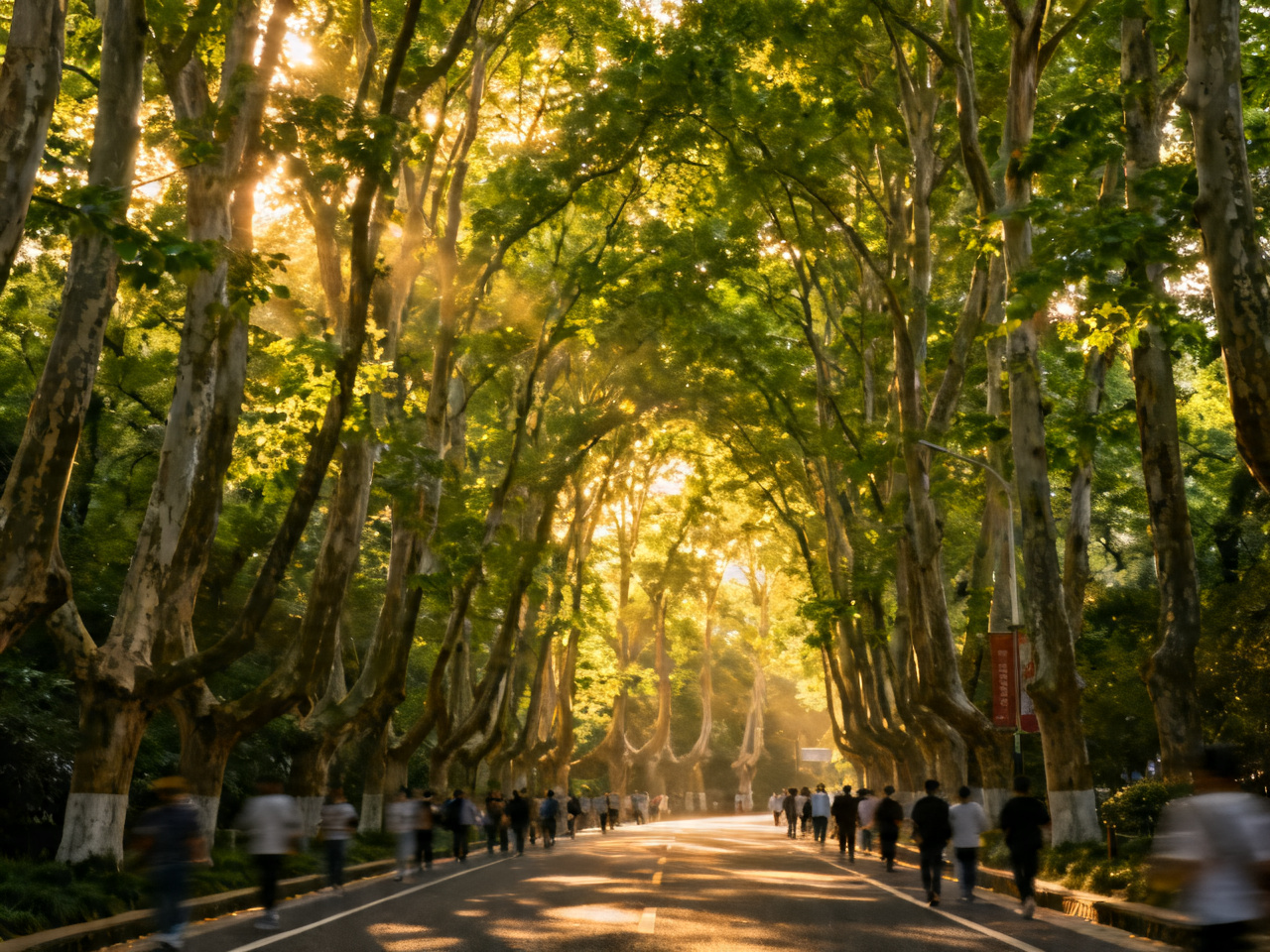
走在南京的中山路上,你会忘记自己在一座千万人口的城市里。
法国梧桐的树冠在头顶交织成拱,夏天的阳光被切成碎片洒下来,地面上全是光影。这些树种于民国时期,有的已经活了近百年。南京人管它们叫"老法桐",不是植物学名词,是一种带感情的叫法。
Walking along Zhongshan Road in Nanjing, you forget you're in a city of millions. French plane trees form a canopy overhead, summer sunlight filtering through in scattered fragments. Some of these trees have stood for nearly a century, planted during the Republic of China era. Nanjing locals call them "lǎo fǎ tóng" — not a botanical term, but an affectionate one.
一棵树能改变什么 / What a Single Tree Can Change
2011年,南京地铁施工方案要求砍掉一批老法桐。消息一出,市民自发上街,有人抱着树哭。最后,地铁线路改道,树留下来了。
这件事说明一个问题:中国城市的绿化,早就不只是政府规划的事了。
In 2011, a Nanjing metro construction plan called for removing a batch of old plane trees. When the news broke, residents took to the streets — some literally hugging the trees in protest. The metro line was rerouted. The trees stayed.
This episode reveals something important: urban greening in Chinese cities has long since stopped being purely a government planning matter.
各城各树,各有性格
南京的法桐是历史遗产,保护条例规定砍一棵要经政府审批,百年以上的树有独立档案。
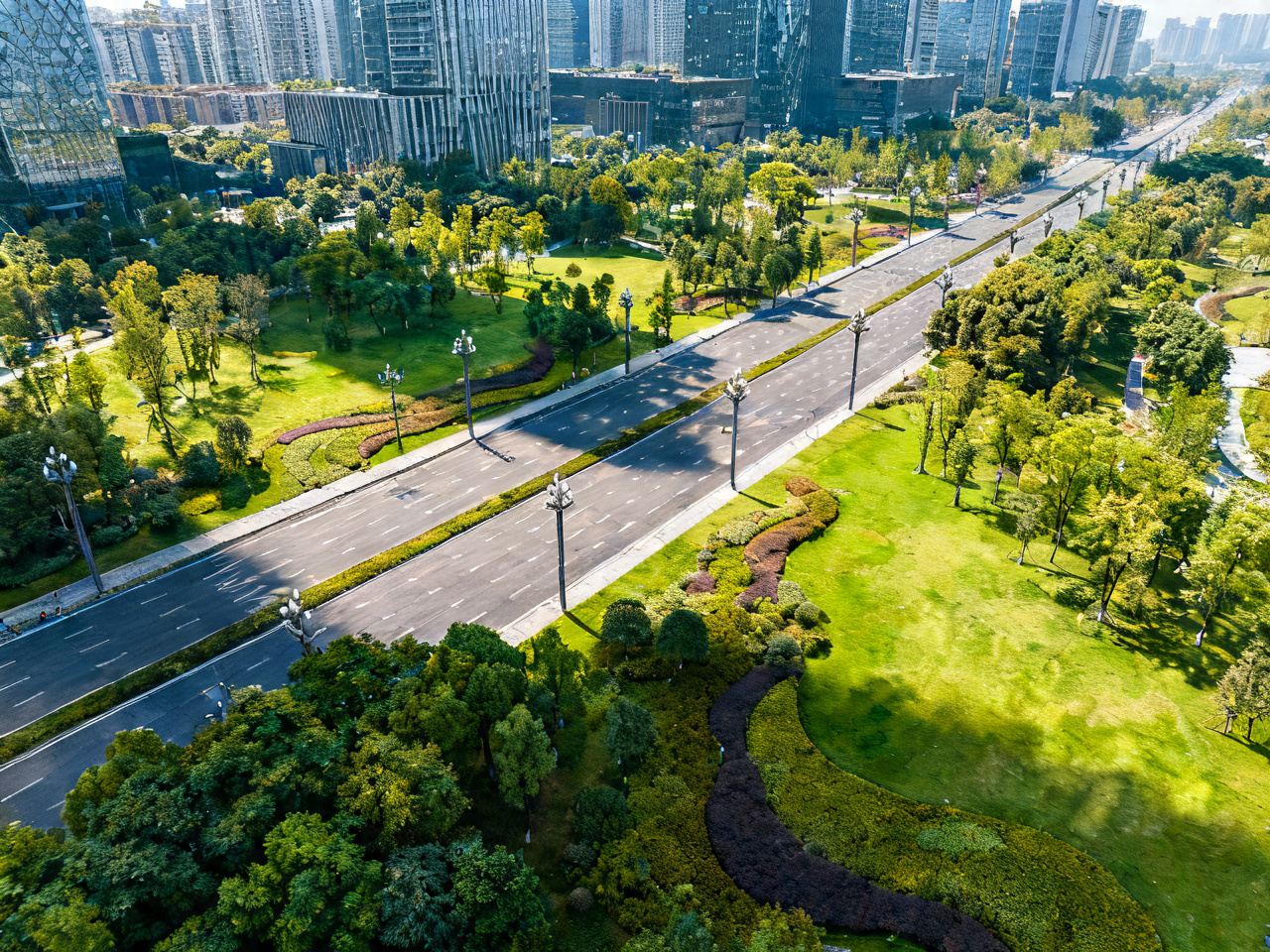
成都走的是另一条路。"公园城市"概念从这里发源,天府大道全长108公里,两侧是多层次绿化带,乔木、灌木、草坪叠加,不是简单种几排树,是把整条路变成线性公园。
广州的街道有木棉。每年三月,木棉花落满地,红得像烧起来。广州人叫它"英雄树",是市花,也是路边最常见的行道树之一。
上海法租界的梧桐和南京的是同一个物种,但气质不同——武康路、淮海路的树更像是城市美学的一部分,配合老洋房和咖啡馆,成了上海最被拍照的街景。
西安秋天的银杏是另一种震撼。大雁塔附近的银杏大道,叶子黄透的时候,整条路像铺了金子,每年吸引大量游客专程来拍照。
Each Chinese city has its own tree identity.
Nanjing's plane trees are protected heritage — cutting one requires government approval, and trees over a century old have individual records on file.
Chengdu took a different approach. The "Park City" concept originated here. Tianfu Avenue stretches 108 kilometers, flanked by layered green belts — trees, shrubs, and lawns stacked together, turning the entire road into a linear park rather than just a tree-lined street.
Guangzhou has kapok. Every March, red kapok flowers carpet the ground beneath the trees. Locals call it the "hero tree" — it's the city flower and one of the most common street trees you'll see.
Shanghai's French Concession plane trees share the same species as Nanjing's, but feel different — on Wukang Road and Huaihai Road, the trees are part of an aesthetic ensemble with old villas and cafés, making them among the most photographed streetscapes in the city.
Xi'an's ginkgo trees in autumn are something else entirely. When the leaves turn gold near the Big Wild Goose Pagoda, the entire boulevard looks paved in gold. Tourists come specifically for the photos.
政策在背后推着
中国城市绿化不是自然生长出来的,背后有系统性的政策支撑。
"国家森林城市"称号是一个重要驱动力。全国已有200多个城市获得这个称号,评定标准包括城市绿化覆盖率不低于40%、人均公园绿地面积不低于15平方米。城市为了争这个称号,会大规模推进绿化工程。
"十四五"规划(2021—2025年)明确要求全国城市绿化覆盖率达到43%以上。这不是口号,是有考核指标的硬性要求。
新建道路的绿化标准也在提高。主干道两侧绿化带宽度要求3到10米不等,开发商拆树必须按3:1比例补种。
Urban greening in China doesn't happen organically — it's driven by systematic policy.
The "National Forest City" designation is a key motivator. Over 200 cities have earned this title, which requires urban green coverage of at least 40% and per-capita park green space of at least 15 square meters. Cities invest heavily in greening to compete for the designation.
The 14th Five-Year Plan (2021–2025) set a binding target: national urban green coverage above 43%. This isn't a slogan — it comes with performance metrics.
Standards for new road construction have also risen. Major roads must have green belts 3 to 10 meters wide on each side, and developers who remove trees must replant at a 3:1 ratio.
绿道网络:把城市连起来
比单条道路绿化更大的野心是"绿道"网络。
中国计划到2035年建成超过15万公里的绿道,把公园、河岸、山体、城市道路连成一张网。骑行、步行、跑步都可以在这张网里完成,不用穿越车流。
成都的天府绿道已经是全球最长的城市绿道系统之一,总长超过1.69万公里,覆盖整个成都平原。武汉有"10分钟绿色圈"政策,目标是让每个居民步行10分钟内能到达公园或绿色廊道。
Beyond individual streets, China has a bigger ambition: the greenway network.
China plans to build over 150,000 kilometers of greenways by 2035, connecting parks, riverbanks, hillsides, and urban roads into a single network for cycling, walking, and running — without crossing traffic.
Chengdu's Tianfu Greenway is already one of the world's longest urban greenway systems, stretching over 16,900 kilometers across the Chengdu Plain. Wuhan has a "10-minute green space" policy — every resident should be within a 10-minute walk of a park or green corridor.
如果你要去看树
几个值得专程去的地方:
- 南京颐和路 — 法桐隧道,民国建筑,最好在早晨人少时去
- 上海武康路 — 梧桐+老洋房,秋天最美
- 西安大雁塔银杏大道 — 10月下旬到11月初,叶子最黄
- 成都天府大道 — 感受"公园城市"的尺度,适合骑行
- 广州越秀公园周边 — 木棉花期在3月,落花满地
If you want to see China's tree-lined streets at their best, here are a few worth the trip:
- Yihe Road, Nanjing — plane tree tunnels with Republican-era architecture; go early morning before the crowds
- Wukang Road, Shanghai — plane trees and old villas; most beautiful in autumn
- Ginkgo Avenue near Big Wild Goose Pagoda, Xi'an — late October to early November for peak golden color
- Tianfu Avenue, Chengdu — experience the "Park City" scale; best explored by bike
- Around Yuexiu Park, Guangzhou — kapok blooms in March, flowers carpeting the ground
中国的城市化速度举世瞩目,但在这个过程里,有些城市选择了把树留下来,甚至为了树改了地铁线路。这件事本身,就值得记一笔。
China's urbanization has been breathtaking in speed. But along the way, some cities chose to keep their trees — even rerouting metro lines to do so. That choice alone is worth noting.
- 六月荷花观赏地全国推荐 | June Lotus Viewing Spots Across China
- 秦淮河灯影之外,我在夫子庙听见一堂夜课 | Beyond Qinhuai's Lantern Reflections, I Found a Night Lesson at Fuzimiao
- 在中国保持联网 | Staying Connected in China
- 六月毕业旅行目的地推荐 | June Graduation Trip Destinations in China
- 春季赏花地图:全国最美花海 | Spring Bloom Map: China's Most Beautiful Flower Fields
- 中国旅游预算规划指南 | China Travel Budget Planning Guide
- 我在西安回民街试了三种肉夹馍:哪一家更值得排队 | I Tried Three Roujiamo in Xi'an Muslim Quarter
- 初秋的阿勒泰不只在草原上:我沿河谷重新排了自驾线 | Altay in Early Autumn: Rebuilding a Drive Along the Valleys
- 数字人民币来了,外国游客到底怎么用?| E-CNY Is Here — How Does It Actually Work for Foreign Visitors?
- 七月避暑:中国最凉快的地方在哪里 | July Cool Escapes: Where to Beat the Heat in China
Comments (0)