
天还没热起来,长安早市已经把一天的味道摆出来了 | Before the Heat Rose, Chang'an's Morning Market Had Already Laid Out the Flavor of the Day
天还没热起来,长安早市已经把一天的味道摆出来了 | Before the Heat Rose, Chang'an's Morning Market Had Already Laid Out the Flavor of the Day
天刚蒙蒙亮,我就把靴底从旅舍门槛上磕了两下,抖掉昨夜沾上的灰。那时的长安还没有完全醒透,可东市边上的早市已经热起来了。街口先飘来的是水汽,再后面才是声音:铜勺碰锅沿的一声脆响,面团摔在案板上的闷声,卖胡饼的人把炉盖揭开时冒出来的一团白气。我是从波斯一路往东做香料买卖来的商人,原以为真正能看出一座城富不富,只要看它的高墙和官署。可在长安住得久一点,我反而越来越相信,最先说明这座城有多大气的,不是宫门,是早市里第一锅热汤。
Before dawn had fully opened, I knocked the dust from my boots against the threshold of the inn. Chang'an was not completely awake yet, but the morning market beside the eastern quarter had already come alive. What arrived first at the street corner was steam, and only after that came sound: the crisp ring of a bronze ladle touching the rim of a pot, the low thud of dough slapped onto a board, the white burst that rose when a vendor lifted the lid from a clay oven. I am a spice merchant who came eastward from Persia, and I once believed the quickest way to judge the wealth of a city was to look at its walls and its offices. But after living in Chang'an for some time, I began to think differently. The first thing that truly shows how grand this city is is not the palace gate, but the first bowl of hot broth at the morning market.
我第一次跟着本地牙人进这片早市时,还走得很慢。不是怕人,是怕错过细节。摊子并不胡乱挤作一团,卖饼的、卖粥的、卖蒸点的、卖腌菜的,各自占着一小块位置,锅灶、木案、竹屉和水桶摆得都有章法。有人挑着担子边走边卖,有人已经固定在一处,把火色照得一张脸忽明忽暗。长安的早市给人的第一感觉不是乱,而是快,却不慌。每个人都像知道自己该站在哪儿,该把手伸向哪只碗,该在什么时候把第一屉吃食递给第一个赶路的人。
The first time I entered this market with a local broker, I moved slowly, not because I feared the crowd, but because I did not want to miss the details. The stalls were not pressed together in confusion. Sellers of flatbread, porridge, steamed snacks, and pickled vegetables each kept a small, ordered space. Their stoves, wooden boards, bamboo steamers, and water buckets were arranged with a kind of discipline. Some men carried shoulder poles and sold while walking. Others had already settled into fixed positions, their faces lit on and off by the fire. The first impression of Chang'an's morning market was not disorder. It was speed without panic. Everyone seemed to know exactly where to stand, which bowl to reach for, and at what moment to hand the first steaming food of the day to the first traveler hurrying past.
我原本以为最热闹的一定是卖肉的地方,后来才发现,真正最先把人拢住的往往是面和火。一个摊主在炉边贴胡饼,手掌一抹,饼胚就顺着炉壁伏上去,边缘很快鼓起一点焦黄。他身边的小徒弟把芝麻撒得飞快,像怕慢一瞬香气就会跑掉。旁边还有人卖汤饼,白气从铜锅里翻起来,面条被筷子一提,带出一阵热腾腾的湿香。若是赶着出城的人,就会站着吃;若是刚挑完货的脚夫,则喜欢蹲在路边,把木碗托在掌心里慢慢吹。
I had assumed the noisiest corner would be the one selling meat, but I soon learned that the first force that gathered people was often flour and fire. One vendor pressed flatbread against the inner wall of his oven. With a sweep of his palm, the dough clung to the hot clay, and the edges browned almost at once. Beside him, his young apprentice scattered sesame seeds with astonishing speed, as if the fragrance might escape if he hesitated. Nearby, another man sold noodle soup. Steam rolled out of a bronze pot, and when he lifted the noodles with chopsticks, a wet, rising aroma followed. Those rushing out of the city would eat standing up. Porters who had already unloaded their goods preferred to squat by the roadside, cradling wooden bowls in both hands and blowing at the surface slowly.
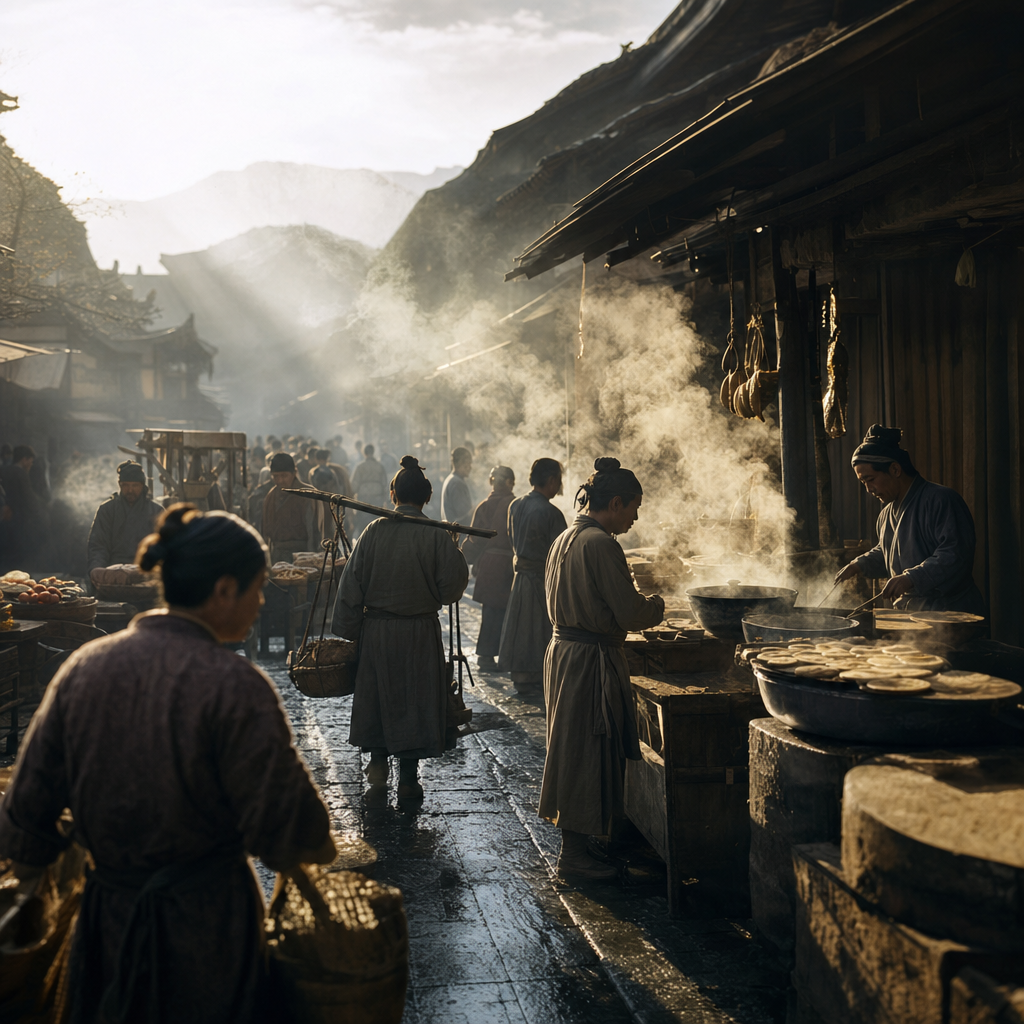
如果只说长安吃得多,那还不够准确。真正让我惊讶的,是这座城一大早就能把不同来路的人都安顿进同一股香气里。有人要的是粟米粥,觉得暖胃顶饱;有人偏爱胡饼,图它省事、香脆、能边走边拿;还有人愿意多等一会儿,就为了那一碗汤里漂着葱末和油花。作为做香料生意的人,我最在意的是鼻子先听见了什么。长安的早市里,不只是麦香和油香,还有葱、蒜、羊脂、发酵面团、炭火、醋汁,甚至是刚被切开的瓜果那种清凉的生气。它们不是混成一片,而是一层一层往外推,像有人在清晨把这座城的味觉次序一点点排开。
It would not be accurate enough to say only that Chang'an had a great deal of food. What truly astonished me was how, so early in the morning, the city could gather people from many different origins into the same cloud of aroma. Some wanted millet porridge because it warmed the stomach and filled the body. Others preferred flatbread because it was crisp, practical, and easy to carry while walking. Still others were willing to wait longer for a bowl of soup dotted with scallions and shimmering fat. As a spice merchant, I always listen first with my nose. In Chang'an's morning market, there was not only the scent of grain and oil, but also scallion, garlic, lamb fat, fermented dough, charcoal, vinegar, and even the fresh coolness of recently cut fruit. These smells did not collapse into one blur. They pushed outward in layers, as though someone were arranging the city's sense of taste one step at a time in the morning air.
有一回我在一个卖蒸点的小摊前站了很久。摊主是个手背发红的中年妇人,掀开竹屉时,热雾一下扑到她额前,连鬓边碎发都湿了。她看我多看了两眼,笑着问我要不要试一个新出的豆馅团子。我本来犹豫,因为那天还要去见一位替我牵线的本地商户,不想让手上带太多食味。她却把一个团子轻轻往纸上一放,说,赶路的人吃一个,话也会说得顺一点。我听懂一半,猜懂一半,还是接了。咬开时豆香很稳,不甜得发急,外皮却软得像刚从热布里拿出来。那一口让我忽然明白,长安人并不把早点只当成填肚子的东西,它更像一种把人从夜里接到白天的方式。
Once I stood for a long time in front of a small stall selling steamed snacks. The vendor was a middle-aged woman whose knuckles were red from work. When she lifted the bamboo lid, a wave of steam struck her forehead, dampening the loose hairs by her temples. After noticing my attention, she smiled and asked whether I wanted to try a newly made bean-filled dumpling. I hesitated because I had to meet a local merchant later that morning and did not want my hands smelling too strongly of food. She set one gently onto a piece of paper and said that a traveler who eats one on the road will speak more smoothly afterward. I understood half the sentence and guessed the rest, but I took it anyway. When I bit into it, the bean filling was calm and deep, not urgently sweet, while the outer skin was so soft it felt as if it had just been taken from warm cloth. In that moment, I understood that people in Chang'an did not treat breakfast merely as a way to fill the stomach. It was a way of receiving a person out of the night and into the day.
长安早市还有一个让我佩服的地方:它让身份差别在一顿早饭前面暂时缩短了一点。自然,谁吃什么、站在哪儿、用什么器皿,还是能看出高低。但在清晨最忙的时候,你能看到脚夫、行旅、写字吏、学童、看店伙计,甚至早起出门的僧人,都在同一条街上被热气熏得眯眼。有人讲价,有人赶时间,有人已经开始盘算中午吃什么。可在第一口热粥和第一块饼之间,大家都先是一个需要被暖醒的人。对一座大城来说,这样的清晨秩序,比任何夸耀都更真实。
There is another reason I admire Chang'an's morning market. For a short while, it narrows the visible distance between ranks. Of course, one can still tell differences by what people eat, where they stand, and what vessels they use. Yet during the busiest moments of the morning, you can see porters, travelers, clerks, schoolchildren, shop assistants, and even monks who have risen early, all squinting through the same steam on the same street. Some bargain. Some hurry. Some are already planning their midday meal. But between the first spoonful of hot porridge and the first piece of bread, they are all first of all people who need to be warmed awake. For a great capital, that kind of morning order feels truer than any boast.
长安早市到底特别在哪 / What Exactly Made Chang'an's Morning Market Special
若只用“繁华”两个字来概括唐代长安的饮食,反而会把最值钱的部分说轻了。长安早市的特别,不只是吃的种类多,而是它把城市的节奏、交通、人群和食物做成了一个连在一起的系统。如果你之前只把中国古代城市理解成城墙、坊门和官署,其实可以顺手看看另一篇站内文章:中国跨城旅行怎么管钱:预算分桶法实战。虽然讲的是现代旅行,但里面关于“城市节奏决定选择”的逻辑,放回古代看也很成立。
If we summarize Tang Chang'an's food culture with the word “prosperous” alone, we actually make its most valuable feature sound smaller than it is. What made Chang'an's morning market special was not only the number of foods available, but the way it tied together the city's rhythm, movement, crowds, and eating habits into one connected system. If you have only imagined ancient Chinese cities through walls, ward gates, and offices, you may also glance at another article on this site: Budget Buckets for China Trips: A Practical Money System. It is about modern travel, but its logic about how city rhythm shapes human choices also makes surprising sense when we look backward.
-
第一,它服务的是不同时间表的人。出城的、上工的、赶考的、挑货的,都能在天刚亮时找到适合自己速度的吃法。
-
第二,它让面食、蒸食、粥食和便携食并排存在,说明城市饮食已经很成熟,不靠单一主食撑场面。
-
第三,它的热闹不是无序拥挤,而是有分工、有位置、有默契,这恰恰反映了大都市的组织能力。
-
First, it served people living by different clocks. Those leaving the city, beginning work, preparing for examinations, or carrying loads could all find food that matched their pace at daybreak.
-
Second, it allowed noodles, steamed foods, porridge, and portable foods to exist side by side, showing that urban eating habits had already grown sophisticated rather than leaning on one single staple.
-
Third, its liveliness was not disorderly crowding but division of labor, position, and shared rhythm, which reflected the organizational strength of a major city.
我后来和一位会写汉字的本地朋友聊起这件事,他说唐人讲究的不只是“吃什么”,还有“什么时候吃、和谁一起吃、在什么地方吃”。这话我越想越觉得对。早市之所以重要,是因为它不是宴席,没有装点门面那一层,却最能暴露一座城真实的胃口。你看它早上先卖什么,就大概知道这座城的人醒来后先想抓住什么:是热、是快、是饱、是方便,还是一点点能安慰人的香味。若你对“古代中国到底怎么把大空间组织起来”这件事有兴趣,也可以对照看看站内那篇 我在中国学会用地理去理解历史,而不是只背名字,两篇放在一起读,会更容易看出饮食和城市结构之间的关系。
I later spoke about this with a local friend who could write Chinese beautifully. He told me that Tang people cared not only about what they ate, but also when they ate, with whom they ate, and where they ate. The more I thought about it, the more right he seemed. The importance of the morning market lies in the fact that it is not a banquet. It has none of the decorative layer of display, and for that very reason it reveals a city's true appetite most clearly. If you see what it sells first thing in the morning, you can almost tell what the people of that city reach for first after waking: warmth, speed, fullness, convenience, or perhaps some small fragrance that quietly comforts them. If you are interested in how ancient China organized large spaces, you may also compare it with this article on the site: In China I Learned to Use Geography to Understand History Instead of Memorizing Names. Read together, the two pieces make it easier to see the link between food and urban structure.
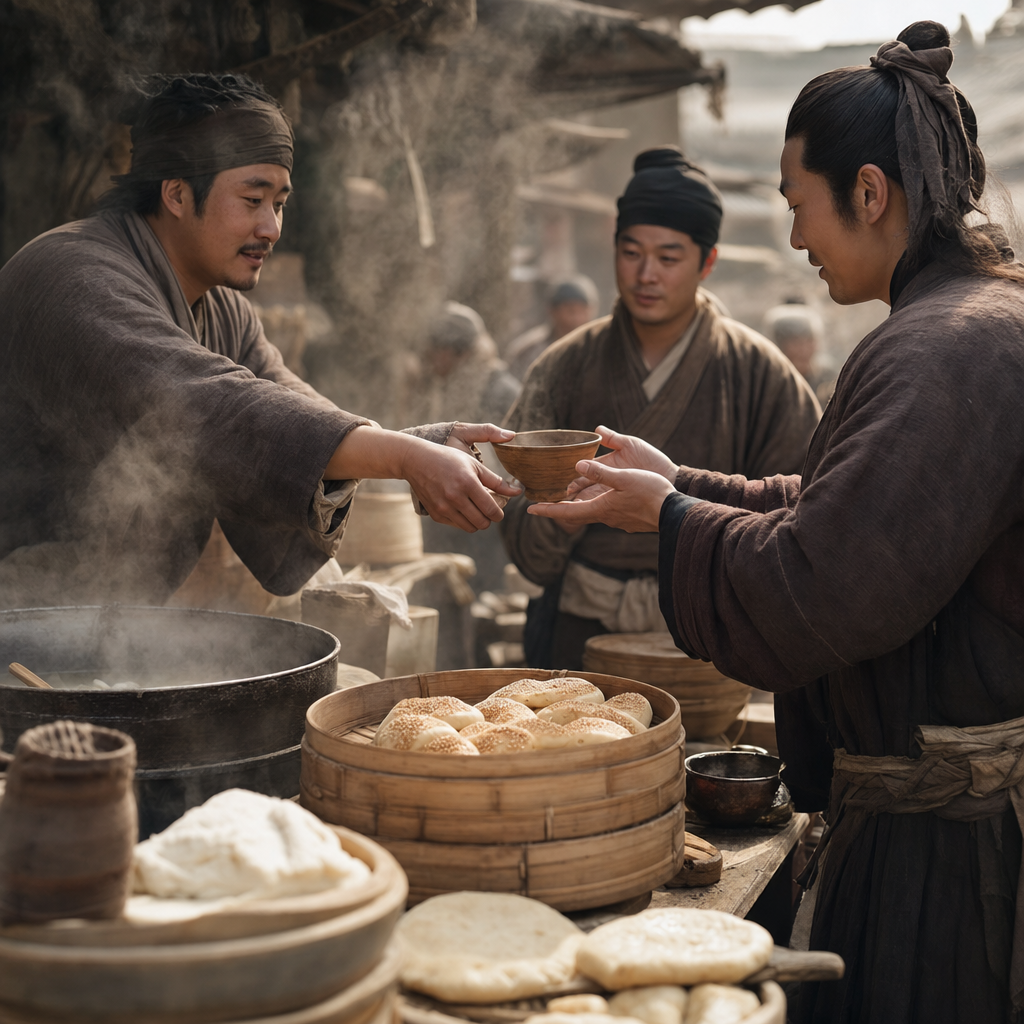
若今天有人问我,唐代长安最值得看的到底是不是宫殿、城门和大道,我大概还是会说值得。但如果他只看那些,就会错过另一种更贴身的盛世。真正让我记住长安的,不是某一道被太阳照得发亮的高墙,而是一个摊主用手背擦汗、一个学童捧着热碗缩肩吹气、一个赶车人把半块胡饼掰给同伴时那种毫不费力的熟练。城的大,可以抬头看出来;城的厚,要靠嘴边那口热气才知道。
If someone asked me today whether the most worthwhile sights of Tang Chang'an were its palaces, gates, and broad avenues, I would still say yes. But if that person looked only at those, they would miss another, more intimate kind of splendor. What made me remember Chang'an was not only a high wall flashing under the sun, but a vendor wiping sweat with the back of a hand, a schoolchild hunching over a hot bowl and blowing at it, a cart driver breaking half a flatbread for his companion with effortless familiarity. The greatness of a city can be seen by lifting your eyes. The depth of a city is known by the heat that rises beside your mouth.
那天我离开早市时,太阳还没有完全升高,街面却已经不像清晨刚开始时那样发冷了。有人挑着空担子回去,有人开始把第二轮面团按上案板,炉火里的红色也更稳了一点。我回头看了一眼,忽然觉得自己不是刚吃过一顿早点,而是刚读完一页关于唐代城市生活最实在的注脚。长安的盛,不只在史书里,也在一张饼的边、一碗汤的雾、和一整条街醒过来的那几分钟里。
When I left the market that day, the sun had not yet climbed high, but the street no longer felt as cold as it had at first light. Some people were carrying empty poles back home. Others were already pressing a second round of dough onto wooden boards. The glow in the stoves had steadied. I looked back once and suddenly felt that I had not merely eaten breakfast, but had just read one of the most concrete annotations to Tang urban life. The fullness of Chang'an lives not only in the history books, but also along the edge of a flatbread, in the mist above a bowl of soup, and in those few minutes when an entire street wakes up together.
- 适合送礼的中国茶具 | Chinese Tea Sets as Gifts
- 配饰指南:扇子、帽子等 | Accessories: Fans, Hats, and More
- 新疆北疆12日深度游 | 12-Day Northern Xinjiang In-Depth Tour
- 春节民俗全攻略:年夜饭到庙会 | Spring Festival Guide: New Year Dinner to Temple Fairs
- 在地铁口停好共享单车那一刻,我才明白锁车并不等于结束 | The Moment I Properly Parked a Shared Bike Outside the Metro, I Understood That Locking It Is Not the End
- 夜市烧烤摊的烟火气,教我别只找网红餐厅 | Smoke from a Night Grill Taught Me Not to Only Chase Viral Restaurants
- 西藏拉萨朝圣之旅:布达拉宫与大昭寺 | Lhasa Pilgrimage: Potala Palace & Jokhang Temple
- 去承德看山庄和寺庙之前,我先把手机训练成一天的领路人 | Before Seeing Chengde’s Mountain Resort and Temples, I Trained My Phone to Lead the Day
- 热海蒸汽打湿车票后,我把腾冲行程缩短了 | Steam at Rehai Wet My Ticket and Made Me Shorten the Tengchong Plan
- 我原以为古装秀会很“复古”,直到看见现代妆发把整场秀台点亮 | I Expected an Ancient-Costume Show to Feel Purely Historical Until Modern Hair and Makeup Lit Up the Entire Runway
Comments (0)