
太原老街的灯不抢眼,却把回家、吃面和晚风都照得刚刚好 | Taiyuan’s Old-Street Lights Are Modest, Yet They Hold Homecoming, Noodles, and Night Wind Just Right
太原老街的一盏灯,让我看见生活比景点更耐看 | One Lamp on an Old Street in Taiyuan Showed Me Daily Life Outlasts Attractions
夜色落到太原的老街时,灯先醒来。它们不是商场里明亮而均匀的白光,也不是高架桥下急促闪烁的指示灯,而是一盏一盏带着旧日温度的街灯。灯罩上有细微的灰,灯杆边缘有被风沙磨出的暗痕,光落下来,像一层淡黄的布,把青砖、门楼、槐树影子和慢慢走路的人都轻轻盖住。老街没有急着证明自己仍然年轻,它只把每一个傍晚稳稳接住,让行人从白天的奔忙里退出来,听见鞋底擦过石板的声音,听见远处自行车铃铛清脆地响一下,听见一家面馆掀帘时冒出的热气。
When night settles on an old street in Taiyuan, the lamps wake first. They are not the flat white brightness of a mall, nor the nervous blinking signals beneath an overpass, but separate pools of light carrying the warmth of earlier days. There is fine dust on the shades, dark wear along the poles where wind and sand have passed for years, and the glow falls like pale yellow cloth over blue bricks, old gatehouses, locust-tree shadows, and people walking slowly. The street does not hurry to prove it is still young. It simply receives each evening with steadiness, letting pedestrians step out of the day’s haste and hear soles brushing stone slabs, a bicycle bell ringing once in the distance, and steam escaping when a noodle shop lifts its curtain.
我沿着街边走,发现这里的光总是有方向的。它照亮门槛,却不把门内的生活完全暴露;它照到招牌,却留下几个笔画隐在暗处;它照见老人手里的布袋、孩子袖口上的反光条、摊主铝锅里轻轻翻动的汤,却让更远一点的屋檐保持沉默。正因为没有照得太满,老街才显得深。每一处阴影后面都像藏着一段家常话:谁家的炉子还没关,谁家的猫从窗台跳到墙头,谁在院里晾着刚洗好的围巾,谁又把一把旧钥匙挂回木门后面。灯不是为了炫耀而亮,它像守夜人,只负责让路不黑,让心不慌。
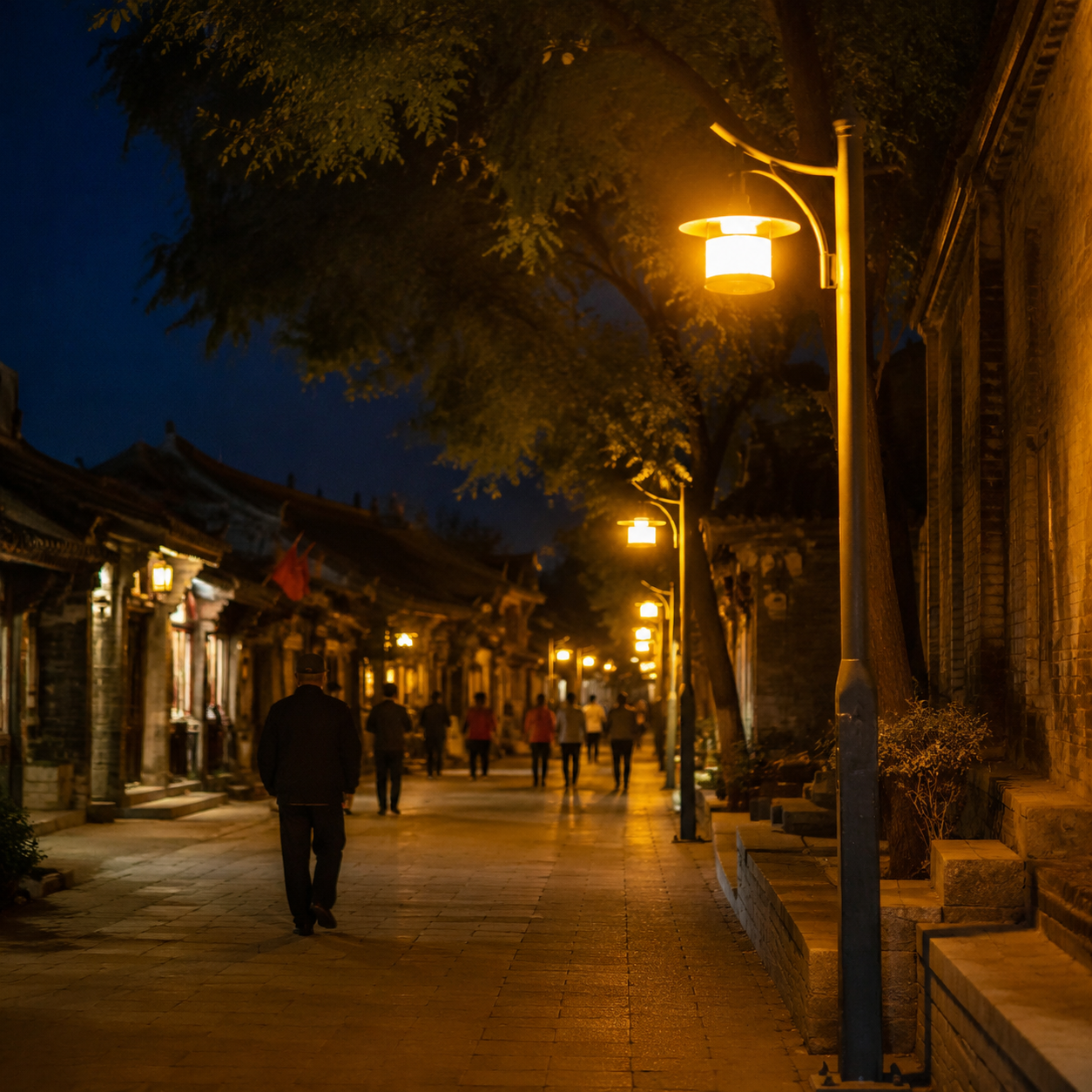
As I walk along the curb, I notice that the light here always has direction. It brightens a threshold without exposing the life inside; it touches a signboard while leaving several brushstrokes half hidden; it catches an old man’s cloth bag, the reflective stripe on a child’s sleeve, and soup moving softly in a vendor’s aluminum pot, yet it lets the eaves farther away remain quiet. Because the street is not overlit, it feels deep. Behind every shadow seems to rest an ordinary sentence: whose stove is still on, whose cat has jumped from windowsill to wall, who has hung a freshly washed scarf in the courtyard, who has placed an old key back behind a wooden door. The lamps do not shine to show off. They are like night watchmen, responsible only for keeping the road from darkness and the heart from unease.
太原的风在夜里有一点干,吹过来时带着煤烟记忆、面粉香气和冬天河谷的凉意。老街灯被风推得轻轻摇,光也跟着晃,墙上的影子便像水一样动起来。有人从小卖部门口出来,手里拿着一袋醋和两根葱;有人坐在台阶上看手机,屏幕蓝光映着脸,身后却是黄灯托住的旧墙;还有一位骑三轮车的师傅慢慢经过,车斗里堆着纸箱和一只红色塑料凳。他没有按铃,车轮从灯下滚过去,影子被拉长,又缩短,最后融进下一盏灯的边缘。
The wind in Taiyuan at night is a little dry, carrying memories of coal smoke, the scent of flour, and the chill of a winter river valley. It nudges the old street lamps, and their light sways with them, making shadows on the walls move like water. Someone comes out of a small shop holding a bag of vinegar and two scallions. Someone sits on a step looking at a phone, blue screen lighting the face while an old wall behind is held by yellow lamplight. A man on a three-wheeled cart passes slowly, cardboard boxes and a red plastic stool stacked in the back. He does not ring a bell. The wheels roll through the pool of light, the shadow stretches, shortens, and finally melts into the edge of the next lamp.
老街灯也照着太原人的晚饭时间。临街的窗口里,有人把刀削面端上桌,碗沿挂着一点汤;邻座两个人谈起白天的公交改线,声音不高,却很认真;店主把账本压在收银台下,抬头看一眼门外,像在确认还有没有熟客会来。灯光从玻璃上反回街面,和屋里的暖气混在一起,使寒冷显得不那么锋利。你会觉得一座城市并不只由大路、楼群和速度组成,它还由这些慢下来的晚饭、这些抬头一笑的熟人、这些被灯照亮又被夜色包围的小小场景组成。
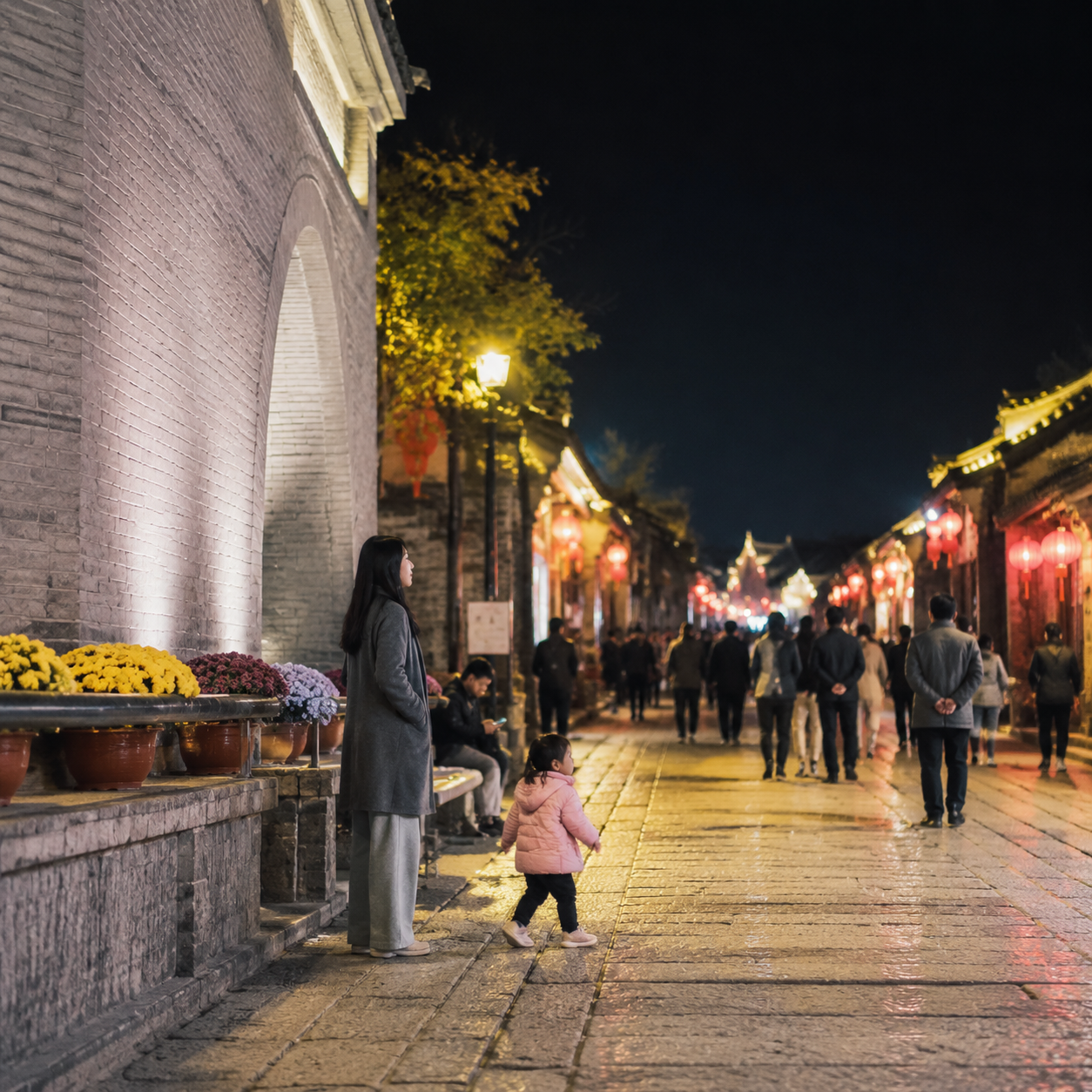
The lamps also shine on Taiyuan’s dinner hour. Through a window facing the street, someone sets a bowl of knife-cut noodles on a table, a trace of broth clinging to the rim. Two people at the next table discuss a changed bus route from the day, not loudly but seriously. The owner presses an account book under the cashier counter and glances outside, as if checking whether another regular might still arrive. Light reflects from the glass back onto the pavement, mixing with indoor warmth and making the cold seem less sharp. A city, you feel, is not made only of avenues, towers, and speed. It is also made of these slowed dinners, these familiar smiles, these small scenes lit by lamps and surrounded by night.
有些灯显然已经用了很久。它们的底座被重新刷过漆,颜色比上半截新一点;电线在杆后绕了一个谨慎的弯;维修贴纸上写着看不清的日期。可它们站在那里,并不显得破旧,反而像老人穿着干净的旧棉衣,袖口磨白,纽扣却扣得整齐。老街需要这样的灯,因为它们知道街的节奏。它们知道哪家铺子关门最晚,知道雨后哪块石板会积水,知道深夜归来的人会在哪个转角放慢脚步,也知道清晨第一辆送菜车会从哪里驶进来。
Some lamps have clearly served for a long time. Their bases have been repainted and look newer than the upper sections. Wires curve cautiously behind the poles. Maintenance stickers carry dates too faded to read. Yet they do not seem shabby. They resemble elders in clean old cotton coats: cuffs worn pale, buttons fastened neatly. The old street needs such lamps because they understand its rhythm. They know which shop closes latest, which stone slab holds water after rain, where a person returning late will slow at a corner, and from which entrance the first vegetable delivery cart will arrive at dawn.
我在一盏灯下停了一会儿,抬头看它。灯泡外面罩着旧式的壳,光从壳边漏出来,照得空气里细小的尘埃都像有了去处。那一刻我忽然想到,所谓老街,并不只是年代久远的建筑排列在一起,而是时间愿意在这里留下可被看见的层次。白天的招牌、夜里的灯影、墙缝里的草、门环上的锈、居民一句随口的招呼,都让过去和现在没有断开。人们常说城市要更新,要变得更亮更快,可如果所有光都一样明亮,所有路都一样笔直,许多记忆就会失去停靠的地方。
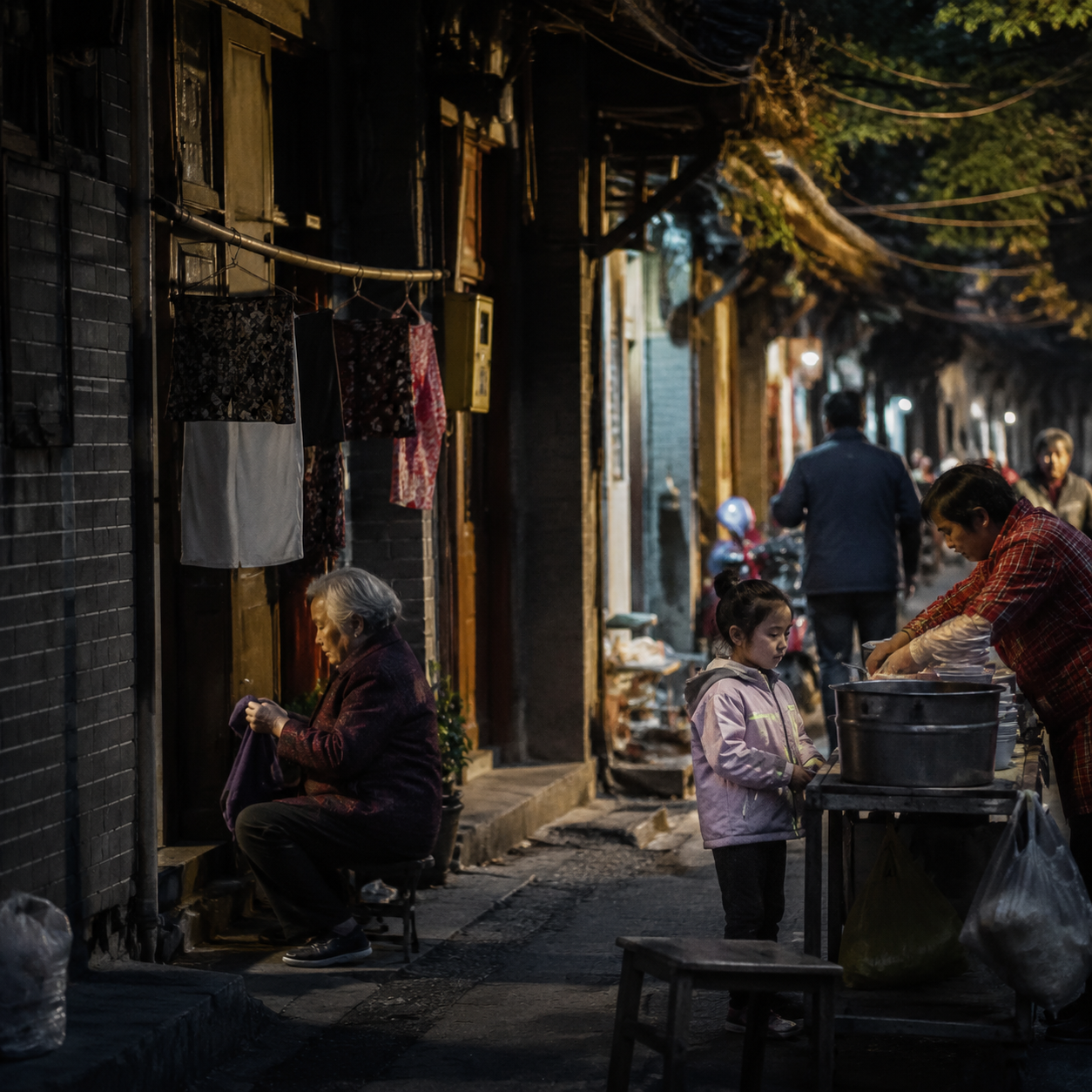
I stop for a while beneath one lamp and look up. An old-fashioned cover surrounds the bulb, and light leaks from its edge, giving even the fine dust in the air somewhere to go. At that moment I think that an old street is not merely a row of aged buildings. It is a place where time has agreed to leave visible layers. Daytime signboards, nighttime shadows, grass in wall cracks, rust on door rings, a casual greeting from a resident—all of these keep past and present from being severed. People often say a city must renew itself, become brighter and faster. But if every light is equally bright and every road equally straight, many memories lose their place to dock.
太原老街的灯,因此像一种缓慢的提醒。它提醒人们,生活不必总在最强的光下进行;有些东西需要半明半暗,才看得出纹理。比如一位老人在灯下整理围巾的动作,比如两个少年把共享单车推过窄巷时压低的笑声,比如一扇门关上后门缝里剩下的一线光。这些都不是宏大的景观,却比景观更能让人相信城市有心跳。灯把它们从夜里轻轻捞出来,又不占有它们,只让路过的人看见片刻,然后继续走。
The lamps of Taiyuan’s old street are therefore a slow reminder. They remind people that life need not always unfold under the strongest light; some things require half-brightness and half-shadow before their texture can be seen. The motion of an elder arranging a scarf beneath a lamp, the lowered laughter of two teenagers pushing shared bicycles through a narrow lane, the thin line of light left in a door crack after the door closes—none of these are grand spectacles, yet they make one believe more deeply that the city has a heartbeat. The lamps lift them gently out of night without possessing them, allowing passersby to see them for a moment and then move on.
越往前走,街越安静。远处新的楼盘把天空切成方形,玻璃窗反射着更冷的光;而脚下这条街仍然用老灯把夜分成一段一段。每一段都适合想一件小事:明天要不要早点出门,许久未联系的人是否该问候,家里那只碗裂了是否还能再用,冬天过去以后第一场春风会不会先吹到这里。灯并不回答,它只是陪着这些念头出现,又陪着它们散开。太原的老街因此有一种不急的宽厚,像一位听得懂沉默的朋友。
The farther I walk, the quieter the street becomes. In the distance, new apartment blocks cut the sky into rectangles, their glass reflecting colder light. Beneath my feet, this street still divides the night into sections with old lamps. Each section is suitable for thinking one small thought: whether to leave earlier tomorrow, whether to greet someone long out of touch, whether the cracked bowl at home can still be used, whether the first spring wind after winter will arrive here first. The lamps do not answer. They simply accompany these thoughts as they appear and disperse. Taiyuan’s old street thus has an unhurried generosity, like a friend who understands silence.
到最后,老街灯留给人的不是怀旧的姿态,而是一种关于日常的信任。它让人相信,只要还有灯愿意照着旧门槛,照着晚归的脚步,照着小店里最后一锅汤,城市就没有完全变成抽象的地图。它仍然有温度,有等待,有可回头辨认的方向。走出街口时,我回望那些黄色的光,它们没有追上来,只在原地继续亮着。正因为它们留在原地,路人才知道自己从哪里来,也知道夜色之中还有一条路,被稳稳地照着。
In the end, what the old lamps leave behind is not a pose of nostalgia but a trust in the everyday. They make one believe that as long as some light is willing to shine on old thresholds, on late footsteps, on the last pot of soup in a small shop, the city has not become a fully abstract map. It still has warmth, waiting, and directions one can recognize when looking back. When I leave the street mouth, I turn toward the yellow lights. They do not follow me; they continue shining where they are. Precisely because they remain, a passerby knows where he has come from and knows that in the night there is still a road held steadily in light.
如果以后再来太原,我想我还会选择傍晚走进这条老街。白天的名胜可以告诉人历史怎样被记录,夜里的老灯却告诉人历史怎样被生活继续使用。它不把过去供起来,也不把现在推开,只在两者之间放下一圈温和的光。有人经过,有人停留,有人关门,有人开灯,城市就在这样的重复里维持着自己的呼吸。那呼吸不响,却长久;不耀眼,却可靠。老街灯亮着,太原也在这份安静里,慢慢把夜晚过成了家。
If I come to Taiyuan again, I think I will still enter this old street at dusk. Daytime landmarks can tell how history is recorded, but old lamps at night tell how history continues to be used by life. They neither enshrine the past nor push the present away; they place a ring of gentle light between them. People pass, people pause, someone closes a door, someone turns on a lamp, and the city maintains its breathing through such repetition. That breathing is not loud, but it lasts; it is not dazzling, but it is reliable. The old street lamps are lit, and Taiyuan, within this quietness, slowly turns the night into something like home.
- 第一次在中国水果店买西瓜,我学会先说想现场切还是带走 | The First Time I Bought Watermelon in a Chinese Fruit Shop, I Learned to Say Whether I Wanted It Cut to Eat Now or Taken Home
- 来华必备手机应用 | Mobile Apps You Need in China
- 张家界最难写的,不是山有多像电影,而是两次惊叹之间身体怎么喘口气 | The Hardest Part of Writing Zhangjiajie Is Not How Cinematic the Peaks Look but How the Body Breathes Between Two Moments of Awe
- 英歌舞:潮汕街头的战鼓与脸谱 | Yingge Dance: War Drums and Painted Faces on Chaoshan Streets
- 把翻译地图付款放在手机首页,让我少在街头慌张 | Putting Translation, Maps, and Payment on My Phone Home Screen Made Street Travel Calmer
- 山城重庆那条上坡路,教我别低估城市地形 | My First Chongqing Hill Road Taught Me Not to Underestimate City Terrain
- 我在青岛学会把海边步行和补水当成一件事 | In Qingdao I Learned to Treat Waterfront Walking and Hydration as One Task
- 中国地理概览 | China Geographic Overview
- 中国旅游网络与上网指南 | Internet & Connectivity Guide for China Travel
- 糖画摊前的几分钟,让我第一次觉得“甜”也可以被画出来 | At a Sugar Painting Stall, I Realized for the First Time That Sweetness Can Be Drawn
Comments (0)