
南京最动人的地方,常常不是讲出来的历史,而是人今天还在怎么顺手用它 | What Moves Me Most in Nanjing Is Not History as Told but the Way People Still Use It Today
南京最难忘的,不是历史摆了多少层,而是今天的人还怎么顺手用着它 | What Stayed With Me in Nanjing Was Not the Number of Historical Layers, but How People Still Use Them Today
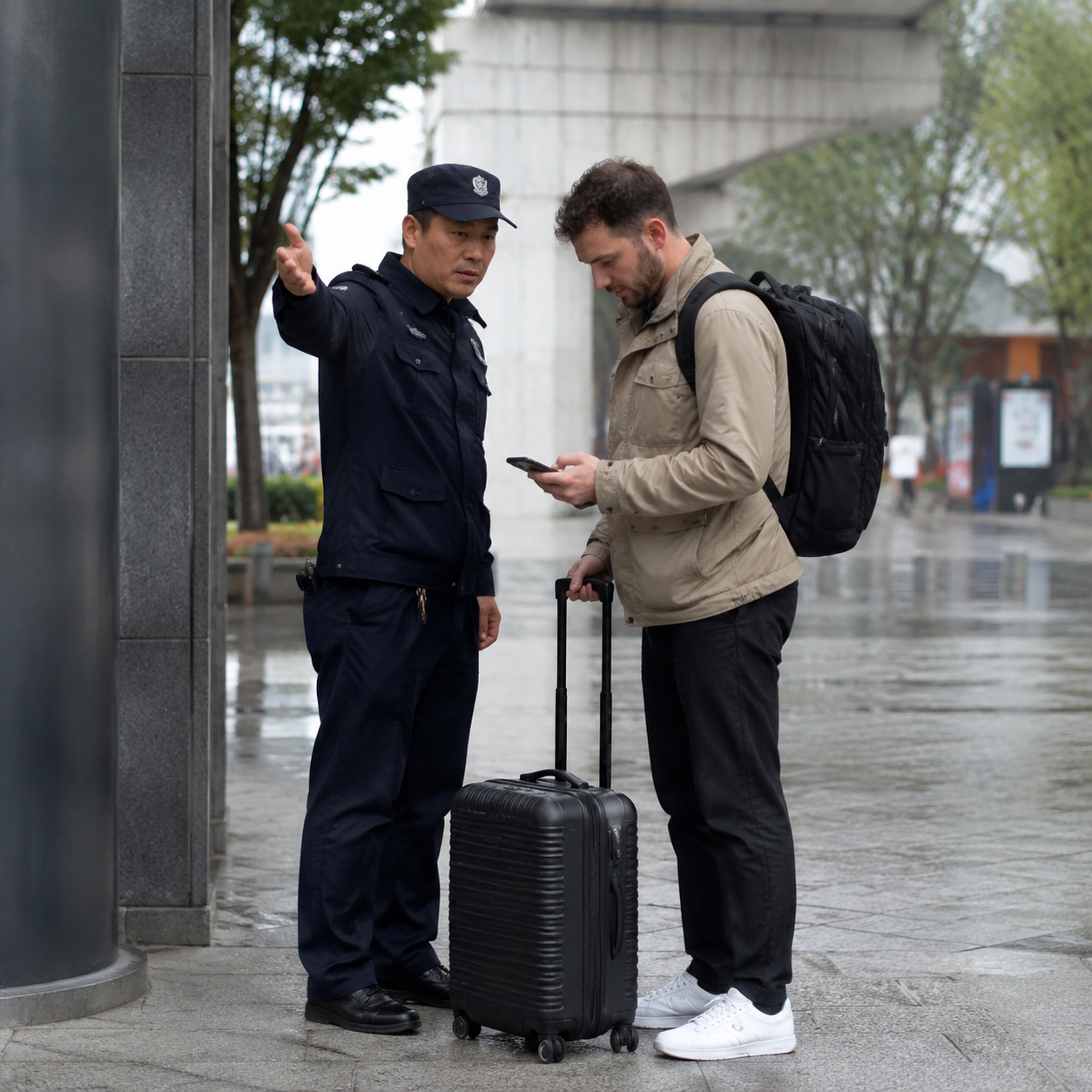
上午九点不到,我从地铁口出来的时候,路面还带着前一夜留下的一点潮意。一个拖着小箱子的外国旅客站在路边看手机导航,停了两次,最后把屏幕转向保安问路。保安先看了地址,又看了看他手里的护照和入住信息截图,顺手比了一个往前再右转的动作,说得不快,却很稳。我当时站在一旁,忽然意识到南京这座城真正适合复盘的地方,不在于你“看了什么”,而在于你怎样被这些看起来分散的小环节带进城市内部。
It was not yet nine when I came out of the metro station, and the pavement still held a little dampness from the previous night. A foreign traveler dragging a small suitcase stood by the roadside studying a phone map, paused twice, and finally turned the screen toward a security guard for directions. The guard checked the address, glanced at the passport and accommodation screenshot in the traveler’s hand, and then pointed forward and to the right, speaking slowly but with certainty. Standing nearby, I suddenly realized that what makes Nanjing so worth revisiting in retrospect lies not in what one “saw,” but in how these scattered little moments lead a person inward.
很多城市的旅游复盘,最后都会变成景点复盘:看没看够,拍没拍好,排队值不值,路线紧不紧。南京当然也可以这样写,但那样写只写到表层。它更有意思的,其实是“落地流程”这件事——不是狭义的入境说明书,不是照着政策逐条解释,而是一个人怎样从陌生、找路、看地址、确认住宿、进入街区,最后慢慢读懂这座城的组织方式。
In many cities, a travel retrospective ends up becoming a site retrospective: did you see enough, did the photos work, was the line worth it, was the route too tight? Nanjing can certainly be written that way, but that only touches the surface. What makes it more interesting is the process of arrival—not an instructional manual in the narrow sense, not a line-by-line explanation of policy, but the way a person moves from unfamiliarity to orientation, from checking an address to confirming accommodation, from entering a district to gradually understanding how the city is organized.
这就是为什么“住宿登记与落地流程”在南京并不该被单独切成一个冷冰冰的小节。对第一次来中国的人来说,这些事本来就和城市体验绑在一起。你不是先完成一套行政动作,再去开始旅行;你是在完成这些动作时,就已经进入了旅行。门牌怎么排,前台怎么问你看证件,地址截图为什么比口头描述更有用,保安或店员为什么经常愿意顺手帮你纠一下方向——这些细节不是边角料,它们正是城市可读性的开始。
That is exactly why accommodation registration and arrival procedure should not be isolated into a cold little section in Nanjing. For someone visiting China for the first time, these things are already woven into the city experience. You do not complete an administrative sequence and then begin to travel; the travel begins inside that sequence. How house numbers are arranged, how a front desk asks to see identification, why an address screenshot helps more than a verbal description, why guards or shop staff often correct your direction almost casually—none of this is marginal. It is where the city first becomes legible.
我后来回头想,南京之所以特别适合复盘体,不只是因为它历史层次多,而是因为它把“进入”这件事做得很像一场渐进式阅读。上午你可能先是为了找酒店、确认位置、放下行李,顺便认识一条街怎么接另一条街;接着你才走到更开阔的地方,看见城墙、湖边、树影和近代街区如何彼此搭在一起。等到晚上再回想时,真正站住的不是某张照片,而是整套进入路径开始互相解释。
Looking back, I think Nanjing suits the retrospective form not only because it has multiple historical layers, but because it turns entry itself into a kind of progressive reading. In the morning, you may first be occupied with finding the hotel, confirming the location, dropping luggage, and incidentally learning how one street joins another. Only then do you move toward wider spaces and see how wall, lakeside, tree shadow, and modern-era district rest against one another. By evening, what remains is not one particular photograph but the way the entire sequence of arrival begins to explain itself.
南京还有一个很少被攻略写透的优点:它的尺度变化对初到者很友好。很多人来中国的大城市,刚落地时最容易紧张的是节奏——地铁口一出来要往哪边站,出租车区和网约车点是不是分开,前台办入住要不要准备更多材料,地址在中文界面里和英文界面里是不是同一个写法。南京并不天然更简单,但它经常在关键节点上给你一点可以喘气的余地。坡不算陡,街区不是完全无序,历史地带和生活地带之间也有过渡,而不是硬切。

Nanjing also has an advantage that guides rarely explain properly: its changes of scale are kind to a first arrival. In many large Chinese cities, what unsettles people most at the beginning is rhythm itself—where to stand after exiting the metro, whether the taxi zone and ride-hailing point are separate, whether hotel check-in requires more material than expected, whether the address in Chinese matches the English interface at all. Nanjing is not inherently simpler, but at crucial moments it often gives a traveler a little room to breathe. The slopes are not too severe, districts are not completely chaotic, and the historical and everyday zones are linked by transitions rather than cut with a knife.
这种“过渡感”决定了南京为什么适合从复盘角度写,而不只适合从打卡角度写。打卡只能记录你去了哪里,复盘才会逼你解释:为什么这里走得顺,那里走得乱;为什么某一段近代街区在放下行李之后去看会更好,而不是刚出站就直冲过去;为什么一顿早一点的午饭,会让下午看城墙或街区时,判断比空着肚子时更稳定。
This sense of transition explains why Nanjing deserves the retrospective angle rather than the check-in angle alone. A check-in only records where you went. A retrospective forces you to explain why one section felt smooth and another confused; why a Republican-era district worked better after dropping luggage rather than by charging straight toward it from the station; why an earlier lunch made later decisions around the wall or the district steadier than walking through them on an empty stomach.
说到住宿登记和入住流程,真正值得记住的不是某条政策文字,而是准备方式。对外国旅客来说,最稳的做法永远不是“到现场再解释”,而是提前把地址、预订信息、证件页面、同行关系和必要截图都留在手机里。南京让我更强烈地确认这一点:当一座城市本身有很多值得细看、细走、细想的层次时,你越早把这些基础动作准备好,越不容易把注意力浪费在入口处的慌乱上。
When it comes to accommodation registration and check-in, what matters most is not memorizing one policy sentence, but preparing well. For a foreign traveler, the safest strategy is never “I will explain it on site,” but keeping the address, reservation information, ID page, companion details, and necessary screenshots ready on the phone. Nanjing reinforced that lesson for me more strongly than before: the more a city offers to examine, walk, and think through in layers, the earlier you settle those basic steps, the less attention you waste in confusion at the threshold.

有意思的是,这种准备并不会让旅行变得机械,反而会让它更自由。因为当你不用一直确认“我是不是走错了、住错了、说漏了什么”时,你看南京的方式会慢慢松下来。你会注意到一栋楼门前台阶的高度,注意到树影为什么在某个时间段刚好把人行道切成两半,注意到城墙附近早餐店的蒸汽怎样把旧砖颜色暂时压暗。很多真正属于南京的细节,都是在这种不慌的状态下才会冒出来。
Interestingly, this preparation does not make travel mechanical. It makes it freer. When you no longer need to keep asking whether you are in the wrong place, the wrong hotel, or missing some crucial step, the way you look at Nanjing begins to loosen. You notice the height of the steps before a doorway, the reason tree shadows cut the pavement in half at a certain hour, the way steam from a breakfast shop briefly darkens the color of the old brick. Many of the details that genuinely belong to Nanjing only appear in that unpanicked state.
到了下午,如果再把城墙、近代街区和居住性的普通街道放进同一天里,你会发现南京最强的地方并不是“内容很多”,而是这些内容之间有互相照亮的能力。早上的找路和入住,让你开始读懂秩序;中午的停顿,让你把注意力收回来;下午看更开阔的城市层次时,那些先前的基础经验会突然变得有意义。原来不是每一座历史城市都能做到这一点:让流程也成为理解的一部分。
By afternoon, once the wall, modern district, and ordinary residential streets are placed inside the same day, one begins to see that Nanjing’s strength is not simply that it contains a lot. Its strength lies in the way those contents illuminate one another. Morning orientation and check-in teach a first reading of order. Midday pause gathers attention back into the body. When wider urban layers open later, those earlier practical experiences suddenly become meaningful. Not every historical city can do this—make procedure itself part of understanding.
傍晚我再次经过早上那个地铁口时,天色已经柔下来。那个保安还在,只是站姿比上午松一点。路边拉箱子的旅客换了人,前台地址截图、酒店名称、路口方向这些细碎动作却还是一遍遍重复。那一刻我终于觉得,南京最值得复盘的,不是“我今天看了多少历史”,而是这些历史直到今天还怎么被门口、路口、前台、坡道和人群继续使用。也正因为这样,这座城不是看完就结束的城市,而是回头一想,很多细节才刚刚开始变清楚。
When I passed the same metro exit again in the evening, the light had softened. The security guard was still there, though his posture had loosened a little. The suitcase-dragging travelers by the road were no longer the same people, yet the same tiny actions kept repeating: address screenshots, hotel names, directions at the corner, gestures toward the right path. In that moment I finally felt that what Nanjing rewards most in retrospect is not how much history I had seen in one day, but how that history is still being used by entrances, intersections, front desks, slopes, and streams of people. That is why it is not a city that ends when the sightseeing ends. It is a city whose details begin to sharpen only after you turn back to think about them.
- 我在贵州山里迷了七天路 | Seven Days Lost in the Mountains of Guizhou
- 南京五月的雨把我们一家三口困在城墙边,却顺手送来了一顿最好吃的鸭血粉丝汤 | A May Rain by Nanjing's City Wall Stranded Our Family of Three and Delivered the Best Bowl of Duck Blood Soup Instead
- 新疆北疆12日深度游 | 12-Day Northern Xinjiang In-Depth Tour
- 南甜北咸是个谎言,但也不全是 | "Sweet South, Salty North" Is a Lie — But Not Entirely
- 中国旅游语言障碍解决方案 | Overcoming Language Barriers in China
- 坡子街地面刚发亮的时候,我决定不再拿长沙和时间赛跑 | When Pozi Street Began to Shine After Rain, I Stopped Racing Changsha
- 文创好物推荐:故宫文创到地方博物馆 | Creative Souvenirs: Palace Museum to Local Museums
- 在中国生活:完整指南 | Living in China: A Complete Guide
- 泉州古城不适合一口气走完:我把海丝路线拆成几次停留 | Quanzhou Old City Is Not a One-Sitting Walk
- 十月赏银杏:满城尽带黄金甲 | October Ginkgo Season: When China Turns to Gold
Comments (0)