
初秋的阿勒泰不只在草原上:我沿河谷重新排了自驾线 | Altay in Early Autumn: Rebuilding a Drive Along the Valleys
初秋的阿勒泰不只在草原上:我沿河谷重新排了自驾线 | Altay in Early Autumn: Rebuilding a Drive Along the Valleys
我原来只盯着草原 / I Used to Look Only at the Grassland
我把车开上这条线之前,脑子里有一种很强的“不要错过”感。只要车轮还在转,我就觉得应该继续寻找更完整的草原视野;只要手机里还有没有打开的标记,我就觉得当前停留不够。这个念头看似积极,实际上让每个位置都变成了临时站台:我没有把鞋底踩稳,没有听清风从哪边来,也没有看见河谷的水怎样改变周围颜色。
Before this drive, I carried a strong fear of missing something. As long as the wheels were moving, I felt I should search for a more complete grassland view; as long as unread pins remained on my phone, the current stop seemed insufficient. The thought sounded energetic, but it turned every place into a temporary platform. I did not settle my footing, hear where the wind came from, or notice how the river changed the colors around it.
我后来把“看更多”拆成两个问题:是增加地点,还是增加理解?如果只是把车开到更多坐标,却没有时间观察道路、天气和自己的状态,那只是增加了移动量。河谷给我的帮助正在这里,它逼着我把视线从远处的景色拉回到水边、岸坡和停车处,让我承认一处地方可以同时包含风景和限制。限制不是旅行的敌人,它让选择变得具体。
I later split “seeing more” into two questions: am I adding places, or adding understanding? Driving to more coordinates without time to observe the road, weather, and my condition only increases movement. The valley helped because it pulled my eyes back from distant scenery to water, banks, and parking spaces. It made me admit that a place contains both beauty and limits. Limits are not the enemy of travel; they make choices concrete.
出发前,我把阿勒泰想得很单纯:车往草原开,遇到一片开阔的绿色就停车,拍完照再赶往下一片更开阔的绿色。那时我的地图像一条被拉直的线,目标只有远处的山和草地,河谷只是地图上两条浅色的弯曲线。初秋真正到来以后,草原的颜色开始分层,风也不再整天保持夏天的温度。我在车里看着窗外,忽然觉得自己把一个有水、有树、有牧道、有停留余地的地方,压缩成了几张“草原打卡照”。
Before leaving, I had reduced Altay to a simple picture: drive toward the grassland, stop whenever the view opened up, take photographs, and hurry toward the next open patch. My map was a straight line aimed at mountains and pasture; the valleys were merely pale curves on the screen. Once early autumn arrived, the grass began to show layers of color and the wind lost summer’s steady warmth. Looking through the windshield, I realized I had compressed a place of water, trees, tracks, and pauses into a handful of pasture snapshots.
我是在一个光线不算强的早晨把车开出城的。路边的草并没有完全变黄,近处仍有一层偏绿的底色,稍远的坡面却已经出现浅褐和灰金色。车轮压过铺装路时声音很均匀,进入河谷附近后,窗缝里开始钻进带着湿意的冷风。我没有精确记录温度,也不想用一个数字替天气下结论;我的身体已经告诉我,薄外套应该放在手边,停下来时不能只穿短袖站在风口。
I drove out of town on a morning with soft, not overpowering light. The grass had not turned completely yellow: green still held the foreground, while pale brown and muted gold appeared across the farther slopes. The tires made a steady sound on the paved road, and near the valley a damp chill began to slip through the window gap. I did not record an exact temperature or pretend one number could define the weather. My body gave me the useful answer: keep a light jacket within reach and do not stand in an exposed gust wearing only a T-shirt.
车里最显眼的不是相机,而是油量表。我出发时没有把它当成一种“肯定够用”的保证,只把当前余量当作一个需要持续观察的条件。阿勒泰的自驾不能只看今天想去哪里,还要看离开最后一个方便补给的位置以后,自己是否仍然留有返回的从容。导航会改变,临时停车会拉长,绕行也可能发生,真正让人安心的不是把油耗算到小数点,而是别把返程余量押在理想路线一定成立上。
The most important instrument in the car was not the camera but the fuel gauge. I did not treat the starting level as proof that everything would be fine; I treated it as a condition to keep checking. In Altay, driving means considering not only where I want to go today, but also whether I will still have enough room to return calmly after leaving the last convenient refueling opportunity. Maps can change, pauses can grow, and detours can happen. Confidence comes less from calculating consumption to a decimal than from refusing to stake the return on a perfect route.
河谷把路线拉宽了 / The Valley Opened Up the Route
我第一次认真看河谷,是因为草原的风把我从车外吹回了车里。那片草地很漂亮,却没有适合长时间停留的遮挡,脚下也有不便踩踏的低矮植被。我把车重新开到较稳定的停车位置,沿着水边能走的地方慢慢走。河流并不是一条只负责提供倒影的装饰线,它把树的颜色、山坡的明暗、云影移动和人的步速全都串在一起。站在河谷里,我不用急着找“更大”的景,水声已经在替我分配注意力。
I first paid serious attention to the valley because the wind on the grassland sent me back into the car. The pasture was beautiful, but it offered little shelter for a long pause, and the low vegetation was not something I wanted to trample. I drove to a more stable place to park and walked slowly where the riverbank allowed. The river was not merely a decorative line for reflections; it connected the colors of the trees, the brightness of the slopes, the moving cloud shadows, and my walking speed. In the valley, I did not need to hunt for a “bigger” view. The sound of water was already organizing my attention.
沿河谷行车最容易犯的错,是把每一个转弯都理解成下一个景点。我的手指几次想去点导航上的下一处标记,后来都收了回来。我开始用“这一处能不能停、停下后能不能安静走一会儿、离开时是否容易重新并入道路”来筛选位置。这样一来,路线不再由景点名称串成,而是由河流旁的可停、可走、可回望组成。少走一个弯,并不等于少看一个阿勒泰;有时只是把匆忙换成了真正看见。
The common mistake on a valley drive is to treat every bend as the entrance to another attraction. Several times my finger moved toward the next pin on the navigation screen, and several times I stopped myself. I began filtering places with three questions: can I park without causing trouble, can I walk quietly for a while, and can I rejoin the road safely when leaving? The route was no longer a chain of attraction names; it became a sequence of places where I could stop, walk, and look back. Skipping one bend did not mean seeing less of Altay. Sometimes it meant replacing haste with actual attention.
河谷里的树让我重新理解“初秋”。草原的季节变化往往先被我看成一张色卡:绿、黄、褐,越丰富越好看。可在河边,变化更像是从树梢向地面慢慢渗开。有些叶子已经失去夏天的亮,另一些仍然鲜明;水面反射出来的颜色并不稳定,云一遮,金色就退到后面,光一出来,坡上的纹理又浮起。季节不是景区布置好的背景,而是每隔一段时间就换一次观看方式。
The trees along the valley changed my understanding of early autumn. On the grassland, I had treated seasonal change like a color chart—green, yellow, brown, with more variety meaning a better photograph. Beside the river, the change seemed to seep gradually from the treetops toward the ground. Some leaves had lost their summer brightness while others remained vivid. The reflected colors shifted whenever clouds crossed the water. Autumn was not a backdrop arranged by a scenic area; it was a changing way of looking, renewed every few moments.
我没有给草地的颜色贴上“最美”或“已经结束”的标签。行驶中看到一片仍有绿意的坡面,我会想到它保留着夏末的柔软;看到边缘泛黄的草梗,我又能感觉到风已经把季节往前推了一步。对我而言,这种不整齐比整片同色更有意思。它也提醒我,不必为了追赶所谓最佳窗口,把行程塞得过满。阿勒泰的初秋不是一声令下同时变色,而是不同海拔、不同坡向、不同水分条件下各自慢慢移动。
I stopped labeling the grass as either “the most beautiful” or “already past its prime.” A green-tinged slope carried the softness of late summer; yellowing stalks at its edge showed that the wind had moved the season forward. The unevenness interested me more than a single uniform color. It also reminded me not to overfill the itinerary in pursuit of a supposedly perfect window. Early autumn in Altay does not change everywhere at once; it moves gradually according to elevation, slope direction, and moisture.
停车不是把车放下就算完 / Parking Is More Than Leaving the Car
我以前停车时先考虑镜头,后来在河谷边把顺序倒了过来:先看车辆会不会挡住别人,再看轮胎是否压到草地,最后才想拍摄角度。能停在已有停车空间里的,我不会为了离水更近而把车挪到松软路肩;没有明确停车条件的地方,我宁愿继续往前找,也不把“只停几分钟”当作可以随意占地的理由。短暂停留不等于可以把自己的方便转嫁给后来的人、当地人的生产活动或正在通行的车辆。
I used to think about the camera first when parking. Along the valley, I reversed the order: would the vehicle block anyone, would the tires damage vegetation, and only then where would the photograph look best? If an established parking space was available, I would not move onto a soft shoulder merely to get closer to the water. Where parking was unclear, I preferred to continue looking rather than use “only a few minutes” as an excuse. A short pause does not give me the right to transfer my convenience to later visitors, local work, or passing vehicles.
有一次我看到前方几辆车停在宽一点的边缘,车门打开后人都站在道路一侧。我没有跟着挤进去,而是先减速观察,确认那一段并不适合我把车横着停下。最后我往前找了一个更不影响通行的地方,走回来拍照。多走一小段路并没有削弱风景,反而让我在按下快门时少了一层心虚。停车礼貌不是额外的道德表演,它是让一条共享道路继续可用的最低成本动作。
Once I saw several vehicles stopped along a wider edge, with people opening doors toward the road. I did not squeeze in behind them. I slowed down, watched the traffic, and decided that stopping sideways there would be inconsiderate. I drove farther to a place that left more room, then walked back. The extra distance did not diminish the view; it removed the uneasiness from taking the photograph. Parking courtesy is not a moral performance. It is a low-cost action that keeps a shared road usable.
我还学会了不把河边的安静当成私人领地。下车后我会把声音压低,不把音乐留在车外,也不会为了拍摄让同行者或陌生游客反复走同一条窄路。遇到有人已经在看水、休息或整理装备,我会绕开一点,等出空处再停下来。空间足够大,并不意味着每个人都可以无视别人的存在;真正宽松的体验,常常来自彼此主动让出一点边界。
I also learned not to mistake the quiet riverbank for private property. After getting out, I kept my voice low, turned off music outside the car, and did not make anyone repeat a walk along a narrow track for my photograph. If someone was already watching the water, resting, or arranging gear, I gave them room and waited for a clearer spot. A large landscape does not mean everyone can ignore everyone else. A relaxed experience often comes from people voluntarily leaving a little space around one another.
停车之后我会看一眼车身四周,把车门边、轮胎附近和自己带来的垃圾检查一遍。这个动作很小,却能避免把纸巾、瓶盖和包装袋留在风里。风一起来,轻东西跑得比人快,等我回到车上再发现,往往已经追不回来了。河谷的美不是一张可以随时重置的照片,少留下一件东西,就是对下一次观看多留一分完整。
After parking, I took a quick look around the vehicle, checking the doors, tires, and anything I had brought with me. It was a small habit that prevented tissues, caps, or wrappers from being carried away by the wind. Light objects travel faster than people once the wind rises, and by the time I noticed from the driver’s seat, they might already be gone. A valley is not a photograph that can be reset. Leaving one less thing behind preserves the next person’s view.
天气把计划改成了判断 / Weather Turned the Plan into a Judgment
那天的天气没有给我一个可以提前写进表格的答案。云层来得快,光线一会儿柔,一会儿发白,远处山坡的轮廓也会因为空气变化而变得不那么清楚。我不把这种变化描述成精确的预报,只记录它对驾驶和停留的影响:看不清就不追着远景开,风起时不在开阔处久站,路面颜色变深时把车速和停车距离一起重新想一遍。
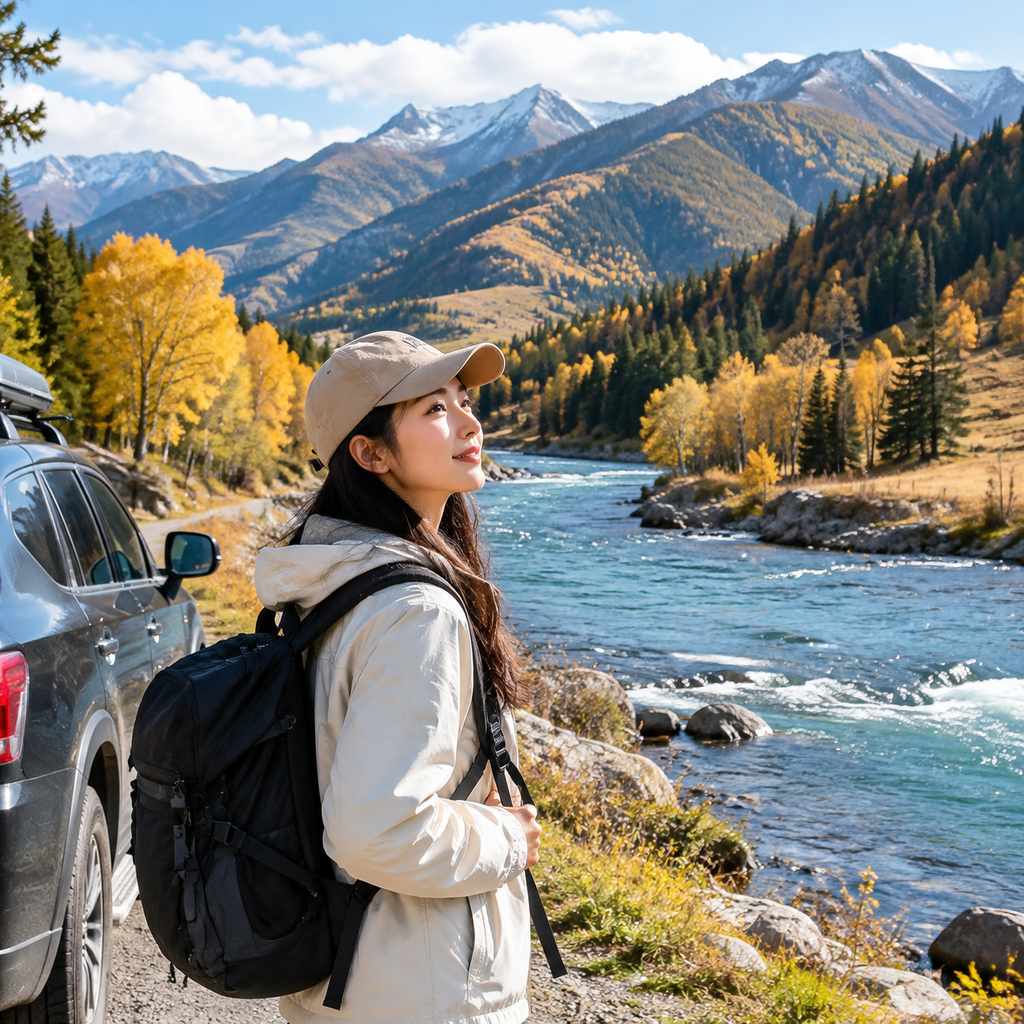
The weather did not offer an answer I could have written into a spreadsheet beforehand. Clouds arrived quickly, the light shifted from soft to pale, and distant slopes became less distinct as the air changed. I would not turn that into a precise forecast; I only recorded its effect on driving and pausing. When the view weakened, I did not chase the distant panorama. When the wind rose, I did not linger in the open. When the road darkened, I reconsidered both speed and stopping distance.
我原本想把上午留给草原,下午沿河谷绕一圈,傍晚再返回。实际开起来后,我发现这个安排把“时间”看得太死,把“现场”看得太轻。云影盖住草坡时,草原不一定值得继续耗时间;河谷的树影反而在这种光线下更有层次。于是我没有执着于上午必须完成什么,而是把可以停留的地方放到天气更合适的时刻。自驾的自由不是想去哪就去哪,而是能接受路线被现场重新排序。
I had planned to give the morning to the grassland, circle through the valley in the afternoon, and return around evening. On the road, I realized that schedule treated time as fixed and the actual conditions as secondary. When cloud shadow covered the pasture, staying longer was not automatically worthwhile; the trees in the valley gained more depth under that light. I stopped insisting that a certain landscape had to be completed before noon and moved pauses toward the conditions that suited them. Freedom in a road trip is not going everywhere on impulse; it is accepting that the scene may reorder the route.
风大的时候,车内的安全感容易制造错觉。坐在封闭车厢里,我会以为外面只是“有点冷”,下车后才发现风把声音吹散,站稳都需要调整脚步。我开始在每个停留点先下车几步试试,再决定要不要拿相机、走多远、待多久。天气判断不需要夸张的仪器,至少可以从自己的站立感、视线和衣服是否挡得住风开始。
Strong wind can create a false sense of comfort inside a car. Through the closed windows, the outside may seem merely “a little cold”; after stepping out, the wind scatters sound and makes me adjust my footing. At each pause, I began by walking a few steps before deciding whether to take the camera, how far to go, and how long to remain. Weather judgment does not always begin with elaborate instruments. It can begin with balance, visibility, and whether my clothing actually blocks the wind.
如果云层压低,我会把远眺改成近看。草叶上的水痕、河岸石头的颜色、树皮上被风吹干的纹路,都是不需要看很远才能读懂的东西。这样改并不是给坏天气找借口,而是承认不同天气有不同的观察尺度。能见度变差时,继续向前冲通常不会让景色自动恢复;缩短驾驶、增加停留,反而让当天的体验更稳。
When the clouds lowered, I changed from looking far to looking close. Moisture on grass, the colors of river stones, and wind-dried patterns in bark did not require a long view. This was not an excuse for poor weather; it was an acknowledgment that each condition offers a different scale of observation. Driving farther rarely makes visibility return by itself. Shorter driving and longer pauses made the day more dependable.
油量要给返程留位置 / Fuel Must Leave Room for the Return
我在河谷里最不愿做的事,是为了一个还没看够的弯道继续向前,却不肯承认返程已经需要被认真计算。油量表下降得并不戏剧化,真正让人紧张的是各种小决定叠加起来:多绕一段、停车后空调不关、看到新入口又回头、在不确定的道路上低速寻找出口。每一件事都很小,合在一起却会挤掉原本留给返程的余量。
The thing I least wanted to do in the valley was continue toward an unexplored bend while refusing to admit that the return needed serious consideration. The fuel gauge did not fall dramatically. What created pressure was the accumulation of small choices: one more detour, leaving the air conditioning on during a pause, turning back after spotting another entrance, or searching slowly for an exit on an uncertain road. Each decision was minor, but together they consumed the margin meant for the return.
我后来把油量分成“出发可以用的部分”和“返程不能动的部分”,但没有给后者编造一个适用于所有车辆的固定数值。不同车型、载重、风向、路况和驾驶习惯都会影响消耗,导航上的距离也不等于实际行驶成本。对我来说,更可靠的做法是每次接近补给条件时都重新确认,不把最后一段路想成肯定顺利,更不把陌生地方的加油安排拖到“快没了再说”。
I eventually treated the fuel as having a usable portion for exploring and a portion that I should not casually spend on the return. I did not assign a universal number to that reserve, because vehicle type, load, wind, road conditions, and driving habits all change consumption. A distance shown on navigation is not the same as the full cost of driving. My safer approach was to reassess whenever a refueling opportunity appeared, rather than waiting until the tank was nearly empty in an unfamiliar area.
当我发现自己为了追一处河谷拐弯而频繁看表时,答案其实已经很清楚:该停下来的不是车,而是继续加码的念头。我把车头调回更熟悉、更容易判断的方向,沿途只保留几个已经看过的停留点。返程并不等于旅行失败,它是自驾计划的一部分。能够在天色、体力和油量都还有余地时回到较稳定的路线上,比多拍一张勉强赶到的照片更值得。
When I found myself checking the gauge repeatedly just to chase another bend in the valley, the answer was already clear. What needed to stop was not the car but my desire to keep adding more. I turned toward a route I understood better and kept only a few pauses I had already assessed. The return was not a failure of travel; it was part of the drive. Reaching a more predictable road with time, energy, and fuel still available mattered more than one hurried photograph.
我也不把“还有油”理解成“可以随便绕”。这两个判断之间差着一整套返程条件:是否还有足够光线、天气会不会让视线继续下降、停车后是否容易重新上路、车里的人是否已经疲惫。油量只是底线,不是冒险许可证。每当我准备改变方向,都会把这些条件放在一起看,而不是只盯着仪表盘上的一个符号。
I also stopped interpreting “there is still fuel” as “I can detour freely.” Between those two statements lies a whole set of return conditions: remaining daylight, changing visibility, ease of rejoining the road, and everyone’s fatigue. Fuel is a baseline, not a license to take risks. Whenever I considered changing direction, I looked at all these conditions together instead of focusing on one symbol on the dashboard.
从唯一目标到组合停留 / From One Goal to a Combination of Pauses
草原作为唯一目标时,我的行程会自然变得急。每到一处,我先问还有没有更大的草坡;照片拍完,身体却没有真的停下来。改成河谷与停留组合以后,路线出现了呼吸:一段路用来驾驶,一处水边用来听声音,一片草坡用来观察颜色,一个不妨碍别人的位置用来吃点东西、整理衣服,再决定是否继续。景点数量减少了,记忆反而更具体。
When the grassland was my only goal, the day became hurried almost by itself. At each stop I asked whether a larger slope was ahead; after taking photographs, I had not truly paused. Once I combined valleys with deliberate rests, the route began to breathe. One stretch was for driving, a riverbank for listening, a pasture for reading colors, and a considerate parking place for food, clothing, and the next decision. I saw fewer “attractions,” but remembered more precise moments.
我给自己留出的停留,不是空白时间,而是用来校正判断的时间。停在河谷边,我能确认风是不是越来越强;坐在车里,我能看看车窗上的水汽有没有影响视线;走到草地边缘,我能判断自己是否应该继续深入,还是从原路返回。没有这些停顿,路线表面上更高效,实际上只是把判断推迟到更疲惫、更不舒服的时候。
The pauses I left were not empty time; they were time for correcting decisions. Beside the valley I could tell whether the wind was strengthening. From the car I could see whether moisture on the window was affecting visibility. At the edge of the grassland I could decide whether to go farther or return along the same path. Without these pauses, the itinerary looked more efficient but merely postponed decisions until I was tired and less comfortable.
午后我没有再寻找“必须完成”的草原镜头,而是在一处河谷附近把车停好,拿出水和简单食物。风声断断续续,远处的草坡被云影切成几块,车门合上后周围又安静下来。我吃得很慢,甚至有点不习惯,因为过去的自驾餐总是夹在两个目的地之间。那一刻我才发现,停留不是行程里的损耗,它本身就是认识地貌的一种方式。
In the afternoon I stopped searching for a grassland image I had to complete. Near the valley, I parked properly and took out water and a simple meal. The wind came and went, cloud shadow divided the distant slope into patches, and after I closed the door the surroundings became quiet again. I ate slowly, almost awkwardly, because I had usually treated meals as something squeezed between destinations. Then I understood that a pause was not a loss from the itinerary; it was a way of reading the landscape.
这套组合也让我更诚实地面对自己的体力。草原看起来平缓,长时间迎风站着却并不轻松;河谷步行也不是越远越好,湿滑、碎石和回到车辆的距离都要算进体验。我的目标从“抵达最远处”改成“在舒服且不打扰别人的状态下看明白一处”。这个标准听起来不壮观,却比把自己赶到筋疲力尽更能保留下一次再来的可能。
This combination also made me more honest about my energy. The grassland looked gentle, but standing against the wind for a long time was tiring. A valley walk was not automatically better when it was longer; wet ground, loose stones, and the distance back to the car all mattered. My goal changed from reaching the farthest point to understanding one place without discomfort or disturbance. It sounded less heroic, but it left room for returning.
我在沿途练习收手 / Learning to Stop Along the Way
自驾最容易被忽略的能力是收手。看到颜色好看的山坡,我仍然会想再往前;看到河面突然亮起来,我仍然会想找一个更近的位置。可每次把“再一点点”说出口,我都要重新检查停车、天气、油量和返程。只要其中一项变得含糊,我就把这次冲动当成提醒,而不是命令。风景不会因为我没有追到最后一米就消失,过度执着才可能让返程变得难受。
The most overlooked driving skill is knowing when to stop. A colorful slope still makes me want to continue, and a sudden bright patch on the river still tempts me to find a closer viewpoint. But whenever I say “just a little farther,” I recheck parking, weather, fuel, and the return. If any one of them becomes unclear, I treat the impulse as a warning, not an instruction. A landscape does not vanish because I miss the final meter; stubbornness can make the return unpleasant.
我没有把这次路线画成一条漂亮的完整闭环,因为实际体验里总有回头、等待和放弃。地图上的折返看起来像效率下降,记忆里的折返却常常是最清楚的部分:我知道哪一段风突然变冷,知道哪种路肩不该停车,知道哪处河边只适合远看,知道自己在哪个时刻应该把镜头收进包里。路线不是越满越有价值,能说清为什么改变方向,才说明我真的在路上做了判断。
I did not draw this trip as a neat, perfect loop, because real travel contains turning back, waiting, and giving something up. A return on the map looks inefficient, but in memory it is often the clearest part. I remember where the wind suddenly cooled, which shoulder was unsuitable for parking, which riverbank was better viewed from a distance, and when I should put the camera away. A fuller route is not automatically more valuable. Being able to explain why I changed direction shows that I was actually making decisions on the road.
离开河谷前,我又看了一次草原。颜色没有因为我改了计划就变得逊色,只是我不再要求它独自承担整天的意义。它和河流、树林、风、停车后的几步路一起出现,才形成了这次初秋的层次。草原给我开阔,河谷给我停顿;前者让我抬头,后者让我把视线放低。两者不是谁取代谁,而是共同把一条自驾线从“追景”变成“停留与返回都算在内的生活”。
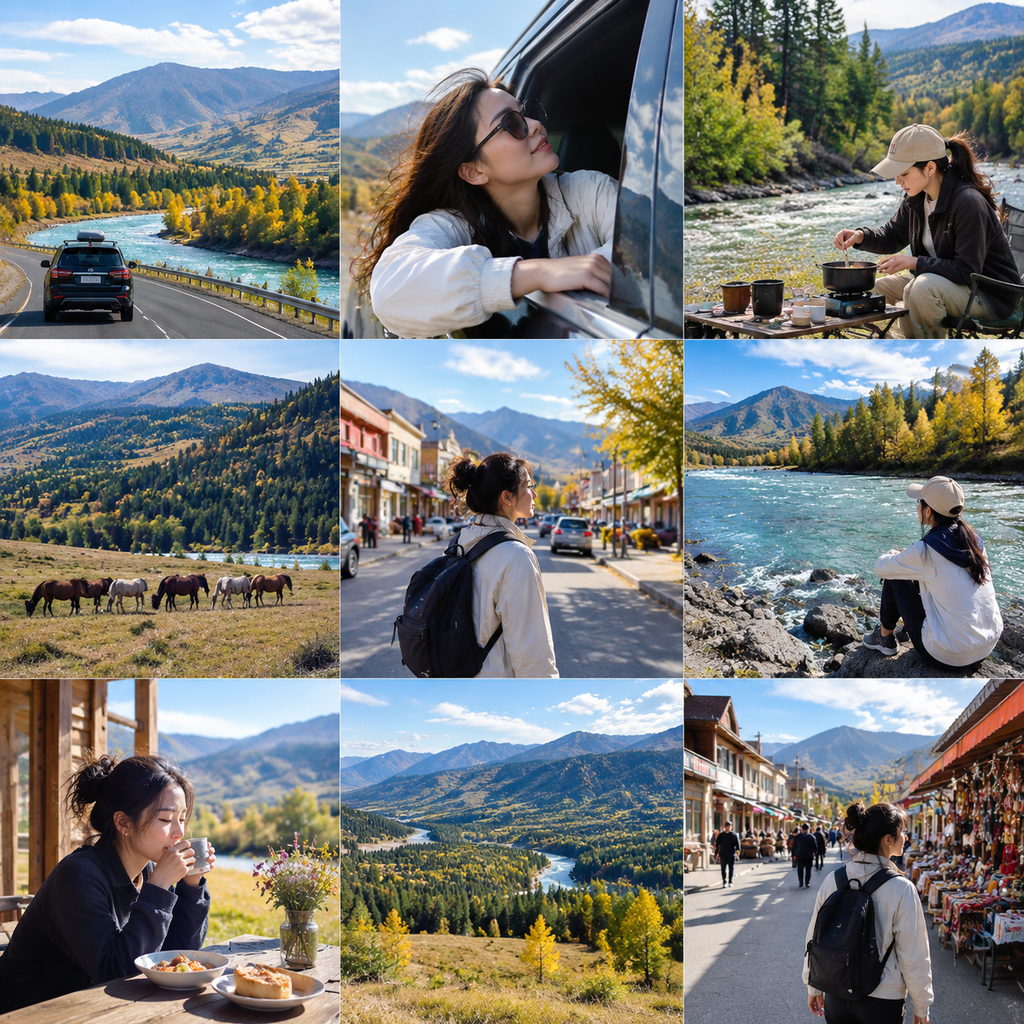
Before leaving the valley, I looked at the grassland once more. It had not become less beautiful because I changed the plan; I simply stopped asking it to carry the meaning of the entire day alone. It appeared alongside water, trees, wind, and the short walks after parking, creating the layers of early autumn. The grassland gave me openness, while the valley gave me pauses. One lifted my eyes; the other lowered them. Neither replaced the other. Together they turned a scenic chase into a way of traveling that included both staying and returning.
车子重新上路时,油量表仍在我能接受的范围里,车厢里也没有那种“还差一个地方没赶到”的焦躁。我把外套搭在副驾驶旁,擦掉鞋底带进来的湿土,确认没有东西留在停车处,然后才慢慢并回道路。晚些时候光线会怎样变化,我没有再替它作保证;下一次还会不会走同一条河谷,我也没有急着决定。此刻我只知道,阿勒泰值得用一条会停下来的路线去接近。
When the car moved back onto the road, the fuel level was still within the margin I considered acceptable, and the cabin no longer carried the anxiety of an unfinished checklist. I placed my jacket beside the passenger seat, brushed damp soil from my shoes, checked that nothing remained at the parking place, and merged back slowly. I made no promise about how the light would change later, and I did not rush to decide whether I would drive the same valley again. I only knew that Altay deserved a route willing to stop.
回头整理这一天,我发现“沿河谷开”并不是把草原路线换成另一条同样追赶景点的路线。真正变化的是我开始给每一段路分配不同任务。开阔处适合看天和坡面,河边适合放慢脚步,树影下适合检查衣服和水,车旁适合确认油量、轮胎周围与随身物品。路线一旦有了这些任务,所谓停留就不再是临时发呆,而是有明确目的的休息与观察。
Looking back on the day, I realized that driving along the valley was not simply replacing one attraction-chasing route with another. The real change was assigning a different job to each stretch of road. Open ground was for reading the sky and slopes; the riverbank was for slowing down; the trees were for checking my clothing and water; the car was for checking fuel, tires, and belongings. Once the route had these jobs, a pause was no longer accidental idling. It became rest and observation with a clear purpose.
我也重新看待了“远方”这个词。以前我总觉得只有把车开到更远的地方,才算没有浪费一次长途自驾。后来在河谷里,我站在离车辆不远的地方,看着水流从石头之间绕过去,忽然明白远方不是里程的奖牌。它可以是一种视线关系:山坡在远处,脚边的石头在近处,二者同时被我看见,才构成完整的尺度。盲目增加里程,反而会把这种关系拆散。
I also changed how I understood the word “far.” I used to believe that a long drive was wasted unless I reached a more distant point. Beside the valley, watching water work its way around stones not far from the car, I understood that distance is not a medal awarded for mileage. It can be a relationship between scales: the slope far away and the stone at my feet appearing together. Adding miles without thought can actually break that relationship apart.
在草原边缘停车时,我会特别留意自己的车影和脚步。初秋的草不再只是夏天那种可以随意想象的柔软地毯,干草梗会勾住鞋带,低处也可能藏着看不清的坑洼。我不为了让照片更完整而走进脆弱的植被,也不把车轮压出的印子当作无关紧要的小事。能从已有的边缘看清颜色,就不必把“靠近”误解成“更尊重风景”。
When I parked near the edge of the pasture, I paid attention to the car’s shadow and my footsteps. Early-autumn grass was no longer the soft summer carpet I had imagined; dry stalks caught on laces, and shallow hollows could be hard to see. I did not enter fragile vegetation merely to complete a photograph, nor did I dismiss tire marks as irrelevant. If I could read the colors from an existing edge, I did not need to confuse getting closer with respecting the landscape.
河水给我的另一个提醒,是不要把声音当成永远不会变化的背景。车门打开时,我先听见自己的动作声,过一会儿才听清水流;风向调整后,水声又被推到一边,树叶摩擦声占了上风。我没有把这些声音录成所谓“现场原声”,只是让耳朵参与判断。声音变大或变乱时,我会更谨慎地靠近水边,也会更快把注意力拉回脚下和回车方向。
The river offered another reminder: sound is not a permanent background. When I opened the door, I heard my own movement first, and only later the water. As the wind shifted, the water moved behind the rubbing leaves. I did not turn these sounds into a claim of an “authentic recording”; I simply let my ears help with decisions. When the sound became louder or less distinct, I approached the water more carefully and kept my attention on the ground and the direction back to the car.
我在车里准备了一套不复杂的顺序:先喝水,再看油量和导航,再决定是否继续;停过车以后,先确认周围,再拿相机;准备离开时,先看道路两侧,再启动。这样的顺序没有神秘技巧,却能把冲动拆成几个可检查的小步骤。尤其在天气变化快、道路陌生的地方,少凭感觉做一次决定,就少给返程增加一种不必要的不确定。
Inside the car, I settled into a simple sequence: drink water, check fuel and navigation, then decide whether to continue; after parking, check the surroundings before taking out the camera; before leaving, inspect both sides of the road before starting. There was no secret technique in it. The sequence simply broke impulse into small checks. In unfamiliar places with changing weather, one less feeling-based decision meant one less avoidable uncertainty on the return.
这套做法也让我不再把“停留”理解成必须坐下来很久。短短几分钟,只要我真的完成了观察,也可以算一次有效停留。我会看云影是否移动、确认身上是否发冷、听一会儿水声,再决定是继续驾驶还是把这处位置留给下一次。停留的价值不由钟表单独决定,而由它有没有改变我的判断决定。
This approach also stopped me from defining a pause as something that had to last a long time. A few minutes could count if I had genuinely observed the place. I watched the cloud shadow move, noticed whether I was getting cold, listened to the water, and then decided whether to drive on or save the place for another visit. The value of a pause was not determined by the clock alone, but by whether it changed my judgment.
有些路段我没有拍照,却记得很牢。记得车窗外一片草坡从绿转成暗黄,记得河谷出口处风突然变得干,记得我在一个不显眼的位置提前掉头,避免把夜里的返回变成压力。照片保存的是画面,驾驶日记保存的是取舍。后者不一定能立刻发给别人看,却更能在下一次出发前提醒我:不要把未知当成一定会顺利。
Some stretches left no photograph but stayed clearly in my memory. I remembered a slope shifting from green to dull yellow, dry air appearing near the valley exit, and turning around early at an unremarkable place so the return would not become stressful after dark. Photographs preserve views; a driving diary preserves choices. The latter may not be immediately shareable, but before the next departure it can offer the more useful reminder: do not treat the unknown as guaranteed to go smoothly.
我曾经把自驾的成就感放在“今天走了多少地方”,后来把它换成“今天有没有给回来留足余地”。这个变化听起来不够热闹,却让我更愿意把阿勒泰当作可以反复阅读的地貌,而不是一次性消费的背景。河流每天的水色会受光线和云影影响,草原的季节也不会按照我的行程表变色。既然景观本来就不服从我的安排,我也没有必要用赶路去证明自己掌控了一切。
I once measured a drive by how many places I covered. Later I replaced that measure with a quieter question: did I leave enough room to come back? It sounded less exciting, but it made me more willing to treat Altay as a landscape to read repeatedly rather than a backdrop to consume once. River colors respond to light and cloud, and the grassland does not change according to my itinerary. Since the landscape does not obey my schedule, I do not need speed to prove that I control everything.
回程途中,我没有再把导航上的未到达标记当成遗憾。它们只是下一次可以重新判断的可能性,前提是我记得这次为什么没有继续。也许那时天气更稳定,也许我会选择在河谷附近多住一晚,也许仍然只走到今天的位置就返回。重要的不是提前替未来写好答案,而是把今天的边界保留下来,让下一次出发有真实经验可用。
On the way back, I stopped treating the unvisited pins on the navigation screen as regrets. They were possibilities to reassess next time, provided I remembered why I had not continued today. Perhaps the weather would be steadier, perhaps I would stay near the valley longer, or perhaps I would still turn around at the same point. The important thing was not to write the future in advance, but to preserve today’s boundaries as real experience for the next departure.
夜色还没有完全压下来时,我已经把车停回较熟悉的位置。下车前,我摸到副驾驶旁那件仍然带着风味的外套,想起早晨把河谷当作附属风景的自己。现在我不会再问哪一片草原最值得奔赴,而会先问:这条路有没有水边的停顿,有没有不妨碍别人的停车方式,有没有足够油量和体力把人带回来。对初秋阿勒泰的重新认识,就从这些不响亮的问题开始。
Before darkness fully settled, I had parked in a more familiar place. Before getting out, I touched the jacket beside the passenger seat, still carrying the memory of the wind, and remembered how I had treated the valley as a secondary view that morning. Now I would not begin by asking which pasture deserved the longest chase. I would ask whether the route allowed a pause beside water, whether I could park without inconvenience, and whether fuel and energy were sufficient for the return. My new understanding of early-autumn Altay began with these quiet questions.
把河谷当作一条会变化的路 / Treating the Valley as a Changing Road
第二天早晨,我没有马上把昨天的路线复制一遍,而是先把车窗降下一条缝,听听风的方向,再看路边草色和远处云层。这样的观察不能告诉我未来几个小时一定会怎样,却能让我知道出发时的条件和前一天不同。自驾路线不是打印好的答案,尤其在河谷和草原交替的地方,同一段路在不同时间可能给人完全不同的压力。先承认变化,才有资格谈调整。
The next morning, I did not immediately copy the previous day’s route. I opened the window a crack, listened to the direction of the wind, and looked at the grass and the clouds in the distance. This could not tell me exactly what the next few hours would bring, but it showed that the starting conditions differed from the day before. A drive is not a printed answer. Where valleys and grasslands meet, the same stretch can create very different pressure at different times. Accepting change is the first step toward making a sensible adjustment.
我把当天想看的地方分成了三层,而不是列成一串必须打卡的名称。第一层是即使只停很短时间也值得观察的河谷段,第二层是天气和路况合适时才加入的草坡,第三层则只是“如果还有余量再看”的远处方向。这个排序让我不必在每一个新念头出现时重新争论整天的安排。条件变差时,删掉第三层就够了;状态很好时,也不代表必须把三层全部完成。
I divided the day’s possibilities into three levels instead of making a single list of places I had to check off. The first level contained valley stretches worth observing even during a brief pause. The second included grassland slopes to add only when weather and road conditions allowed. The third was simply a distant direction to consider if I still had room. This order meant that every new impulse did not require rebuilding the whole day. When conditions worsened, I could remove the third level. Feeling good did not mean I had to complete all three.
这次我还特别留意了“入口感”很强的地方。某个岔口看起来像是可以直接驶入的景观道路,实际是否允许车辆进入、是否属于牧业生产使用范围、是否有足够的回转空间,都不能靠一眼判断。我宁愿把这种位置当作需要确认的边界,而不是默认可探索的邀请。看到路旁有明显的通行痕迹,也不等于那条路对游客车辆开放;痕迹可能属于当地车辆、工作车辆或季节性使用。
I also paid attention to places that gave a strong impression of being an entrance. A junction may look like a scenic road, but whether vehicles may enter, whether it serves pastoral work, and whether there is enough room to turn cannot be decided at a glance. I preferred to treat such a place as a boundary requiring confirmation, not as an invitation to explore. Visible tire tracks do not prove that a road is open to visitor vehicles; they may belong to local, working, or seasonal traffic.
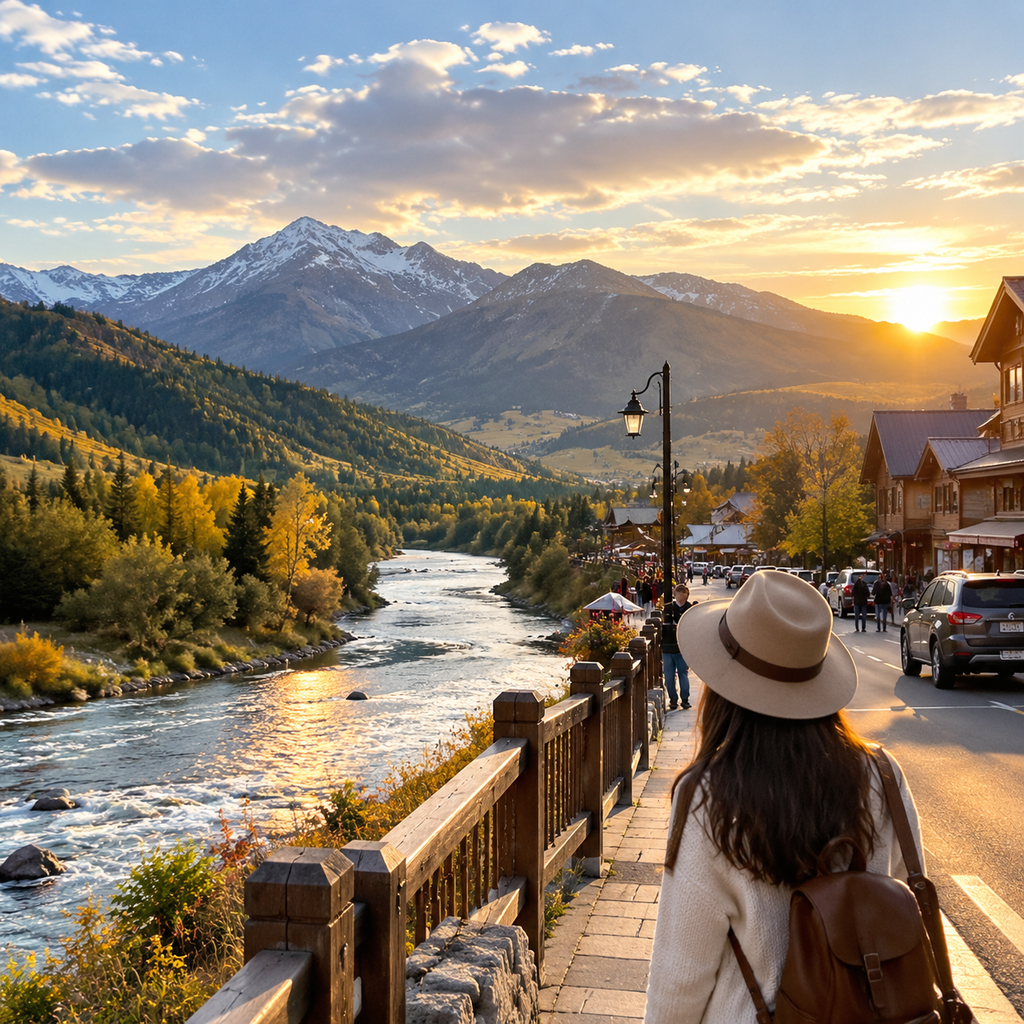
河谷停车时,最让我不安的并不是找不到“最佳机位”,而是有些位置会让车辆和行人互相猜测。车停得太靠近弯道,后车要临时变线;车门开向通行侧,同行人下车就容易把注意力放在拍照而不是来车;几辆车首尾交错,又没有留下清楚的驶出方向,所有人都只能慢慢试探。后来我会先把车停在不妨碍的位置,再下车走几步确认视线,避免让相机决定车辆的位置。
When parking in the valley, what bothered me was not failing to find the “best angle,” but seeing places where cars and pedestrians had to guess each other’s intentions. A vehicle too close to a bend could force approaching traffic to change course. A door opening toward the traffic side made passengers focus on photographs instead of vehicles. When several cars stopped at odd angles without a clear way out, everyone had to negotiate slowly. I began parking without obstructing first, then walking a few steps to check the view, rather than letting the camera choose the vehicle’s position.
如果前方已经有车辆停靠,我会尽量避免把自己的车贴得太近。留出的距离不只是为了别人开门,也是为了让对方能够在需要时先离开。旅行者很容易把停车理解成“我到了,所以这里属于我几分钟”,但河谷道路往往同时承担通行、放牧、维护和临时停靠等不同功能。你不知道下一辆车是不是正在处理工作,也不知道前车里的人是否需要立即调头。多给一点空间,通常比多抢一块草边更有用。
If another vehicle was already parked, I tried not to stop too close. The space was not only for opening doors; it also allowed the other driver to leave first if necessary. Travelers can easily think, “I have arrived, so this place is mine for a few minutes,” but valley roads may serve traffic, pastoral work, maintenance, and temporary stops at the same time. I could not know whether the next vehicle was working or whether the people in the first car needed to turn around. Leaving room was usually more useful than claiming another patch of grass.
我观察到,停车礼貌会直接改变人的心情。一次我把车往后挪了些,同行的人起初觉得这样会少拍到一段水面;等另一辆车顺利通过后,他反而说刚才如果停在原处,大家都会一直担心挡路。那句很普通的话让我意识到,所谓旅行中的松弛,不是道路必须为我让出全部空间,而是我做完一个动作后,不需要不断回头确认自己有没有给别人添麻烦。轻松感有时来自少占一点地方。
I noticed that considerate parking directly changed our mood. Once I moved the car farther back, and my companion initially worried that we would lose part of the river from the frame. After another vehicle passed easily, he admitted that staying in the first position would have made everyone wonder whether we were blocking the way. That ordinary comment showed me that relaxation does not mean the road must surrender all its space to me. It can come from making one small decision that removes the need to keep checking whether I have caused trouble.
草原的颜色变化也影响我选择停车点的方式。夏末还显得柔软的低坡,初秋可能已经露出干燥的梗和不规则的空隙;远处看是一片完整的色块,走近才会发现脚下并不适合随意踩踏。我不再为了拍出“满屏草原”而穿过边缘,而是先在已有道路或坚实地面上观察。距离稍远时,草坡的层次反而更清楚,车辆也不会因为追求近景而留下新的压痕。
Seasonal color also changed how I chose parking places. A low slope that looked soft at the end of summer might already show dry stalks and uneven gaps in early autumn. From far away it appeared to be one complete color field, but up close the ground was not suitable for casual footsteps. I stopped crossing the edge merely to fill the frame with pasture and observed from an existing road or firm ground instead. From a little farther away, the layers of the slope were often clearer, and the car did not create new marks in pursuit of a close-up.
我开始把“草原还绿不绿”换成更具体的观察:绿意集中在哪里,黄褐色是从坡顶下来还是沿着沟地展开,风吹过时草面是一齐倒下还是只在局部起伏。这样的看法不需要把某一天宣布成最佳季节,也不需要拿别人的照片作为标准。它只要求我承认季节变化有过程。对自驾者来说,过程意味着不能把路线押在某个颜色必须同时出现的想象上。
I replaced the vague question of whether the grassland was still green with more specific observations: where the green was concentrated, whether brown spread down from the ridge or followed a drainage line, and whether the grass moved as one surface or in local ripples under the wind. This did not require declaring a particular day the perfect season, nor using someone else’s photograph as a standard. It only required accepting that seasonal change is a process. For a driver, that means not building a route around the fantasy that every color must appear at the same moment.
云层移动时,河谷和草原给出的答案并不一样。开阔草坡在光线变白后容易失去远近层次,河边的树干、湿石和水面边缘却可能因此显出更细的关系。我并没有把这种变化解释成“阴天更好”或“晴天更好”,因为天气好坏还取决于风、能见度、地面状态和人的体力。我的做法只是让景观承担不同任务:远景不清时,就把注意力交给近处的质地。
When clouds moved, the valley and the grassland did not give the same answer. An open slope could lose its sense of distance when the light turned pale, while tree trunks, damp stones, and the edge of the water might show finer relationships. I did not turn this into a claim that cloudy weather is better or sunny weather is better, because conditions also depend on wind, visibility, ground surface, and human energy. I simply gave different landscapes different jobs: when the far view weakened, I paid attention to nearby textures.
天气判断还需要考虑车内外的落差。车里有座椅、有玻璃、有暖气或空调,人的感觉容易被包裹住;下车后,风会立刻告诉你衣服是否够用,湿地会告诉你鞋底是否可靠,低云会告诉你远行是否值得。每次停车我都会先短暂站在车旁,而不是拎着相机直接走远。如果身体已经在提醒我缩短停留,继续拍摄并不会让照片更诚实。
Weather judgment also requires noticing the difference between inside and outside the car. A seat, glass, heating, or air conditioning can wrap a person in comfort. Once outside, the wind immediately reveals whether the clothing is adequate, wet ground tests the soles, and low cloud questions whether a longer outing is worthwhile. At each stop I stood beside the car briefly before walking away with the camera. If my body was already asking for a shorter pause, more photographs would not make the experience more truthful.
我没有把天气应用上的一条预测当成河谷现场的替代品。预报可以帮助我知道出发前该准备什么,却不能替我判断某个停车处是否暴露、某段路是否适合回头、风是否已经让同行者不舒服。即使没有明显降水,湿气、低温和视线变化也足以改变路线顺序。对我来说,天气信息最有用的地方,是提前留下选择,而不是提前保证结果。
I did not treat a single forecast line as a substitute for conditions in the valley. A forecast could help me prepare before departure, but it could not decide whether a parking place was exposed, whether a stretch was easy to turn back from, or whether the wind had already made my companion uncomfortable. Even without obvious rain, dampness, cold, and shifting visibility could change the order of the route. Weather information was most useful when it left options open, not when it promised an outcome.
油量检查也被我拆成了几个时刻:离开城区或补给方便的地方之前看一次,准备驶向更偏的方向之前再看一次,决定掉头或继续之前最后看一次。每次看的都不只是数字,还包括已经行驶的绕行、车内是否需要长时间保持舒适、道路是否可能让速度变慢,以及回程是否要经过同样的弯道。这样做不是把旅行变成计算题,而是防止一个早晨的乐观情绪替晚上做决定。
I broke fuel checks into several moments: before leaving an area with convenient supplies, before heading toward a more remote direction, and before choosing between turning around and continuing. Each check included more than the gauge. I considered detours already taken, how long the cabin might need to remain comfortable, whether the road could slow us down, and whether the return would use the same bends. This did not turn the trip into a math exercise. It prevented morning optimism from making the evening decision.
我不愿给出一个看似专业、实际上无法适用于所有车的固定返程比例。车辆大小、载荷、驾驶节奏、风向、道路起伏都会影响消耗,临时等待也会改变计划。比起背一个数字,我更愿意确认自己是否仍能在不慌张的情况下回到熟悉路段;如果答案开始变得勉强,就应该把“继续探索”从选项里拿掉。余量的意义,是让人可以平静地改变方向。
I did not want to offer a fixed return percentage that sounded professional but could not fit every vehicle. Vehicle size, load, driving style, wind, and slopes all affect consumption, and an unexpected wait can change the plan. Rather than memorizing a number, I preferred to ask whether I could still reach a more familiar road without anxiety. Once the answer became doubtful, continuing to explore should leave the list of options. The value of a reserve is that it allows a calm change of direction.
导航重新规划时,我也不再把新增路线看成奖励。它可能把我带向一条看似更近、但更难停车或更难掉头的道路;也可能让原本简单的返程变成需要持续确认的过程。我会先看它改变了什么,再决定是否接受:是缩短距离,还是减少可控性?是让河谷停留更顺,还是只是增加一个没有验证的入口?路线调整必须有理由,不能因为屏幕上出现一条新线就立刻跟随。
When navigation recalculated, I no longer treated the new route as a reward. It might lead to a road that looked shorter but offered fewer parking or turning choices. It might also turn a simple return into a sequence of constant checks. I first asked what had changed before accepting it: did it shorten distance, or reduce control? Did it improve the valley pause, or merely add an unverified entrance? A route change needed a reason; a new line on the screen was not enough.
有时最好的调整只是减少一个方向。比如原本想沿着河谷继续深入,再从另一侧绕回,我最后可能只保留前半段,沿来路返回。这个决定在地图上不够漂亮,却让停车、天气、油量和同行人的状态都更容易管理。折返并不会抹掉已经看见的东西,反而能把注意力从“闭环是否完成”转回“回去的路是否仍然舒服”。
Sometimes the best adjustment was simply removing one direction. I might plan to go deeper along the valley and return by another side, then keep only the first half and drive back the way I came. The decision looked less elegant on a map, but it made parking, weather, fuel, and my companion’s condition easier to manage. Turning back did not erase what I had seen. It moved my attention from completing a loop to keeping the way home comfortable.
我还会给返程预留一段不被景点填满的时间,但不把它伪装成精确的安全承诺。那段余地可以用来减速、等待视线改善、寻找合适的停车处,或者让同行者整理衣物和喝水。它的作用不是保证任何情况都能解决,而是在普通的小变化发生时,不至于立刻失去选择。旅行计划若没有空隙,就连一个短暂的停顿也会被感受成失败。
I also left a stretch of the return unfilled by attractions, without pretending that it was an exact safety guarantee. That space could absorb slower driving, a wait for visibility, a search for a proper parking place, or time for a companion to adjust clothing and drink water. It could not solve every possible problem, but it prevented ordinary small changes from eliminating all choices. A plan with no gaps makes even a short pause feel like failure.
在一处河谷边,我遇到过一群准备离开的游客。他们把车旁的袋子和外套收好,又站在原地看了一会儿才上车。我没有靠过去打扰,只从旁边经过时看见他们先确认地面和道路,再关门启动。那个动作很不起眼,却比匆忙上车更像一种完整的离开:不是看完就走,而是把自己带来的物品、留下的空间和下一辆车的通行一起考虑。
At one valley stop, I saw a group of visitors preparing to leave. They gathered their bags and jackets beside the car, then stood for another moment before getting in. I did not approach or interrupt them. As I passed, I noticed that they checked the ground and the road before closing the doors and starting. It was an unremarkable action, but it looked like a complete departure: not merely leaving after looking, but considering their belongings, the space they had used, and the next vehicle’s passage.
我后来把这个动作变成自己的离开程序。先看有没有垃圾和遗落物,再看轮胎附近是否有石块、坑洼或被风吹来的轻物,接着确认车门打开不会碰到旁边的人或车,最后才看道路两侧。程序很短,却能把“我想马上出发”的冲动放慢一点。尤其在风声很大时,人容易只想着回到车里,反而忘了启动车辆前最需要确认的东西。
I later made that sequence my own departure routine. First I checked for rubbish or forgotten items, then looked around the tires for stones, hollows, or windblown objects. Next I made sure the doors would not hit a person or another vehicle, and only then checked both sides of the road. The routine was brief, but it slowed the urge to leave immediately. When the wind was loud, it was easy to focus only on getting back inside and forget what needed checking before moving.
这条路线也让我重新理解“停车后走多远”。不是越远越能证明我认真,也不是离车越近就越安全。距离要和地面、天气、视线、体力以及回车方向一起判断。河谷边如果碎石变多,我会缩短步行;草坡边如果边界不清,我会停在已有痕迹处;风把声音和人的位置感吹乱时,我会让车辆成为明确的参照。走得少一点,常常能让我看得更完整。
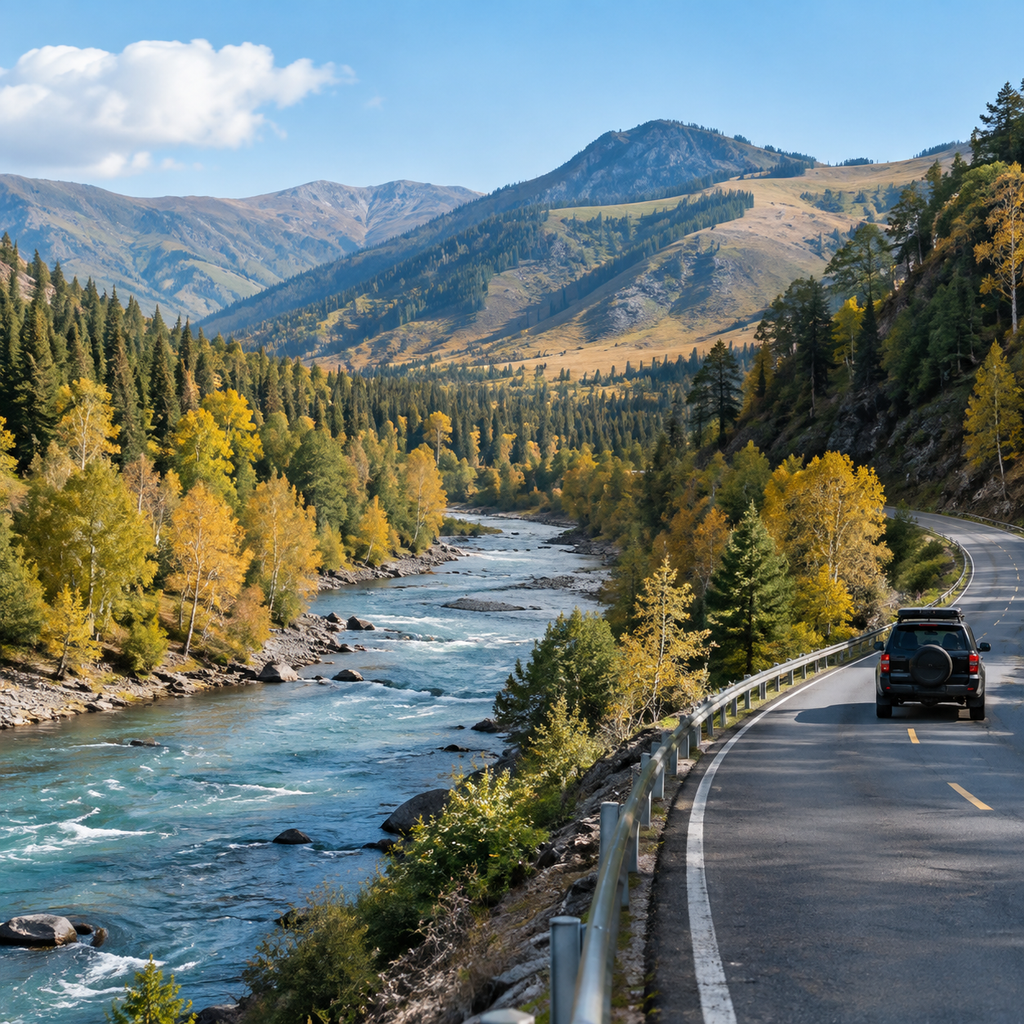
This route also changed how I understood the distance walked after parking. Going farther did not prove greater seriousness, and staying close to the car was not automatically safer. Distance had to be judged together with the ground, weather, visibility, energy, and the way back. If loose stones increased beside the valley, I shortened the walk. If the pasture boundary was unclear, I stayed near an existing track. When the wind disrupted sound and orientation, I kept the car as a clear reference. Walking less often helped me see more completely.
我没有把河谷里的每一条小路都命名,也没有把自己看见的每处水面都包装成独家发现。很多景观之所以有价值,恰恰因为它们属于当地日常,不需要被游客重新发明。对旅行者而言,最负责任的做法不是把所有位置都写成“必到”,而是说明自己的判断边界:哪里适合短停,哪里只能远望,哪里需要先确认,哪里因为天气或返程压力被我放弃。
I did not name every small track in the valley or present every patch of water as a private discovery. Many landscapes matter precisely because they belong to local daily life and do not need visitors to reinvent them. For a traveler, responsibility does not mean calling every place a must-see. It means explaining the limits of one’s judgment: where a short stop works, where looking from a distance is better, where confirmation is needed, and where weather or return pressure made me leave it out.
写到这里,我仍然不会给这条线排出一份僵硬的先后顺序。可以先看草原再进河谷,也可以在风大时反过来;可以把最远的念头删掉,也可以在条件稳定、余量充足时多留一会儿。更重要的是,每一次变化都应当能回答一个问题:它是在让当天更清楚,还是只是在满足“我还想再多一点”的欲望。前者值得保留,后者可以放下。
Even now, I would not turn this route into a rigid sequence. One could begin with the grassland and then enter the valley, or reverse the order when the wind rises. The farthest idea can be removed, or a longer pause can be kept when conditions are stable and the margins are sufficient. What matters is that each change should answer a question: is it making the day clearer, or merely satisfying the desire for one more thing? The first deserves to stay; the second can be released.
返程时,草原和河谷在后视镜里交替出现。前者的开阔很快被道路的弯曲切开,后者的树影则一段段退到身后。我没有试图在镜头里把它们拼成一张完美的总结图,因为这一天真正留下来的不是某个统一色调,而是几次具体的选择:没有压草停车,没有追着低云赶远景,没有把最后的油量当成绕行许可,也没有因为掉头而责怪自己。
On the return, the grassland and valley alternated in the rear-view mirror. The road’s bends cut the openness of the pasture into pieces, while the trees withdrew behind us one stretch at a time. I did not try to combine them into one perfect summary image. What stayed with me was not a single color scheme but several concrete choices: I had not parked on the grass, chased a distant view beneath low cloud, treated the remaining fuel as permission to detour, or blamed myself for turning around.
如果有人问我初秋阿勒泰应该怎么排自驾线,我现在不会先报出一串地名。我会先问他想把一天交给什么:开阔的视野、河水和树影、慢慢变化的草色,还是一条需要不断验证的远路。然后我会提醒他把停车礼貌、天气变化、油量和返程余地放进同一张判断里。这样得到的路线也许不够满,却更像一个真实的人在真实道路上做出的安排。
If someone asked how to arrange a drive through Altay in early autumn, I would not begin with a string of place names. I would first ask what they wanted to give the day to: open views, water and tree shadows, slowly shifting grass, or a distant road requiring constant verification. Then I would remind them to consider parking courtesy, changing weather, fuel, and return margin together. The resulting route might look less full, but it would resemble a real person’s decisions on a real road.
我想保留的最后一个画面,并不是草原最亮的那一刻,而是我在离开前把一只空水瓶放回车内、把外套拉好、再看一眼河流的动作。水还在沿着自己的方向流,草色也没有等我拍完才变化。车轮重新转起来以后,我知道今天少走的那一段并没有被浪费,它变成了下一次可以谨慎核对的可能。对我来说,这就是沿河谷重排路线的意义:不是逃离草原,而是终于学会和风景一起安排抵达与返回。
The final image I want to keep is not the grassland at its brightest. It is the act of putting an empty bottle back in the car, pulling my jacket closed, and looking once more at the river before leaving. The water continued in its own direction, and the grass did not wait for my camera. When the wheels turned again, I knew the stretch I had not driven was not wasted. It had become a possibility to check carefully another time. For me, rebuilding the route along the valleys meant not abandoning the grassland, but learning to arrange arrival and return together with the landscape.
我还给自己留了一条很实际的退路:任何一个看起来值得继续的方向,都必须能在不慌张的情况下被放弃。这个要求听起来有些保守,却让我在陌生道路上轻松很多。以前我怕掉头意味着承认判断错误,后来才发现,掉头只说明新的信息已经出现。云层变厚、风变冷、车里的人开始疲惫、油量余地不再宽松,这些都不是失败的证据,而是路线需要更新的信号。
I also kept a very practical escape route: any direction that looked worth pursuing had to be possible to abandon without panic. The rule sounded cautious, but it made unfamiliar roads much easier. I used to think turning around meant admitting a mistake. Later I understood that it only meant new information had appeared. Thicker clouds, colder wind, growing fatigue, or a narrower fuel margin were not proof of failure; they were signals that the route needed an update.
在河谷附近找停车处时,我会把“能不能停”与“想不想停”分开。想停是我的愿望,能停则涉及道路宽度、视线、地面状态和其他人的使用。一个角度再漂亮,只要车停下后让后车难以判断,也让行人不得不绕到危险的一侧,我就不会把它当成合适的停留点。有时我只在车内看一会儿,把那一段景色交给眼睛,不把每次喜欢都变成一次占用。
When looking for a place to park near the valley, I separated “can I stop?” from “do I want to stop?” Wanting to stop was my preference; being able to stop involved road width, visibility, ground conditions, and other users. No angle was worth choosing if my car made it hard for another driver to read the road or forced a walker toward the unsafe side. Sometimes I simply watched from inside and left the view alone, refusing to turn every moment of attraction into an occupation of space.
天气变动时,我还会重新检查车里的小物件。水瓶有没有滚到脚边,外套是否挡住了视线,手机是不是放在不需要低头寻找的位置,充电线有没有缠在换挡附近。它们并不是壮观的旅行经验,却会决定我能不能专心驾驶。尤其当河谷的光线忽明忽暗时,我不愿意一边找东西一边看路,也不愿意因为临时停靠没有整理好车内而增加下一段路的分心。
When the weather shifted, I also checked the small things inside the car. Had a bottle rolled near the pedals? Was a jacket blocking the view? Was the phone within reach without looking down? Was a charging cable caught near the gear selector? These were not glamorous travel lessons, but they affected whether I could concentrate. When light in the valley changed from bright to muted, I did not want to search for objects while watching the road or add distraction because I had failed to organize the cabin during a pause.
我把这次行程写进日记时,没有给每个停留点排出高低顺序。因为真正改变我的,不是某一处比另一处更漂亮,而是我在不同位置做出的不同决定:在草原边缘不再压近,在风大的地方缩短停留,在河谷里把远景换成近景,在油量和返程之间主动收手。它们合在一起,才是我愿意再次使用的路线经验。
When I wrote about the drive, I did not rank every stopping point. What changed me was not one place being prettier than another, but the different decisions I made: staying back from the pasture edge, shortening a pause in strong wind, replacing distant views with close observation in the valley, and stopping before the fuel and return margin became uncomfortable. Together, these choices formed the route knowledge I would actually use again.
如果以后再来,我仍然会看草原,但不会把出发前的想象当成必须完成的任务。我会先确认当天的道路和天气条件,再决定把时间交给开阔坡面、河水、林带,还是某个适合安静坐一会儿的位置。我也会在补给条件明确时关注油量,在离开时给返程留出不依赖运气的空间。这样的安排可能少一些“我去过很多地方”的谈资,却多了一种不急着证明自己的踏实。
If I return, I will still look at the grassland, but I will not treat my pre-trip imagination as a task that must be completed. I will first read the road and weather conditions of that day, then decide whether to give my time to an open slope, the river, the trees, or a place where I can sit quietly. I will pay attention to fuel when refueling conditions are clear and leave a return margin that does not depend on luck. The plan may give me fewer stories about how many places I covered, but more steadiness from not needing to prove anything.
最后留下来的,是我把车停稳后没有立刻下车的那几分钟。挡风玻璃外,草原和河谷各自占着一部分视野;远处的颜色在云影里变淡,近处的水面还在移动。我看了一眼油量,确认返程仍有余地,又把外套拉到手边。那一刻我不再把停留看作偏离路线,而把它当成路线本身:看景、判断、尊重空间,然后在还来得及的时候回家。
What stayed with me most were the few minutes after I had parked but before I got out. Through the windshield, the pasture and valley each occupied part of the view. Distant colors softened under cloud shadow while the nearby water kept moving. I checked the fuel gauge, confirmed there was still room for the return, and pulled my jacket within reach. I no longer saw pausing as a deviation from the route. It was the route itself: observe, decide, respect the space, and return home while there was still time.
我还记住了返程中一个很普通的细节:每次准备离开停留处,我都会先把视线从河谷收回车道,再把注意力从远山收回车前。这个顺序让我少了一点“沉浸在景色里”的迟钝。旅行当然需要沉浸,但驾驶不能一直停留在欣赏状态。看完风景以后重新确认道路,是把感受带回现实,也是对自己和其他道路使用者负责。河谷可以让人慢下来,却不能让判断也停下来。
I also remembered one ordinary detail from the return: before leaving each pause, I moved my eyes from the valley back to the lane, and from the distant mountains back to the space in front of the car. The sequence reduced the daze that can follow a beautiful view. Travel needs immersion, but driving cannot remain in an appreciation-only state. Rechecking the road after looking at scenery brings the experience back into reality and respects everyone using the road. The valley may slow me down, but it cannot stop my judgment.
这次之后,我对“余量”有了更宽的理解。它不只指油箱里剩下多少,也包括天气变坏时还能不能缩短路线,体力下降时是否有地方坐下,停车不合适时有没有继续寻找的耐心,错过一处景观后能不能接受。余量越多,越不需要用冒险去换取完整感。一个允许改变的行程,反而比写得密密麻麻的行程更接近真实旅行。
After this drive, I understood “margin” more broadly. It did not only mean the amount left in the fuel tank. It also meant whether I could shorten the route when weather worsened, sit down when energy dropped, keep looking patiently when parking was unsuitable, and accept missing a view. The more margin I kept, the less I needed risk to manufacture a sense of completeness. An itinerary that allowed change was closer to real travel than one packed tightly with obligations.
我现在会把路线复盘分成两部分:一部分写“看到了什么”,另一部分写“因为看到了什么,所以改变了什么”。前一部分容易留下漂亮的句子,后一部分才真正能帮我下一次出发。看见草色变化,所以不再追求整片同色;看见河谷里的风和水,所以把停留安排得更慢;看见停车位置会影响别人,所以愿意多走几步;看见油量和返程相互牵制,所以不把远处的弯道当成必须完成的承诺。这样写下来,一天的记忆就不只是景观目录。
Now I divide a route review into two parts: what I saw, and what I changed because I saw it. The first part produces attractive sentences; the second is what can actually help me on the next departure. The changing grass colors taught me not to demand a uniform field. Wind and water in the valley taught me to slow down. The effect of parking on others taught me to walk a little farther. The link between fuel and the return taught me not to treat a distant bend as a promise I had to fulfill. Written this way, a day becomes more than a catalog of views.
我还愿意把一部分空白留在照片之外。没有拍下来的路边、没有走近的河岸、没有继续追的坡面,并不代表它们没有进入这次旅行。恰恰是因为我收住了脚步和车轮,它们才以“我为什么没有过去”的形式留在记忆里。对我来说,这种未完成不是缺口,而是一种边界感:我知道自己看到了哪里,也知道哪里应该留给条件更合适的以后。
I am also willing to leave some of the journey outside the photographs. The roadside I did not capture, the riverbank I did not approach, and the slope I did not chase still became part of the trip. Because I stopped my feet and wheels, they remained in memory as questions of why I chose not to continue. This incompleteness is not a hole for me. It is a sense of boundary: I know what I saw, and I know what should wait for conditions that are more suitable.
- 我原以为宋代喝茶最讲究的是器物,后来才发现最难学的是桌边那种慢劲 | I Thought Song Tea Culture Was Mostly About Objects Until I Realized the Hardest Thing to Learn Was the Calm Pace at the Table
- 四个人一桌火锅,谁来先付?我在成都学会了中国式AA的真正节奏 | Four People, One Hot Pot Bill: In Chengdu I Learned the Real Rhythm of Splitting Cost
- 五月在西安城墙下看夜城,我第一次觉得历史不是课本里的东西 | Walking Xi'an's City Wall at Night in May Was the First Time History Stopped Feeling Like a Textbook
- 从大连到湛江:中国沿海城市的海鲜吃法 | Seafood Along China's Coast: From Dalian to Zhanjiang
- 中国茶叶选购:龙井普洱铁观音怎么挑 | Buying Chinese Tea: Longjing, Pu'er & Tieguanyin
- 甘南:被遗忘的藏区秘境七日行 | Gannan: A 7-Day Journey Through Tibet's Forgotten Frontier
- 我们在常熟尚湖的五月雨里轮流拿伞拍照,最后笑到谁都不在乎照片拍没拍好 | Passing One Umbrella Around in Changshu's May Rain, We Laughed Until None of Us Cared About the Photos Anymore
- 在吐鲁番的热度里寻找阴影和葡萄 | Seeking Shade and Grapes in Turpan's Heat
- 中国白酒与黄酒:送礼自饮怎么选 | Chinese Baijiu & Huangjiu: Gift & Tasting Guide
- 桂林和阳朔真正迷人的,不只是像画,而是那种愿意把人脚步放慢的山水节奏 | What Truly Charms Guilin and Yangshuo Is Not Only Their Painterly Beauty but the Way the Landscape Slows Your Pace
Comments (0)