
南京那场雨后,我在梧桐树下把行程表慢慢放下 | After the Rain in Nanjing, I Let My Itinerary Go Beneath the Plane Trees
雨后的南京,我把赶路改成了慢走 | After Rain in Nanjing, I Changed Rushing into Slow Walking
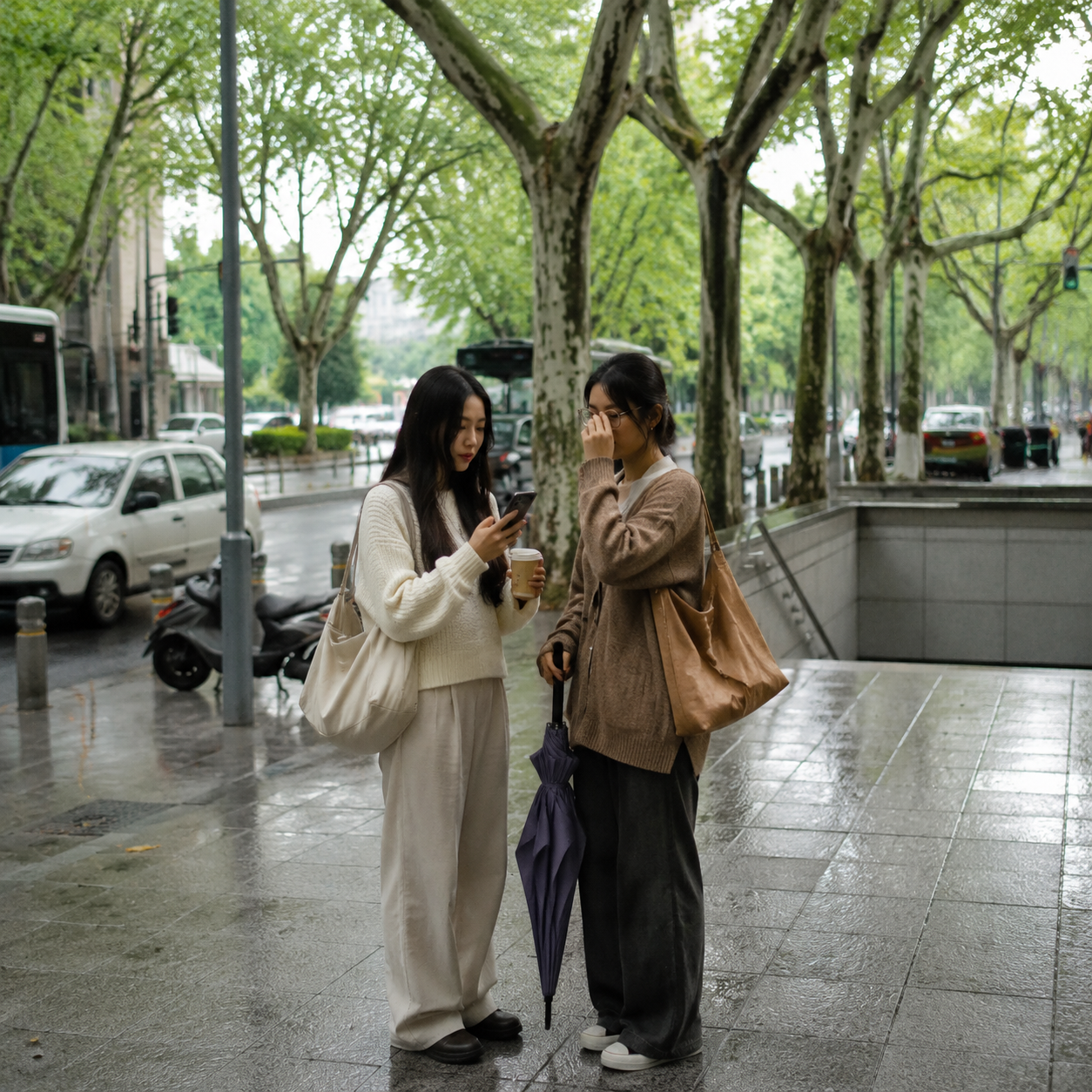
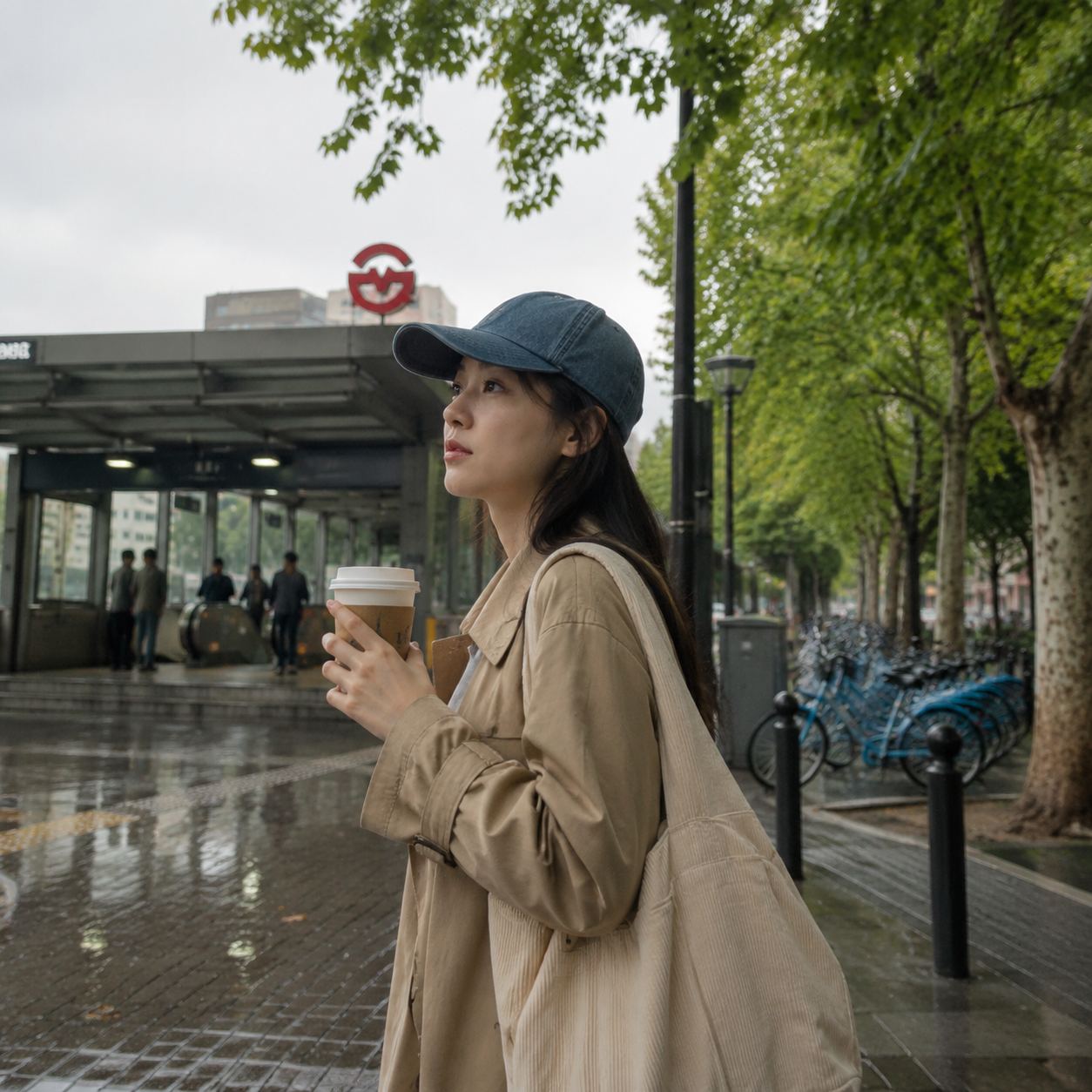
2025年4月12日下午四点十七分,我站在南京上海路地铁口外,鞋底踩在刚被雨洗过的砖面上,手里拿着一杯还没来得及喝的热豆浆。雨停得很突然,像有人把天上的水龙头拧紧,梧桐叶上的水珠却还在一颗颗往下掉。同行的朋友林然把伞合上,用手背擦了一下镜片,对我说,别急着去下一个地方,雨后的南京要慢点走才看得见。我当时已经把手机地图打开,准备从上海路赶去老门东,再从老门东赶去秦淮河边,像把城市切成几个必须完成的点。听见她这句话,我没有立刻回答,只是看着地铁口台阶边的一小片积水,里面倒着灰蓝色的天和一根摇晃的梧桐枝。
At 4:17 in the afternoon on April 12, 2025, I stood outside the Shanghai Road metro exit in Nanjing, my shoes pressing against bricks freshly washed by rain, while I held a cup of hot soy milk I had not yet managed to drink. The rain had stopped suddenly, as if someone had tightened a tap in the sky, but drops were still falling one by one from the plane tree leaves. My companion, Lin Ran, folded her umbrella and wiped her glasses with the back of her hand. She told me not to hurry to the next place, because Nanjing after rain had to be walked slowly to be seen. At that moment I had already opened the map on my phone, preparing to rush from Shanghai Road to Laomendong, then from Laomendong to the Qinhuai River, as if cutting the city into several points that had to be completed. Hearing her words, I did not answer right away. I only looked at a small puddle beside the metro steps, where the gray-blue sky and a swaying plane tree branch were reflected.
那天原本的计划排得很满。上午去博物馆,午后去先锋书店,傍晚赶到秦淮河看灯,晚上再找一家鸭血粉丝汤。对一个第一次认真逛南京的外国人来说,我总觉得如果少去一个地方,就像少交了一份作业。可雨把行程打散了。我们在书店里多停了一个小时,出来时预约的时间已经不合适,地图上每一段路都因为晚高峰变红。我看着屏幕上的预计时间变来变去,心里开始焦躁。林然看出来了,她没有抢走我的手机,也没有批评我的计划,只是指了指路边一排湿亮的梧桐树,说,如果你一直看地图,就会错过这些树刚被雨洗过的样子。
The day's original plan was packed. We would visit a museum in the morning, go to Librairie Avant-Garde in the afternoon, reach the Qinhuai River by evening to see the lights, and then find a bowl of duck blood vermicelli soup at night. As a foreigner seriously exploring Nanjing for the first time, I felt that skipping one place would be like failing to hand in part of an assignment. But the rain broke the itinerary apart. We stayed in the bookstore an extra hour, and by the time we came out, the reservation time no longer fit. Every route on the map turned red because of evening traffic. Watching the estimated times change on my screen, I began to grow anxious. Lin Ran noticed. She did not take my phone away or criticize my plan. She simply pointed toward a row of wet plane trees by the road and said that if I kept looking at the map, I would miss how those trees looked just after being washed by rain.
我抬头看,才发现整条路像被擦亮了。梧桐树干呈现出深浅不一的灰褐色,树皮边缘吸了水,像旧书页卷起的边。路边自行车座上积着一层细水,外卖骑手经过时车轮带起很轻的水声。一个穿蓝色围裙的店员从咖啡店里出来,把门口的两把椅子重新摆正,又用抹布擦掉桌面上的雨点。他看见我们站在路边犹豫,就笑着说,刚下过雨,别走太快,前面砖缝有点滑。那句话很普通,却像是这座城市用店员的声音给我又补了一次提醒。我把地图缩小,第一次不是为了寻找最快路线,而是为了看附近有什么可以慢慢走过去的街巷。
I looked up and only then realized that the entire street seemed polished. The plane tree trunks showed different shades of gray and brown, and the wet edges of the bark curled like the corners of old book pages. A thin layer of water rested on bicycle seats along the road, and the wheels of a delivery rider made a light sound as he passed. A shop assistant wearing a blue apron came out of a café, straightened two chairs by the door, and wiped rain from the tabletops with a cloth. Seeing us hesitate by the roadside, he smiled and said that it had just rained, so we should not walk too fast because the brick seams ahead were a little slippery. The sentence was ordinary, yet it felt as if the city had used his voice to remind me again. I zoomed out on the map, for the first time not to find the fastest route, but to see which nearby lanes we could walk through slowly.
我们没有立刻去老门东,而是沿着上海路往一条小巷里拐。巷口有一家修鞋铺,门帘半卷,里面的师傅正把一双黑色皮鞋放在灯下检查,鞋面因为潮气泛着暗光。隔壁小店蒸笼刚掀开,白汽涌出来,把招牌下的红灯笼遮了一瞬。雨后的空气里混着泥土、油条、咖啡和旧墙的味道,这种混合气味在旅游介绍里很难被写进去,却比任何标志性建筑都更快把我拉进南京的日常。林然说,南京有时候不是靠一个景点打动人,而是靠你在梧桐树下走慢一点时,突然听见电动车铃声、锅铲声和老人聊天声重叠在一起。
We did not go to Laomendong immediately. Instead, we followed Shanghai Road and turned into a small lane. At the entrance stood a shoe repair shop with its curtain half rolled up. Inside, the craftsman was examining a pair of black leather shoes under a lamp, their surface giving off a dark shine from the dampness. In the neighboring shop, a steamer lid had just been lifted, and white vapor surged out, briefly covering the red lantern beneath the sign. The air after rain mixed the smells of soil, fried dough, coffee, and old walls. This kind of blended scent is hard to write into travel introductions, yet it pulled me into Nanjing's daily life faster than any landmark. Lin Ran said Nanjing sometimes does not move people through one attraction, but through the moment you slow beneath the plane trees and suddenly hear bicycle bells, wok spatulas, and elderly voices overlapping.
走到一个小路口时,我的鞋底在湿砖上轻轻滑了一下。林然伸手扶了我一把,笑说你看,城市已经用路面告诉你不要赶。我也笑了,但心里确实放松下来。我们把接下来的路线改掉,只保留一个晚上的目的地,不再试图把每个点都塞进同一天。手机地图从命令变成参考,我们顺着更安静的路走,遇到水洼就绕开,遇到屋檐滴水就停一下。路边一位老人把折叠凳搬回门内,收音机里传出评弹似的声音,虽然我听不懂每一个字,却听得出那种雨后不急不慢的节奏。我的脚步开始跟着这种节奏变轻。
At a small intersection, the sole of my shoe slipped slightly on the wet bricks. Lin Ran reached out to steady me and laughed, saying, “See, the city is already using the road surface to tell you not to hurry.” I laughed too, but my heart truly relaxed. We changed the rest of the route, keeping only one destination for the evening and no longer trying to squeeze every point into the same day. The map on my phone changed from a command into a reference. We followed quieter streets, stepping around puddles and pausing when water dripped from eaves. An elderly man by the roadside carried a folding stool back inside, while a radio played a voice that sounded like traditional storytelling. I could not understand every word, but I could hear the unhurried rhythm after rain. My steps began to lighten according to that rhythm.
南京的梧桐在雨后有一种很特别的存在感。白天干燥时,它们像城市道路的背景;雨后,它们忽然变成了主角。树叶被水压得低一些,枝条伸到路中央,风一吹,水滴就落在行人的肩上。路灯还没亮,天空却已经暗下来,树冠之间漏出一块块淡色。我们经过一所学校门口,几个学生把校服外套顶在头上跑出来,门卫在后面喊小心滑。一个女孩跑到一半停住,低头看见鞋带散了,蹲在树下重新系。她身后的梧桐叶一片一片晃动,我突然觉得,这种画面如果用赶路的速度掠过去,就只会变成模糊的绿色。
Nanjing's plane trees have a special presence after rain. On dry days, they seem like the background of city roads; after rain, they suddenly become the main characters. Their leaves hang a little lower under the weight of water, branches stretch toward the middle of the road, and when wind passes, drops fall onto pedestrians' shoulders. The streetlights were not yet on, but the sky had already dimmed, and pale patches showed through the crowns. We passed a school gate where several students ran out with uniform jackets over their heads, while the gate guard called after them to be careful because the ground was slippery. One girl stopped halfway, looked down to find her shoelace undone, and crouched beneath a tree to tie it again. Plane leaves shook behind her, and I suddenly felt that if I passed such a scene at the speed of rushing, it would become only a blur of green.
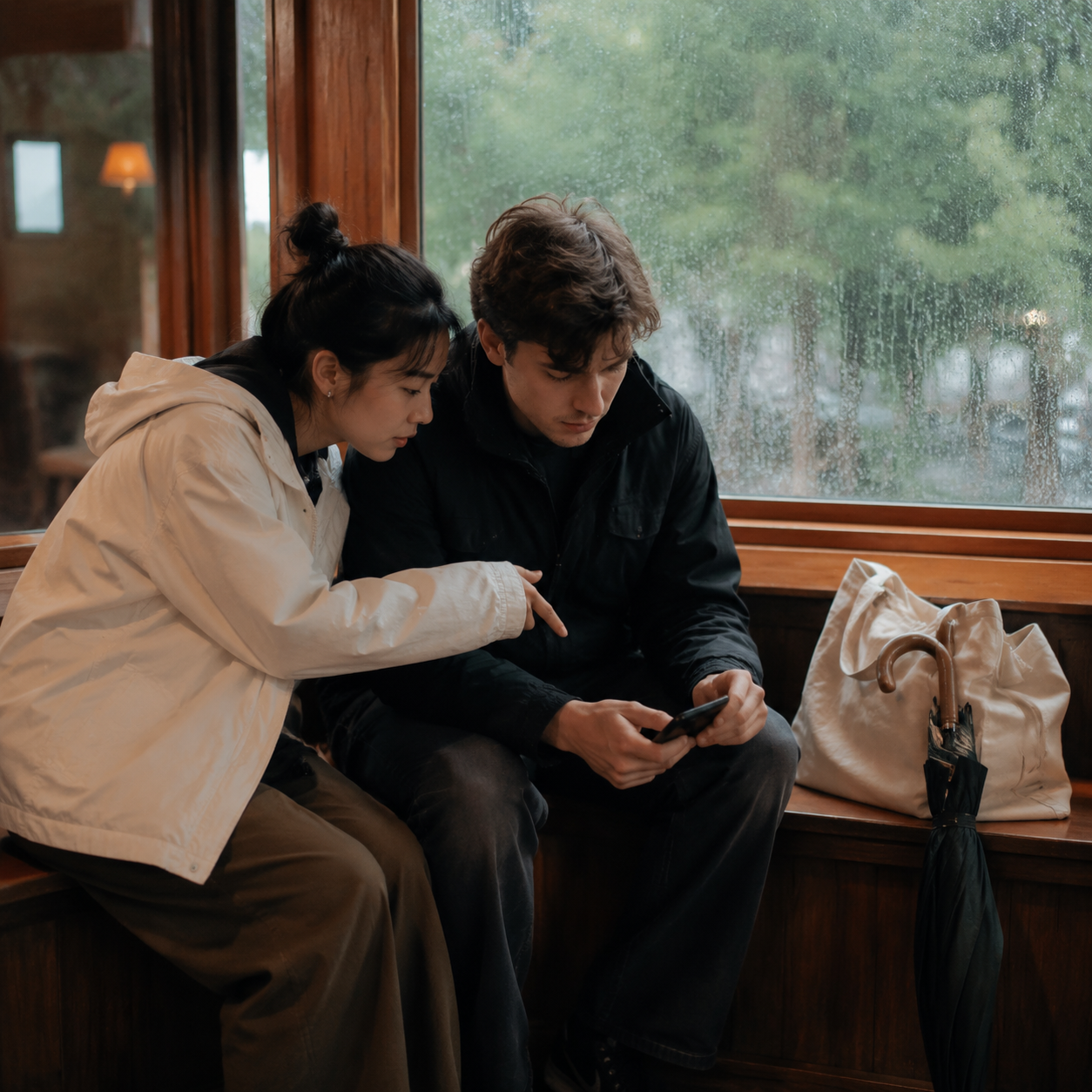
我们在一家小面馆停下,店面不大,玻璃上还有雨痕。店主是一位说话很快的中年女人,她见我们站在门口看菜单,就招呼我们进来避一避湿气。林然点了皮肚面,我点了小碗馄饨。店主端碗时问我是不是游客,我点头,她说南京下过雨别急着去河边,先吃点热的,路上慢慢走,灯晚一点也好看。她的提醒比任何旅行软件都具体,因为她知道这条路雨后哪里滑,哪里有风,哪里晚上人多。馄饨汤很烫,葱花浮在表面,我用勺子轻轻推开,热气把眼镜熏出一层白雾。那一刻,我不再觉得改路线是失败。
We stopped at a small noodle shop with a narrow storefront and rain marks still on the glass. The owner was a middle-aged woman who spoke quickly. Seeing us stand at the door reading the menu, she invited us in to escape the damp air. Lin Ran ordered pork skin noodles, and I ordered a small bowl of wontons. When the owner brought the bowls, she asked whether I was a tourist. I nodded, and she said that after rain in Nanjing, I should not hurry to the riverbank. I should eat something hot first, then walk slowly, because the lights would still be beautiful later. Her advice was more specific than any travel app, because she knew where the road became slippery after rain, where the wind blew, and where crowds gathered at night. The wonton soup was hot, chopped scallions floated on the surface, and as I gently pushed them aside with my spoon, steam covered my glasses with a white mist. In that moment, I no longer felt that changing the route was a failure.
吃完出来,天色已经转成深蓝。我们没有叫车,而是走到最近的地铁站,准备坐两站再换步行。地铁口的人流比雨停时更多,伞面互相碰到,地面上有一串串水印。站口工作人员用拖把把台阶边的水推开,一边提醒大家扶好扶手。林然说,这就是南京的另一种慢,不是让城市停下来,而是让人知道在湿滑的台阶前该慢。我们站在入口外等一拨人先下去,我看见一个父亲把孩子的书包拎起来,另一只手护着孩子后背。没有人拍照,也没有人停留,可这些动作构成了雨后城市真正的纹理。
When we came out after eating, the sky had turned deep blue. We did not call a car. Instead, we walked to the nearest metro station, planning to ride two stops and then continue on foot. The crowd at the entrance was larger than when the rain first stopped; umbrellas brushed against one another, and trails of water marked the ground. A station worker used a mop to push water away from the edge of the steps while reminding everyone to hold the handrail. Lin Ran said this was another kind of slowness in Nanjing: not making the city stop, but making people know when to slow down before wet steps. We stood outside the entrance and waited for one group to descend first. I saw a father lift his child's schoolbag with one hand and protect the child's back with the other. Nobody photographed it, and nobody paused for long, yet these movements formed the true texture of the city after rain.
在地铁里,我打开手机看原来的行程,发现上面还排着三个地点。它们突然显得有些陌生,像另一个更紧张的自己留下的清单。我把其中两个删掉,只保留秦淮河边的散步。列车穿过隧道时,车窗映出我们疲惫但松弛的脸。对面坐着一位拎菜的阿姨,塑料袋里露出一把青菜和一块豆腐。她看见我盯着线路图,主动告诉我们在哪站下更近,还补了一句,下去以后别跟人流急着走,沿着小路过去更舒服。她说完就低头看手机,像只是顺手递给陌生人一把小伞。我把她的话记在地图备注里,这一次不是为了追赶,而是为了少走拥挤的路。
On the metro, I opened the original itinerary on my phone and saw that three places were still listed. They suddenly looked unfamiliar, like a checklist left by another, more anxious version of myself. I deleted two of them and kept only the walk along the Qinhuai River. As the train passed through the tunnel, the window reflected our tired but relaxed faces. Across from us sat an auntie carrying groceries, with a bundle of greens and a block of tofu visible through a plastic bag. Seeing me look at the route map, she told us which station would be closer and added that after getting off, we should not hurry with the crowd, but take the smaller road because it would be more comfortable. After speaking, she lowered her head to her phone, as if she had simply handed a small umbrella to strangers in passing. I saved her advice in the map notes, this time not to chase time but to avoid the crowded road.
出站后,风里有河水的潮气。雨后的石栏杆摸上去冰凉,沿街店铺的灯一盏盏亮起来,照在湿地面上,比晴天多了一层散开的光。秦淮河边的人不少,但因为地面潮湿,大家走得都比平时慢。有人扶着老人,有人把伞横过来替同伴挡树上掉下的水,有人站在桥上拍照却很快让出位置。我们没有挤到最热闹的灯下,而是沿着河边往人少的方向走。林然说,南京最好的时候常常在热门地点旁边一点,不远,却少一点用力。我看着河面上的灯影被水纹拉长,觉得这句话像是专门说给今天的我听的。
After leaving the station, the wind carried moisture from the river. The stone railing after rain felt cold to the touch, and shop lights along the street came on one by one, shining on the wet ground with a more scattered glow than on clear days. There were many people beside the Qinhuai River, but because the ground was damp, everyone walked more slowly than usual. Some supported elderly relatives, some held umbrellas sideways to shield companions from water falling from trees, and some took photos on the bridge but quickly gave up their spot. We did not squeeze beneath the brightest lights. Instead, we followed the river toward a quieter direction. Lin Ran said Nanjing's best moments are often just beside the popular places, not far away, but with less force. Watching the reflections of lights stretch across the rippled water, I felt that her words were meant especially for me that day.
我们在一座小桥边停了很久。桥下有游船经过,船上的讲解声被水面和夜风揉得断断续续。岸边一家糖芋苗店门口排着短队,锅里的甜香飘过来。一位店员把刚擦干的木凳搬到屋檐下,招呼客人坐得靠里一点,免得树上滴水。她看见我望着桥发呆,笑着说,雨后这里比平时亮,因为地上也会反光。她说得很轻,却让我重新看向脚下。果然,灯不只在河里,也在每一块湿石板上。所谓景色并不是远处才有,它就在你愿意低头看一眼的地方。
We stopped for a long time beside a small bridge. A tour boat passed beneath it, and the guide's voice on board was broken into fragments by the water and night wind. A short queue stood outside a sweet taro soup shop on the bank, and a warm sugary scent drifted from the pot. A shop assistant moved a freshly wiped wooden bench under the eaves and invited customers to sit farther inside so water would not drip on them from the trees. Seeing me stare at the bridge, she smiled and said this place was brighter after rain because the ground reflected light too. She spoke softly, but her words made me look down again. Sure enough, the lights were not only in the river; they were also on every wet stone slab. Scenery is not found only in the distance. It is also wherever you are willing to lower your head and look.
那晚我没有完成原来的计划,却记住了更多细节。上海路地铁口的水洼,咖啡店员擦椅子的手,修鞋铺灯下的皮鞋,面馆老板端来的热汤,地铁工作人员推水的拖把,拎菜阿姨给的路线建议,秦淮河边木凳上的雨点。这些东西没有一个会被印在旅游手册封面上,却合在一起成为我对南京最清晰的记忆。赶路时,我只是在收集地点;慢走时,我开始收集人的动作、空气的味道和城市给出的细小照顾。它们没有让我少看南京,反而让我看见一个更完整的南京。
That night I did not complete the original plan, yet I remembered more details. The puddle outside the Shanghai Road metro exit, the café worker's hand wiping chairs, the leather shoes under the lamp in the repair shop, the hot soup carried by the noodle shop owner, the mop pushing water at the metro entrance, the route advice from the grocery-carrying auntie, and the raindrops on wooden benches beside the Qinhuai River. None of these would be printed on the cover of a travel brochure, yet together they became my clearest memory of Nanjing. When rushing, I was only collecting locations. When walking slowly, I began collecting people's movements, the smell of the air, and the small care the city offered. They did not make me see less of Nanjing; they helped me see a more complete Nanjing.
回酒店的路上,林然问我,如果明天还下雨,还会不会把行程排得那么满。我想了一会儿,说不会了,但也不是完全不计划。我会先看天气,再看地铁距离,把室内和室外地点分开,给每段路留出可以停下来的时间。她点头,说慢走不是没有方向,而是给方向留一点呼吸。这个说法我很喜欢。过去我以为旅行的效率来自把时间塞满,现在才知道,有些城市不适合被塞满,南京尤其如此。它的历史、树影、雨水和生活声响都需要缝隙,如果你把每一分钟都压紧,它们就没有地方进来。
On the way back to the hotel, Lin Ran asked whether I would still pack the schedule so tightly if it rained again the next day. I thought for a while and said no, but that did not mean I would stop planning entirely. I would check the weather first, then the metro distance, separate indoor and outdoor places, and leave time in each segment for stopping. She nodded and said walking slowly does not mean lacking direction; it means giving direction a little room to breathe. I liked that way of putting it. I used to think travel efficiency came from filling time completely. Now I know some cities are not suited to being filled completely, and Nanjing is especially like that. Its history, tree shadows, rain, and sounds of daily life all need gaps. If you press every minute too tightly, they have no room to enter.
第二天早晨,雨没有再下,阳光从窗帘缝里照进来。我重新打开地图,把目的地减少到两个,中间留出一段没有名字的步行时间。早餐店阿姨把鸭油烧饼装进纸袋时,提醒我趁热吃,凉了就不香。我站在店门口咬下一口,芝麻和油香一起散开,街上的梧桐叶已经干了一半,仍有几颗水珠挂在叶尖。我没有急着走到下一个景点,而是沿着人行道慢慢吃完。昨天雨后的经验还留在身体里,让我知道城市不是一张需要快速打勾的表,而是一段需要用脚步慢慢读的文字。
The next morning, the rain did not return, and sunlight came through the gap in the curtains. I opened the map again and reduced the destinations to two, leaving an unnamed walking period between them. At a breakfast shop, the auntie packed duck-oil sesame pastries into a paper bag and reminded me to eat them while hot, because they would lose fragrance when cold. I stood at the door, took a bite, and the smell of sesame and oil spread together. The plane tree leaves along the street were already half dry, though a few drops still hung from their tips. I did not hurry toward the next attraction. I walked slowly along the sidewalk and finished eating. The lesson from the rainy day remained in my body, telling me that a city is not a checklist to tick off quickly, but a text to read slowly with one's steps.
我后来再去其他中国城市,也会想起南京雨后的那次改道。在成都,我因为一场小雨多坐了半小时茶馆;在广州,我放弃赶去第三个市场,沿着骑楼下看店主收摊;在青岛,我没有追着日落跑,而是在湿滑的坡路上慢慢下行。南京给我的不是一个只适用于南京的建议,而是一种判断:当天气、路面、人流和身体状态都提醒你放慢时,最好听一听。旅行计划可以是骨架,但真正的经历长在骨架之间。那些临时停下来的几分钟,常常比勉强赶到的一个地点更有生命力。
When I later visited other Chinese cities, I often remembered that changed route after rain in Nanjing. In Chengdu, a light rain made me sit in a teahouse for half an hour longer. In Guangzhou, I gave up rushing to a third market and watched shop owners close up beneath arcade buildings. In Qingdao, I did not chase the sunset but walked slowly down a slippery slope. Nanjing did not give me advice that applied only to Nanjing. It gave me a way of judging: when weather, road surface, crowds, and your own body all tell you to slow down, it is better to listen. A travel plan can be a skeleton, but real experience grows between the bones. Those few minutes of temporary stopping often have more life than a place reached by force.
如果第一次来南京的朋友问我雨天怎么安排,我会告诉他,带一双不怕湿的鞋,别把地铁换乘时间算得太紧,梧桐路段值得多留一点时间。雨停后先别急着钻进车里,看看树、台阶、屋檐和路边小店;如果店员或同行人提醒你慢一点,就真的慢一点。老门东、秦淮河、博物馆和书店都值得去,但它们不必在同一天被全部完成。南京的好,有时在去这些地方的路上,在一碗热汤上方的白雾里,在地铁口工作人员的一声小心里,在雨后石板反出来的一点灯光里。你走慢了,才会发现这些并不是附属品。
If a friend visiting Nanjing for the first time asks how to arrange a rainy day, I would tell him to wear shoes that can handle damp ground, not to calculate metro transfers too tightly, and to leave extra time for streets lined with plane trees. After the rain stops, do not rush into a car. Look at the trees, steps, eaves, and small roadside shops. If a shop assistant or companion reminds you to slow down, truly slow down. Laomendong, the Qinhuai River, museums, and bookstores are all worth visiting, but they do not need to be completed on the same day. Nanjing's goodness is sometimes on the way to these places: in the white steam above a bowl of hot soup, in a station worker's warning to be careful, and in a little light reflected by rain-wet stone. Only when you slow down will you discover that these are not accessories.
那次雨后的南京没有给我拍到最完美的照片。天空不够蓝,衣角有点潮,鞋底沾了泥,原计划上还有几个没有完成的空白。但它给了我一种更可靠的旅行方式:当城市因为雨水变慢时,我也跟着慢下来;当路边的人用一句普通提醒把经验递给我时,我认真接住;当地图上的路线和眼前的街巷发生冲突时,我允许自己选择眼前。晚上回到酒店,我把原来的行程表删掉,只留下几条短短的记录。第一条写着:上海路雨后,梧桐很亮。第二条写着:不要赶,路面会告诉你速度。
That rainy Nanjing afternoon did not give me the most perfect photos. The sky was not blue enough, my coat hem was damp, my soles carried mud, and several blanks remained on the original itinerary. But it gave me a more reliable way to travel: when the city slows because of rain, I slow with it; when people by the road hand me experience through an ordinary reminder, I receive it seriously; when the route on the map conflicts with the lanes before my eyes, I allow myself to choose what is before me. Back at the hotel that night, I deleted the original schedule and kept only a few short notes. The first read: After rain on Shanghai Road, the plane trees were bright. The second read: Do not hurry; the road surface will tell you the speed.
现在,只要闻到雨后梧桐叶和湿砖混在一起的味道,我就会想起那天下午四点十七分的地铁口。一个外国游客站在那里,握着还温热的豆浆,急着把南京变成几个坐标;一个朋友收起伞,叫他慢点;一个店员提醒砖缝很滑;一座城市没有用宏大的方式欢迎他,只是把水珠、树影、热汤和灯光一点点摆在路上。也正因为这样,我记住了南京。不是因为我去了最多地方,而是因为雨停以后,我终于把赶路改成了慢走,让这座城市有机会走近我。
Now, whenever I smell plane leaves and wet bricks after rain, I remember the metro exit at 4:17 that afternoon. A foreign traveler stood there holding still-warm soy milk, eager to turn Nanjing into several coordinates. A friend folded her umbrella and told him to slow down. A shop assistant warned that the brick seams were slippery. A city did not welcome him in a grand way; it simply placed water drops, tree shadows, hot soup, and lamplight along the road little by little. That is exactly why I remember Nanjing. Not because I visited the most places, but because after the rain stopped, I finally changed rushing into slow walking, giving the city a chance to come closer to me.
- 在平遥城墙内看一座县城醒来 | Watching Pingyao Wake Inside Its City Walls
- 带爸妈游中国七日:一份不累不赶的行程单 | 7 Days in China with Aging Parents: A No-Rush Itinerary
- 在重庆住满一个月以后,镜头终于开始拍到景点以外的日常骨架 | After a Full Month in Chongqing, the Camera Finally Catches the Everyday Framework Beyond the Sights
- 中式婚礼服饰 | Chinese Wedding Attire
- 广州夜里最好走的那条线,往往不是最热闹的,而是最知道什么时候该坐下的 | Guangzhou’s Best Night Route Is Rarely the Loudest One but the One That Knows When to Sit Down
- 景德镇陶瓷伴手礼选购指南 | Jingdezhen Ceramics Souvenir Buying Guide
- 把中国拍成高铁大线以后,最值钱的内容其实藏在换乘和转场里 | Once China Becomes a High-Speed Rail Arc on Camera, the Real Value Hides in Transfers and Transitions
- 太原老街的灯不抢眼,却把回家、吃面和晚风都照得刚刚好 | Taiyuan’s Old-Street Lights Are Modest, Yet They Hold Homecoming, Noodles, and Night Wind Just Right
- 石板街尽头那杯毛尖冷泡茶,让我慢下来 | A Cold Brew of Maojian at the End of a Stone Street Slowed Me Down
- 我在上海学会先看地铁口周边,再决定在哪家咖啡馆坐下 | In Shanghai I Learned to Read the Metro Exit Area Before Choosing a Café
Comments (0)