
中国书法艺术 | The Art of Chinese Calligraphy
中国书法艺术 | The Art of Chinese Calligraphy
书法在中国不只是写字——它是哲学、是修行、是三千年文明的视觉载体。一支毛笔、一块砚台、一张宣纸,能让你触碰到中国文化最深处的那根弦。
In China, calligraphy is far more than handwriting — it's philosophy, meditation, and the visual carrier of three thousand years of civilization. A brush, an inkstone, a sheet of Xuan paper: these simple tools can connect you to the deepest chord of Chinese culture.
三千年的笔墨史 / Three Thousand Years of Ink
中国书法的历史从甲骨文开始。商朝(约公元前1600年)的占卜师把文字刻在龟甲和兽骨上,那些歪歪扭扭却充满力量的刻痕,是汉字最早的祖先。到了秦朝,秦始皇统一六国文字,书写才有了统一的标准。
Chinese calligraphy begins with oracle bone inscriptions. Shang Dynasty diviners (around 1600 BCE) carved characters into turtle shells and animal bones — those angular, forceful marks are the earliest ancestors of Chinese characters. When Qin Shi Huang unified the six kingdoms, he also standardized the writing system, giving calligraphy its first common foundation.
书法在中国传统文化里的地位极高——它被列在绘画之上,是文人必须掌握的技艺。科举考试要考书法,皇帝的诏书要用最工整的楷书,连寺庙的匾额、园林的楹联,都是书法的舞台。2009年,中国书法被联合国教科文组织列入人类非物质文化遗产。
Calligraphy holds the highest place in traditional Chinese culture — ranked above painting, it was a skill every scholar-official had to master. Imperial examinations tested calligraphy; imperial edicts required the most precise regular script; temple plaques and garden couplets were all stages for the art. In 2009, UNESCO inscribed Chinese calligraphy on the Intangible Cultural Heritage of Humanity list.
文房四宝 / The Four Treasures of the Study
学书法,先认识工具。"文房四宝"是笔、墨、纸、砚,每一样都有自己的产地和讲究。
To learn calligraphy, start with the tools. The "Four Treasures of the Study" (文房四宝, Wénfáng Sìbǎo) are brush, ink, paper, and inkstone — each with its own origin and standards.
毛笔(湖笔)——最好的毛笔产自浙江湖州,称"湖笔",用羊毛、狼毫或兔毫制成。笔头的弹性和吸墨量决定了书写的质感。一支好的湖笔,笔尖聚拢时细如针,展开后饱满圆润。
Brush (Hu Brush) — The finest brushes come from Huzhou, Zhejiang, known as "Hu brushes," made from goat hair, weasel hair, or rabbit fur. The spring and ink-holding capacity of the bristles determine the quality of each stroke. A good Hu brush tapers to a needle-fine point when gathered, yet opens full and round when loaded with ink.
墨(徽墨)——传统墨锭产自安徽,称"徽墨",用松烟或油烟制成,研磨时加水,墨汁浓淡可以自己控制。现在也有瓶装墨汁,方便但少了研墨的仪式感。
Ink (Hui Ink) — Traditional ink sticks come from Anhui province, called "Hui ink," made from pine soot or oil soot. You grind the stick on an inkstone with water, controlling the concentration yourself. Bottled ink is available now and more convenient, but you lose the meditative ritual of grinding.
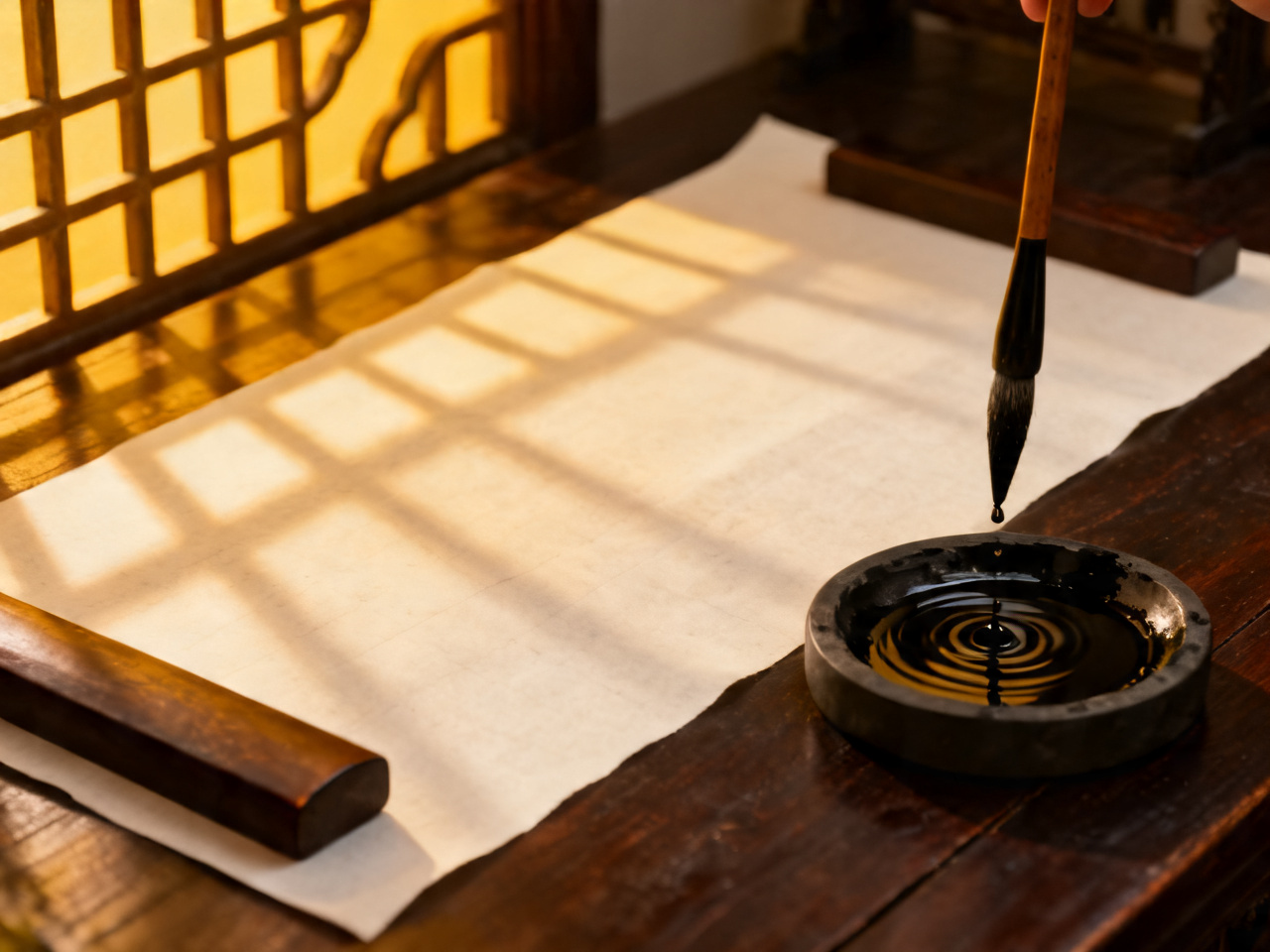
宣纸——产自安徽泾县,用青檀树皮制成,能吸墨而不晕染,保存千年不变色。一张好的宣纸,落笔时能感受到墨迹在纤维间渗透的那种微妙阻力。
Xuan Paper — Made in Jing County, Anhui from blue sandalwood bark, it absorbs ink without bleeding and can last over a thousand years without yellowing. On a good sheet of Xuan paper, you can feel the subtle resistance as ink seeps through the fibers with each stroke.
砚台(端砚)——最名贵的砚台是广东肇庆出产的"端砚",石质细腻,研出的墨汁光泽好。一方好砚可以传家,价格从几百元到数万元不等。
Inkstone (Duan Inkstone) — The most prized inkstones are "Duan inkstones" from Zhaoqing, Guangdong, with fine-grained stone that produces lustrous ink. A fine inkstone can be passed down through generations, ranging in price from a few hundred to tens of thousands of yuan.
五种书体 / Five Script Styles
中国书法有五种主要字体,每种都有自己的时代背景和美学气质。
Chinese calligraphy has five major script styles, each with its own historical context and aesthetic character.
篆书——最古老的字体,线条圆润均匀,像是在纸上画图案。今天主要用于刻印章(名章)。如果你在中国定制一枚刻有自己名字的印章,刻的就是篆书。
Seal Script (篆书, zhuànshū) — The oldest style, with smooth, even lines that look almost like drawn patterns. Today it's mainly used for carving personal name seals (印章). If you have a seal carved with your name in China, it will almost certainly be in seal script.
隶书——汉朝发展成熟,字形扁宽,横画末端有"蚕头雁尾"的特征挑法。看起来稳重大气,常见于博物馆展牌和仿古建筑的题字。
Clerical Script (隶书, lìshū) — Matured during the Han Dynasty, with wide, flat characters and distinctive "silkworm head, wild goose tail" horizontal strokes. It looks dignified and grand, commonly seen on museum signs and inscriptions on historical-style buildings.
楷书——最规范的字体,也是中国孩子学写字的起点。唐朝达到顶峰,颜真卿的"颜体"和柳公权的"柳体"是两座高峰。楷书方正端庄,每一笔都有明确的起收笔规范。
Regular Script (楷书, kǎishū) — The most standardized style and the starting point for Chinese children learning to write. It peaked in the Tang Dynasty; Yan Zhenqing's "Yan style" and Liu Gongquan's "Liu style" are its two great summits. Regular script is upright and dignified, with precise rules for beginning and ending each stroke.
行书——楷书的流动版,书写速度更快,笔画之间有连带。日常书写和书信往来用的就是行书。王羲之的《兰亭集序》是行书的最高峰,被称为"天下第一行书"。
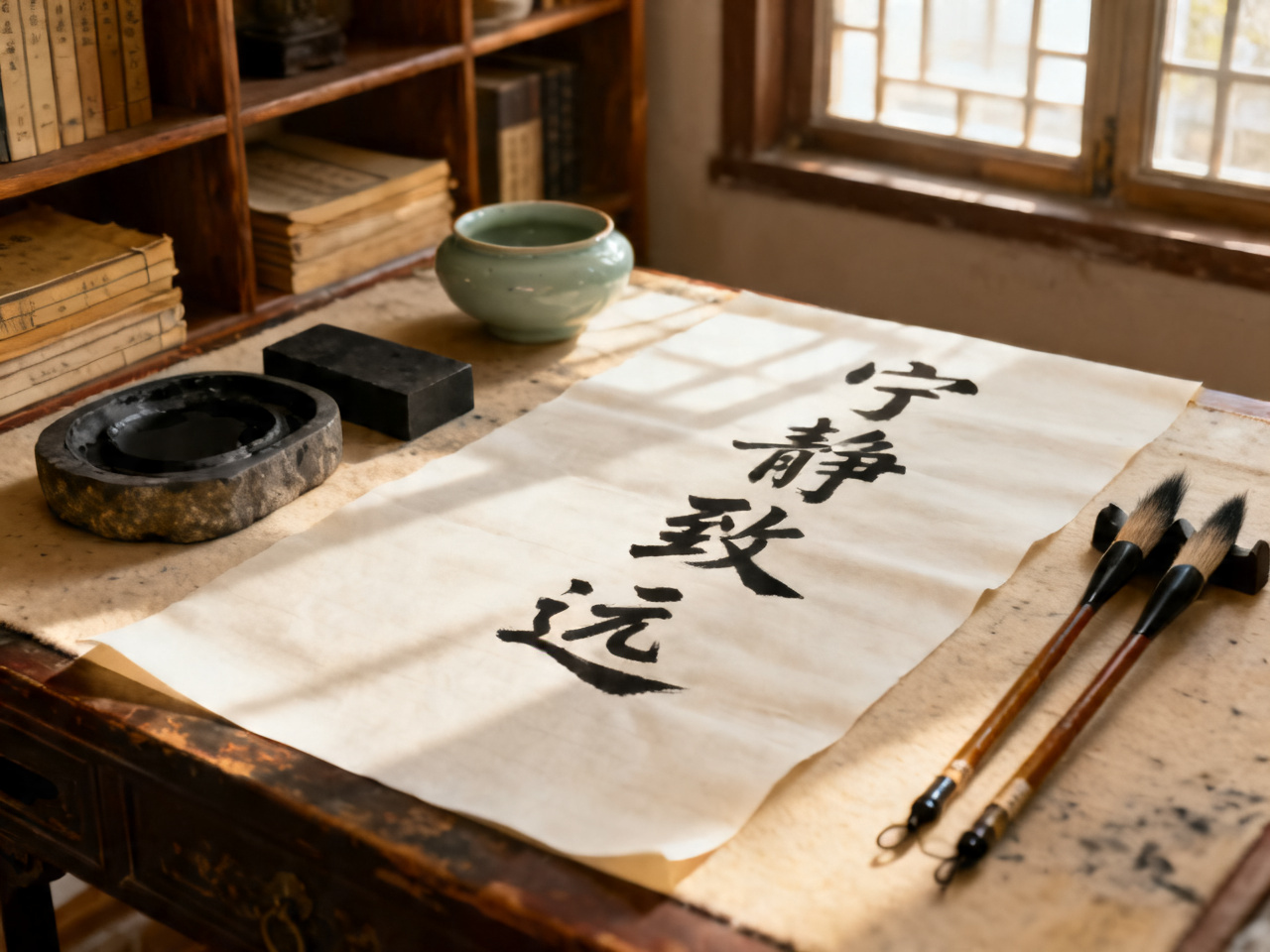
Running Script (行书, xíngshū) — A fluid version of regular script, written faster with connected strokes. This is what people use for everyday writing and correspondence. Wang Xizhi's "Preface to the Orchid Pavilion" is the pinnacle of running script, called "the finest running script under heaven."
草书——最自由、最抽象的字体,笔画高度简化,字与字之间连绵不断。外行人几乎看不懂,但在书法家眼里,草书是最能表达情绪和个性的字体。唐朝的张旭被称为"草圣",据说他喝醉后写的草书最好。
Cursive Script (草书, cǎoshū) — The freest and most abstract style, with highly simplified strokes flowing continuously between characters. Non-specialists can barely read it, but to calligraphers it's the style most capable of expressing emotion and personality. Tang Dynasty master Zhang Xu was called the "Sage of Cursive Script" — legend says his best work came when he was drunk.
书圣王羲之 / Wang Xizhi: The Sage of Calligraphy
说书法,绕不开王羲之(303—361年)。他是东晋人,被后世尊为"书圣",地位相当于书法界的孔子。
No discussion of calligraphy can bypass Wang Xizhi (303–361 CE). A man of the Eastern Jin Dynasty, he is revered as the "Sage of Calligraphy" — the Confucius of the art form.
公元353年,王羲之在浙江绍兴的兰亭举办了一场文人雅集,42位文人在曲水边饮酒赋诗。酒后,王羲之乘兴写下了《兰亭集序》——324个字,28个"之"字,每一个写法都不同。这篇序文被后世称为"天下第一行书"。
In 353 CE, Wang Xizhi hosted a gathering of scholars at the Orchid Pavilion near Shaoxing, Zhejiang. Forty-two literati drank wine and composed poems beside a winding stream. Inspired by the wine, Wang Xizhi wrote the "Preface to the Orchid Pavilion" — 324 characters, including 28 instances of the character "之" (zhī), each written differently. This preface has been called "the finest running script under heaven" ever since.
传说王羲之第二天酒醒后,想重写这篇序文,却怎么也写不出当时的神韵。唐太宗李世民极爱此帖,据说死后将真迹带入了昭陵陪葬——我们今天看到的都是摹本。
Legend says Wang Xizhi tried to rewrite the preface the next day when sober, but could never recapture its spirit. Emperor Taizong of Tang loved it so much that he allegedly had the original buried with him in his tomb — everything we see today is a copy.
如果你去绍兴,可以参观兰亭景区,每年农历三月初三还有书法节,书法爱好者从全国各地赶来,在曲水边重现当年的雅集。
If you visit Shaoxing, you can tour the Orchid Pavilion scenic area. Every year on the 3rd day of the 3rd lunar month, a calligraphy festival draws enthusiasts from across the country to reenact the original gathering beside the winding stream.
去哪里体验书法 / Where to Experience Calligraphy
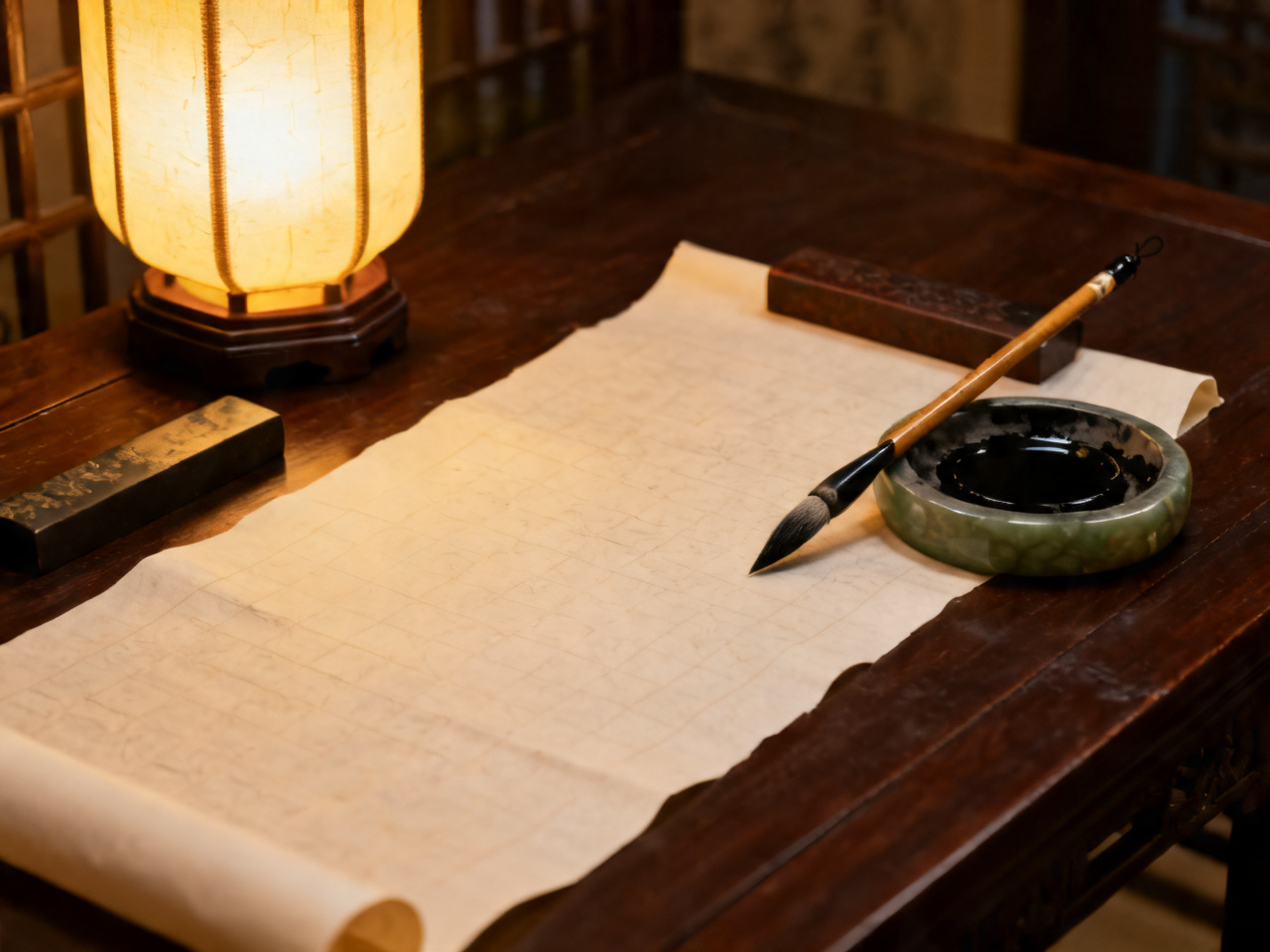
西安碑林博物馆——建于1087年,收藏了4000多块石碑,跨越两千年,几乎囊括了所有书法大家的真迹拓本。其中"开成石经"用114块石碑刻下了65万字的儒家经典。游客可以在这里购买拓片作为纪念品——把宣纸覆在石碑上,用墨拓出字迹,带走一份千年前的笔墨。
Xi'an Stele Forest Museum (碑林博物馆) — Founded in 1087 CE, it houses over 4,000 stone steles spanning two thousand years, containing rubbings of nearly every great calligrapher's work. The "Kaicheng Stone Classics" alone fill 114 steles with 650,000 characters of Confucian texts. Visitors can buy stone rubbings (拓片) as souvenirs — Xuan paper is pressed onto the stele and rubbed with ink, producing a copy of characters carved a thousand years ago.
北京琉璃厂——北京最著名的文化街,500年历史,专卖文房四宝、字画、古籍。荣宝斋(1672年创立)和戴月轩是买毛笔的好去处。这里也有书法工作坊,可以预约体验。
Beijing Liulichang Street — Beijing's most famous cultural street, 500 years old, specializing in the Four Treasures, paintings, and antique books. Rongbaozhai (est. 1672) and Daiyuexuan are excellent places to buy brushes. Calligraphy workshops here can be booked for hands-on experience.
书法工作坊——北京、上海、杭州、西安的很多文化中心和胡同民宿都提供1—2小时的书法体验课,价格约100—300元。老师会先教你握笔姿势和基本笔画,然后让你写自己的中文名字。这是送给自己最好的旅行纪念。
Calligraphy Workshops — Cultural centers and hutong guesthouses in Beijing, Shanghai, Hangzhou, and Xi'an offer 1–2 hour calligraphy experience classes for around 100–300 RMB. The teacher will first show you how to hold the brush and practice basic strokes, then guide you to write your own Chinese name. It makes for one of the best personal souvenirs of any China trip.
买什么带回家 / What to Buy and Take Home
入门套装(笔墨纸砚四件套)在琉璃厂或各地文化街大约50—150元,适合自用或送礼。如果想买好一点的,单支湖笔30—500元不等,一刀宣纸(100张)50—300元。
A beginner's set (brush, ink, paper, inkstone) costs around 50–150 RMB at Liulichang or cultural streets elsewhere — good for personal use or as a gift. For better quality, individual Hu brushes range from 30 to 500+ RMB; a pack of 100 sheets of Xuan paper runs 50–300 RMB.
最有纪念意义的是定制印章——刻上你的中文名字或一句喜欢的话,30分钟左右完成,价格50—500元。这枚印章可以盖在你写的书法作品上,也可以盖在明信片、书页上,是独一无二的个人符号。
The most meaningful souvenir is a custom name seal — carved with your Chinese name or a phrase you love, ready in about 30 minutes, costing 50–500 RMB. You can stamp it on your own calligraphy, on postcards, or on book pages — a unique personal symbol that's entirely yours.
书法不是一天能学会的艺术,但一次认真的体验足以让你理解:为什么中国人说,看一个人的字,就能看出这个人的性格。
Calligraphy is not an art you can master in a day, but one genuine experience is enough to understand why Chinese people say: look at a person's handwriting, and you can see their character.
延伸阅读 / Related Reads
- 走进中国56个民族:旅行者的少数民族文化指南 | Exploring China's 56 Ethnic Groups: A Traveler's Guide to Minority Cultures
- 哈尔滨冬天的第一口热汤,救了我冻僵的旅行计划 | The First Bowl of Hot Soup in Harbin Saved My Frozen Travel Plan
- 东北三省冬季8日游 | 8-Day Northeast China Winter Tour
- 我站到皮影戏幕布后面的一晚 | The Night I Stepped Behind the Shadow Puppetry Screen
- 螺蛳粉:一碗臭出国界的粉 | Luosifen: The Stinky Noodle That Conquered the World
- 我在中国县城汽车站学会先看人群走向,再找检票口 | I Learned at a Chinese County Bus Station to Watch Where People Flow Before Looking for the Gate
- 冷门但值得去的中国小城 | Hidden Gem Cities in China Worth Visiting
- 元旦跨年旅游目的地盘点 | New Year's Eve Travel Destinations Roundup
- 杭州下雨的下午,孩子第一次主动找陌生小朋友一起玩 | On a Rainy Afternoon in Hangzhou, My Child Asked a Stranger to Play Together
- 五月黄山脚下的一场雨,让本人第一次明白赶景点不如先安顿情绪 | A Rainy May Day at the Foot of Huangshan Taught Me to Settle My Mood Before Chasing Views
Comments (0)