
中医传统疗法指南 | Traditional Chinese Medicine
中医:中国传统医学的智慧 | Traditional Chinese Medicine: Ancient Wisdom, Modern Journey
中医不只是针灸和草药——它是一套完整的生命哲学,把人体看作小宇宙,把健康看作阴阳平衡的动态状态。在中国旅行,你会在药店、茶馆、公园晨练的老人身上,随处看到这套哲学的痕迹。
TCM is far more than acupuncture and herbs — it's a complete philosophy of life that views the human body as a microcosm, and health as the dynamic balance of yin and yang. Travel through China and you'll find traces of this philosophy everywhere: in pharmacies, teahouses, and the elderly doing morning exercises in the park.
两千年的医学传承 / Two Thousand Years of Medical Tradition
中医的历史至少有两千五百年。《黄帝内经》成书于公元前2世纪,是中医理论的奠基之作,至今仍是中医院校的必读经典。书中提出了气、阴阳、五行、经络等核心概念,构建了一套完全不同于西方医学的身体观。
TCM has a history of at least 2,500 years. The Huangdi Neijing (Yellow Emperor's Classic of Medicine), compiled around the 2nd century BCE, is the foundational text of TCM theory and remains required reading in TCM colleges today. It introduced core concepts — qi, yin-yang, the five elements, and meridians — building a view of the body entirely different from Western medicine.
东汉张仲景的《伤寒杂病论》奠定了中医辨证论治的基础;明朝李时珍花了27年写成《本草纲目》,收录了1892种药物,被翻译成多国语言,影响了全球植物学和药学的发展。
Zhang Zhongjing's Treatise on Cold Damage (Eastern Han Dynasty) established the foundation of TCM's pattern-differentiation approach to treatment. Li Shizhen of the Ming Dynasty spent 27 years writing the Compendium of Materia Medica, cataloguing 1,892 medicinal substances — it was translated into dozens of languages and influenced botany and pharmacology worldwide.
核心理念 / Core Concepts
气(Qì)——中医认为,气是生命的基本能量,流动于全身的经络之中。气的充足与流畅决定了健康状态;气虚、气滞、气逆都会导致疾病。西方人有时把气理解为"生命力"或"能量",但它的含义更复杂,既是物质的,也是功能性的。
Qi (气) — TCM holds that qi is the fundamental energy of life, flowing through the body's meridians. The abundance and free flow of qi determines health; deficiency, stagnation, or rebellious qi all cause disease. Westerners sometimes translate qi as "life force" or "energy," but it's more complex — simultaneously material and functional.
阴阳——万物都有阴阳两面:寒热、虚实、内外、动静。健康是阴阳的动态平衡,疾病是失衡的结果。中医治疗的目标不是消灭病原体,而是恢复平衡。
Yin-Yang (阴阳) — Everything has two complementary aspects: cold/hot, deficient/excess, interior/exterior, still/moving. Health is the dynamic balance of yin and yang; disease is the result of imbalance. The goal of TCM treatment is not to eliminate pathogens but to restore balance.
五行——木、火、土、金、水对应五脏(肝、心、脾、肺、肾),五种情志(怒、喜、思、悲、恐),五种味道(酸、苦、甘、辛、咸)。这套对应关系指导着中医的诊断和用药。
Five Elements (五行) — Wood, fire, earth, metal, and water correspond to the five organs (liver, heart, spleen, lung, kidney), five emotions (anger, joy, pensiveness, grief, fear), and five flavors (sour, bitter, sweet, pungent, salty). These correspondences guide TCM diagnosis and treatment.
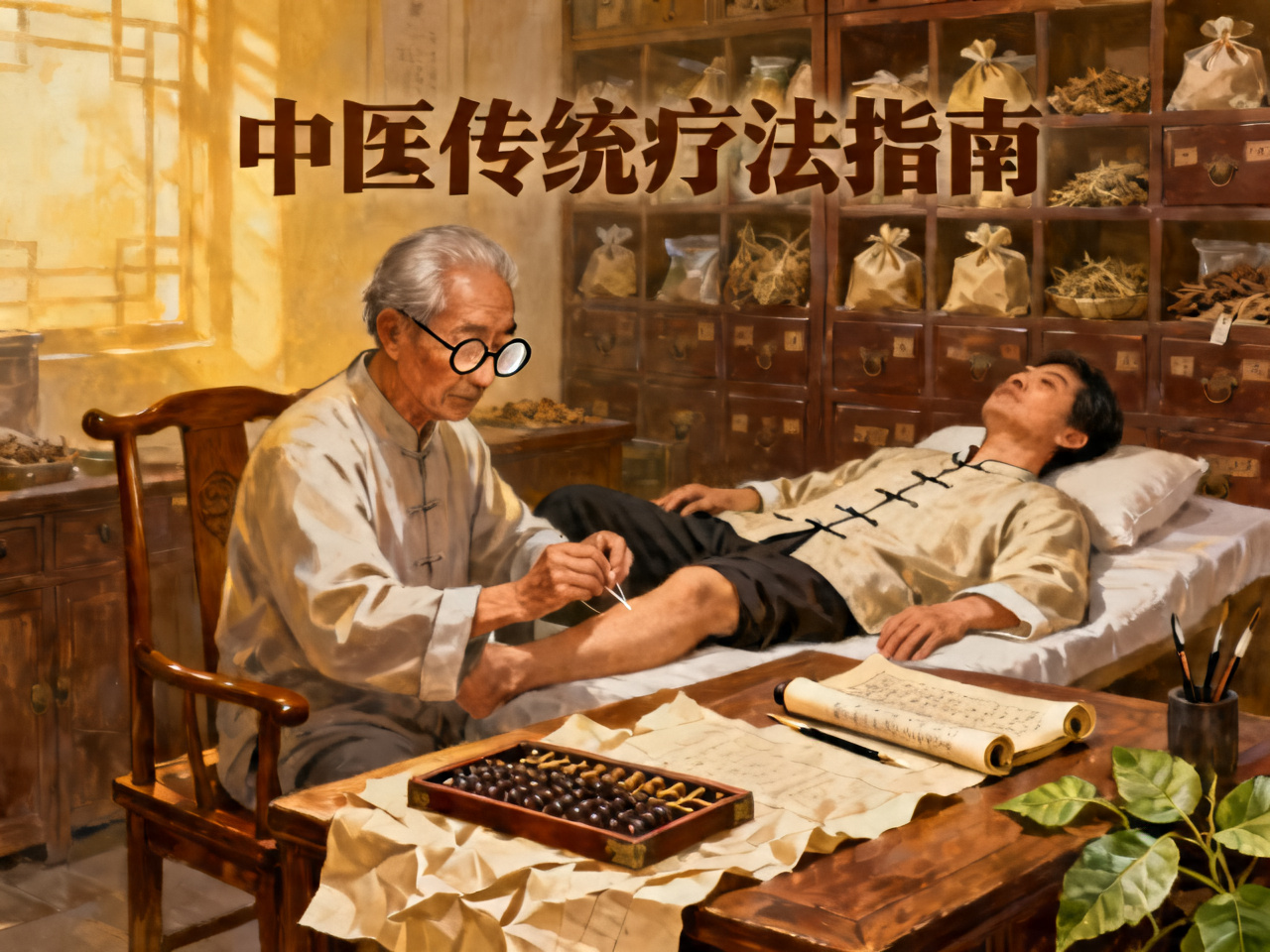
经络——人体有12条主要经络,连接脏腑与体表,是气血运行的通道。针灸和推拿通过刺激经络上的穴位来调节气血。现代医学尚未找到经络的解剖学对应结构,但针灸的临床效果已被大量研究证实。
Meridians (经络) — The body has 12 primary meridians connecting the organs to the body surface, serving as pathways for qi and blood. Acupuncture and tuina massage regulate qi and blood by stimulating acupoints along these meridians. Modern anatomy has yet to find a structural correlate for meridians, but the clinical effects of acupuncture have been confirmed by extensive research.
四大疗法 / Four Major Therapies
针灸——用细如发丝的金属针刺入特定穴位,通过刺激经络来调节气血。一次针灸治疗通常留针20—30分钟,针刺时有酸、麻、胀、重的"得气"感,多数人描述为舒适而非疼痛。针灸对慢性疼痛、偏头痛、失眠、焦虑的疗效已获WHO认可。
Acupuncture (针灸) — Hair-thin metal needles are inserted at specific acupoints to regulate qi and blood through meridian stimulation. A session typically involves 20–30 minutes of needle retention. The "arrival of qi" sensation — soreness, numbness, distension, heaviness — is described by most patients as comfortable rather than painful. The WHO recognizes acupuncture's efficacy for chronic pain, migraines, insomnia, and anxiety.
中药——中药方剂通常由10—20味药材组成,煎煮后服用。常见药材有黄芪(补气)、当归(补血)、枸杞(滋阴)、人参(大补元气)。现代中药也有颗粒剂、丸剂、膏方等剂型,方便日常服用。
Chinese Herbal Medicine (中药) — Herbal formulas typically combine 10–20 ingredients, decocted and drunk as tea. Common herbs include astragalus (tonifying qi), angelica root (nourishing blood), goji berries (nourishing yin), and ginseng (powerfully tonifying original qi). Modern TCM also offers granules, pills, and medicinal pastes for convenient daily use.
推拿——中医按摩,通过手法刺激经络穴位,疏通气血。与西式按摩不同,推拿有明确的治疗目标,常用于颈椎病、腰痛、消化不良等。在中国,推拿诊所遍布大街小巷,价格亲民,一小时约60—200元。
Tuina Massage (推拿) — TCM massage that stimulates meridians and acupoints through manual techniques to move qi and blood. Unlike Western massage, tuina has specific therapeutic goals and is commonly used for cervical spondylosis, lower back pain, and digestive issues. Tuina clinics are found on nearly every street in China, with one-hour sessions costing around 60–200 RMB.
拔罐——将玻璃或竹制罐子通过负压吸附在皮肤上,促进局部气血循环。留下的圆形红印会在几天内消退。2016年里约奥运会上,游泳运动员迈克尔·菲尔普斯身上的拔罐印让这一疗法在西方广为人知。
Cupping (拔罐) — Glass or bamboo cups are suctioned onto the skin to promote local qi and blood circulation. The circular red marks left behind fade within a few days. When swimmer Michael Phelps appeared with cupping marks at the 2016 Rio Olympics, the therapy became widely known in the West overnight.
在中国体验中医 / Experiencing TCM in China
北京同仁堂——创立于1669年,是中国最著名的中药老字号,在全球30多个国家有门店。北京大栅栏的总店保留了清朝风格的装潢,可以在这里抓药、买成药,也可以预约坐诊中医师把脉问诊。
Beijing Tongrentang (同仁堂) — Founded in 1669, China's most famous traditional pharmacy with stores in 30+ countries. The flagship store in Beijing's Dashilar district retains its Qing Dynasty décor. You can fill herbal prescriptions, buy patent medicines, and book a consultation with a TCM physician for pulse diagnosis.
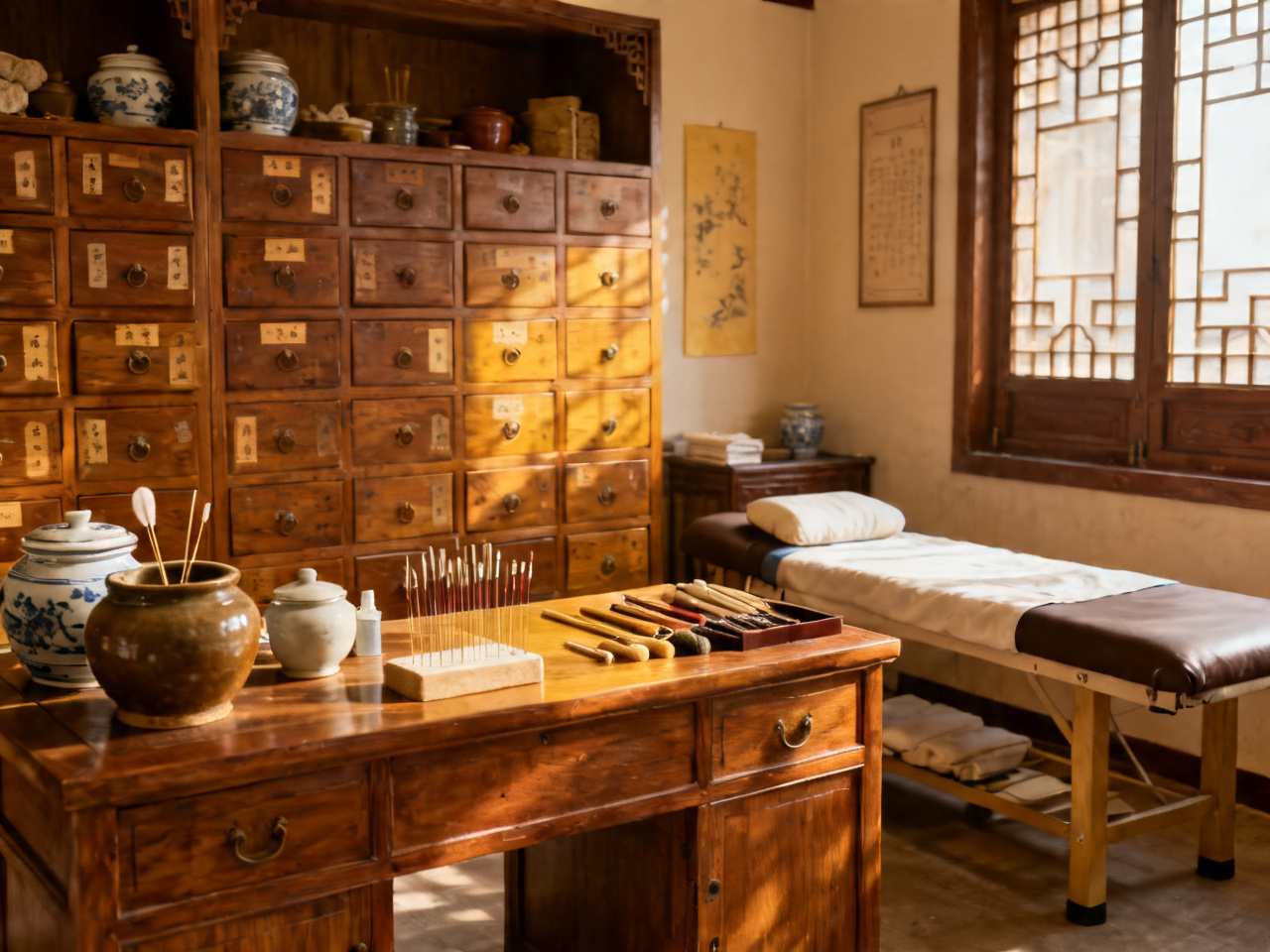
上海中医药博物馆——位于上海中医药大学内,展示了中医两千年的历史文物、药材标本和医疗器具。有英文导览,是了解中医历史的最佳场所之一,门票免费。
Shanghai Museum of TCM — Located within Shanghai University of TCM, it displays 2,000 years of historical artifacts, medicinal specimens, and medical instruments. English guides are available. It's one of the best places to understand TCM history, and admission is free.
成都青城山——道教圣地,也是中医养生文化的重要发源地。山上有道医诊所,提供针灸、推拿、药浴等服务,在山林间接受传统疗法,体验别具一格。
Qingcheng Mountain, Chengdu — A Taoist sacred site and important birthplace of TCM wellness culture. Taoist medicine clinics on the mountain offer acupuncture, tuina, and herbal baths. Receiving traditional therapies amid mountain forests is an experience unlike any other.
旅行者实用指南 / Practical Guide for Travelers
在中国看中医,语言不是障碍——很多大城市的三甲医院中医科都有英文翻译服务,部分专门面向外国人的诊所全程英文接诊。挂号费约20—100元,药费另计。
Language is no barrier to seeing a TCM doctor in China — many top-tier hospitals in major cities have English translation services in their TCM departments, and some clinics cater specifically to foreign patients with full English consultations. Registration fees run 20–100 RMB, with herbal medicine costs separate.
把脉是中医诊断的标志性环节。医生用三根手指按在你的手腕内侧,感受脉象的浮沉、迟数、强弱,从中判断脏腑状态。一次完整的把脉约3—5分钟,医生可能还会看你的舌苔、问你的睡眠和饮食习惯。
Pulse diagnosis (把脉) is the signature moment of a TCM consultation. The doctor places three fingers on the inside of your wrist, sensing the depth, speed, and strength of your pulse to assess organ function. A full pulse reading takes 3–5 minutes; the doctor may also examine your tongue coating and ask about your sleep and eating habits.
带一些中药回家是很多旅行者的选择。枸杞、红枣、菊花茶、铁观音等既是食品也是药材,在超市和药店都能买到,价格实惠,过海关通常没有问题(干燥植物类)。人参、鹿茸等贵重药材出境时需注意目的地国家的进口规定。
Many travelers bring Chinese herbs home. Goji berries, red dates, chrysanthemum tea, and Tieguanyin are both food and medicine — available in supermarkets and pharmacies at affordable prices, and generally fine through customs as dried plant products. For valuable items like ginseng and deer antler, check your destination country's import regulations.
中医不承诺奇迹,但它提供了一种不同的看待身体的方式——把你当作一个整体,而不是一堆需要分别修理的零件。在中国旅行时,哪怕只是走进一家百年老药店,闻一闻那混合着草木香气的空气,也是一次值得的文化体验。
TCM promises no miracles, but it offers a different way of seeing the body — treating you as a whole rather than a collection of parts to be repaired separately. Even if you only step into a century-old pharmacy during your China travels and breathe in that air thick with the fragrance of herbs and wood, it's a cultural experience worth having.
延伸阅读 / Related Reads
- 南甜北咸是个谎言,但也不全是 | "Sweet South, Salty North" Is a Lie — But Not Entirely
- 中国医疗就诊指南:看病买药与保险 | Medical Care in China: Hospitals, Pharmacies & Insurance
- 早上七点,广州人已经喝了两轮茶 | Morning Tea in Guangzhou: A Ritual Before the Rest of China Wakes Up
- 南京早餐摊前的队伍,让我第一次看懂城市早晨 | A Breakfast Queue in Nanjing Helped Me Read a City’s Morning
- 新疆北疆12日深度游 | 12-Day Northern Xinjiang In-Depth Tour
- 中秋赏月最美地点推荐 | Best Places to Enjoy the Mid-Autumn Moon
- 中国新年:传统与习俗 | Chinese New Year: Traditions and Customs
- 凌晨五点的生料粉摊,把我带进了玉林 | A 5 A.M. Rice-Noodle Stall Led Me into Yulin
- 我站到皮影戏幕布后面的一晚 | The Night I Stepped Behind the Shadow Puppetry Screen
- 中国厕所革命 | China's Toilet Revolution: From Nightmare to Five Stars
Comments (0)