
苏州一到雨天,最容易失灵的不是路线图,而是那种“这里本来很好走”的自信 | When Rain Comes to Suzhou, What Fails First Is Not the Map but the Confidence That the City Is Easy to Walk
雨天里的苏州最怕的不是湿,而是你以为它还是白天那种“轻” | What Rainy Suzhou Fears Most Is Not Wetness, but the Assumption That It Still Behaves Like Daytime Lightness
苏州白天的轻,很容易让人产生一种过度自信:桥不高,路不宽,水也不急,好像整座城天然就适合一直慢慢走。可一到雨天,这种轻会变成另一种东西。砖面更滑,反光更重,巷口更容易看起来彼此相像,安静也更容易把方向感悄悄削弱。雨天的苏州不是不能走,而是不能还按白天那套“轻松就等于简单”的逻辑去走。
The lightness of Suzhou by day easily creates a kind of excessive confidence. The bridges are low, the lanes are narrow, the water is calm, and the whole city seems naturally suited to endless gentle walking. But once rain arrives, that lightness turns into something else. Bricks become more slippery, reflections grow stronger, turns begin to resemble one another, and quietness can erode orientation more subtly. Rainy Suzhou is not unwalkable. It simply cannot be walked with the daytime assumption that ease must also mean simplicity.
这正是为什么,雨天版苏州特别适合和别的城市放在一起比较着写。很多城市下雨以后,问题是拥挤、堵塞或者景观直接失效;苏州的问题更轻,也更细:判断会慢一点,桥与桥之间更像,河巷的美会更容易把人往深处引。TravelCN 如果只写“雨天更有氛围”,就会错过真正重要的那层——雨天如何改变进入法。
That is exactly why rainy Suzhou is especially suited to comparative route writing. In many cities, rain produces crowding, blockage, or the collapse of scenic value altogether. In Suzhou, the problem is lighter and more subtle. Judgment slows, one bridge resembles another more easily, and the beauty of the canal lanes more readily draws a person farther in than intended. If TravelCN writes only that rain makes the city more atmospheric, it misses the most important layer: how rain changes the method of entry.
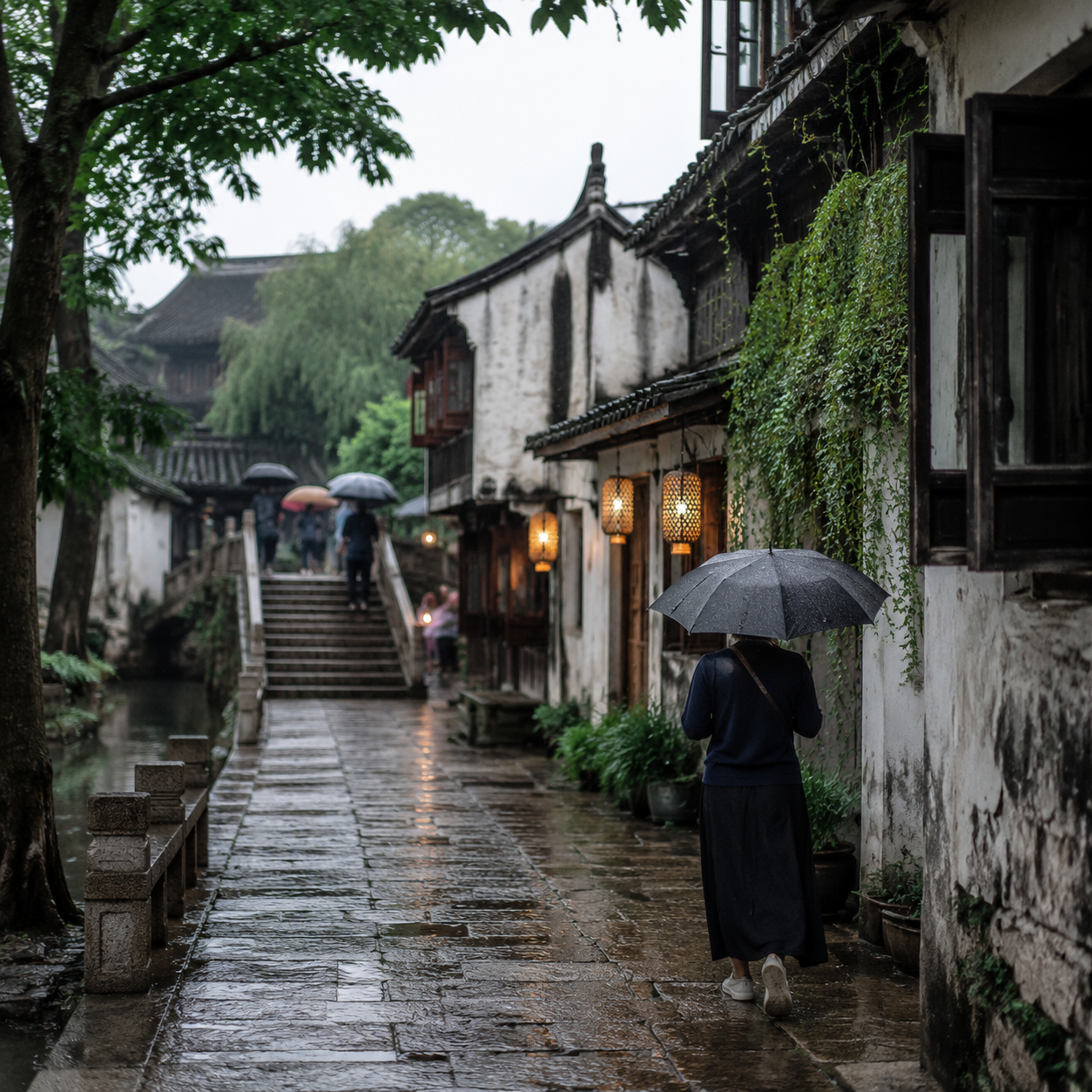
雨天里的苏州真正要紧的,不是多看一处,而是多确认一次 / What Matters Most in Rainy Suzhou Is Not Seeing One More Place, but Confirming One More Time
白天你可能靠直觉就能把路线走顺,雨天则更需要反复确认:这一段灯够不够,这座桥过去以后还有没有稳定的人流,这家店是不是值得坐进去把脚下的水气先晾一晾。对第一次来中国的人来说,这种反复确认并不丢人,反而说明你正在用更成熟的方式进入一座小城。苏州雨天最值得学的,不是诗意,而是判断。
By day, intuition may be enough to carry a route smoothly. In rain, repeated confirmation matters more: is the lighting still reliable here, does a stable pedestrian flow continue beyond this bridge, and is this place worth sitting in long enough to let the wetness leave the shoes? For a first-time visitor to China, this repeated confirmation is not embarrassing. It is a sign of entering a smaller city in a more mature way. What rainy Suzhou most deserves to teach is not poetry, but judgment.
雨天里最容易出错的,不是路线不够美,而是你太想把原计划保住 / What Goes Wrong Most Easily in Rainy Suzhou Is Not That the Route Stops Being Beautiful, but That You Cling Too Hard to the Original Plan
很多人一下雨就更不愿意改动安排,仿佛一旦缩短路线、提前坐下,整天就算输掉了。苏州雨天最聪明的地方,恰恰在于它很适合做小改动:少过一座桥、少追一条巷、早一点坐下、晚一点再出门。你只要肯承认今天的城和白天不完全一样,它反而会给你另一种很细、很稳的好看。国外博主如果能把这种“雨天的小调整”拍进去,TravelCN 最该写清楚,因为这会真正帮读者学会怎样在中国小城里应对天气变化。

What goes wrong most easily in rainy Suzhou is not that the route ceases to be beautiful, but that the traveler clings too hard to the original plan. Many people resist changing anything once the rain begins, as if shortening the route or sitting earlier means losing the day. Yet rainy Suzhou is especially suited to small adjustments: one fewer bridge, one fewer lane, an earlier pause, and a later return outside. The moment the traveler admits that the city is not behaving exactly like daytime anymore, it often returns another kind of beauty—fine-grained, steady, and surprisingly generous. If foreign creators capture these small rainy-day corrections, TravelCN should explain them clearly, because they genuinely teach readers how to respond to weather in a smaller Chinese city.
雨天里真正成熟的动作,不是硬撑,而是主动改小 / The Mature Action in Rain Is Not Endurance, but Deliberate Reduction
很多人会把缩短路线误会成退步,可在苏州雨天,主动改小反而是高级判断。你少走一段,不代表这一天的体验变薄;很多时候,它只是把本来可能散掉的节奏重新收回来。国外博主如果拍到了这种“缩小反而更稳”的感觉,TravelCN 最该把它继续写明,因为这会让第一次来中国的读者更愿意在天气变化时信任自己的调整,而不是死守原计划。
Many travelers mistake a shorter route for failure. In rainy Suzhou, deliberate reduction is often the more mature decision. Walking less does not necessarily thin the day out. Very often, it simply gathers back a rhythm that would otherwise have fallen apart. If foreign creators capture this feeling—that shrinking the line can make it steadier—TravelCN should explain it explicitly. It helps first-time visitors to China trust their own adjustments when weather changes instead of defending the original plan at all costs.
雨天后的苏州真正会留下来的,是“这座城没有因为变湿就失去秩序” / What Truly Remains After Rain in Suzhou Is the Sense That the City Did Not Lose Its Order When It Became Wet

很多地方一到雨天,最先消失的就是秩序感:路变乱了,判断变急了,情绪也开始散。苏州如果走得对,反而会让人记住另一件事——它变湿以后,依然有办法稳稳地接住你。桥还是桥,巷还是巷,只是你得换一种更轻、更仔细的方式去读它。对第一次来中国的人来说,这种经验很值钱,因为它说明一座城的可进入性,不只是天气好时的礼貌,更是天气差时的能力。
In many places, the first thing rain erases is the feeling of order. The road grows messy, judgment becomes sharp and impatient, and mood begins to scatter. If Suzhou is walked properly, it leaves behind a different memory: even after becoming wet, it still knows how to receive the traveler steadily. A bridge remains a bridge and a lane remains a lane, but they now require a lighter and more careful way of reading. For a first-time visitor to China, that lesson is valuable because it shows that a city’s accessibility is not only a courtesy offered in good weather. It is also a capability revealed in bad weather.
雨天里的苏州,还会教人一件更小、但更难学会的事:不要因为气氛好看,就把路线继续往深处拖。很多水巷在潮湿和反光里看上去会比白天更迷人,也更像值得追进去的地方。可真正成熟的判断,是愿意在最诱人的那一刻先停一停,看看今天的鞋底、灯光、体力和人流到底支不支持继续。这样的克制不是扫兴,而是让这座小城在雨里仍然保持可读。
Rainy Suzhou also teaches something smaller but harder to learn: do not drag the route deeper simply because the atmosphere looks beautiful. Many canal lanes appear even more charming under moisture and reflection than they do by day, and therefore feel more tempting to pursue. The mature judgment is to pause exactly at the most seductive moment and check whether the shoes, the light, the remaining energy, and the human flow really support going farther. That restraint is not a loss of mood. It is what keeps the small city readable in rain.
到最后,真正留在记忆里的,常常不是你多看了哪一条巷,而是你在什么地方决定今天已经够了。苏州雨天最好的状态,不是把计划全部保住,而是把整天的线收得干净:进得去,看得懂,回得来。对第一次来中国的人来说,这种“能完整收回来”的体验,会比多拍几张雨景更值钱,也更能变成以后再进别的小城时真正派得上用场的判断。
In the end, what stays in memory is often not which extra lane was added, but where the traveler decided that the day was already enough. Rainy Suzhou works best not when the original plan is preserved in full, but when the whole route is gathered cleanly: it can be entered, read, and returned from. For a first-time visitor to China, that experience of being able to bring the line back in one piece is more valuable than a few more rain photographs, and more likely to become a practical judgment useful in other smaller cities later.
- 成都-重庆5日美食与熊猫行程 | 5-Day Chengdu-Chongqing Food & Panda Trip
- 广东广西10日海陆游 | 10-Day Guangdong-Guangxi Sea & Land Tour
- 中国饮品文化:从功夫茶到网红奶茶 | Chinese Drink Culture: From Kung Fu Tea to Viral Milk Tea
- 广西山水5日行程:桂林阳朔龙脊梯田 | 5-Day Guangxi: Guilin, Yangshuo & Longji Terraces
- 五月黄山脚下的一场雨,让本人第一次明白赶景点不如先安顿情绪 | A Rainy May Day at the Foot of Huangshan Taught Me to Settle My Mood Before Chasing Views
- 从广州吃到潮汕:一条被低估的美食公路 | Guangzhou to Chaoshan: An Underrated Foodie Road Trip
- 牛肉下锅前,潮州人先把时间切薄 | Before the Beef Enters the Pot, Chaozhou Cuts Time Thin
- 我在中国学会求助,不是因为无助,而是因为这里的回应速度太真诚 | I Learned to Ask for Help in China Not Because I Was Helpless, but Because People Responded So Honestly
- 在中国穷游要花多少钱?每日预算全拆解 | How Much Does It Cost to Travel China on a Budget?
- 从武夷山下来,在茶桌上理解岩韵 | Understanding Rock Rhyme at a Wuyi Tea Table
Comments (0)