
把中国拍成高铁大线以后,最值钱的内容其实藏在换乘和转场里 | Once China Becomes a High-Speed Rail Arc on Camera, the Real Value Hides in Transfers and Transitions
他把中国写成一条高铁大线,真正值得抄的不是名单,而是衔接方式 | He Turned China into a Long High-Speed Rail Arc, and What Matters Is Not the List but the Connections
在国外旅行频道里,Island Hopper TV 这类偏“国家级总览型”的内容,和城市沉浸式 vlog 不太一样。它的中国视频不是从一个街角切进去,而是直接把中国放成一条大线来讲:哪些城市值得看、哪些区域适合第一次来、哪些地段适合压进同一趟高铁旅程。表面上,这种视频最容易被当成一份“目的地合集”;但如果细看公开标题和摘要,它真正吸引人的,其实是另一件事——它试图证明,中国不是只能拆成一个个孤立的景点,而是可以被理解为一张靠高铁串起来的旅行网络。
On foreign travel channels, content from creators like Island Hopper TV differs sharply from immersion-style city vlogs. Their China video does not enter through one neighborhood corner. It frames the country directly as a broad line: which cities deserve attention, which regions suit a first-time visit, and which sections belong within the same high-speed rail journey. On the surface, this is easy to treat as a simple destination compilation. But if the public title and summary are read carefully, the real attraction lies elsewhere. The video tries to prove that China does not have to be understood as isolated attractions. It can be understood as a travel network held together by high-speed rail.
这类内容对 TravelCN 的价值非常高,因为中国旅行最容易把海外读者劝退的,往往不是景点不够好,而是他们不知道这些景点在一趟真实行程里怎么连。只要“怎么连”这一步变得可想象,很多原本看上去过于庞杂的目的地就会突然降温,从“我好像搞不定”变成“我也许能试一条缩短版”。
This kind of content is extremely valuable for TravelCN because what often discourages overseas readers is not the quality of the destinations. It is the inability to imagine how those destinations connect inside one real trip. The moment connection becomes thinkable, many places that seemed overwhelmingly complex cool down immediately. They shift from “I could never manage that” into “I might be able to attempt a shorter version.”
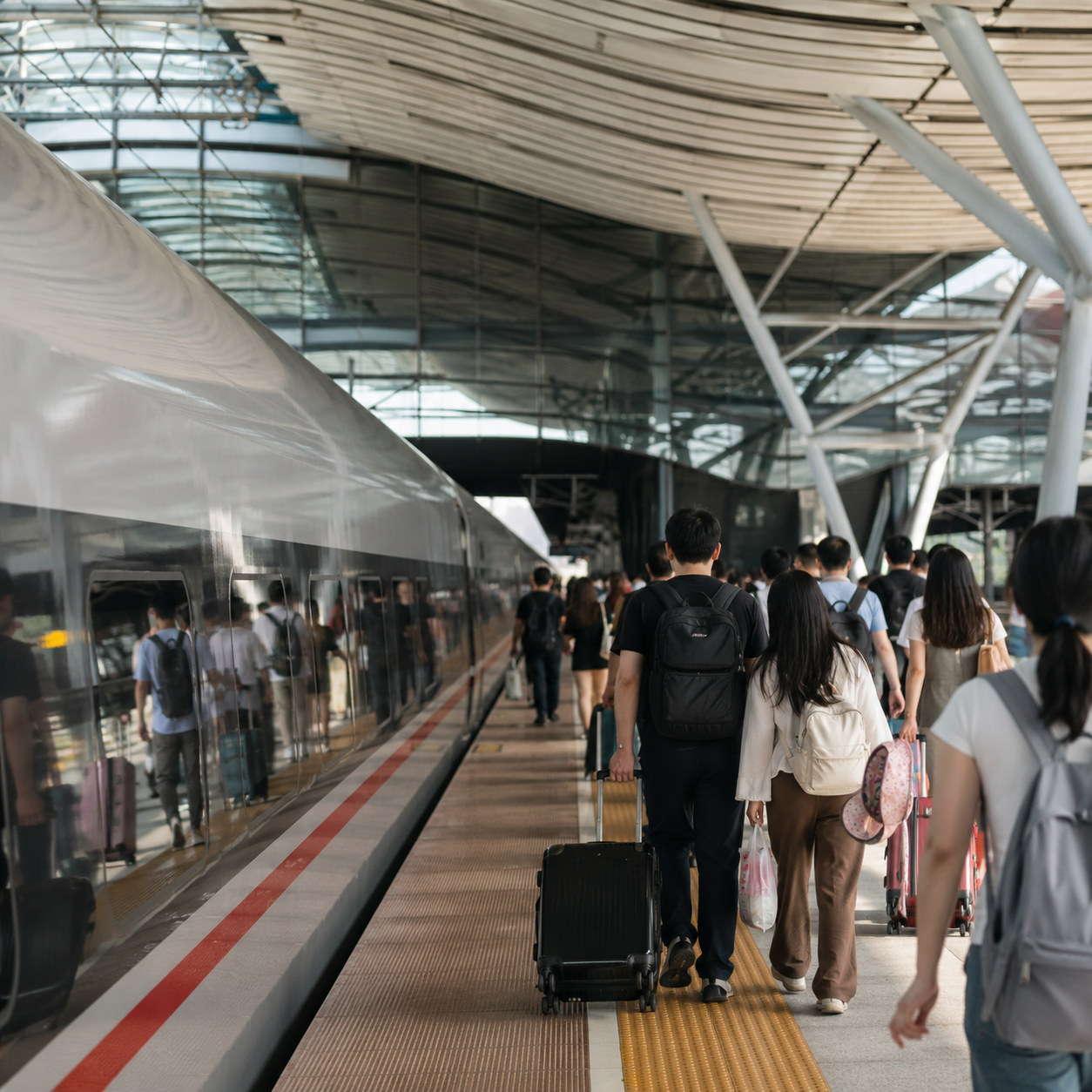

Island Hopper TV 这种总览型中国视频,重点其实不是“最多”,而是“最能串” / In an Island Hopper Style China Guide, the Real Focus Is Not Maximum Coverage but Maximum Linkability
这类总览型视频最容易被误读成“把中国最有名的地方都报一遍”。可真正支撑它成立的,不是数量,而是可串联性。公开摘要里提到的,不只是城市名字,还包括高铁旅程、区域跨度、饮食差异和文化切换。也就是说,它并没有把中国讲成一张平的旅游海报,而是在暗示观众:你真正需要学习的,不是记住十几个点,而是知道哪些点放在一起顺。
These overview-style videos are often misread as nothing more than a roll call of famous destinations. But what truly holds them together is not quantity. It is linkability. The public summary points not only to cities, but also to rail motion, regional spread, food differences, and cultural switching. In other words, the video does not present China as a flat travel poster. It suggests instead that what viewers really need to learn is not how to memorize a dozen points, but which points belong together.
这对于第一次来中国的人尤其重要。因为第一次来的人,通常不怕看到太多选择,他们怕的是每个选择之间都隔着一大块未知。高铁大线型的视频之所以有传播力,恰好是因为它替观众做了一次大型减法:它不要求你一上来理解整个中国,而是先让你接受“中国可以沿着一条轨道逻辑被拆开再拼回去”。
This matters especially for first-time visitors to China. Such travelers are not usually frightened by the existence of many options. They are frightened by the unknown space between those options. A high-speed-rail-arc video spreads well precisely because it performs a major subtraction on the viewer’s behalf. It does not demand understanding of the entire country at once. It first persuades the viewer that China can be broken apart and reassembled according to the logic of a rail line.

高铁内容为什么会让中国突然变得“可计划” / Why High-Speed Rail Content Makes China Suddenly Feel Plannable
很多国家的旅行总览视频,最后仍然会落回租车、公路或航班拼接;而中国一旦进入高铁叙事,整个旅行心态就会明显变。因为高铁把“这几个地方能不能接起来”这件事,从地理幻想变成了时间管理。对外部观众来说,这是一种很大的心理转折。原来问题不再是“我能不能跨这么大一个国家”,而是“我该把哪几个城市放在前半段、哪几个放在后半段”。
In many countries, travel-overview videos still ultimately fall back on rental cars, highways, or stitched flights. Once China enters a high-speed-rail narrative, the psychology changes visibly. Rail converts the question of “can these places really connect?” from geographical fantasy into time management. For outside viewers, that is a major mental shift. The problem stops being “can I cross a country this large?” and becomes “which cities belong in the first half and which belong in the second?”
笔者认为,这种变化是国外中国旅行内容里最值得珍惜的部分之一。它把中国从一个“值得敬畏的大目的地”,慢慢往“值得认真计划的大路线”推进。前者容易制造距离感,后者反而更容易催生行动。TravelCN 如果能把这层逻辑接住,就不该只转写“哪些地方最美”,而要继续往下写:第一次来中国,高铁大线该如何缩编;如果只有十天、两周、三周,哪些组合最稳。
The writer believes this is one of the most valuable changes inside foreign-facing China travel content. It moves China away from being only a vast destination to admire and toward being a vast route that can be planned seriously. The first image creates distance. The second creates action. If TravelCN wants to catch this logic properly, it should not stop at rewriting “which places are the most beautiful.” It should keep moving downward into operation: how a first-time China rail arc should be shortened, and which combinations remain stable if the traveler has ten days, two weeks, or three weeks.
这种视频最容易忽略的问题,是节奏不是地图 / What This Kind of Video Most Easily Overlooks Is That Rhythm Matters More Than the Map

高铁会让一切看起来很近,这既是优点,也是误导。对观众来说,一旦线路图成立,就会很容易低估移动后的疲劳、换城后的适应、以及区域气候差异带来的体感变化。北方和南方不是只换了菜系,东部和西部也不是只换了景观。真正会影响旅行舒适度的,是你在连续换城中,是否还留得下足够的缓冲段。
High-speed rail makes everything look close. That is its gift and also its deception. Once the line appears feasible, viewers easily underestimate post-transfer fatigue, the adaptation cost of city changes, and the bodily effect of climate variation between regions. North and south are not separated only by cuisine, and east and west are not separated only by scenery. What truly shapes the comfort of the trip is whether enough buffer remains inside the chain of city changes.
所以,第三方报道体最适合补上的,就是这类大线视频没有时间细讲的部分:哪几站可以连着排,哪几站之间必须休息;哪几段适合拉长停留,哪几段更适合点到为止;什么样的观众适合“多城高铁大线”,什么样的观众更适合“一区域深入版”。这不是在反驳博主的路线,相反,是在把博主带来的想象力补成真正可执行的中国攻略。
That is exactly the layer third-person reported writing can supply—the parts such large-route videos have no time to explain in detail. Which stops can sit tightly together, and which need rest in between? Which segments deserve longer stays, and which are better touched briefly? What kind of traveler suits a multi-city rail arc, and what kind is better served by a region-focused version? This does not reject the creator’s route. It completes the imagination the creator opened and turns it into executable China travel logic.
对 TravelCN 来说,这类国外视频最该被转化成什么 / What TravelCN Should Transform This Kind of Foreign Video Into
笔者认为,这类国外大线视频最适合被转化成三层内容。第一层,是像这篇这样解释它为什么会火:因为它把中国从“太大”重新讲成了“能连”。第二层,是更具体的路线压缩版:十天怎么剪,两周怎么排,第一次来该怎么避开最累的组合。第三层,才是单城市或单区域的深入文章,去把其中一站展开。这样做,站内内容就不只是追着外部热度跑,而是能真正把外部热度变成内部结构。
The writer believes overview videos of this kind should be transformed into three layers of site content. The first layer explains why the video spreads, just as this article does: because it reframes China from “too large” into “connectable.” The second becomes a compressed practical version of the route: how to cut it to ten days, how to arrange it for two weeks, and how first-time travelers can avoid the most exhausting combinations. Only the third layer moves into deep single-city or single-region pieces that unfold one stop properly. This way, the site stops merely following outside heat and starts converting it into internal structure.
如果未来国外创作者关于中国的内容继续成熟,那么最值得期待的,不是他们再多给一个城市上榜,而是他们越来越愿意承认:在中国,路线设计本身就是景点的一部分。谁能把这件事拍明白,谁就不只是在介绍中国,而是在帮助外部观众重新建立一种看待中国旅行的方法。
If foreign creator content about China continues to mature, the most interesting development will not be the addition of yet another city to the ranking. It will be the growing willingness to admit that in China, route design itself is part of the attraction. Whoever learns to film that clearly is no longer just introducing China. They are helping outside viewers rebuild the very method by which China travel is understood.
公开素材来源 / Public Source Notes
- Island Hopper TV, “15 Best Places to Travel in China 2026 | Ultimate China Travel Guide”
- 仅少量使用公开视频封面作报道说明,不做整段搬运。
Public source used:
- Island Hopper TV, “15 Best Places to Travel in China 2026 | Ultimate China Travel Guide”
- Only a very limited amount of public cover imagery is used for explanatory reporting, not for wholesale reproduction.
- 签证与入境要求 | Visa and Entry Requirements
- 四月江南烟雨游 | April in Jiangnan: Misty Rain and Ancient Water Towns
- 在成都点微辣,我才知道辣度不是翻译能完全解决的 | Ordering Mild Spice in Chengdu Taught Me Translation Cannot Fully Explain Heat
- 扬州早茶不是一张菜单:我在园林之间学会给一顿饭留时间 | Yangzhou Morning Tea Is Not Just a Menu
- 甘南:被遗忘的藏区秘境七日行 | Gannan: A 7-Day Journey Through Tibet's Forgotten Frontier
- 我一直以为唐代早点只是“种类多”,直到我站在晨市里闻见锅边和胡饼一起冒热气 | I Thought Tang Breakfast Was Only About Variety Until I Stood in the Morning Market and Smelled Pan Steam and Sesame Flatbread Rising Together
- 我第一次看懂明代衣服,不是在博物馆,而是在裁缝铺里看人怎么站 | I First Understood Ming Clothing Not in a Museum, but in a Tailor's Shop Watching How People Stood
- 第一次去中国,你可能准备错了 | First Trip to China: You're Probably Preparing for the Wrong Things
- 保温杯没有拧紧的那一刻,我才懂宜春的温泉不是赶场项目 | When My Thermos Came Loose, I Understood That Yichun’s Hot Springs Are Not a Race
- 在景德镇看一只碗怎么出生:窑火、白粉和老师傅的手势 | Watching a Bowl Be Born in Jingdezhen: Kiln Fire, White Clay Dust, and a Master's Hands
Comments (0)