
第一口就着了魔:一个外乡人在成都的麻辣沉沦 | Spellbound at First Bite: A Stranger's Descent into Chengdu's Heat
第一口就着了魔:一个外乡人在成都的麻辣沉沦 | Spellbound at First Bite: A Stranger's Descent into Chengdu's Heat
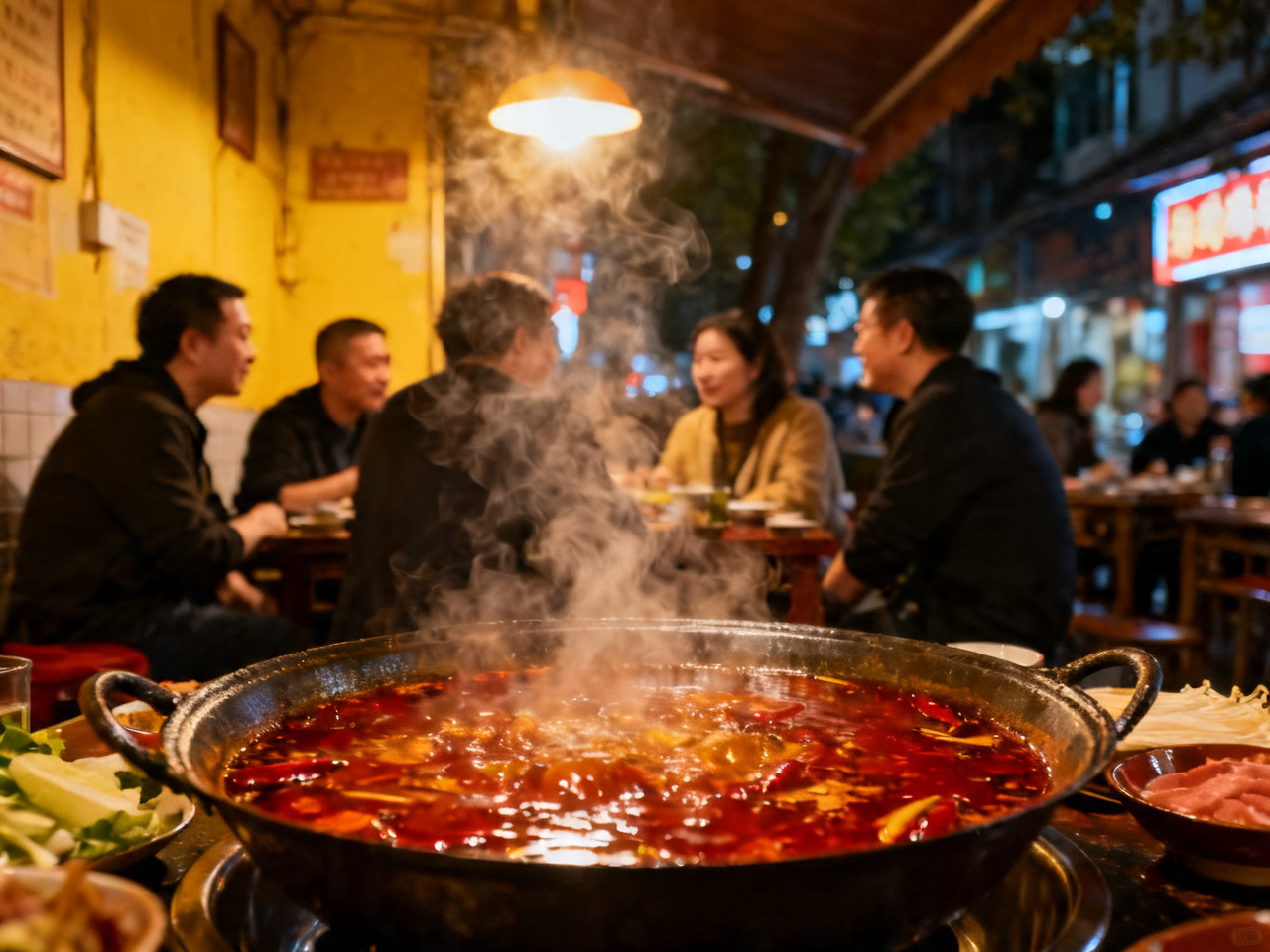
那是2023年11月的一个阴雨傍晚,我拖着行李箱走进成都玉林路附近一家没有招牌的苍蝇馆子。老板娘正用一把大铁勺搅动锅里翻滚的红油,油面上漂着密密麻麻的干辣椒和花椒,香气扑面而来,呛得我眼睛发酸。我在一张油腻的木桌前坐下,用蹩脚的普通话点了一份夫妻肺片。那一刻,我不知道自己即将经历的,会彻底改变我对"好吃"这件事的理解。
It was a rainy November evening in 2023 when I dragged my suitcase into an unmarked hole-in-the-wall near Yulin Road in Chengdu. The owner was stirring a wok of rolling red oil with a large iron ladle, the surface thick with dried chilies and Sichuan peppercorns, the aroma hitting me like a wall. I sat down at a greasy wooden table and ordered a plate of fuqi feipian — husband-and-wife beef offal — in my broken Mandarin. I had no idea that what I was about to experience would permanently rewire my understanding of what "delicious" means.
四川人不叫它"辣",他们叫它"麻辣"。这两个字的差距,比你想象的大得多。"辣"是单维度的灼烧,是墨西哥辣椒素对口腔神经的直接攻击;而"麻"是花椒带来的那种奇异的电麻感,像是舌尖上有细小的电流在跳动。两者叠加,产生的不是痛苦,而是一种近乎迷幻的感官体验——麻痹与刺激同时发生,让人欲罢不能。
Sichuan people don't just call it "spicy" — they call it "málà," two characters that together mean something far more complex than simple heat. "Là" is the one-dimensional burn, the direct assault of capsaicin on your oral nerves. "Má" is the strange electric numbness from Sichuan peppercorns, like tiny currents dancing on the tip of your tongue. Combined, they don't produce pain so much as a near-psychedelic sensory experience — numbness and stimulation happening simultaneously, impossible to stop once started.
那盘夫妻肺片端上来的时候,颜色深红发亮,薄切的牛肉和牛杂码放整齐,上面淋着厚厚的红油,撒着芝麻和花生碎。我夹起一片,放进嘴里,先是芝麻香,然后是牛肉的韧劲,然后——麻辣的浪潮从舌根涌上来,一波接一波,停不下来。我喝了口茶,没用。我吃了口白饭,稍微缓了一下,然后又夹了一片。
When the plate of fuqi feipian arrived, it was deep crimson and glossy — thin-sliced beef and offal arranged neatly, drenched in thick red oil, scattered with sesame seeds and crushed peanuts. I picked up a slice, put it in my mouth: first came the sesame fragrance, then the chewy resistance of the beef, then — a wave of málà surged up from the back of my tongue, wave after wave, unstoppable. I drank some tea. Useless. I ate a spoonful of plain rice, which helped briefly — and then I reached for another slice.
成都的麻辣江湖,远比外人想象的复杂。光是火锅,就分清油锅、鸳鸯锅、牛油锅、菜籽油锅,每一种底料的配方都是店家的核心机密。我在成都待了十天,专门去拜访了一位做了三十年火锅底料的老师傅——他姓王,在簇桥附近有一间不对外开放的小作坊。
The málà universe of Chengdu is far more complex than outsiders imagine. Hot pot alone splits into clear-oil pots, yin-yang pots, beef-tallow pots, and rapeseed-oil pots, each with a base recipe that is the proprietor's most guarded secret. During my ten days in Chengdu, I tracked down a master who had been making hot pot base for thirty years — surnamed Wang, with a small workshop near Cuqiao that he doesn't open to the public.
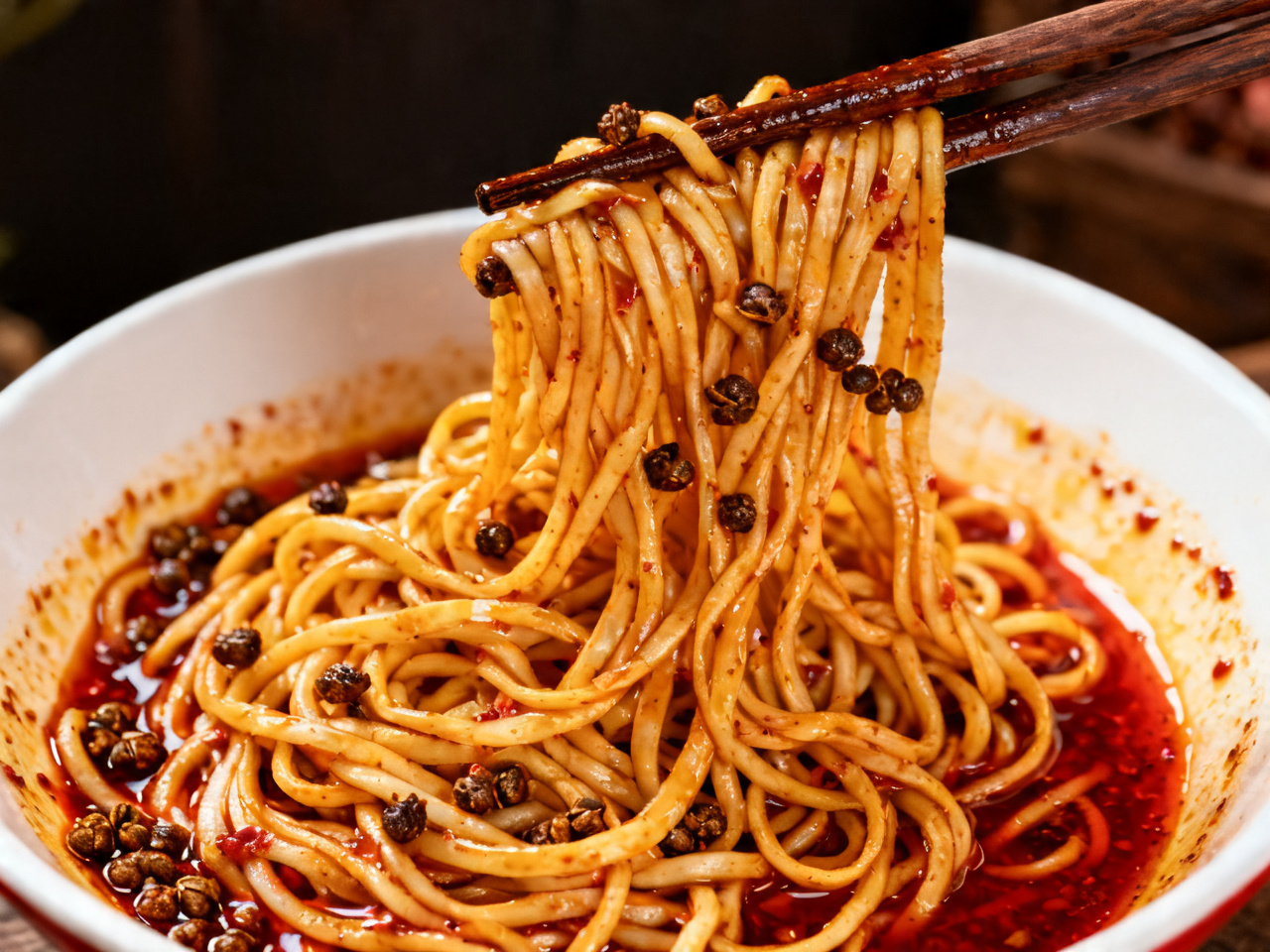
王师傅的作坊里,整面墙都是密封的陶罐,里面装着不同产地、不同年份的干辣椒。他告诉我,正宗的成都火锅底料至少需要二十种香料,炒制时间不能少于四十分钟,火候的控制全靠手感和经验。"现在很多店用机器炒,味道就差了。"他说这话的时候,语气里有一种老工匠特有的骄傲和惋惜。
Master Wang's workshop had an entire wall of sealed ceramic jars containing dried chilies from different regions and different harvests. He told me that authentic Chengdu hot pot base requires at least twenty spices, must be stir-fried for no less than forty minutes, and that controlling the heat is entirely a matter of feel and experience. "A lot of places use machines now. The flavor suffers." He said this with the particular pride and sorrow of an old craftsman.
除了火锅,成都的麻辣版图还包括:钵钵鸡、口水鸡、麻辣兔头、串串香、冷锅鱼……每一道菜都有自己的麻辣逻辑。钵钵鸡的辣是温柔的,红油浸泡过的鸡肉带着淡淡的甜;麻辣兔头则是暴力的,需要用手撕开,辣椒和花椒的香气直接渗进骨缝里。
Beyond hot pot, Chengdu's málà territory includes: bō bō jī (skewered chicken in chili oil), mouthwatering chicken, spicy rabbit heads, chuàn chuàn xiāng (skewer hot pot), cold-pot fish... Each dish has its own málà logic. The heat in bō bō jī is gentle — chicken soaked in red oil carries a faint sweetness. Spicy rabbit heads are violent — you tear them apart with your hands, the fragrance of chilies and peppercorns seeping directly into the bone crevices.
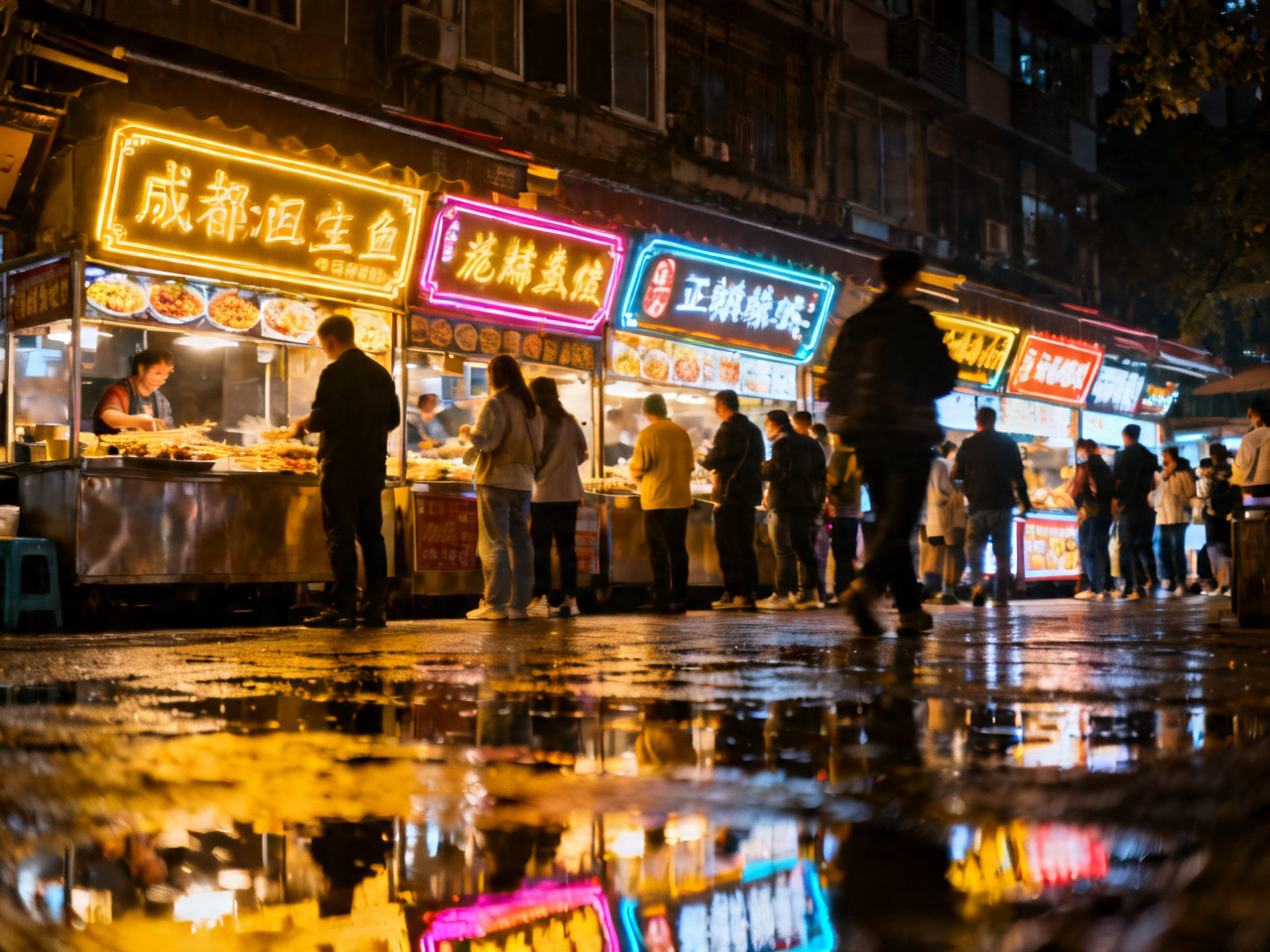
我在宽窄巷子附近的一家小店,见过一个穿着西装的中年男人,一个人坐在角落里,面前摆着一盆麻辣兔头,吃得满手红油,神情却无比专注,像是在处理一件极其重要的事务。旁边的服务员见怪不怪,给他续了一杯茶,顺手递了几张纸巾。这个画面让我觉得,麻辣在成都不只是一种口味,它是一种生活态度——投入、专注、不在乎旁人的眼光。
Near Kuanzhai Alley, I watched a middle-aged man in a suit sitting alone in a corner, a basin of spicy rabbit heads in front of him, hands covered in red oil, expression utterly focused — as if handling a matter of the utmost importance. The server nearby was unfazed, refilling his tea and handing him a few napkins without a word. That image made me feel that málà in Chengdu is more than a flavor — it's a life philosophy: total commitment, full presence, indifference to how you look doing it.
离开成都的前一晚,我又回到了那家苍蝇馆子。老板娘认出了我,笑着问:"吃辣了没?"我说吃了。她点点头,说了一句让我记到现在的话:"第一次来的人,都说太辣了。第二次来,就说刚好。第三次来,就说不够辣了。"
On my last night in Chengdu, I went back to that unmarked restaurant. The owner recognized me and smiled: "Getting used to the spice?" I said yes. She nodded and said something I still think about: "First-timers always say it's too spicy. Second visit, they say it's just right. Third visit, they say it's not spicy enough."
我想,这大概就是麻辣的魔法所在。它不是在征服你,它是在改变你。
I think that's the magic of málà. It's not conquering you. It's changing you.
- 中国早餐图鉴:从豆浆油条到肠粉米粉 | A Field Guide to Chinese Breakfast: From Soy Milk & Fried Dough to Rice Rolls & Noodles
- 中国社交礼仪速成:称呼、送礼与餐桌文化 | Chinese Social Etiquette: Greetings, Gifts & Dining
- 中国旅游紧急情况处理手册 | Emergency Handbook for China Travel
- 一碗面能走多远:从兰州到潼关,西北人用面食丈量土地 | How Far Can a Bowl of Noodles Take You: Measuring the Northwest by Wheat
- 二月冬末旅游:南方暖意正浓 | Late Winter Travel: Warmth in Southern China
- 我在贵州山里迷了七天路 | Seven Days Lost in the Mountains of Guizhou
- 中国医疗就诊指南:看病买药与保险 | Medical Care in China: Hospitals, Pharmacies & Insurance
- 重庆不需要滤镜:一座让赛博朋克自惭形秽的城市 | Chongqing Needs No Filter: A City That Makes Cyberpunk Feel Inadequate
- 第一口就着了魔:一个外乡人在成都的麻辣沉沦 | Spellbound at First Bite: A Stranger's Descent into Chengdu's Heat
- 重庆火锅不需要你懂,它只需要你坐下来 | Chongqing Hotpot Doesn't Need You to Understand It — Just Sit Down
Comments (0)