
重庆不需要滤镜:一座让赛博朋克自惭形秽的城市 | Chongqing Needs No Filter: A City That Makes Cyberpunk Feel Inadequate
重庆不需要滤镜:一座让赛博朋克自惭形秽的城市 | Chongqing Needs No Filter: A City That Makes Cyberpunk Feel Inadequate
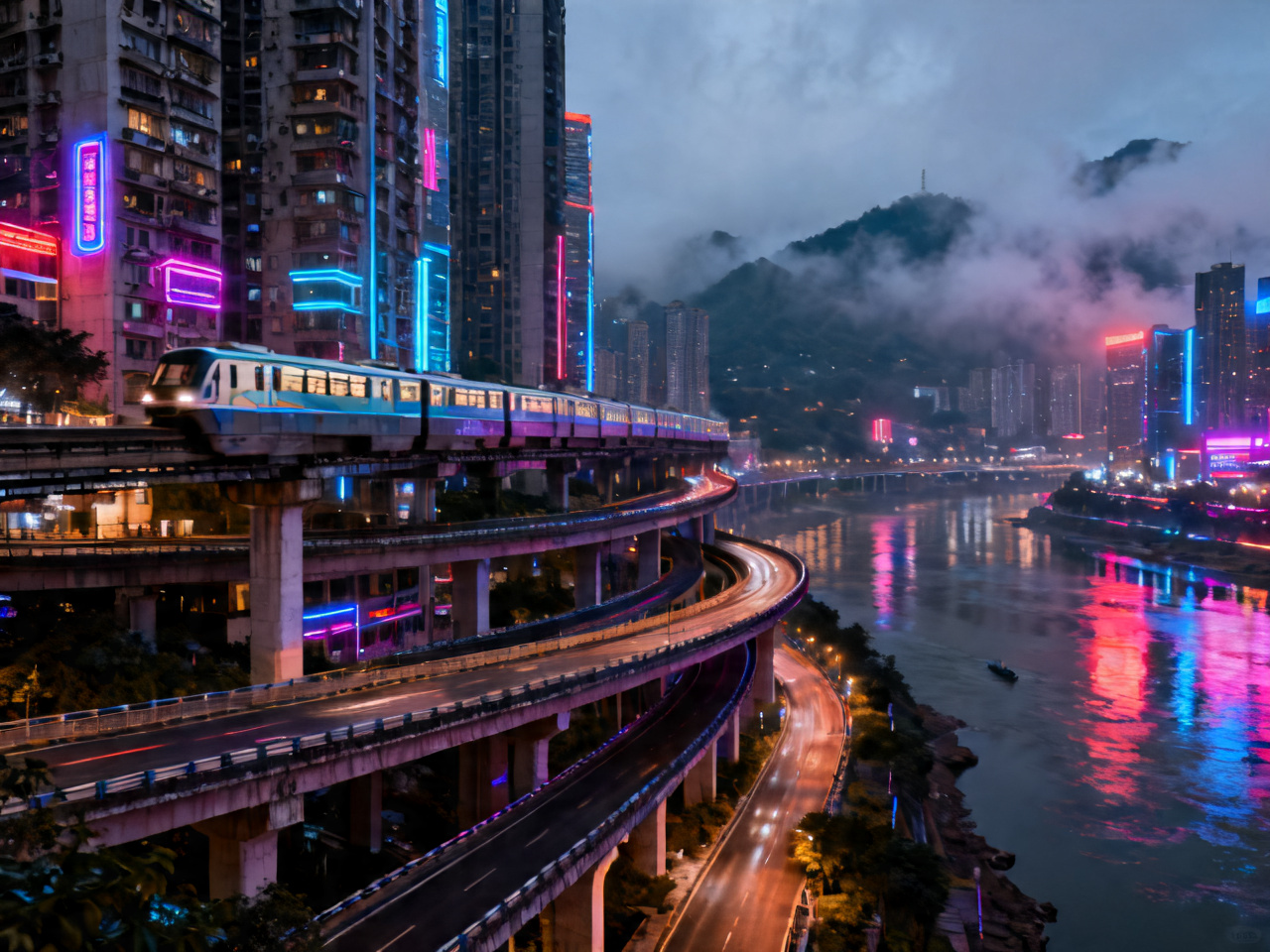
我第一次到重庆,是晚上十一点。出了江北机场,坐上出租车,司机沿着高架桥绕了二十分钟,我始终分不清自己在第几层。左边是江面上的灯光倒影,右边是半山腰的居民楼窗户,头顶是轻轨轰隆驶过,脚下又是另一条公路。我当时想:这座城市是不是把平面地图揉成了一团,然后直接盖了上去。
My first time in Chongqing was at 11 PM. Stepping out of Jiangbei Airport into a taxi, the driver wound along elevated highways for twenty minutes while I couldn't figure out what level I was on. To the left, lights reflected off the river. To the right, apartment windows glowed halfway up a hillside. Above, a monorail thundered past. Below, another road. I thought: this city took a flat map, crumpled it into a ball, and built on top of it.
为什么全世界都在说重庆像赛博朋克 | Why the Whole World Calls Chongqing Cyberpunk
这件事得从地形说起。
重庆主城建在两江交汇的山地上,城区海拔落差超过三百米。别的城市是摊开的,重庆是叠起来的——同一栋楼,一楼和二十楼都可以是"地面层",因为它们各自连着不同高度的马路。导航软件在这里经常崩溃,因为GPS分不清你在桥上还是桥下,在隧道里还是隧道上面的公园里。
It starts with terrain.
Chongqing's urban core sits on mountains at the confluence of the Yangtze and Jialing rivers, with elevation differences exceeding 300 meters within the city. Other cities spread out horizontally. Chongqing stacks vertically — in the same building, both the 1st and 20th floors can be "ground level," each connecting to streets at different heights. Navigation apps frequently crash here because GPS can't distinguish whether you're on a bridge or under it, in a tunnel or in the park above the tunnel.
然后是雾。重庆历史上每年有超过一百天大雾天气,江面上的水汽和山城的温差制造出一种天然的"滤镜"。霓虹灯穿过雾气变得柔软、弥散,高楼的轮廓若隐若现——你不需要后期调色,这座城市自带《银翼杀手》的色调。
Then there's the fog. Historically, Chongqing has over 100 foggy days per year. Moisture from the rivers and temperature differentials across the mountain city create a natural "filter." Neon lights soften and diffuse through the mist, skyscraper silhouettes fade in and out — you don't need post-processing. This city comes with Blade Runner's color palette built in.
再加上一万四千多座桥。没打错,重庆是全球桥梁最多的城市。桥不只是过江用的,还用来连接不同高度的山头、街区、甚至楼层。你站在某个路口,可能同时看到五层交通:江面上的船、沿江公路上的车、轻轨、高架桥、以及更高处的另一座桥。这种密度,任何科幻电影的美术指导看了都会沉默。
Add to that over 14,000 bridges. Not a typo — Chongqing has more bridges than any city on Earth. Bridges here aren't just for crossing rivers; they connect mountain peaks, neighborhoods, even building floors at different elevations. Standing at certain intersections, you can see five layers of traffic simultaneously: boats on the river, cars on the riverside road, the monorail, an overpass, and yet another bridge higher up. That kind of density would silence any sci-fi film's production designer.
洪崖洞:那栋让所有人以为是《千与千寻》取景地的楼 | Hongya Cave: The Building Everyone Mistakes for Spirited Away
洪崖洞不是洞。
它是一组十一层的吊脚楼建筑群,嵌在嘉陵江边的悬崖上。你从沧白路走进去,以为自己在一楼,其实是在十一楼。坐电梯到"一楼"出来,已经站在了江边。这种空间错位是重庆建筑的日常,但洪崖洞把它做到了极致。
Hongya Cave isn't a cave.
It's an eleven-story stilted building complex (吊脚楼) embedded into a cliff face along the Jialing River. You walk in from Cangbai Road thinking you're on the first floor — you're actually on the eleventh. Take the elevator down to "floor one" and step out at river level. This kind of spatial disorientation is routine in Chongqing architecture, but Hongya Cave pushes it to the extreme.
晚上七点半,灯亮了。整栋建筑变成一座金色的光塔,倒映在嘉陵江里。2024年国庆假期,七天里有超过两百三十万人来看这栋楼。两百三十万。一栋楼。
At 7:30 PM, the lights come on. The entire structure transforms into a golden tower of light, reflected in the Jialing River. During the 2024 National Day holiday, over 2.3 million people came to see this building in seven days. 2.3 million. One building.
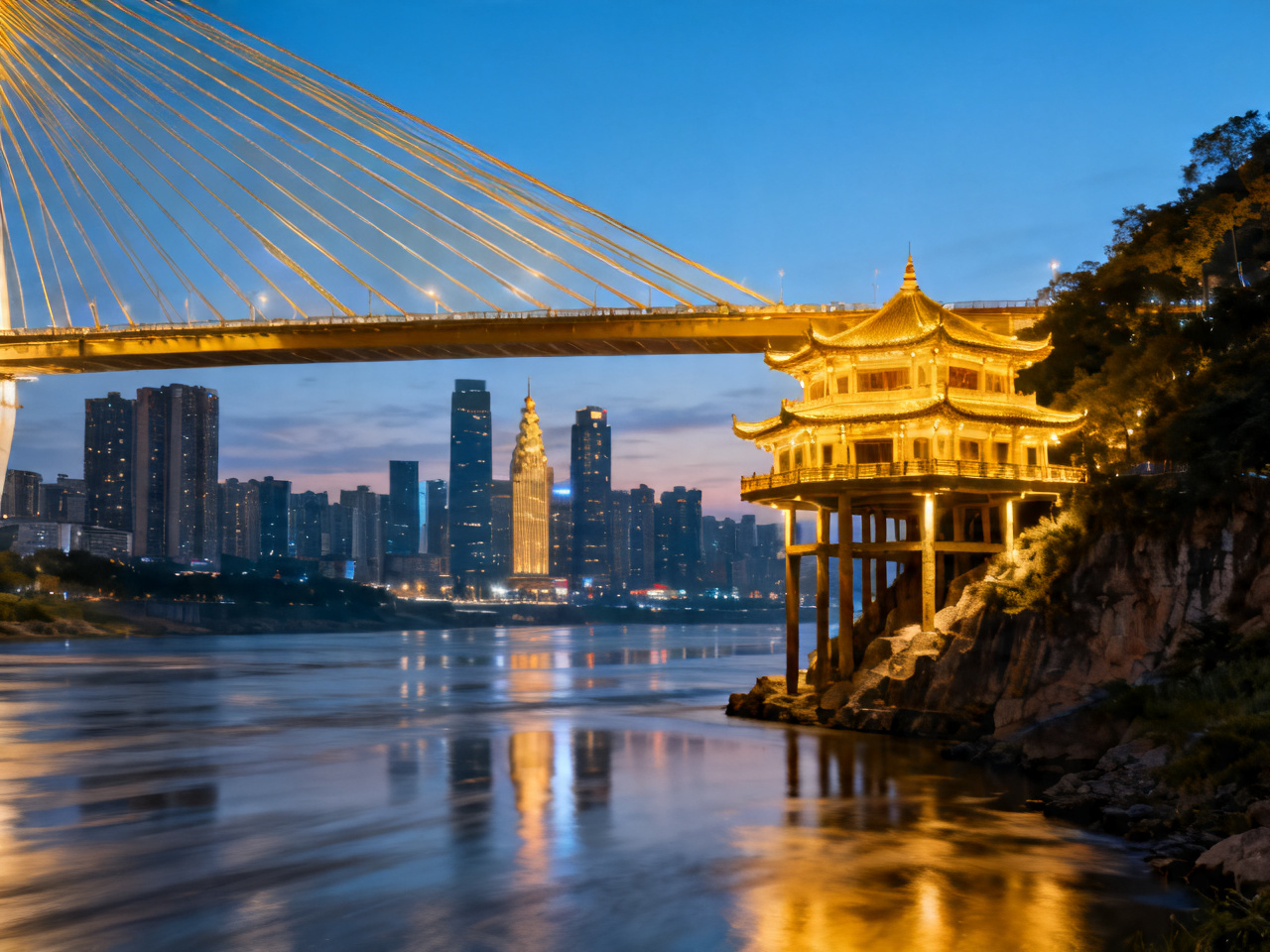
站在对岸的江北嘴看过去,洪崖洞的灯光和千厮门大桥的金色悬索叠在一起,背后是渝中半岛的摩天楼群——这个画面不需要任何解释,你的手机会自己举起来。
From the opposite bank at Jiangbeizui, Hongya Cave's lights layer with the golden cables of Qiansi Gate Bridge, backed by the Yuzhong Peninsula's skyscraper cluster — this scene needs no explanation. Your phone lifts itself.
李子坝:轻轨穿楼而过,乘客面不改色 | Liziba: A Monorail Through a Building, Passengers Unfazed
轨道交通二号线在李子坝站做了一件别的城市想都不敢想的事:直接从一栋居民楼的六到八层穿过去。
站台在八楼。你站在楼下的观景平台往上看,一列橙色的轻轨缓缓驶入大楼,消失在墙壁里,几十秒后从另一侧钻出来,继续沿着嘉陵江边的高架轨道前行。楼里的住户早就习惯了,隔音做得不错,他们说震感还不如楼下过卡车。
Line 2 of the rail transit does something at Liziba Station that no other city would dare: it passes directly through floors 6 to 8 of a residential building.
The platform is on the 8th floor. Standing on the viewing deck below, you watch an orange monorail glide into the building, vanish into the wall, emerge from the other side seconds later, and continue along the elevated track beside the Jialing River. Residents have long since gotten used to it — the soundproofing is decent, and they say the vibration is less than a truck passing downstairs.
这个场景大概在2018年左右开始在网上爆火,到现在热度不减。重庆市政府专门在楼下修了观景平台,因为之前游客都站在马路中间拍照,太危险了。
This scene went viral around 2018 and hasn't cooled down since. The Chongqing municipal government built a dedicated viewing platform below the building because tourists kept standing in the middle of the road to take photos — too dangerous.
白象居和魁星楼:重庆人的"正常住宅" | Baixiang Ju & Kuixing Tower: "Normal Housing" for Chongqing Locals
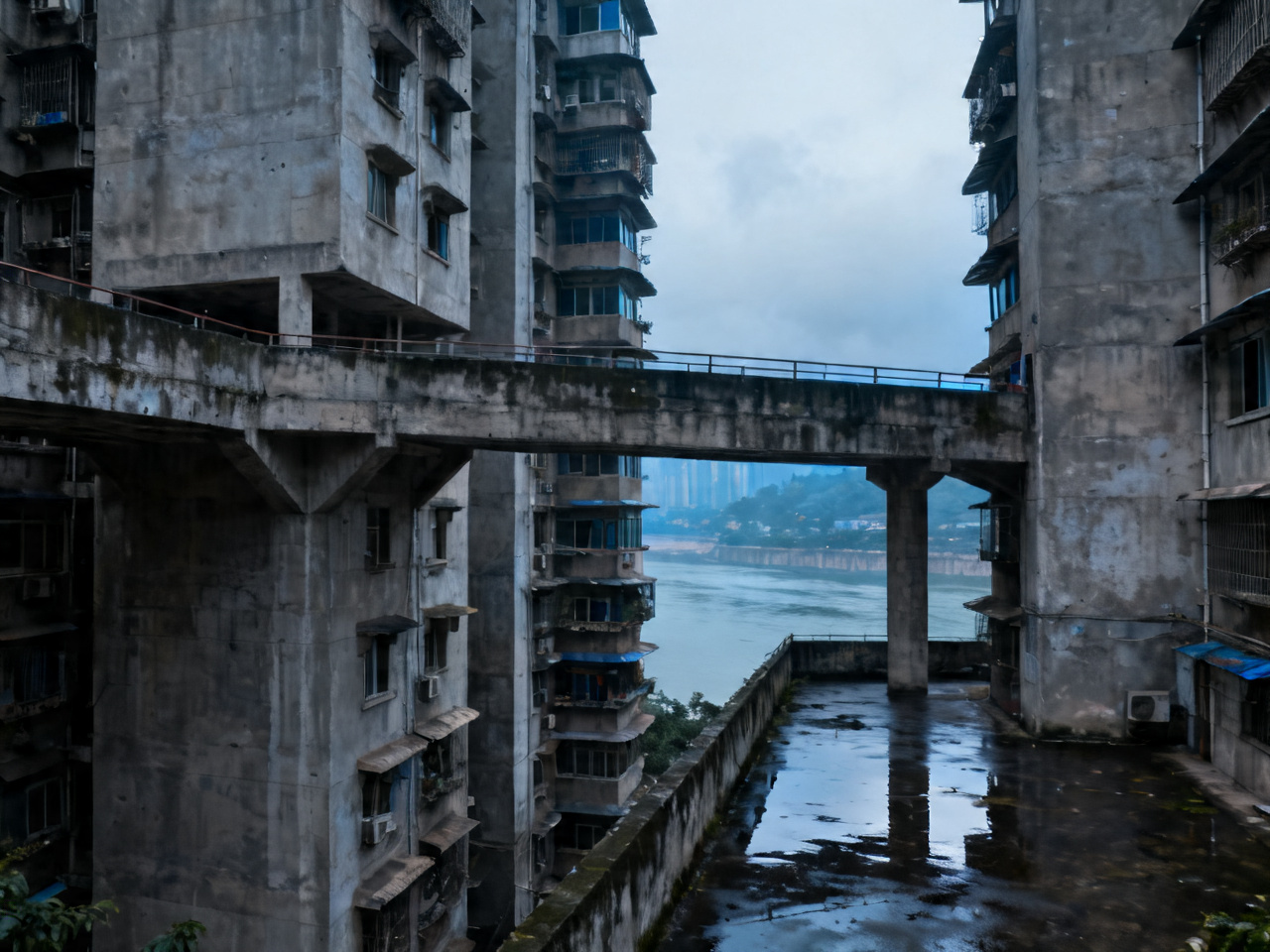
白象居是一个九十年代建的居民小区,有三个入口,分别在一楼、十楼和十五楼——三个入口都连着"地面",只不过是三条不同高度的街道。楼与楼之间有架空的连廊,走在上面,脚下是几十米的落差,远处是长江。
Baixiang Ju is a 1990s residential complex with three entrances — on floors 1, 10, and 15 — all connecting to "ground level," just three different streets at three different heights. Elevated walkways link the buildings; walking across them, you look down at a drop of dozens of meters, with the Yangtze in the distance.
2024年,这个小区在抖音和小红书上彻底火了。摄影师们发现这里的空间结构天然适合拍赛博朋克风格的照片——层叠的混凝土、悬空的走廊、远处的江景和高楼。但这里毕竟是住宅区,居民们贴出了"请保持安静"的告示。拍照可以,别扰民。
In 2024, this complex went completely viral on Douyin and Xiaohongshu. Photographers discovered its spatial structure was naturally perfect for cyberpunk-style shots — layered concrete, suspended corridors, distant river views and skyscrapers. But it's still a residential area, and residents have posted "please keep quiet" signs. Photos are fine — just don't disturb the neighbors.
魁星楼更离谱。你从一楼走进去,坐电梯到二十二楼出来,发现自己站在另一条街的地面上。两边都是"一楼"。第一次来的人通常需要几秒钟才能理解发生了什么。
Kuixing Tower is even more absurd. You walk in on the 1st floor, take the elevator to the 22nd floor, step out, and find yourself standing on ground level of a different street. Both sides are "first floor." First-time visitors usually need a few seconds to process what just happened.
夜景路线:从黄昏到深夜的六小时 | Night Route: Six Hours from Dusk to Midnight
如果你只有一个晚上,这是我走过之后觉得最值的路线:
If you only have one evening, this is the route I found most worthwhile after walking it myself:
17:30 — 鹅岭二厂(Testbed2)
从鹅岭轻轨站步行十分钟到达。这是一个由旧印刷厂改造的文创园区,屋顶平台可以俯瞰渝中半岛。黄昏时分,太阳从江对面落下去,整座城市从暖黄色过渡到深蓝色,然后灯光一盏一盏亮起来。这个过程大概持续四十分钟,是重庆最好的"蓝调时刻"。
A ten-minute walk from E'ling monorail station. This creative park converted from an old printing factory has a rooftop terrace overlooking the Yuzhong Peninsula. At dusk, the sun sets across the river, the city transitions from warm gold to deep blue, and lights flicker on one by one. This process takes about forty minutes — Chongqing's finest "blue hour."
19:00 — 李子坝轻轨站
坐二号线到李子坝,先在观景平台看一趟轻轨穿楼,然后坐上这趟轻轨,亲自体验从大楼内部穿过的感觉。车厢里很安静,窗外突然变暗又变亮,整个过程不到十秒。
Take Line 2 to Liziba, watch a monorail pass through the building from the viewing platform, then board one yourself and experience passing through the building from inside. The carriage goes quiet, the window suddenly darkens then brightens — the whole thing takes less than ten seconds.
19:30 — 千厮门大桥
从洪崖洞方向步行上桥。七百二十米长的大桥横跨嘉陵江,走到桥中间回头看,洪崖洞的灯光、渝中半岛的天际线、江面的倒影同时收入眼底。这是重庆出镜率最高的机位,没有之一。
Walk onto the bridge from the Hongya Cave side. The 720-meter bridge spans the Jialing River; walk to the middle, turn around, and Hongya Cave's lights, the Yuzhong skyline, and river reflections all enter your frame simultaneously. This is the single most photographed angle in Chongqing, bar none.
20:30 — 洪崖洞内部
从桥上下来走进洪崖洞。十一层楼,每层都有不同的商业业态,但重点不是购物,是体验这栋建筑本身的空间逻辑。坐电梯上上下下,走楼梯绕来绕去,你会反复丧失方向感。这就对了。
Come down from the bridge and enter Hongya Cave. Eleven floors, each with different shops, but the point isn't shopping — it's experiencing the building's spatial logic. Ride elevators up and down, wind through staircases, and you'll repeatedly lose your sense of direction. That's the point.
21:30 — 解放碑步行街 → 魁星楼
步行到解放碑,重庆的商业中心。霓虹灯、LED屏幕、人流——这里是最"都市赛博朋克"的区域。然后拐到魁星楼,体验一下"一楼进二十二楼出"的魔幻操作。
Walk to Jiefangbei, Chongqing's commercial center. Neon lights, LED screens, crowds — this is the most "urban cyberpunk" zone. Then detour to Kuixing Tower for the "enter on floor 1, exit on floor 22" experience.
22:30 — 皇冠大扶梯 → 宵夜
坐二号线到两路口,花两块钱坐一趟皇冠大扶梯。这部建于1996年的扶梯全长一百一十二米,垂直落差五十二米,连接两路口和重庆火车站,是亚洲最长的户外扶梯之一。两分半钟的下行过程中,你会经过隧道、看到对面上行的人流、听到扶梯链条的机械声——这种"基础设施即景观"的体验,只有重庆能给你。
Take Line 2 to Lianglukou and spend 2 RMB on the Crown Escalator. Built in 1996, this 112-meter-long escalator with a 52.7-meter vertical drop connects Lianglukou to Chongqing Railway Station — one of Asia's longest outdoor escalators. During the two-and-a-half-minute descent, you pass through a tunnel, see the stream of people ascending opposite you, hear the mechanical clank of escalator chains — this "infrastructure as spectacle" experience is uniquely Chongqing.
然后去较场口吃一顿火锅或者一碗小面。凌晨的重庆街头,雾气、灯光、还没散场的食客——这才是赛博朋克的最后一笔。
Then head to Jiaochangkou for hotpot or a bowl of xiaomian noodles. Chongqing's streets past midnight — fog, lights, diners who haven't called it a night — that's the final brushstroke of cyberpunk.
拍照的人请注意 | Notes for Photographers
几个实用建议:
A few practical tips:
三脚架必带。重庆夜景的精髓在长曝光——雾气中的光线拖尾、江面倒影的丝绸质感、车流的光轨,都需要稳定的机位和至少两到三秒的快门。手机夜景模式也行,但效果差一个量级。
Bring a tripod. The essence of Chongqing night photography is long exposure — light trails through fog, silky river reflections, traffic light streaks all require a stable platform and at least two to three seconds of shutter. Phone night mode works, but the results are a magnitude apart.
广角镜头(16-35mm)几乎是标配。重庆的空间太密、太立体,普通焦段装不下。
A wide-angle lens (16-35mm) is practically standard. Chongqing's spaces are too dense, too three-dimensional for normal focal lengths.
最佳拍摄时间是晚上七点半到九点。灯光全开,天空还留着一点深蓝色的余光,这个窗口大概只有四十分钟。九点以后天空全黑,画面会少一层层次感。
The best shooting window is 7:30 to 9:00 PM. All lights are on while the sky retains a trace of deep blue — this window lasts about forty minutes. After 9 PM the sky goes fully black, and images lose a layer of depth.
如果想去南山一棵树观景台拍全景,门票三十块,周末人非常多,建议工作日去。WFC七十三楼和来福士水晶连廊也有观景台,各一百二十块左右,适合下雨天(室内)。
If you want panoramic shots from Nanshan One Tree viewing platform, tickets are 30 RMB; weekends are extremely crowded, weekdays recommended. The WFC 73rd floor and Raffles Crystal sky bridge also have observation decks, around 120 RMB each, good for rainy nights (indoor).
最后说一句不太客气的话 | One Last Blunt Thought
网上有人说重庆的赛博朋克感是"营销出来的"。我不同意。
营销可以制造一个网红景点,但制造不了一座城市的地形。重庆的立体感、它的雾、它的桥、它把基础设施变成奇观的能力——这些不是规划出来的,是几百年来人和山地博弈的结果。赛博朋克电影花几亿美元搭建的场景,重庆人每天通勤就走一遍。
Some people online say Chongqing's cyberpunk vibe is "manufactured by marketing." I disagree.
Marketing can create a viral attraction, but it can't create a city's terrain. Chongqing's three-dimensionality, its fog, its bridges, its ability to turn infrastructure into spectacle — none of this was planned. It's the result of centuries of humans negotiating with mountainous terrain. The sets that cyberpunk films spend hundreds of millions of dollars building? Chongqing residents walk through them on their daily commute.
所以别加滤镜了。重庆不需要。
So put the filters away. Chongqing doesn't need them.
延伸阅读 / Related Reads
- 华东五城10日经典环线 | 10-Day East China Five-City Loop
- 丽江古城深度游:纳西文化与雪山美景 | Lijiang Old Town: Naxi Culture & Snow Mountain Views
- 张家界玻璃桥与天门山攻略 | Zhangjiajie Glass Bridge & Tianmen Mountain Guide
- 桂林漓江山水游全攻略 | Guilin Li River Scenic Tour Complete Guide
- 春季赏花地图:全国最美花海 | Spring Bloom Map: China's Most Beautiful Flower Fields
- 我原以为汉代节日只是热闹,后来才发现真正难忘的是厨房里那股蒸汽 | I Used to Think Han Festivals Were Only About Excitement, Until I Realized the Kitchen Steam Was What Stayed With Me
- 把中国拍成高铁大线以后,最值钱的内容其实藏在换乘和转场里 | Once China Becomes a High-Speed Rail Arc on Camera, the Real Value Hides in Transfers and Transitions
- 一次小小的药店交流,怎么让我开始信任在中国开口求助这件事 | How a Small Pharmacy Interaction Taught Me to Trust Asking for Help in China
- 苏州这种地方,最怕人还没看够,词已经先把它写完了 | A Place Like Suzhou Suffers Most When Words Finish It Before the Eyes Do
- 成都大熊猫与宽窄巷子 | Chengdu: Giant Pandas & Kuanzhai Alley
- 五月高原旅游指南:西藏、青海、云南高原怎么玩 | May Plateau Travel Guide: Tibet, Qinghai, and Yunnan Highlands
- 五一去哪儿?8个你可能没听过的宝藏目的地 | Where to Go for May Day? 8 Hidden Gems You Probably Haven't Heard Of
- 中国茶道体验指南:从功夫茶到茶山 | Chinese Tea Culture: From Gongfu Tea to Tea Plantations
- 来华支付第一课:现金、银行卡、移动支付怎么搭配 | Payment Setup for China: Cash, Cards, and Mobile Wallets
- 中国城市的绿色脉络:那些被树荫覆盖的街道 | China's Green Veins: The Tree-Lined Streets That Define Its Cities
Comments (0)