
在北京一节低年级语文课后,作者终于明白小朋友为什么总先学量词 | After a Beijing Language Class, I Finally Understood Why Kids Learn Measure Words So Early
在北京一节低年级语文课后,作者终于明白小朋友为什么总先学量词 | After a Beijing Language Class, I Finally Understood Why Kids Learn Measure Words So Early
上午九点零五分,北京一间低年级语文教室里刚下过一场很轻的春雨,窗外操场的塑胶地面还带着一点湿亮的反光。作者坐在教室最后一排靠门的位置,看见老师把一个苹果、一只毛绒小狗和一个蓝色书包依次放在讲台上。粉笔在黑板上写下“一个苹果、一只小狗、一个书包”时,前排有孩子忍不住跟着轻轻读出来,声音短短的,却很整齐。
At 9:05 in the morning, in a lower-grade language classroom in Beijing, a light spring rain had just passed. Outside the window, the rubber playground still reflected a thin wet shine. I was sitting by the door in the last row, watching the teacher place an apple, a plush puppy, and a blue schoolbag on the front desk one after another. As she wrote “one apple, one puppy, one schoolbag” on the board, some children in the front row quietly read along. Their voices were short, but surprisingly even.
作者以前一直觉得,量词是中文里最让外国人头疼的一块。为什么一本书是“一本”,一张纸是“一张”,一条鱼又是一“条”?如果只看规则,它们确实像从不同方向飞来的小碎片,不太容易一下拼成图。可那天这节课一开始,老师没有先讲规则,而是先让孩子们看、摸、指、说。她把苹果举高一点,问“这是什么”,孩子们齐声答“苹果”;再问“几个”,大家答“一个”;最后才问“一个什么”,那时候“量词”像门一样,轻轻被推开了。
I had always felt that measure words were one of the most difficult parts of Chinese for foreigners. Why is a book counted one way, a sheet of paper another, and a fish yet another? If you look only at the rules, measure words really do seem like little pieces flying in from different directions. But when this class began, the teacher did not start with abstract rules. She started with looking, touching, pointing, and saying. She held up the apple and asked, “What is this?” The children answered, “An apple.” Then she asked, “How many?” They answered, “One.” Only after that did she ask, “One what?” At that point, the door to measure words opened almost by itself.
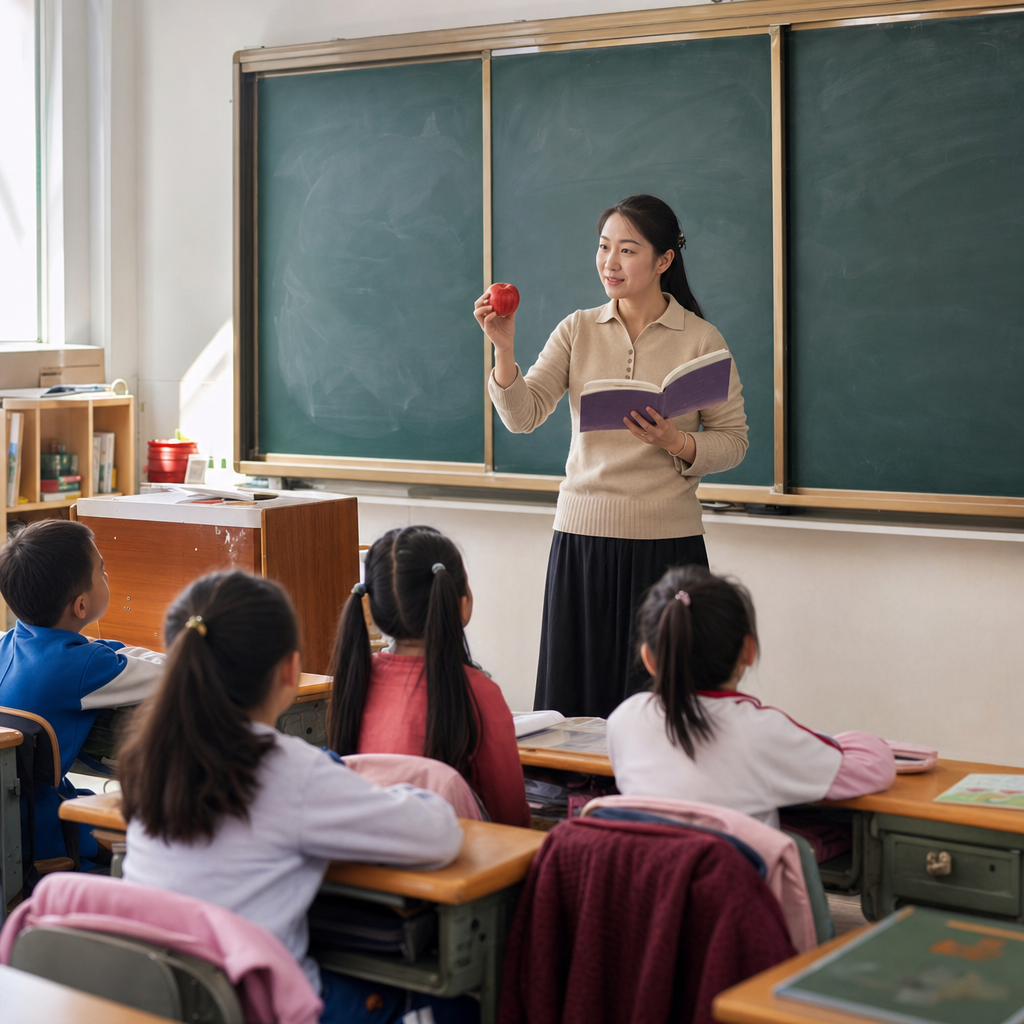
最打动作者的,不是知识点本身,而是孩子们学它的方式。一个穿校服背心的小男孩在说“一只小狗”时,还把两只手缩到胸前,比了个像小狗爪子的动作;另一个女孩说“一张纸”时,手掌在空中平平展开,好像真的捏着一片纸边。量词在成人眼里像语法,在孩子手里却像形状、重量和轮廓。那一瞬间,作者突然明白,小朋友先学量词,不只是因为考试要考,而是因为中文本来就常常借这些小词,把东西“怎么看”一起交给你。
What moved me most was not the knowledge point itself, but the way the children learned it. A boy in a uniform vest said “one puppy” while tucking his hands to his chest like little paws. A girl said “one sheet of paper” while flattening her hand in the air as if she were actually holding the edge of a page. To adults, measure words can feel like grammar. In children’s hands, they feel like shape, weight, and outline. At that moment, I finally understood that children learn measure words early not only because exams require them, but because Chinese uses these small words to teach you how to see things.
量词为什么对外国小朋友特别重要 / Why Measure Words Matter So Much for Foreign Kids
第一,它们让句子更像中文。 如果你只会说“我有书”“桌上有苹果”,别人当然也能懂,可一旦你学会“一本书”“一个苹果”,句子立刻就更自然了。
First, they make your sentence sound more like Chinese. If you say “I have book” or “There is apple on the table,” people may still understand. But once you say “one book” and “one apple” the Chinese instantly sounds more natural.
第二,它们帮你把实物和语言绑在一起。 孩子看见书包,会记住“一个书包”;看见鱼,会更容易记住“一条鱼”;看见路,会慢慢熟悉“一条路”。这不是死背,是把语言系在眼前的东西上。
Second, they tie real objects to language. A child sees a schoolbag and remembers “one schoolbag.” A child sees a fish and more easily remembers “one fish.” A child sees a road and slowly gets used to “one road.” This is not dead memorization. It is tying language to what is in front of you.
第三,它们能减少“翻译式中文”。 很多外国小朋友说中文时,会先在脑子里把英文句子翻一遍再搬过来。量词会迫使你停一下,开始用中文自己的方式组织东西。
Third, they reduce translation-style Chinese. Many foreign children first build a sentence in English inside their heads and then carry it over into Chinese. Measure words force you to pause and begin organizing things in a Chinese way instead.
第四,它们适合用故事记。 你完全可以把“一把伞”“一张票”“一条裤子”放进不同的小场景里记,而不是做一整页枯燥配对题。
Fourth, they are perfect for story-based memory. You can remember “one umbrella,” “one ticket,” and “one pair of pants” through different mini-scenes instead of dry matching exercises.
第五,它们会提高听懂速度。 当你听别人说“一杯”“一件”“一条”时,你的大脑会提前猜到后面可能跟什么,这会让听力突然轻松很多。
Fifth, they improve listening speed. When you hear someone say “one cup,” “one piece,” or “one strip,” your brain starts predicting what may come next, and listening becomes easier very quickly.
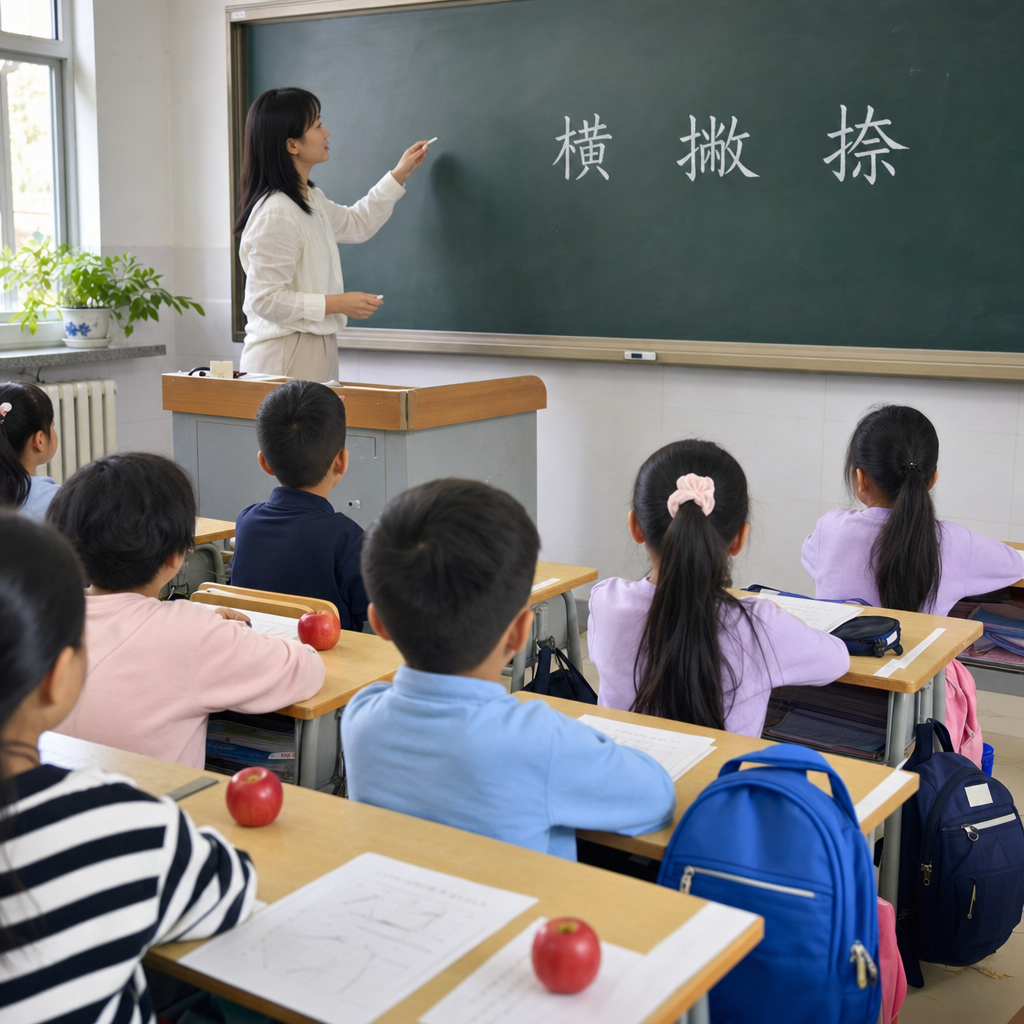
下课后,作者在走廊里又碰见那位老师。她正把苹果重新装回袋子里,袋口摩擦出轻轻的沙沙声。作者问她,为什么低年级这么早就让孩子反复练量词。她笑着说了一句很简单的话:“因为小朋友先要会把东西看清楚,中文才会跟上。”这句话比任何长解释都更有用。原来量词不是附加题,而是中文观察世界的一副小骨架。
After class, I met the teacher again in the hallway. She was putting the apple back into a bag, and the paper rubbed softly as she folded the top. I asked why lower-grade children practice measure words so early and so often. She smiled and answered with one simple sentence: “Because children first need to see things clearly, and then Chinese follows.” That line helped me more than any long explanation. Measure words, I realized, are not an extra detail. They are part of the small frame Chinese uses to observe the world.
如果你是刚学中文的外国小朋友,可以先别一下子背几十个量词。你先从眼前最常见的五个开始:一个人、一本书、一只猫、一张纸、一杯水。然后给每个量词找一个小场景。比如,书桌上放一本书,操场边有一只猫,教室里有人发一张纸,午饭后你喝一杯水。这样记,比单独背表格扎实得多。
If you are a foreign child just starting Chinese, do not try to memorize dozens of measure words at once. Start with five common ones: one person, one book, one cat, one sheet of paper, and one cup of water. Then give each one a tiny scene. A book on the desk. A cat by the playground. A sheet of paper handed out in class. A cup of water after lunch. This kind of memory is much stronger than memorizing a chart by itself.
那天教室窗外的雨后来完全停了,操场边的积水被阳光一点点照亮。孩子们抱着课本往外走时,还在边走边念“一本书、一张纸、一只狗”。作者忽然觉得,这些词之所以会先教给小朋友,不是因为它们难,而是因为它们太贴近日常。中文很多时候并不是让你先去想大道理,它先让你看清桌上的苹果、手里的书包,还有你眼前这个世界到底是什么样子。
By the time class ended, the rain outside had stopped completely, and the shallow water near the playground was slowly catching the sunlight. As the children walked out with textbooks in their arms, they were still murmuring “one book, one sheet of paper, one dog.” I suddenly felt that these words are taught early not because they are difficult, but because they are so close to daily life. Chinese often does not begin by asking you to think about big ideas. It begins by asking you to notice the apple on the desk, the schoolbag in your hand, and what the world in front of you actually looks like.
如果你还想看一个更贴近校门口真实语气的小故事,也可以读读 school-gate Chinese story。
If you want one more story about real Chinese around a school gate, you can also read school-gate Chinese story.

- 大运河边读一座城市 | Reading a City Along the Grand Canal
- 适合送礼的中国茶具 | Chinese Tea Sets as Gifts
- 在中国夜间抵达后,我怎样判断回酒店的路最稳妥 | How I Judge the Safest Way Back to My Hotel After Arriving Late in China
- 新疆最容易拍出大片,可真正决定一条线能不能走顺的是那些留白路段 | Xinjiang Is Easy to Film Spectacularly, but the Blank Stretch Between Highlights Determines Whether the Route Works
- 跨境支付的隐藏成本:汇率、限额与手续费,外国游客怎么少花冤枉钱 | The Hidden Costs of Cross-Border Payment in China: Exchange Rates, Limits & Fees That Catch Tourists Off Guard
- 中国城市的绿色脉络:那些被树荫覆盖的街道 | China's Green Veins: The Tree-Lined Streets That Define Its Cities
- 桂林和阳朔真正迷人的,不只是像画,而是那种愿意把人脚步放慢的山水节奏 | What Truly Charms Guilin and Yangshuo Is Not Only Their Painterly Beauty but the Way the Landscape Slows Your Pace
- 五月高原旅游指南:西藏、青海、云南高原怎么玩 | May Plateau Travel Guide: Tibet, Qinghai, and Yunnan Highlands
- 中国景区门票预约与排队技巧 | Booking Tickets and Beating Queues at Chinese Attractions
- 在吐鲁番的热度里寻找阴影和葡萄 | Seeking Shade and Grapes in Turpan's Heat
Comments (0)