
桂林和阳朔真正迷人的,不只是像画,而是那种愿意把人脚步放慢的山水节奏 | What Truly Charms Guilin and Yangshuo Is Not Only Their Painterly Beauty but the Way the Landscape Slows Your Pace
他们到桂林和阳朔最先拍的是山水像画,但真正该被讲清楚的是“慢”怎么安进路线 | What Creators Notice First in Guilin and Yangshuo Is the Landscape Like a Painting, but What Truly Matters Is How Slowness Gets Built into the Route
国外博主一到桂林和阳朔,最先被镜头抓住的,几乎总是“像画”这件事。山不是只立在远处,而是成排地浮在天边;江面不是只负责反光,而是把整座景观变得更轻、更远、更像被慢慢展开的卷轴。这样的地方太容易被拍成一句话:这里像中国山水画成真了。可如果 TravelCN 只接住这层赞叹,文章很快就会变成空灵的风景句子,最后反而解释不了,为什么这么多真正走过桂林和阳朔的人,会反复强调这条线最重要的,不只是看,而是慢。
When foreign creators reach Guilin and Yangshuo, the camera almost always catches the same first impression: the landscape looks painted. The mountains do not simply stand in the distance. They float in rows at the edge of vision. The river does not merely reflect light. It makes the entire scene feel lighter, farther away, and more like a scroll being opened slowly. Places like this are extremely easy to reduce to one sentence: Chinese landscape painting made real. But if TravelCN catches only that admiration, the article quickly drifts into airy scenery language and fails to explain why people who actually walked Guilin and Yangshuo keep returning to the same point: the route matters not only because of what it shows, but because of how slowly it asks to be taken.
对很多第一次来中国的海外读者来说,桂林和阳朔最大的误区,恰恰不是会不会去,而是会不会把它走得太急。山水型路线和奇景型路线不一样,它并不靠不断把你推到下一个惊叹点来维持强度。它的力量,常常来自重复:一段水边、一段稻田、一段公路、一段清晨的雾,再加一段傍晚光线慢慢往山脚退的过程。国外博主如果真把这条线拍顺了,他们其实拍出来的,不只是风景,而是一种节奏价值。
For many overseas readers coming to China for the first time, the largest misunderstanding about Guilin and Yangshuo is not whether to go there, but whether they will move through it too quickly. A landscape route differs from a pure wonder route. It does not sustain itself by throwing the traveler toward the next exclamation point over and over again. Its power often comes from repetition: one stretch of water, one stretch of rice fields, one section of road, one layer of morning mist, and then one evening in which the light slowly retreats toward the base of the hills. When foreign creators truly film this line well, what they capture is not only scenery. They capture the value of rhythm.
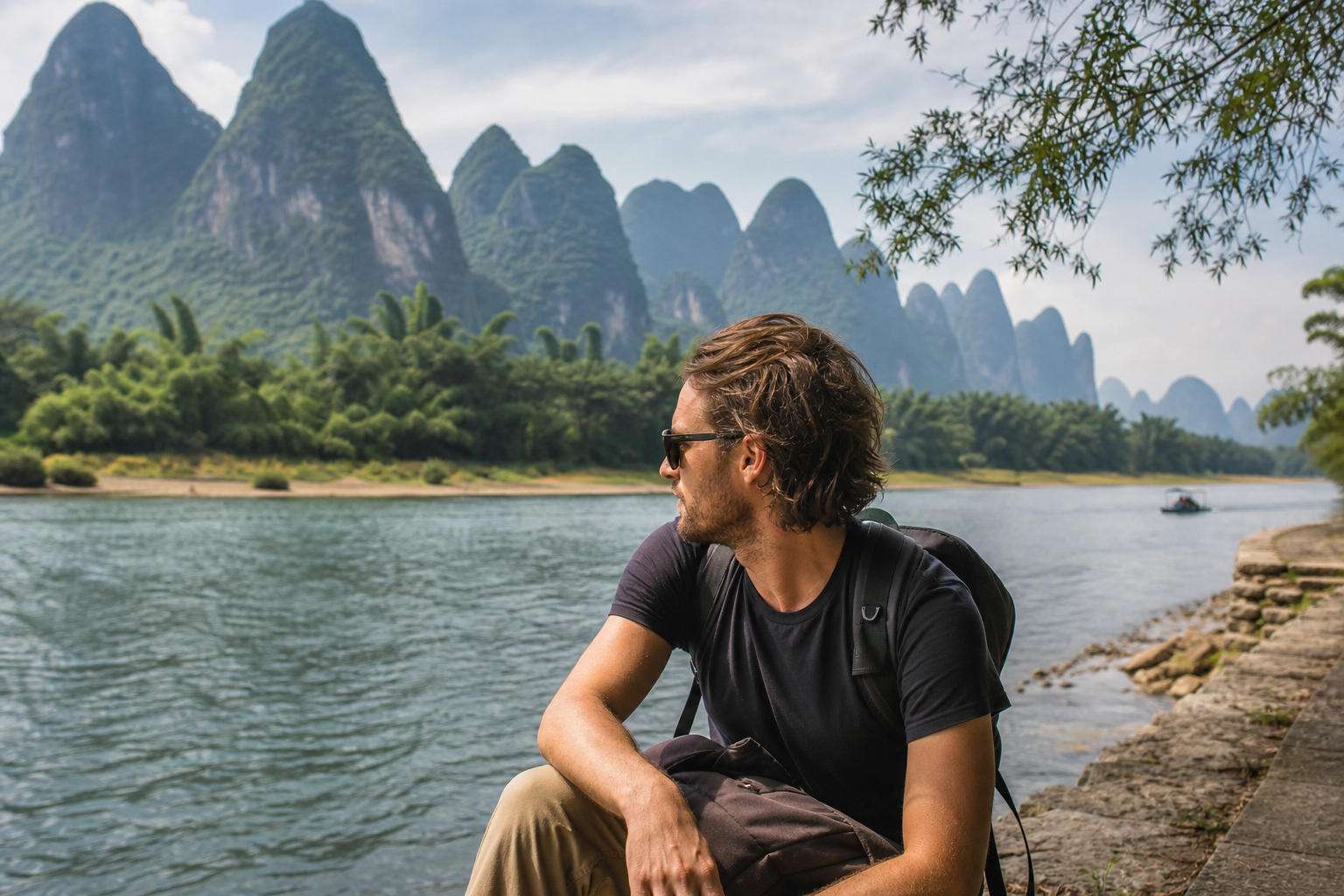
桂林和阳朔为什么总被写成“最像中国”的风景之一 / Why Guilin and Yangshuo Are So Often Written as One of the Landscapes That Feel Most Like “China”
一些国外博主写中国自然景观时,会先被张家界那种强冲击力吸住;而到了桂林、阳朔,镜头的反应方式往往会明显变软。因为这里的山水不是那种一下子把你打住的高压景观,它更像在不断重复“看近一点,再看远一点”。观众看到的不是一次性的大结论,而是一种慢慢建立起来的确定感:原来很多人脑子里关于中国山水的图像,确实是在这里被现实托住的。
Some foreign creators writing about China’s natural scenery are first captured by the hard impact of a place like Zhangjiajie. But when they reach Guilin and Yangshuo, the camera’s response often becomes noticeably softer. The landscape here is not a high-pressure visual force that stops the viewer in one blow. It keeps repeating another instruction: look closer, then look farther. What the audience receives is not one immediate conclusion, but a slowly accumulating certainty that many of the mental images people carry about Chinese landscapes really do find physical support here.
这也是为什么,这类内容不适合只用“壮观”去写。桂林和阳朔的吸引力,不只是强,而是稳。它不像某些地方只靠一两个机位赢得记忆,它更像一条持续给出低强度、但很难厌倦的美感线路。对普通读者来说,这种稳反而很重要,因为它意味着路线不用太拼命,也一样能成立。
That is also why this kind of material should not be written only through spectacle. The attraction of Guilin and Yangshuo is not merely force. It is steadiness. Unlike some destinations that win memory through one or two dramatic viewpoints, this line offers a continuous stream of lower-intensity but surprisingly durable beauty. For ordinary readers, that steadiness matters because it suggests that the route does not have to be conquered aggressively in order to feel worthwhile.
真正值得 TravelCN 补上的,是“山水路线不是用来赶的” / What TravelCN Most Needs to Add Is That a Landscape Route Is Not Meant to Be Rushed

国外公开视频很容易把桂林、阳朔剪成很流畅的一条视觉带:船、山、路、稻田、自行车、日落,仿佛整段旅程都在持续给出同一种轻松感。可实际走起来,真正有价值的地方恰恰是你愿不愿意把步子降下来。早上是不是愿意早一点出门去看雾还没散完的河边,中午是不是敢留一段空白不给新景点,傍晚是不是愿意只在一条路上慢慢走,而不是想把所有最好看的角度一晚打尽。
Foreign public video easily cuts Guilin and Yangshuo into a seamless visual ribbon of boats, hills, roads, rice fields, bicycles, and sunset, as if the entire journey produces the same easy feeling without interruption. But on the ground, the real value lies in whether the traveler is willing to reduce pace. Will they leave early enough to see the riverside before the mist has fully gone? Will they dare to leave part of midday intentionally blank rather than forcing another stop into it? Will they spend the evening on one road slowly instead of trying to conquer every beautiful angle in a single night?
这就是为什么,第三方报道体不该只说“这些国外博主觉得这里很诗意”,而要继续往下写:诗意到底是怎么被走出来的。它不是某个滤镜,也不是某个角度,而是路线里故意保留出来的慢段。慢段一没了,桂林和阳朔就容易被走成普通打卡地;慢段一保住,这条线才会长出它真正的气质。
That is why a third-person reported article should not stop at saying these foreign creators found the area poetic. It needs to continue downward and explain how that poetry is actually walked into being. It does not come from a filter or a single angle. It comes from slower segments deliberately protected inside the route. Once those segments disappear, Guilin and Yangshuo can be flattened into ordinary checklist scenery. Once they are preserved, the line begins to show its true character.
这类路线最强的地方,不是高峰,而是“持续成立” / The Strength of This Route Is Not a Single Peak, but the Fact That It Keeps Working
张家界那样的路线,常常要解决的是“奇景和奇景之间怎么不过载”;桂林、阳朔这条线要解决的则是另一种问题:为什么景色看起来没有每一分钟都在爆发,却还是让人越走越舍不得离开。原因就在于它的美不是尖的,而是铺开的。你第一眼觉得好看,第三眼还是好看,第五次停下来也依旧成立。这种持续成立的能力,才是很多国外博主愿意反复拍这类山水的真正原因。

A route like Zhangjiajie often has to solve the problem of how spectacle connects to spectacle without overload. The Guilin–Yangshuo line solves a different problem: why a landscape that does not explode every minute can still make people increasingly reluctant to leave. The answer is that its beauty is not sharp but spread out. It looks good the first time, the third time, and even the fifth time one stops to look. That ability to keep working is precisely why many foreign creators keep returning to this kind of scenery.
对于 TravelCN 而言,这种“持续成立”特别适合转写成文章,因为它意味着读者会真正从文本里学到行程安排,而不只是获得一次视觉种草。什么时候该把自行车段放进去,什么时候该让船程成为主轴,什么时候干脆只保留一段河边步行——这些安排一旦写出来,桂林和阳朔就不再只是一个“看图很美”的地方,而会变成一条更会留住人的中国山水路线。
For TravelCN, this capacity to keep working is especially suitable for article form because it means readers can genuinely learn itinerary design rather than merely receive visual temptation. When should a bicycle segment be inserted? When should the boat ride become the main axis? When is it better to leave only one riverside walking stretch? Once such choices are written clearly, Guilin and Yangshuo stop being merely places that look beautiful in pictures and become a Chinese landscape route better able to hold people inside it.
公开素材来源 / Public Source Notes
- 基于国外博主公开可见的桂林/阳朔山水路线内容切口重写,偏“山水路线如何通过慢段成立”的报道体分析。
- 不做整段搬运,重点转写路线与节奏逻辑。
Public source note:
- Rewritten from publicly visible foreign-creator angles on Guilin and Yangshuo, focusing on how a landscape route is sustained through slower segments.
- No wholesale reproduction is used; the emphasis is on route rhythm and pacing logic.
- 成都大熊猫与宽窄巷子 | Chengdu: Giant Pandas & Kuanzhai Alley
- 六月毕业旅行目的地推荐 | June Graduation Trip Destinations in China
- 在成都用手机付款的一天 | A Day of Mobile Payments in Chengdu
- 我在长沙坡子街连吃四样小吃:臭豆腐到底怎么选 | Four Snacks in Pozi Street, Changsha: How I Chose Stinky Tofu
- 我在中国学会求助,不是因为无助,而是因为这里的回应速度太真诚 | I Learned to Ask for Help in China Not Because I Was Helpless, but Because People Responded So Honestly
- 中国免签政策 | China's Visa-Free Policies Fully Decoded (2025-2026)
- 在中国住酒店前先懂这五件事:押金、电梯、外卖和静音时间 | Five Things to Know Before Staying in Hotels in China
- 我在上海小学门口等放学时,第一次真正听懂“你吃了吗”为什么不是在问饭 | Waiting Outside a Shanghai Primary School, I Finally Understood Why “Have You Eaten?” Is Not Really About Food
- 在中国保持联网 | Staying Connected in China
- 在建水古井边安排一场慢旅行 | A Slow Journey Around Jianshui's Ancient Wells
Comments (0)