
我站在屋檐下面,才明白中国古建筑为什么先让人慢下来 | I Understood Why Traditional Chinese Architecture Slows the Body Only After Standing Under the Eaves
我站在屋檐下面,才明白中国古建筑为什么先让人慢下来 | I Understood Why Traditional Chinese Architecture Slows the Body Only After Standing Under the Eaves
那天傍晚的风不大,可檐角下面的空气明显比院子中央安静。我是跟着一位修木构多年的老师傅走进这座旧建筑院落的,鞋底刚从外面的石路踩到门内略微发暗的砖地上,身体就先自己收了一下。不是因为有人提醒我小声,也不是因为这里写着什么规矩,而是屋檐、门框、柱子、台基和光线一起,把人的动作慢慢拢住了。外面还有人说话,巷子里也还有车轮压过地面的轻响,可你一站到檐下,就会本能地不想把步子迈得太散。
The wind that evening was not strong, yet the air under the eaves was noticeably calmer than the air in the middle of the courtyard. I had entered the old architectural compound behind a master carpenter who had spent years repairing timber structures. The moment the soles of my shoes left the stone path outside and landed on the darker brick surface inside the gate, my body drew inward on its own. It was not because anyone told me to be quiet, and not because some written rule demanded it. It was because the eaves, the gate frame, the columns, the raised base, and the light all worked together to gather my movements little by little. Outside, people were still talking, and somewhere in the lane a wheel still scratched over the ground. But once you stand under the eaves, you instinctively stop wanting to let your steps spread too wide.
很多人第一次看中国古建筑,会先说壮观、对称、古老,或者拍一张正立面的照片就走。我以前也这样。可后来我越来越觉得,真正厉害的地方根本不在“远看像什么”,而在“走进去以后身体会发生什么”。中国古建筑不是把人挡在外面让你欣赏,它常常是在你往里走的时候,悄悄调整你的速度、视线和站姿。你会开始注意哪里该停,哪里该侧身,哪里应该先抬头看一眼,再往前跨一步。
The first time many people look at traditional Chinese architecture, they say it is grand, symmetrical, ancient, and then take a frontal photograph before leaving. I used to do the same. But over time I began to feel that its true power lies not in what it resembles from afar, but in what happens to the body once you enter it. Traditional Chinese architecture does not merely stand outside itself waiting to be admired. Very often, as you move through it, it quietly adjusts your pace, your line of sight, and the way you stand. You begin to sense where you should pause, where you should angle your body, and where you ought to lift your head first before taking another step.
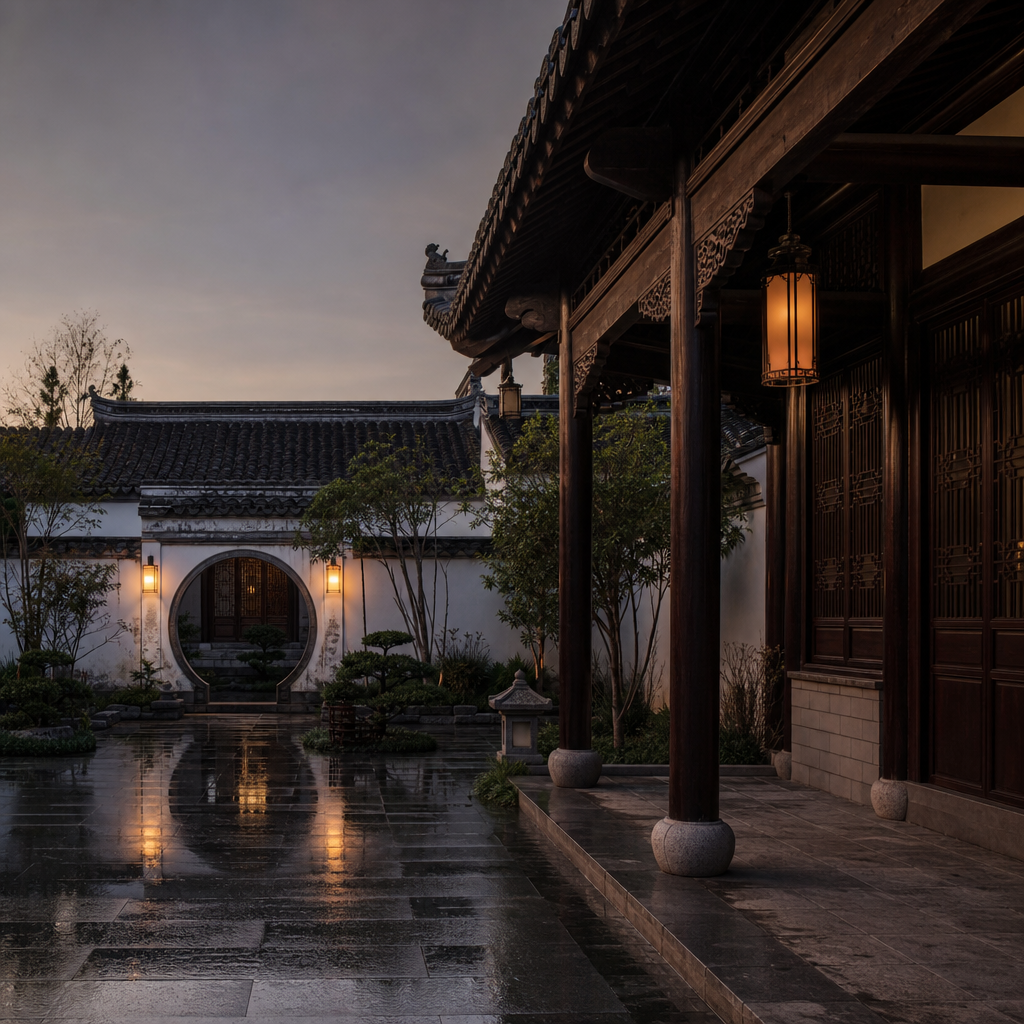
带我进去的老师傅姓姚,手背很粗,指甲缝里总留着一点洗不净的木灰。他没先跟我讲朝代,也没先讲名词,只让我别急着拍照,先站在檐下看一会儿。他说,屋檐不是只拿来遮雨的。说完他拿脚尖轻轻点了点台基边缘,又往后退半步,让我看柱子和阴影是怎么把门口这块地方“定”住的。那一刻我突然懂了,为什么很多中国古建筑看起来不吵。不是因为它们没细节,而是因为细节都在给秩序打工。
The craftsman guiding me was surnamed Yao. The backs of his hands were rough, and fine wood dust seemed permanently lodged in the edges of his nails. He did not begin with dynasties, and he did not begin with terminology. He only told me not to rush into taking photographs and to stand under the eaves for a while first. The eaves, he said, were not there only to keep out rain. Then he touched the edge of the stone base lightly with his toe and stepped back half a pace, showing me how the columns and the shadow line fixed the entrance zone into place. At that instant I suddenly understood why so many traditional Chinese buildings never feel visually noisy. It is not because they lack detail. It is because every detail is working in service of order.
先看屋檐,不然你会错过一半 / Start with the Eaves, or You Miss Half the Story
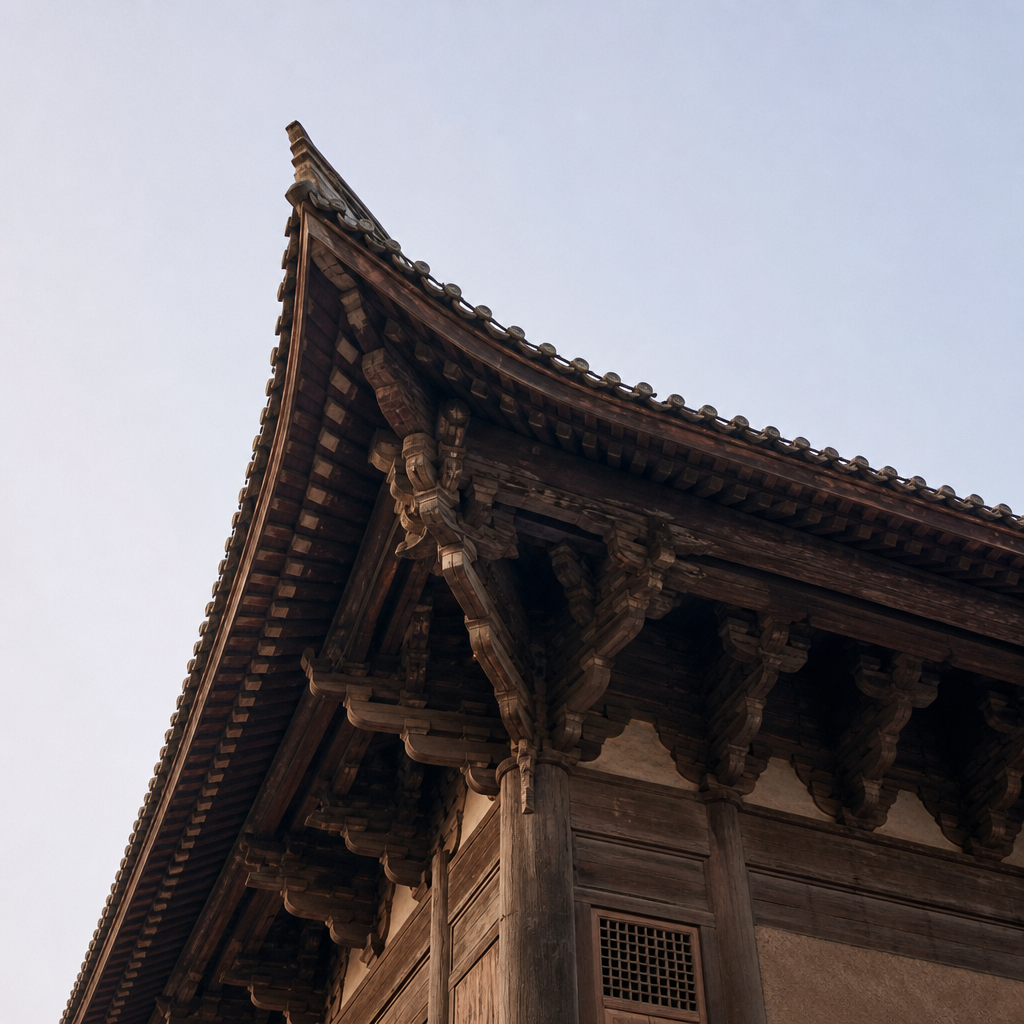
如果让我教一个第一次看中国古建筑的人从哪儿开始,我不会先让他盯着屋顶全貌。我会先让他站得离建筑稍微近一点,看屋檐是怎么伸出来的。那不是一个平平的遮盖动作,而是一个很有分寸的“邀请”。它把太阳、雨水和落下来的影子都接住一点,然后在人的头顶前方留出一块过渡空间。你还没正式进屋,身体已经先从外面的亮和空,过渡到里面的稳和收。
If I had to teach someone where to begin when looking at traditional Chinese architecture for the first time, I would not start with the whole roofline. I would ask that person to move a little closer and study the way the eaves project outward. This is not a flat, mechanical gesture of covering. It is a carefully measured form of invitation. The eaves receive sunlight, rain, and falling shadow, and then leave a transitional space just ahead of the human head. Before you formally enter the building, your body has already begun shifting from the brightness and openness of outside into the steadiness and containment of inside.
姚师傅跟我说,很多外行看建筑总爱看“像不像宫殿”,其实普通木构最值得看的常常是檐下那点距离。长一点,压人;短一点,没气;角度太生硬,雨线不好看,影子也不好看。听他这样讲,我才发现自己以前拍古建筑总是拍得太满。我只想把它整座收进画面里,却没意识到人真正会记住的,往往是自己站在檐下时那种差一点就淋到雨、又刚好没淋到的身体感觉。
Master Yao told me that outsiders often stare at architecture and ask whether it resembles a palace, yet in ordinary timber structures the most worth seeing is often the small span under the eaves. If the projection is too long, it becomes oppressive. If it is too short, the building loses breath. If the angle is too stiff, neither the line of rain nor the line of shadow will look right. Listening to him, I realized that I had always photographed old buildings too fully, trying to capture the entire structure in one frame. I had never understood that what a person really remembers is often the bodily sensation of standing just under the eaves—almost caught by rain, yet not quite touched by it.
柱子不是竖在那里,它在管你的路线 / The Columns Are Not Just Standing There, They Are Managing Your Route
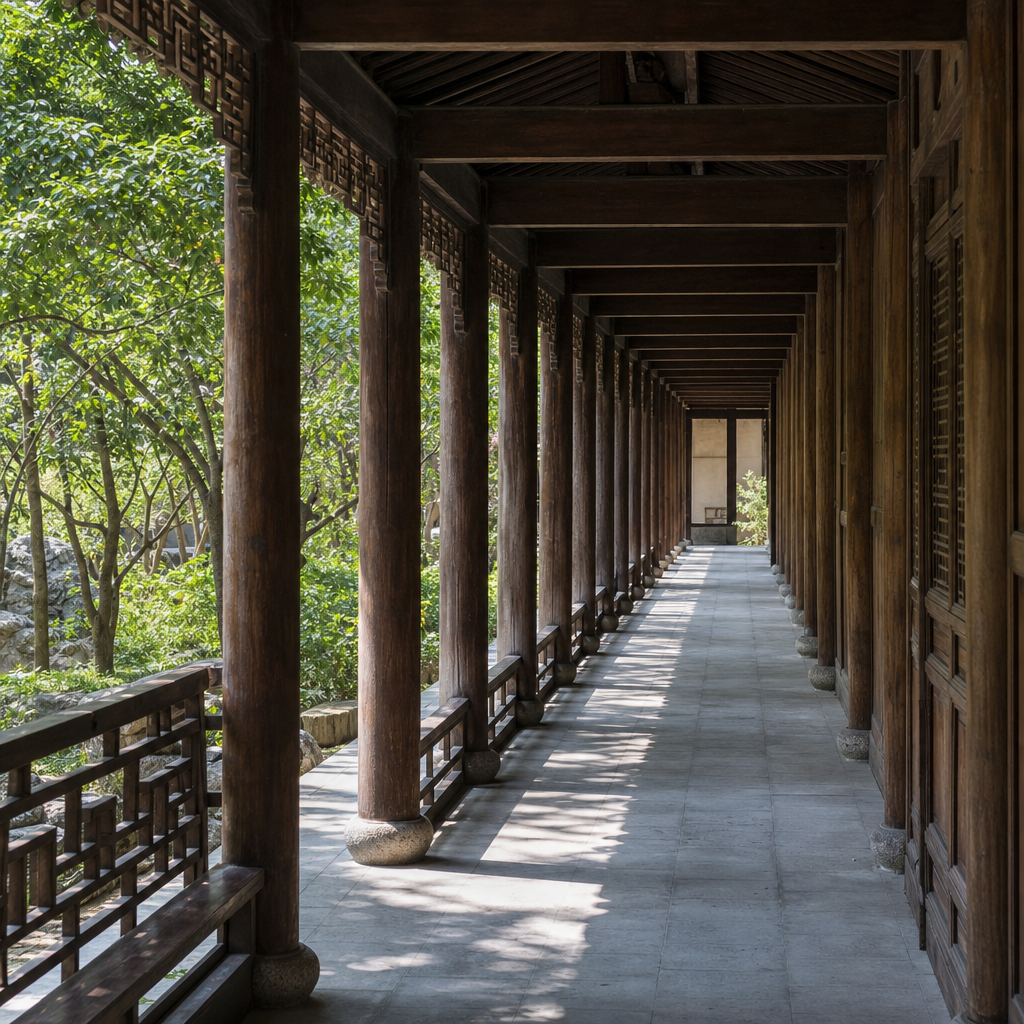
我以前总把柱子当背景,后来才知道它们几乎是在安排人的移动。院子里如果只有空地,你会走得很随便;可一旦柱列出现,你的路线就开始被轻轻修正。你会更愿意沿着廊走,更愿意在柱子之间停一下,更愿意把目光顺着前方一格一格送出去。中国古建筑的有趣之处,在于它很少粗暴地命令人,可它又确实在温和地组织你。
I used to treat columns as background. Only later did I understand that they nearly arrange human movement. If a courtyard is nothing but open ground, you walk carelessly. But once a row of columns appears, your path begins to receive gentle correction. You become more willing to move along the corridor, more willing to pause between columns, more willing to send your gaze outward bay by bay. One of the fascinating things about traditional Chinese architecture is that it rarely commands people harshly, yet it still organizes them with unmistakable softness.
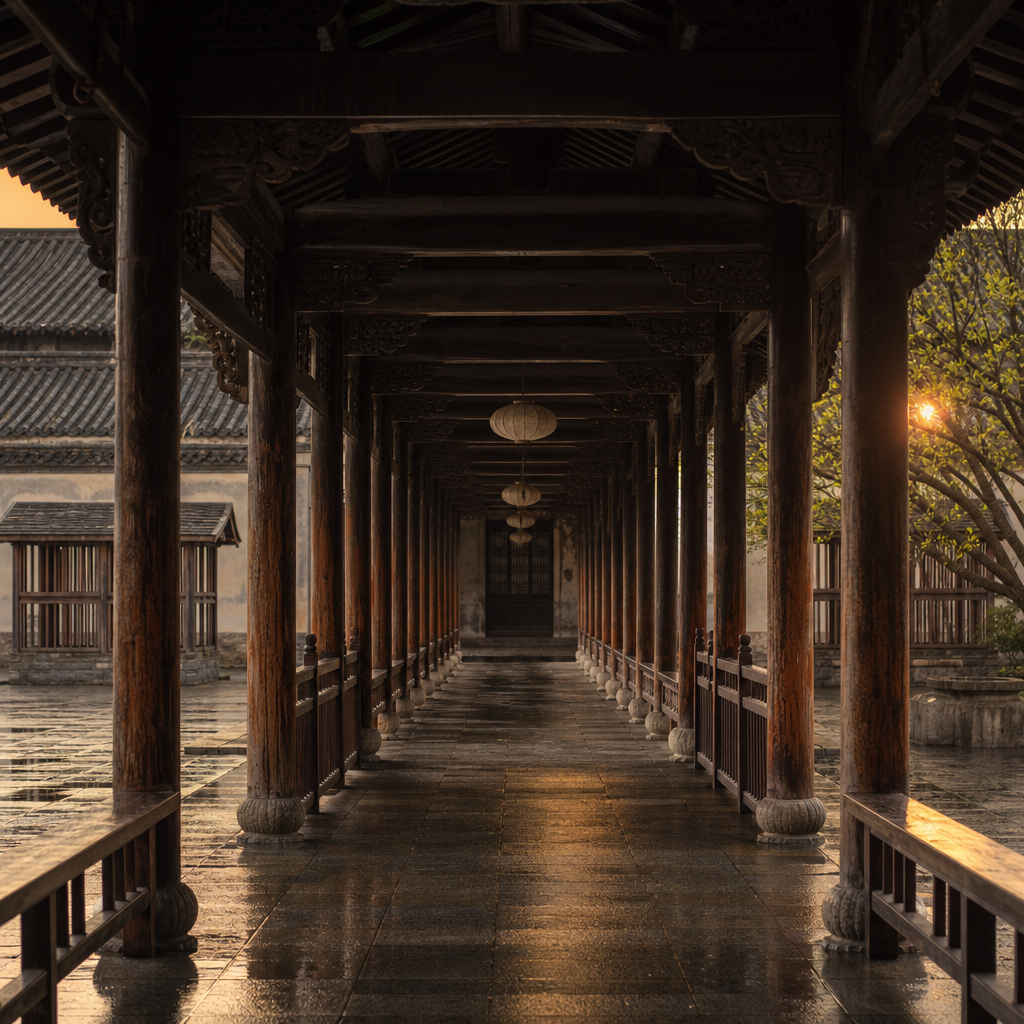
姚师傅让我沿着一侧长廊走了一遍。他走在前面,脚步很轻,可每次经过柱子时都会微微停顿一下,好像不是他故意停,而是建筑自己把节拍给出来了。廊外的树影被风吹得一格一格地动,柱础下方则稳得几乎不动。走到第三根柱子的时候,他回头问我,有没有发现这里的“快”和“慢”不是平均分布的。我一下就懂了。开敞处让你快,收住处让你慢;亮处让你往前,暗处让你收心。这种安排比任何导览牌都更聪明。
Master Yao led me once along one side of the corridor. He walked ahead lightly, but each time he passed a column he paused almost imperceptibly, as though he were not deliberately stopping and the building itself had simply given the rhythm. Outside the corridor, shadows from the trees shifted one bay at a time in the wind, while the stone bases below the columns remained almost completely still. By the time we reached the third column, he turned and asked whether I had noticed that the quick and slow moments here were not evenly distributed. I understood immediately. Open zones make you move faster. Gathered zones make you slow down. Brightness invites you forward. Dimness asks you to collect yourself. This arrangement is more intelligent than any explanatory signboard.
如果你曾经读过站内那篇写宋代起居的文章,就会知道我为什么总把建筑和生活放在一起看。家具、门、窗、屋檐、走廊,它们不是分开的美学对象,而是一起决定人怎么拿东西、怎么转身、怎么坐下、怎么避雨。中国古建筑让我最佩服的,不是它能不能被拍得很雄伟,而是它总在帮日常动作找位置。
If you have read the site's piece on Song daily life, you may understand why I keep looking at architecture and daily living together. Furniture, doors, windows, eaves, and corridors are not separate aesthetic objects. Together they decide how a person lifts an object, turns the body, sits down, or avoids rain. What I admire most in traditional Chinese architecture is not whether it can be photographed majestically, but how consistently it finds a place for ordinary human actions.
斗拱、柱础和那些不肯抢戏的细节 / Dougong, Column Bases, and Details That Refuse to Show Off
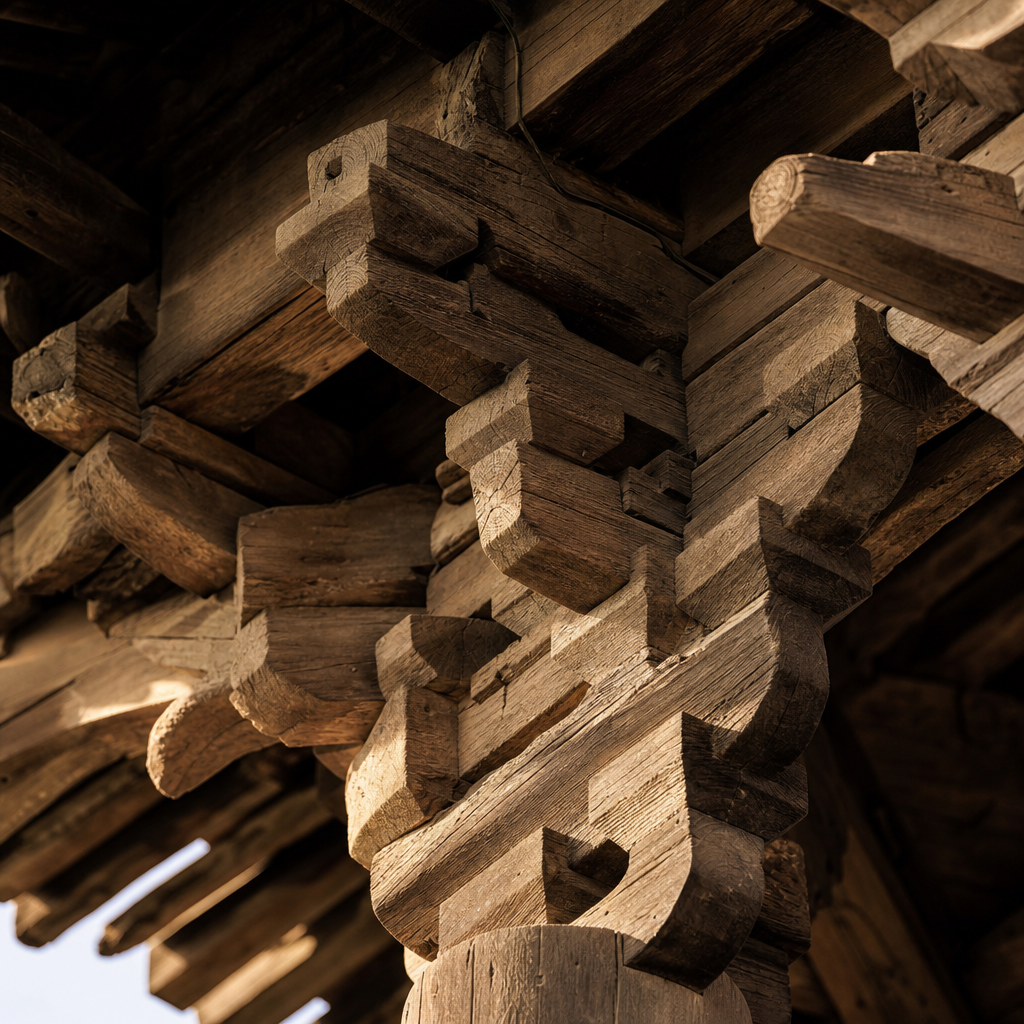
真正让我安静下来的,是细节。尤其是那些并不急着朝你大喊“看我”的细节。斗拱就是这样。很多人知道它重要,也知道它漂亮,可如果只是把它当雕花看,就还是看浅了。姚师傅抬手让我看檐下层层咬合的木件,说它们不是为了炫技巧才长成这样,而是因为力要这样转,重量要这样分,檐子才能既伸出去又不显得笨。那一瞬间我忽然觉得,中国古建筑最动人的地方,往往是力学被做成了气质。
What finally made me grow quiet was detail, especially detail that does not hurry to shout look at me. Dougong brackets are like that. Many people know they are important, and many know they are beautiful. But if you treat them only as carving, you still see them too shallowly. Master Yao lifted his hand and asked me to study the layered wooden members interlocking beneath the eaves. They had not grown into that form to display skill for its own sake. They looked that way because force had to turn that way, and weight had to divide that way, if the roof were to extend outward without becoming clumsy. In that moment I suddenly felt that one of the deepest charms of Chinese architecture lies in how mechanics becomes temperament.
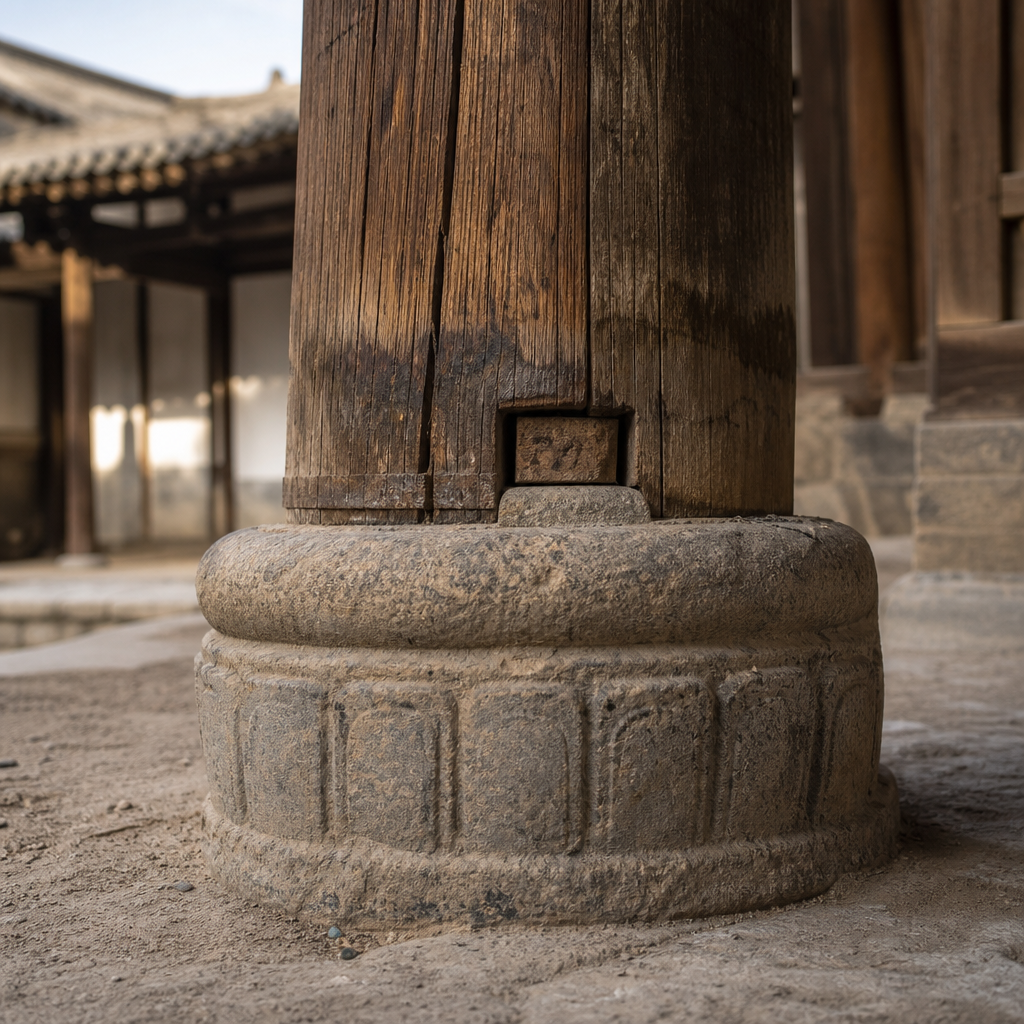
柱础也一样。很多游客从它旁边走过去,几乎不会停。可你若真蹲下来一点看,就会发现柱子和地面之间不是随便落下去的。那种抬离、承接、过渡,像一句话里故意留出来的顿点。它不夸张,却让整根柱子站得更有理由。建筑里最厉害的秩序,常常不是把东西堆满,而是在必要的地方给出一个准确的停顿。
Column bases are the same. Many visitors walk right past them without stopping. But if you lower yourself slightly and truly look, you notice that the meeting between column and ground is never casual. There is lift, support, and transition, like a pause deliberately kept within a sentence. It is not dramatic, yet it gives the entire column a better reason to stand. The strongest order in architecture often comes not from filling everything up, but from placing an exact pause where it is needed.
最后我记住的,不是一整座楼,而是一条影子 / In the End, What I Remember Is Not the Whole Building, but a Single Shadow Line
快离开的时候,天已经有点暗了。姚师傅没有带我去找最气派的角度,只是让我回头再看一眼长廊尽头。那时檐下的影子已经更深,廊外地面还留着白天雨后的微亮反光,木柱一根一根往里退,像把时间也一起收进去。我忽然明白,中国古建筑为什么总让人慢下来,不是因为它陈旧,也不是因为它神秘,而是因为它对“过渡”这件事处理得太好了。亮和暗、里和外、快和慢、看和走,它从不粗暴切断,总是给你一小段可以把身体和心都放稳的距离。
By the time we were leaving, evening had already darkened a little. Master Yao did not guide me toward the grandest angle. He only asked me to turn back once more and look at the far end of the corridor. By then the shadows under the eaves had deepened, while the ground outside still held a faint reflective brightness from the earlier rain. The timber columns retreated one by one into the depth, as though gathering time inward with them. I suddenly understood why traditional Chinese architecture slows people down. It is not because it is old, and not because it is mysterious. It is because it handles transition so well. Light and shadow, inside and outside, fast and slow, looking and walking—it never cuts these things apart violently. It always leaves a small span where both body and mind can come to rest.
我离开院子时,檐边最后一滴水正好掉下来,落在台基旁边,没有溅到我身上。我站了一秒,没有立刻走。对我这种外来者来说,这类建筑最珍贵的地方并不是它代表了什么宏大文化口号,而是它真的会在一个具体瞬间里教你怎么慢一点,怎么站稳一点,怎么把注意力从“拍下来”改成“感受到”。后来我再看中国古建筑,先看屋檐,再看柱子,再看那条把人轻轻收住的影子线。剩下的气魄,反而会自己慢慢显出来。
As I left the courtyard, the final drop of water from the eaves fell beside the raised base without splashing onto me. I stood there for a second and did not walk away immediately. For an outsider like me, the most precious thing about architecture like this is not that it stands for some grand cultural slogan. It is that in one specific moment it can genuinely teach you how to slow slightly, how to stand a little more steadily, and how to shift attention from capturing an image to feeling a place. Ever since then, when I look at traditional Chinese architecture, I start with the eaves, then the columns, then the shadow line that quietly gathers the body inward. The grandeur reveals itself later, on its own.
- 我在高铁站丢过方向,但没丢掉行程 | I Lost My Direction at a High-Speed Railway Station but Not My Trip
- 上海外滩与弄堂文化探索 | Shanghai: The Bund & Longtang Culture
- 南京城墙夜走笔记:历史不是展板,是脚下的坡度 | Night Walk on Nanjing City Wall: History Felt Through the Slope
- 木版年画体验:我第一次在一张纸上看见“过年”被印出来 | Woodblock New Year Print Experience: The First Time I Saw New Year Spirit Printed onto Paper
- 学会说“麻烦了”之后,我在中国的人际距离一下子变顺了 | After I Learned to Say Máfan Le, My Social Distance in China Suddenly Became Smoother
- 在西安回民街吃一天,胃和钱包都很满足 | A Full Day of Eating on Xi'an Muslim Quarter
- 泉州西街入夜以后,一盏圆灯就能把面线糊和人情都照热 | Once Night Falls on West Street in Quanzhou, One Round Lamp Can Warm Both Noodles and Human Feeling
- 第一次在中国水果店买西瓜,我学会先说想现场切还是带走 | The First Time I Bought Watermelon in a Chinese Fruit Shop, I Learned to Say Whether I Wanted It Cut to Eat Now or Taken Home
- 走进中国56个民族:旅行者的少数民族文化指南 | Exploring China's 56 Ethnic Groups: A Traveler's Guide to Minority Cultures
- 中国城市的绿色脉络:那些被树荫覆盖的街道 | China's Green Veins: The Tree-Lined Streets That Define Its Cities
Comments (0)