
宁波码头边的海鲜饭,不是菜单教会我的 | Seafood Rice Beside a Ningbo Pier Was Not Something the Menu Taught Me
宁波码头边的海鲜饭,不是菜单教会我的 | Seafood Rice Beside a Ningbo Pier Was Not Something the Menu Taught Me
我到宁波那天下午,雨刚停,码头边的水面还带着灰色的皱纹。风从船缝里吹出来,有盐味,也有柴油和湿木头的味道。朋友说附近有家做海鲜饭的小店,菜单不复杂,但最好别只盯着菜单看。我当时没太明白这句话,以为不过是让人看看当天有什么新鲜货。直到我站在店门口,看见塑料筐里还在滴水的虾、蛤蜊和小黄鱼,听见老板跟渔船上的人隔着几步喊价,才知道这顿饭的第一行字,其实写在菜单外面。
When I arrived in Ningbo that afternoon, the rain had just stopped, and the water beside the pier still carried gray wrinkles. Wind came through the gaps between boats, smelling of salt, diesel, and wet wood. A friend said there was a small place nearby that made seafood rice. The menu was simple, he told me, but it was better not to stare only at it. I did not understand at first and thought he simply meant I should check what was fresh that day. Only when I stood at the doorway, saw shrimp, clams, and small yellow croaker still dripping in plastic baskets, and heard the owner bargaining with people from a fishing boat a few steps away did I realize that the first line of this meal was written outside the menu.
店里有两张长桌,几张矮凳,墙上贴着手写价目表。所谓海鲜饭,并不是一个固定得像公式的菜名。老板问我几个人、能不能吃葱姜、要汤饭还是干一点、预算大概多少。我原本准备说“来一份招牌”,话到嘴边却被这些问题拦住。菜单上写着虾饭、蟹饭、蛤蜊饭、杂海鲜饭,看上去清楚,但真正开始点单时,选择忽然变成了现场的事:今天什么活、什么肥、什么适合下饭,什么虽然贵却不一定值得。那一刻我意识到,在码头边吃饭,点菜不是从菜名开始,而是从当天的海水开始。
Inside, there were two long tables, a few low stools, and a handwritten price list on the wall. What they called seafood rice was not a dish fixed like a formula. The owner asked how many people were eating, whether I could take scallion and ginger, whether I wanted it soupy or drier, and roughly how much I wanted to spend. I had been ready to say, “give me the signature one,” but those questions stopped the words. The menu listed shrimp rice, crab rice, clam rice, and mixed seafood rice, all seemingly clear. Yet once ordering began, choice became a matter of the scene itself: what was lively today, what was fat, what suited rice, and what was expensive but not necessarily worth it. At that moment I realized that beside a pier, ordering does not begin with dish names. It begins with the day’s seawater.
老板把我带到门口的筐边,像带人看一块正在变化的黑板。他捞起几只虾,虾须还在抖;又翻开一篮蛤蜊,说这批泥吐得干净,适合做汤底;小黄鱼个头不大,但眼睛亮,肉甜;梭子蟹刚过最肥的时候,想吃也能做,只是放进饭里未必比清蒸更划算。他说话不慢,却每句话都有判断。我听着听着,忽然觉得自己不是顾客在挑食材,而是学生在听一节关于潮水、季节和锅气的课。课本挂在墙上,真正的内容却躺在筐里。
The owner led me to the baskets by the door, as if showing me a blackboard that kept changing. He lifted a few shrimp whose whiskers were still trembling. He opened a basket of clams and said this batch had cleaned out their sand well, good for making a broth base. The small yellow croaker were not large, but their eyes were bright and the meat would be sweet. Swimming crab had just passed its fattest moment; he could cook it if I wanted, but in rice it might not be as worthwhile as steaming it plain. He did not speak slowly, yet every sentence carried judgment. As I listened, I felt less like a customer choosing ingredients and more like a student attending a lesson on tide, season, and wok heat. The textbook hung on the wall, but the real content lay in the baskets.
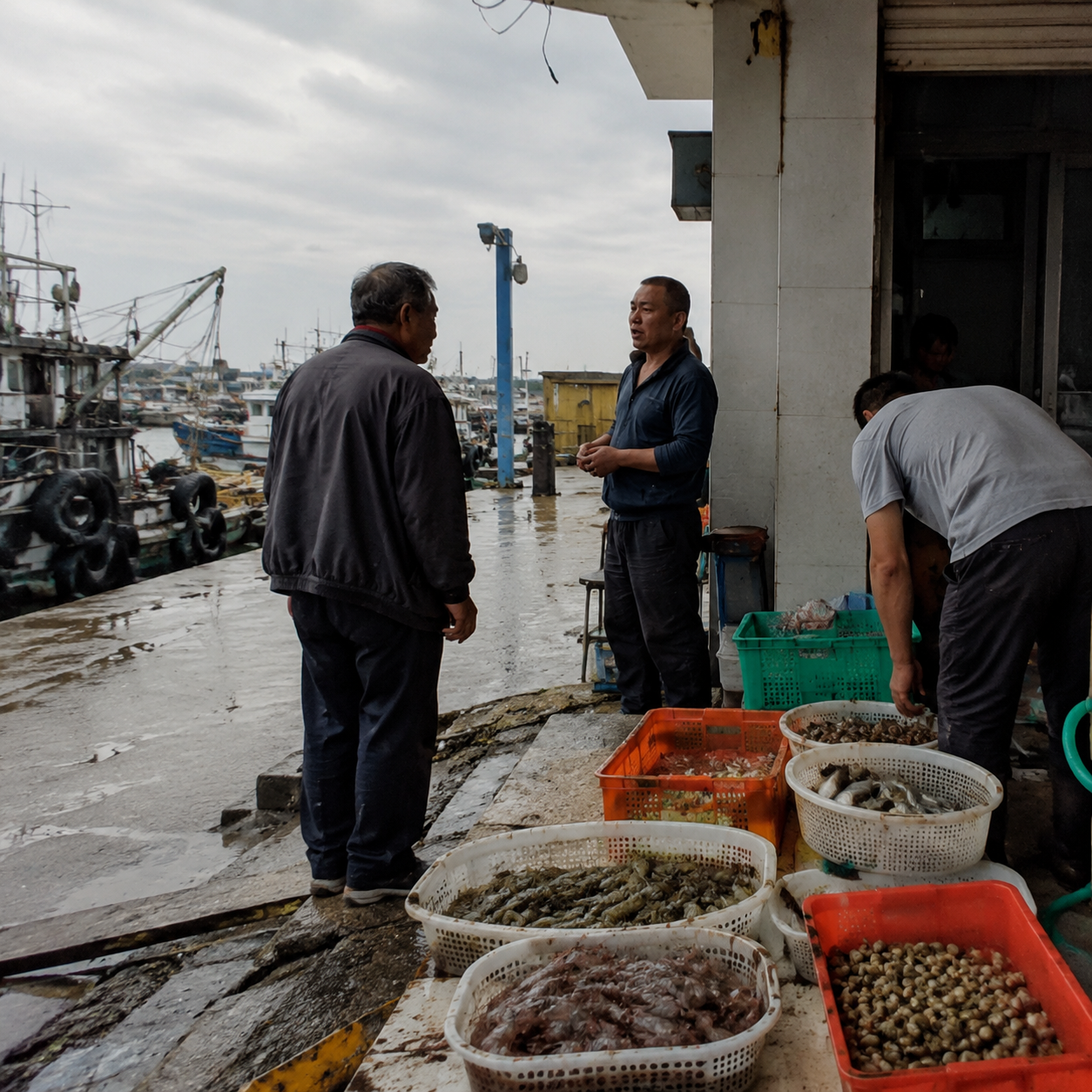
最后我点了一份蛤蜊、虾和小黄鱼的海鲜饭。老板建议汤饭,理由是雨后风凉,蛤蜊汤底也好。他没有把米饭和海鲜简单混在一起,而是先把姜片和葱白下锅,油声响起来后放入小黄鱼略煎,再加水熬出底味。蛤蜊进锅时,壳一个个张开,像很小的门。虾最后才放,颜色从青灰转成橘红,速度快得让人来不及分神。米饭被倒进汤里时,锅里声音忽然变得柔和,海鲜的鲜味像被米粒一颗颗接住。
In the end I ordered seafood rice with clams, shrimp, and small yellow croaker. The owner suggested a soupy version because the wind after rain was cool and the clams would make a good base. He did not simply mix rice and seafood together. First he put ginger slices and the white parts of scallions into the wok. When the oil began to speak, he added the small fish and seared them briefly, then poured in water to draw out a foundation of flavor. When the clams entered, their shells opened one by one like tiny doors. The shrimp went in last, turning from blue-gray to orange-red so quickly that there was no time to look away. When rice was poured into the broth, the sound in the wok softened, and the seafood’s freshness seemed to be caught by each grain.
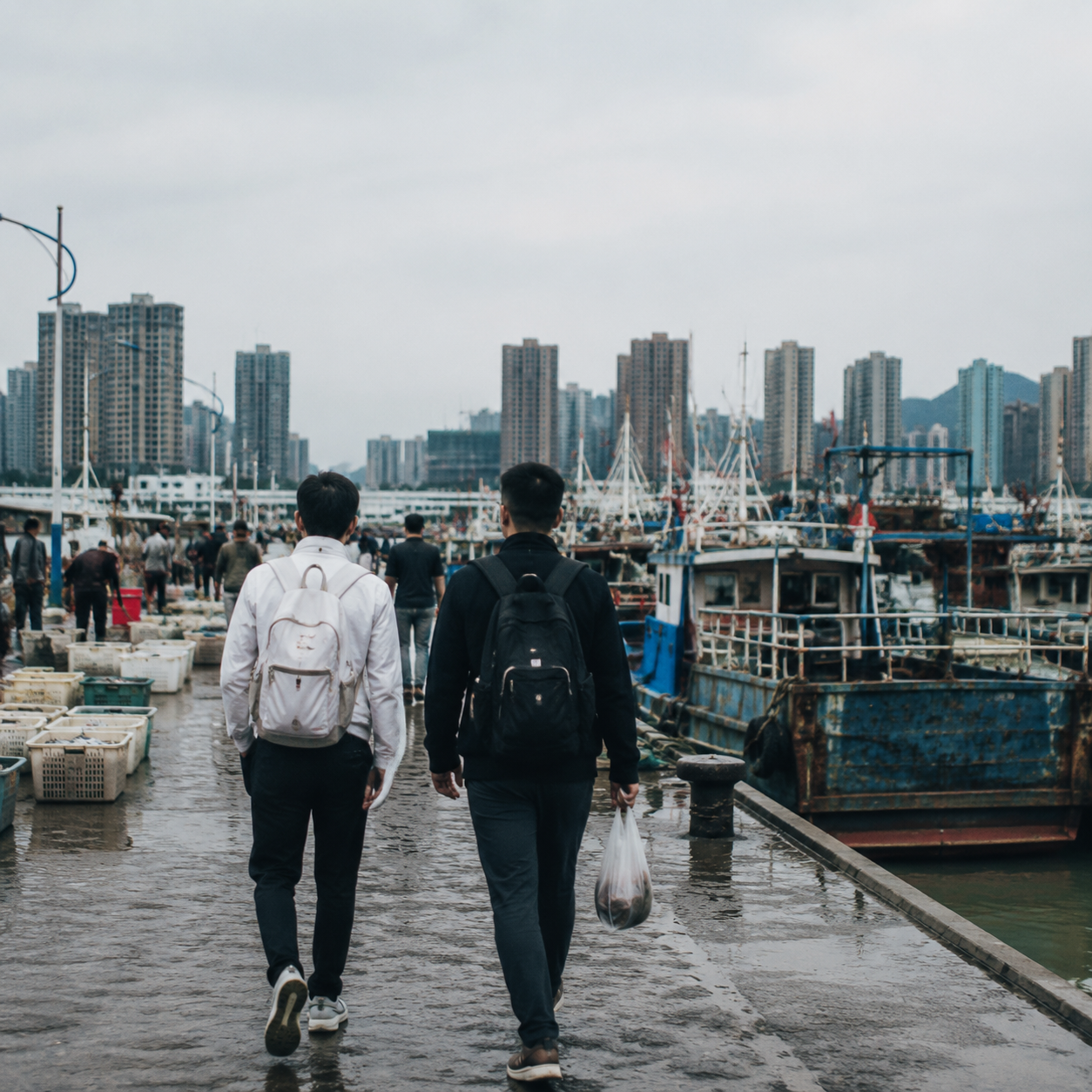
我坐在靠门的位置,能看见码头上的人来回搬货。有人穿着雨靴,把空筐摞得很高;有人蹲在船边冲洗甲板;还有骑电动车的阿姨停下来问今天有没有便宜的小杂鱼。店里没有刻意营造海边氛围,因为氛围已经从门口涌进来了。风把塑料门帘吹得一下一下贴在门框上,锅里的蒸汽往外跑,外面的潮气又往里进。这样的地方不需要装饰成“海鲜主题”,它本来就在海鲜的上游几步远,所有声音都还带着刚上岸的湿。
I sat near the door and could see people moving goods back and forth on the pier. Some wore rain boots and stacked empty baskets high. Some crouched beside boats to rinse decks. An auntie on an electric scooter stopped to ask whether there were any cheap small mixed fish that day. The shop did not deliberately create a seaside atmosphere, because the atmosphere was already pouring in through the entrance. Wind slapped the plastic door curtain against the frame, steam from the wok ran outward, and damp air from outside moved in. A place like this did not need to be decorated as a “seafood theme.” It was already only a few steps upstream from the seafood, and every sound was still wet from landing.
海鲜饭端来时,碗比我想象中深。汤面上漂着葱花,虾背弯成红色的弧,小黄鱼半埋在米粒里,蛤蜊壳张开,像在为这碗饭留下几个呼吸口。我先尝汤,鲜味很快,但不是那种用力推人的鲜。它有贝类的清甜,也有鱼骨熬出来的厚,姜把腥气压住,却没有抢味。米粒吸了汤,边缘软,中心仍有一点形状。吃到虾时,肉紧而弹;吃到鱼时,细刺提醒我不能像吃快餐那样心急。这碗饭从第一口就要求我放慢。
When the seafood rice arrived, the bowl was deeper than I had expected. Scallions floated on the surface, shrimp backs curved into red arcs, small yellow croaker lay half-buried among the grains, and clam shells opened like breathing spaces left for the bowl. I tasted the broth first. The freshness came quickly, but it did not shove itself forward. There was the clean sweetness of shellfish, the depth drawn from fish bones, and ginger holding down any fishiness without stealing attention. The rice had absorbed the broth, soft at the edges while keeping a little shape at the center. The shrimp was firm and springy; the fish had fine bones that reminded me not to eat as impatiently as fast food. From the first bite, the bowl asked me to slow down.
旁边一桌是三个本地人,点单比我熟练得多。他们没有看墙上的菜单,而是直接问“今天哪样灵”。老板报了几样,他们很快决定:一个要蛏子炒饭,一个要汤泡饭,一个要把小杂鱼另煎。听起来随意,其实每个选择都对应着经验。蛏子炒饭要火快,米粒不能湿;汤泡饭要底鲜,适合天气冷一点;小杂鱼另煎,是因为它们进饭里容易碎,单独吃才香。我在旁边听着,觉得这比任何攻略都具体。菜单告诉我有什么,熟客告诉我怎么判断。
At the next table sat three local diners who ordered with far more ease than I did. They did not look at the menu on the wall. They simply asked, “What is good today?” The owner named several things, and they decided quickly: one wanted razor clam fried rice, one wanted rice in broth, and one wanted small mixed fish fried separately. It sounded casual, but each choice matched experience. Razor clam fried rice needed fast heat and grains that were not wet. Rice in broth needed a fresh base and suited cooler weather. Small mixed fish were better fried separately because they would break apart too easily in rice and taste better on their own. Listening beside them, I found this more specific than any guide. The menu told me what existed; regulars told me how to judge.
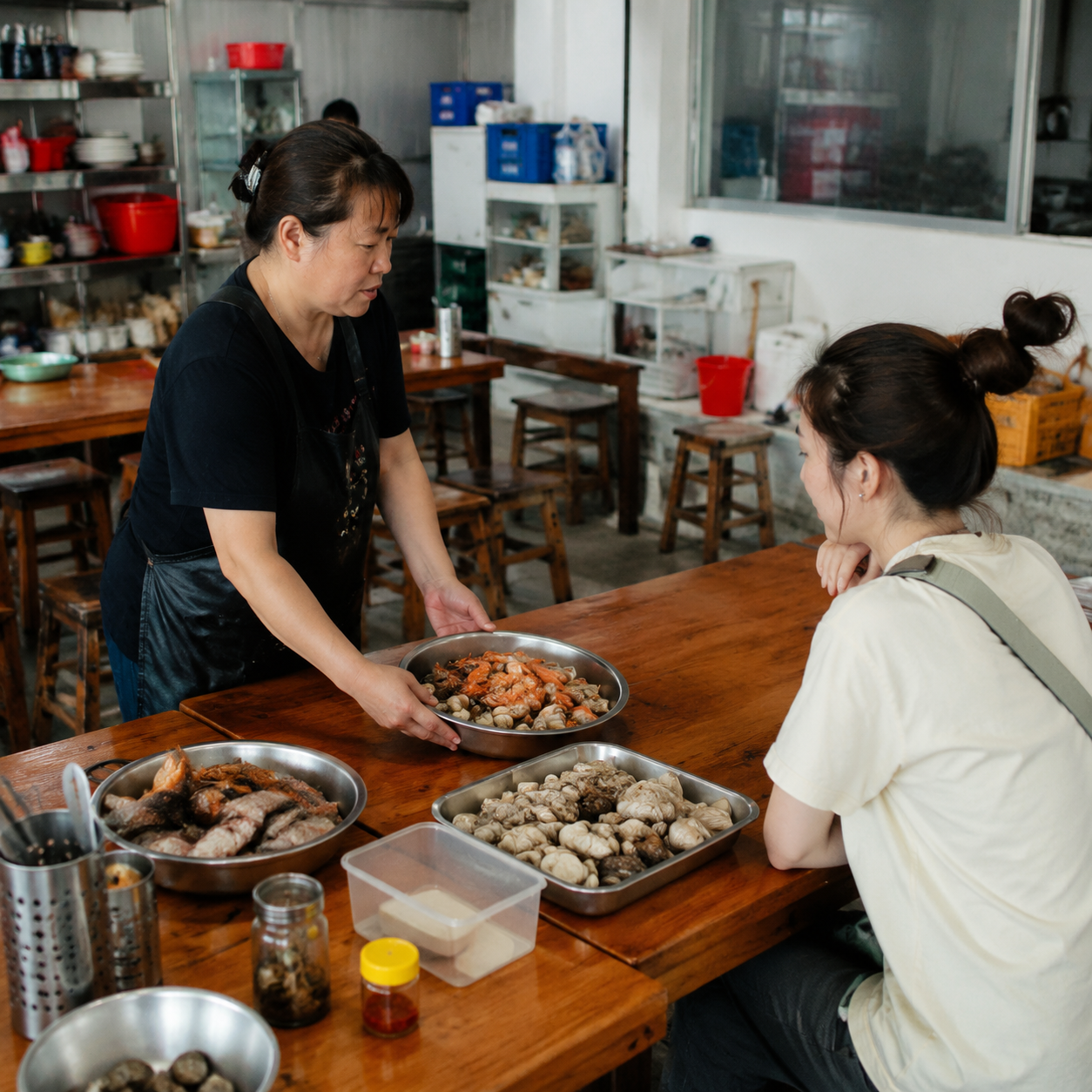
我问老板,为什么不把这些写得详细一点。他笑说写不完,也写不准。海鲜不是每天都一个样,客人也不是每天都想吃同一种口感。有的人赶时间,适合炒得干爽;有的人带老人孩子,汤饭更稳;有人专门来喝鲜,就让贝类多一些;有人想吃肉感,就换成鱼块或蟹。写在纸上的菜名只能给一个入口,真正的点单要看人、看货、看天气、看锅。这个回答让我突然理解了码头边餐馆的规则:不是拒绝标准化,而是标准化追不上变化。
I asked the owner why he did not write all of this in more detail. He laughed and said it could not be fully written, and even if written, it would not stay accurate. Seafood was not the same every day, and customers did not want the same texture every day either. People in a hurry suited a drier stir-fry. Those with elderly family members or children were safer with soupy rice. Those who came for freshness should have more shellfish. Those who wanted a meaty bite could switch to fish chunks or crab. A dish name on paper could only provide an entrance. Real ordering had to consider the person, the catch, the weather, and the wok. That answer helped me understand the rules of pier-side restaurants: they are not refusing standardization; standardization simply cannot keep up with change.
吃到一半,我发现这碗饭的层次不是从复杂调味里来的,而是从食材先后进入锅里的顺序里来的。鱼先煎,所以汤里有一点焦香的底;蛤蜊中段加入,鲜味展开却不老;虾最后下,保持弹性;米饭收尾,把前面那些味道重新聚在一起。这个顺序如果倒过来,结果就会变成另一种饭。很多人谈海鲜,只说新鲜二字,可新鲜只是起点。真正决定一碗饭能不能好吃的,是厨师怎样让不同的鲜味保持各自的边界,又在最后合成一个整体。
Halfway through, I found that the bowl’s layers did not come from complicated seasoning, but from the order in which ingredients entered the wok. The fish was seared first, so the broth had a faint roasted base. The clams went in midway, opening their freshness without becoming tough. The shrimp entered last, keeping its bounce. The rice finished the process, gathering all previous flavors together again. If that order were reversed, the result would become a different bowl. Many people talk about seafood only in terms of freshness, but freshness is only the starting point. What truly decides whether a bowl of rice is good is how the cook lets different kinds of freshness keep their own edges while finally becoming one whole.
这顿饭也让我重新看见宁波的口味。以前我听别人说宁波菜咸鲜,脑子里只剩下“咸”这个字,像一个过于粗糙的标签。可坐在码头边吃海鲜饭,我才知道咸鲜的重点不是把盐放重,而是让海的味道有支撑。盐在这里像一条线,把贝、鱼、虾、米和姜葱牵在一起;如果没有它,鲜味会散,如果太多,它又会盖住所有细节。宁波人的口味精确处,就在这条线的松紧之间。它不是温吞,也不是粗暴,而是一种贴着海生活久了才有的分寸。
The meal also made me see Ningbo’s flavor again. I had heard people describe Ningbo food as salty-fresh, but in my mind only the word salty remained, like a label too rough to be useful. Sitting beside the pier with seafood rice, I learned that salty-fresh is not about using a heavy hand with salt. It is about giving the taste of the sea support. Salt here is like a line tying shellfish, fish, shrimp, rice, ginger, and scallion together. Without it, freshness scatters; with too much, it covers every detail. The precision of Ningbo taste lies in the tension of that line. It is neither bland nor rough, but a measure gained from living close to the sea for a long time.
店外来了一个年轻渔工,裤脚还湿着,进门就问有没有饭剩着。老板给他盛了一碗不太讲究摆相的海鲜饭,虾少一些,汤多一些,又夹了两块煎鱼放在上面。他端到角落,几乎不说话,低头吃得很快。那一幕把我从“品尝”的姿态里拉出来。对我来说,这碗饭是旅行里的发现;对他来说,可能只是干完活以后让胃落地的东西。同一锅饭,可以被游客慢慢分析,也可以被劳动的人迅速需要。码头边的食物就是这样,一边有风味,一边有体力。
A young fisherman came in from outside, his trouser cuffs still wet, and asked whether there was any rice left. The owner served him a bowl of seafood rice without much concern for appearance: fewer shrimp, more broth, and two pieces of fried fish placed on top. He carried it to a corner and ate quickly with almost no words. That scene pulled me out of the posture of “tasting.” For me, the bowl was a discovery during travel. For him, it may have been something that let his stomach settle after work. The same pot of rice could be slowly analyzed by a visitor and urgently needed by someone who labored there. Food beside a pier is like that: it carries flavor on one side and physical strength on the other.
我继续吃,开始明白为什么朋友提醒我不要只看菜单。菜单适合让陌生人安心,它把未知整理成可以选择的项目;但码头边的海鲜饭,最有意思的部分恰恰在那些不稳定里。雨停多久了,船几点靠岸,今天水温怎样,哪一筐卖得快,厨师愿不愿意劝你少点贵的,旁边熟客怎样搭配,这些都会改变你最后吃到的那一碗。如果只按菜单点完、拍照、付款离开,就会错过这顿饭最活的部分。它不是隐藏菜单,而是活菜单。
I kept eating and began to understand why my friend had told me not to look only at the menu. A menu is useful for reassuring strangers; it organizes the unknown into selectable items. But the most interesting part of seafood rice beside a pier lies precisely in instability. How long ago the rain stopped, what time the boat came in, how the water temperature had been, which basket was selling quickly, whether the cook was willing to advise you against ordering something expensive, and how regulars combined ingredients could all change the bowl you finally received. If you only ordered from the menu, took a photo, paid, and left, you would miss the most living part of the meal. It was not a hidden menu; it was a living menu.
快吃完时,米粒已经吸到更深的味道。碗底有一点碎鱼肉和蛤蜊汁,勺子刮过去,鲜味比前面更集中。我忽然想到,海鲜饭这种食物并不追求每一口完全一致。第一口是汤的开场,中间是虾和鱼的存在,最后是米粒把所有细碎的东西收起来。它像码头一天的缩小版:船靠岸,货上来,人议价,筐搬走,地上剩下一点水痕和鱼鳞,最后被风慢慢吹干。碗底不是剩余,而是整顿饭的回声。
Near the end, the grains had absorbed a deeper flavor. At the bottom of the bowl were tiny bits of fish and clam juice; when the spoon passed through, the freshness became more concentrated than before. I suddenly thought that seafood rice does not try to make every bite identical. The first bite is the opening of broth, the middle carries the presence of shrimp and fish, and the ending lets rice collect all the small fragments. It resembles a reduced version of a day at the pier: boats arrive, goods come up, people bargain, baskets move away, and a little water and fish scale remain on the ground until wind dries them. The bottom of the bowl is not leftover. It is the echo of the whole meal.
结账时,老板问我味道够不够。我说够,而且比菜单上看起来复杂。他摆摆手,说这不复杂,东西对就行。我知道这句话里有手艺人的谦虚,也有一种很硬的标准。所谓“东西对”,并不是随便买点海鲜就能成立。它包括识货、处理、火候、搭配,也包括知道什么时候不要多放调料,什么时候提醒客人换一种做法,什么时候让米饭而不是海鲜站在最后的位置。真正成熟的经验常常这样说得轻,好像一切理所当然,背后却压着很多次失败和修正。
When I paid, the owner asked whether the flavor had been enough. I said it had, and that it was more complicated than it looked on the menu. He waved his hand and said it was not complicated; the ingredients just had to be right. I knew there was both a craftsperson’s modesty and a hard standard inside that sentence. “Right ingredients” does not mean buying some seafood at random. It includes knowing the catch, handling it, controlling heat, pairing textures, and knowing when not to add more seasoning, when to suggest another method to a customer, and when to let rice rather than seafood take the final position. Mature experience often speaks this lightly, as if everything were obvious, while many failures and corrections sit behind it.
走出小店时,码头的天色已经从灰转蓝,水面亮了一点。有人把空筐冲洗干净,倒扣在墙边;一只猫从绳索旁钻过,盯着地上的鱼鳞;远处船上的发动机声断断续续。我的嘴里还留着一点贝类的甜和姜的暖。那顿海鲜饭没有给我一个可以复制的点单模板,反而让我放弃了模板。下次再来,我也许吃到完全不同的一碗:蛏子多一点,蟹少一点,汤更白,饭更干,价格也可能变。可只要我愿意站到筐边听一听,它就仍然会教我。
When I walked out, the sky over the pier had turned from gray toward blue, and the water had brightened a little. Someone rinsed empty baskets and placed them upside down by the wall. A cat slipped past a coil of rope and stared at fish scales on the ground. In the distance, the engines of boats sounded in broken intervals. A little sweetness from shellfish and warmth from ginger remained in my mouth. That seafood rice did not give me a repeatable ordering template; instead, it made me give up the template. Next time I come, I may eat a completely different bowl: more razor clams, less crab, a whiter broth, drier rice, perhaps a different price. But as long as I am willing to stand beside the baskets and listen, it will still teach me.
后来我想,旅行里的点单能力并不是背下几个名菜,而是承认自己对现场一无所知,然后让现场慢慢开口。宁波码头边的这碗海鲜饭让我学到的,不是“应该点哪一种”,而是“应该怎样问”。问今天什么刚上岸,问哪样适合做饭,问一个人吃会不会太多,问能不能别把好食材做坏。好的店家不怕你问,好的食物也经得起这样的来回。菜单给陌生人一张安全网,现场则把这张网打开,让你看见风、潮、船、锅和人的判断怎样一起落进一碗饭里。
Later I thought that the ability to order while traveling is not about memorizing a few famous dishes. It is about admitting that you know nothing about the scene and then letting the scene speak slowly. What that bowl of seafood rice beside a Ningbo pier taught me was not which version I should order, but how I should ask. Ask what came ashore today, what suits rice, whether one person will be ordering too much, and whether a good ingredient might be better cooked another way. A good shop does not fear questions, and good food can withstand that back-and-forth. The menu gives strangers a safety net, while the scene opens that net and lets you see how wind, tide, boats, wok, and human judgment fall together into one bowl of rice.
所以我记住的不是墙上那几行菜名,而是点单前那段站在门口的时间。老板翻动塑料筐,虾须轻轻颤,蛤蜊壳碰出细响,小黄鱼的眼睛映着雨后的天光,熟客在旁边插一句“今天这个可以”。那几分钟里,饭还没下锅,味道却已经开始形成。宁波的海鲜饭不是菜单教会我的,是码头、天气、熟客、老板和一锅热气一起教会我的。它让我明白,真正靠海的饭,有时不急着被写下来;它先在水边发生,然后才被盛进碗里。
So what I remembered was not the few lines of dish names on the wall, but the time spent standing at the door before ordering. The owner turned over plastic baskets, shrimp whiskers trembled lightly, clam shells clicked against one another, the eyes of small yellow croaker reflected the post-rain sky, and a regular nearby added, “that one is good today.” During those minutes, the rice had not yet entered the wok, but the flavor had already begun to form. Ningbo’s seafood rice was not something the menu taught me. It was taught by the pier, the weather, regular diners, the owner, and a wok of rising steam together. It made me understand that food truly close to the sea is sometimes in no hurry to be written down; it happens first by the water, and only afterward is it served in a bowl.

- 苏州一到雨天,最容易失灵的不是路线图,而是那种“这里本来很好走”的自信 | When Rain Comes to Suzhou, What Fails First Is Not the Map but the Confidence That the City Is Easy to Walk
- 西安兵马俑:完整参观指南 | Xi an Terracotta Warriors: A Complete Guide
- 苏州夜里最会骗人的,不是方向,而是那种“看着很轻松”的安静 | What Misleads Most at Night in Suzhou Is Not Direction but the Quiet Ease It Seems to Promise
- 英歌舞:潮汕街头的战鼓与脸谱 | Yingge Dance: War Drums and Painted Faces on Chaoshan Streets
- 昆明菜市场里的花和菜,让我重新认识日常审美 | Flowers and Vegetables in a Kunming Market Changed How I See Everyday Beauty
- 孔氏南宗家庙门口的豆腐脑,让我重新认识衢州的早晨 | A Bowl of Tofu Pudding Outside the Southern Confucius Temple Changed How I Saw Quzhou Mornings
- 在绍兴,一张公交卡小票和一座小桥一起把我领进了城 | In Shaoxing, a Transit Receipt and a Small Bridge Led Me into the City Together
- 泥塑体验:我第一次觉得泥土不是材料,而是一种很慢的语言 | Clay Figurine Experience: The First Time I Felt Earth Was Not a Material, but a Slow Language
- 那本被果汁弄湿的拼音本,让本人第一次学会声调不是唱歌,而是方向 | A Pinyin Notebook Spilled with Juice Taught Me That Tones Are Not Singing but Direction
- 中国旅游购物攻略:特产与纪念品 | China Shopping Guide: Local Specialties & Souvenirs
Comments (0)