
昆明菜市场里的花和菜,让我重新认识日常审美 | Flowers and Vegetables in a Kunming Market Changed How I See Everyday Beauty
昆明菜市场里的花和菜,让我重新认识日常审美 | Flowers and Vegetables in a Kunming Market Changed How I See Everyday Beauty
我第一次在昆明的菜市场里停住脚,不是因为要买什么,而是被一束摆在青菜旁边的鲜花拦住了。那天早晨空气很轻,阳光从棚顶的缝隙里落下来,照在湿漉漉的地面上。摊主把小白菜码成一排,旁边放着洋桔梗、玫瑰和几把叫不出名字的小花。花没有被放进精致花店的玻璃柜,也没有配上缎带,只是和土豆、番茄、香菜一起占据着同一张木板。可正因为这样,它们显得格外自然,像日子本来就允许美和实用挨得很近。
The first time I stopped inside a Kunming market, it was not because I needed to buy anything, but because a bunch of flowers beside vegetables caught me. The morning air was light, and sunlight slipped through gaps in the roof, falling on the damp ground. A vendor had lined up bok choy, with lisianthus, roses, and several small flowers whose names I did not know placed beside them. The flowers were not sealed in a florist’s glass case or tied with ribbon. They shared a wooden board with potatoes, tomatoes, and cilantro. Because of that, they looked especially natural, as if daily life had always allowed beauty and usefulness to stand close together.
我原先对菜市场的想象很简单:买菜、讲价、找零钱、塑料袋发出声音,鱼摊和肉摊各有自己的气味。它当然热闹,但我很少把它和审美联系起来。审美在我的旧印象里,好像应该发生在展厅、咖啡馆、民宿窗台,至少要有被整理过的光线和留白。昆明这个早晨却把这种想法轻轻推开了。这里的美不是被单独陈列出来的,而是混在生活的功能里,混在称重、剥叶、装袋和寒暄之间。
My old idea of a market was simple: buying vegetables, bargaining, counting change, hearing plastic bags rustle, and noticing the separate smells of fish stalls and meat stalls. It was certainly lively, but I rarely connected it with aesthetics. In my earlier imagination, beauty seemed to belong in galleries, cafés, guesthouse windowsills, or at least places with arranged light and deliberate empty space. That Kunming morning quietly pushed that idea aside. Beauty there was not displayed separately. It was mixed into function, into weighing, trimming leaves, packing bags, and exchanging greetings.
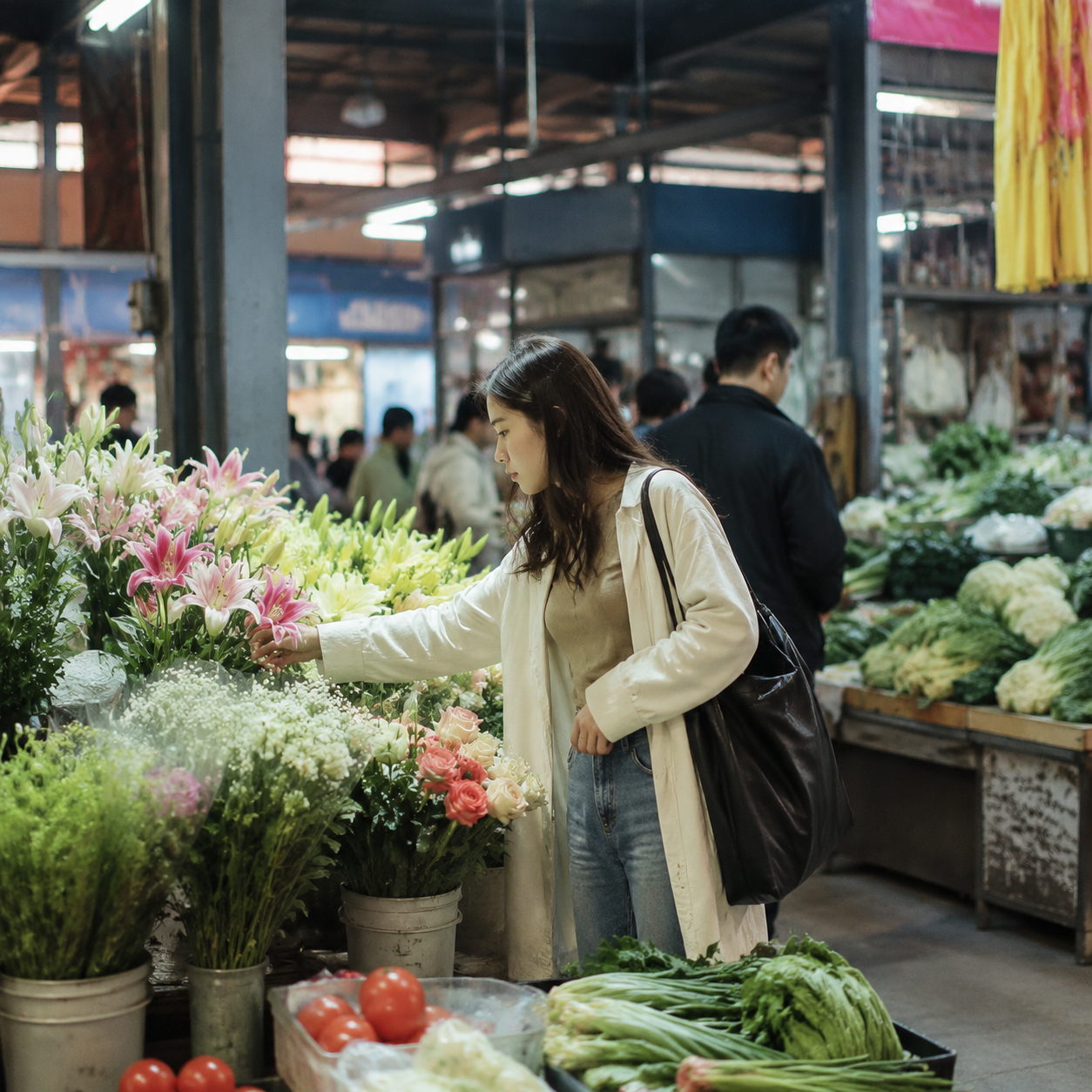
入口处有一位阿姨专卖花。她的摊不大,几只水桶排在脚边,花枝斜斜伸出来,像一群刚睡醒的人。玫瑰没有统一高度,有的花瓣边缘已经微微卷起;百合还没完全打开,绿色花苞带着清晨的凉意;小雏菊被扎成松散的一把,白色和黄色挤在一起。她一边给顾客找零钱,一边把折断的叶子摘掉,动作快,却不粗糙。我看着她把一把花重新抖开,忽然意识到这里也有构图,只是构图不服务镜头,而服务带回家的那段路。
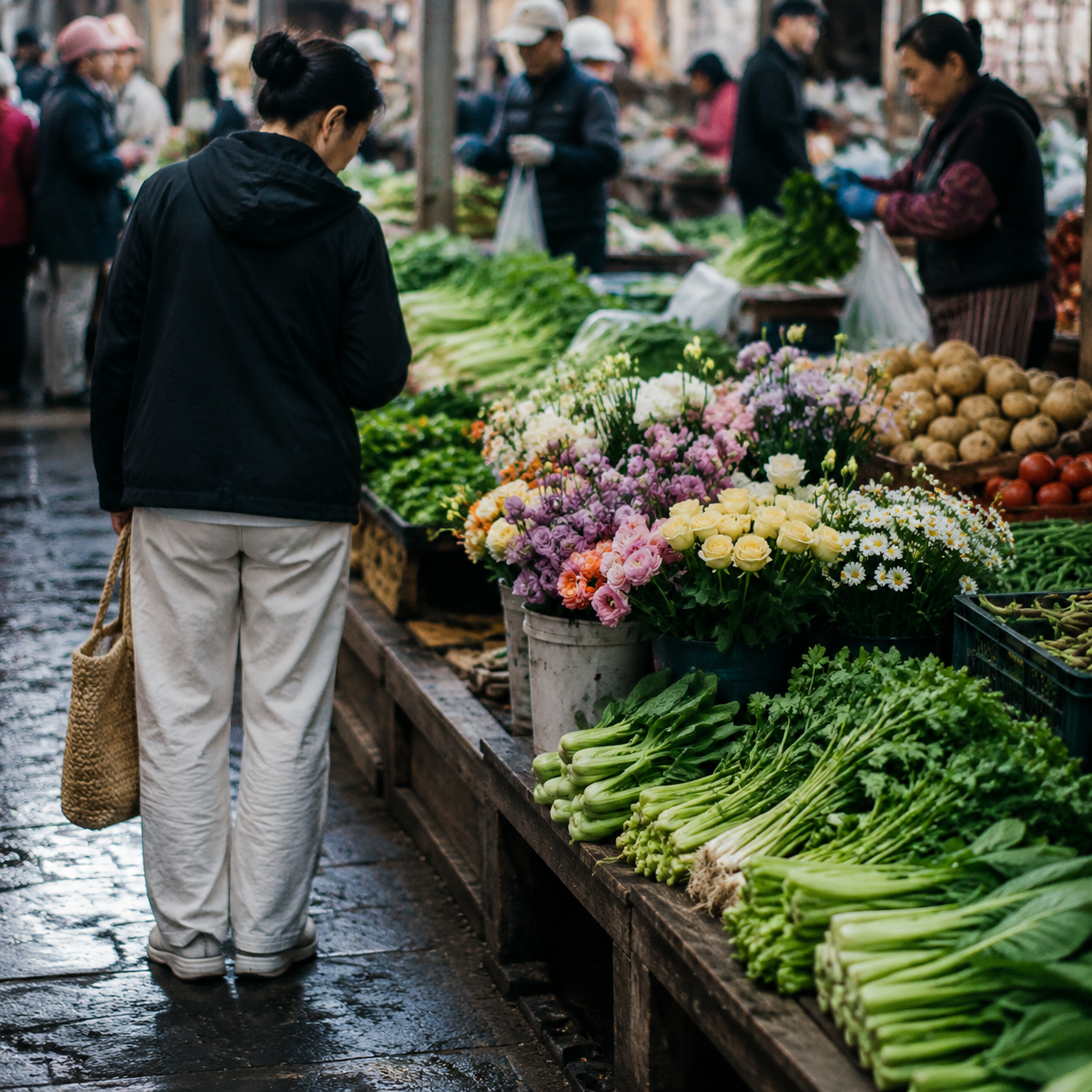
Near the entrance, an auntie sold only flowers. Her stall was small, with several buckets at her feet and stems leaning out at angles like people who had just woken up. The roses were not trimmed to one height; some petals had slightly curled edges. The lilies had not fully opened, and their green buds carried the coolness of morning. Small daisies were tied in loose bunches, white and yellow crowded together. While giving change, she plucked off broken leaves with quick but careful movements. Watching her shake a bunch of flowers open again, I realized there was composition here too, only it served the walk home rather than the camera.
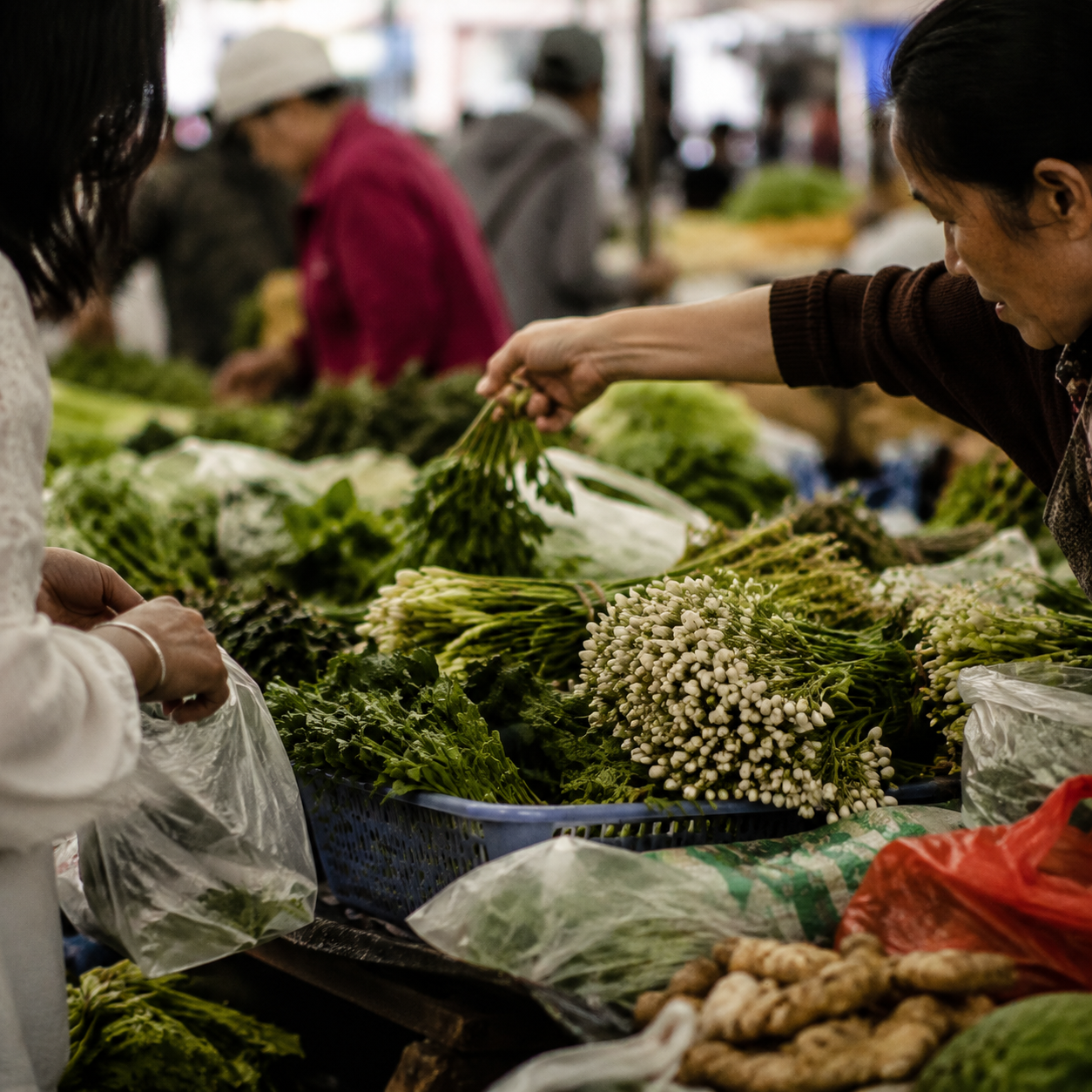
再往里走,菜摊的颜色像被慢慢铺开。豌豆尖是一种嫩到几乎透明的绿,韭菜更深,带着直直的线条;紫皮茄子在竹筐里发亮,表面像刚被擦过;小米辣红得很密,旁边的薄荷叶又把颜色压下来。摊主没有刻意摆造型,却懂得让同类靠在一起,让高的在后,矮的在前,让根茎和叶子互相托住。那些看似随手的摆放,其实是长期做买卖练出来的判断:怎样好拿,怎样不压坏,怎样让人一眼看见新鲜。
Farther inside, the colors of the vegetable stalls spread out slowly. Pea shoots were a green so tender they seemed almost transparent. Garlic chives were darker and straighter. Purple eggplants shone in bamboo baskets as if recently wiped. Small chilies were densely red, while mint leaves beside them softened the color. The vendors were not deliberately styling anything, yet they knew how to keep similar things together, how to place taller items behind shorter ones, how to let roots and leaves support one another. What looked casual was actually judgment developed through years of selling: what was easy to pick up, what would not be crushed, and what made freshness visible at a glance.
昆明的菜市场还有一种特别的松弛。很多摊位旁边都能看见花,不一定多,也不一定贵。有的顾客买一把青菜,又顺手带走两枝玫瑰;有的人拎着豆腐和菌子,最后加一小束满天星。花在这里不是节日才出现的礼物,也不是必须郑重其事的装饰。它更像一件普通用品,和葱姜蒜一样被纳入早晨的采购清单。看见这种自然,我有点羡慕。原来把花带回家可以不需要理由,喜欢就是足够的理由。
Kunming’s market also had a special looseness. Flowers appeared beside many stalls, not always in large amounts and not always expensive. Some customers bought leafy greens and casually added two roses. Others carried tofu and mushrooms, then finally chose a small bunch of baby’s breath. Flowers here were not gifts reserved for festivals, nor decorations that required solemn intention. They seemed more like ordinary supplies, included in the morning shopping list alongside scallions, ginger, and garlic. Seeing this ease made me a little envious. Apparently bringing flowers home did not need a reason. Liking them was reason enough.
我在一个卖菌子的摊位前站了很久。竹筐里有鸡枞、牛肝菌、青头菌,还有一些被摊主称作“今天刚到”的小菌。它们不像花那样明亮,却有另一种低调的漂亮:泥土色的伞盖、细密的纹路、被削干净的根部,放在一起像一张由山里带来的地图。摊主见我看得认真,告诉我哪种适合炒,哪种要煮透,哪种香味重。她说这些话时没有推销的兴奋,更像是在说明一种常识。那一刻,食材的美不只是颜色,也包括它们从山里来到餐桌之前的路径。
I stood for a long time in front of a mushroom stall. Bamboo baskets held termite mushrooms, porcini, green-capped mushrooms, and several small varieties the vendor called “fresh arrivals today.” They were not bright like flowers, but they had another kind of quiet beauty: earth-colored caps, fine textures, cleanly trimmed roots, all arranged like a map brought down from the mountains. Seeing me look carefully, the vendor told me which ones were good for stir-frying, which needed thorough cooking, and which had stronger fragrance. She spoke without sales excitement, more like explaining common knowledge. In that moment, the beauty of ingredients was not only their color, but also the route they had taken from mountain soil to table.
我发现自己在市场里看东西的速度变慢了。平时走进景区,我总会先寻找标志性的角度,想着哪里最能代表这座城市。可在菜市场里,昆明没有急着亮出一个标准答案。它在切开的南瓜里,在挂着露水的生菜里,在塑料盆里漂着的豆腐里,在鲜花摊旁边一只打盹的狗身上。这里没有人提醒我“应该看哪里”,所以我反而开始真正看见。没有导览图的地方,眼睛必须自己工作,也因此更容易遇到意外。
I noticed that my way of looking slowed down in the market. When I usually enter a scenic area, I search first for the most iconic angle, wondering which view best represents the city. But in the market, Kunming did not rush to offer a standard answer. It appeared in sliced pumpkins, lettuce carrying dew, tofu floating in plastic tubs, and a dozing dog beside the flower stall. No one reminded me where I was supposed to look, so I began to truly see. In a place without a guide map, the eyes have to work on their own, and for that reason they meet more surprises.
有个细节让我印象很深。一位老人买完菜后,又回来挑了一小把康乃馨。她把花放进装菜的布袋里,怕压坏,就让花头露在外面。布袋里有芹菜、胡萝卜和一盒鸡蛋,花从中间探出来,像给这袋日常开了一个小窗。她没有拍照,也没有把花举起来端详,只是把袋口整理好,慢慢往市场外走。那一幕比任何精心布置的静物都让我心动,因为它完全不需要证明自己好看。
One detail stayed with me. An elderly woman finished buying vegetables, then returned to choose a small bunch of carnations. She placed the flowers in her cloth bag, leaving the heads outside so they would not be crushed. Inside the bag were celery, carrots, and a carton of eggs, while the flowers looked out from the middle like a small window opened in daily life. She did not take a photo or hold the flowers up for inspection. She simply adjusted the bag and walked slowly out of the market. That scene moved me more than any carefully arranged still life because it did not need to prove that it was beautiful.
我也开始重新理解“便宜”和“漂亮”的关系。我们常把便宜和将就放在一起,觉得价格低的东西很难拥有审美价值。但在这个市场里,一把几块钱的花、一筐新鲜蔬菜、一只洗得发亮的搪瓷盆,都能让人停一下。它们的漂亮不是因为昂贵,而是因为干净、饱满、适时,也因为有人愿意把它们摆正、剪齐、照看好。日常审美并不总是花很多钱换来的,有时只是把普通东西认真对待。
I also began to rethink the relationship between inexpensive and beautiful. We often place cheapness beside compromise, assuming that low-priced things rarely carry aesthetic value. But in this market, a bunch of flowers costing only a few yuan, a basket of fresh vegetables, or a washed enamel basin shining under light could all make a person pause. Their beauty did not come from expense. It came from cleanliness, fullness, timeliness, and from someone’s willingness to straighten, trim, and care for them. Everyday beauty is not always purchased with a large amount of money. Sometimes it is simply ordinary things treated seriously.
市场的声音也参与了这种审美。称重时秤盘轻轻一响,摊主报出价格;塑料袋被撑开,像一阵短风;有人用昆明话问今天花好不好养,有人讨论哪种菜适合煮汤。声音没有被降噪,也没有被调成背景音乐,却让整个空间有了层次。花和菜只负责颜色,人的声音负责温度,水桶、竹筐、铁秤和脚步声负责节奏。我站在中间,觉得自己不是在参观一个地方,而是在短暂进入一套正在运转的生活。
Sound also took part in this aesthetic. The scale tray made a light noise when weighing, and the vendor called out a price. A plastic bag opened like a brief gust of wind. Someone asked in Kunming dialect whether today’s flowers were easy to keep, while another person discussed which vegetable was best for soup. The sounds were not reduced or turned into background music, yet they gave the space layers. Flowers and vegetables handled color, human voices handled warmth, and buckets, bamboo baskets, metal scales, and footsteps handled rhythm. Standing there, I felt less like I was visiting a place and more like I had briefly entered a life already in motion.
走到一处转角,我看见有人把鲜花插在空啤酒瓶里,放在摊位后面的小桌上。花瓶不正式,桌上还有保温杯、账本和半包纸巾。可那几枝花让整个角落突然柔和起来,好像摊主在忙碌之外给自己留了一点私人空间。这个细节让我想到,审美不一定是给别人看的。它也可以是一种自我照顾:在很吵的地方留一点安静,在很实用的环境里放一点无用的颜色,让一个工作日不只剩下效率。
At a corner, I saw someone place fresh flowers in an empty beer bottle on a small table behind a stall. The vase was unofficial, and the table also held a thermos, an account book, and half a pack of tissues. Yet those few stems softened the whole corner, as if the vendor had kept a little private space for herself beyond the work. The detail made me think that aesthetics are not always for other people to see. They can also be a form of self-care: leaving a little quiet in a noisy place, placing a little unnecessary color in a practical environment, allowing a workday to be more than efficiency.
我买了一把豌豆尖和一小束紫色小花。摊主把菜装进袋子,又另外找了一张旧报纸把花包起来。她说花回去先剪一下根,水别太满,放窗边就行。我听着这些朴素的养护方法,突然觉得它们像昆明给我的一份城市说明书:不用太复杂,留一点水,留一点光,别把东西压得太紧。旅行中很多地方会用宏大的景观说服你,而这座市场用很小的动作告诉我,舒适也可以是一种城市气质。
I bought a bundle of pea shoots and a small bunch of purple flowers. The vendor put the greens into a bag, then found an old newspaper to wrap the flowers separately. She said I should trim the stems after returning, not fill the water too high, and place them near a window. Listening to these plain care instructions, I suddenly felt they were like a city manual Kunming had handed me: do not make things too complicated, leave a little water, leave a little light, and do not press things too tightly. Many destinations persuade you with grand landscapes, but this market told me through small gestures that comfort can also be a city’s temperament.
离开市场时,太阳已经更亮,门口的电动车一辆接一辆经过。我拎着菜和花,发现手里的重量很有意思:一边是晚饭会用到的食材,一边是不会“解决问题”的花。可它们都让我对当天更有期待。食材提醒我晚上要好好吃饭,花提醒我房间可以不只是睡觉的地方。所谓日常审美,大概就是这种不把生活切成有用和无用的能力。菜让人活得下去,花让人愿意慢一点活。
When I left the market, the sun had grown brighter, and electric scooters passed one after another at the entrance. Carrying vegetables and flowers, I found the weight in my hands interesting: on one side were ingredients for dinner, and on the other were flowers that would not “solve” any problem. Yet both made me look forward to the day. The ingredients reminded me to eat well that evening; the flowers reminded me that my room could be more than a place to sleep. Everyday aesthetics may be this ability not to divide life too sharply into useful and useless. Vegetables help a person keep living; flowers make a person willing to live more slowly.
回到住处后,我把豌豆尖洗好,花插进一个玻璃杯里。它们没有把房间变成什么高级空间,只是让窗台多了一点颜色。可我坐下来时,心情确实不同了。那天我没有去看著名景点,也没有拍到一张足够醒目的照片,却觉得自己更接近昆明。因为我看见了这座城市怎样把美放进早晨,放进采购,放进普通人的手里。菜市场没有教我如何装饰生活,它只是让我明白,生活本身早就有可以被看见的纹理。
Back at my lodging, I washed the pea shoots and placed the flowers in a glass. They did not transform the room into anything elegant; they simply added a little color to the windowsill. Yet when I sat down, my mood had changed. That day I had not visited a famous landmark or taken a striking photo, but I felt closer to Kunming. I had seen how the city placed beauty into morning, into shopping, and into ordinary hands. The market did not teach me how to decorate life. It simply made me understand that life itself already has textures that can be seen.
如果以后有人问我昆明哪里最能看见日常审美,我可能不会先说某条网红街或某家花店,而会想起这个菜市场。那里没有完美的背景,也没有统一的色调,甚至地面还常常湿滑,摊位也会显得拥挤。但正是在这些不完美里,花和菜一起构成了城市最诚实的颜色。它们告诉我,美不一定需要被抬高,也不一定需要远离烟火气。美可以就在买菜的清晨,在一只竹筐里,在一束顺手带回家的花里,安静地改变一个人看待日子的方式。
If someone later asks me where Kunming’s everyday beauty can be seen most clearly, I may not first mention a popular street or a florist. I will think of this market. It had no perfect background, no unified color palette, and the ground was often wet while the stalls could feel crowded. But within those imperfections, flowers and vegetables together formed the city’s most honest colors. They told me that beauty does not always need to be elevated, nor does it need to be separated from the smoke and warmth of daily life. Beauty can be in a morning of grocery shopping, in a bamboo basket, in a bunch of flowers casually carried home, quietly changing the way a person sees ordinary days.
- 把天气留在行程里:秋天去喀纳斯的公路节奏 | Leave Weather in the Itinerary: An Autumn Road Rhythm for Kanas
- 中山装与唐装:男士传统服饰怎么穿 | Zhongshan Suit & Tang Suit: Men's Traditional Wear
- 在泉州看见海上丝路:寺庙、古港和街巷里的混合文化 | Quanzhou and the Maritime Silk Road: Temples, Port Traces, and Living Culture
- 六月在成都躲避开午后的热,我发现了更舒服的旅行节奏 | In June Chengdu, Everything Went Smoother Once I Stopped Fighting the Midday Heat
- 遵义老城坡道上,我把台阶数错了 | I Lost Count of the Steps on Zunyi’s Old-Town Slopes
- 我在上海学会先看地铁口周边,再决定在哪家咖啡馆坐下 | In Shanghai I Learned to Read the Metro Exit Area Before Choosing a Café
- 广州早茶桌上,孩子先学会了听,再学会了说 | At a Guangzhou Dim Sum Table, My Child Learned to Listen Before Speaking
- 来华旅行必备配件 | Best Travel Accessories for China
- 西部荒漠上的光伏海洋:中国新能源如何重塑大西北 | Oceans of Solar Panels in the Western Desert: How Renewable Energy is Reshaping China's West
- 清明踏青好去处:近郊自然游 | Qingming Outing: Nature Trips Near the City
Comments (0)