
那本被果汁弄湿的拼音本,让本人第一次学会声调不是唱歌,而是方向 | A Pinyin Notebook Spilled with Juice Taught Me That Tones Are Not Singing but Direction
那本被果汁弄湿的拼音本,让本人第一次学会声调不是唱歌,而是方向 | A Pinyin Notebook Spilled with Juice Taught Me That Tones Are Not Singing but Direction
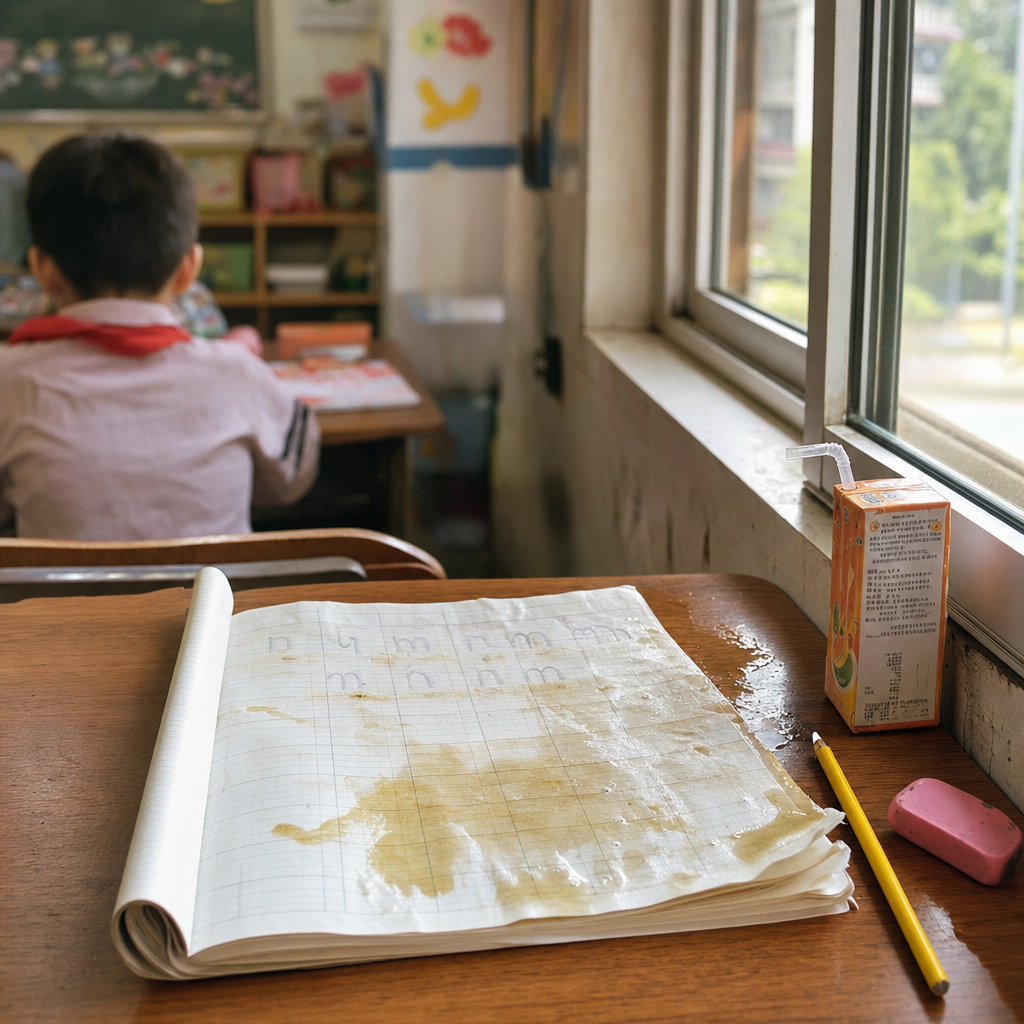
本人第一次认真觉得声调这件事“终于有点像样了”,不是在课堂上,也不是对着手机软件,而是在一张被橙汁打湿的拼音练习本旁边。那是一个闷热的下午,教室窗户开着一半,外面的树叶被风吹得一阵一阵翻亮,桌面上还有午点留下来的甜味。有人不小心碰倒了纸杯,橙黄色的果汁顺着本子的边角慢慢爬开,把写着“mā、má、mǎ、mà”的那一页晕成了一小片软软的云。
The first time tones finally began to make sense to me did not happen in class and did not happen in a phone app. It happened next to a pinyin workbook that had been soaked with orange juice. It was a humid afternoon. The classroom windows were half open, and outside, leaves flashed bright and dark in the wind. A sweet snack smell still floated above the desks. Someone knocked over a paper cup, and orange juice slowly crawled across the corner of a workbook page, blurring the line that said “mā, má, mǎ, mà” into a small soft cloud.
我以前总把四声学成一种很累的表演,好像嘴巴必须一下往高处飞,一下又掉下来,整个人像在唱一首自己也没听懂的短歌。结果就是,越想唱准,越容易紧。你一紧,音就硬;音一硬,中文就不像在说,而像在对付一道题。那天下午我正盯着被弄湿的拼音页发愁,旁边一个借我橡皮的小学生忽然把手抬起来,对着空气划了四下。
I used to learn the four tones like a tiring performance, as if my mouth had to leap upward and then fall back down again, like I was singing a very short song I did not even understand. And the harder I tried to sing them correctly, the tighter I became. When you get tight, the sound turns stiff. And once the sound turns stiff, Chinese stops sounding spoken and starts sounding like a test problem. That afternoon I was staring at the wet workbook page in frustration when a primary school student who had just lent me an eraser suddenly lifted his hand and drew four movements in the air.
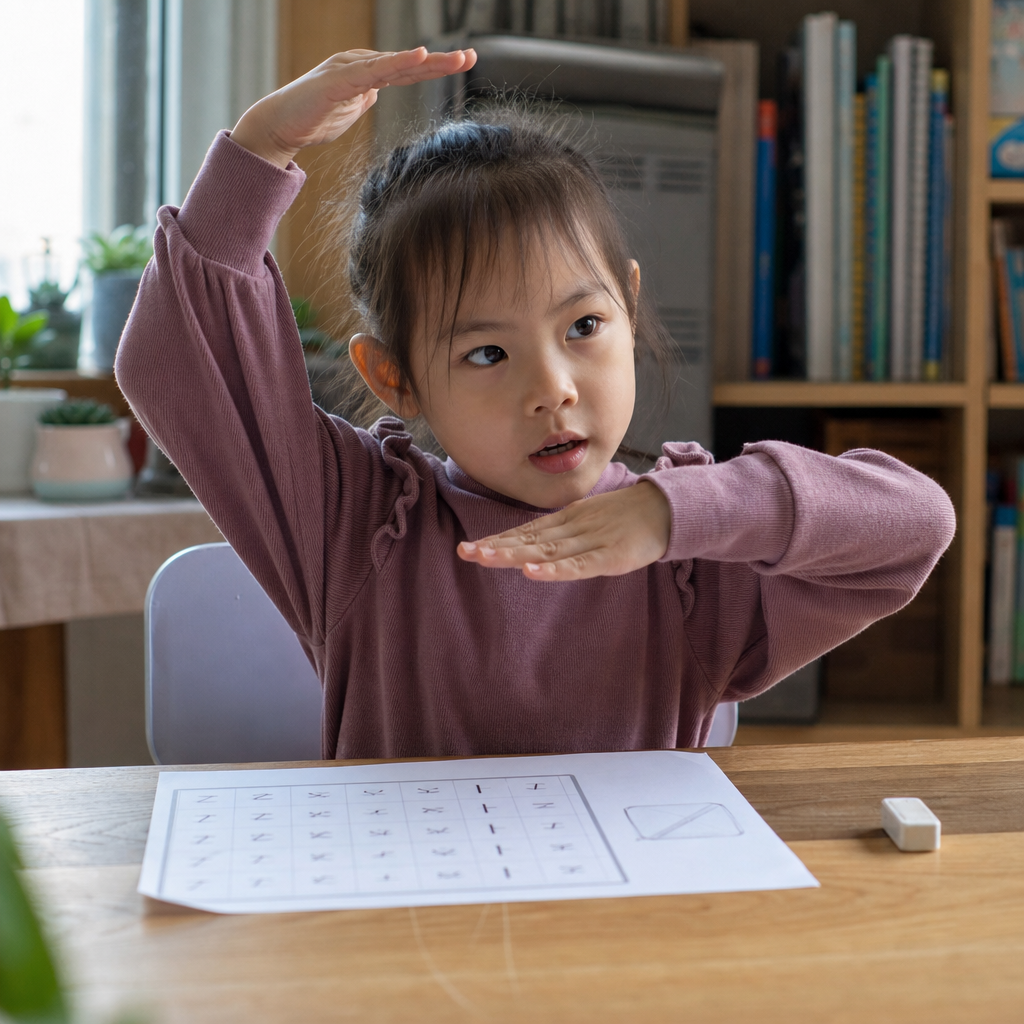
他先把手平平地推出去,说:“第一声,平。” 又把手往上一挑,说:“第二声,上去。” 接着把手压低再拐一下,说:“第三声,先下再上。” 最后干脆往下一切:“第四声,下去。” 他说得一点也不复杂,甚至没有用什么语法词。可本人一下就明白了:原来声调不一定要当成音乐来学,它更像方向。像你走楼梯,像你抛球,像你骑滑板车拐弯。不是唱,是走。
He pushed his hand flat and said, “First tone. Flat.” Then he flicked it upward: “Second tone. Up.” Then he dipped it low and curved it back: “Third tone. Down first, then up.” Finally he cut sharply downward: “Fourth tone. Down.” He explained it without any complicated grammar terms. Yet I understood at once. Tones did not have to be learned as music. They could be learned as direction. Like walking up stairs. Like tossing a ball. Like turning a scooter. Not singing. Moving.
那一瞬间,很多之前总记不住的东西忽然松开了。为什么“má”听起来像有人在抬头追问,为什么“mà”像一句利落落地的话,为什么“mǎ”老是让我卡住——因为它不是高低那么简单,它里面有一个拐弯。对外国小朋友来说,这种“用动作记声音”的方法特别有用。因为有时候耳朵来不及,身体会先懂。
At that moment, many things that had never stayed in my mind suddenly loosened. Why did “má” sound like someone lifting their head to ask again? Why did “mà” land like a quick firm statement? Why did “mǎ” always trip me up? Because it was not only about pitch. It had a turn inside it. For foreign children, this way of remembering sound through movement is especially useful. Sometimes the ears are too slow, but the body understands first.
本人后来怎么练四声 / How I Practiced the Four Tones After That
第一,不再一口气背整页拼音。 我只抓一个音节,比如“ma”,先用手比方向,再开口。手走顺了,嘴巴就没那么慌。
First, I stopped memorizing a whole page of pinyin at once. I picked one syllable, like “ma,” used my hand to show the direction first, and only then said it out loud. Once the hand moved smoothly, the mouth panicked less.
第二,把声调放进短词里,不单练孤零零的音。 比如“妈妈”“麻烦”“小马”“骂人”。有词在旁边,声音就更像活的。
Second, I put tones into short words instead of drilling lonely syllables. For example, “mother,” “trouble,” “little horse,” and “scold someone.” Once a tone lived inside a word, it sounded more alive.
第三,对着真实物品练,不只看拼音表。 拿着杯子说“水杯”,指着妈妈说“妈妈”,看着马的图片说“小马”。东西在眼前,音会更稳。
Third, I practiced with real objects, not only with pinyin charts. Hold a cup and say “cup.” Point to your mother and say “mom.” Look at a horse picture and say “little horse.” When the object is in front of you, the sound becomes steadier.
第四,允许自己慢一点。 很多外国小朋友一着急,就把四声全压成一个模样。慢一点反而更快,因为慢能让你听见差别。
Fourth, I allowed myself to go slower. Many foreign children flatten all four tones into one shape when they get nervous. Slowing down is actually faster, because it lets you hear the difference.
第五,遇到卡住的音,就让手再带一次路。 如果嘴巴忘了,手势还能提醒你:平、上、拐、下。这个顺序会像小地图一样留在身体里。
Fifth, whenever I got stuck, I let my hand lead the way again. If the mouth forgot, the gesture could still remind me: flat, up, bend, down. That order stayed in the body like a tiny map.
后来本人发现,很多小朋友学中文时最怕的,不是汉字,而是发音一开始就觉得“我怎么都不像”。可声调这件事,恰好很适合借助动作、方向、表情和重复的小场景。比如第二声可以像你在操场远远叫朋友,第四声像老师说“坐下”,第三声像球先弹低一下再起来。你一旦把这些画面装进去,四声就不再只是教科书上那几条抽象的线。
Later I realized that what many children fear most in Chinese is not characters, but the feeling that “I never sound right.” Tones, however, are perfect for learning through movement, direction, expression, and repeated little scenes. The second tone can feel like calling a friend across the playground. The fourth tone can feel like a teacher saying, “Sit down.” The third tone can feel like a ball that dips first and rises again. Once these pictures enter your mind, the four tones stop being abstract marks in a textbook.
那天放学前,果汁已经被纸巾吸干,只在拼音本页角留下一圈浅浅的橙色痕迹。借我橡皮的小学生把本子推回给我,还很认真地补了一句:“你不要唱,走方向就好了。”这句话到现在我都记得。它不像一个正式定义,倒像一句从教室里捡来的窍门。可有时候,最能救人的,恰恰就是这种小窍门。
Before school ended that day, the juice had been dabbed dry with tissues, leaving only a pale orange ring at the edge of the page. The student who lent me the eraser pushed the workbook back toward me and added very seriously, “Don’t sing it. Just follow the direction.” I still remember that sentence now. It did not sound like a formal definition. It sounded more like a tip picked up off the classroom floor. But sometimes the things that save you most are exactly those little tips.
如果你也是刚开始学中文的小朋友,不妨试试这个办法:每学一个新声调,先别急着让耳朵全懂,先让手比出来,身体走一遍。中文很多时候不是一下听会的,而是一点点做会的。想先补最基础的一层,可以顺手看看 Chinese language basics。就像那本被果汁打湿的拼音本,看起来有点狼狈,却偏偏让本人第一次觉得,原来四声不是来难为人的,它只是想告诉你,声音也有路可以走。
If you are also a child just starting Chinese, try this method: whenever you learn a new tone, do not force your ears to understand everything first. Let your hand show it. Let your body walk through it. Chinese is often not learned all at once by hearing. It is learned little by little by doing. Just like that pinyin workbook stained by juice: it looked messy, but it was exactly what made me feel for the first time that the four tones were not there to make life hard. They were simply showing me that sounds also have roads to travel.
如果你还想看一个更贴近校门口真实语气的小故事,也可以读读 school-gate Chinese story。
If you want one more story about real Chinese around a school gate, you can also read school-gate Chinese story.

- 大理风停下来的那一刻,我才看清洱海边的节奏 | When the Wind Paused in Dali, I Finally Saw the Rhythm Beside Erhai
- 从大连到湛江:中国沿海城市的海鲜吃法 | Seafood Along China's Coast: From Dalian to Zhanjiang
- 中国城市通勤怎么选:地铁、打车、骑行的真实差别 | Metro, Taxi, or Bike: How Commuting Really Works in Chinese Cities
- 桂林码头清晨的雾,教我别把山水只当背景 | Morning Mist at a Guilin Pier Taught Me Not to Treat Landscape as Background
- 五月在南浔陪孩子看雨落到河面,我们全家第一次接受“今天少去一个景点也没关系” | Watching Rain Touch the Canal in Nanxun, Our Family Finally Accepted That One Less Stop Could Still Mean a Full Day
- 龙舟不只是比赛:一个外国人看懂端午的三年 | Dragon Boats Aren't Just Racing: 3 Years of an Outsider Learning Duanwu
- 我在服务区吃到一碗热汤,才懂中国公路旅行的细节 | A Hot Soup at a Highway Service Area Showed Me the Details of Road Trips in China
- 一碗面,走遍中国 | One Bowl of Noodles, One Country
- 一根提线停在掌心时,我在泉州听见了海风 | When a Puppet String Rested in a Palm, I Heard the Sea Wind in Quanzhou
- 中国旅游安全须知 | Safety Tips for Traveling in China
Comments (0)