
走到一半就下城墙,是我在南京学会的第一个正确决定 | Getting Off the Wall Midway Was the First Right Decision I Learned in Nanjing
走到一半就下城墙,是我在南京学会的第一个正确决定 | Getting Off the Wall Midway Was the First Right Decision I Learned in Nanjing
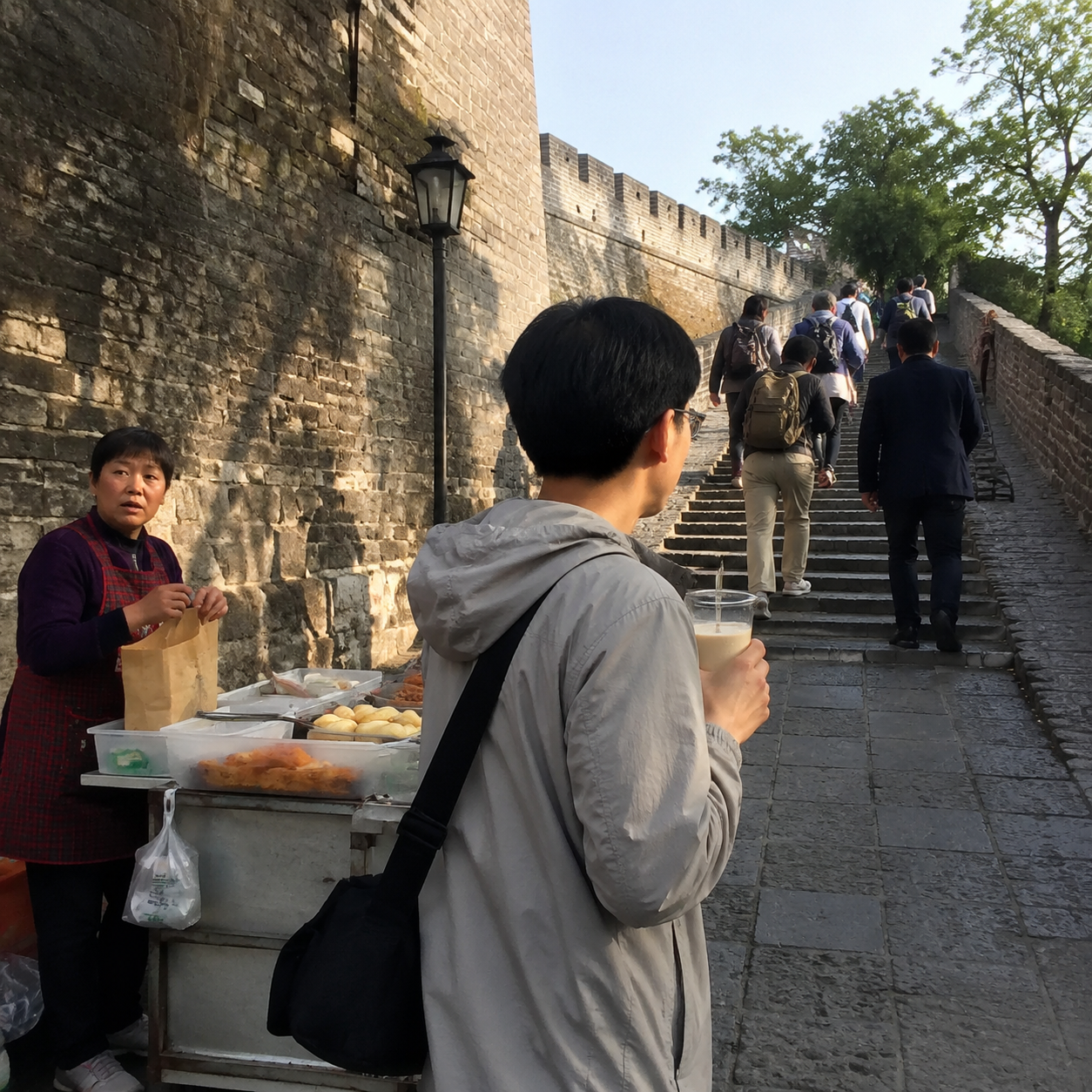
早上八点半,我站在解放门附近,手里那杯刚买的豆浆还很烫,塑料杯壁把掌心烘得发黏。前面有一小队游客已经往坡上走,鞋底蹭过石阶时带出一种干而短的摩擦声。旁边卖早点的阿姨一边给人装烧饼,一边抬头看了我一眼,说了一句很像提醒又很像经验总结的话:别急着一口气全走完,南京这种地方,走顺比走满更重要。
At half past eight in the morning, I was standing near Jiefang Gate with a cup of soy milk still hot in my hand, the thin plastic warming my palm until it felt slightly sticky. Ahead of me, a small group of tourists had already started up the slope, and the soles of their shoes scraped the steps with a short, dry sound. A woman selling breakfast packed sesame flatbread for another customer, glanced up at me, and offered a sentence that sounded half like advice and half like accumulated experience: don’t rush to finish everything in one go; in a place like Nanjing, moving smoothly matters more than covering everything.
我以前做中国城市攻略时,很容易犯一个毛病:喜欢把“完整”误当成“高效”。只要地图上能连起来,我就默认自己应该多看一点、多走一点、多把一个点和下一个点直接拼起来。南京把这个习惯改掉了。因为这里最容易出错的,不是信息不够,而是你会误以为每一段都值得立刻接上下一段,结果把整座城走得只剩下框架。
When I used to plan city routes in China, I made one mistake again and again: I mistook completeness for efficiency. If the map allowed me to connect things, I assumed I should see a little more, walk a little farther, and stitch one site directly onto the next. Nanjing cured me of that habit. The easiest error here is not a lack of information. It is the assumption that every section deserves to be followed immediately by another, until the entire city is walked down to nothing but a frame.
南京攻略最实用的一条,不是“必看名单”,而是顺序意识。城墙这一类地方,上午去最合适。不是因为人一定最少,而是因为早上的光会把砖、坡道、门洞和外圈道路的关系交代得更清楚。你站上去,不会只看到“古城墙”三个字,而会看见今天的南京是怎么在它旁边继续运转的。这个判断很重要,因为它决定了你后面是不是还保留体力和耐心去看另一层城市。
The most practical lesson for a Nanjing guide is not a list of must-sees. It is an awareness of sequence. A place like the wall belongs to the morning. Not because it is guaranteed to be least crowded, but because morning light explains more clearly how brick, slope, gate opening, and surrounding roads still relate to one another. From the top, you stop seeing only the phrase “ancient city wall” and start seeing how present-day Nanjing keeps functioning beside it. That matters, because it determines whether you still have the patience and energy to read the city’s next layer later in the day.
我那天走到台城一段时,第一反应其实是想贪多。玄武湖那边视野很好,风也顺,照片几乎怎么拍都不难看。最危险的恰恰就是这种“太顺”。一顺,人就会以为自己状态很好,于是下意识给后半天继续加任务:再去一个门,再多看一段,再补一个近代街区,再顺手找一家传说中的老店。可南京最怕的就是被这样对待。你加得越满,它回到你脑子里时越空。
When I reached the Taicheng stretch that day, my first instinct was honestly to become greedy. The view toward Xuanwu Lake was open, the breeze worked in my favor, and the photographs were almost impossible to ruin. That smoothness is exactly the danger. Once things feel easy, you begin to assume you are in great shape, and without noticing it you add tasks to the second half of the day: another gate, another section of wall, one more modern district, perhaps even a famous old restaurant folded in on the way. But this is precisely how Nanjing resists being handled. The fuller you pack it, the emptier it returns in your memory.

真正有效的攻略,不是多给点,而是早一点收。那天我在墙上停够以后,没有继续硬接下一段,而是先下到墙脚,顺着路边慢慢走,找了个可以坐下来的小馆子。那顿饭本身不夸张,一碗热汤、两样小吃,桌面是用了很多年的浅色贴面板,边角有一点卷起。可坐下来之后,我明显感觉自己的注意力重新变好了。南京这座城有一个很有意思的地方:你必须给自己留停顿,它才会把下一层交出来。
A truly effective guide does not give more. It knows when to end earlier. That day, after I had stayed on the wall long enough, I did not force the next section onto the route. I came down, walked slowly along the road below, and found a small place where I could sit. The meal itself was not dramatic—a hot bowl of soup, two modest snacks, a pale laminated tabletop worn by years of use with one corner slightly peeling. Yet once I sat down, I could feel my attention reset. Nanjing has this very particular quality: you need to leave room for pauses, or the city refuses to reveal the next layer.
节假日前后尤其要这么处理。很多人一听到国庆、五一、周末,就本能地想把“热门”和“高峰”完全错开,于是或者起得过早,或者把路线拉得太远。我的经验是,南京更适合做“避峰”而不是“反峰”。避峰的意思不是跟人群作战,而是识别哪些地方该早一点去,哪些地方该中段去,哪些地方不值得在最热的时候挤进去。城墙要早,近代街区可以晚一点,吃饭不要拖到最饿的时候,湖边和树下的路则更适合放在精神稍微松下来的时段。
This matters even more around public holidays. The moment people hear National Day, May Day, or even an ordinary weekend, they instinctively try to outrun the crowd entirely—by starting too early, or stretching the route too far. My experience is that Nanjing rewards peak avoidance, not anti-peak obsession. Peak avoidance does not mean fighting the crowd at all costs. It means recognizing which places should be done early, which belong to the middle, and which are simply not worth squeezing into the busiest hour. The wall wants the morning, the modern districts can wait a little, food should not be postponed until hunger turns sharp, and roads under trees or by the lake belong to the hours when the mind has softened a little.
很多第一次来中国的外国游客会把南京想成一座“历史密度很高”的城市,这个判断没有错,但如果只停在这里,攻略会写成说明书。真正有用的写法应该更具体:你在这里不是单纯读历史,而是在学习一座城市怎样把重量分配到一天里。上午让你靠近砖和门,下午让你靠近街区和树影,傍晚再把行人的速度、路边灯光和旧建筑的边缘一起递给你。路线顺了以后,南京就不再是一页一页被翻开的材料,而像一整天被慢慢调亮的表面。

Many first-time foreign visitors to China imagine Nanjing primarily as a city of dense history. That judgment is not wrong, but if a guide stops there, it turns into a manual. The useful version is more concrete: here you are not simply reading history, you are learning how a city distributes weight across one day. Morning brings you close to brick and gates, afternoon to districts and tree shadows, and evening hands you pedestrian rhythm, roadside light, and the outline of older buildings together. Once the route begins to flow, Nanjing stops feeling like stacked pages of material and starts to feel like a surface slowly brightened over the course of the day.
我还学会一件小事:不要把每一处“看起来还能继续”的地方都继续下去。南京有不少路段会给你这种错觉,尤其是城墙附近和一些安静的街区边缘。你会觉得,再走二十分钟也没什么,再拐一个弯看看也可以。可旅行判断往往不是坏在大选择上,而是坏在这种不断延长的微小乐观。那天我第一次在一个觉得“刚刚好”的节点停住,反而让后半天的近代街区和夜里散步都变得更清楚。
I learned another small lesson too: do not continue every place that looks as if it still has more to give. Nanjing offers that illusion often, especially near the wall and around quiet district edges. You think another twenty minutes will not hurt, another turn might still be worth it. But travel judgment rarely collapses through one big decision; it usually erodes through this kind of endlessly extended optimism. The first time I stopped at a point that merely felt “just right,” the rest of the day—the Republican-era streets and the evening walk—became clearer instead of thinner.
到了傍晚,风从树冠底下斜着吹过来,路边亮起的灯没有很夸张,但足够把建筑立面轻轻托出来。我拿着没喝完的最后几口水,站在一处路口,忽然觉得自己总算没有再把南京走成一张待办清单。前面还有路,当然也还有地方可看,可那天我终于知道,好的攻略不是教人怎么把一座城用尽,而是教人怎么在还想继续的时候,伸手把那口袋里的空杯子捏扁,然后往下一个更慢的方向走去。
By evening, the wind came slanting under the tree canopy. The lights along the road were not dramatic, but they were enough to lift the façades gently into view. Holding the last unfinished mouthfuls of water, I stood at a crossing and realized I had finally stopped turning Nanjing into a checklist. There were still roads ahead, of course, and still more to see. But that day I finally understood that a good guide does not teach you how to use a city up. It teaches you how, at the moment you still want to continue, to crush the empty cup in your pocket and walk instead toward a slower direction.
- 适合送礼的中国茶具 | Chinese Tea Sets as Gifts
- 夜市烧烤摊的烟火气,教我别只找网红餐厅 | Smoke from a Night Grill Taught Me Not to Only Chase Viral Restaurants
- 中医传统疗法指南 | Traditional Chinese Medicine
- 景德镇陶瓷伴手礼选购指南 | Jingdezhen Ceramics Souvenir Buying Guide
- 端午龙舟节旅游攻略 | Dragon Boat Festival Travel Guide
- 在广州早茶桌上学会点心 | Learning Dim Sum at a Guangzhou Morning Tea Table
- 在中国打车这件事,没你想的那么难 | Ride-Hailing in China: Easier Than You Think
- 雾江边的一晚重庆火锅 | A Foggy-River Evening of Chongqing Hotpot
- 在社区修理铺门口等十分钟,我才明白中国人为什么总说“先看看能不能修” | Waiting Ten Minutes Outside a Neighborhood Repair Shop, I Finally Understood Why People in China Always Say, “Let’s See If It Can Be Fixed First”
- 在中国吃素这件事,比你想象的难,也比你想象的容易 | Eating Vegetarian in China: Harder Than You Think, Easier Than You Fear
Comments (0)