
我在杭州把西湖走成一天慢电影:从晨雾到夜船都不赶 | I Turned West Lake into a Slow Day Film from Morning Mist to Night Boat
我在杭州把西湖走成一天慢电影:从晨雾到夜船都不赶 | I Turned West Lake into a Slow Day Film from Morning Mist to Night Boat
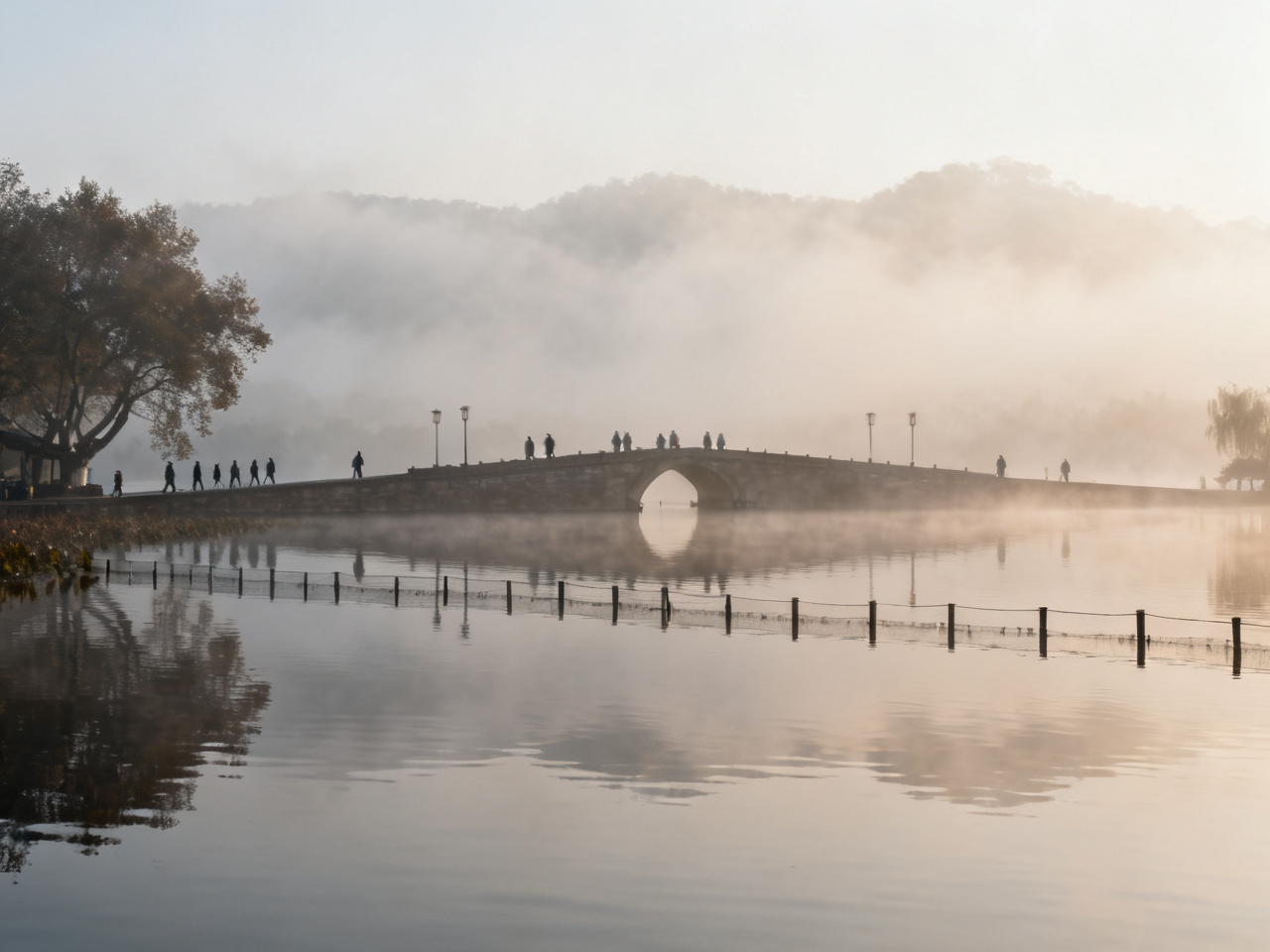
清晨六点十五分,杭州的天还带着夜里没散尽的潮气,我一个人站在西湖边的北山街,手里捏着还烫指尖的豆浆杯,看保洁阿姨把湿叶子慢慢扫到路边,风把湖面的雾往断桥方向推,我决定这一天什么都不赶,只把西湖当成一部慢慢放映的电影,从第一帧看到账幕落下。
At 6:15 in the morning, Hangzhou was still holding the dampness left over from the night. I stood alone on Beishan Street by West Lake with a cup of soy milk warming my fingertips, watching a sanitation auntie sweep wet leaves into a neat line while the wind pushed the mist across the water toward Broken Bridge. I decided not to rush anything that day and to treat West Lake like a slow film, watching it frame by frame until the closing scene.
天色最灰的时候,湖边的人反而最轻。晨跑的人鞋底拍着石板,声音像被雾包了一层棉;卖早点的小车掀开蒸笼,白汽一下子冲出来,带着包子皮和葱花的甜味;两只黑天鹅贴着岸边游,水纹只荡开很窄的一道。我沿着白堤往前走,步子故意放慢,像怕踩碎这层半醒的安静。
At the grayest hour, the people by the lake moved most lightly. The soles of runners tapped the stone pavement with a sound softened by the mist, as if wrapped in cotton; a breakfast cart lifted its steamer lid and a cloud of vapor burst out carrying the sweet scent of dough and chopped scallion; two black swans glided along the shore, their ripples opening only a narrow seam in the water. I walked onto Bai Causeway on purpose at a slower pace, as if I might crack the half-awake quiet underfoot.
断桥并不热闹,至少在早晨不是。桥上有一对来拍婚纱照的年轻人,新娘穿着球鞋,白纱下露出一截粉色袜子,摄影师半蹲着喊她把头再偏一点。我停下来让路,结果摄影师冲我笑了一下,说:“哥,你站那边别动,正好给画面一个路人。”于是我莫名其妙地成了别人爱情故事里的背景,站在桥栏边看湖,把手里的空豆浆杯攥得扁扁的。
Broken Bridge was not crowded, at least not in the morning. A young couple was shooting wedding photos there. The bride wore sneakers, and a strip of pink socks showed beneath her white dress. The photographer crouched and asked her to tilt her head a little more. I stopped to get out of the way, but he grinned at me and said, “Sir, stay there for a second—your silhouette is perfect as a passerby.” For a brief moment I became background scenery in someone else’s love story, standing by the railing, looking over the lake, crushing my empty soy milk cup in one hand.
西湖最适合慢慢走,而不是拼命打卡。以前有人问我第一次来杭州怎么安排,我总觉得先把节奏学会,比先把景点记全更重要。如果你在城市之间切换得太快,可以先看一篇 Shanghai to Suzhou in Two Slow Days,那种把移动也过成内容的方式,和西湖很合拍。
West Lake rewards a slow walk more than a frantic checklist. When people ask me how to arrange a first trip to Hangzhou, I always think learning the rhythm matters more than memorizing every sight. If you have been jumping too quickly between cities, it helps to read Shanghai to Suzhou in Two Slow Days first; its way of turning transit itself into part of the experience fits West Lake very well.
七点以后,天一点点亮起来,柳树把绿色从灰里提出来。我从平湖秋月一带拐过去,看到几个本地叔叔已经支起小音箱练太极,动作慢得像和水面一起呼吸。旁边有位遛狗的大姐,牵着一只腿很短的柯基,狗鼻子贴着地一路闻过去,最后停在我鞋边。大姐笑着说:“它闻得出来谁是游客。”我问怎么看出来,她说:“本地人早上不会抬头看这么久,游客会。”
After seven, the sky gradually brightened and the willows pulled green out of the gray. I turned past the area near Autumn Moon over the Calm Lake and saw several local uncles already practicing tai chi with a small speaker beside them, moving so slowly that they seemed to breathe with the water. Nearby a woman walking a corgi let the dog sniff along the ground until it stopped beside my shoe. She laughed and said, “It can tell who’s a visitor.” I asked how, and she answered, “Locals don’t spend that long looking up in the morning. Visitors do.”
这句话让我突然放松下来。原来游客不一定非得显得熟门熟路,站着发呆也是正经的旅行方式。我在长椅上坐了十分钟,什么都没做,只看湖面颜色从铅灰变成淡银,再变成被日头擦亮的蓝。耳边有自行车铃声,远处有船马达低低地响,近处能闻到树皮被夜露浸湿后的清气,还有刚烤出来的芝麻烧饼香味。
That line relaxed me at once. A traveler does not need to look efficient; standing still and staring is a valid way to travel too. I sat on a bench for ten minutes doing nothing except watching the lake change from lead-gray to pale silver and then to a blue polished by the rising sun. Around me I heard bicycle bells, a distant low hum from a boat engine, and nearby the clean smell of bark soaked by night dew mixed with the aroma of freshly baked sesame flatbread.
上午九点,我走到孤山脚下,原本想顺着路去看几个小院子,却在岔口遇到了一点小麻烦:天忽然下起细雨。我没带伞,雨丝一开始像试探,没几分钟就把衬衫肩头打出深色印子。正在我犹豫要不要躲进游客中心时,一位卖龙井茶的阿姨从摊位里探出头,冲我招手:“先站进来,杭州的雨不讲道理。”她把一把旧伞靠在柜边,又顺手给我倒了半纸杯温热的茶。
At nine, I reached the foot of Solitary Hill. I had planned to continue toward a few tucked-away courtyards, but a small problem arrived at the fork in the path: a sudden drizzle. I had no umbrella. At first the rain only tested the air, but within minutes it darkened the shoulders of my shirt. Just as I was hesitating over whether to duck into the visitor center, a woman selling Longjing tea leaned out from her stall and waved me over. “Stand in here first,” she called. “Hangzhou rain doesn’t follow reason.” She rested an old umbrella by the counter and poured me half a paper cup of warm tea.
那杯茶带一点嫩栗子的香,入口并不苦,咽下去时喉咙像被轻轻熨过。阿姨说她家住梅家坞,雨大的时候湖边生意一般,反而有空和路过的人聊天。她问我是不是第一次把西湖走这么慢,我点头。她说:“好,别急着坐观光车。西湖要靠脚底知道远近,靠耳朵知道热闹从哪儿开始。”这句像台词一样的话,被我记了一整天。
The tea carried a faint young chestnut aroma. It was not bitter, and when I swallowed it, my throat felt gently pressed smooth. The auntie told me she lived in Meijiawu and that heavy rain usually slowed business by the lake, leaving her time to chat with passersby. She asked whether it was my first time taking West Lake this slowly. I nodded. “Good,” she said. “Don’t rush onto a sightseeing car. You need your feet to learn the distances here, and your ears to know where the liveliness begins.” The line sounded like a film script, and I carried it with me all day.
雨不大,却把湖的边缘洗得更清楚。等我撑着她借的伞往楼外楼方向慢慢走时,岸边的荷叶上已经积了亮亮的小水珠,游船码头前排起短短一列队,几个孩子伸手去接雨,笑声弹得很高。我没有去追任何一个“必须看”的点,而是拐进树影里,沿着曲折的堤和小坡走,看墙根的苔藓、石阶的裂缝、栏杆上被手掌磨亮的木纹。
The rain was light, but it washed the edges of the lake into sharper focus. By the time I moved slowly toward the Louwailou area beneath the umbrella she lent me, bright droplets had gathered on the lotus leaves by the shore, a short queue had formed at the boat pier, and several children reached into the rain with laughter springing high into the air. I did not chase any “must-see” stop. Instead I turned into the tree shadows and followed winding embankments and small slopes, studying moss at the foot of walls, cracks in the steps, and the grain of wood burnished by countless hands on the railings.
中午我没有刻意找网红店,只在岳庙附近的一家小馆子吃了一碗片儿川。面上来时汤面浮着一点油花,雪菜咸香,笋片脆,瘦肉薄薄的却很鲜。店里空调不算强,玻璃窗被室内外温差熏出一层白雾,门口有人抖伞,有人甩掉鞋边的泥水,碗筷碰撞得清脆。老板娘见我一个人坐窗边,给我多添了一小碟萝卜干,说“慢慢吃,下午天气会开。”
At noon I did not hunt for an internet-famous restaurant. I simply ducked into a small eatery near Yue Fei Temple and ordered a bowl of pian’er chuan. When it arrived, tiny circles of oil floated on the broth; the preserved mustard greens were salty and fragrant, the bamboo shoots crisp, and the slices of lean pork thin but deeply flavorful. The air-conditioning was modest, and the window glass had fogged white from the indoor-outdoor temperature difference. At the door people shook umbrellas and flicked muddy water from their shoes while bowls and chopsticks clinked sharply. Seeing me sitting alone by the window, the owner added a small dish of pickled radish and said, “Take your time. The sky will clear this afternoon.”
下午的西湖确实像被重新剪辑过。云层被风一点点推开,阳光从缝里洒下来,湖水先亮一块,再亮一片。苏堤上开始热闹,租车的人多了,导游旗也多了,我却不想加速,于是选了最笨但最舒服的办法:继续用走的。走累了就靠栏杆看鱼,渴了就买一支盐汽水,脚酸了就在树荫底下坐五分钟。
The afternoon version of West Lake did feel as if it had been re-edited. The wind pushed the cloud cover apart little by little, and sunlight spilled through the seams, brightening first one patch of water and then an entire sheet. Su Causeway grew busier. More people rented bikes, and more guide flags appeared. I still did not want to speed up, so I chose the clumsiest and most comfortable method of all: I kept walking. When I was tired, I leaned over the railing to watch fish. When I was thirsty, I bought a bottle of salty soda. When my feet ached, I sat under a patch of shade for five minutes.
如果你需要一点行程之外的背景知识,像如何在中国城市里判断该走路、坐公交还是叫车,可以顺手看看 Chinese city commuting choices;而假如你是坐高铁到杭州、打算接着串别的城市,China high-speed rail end-to-end guide 也很实用。但这一天里,我最想记住的不是效率,而是停顿。
If you want a little practical background beyond the walk itself—how to judge when to walk, take a bus, or call a car in a Chinese city—you can look at Chinese city commuting choices. And if you arrived in Hangzhou by high-speed rail and plan to string together other cities afterward, China high-speed rail end-to-end guide is useful too. But on this day, what I most wanted to remember was not efficiency. It was the pauses.
傍晚前我终于坐上了船,不是为了打卡“三潭印月”,只是因为脚走得发热,想换一种速度。船老大是个嗓门很亮的大叔,皮肤晒得发红,开船前挨个提醒大家坐稳。他看我一路都在拍水面,不拍人,笑着问:“你是不是来找安静的?”我说是。他把船头稍微往外带一点,让湖心的风更直接地扑过来,说:“那你等天再暗一点。”
Before evening I finally boarded a boat—not to check off Three Pools Mirroring the Moon, but because my feet were hot from walking and I wanted a different speed. The boatman was a broad-voiced uncle with sun-reddened skin who reminded everyone to sit steady before departure. He noticed that I kept photographing the water instead of people and asked with a grin, “Are you here looking for quiet?” I said yes. He nudged the bow slightly farther out so the breeze from the center of the lake hit us more directly. “Then wait until it gets a little darker,” he said.
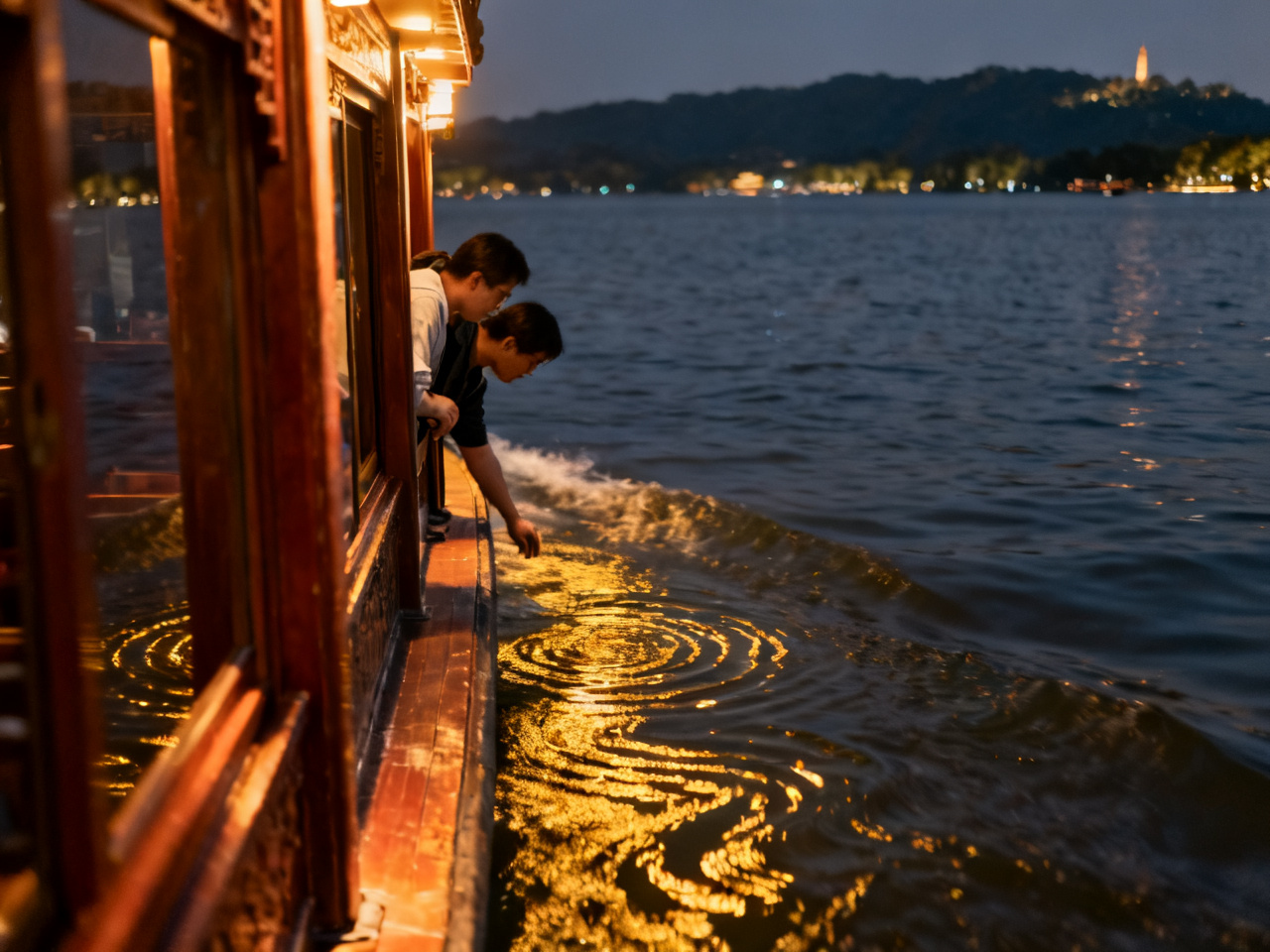
他说得对。天色往下沉的时候,岸上的树、塔、屋檐都变成更温柔的剪影,白天那些明显的颜色收起来了,只剩水光一层层叠开。船身划过湖面时,能听见细细的拍水声,像有人用手指不停拨动丝绸。远处雷峰塔亮灯,不刺眼,像在提醒你夜晚已经接管了风景。船上原本说话很响的游客也一个个轻下来,好像谁先安静,谁就能多分到一点夜色。
He was right. When the sky began to sink into evening, the trees, pagodas, and rooflines onshore softened into silhouettes. The clear colors of daytime folded away, leaving only layers of reflected light on the water. As the boat cut forward, I could hear a fine slapping sound against the hull, as if someone were repeatedly brushing silk with their fingertips. Leifeng Pagoda lit up in the distance—not glaring, just enough to announce that night had taken over the scenery. Even the tourists who had been speaking loudly one by one lowered their voices, as if whoever became quiet first would receive a larger share of the dark.
靠岸时已经将近八点。我把伞还给下午那位卖茶阿姨时,她正在收摊,塑料布上还留着几点没干的水迹。她认出我,问:“走完了?”我说:“没走完,但今天够了。”她点点头,像是完全明白。最后我没有急着回酒店,而是又沿湖边站了一会儿,看一艘晚船慢慢离开码头,橙黄的灯在黑水里拖出细长的一道,身后桂花树下有人轻声说话,前面风把湖气吹到脸上,凉得刚刚好。
It was nearly eight when I came ashore. I returned the umbrella to the tea-selling auntie, who was packing up; a few wet dots still clung to the plastic cover over her stall. She recognized me and asked, “Finished the walk?” I said, “Not finished. But enough for today.” She nodded as if she understood completely. I did not hurry back to my hotel after that. I stood by the lake a while longer and watched a late boat leave the pier, its orange light dragging a thin line across the black water. Behind me, people spoke softly under osmanthus trees. In front of me, the wind pushed lake air against my face, cool in exactly the right way.
- 行李打包清单:来中国旅行该带什么 | Packing List: What to Bring for a Trip to China
- 我在中国小区菜市场过了一个早晨,才明白“新鲜”原来是被声音和水气一起托出来的 | One Morning in a Neighborhood Wet Market in China Taught Me That “Fresh” Is Carried as Much by Sound and Moisture as by the Food Itself
- 广州宵夜:凌晨两点,我在惠福东路吃炒螺 | Guangzhou After Midnight: Stir-Fried Snails at 2am on Huifu East Road
- 中国旅游预算规划指南 | China Travel Budget Planning Guide
- 一根提线停在掌心时,我在泉州听见了海风 | When a Puppet String Rested in a Palm, I Heard the Sea Wind in Quanzhou
- 外国人第一次夜游中国城市的安全感 | The Sense of Safety I Felt on My First Night Walk in a Chinese City
- 签证与入境要求 | Visa and Entry Requirements
- 我在中国学会先看队伍,再决定吃什么 | In China I Learned to Read the Queue Before Choosing What to Eat
- 我在中国学会看便利店灯光、地铁出口和人流方向来判断安全 | I Learned to Read Convenience-Store Lights, Metro Exits, and Pedestrian Flow for Safety in China
- 敦煌老街真正留人的,常常不是夜色多辽阔,而是灯下那口杏皮水和炉火 | What Truly Holds You on Dunhuang’s Old Street Is Not the Vast Night but the Apricot Drink and Firelight Under the Lamps
Comments (0)