
在中国高铁站学会像本地人一样换乘 | How I Learned to Transfer Like a Local at a Chinese High-Speed Railway Station
在中国高铁站学会像本地人一样换乘 | How I Learned to Transfer Like a Local at a Chinese High-Speed Railway Station
我在中国旅居久了以后,最能暴露自己还不像本地人的地方,不是点菜,也不是打车,而是高铁站换乘。平时我可以熟练地扫码、收快递、在小区门口和保安点头,可一到大型高铁站,头顶的屏幕、左右分流的通道、不断更新的检票口,就会把我的自信拆得很细。第一次独自换乘时,我站在到达层的出口前,手里拿着手机,心里只有一个问题:我是不是必须先出站,再重新进站?
After living in China for a long time, I found that the place where I still looked least like a local was not a restaurant or a ride-hailing car, but a high-speed railway station transfer. In daily life I could scan codes, receive parcels, and nod to the guard at my compound gate with ease. Yet inside a large railway station, the overhead screens, split corridors, and constantly changing gates could take my confidence apart piece by piece. The first time I had to transfer alone, I stood before the arrival exit with my phone in my hand and one question in my mind: did I need to leave the station first and then enter all over again?
那次行程并不复杂,至少在买票时看起来不复杂。我从一个中部城市到东部沿海,系统给了我一个中转方案,两段车之间有四十二分钟。朋友说够了,我也相信够了。真正的问题是,四十二分钟在手机页面上像一块完整的时间,到了站台上却会被拆成很多小块:下车、跟人流上楼、找换乘标志、确认下一趟车次、过闸或不出闸、找到候车区、再去检票口。每一步只要慢一点,时间就会开始漏水。
The itinerary was not complicated, at least not when I bought the tickets. I was traveling from a central Chinese city to the eastern coast, and the system offered a transfer plan with forty-two minutes between trains. A friend said it was enough, and I believed it. The real problem was that forty-two minutes looked like one solid block on the phone screen, but on the platform it broke into many pieces: getting off, following the crowd upstairs, finding transfer signs, confirming the next train number, passing a gate or not passing one, reaching the waiting area, and then finding the boarding gate. If any step slowed down, time began to leak.
我下车时犯的第一个错误,是把“跟着大家走”理解得太简单。大部分乘客确实都往同一个方向走,但他们的目的不一样:有人出站,有人去地铁,有人去网约车上车点,也有人和我一样换乘。刚开始我只盯着前面人的行李箱,结果差点跟到出站口。直到看见头顶一块蓝色牌子写着“便捷换乘”,旁边还有英文提示,我才停下来,从人流边缘挤回另一条通道。那一刻我明白,本地人的从容不是随便走,而是他们很早就开始筛选信息。
My first mistake after getting off the train was understanding “follow the crowd” too simply. Most passengers did move in the same direction, but they were not going to the same place. Some were exiting, some were heading for the metro, some were going to ride-hailing pickup points, and some, like me, were transferring. At first I stared only at the suitcase in front of me and almost followed it to the exit. Then I saw a blue overhead sign marked “convenient transfer,” with English beside the Chinese, and I stopped, edging back from the stream into another corridor. At that moment I understood that locals did not look calm because they wandered casually; they started filtering information earlier.
第二个问题出在车次上。我习惯看目的地城市,却没有立刻看车次编号。中国高铁站的屏幕上,同一个方向可能有很多趟车,甚至同一个城市名会反复出现。我的下一班车不是“去杭州的车”这么简单,而是具体的 G 开头编号、具体的发车时间、具体的检票口。后来我养成的办法是,下车前就把下一程车次截图放在相册最前面,车次、座位、开车时间都能一眼看到。这样到了换乘通道,我不用在网络不稳或手忙脚乱时重新打开订单。
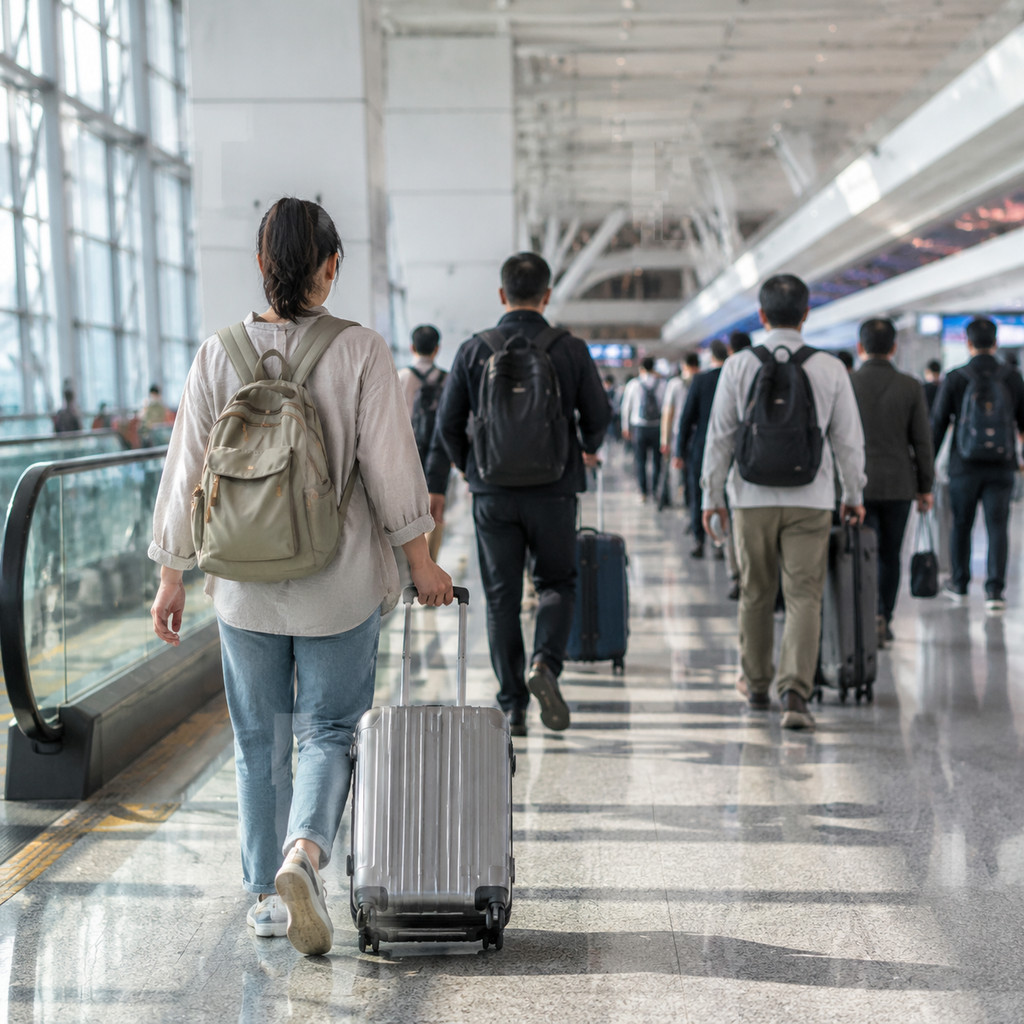
The second problem was the train number. I was used to looking at the destination city, but I did not check the specific service number immediately. On screens in Chinese high-speed railway stations, there may be many trains going in the same direction, and the same city name may appear again and again. My next train was not simply “the train to Hangzhou.” It was a specific G-number, a specific departure time, and a specific boarding gate. The method I later developed was to take a screenshot of the next leg before getting off and keep it at the front of my photo album. Train number, seat, and departure time were visible at once, so in the transfer corridor I did not have to reopen the order while the signal was weak or my hands were busy.
那天我沿着“便捷换乘”标志走到一个闸口,前面排着十几个人。每个人都把身份证或护照信息页准备好,动作很快。我用的是护照,不能像多数人那样刷身份证通过,于是心里又紧了一下。工作人员看见我犹豫,指了指人工通道。我递上护照和手机订单,她核对下一程车票后让我通过,全程不到一分钟。问题并没有消失,但它从一团模糊的担心变成了一个可处理的步骤:外国护照走人工通道,提前打开订单,别在窗口前才开始找。
That day I followed the “convenient transfer” signs to a gate where more than a dozen people were waiting. Everyone had an ID card or document page ready, and the line moved quickly. I was using a passport, so I could not pass through the same way most people did with Chinese ID cards, and I felt tense again. A staff member saw my hesitation and pointed to the manual lane. I handed over my passport and phone order; she checked my next ticket and let me through in less than a minute. The problem did not vanish, but it changed from a vague worry into a manageable step: foreign passport holders use the manual lane, open the order in advance, and do not start searching at the window.
通过换乘闸口后,我进入了候车层。这里的挑战和机场不同。机场换乘常常强调登机口,铁路站则要同时看候车区、检票口、车次状态和开检时间。大屏幕一刷新,我就开始紧张,因为信息太多。后来我学会先锁定三件事:车次有没有显示,检票口是不是已经出来,状态是“正点”“候车”还是“正在检票”。只要这三件事清楚,其他信息可以暂时忽略。像本地人一样换乘,不是看懂所有屏幕,而是知道哪些字现在最重要。
After the transfer gate, I reached the waiting level. The challenge there was different from an airport. Airport transfers often center on the gate, while railway stations require you to watch the waiting area, boarding gate, train status, and inspection time together. Each time the big screen refreshed, I felt nervous because there was too much information. Later I learned to lock onto three things first: whether my train number was displayed, whether the boarding gate had appeared, and whether the status said on time, waiting, or boarding. Once those three were clear, other information could wait. Transferring like a local did not mean understanding every screen; it meant knowing which words mattered right now.
我还学到一个很实际的细节:不要站在通道正中央研究手机。第一次换乘时,我因为紧张,在扶梯出口停下来确认方向,立刻发现自己挡住了后面的人。没有人责备我,但行李箱轮子和脚步声从身边绕开,让我意识到自己占错了位置。现在我会先走到柱子旁、墙边或座椅后方,再看地图和车票。这个小动作改变很大,因为你一旦不挡路,心态也会稳定下来。你从被人流推着走,变成在旁边观察人流怎么走。
I also learned a very practical detail: do not stop in the middle of a passage to study your phone. During my first transfer, I was nervous and paused at the top of an escalator to confirm my direction. I immediately realized I was blocking the people behind me. No one scolded me, but suitcase wheels and footsteps detoured around me, and I understood that I had chosen the wrong place to think. Now I first move beside a pillar, near a wall, or behind a row of seats before checking maps and tickets. That small adjustment changes a lot. Once you are not blocking the way, your mind steadies too. You stop being pushed by the flow and start observing how the flow works.
那次换乘最危险的不是迷路,而是我差点把时间花在错误的舒适上。候车厅里有咖啡店和便利店,我看见本地乘客去买水,也想跟着买一瓶。可是他们可能离检票口很近,可能对站内布局很熟,可能知道自己那趟车还没开始检票。我不一样。我需要先找到检票口,再决定有没有时间买东西。后来我的顺序固定下来:先确认门,再解决水、洗手间和充电。顺序一变,焦虑就少了一半。
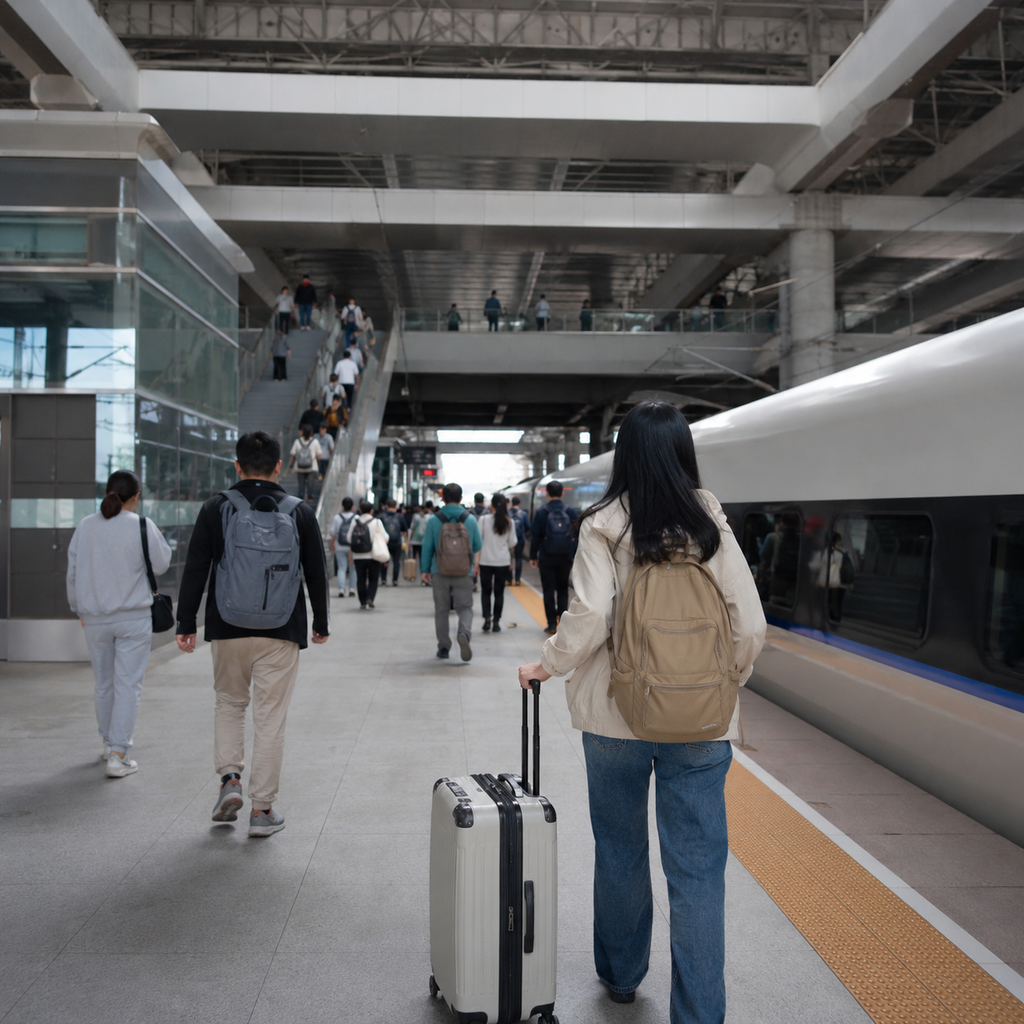
The most dangerous part of that transfer was not getting lost; it was almost spending time on the wrong comfort. There were coffee shops and convenience stores in the waiting hall. I saw local passengers buying water and wanted to do the same. But they might be close to their boarding gate, familiar with the station layout, or aware that their train had not started boarding. I was different. I needed to find the gate first and only then decide whether I had time to buy anything. Later my order became fixed: confirm the gate first, then deal with water, restroom, and charging. Once the order changed, half the anxiety disappeared.
我找到检票口时,屏幕显示还有十五分钟开始检票。那一刻我才第一次真正松气。旁边有一排座位,我坐下,把背包放在膝盖上,看周围的人。有人把身份证夹在手机壳后面,有人把孩子的水杯挂到行李杆上,有人低头看车票信息但表情很平静。我开始模仿这些细节:把护照放到最容易拿的位置,把手机亮度调高,把背包拉链朝向自己,把下一程座位号记在脑子里。模仿不是丢脸,在大型交通空间里,模仿常常是最快的学习方式。
When I found the boarding gate, the screen showed that inspection would begin in fifteen minutes. Only then did I truly breathe out. I sat on a nearby row of seats with my backpack on my knees and watched the people around me. Someone had slipped an ID card behind a phone case, someone hung a child’s water bottle on a suitcase handle, and someone checked ticket information with a calm face. I began copying these details: putting my passport where I could reach it fastest, turning up my phone brightness, facing my backpack zipper toward myself, and memorizing my next seat number. I did not feel embarrassed about imitation. In large transport spaces, imitation is often the quickest form of learning.
检票开始后,人群很快排成几条线。我以前总以为本地人排队快,是因为他们更着急;后来发现不完全是。他们只是更早把证件准备好,更早判断哪个口能过,更早知道自己不用在闸机前停下来整理包。我走人工检票口,排在一位带孩子的母亲后面。她一手拿证件,一手扶着孩子肩膀,孩子拖着小箱子,轮子卡了一下,她没有慌,只是把箱子轻轻提过缝隙。她处理小麻烦的方式,比任何说明牌都更像教程。
When boarding inspection began, the crowd quickly formed several lines. I used to think locals queued fast because they were in more of a hurry; later I realized that was not the whole story. They had simply prepared documents earlier, judged which gate they could use earlier, and knew earlier that they should not reorganize bags at the machine. I joined the manual inspection lane behind a mother with a child. She held documents in one hand and rested the other on the child’s shoulder. The child pulled a small suitcase; when its wheels caught in a gap, she did not panic, only lifted it gently over. The way she handled a small problem taught me more than any sign could.
站台层又是另一种节奏。候车厅里大家还可以分散,到了站台上,人会自动贴近自己车厢号附近。第一次我只看见列车很长,没意识到车厢位置决定了上车速度。后来我会在下到站台前先看电子屏上的车厢方向,确认一号车厢在左还是右,再按自己的车厢号移动。中国高铁停车时间通常不长,站台上再慢慢找车厢,会把自己弄得很狼狈。像本地人一样,就是把“上车后再说”提前变成“下站台前先想”。
The platform had another rhythm. In the waiting hall, people could spread out, but on the platform they automatically moved near their carriage numbers. The first time, I only noticed that the train was long and did not understand how much carriage position affected boarding speed. Later I checked the platform screen before going down to see whether Car 1 was to the left or right, then moved according to my own carriage number. Chinese high-speed trains usually do not stop for long. If you wait until you are on the platform to search slowly, you can make things difficult for yourself. Acting like a local means moving “I’ll figure it out after I board” earlier into “I should think before I go down.”
上车之后,我发现自己还剩八分钟。这个数字让我印象很深,因为它证明那次换乘既成功,也没有宽裕到可以乱来。我把箱子放好,找到座位,坐下时手心还有汗。列车启动后,我给朋友发消息说我换上了。朋友只回了两个字:正常。那两个字让我笑了。对他来说这当然正常,对我来说却是一套刚刚拆开的系统:标志、屏幕、证件、人工通道、检票口、车厢方向,每个环节都从陌生变得可读了一点。
After boarding, I realized I had eight minutes left. That number stayed with me because it proved the transfer had succeeded, but not by such a wide margin that I could have been careless. I stored my suitcase, found my seat, and sat down with sweat still in my palms. After the train started, I messaged my friend that I had made the transfer. He replied with only two characters in Chinese: normal. I laughed. For him, of course it was normal. For me, it was a system I had just unpacked: signs, screens, documents, manual lanes, boarding gates, carriage direction. Each part had become a little more readable.
从那以后,我把高铁换乘当成一个可以提前设计的流程,而不是临场发挥。买票时,我不只看总时长,还看中转站大小、两段车之间的间隔、是否同站换乘,以及到达时间是不是高峰。十五分钟看起来诱人,但对拿护照、带行李、还不熟站内路线的人来说,风险很高。三十到五十分钟通常更舒服,遇到特别大的站或第一次去的站,我宁愿多留一点。时间不是浪费,它是给错误和犹豫预留的缓冲。
Since then, I have treated high-speed rail transfers as a process to design in advance, not an improvisation. When buying tickets, I no longer look only at total travel time. I check the size of the transfer station, the gap between the two trains, whether the transfer is within the same station, and whether the arrival time falls during a rush period. Fifteen minutes may look attractive, but for someone using a passport, carrying luggage, and unfamiliar with the station route, it can be risky. Thirty to fifty minutes is usually more comfortable. At a very large station or one I am visiting for the first time, I would rather leave more. Time is not wasted; it is a buffer for mistakes and hesitation.
我也给自己整理过一个简单清单。下车前:截屏下一程车票,收好水杯和充电线,把护照放到外层口袋。下车后:先看“换乘”或“便捷换乘”,不要先看出口;如果不确定,问穿制服的工作人员,不要问同样赶路的乘客。进候车层后:先找车次屏幕和检票口,再考虑洗手间和买东西。检票前:手机亮度调高,订单页面打开,护照拿在手里。到站台前:看车厢方向。这个清单没有什么高明之处,但它让我少犯重复错误。
I also made a simple checklist for myself. Before getting off: screenshot the next ticket, put away the water bottle and charging cable, and place the passport in an outer pocket. After getting off: look first for “transfer” or “convenient transfer,” not for the exit; if unsure, ask uniformed staff rather than passengers who are also rushing. After reaching the waiting level: find the train screen and boarding gate before thinking about the restroom or buying things. Before inspection: raise phone brightness, open the order page, and hold the passport. Before going to the platform: check carriage direction. The checklist is not brilliant, but it prevents me from repeating the same mistakes.
长期旅居让我明白,本地感很多时候不是语言有多完美,而是动作顺序对不对。你可以带着口音问路,也可以慢一点通过人工通道,但如果你知道先站到旁边再看手机,知道先确认检票口再买咖啡,知道屏幕上车次比城市名更可靠,整个人就会显得不那么慌。高铁站并没有因为我变得简单,是我学会把它拆成一连串小问题。每个小问题都有答案,问题就不再像一堵墙。
Long-term living taught me that feeling local is often less about perfect language and more about the right order of actions. You can ask directions with an accent and take a little longer at the manual lane, but if you know to stand aside before checking your phone, confirm the boarding gate before buying coffee, and trust the train number more than the city name, you look far less panicked. The railway station did not become simple because of me. I learned to break it into a chain of small problems. Each small problem had an answer, so the whole situation stopped looking like a wall.
现在我再去高铁站换乘,还是会提前到,还是会看两遍屏幕,还是会把护照拿得很紧。我没有变成那种闭着眼都能穿过车站的人。但我不再把紧张理解为失败。紧张提醒我检查,流程帮助我前进,观察让我修正。等我跟着“便捷换乘”的牌子走上候车层,找到检票口,再看见自己的车次按时出现时,我会有一种很安静的满足感:不是征服了车站,而是终于学会和它合作。
Now, when I transfer at a high-speed railway station, I still arrive early, check the screens twice, and hold my passport carefully. I have not become someone who can cross the station with closed eyes. But I no longer interpret nervousness as failure. Nervousness reminds me to check, procedure helps me move, and observation lets me adjust. When I follow the “convenient transfer” signs up to the waiting level, find the boarding gate, and see my train number appear on time, I feel a quiet satisfaction: not that I have conquered the station, but that I have finally learned how to cooperate with it.
- 合肥路口那些半秒钟的互让,比任何介绍都更像城市说明书 | The Half-Second Acts of Yielding at Hefei Crossings Explain the City Better Than Any Guide
- 夜市烧烤摊的烟火气,教我别只找网红餐厅 | Smoke from a Night Grill Taught Me Not to Only Chase Viral Restaurants
- 苏州不是靠滤镜取胜的城市,先后顺序一错,再美也会被看空 | Suzhou Is Not a City Won by Filters; Get the Sequence Wrong and Even Beauty Goes Flat
- 中国麻将文化:规则、礼仪与社交密码 | Chinese Mahjong Culture: Rules, Etiquette & the Social Code
- 手机支付失败后,我给自己准备了三套备用方案 | After Mobile Payment Failed, I Prepared Three Backup Plans
- 贵阳的酸汤不是一道菜:从菜市场到晚饭桌 | Sour Soup in Guiyang Is More Than a Dish: From Market to Dinner Table
- 四个人一桌火锅,谁来先付?我在成都学会了中国式AA的真正节奏 | Four People, One Hot Pot Bill: In Chengdu I Learned the Real Rhythm of Splitting Cost
- 第一次一个人进中国银行,我学会先取号再去找窗口 | The First Time I Entered a Chinese Bank Alone, I Learned to Take a Number Before Looking for a Counter
- 刺绣体验:我第一次发现“安静”也可以有这么强的存在感 | Embroidery Workshop: The First Time I Realized Quietness Could Have Such a Strong Presence
- 雨停以后,我在武夷山把茶路走成了溪边慢线 | After the Rain Stopped, I Turned Wuyi Mountain’s Tea Road into a Streamside Walk
Comments (0)