
四个人一桌火锅,谁来先付?我在成都学会了中国式AA的真正节奏 | Four People, One Hot Pot Bill: In Chengdu I Learned the Real Rhythm of Splitting Cost
四个人一桌火锅,谁来先付?我在成都学会了中国式AA的真正节奏 | Four People, One Hot Pot Bill: In Chengdu I Learned the Real Rhythm of Splitting Costs in China
“等一下,这顿先别抢,我来挂单,你们一会儿再转我。”晚上八点十五分,成都玉林附近一间火锅店里,我们刚把最后一盘毛肚下进红汤,坐在我对面的老周已经把手机扣在桌边,语气熟练得像在指挥一场小型排练。桌上四个人,锅里两格翻滚,一边牛油辣得发亮,一边番茄汤给完全不能吃辣的Mina留退路。空调吹不散辣椒和花椒混起来的热香,玻璃门外还有人在排队,而我那一刻最困惑的不是该蘸香油还是干碟,而是:在中国,四个人一起吃火锅,到底谁应该先付,AA又究竟是怎么默契完成的?
“Wait, don’t fight for this one yet. I’ll put it on my phone first, and you can transfer me later.” At 8:15 p.m. in a hot pot restaurant near Yulin in Chengdu, we had just dropped the last plate of tripe into the red broth when Old Zhou, sitting across from me, placed his phone face down by the table with the practiced tone of someone directing a small rehearsal. There were four of us around the table, two broths boiling in the pot: a tallow-heavy spicy side glowing red, and a tomato broth preserving an escape route for Mina, who could not handle much heat. The air conditioner could not overpower the hot fragrance of chili and Sichuan pepper mixed together, people were still waiting outside the glass door, and the thing that confused me most in that moment was not whether to dip in sesame oil or dry seasoning. It was this: in China, when four people share hot pot, who is really supposed to pay first, and how does splitting the bill actually happen so smoothly?
来成都之前,我以为AA无非就是数学题:总价除人数,再互相转账。但真正坐上桌才发现,它更像一套社交节奏。谁发起聚餐、谁最熟悉点单、谁临时加了朋友、谁要先走、谁已经在前面垫了奶茶或打车,这些都会影响最后谁先付、怎么付、什么时候付。中国式AA并不一定意味着每一分钱都切得绝对平均,它更常见的目标是让场面顺、关系松、操作快,不让账单打断一桌人吃得正热的时候。
Before coming to Chengdu, I thought splitting the bill was merely arithmetic: divide the total by the number of people and transfer the money around. But once I actually sat down, I realized it was more like a social rhythm. Who organized the meal, who knows how to order, who added a friend at the last minute, who has to leave early, and who already covered milk tea or a taxi beforehand—all of these can shape who pays first, how they pay, and when the transfers happen. Chinese-style AA does not always mean every cent is carved into perfect equality. More often, its goal is to keep the scene flowing, the relationships relaxed, and the payment process fast enough that the bill does not interrupt a table that is still eating happily.
我们这桌四个人,关系就很典型地不对称。老周在成都工作了七年,是这顿的召集人,也是最熟悉这家店的人;我和Mina是旅行中的朋友,第一次来;还有一位小唐,是老周的同事,下班后直接赶来,连包都没放就坐下了。真正点菜的人是老周,真正记得谁能吃辣、谁不吃香菜、谁想试鸭肠的人也是老周。所以菜单还没上完,他就自然成了付款节奏的中心。这不是谁要控制局面,而是大家默认让最清楚全场情况的人先把流程接住。
The relationships at our table were asymmetrical in a very typical way. Old Zhou had worked in Chengdu for seven years, had organized the meal, and knew this restaurant best. Mina and I were friends traveling together and first-timers here. The fourth person, Xiao Tang, was Old Zhou’s coworker, arriving straight from work and taking his seat before he had even set his bag down properly. Old Zhou was the one who truly ordered, the one who remembered who could eat spice, who avoided cilantro, and who wanted to try duck intestines. So before all the dishes had even arrived, he naturally became the center of the payment rhythm. It was not that he wanted control. Everyone simply defaulted to letting the person with the clearest view of the whole table hold the process together.
火锅这种场景尤其能看出这种节奏。因为它不是一道菜吃完就结账,而是一段持续变化的共同活动。刚开始上的是毛肚、黄喉、鸭血和蔬菜,半小时后又加了冰粉、唯怡豆奶、酥肉和第二轮肉片;有人中途去洗手间,有人起身调蘸料,有人还在犹豫要不要再来一份脑花。你如果在这种时候突然掏出手机当场逐项精算,不仅麻烦,还会把桌上的热气一下掐断。老周显然很懂这一点,所以他从头到尾都没提“现在就A一下”,只是先把饭吃顺。
Hot pot makes this rhythm especially visible because it is not a single dish followed by a bill. It is a shared activity that keeps changing. At first came tripe, beef aorta, duck blood, and vegetables. Half an hour later we added ice jelly, Vitasoy-style soy milk, crispy pork, and a second round of sliced meat. Someone got up to use the restroom, someone stood to mix dipping sauce, and someone was still debating whether to order pig brain. If, in the middle of all this, you pulled out your phone and insisted on calculating each item line by line, it would not only be troublesome; it would slice straight through the warmth of the table. Old Zhou clearly understood this, so from start to finish he never said, “Let’s split this right now.” He focused first on keeping the meal running smoothly.
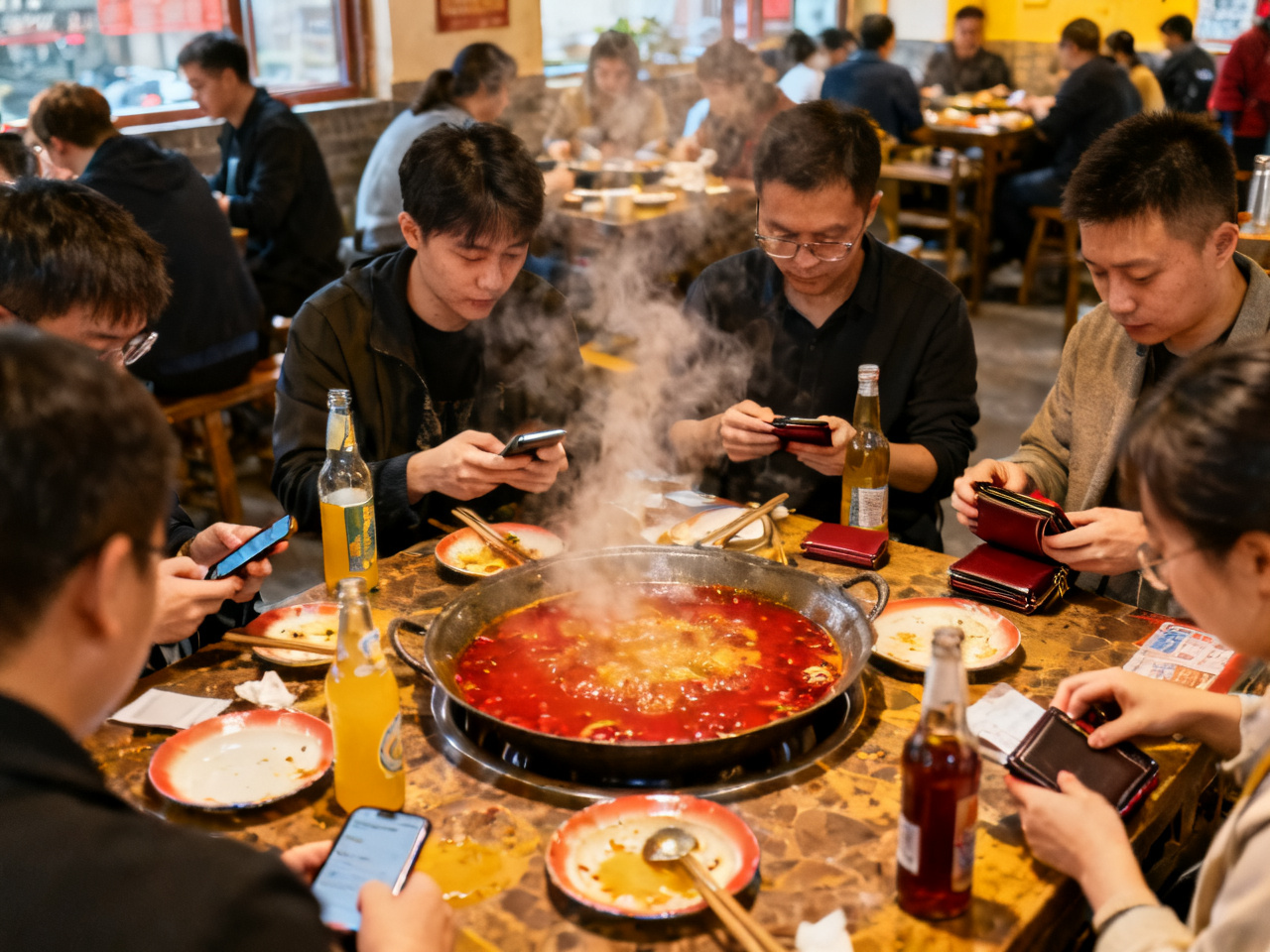
真正的转折出现在服务员把账单夹送过来的时候。Mina下意识就伸手去拿,我也几乎同一秒掏了手机,小唐则笑着说自己今天发工资可以请。场面一下热闹起来,像很多第一次见到的中国式“抢单”一样,看上去像竞争,其实里面有礼貌、关系和分寸。老周没跟我们来回推,只是把账单往自己这边一压,说:“你们别演,今天我先付,回头按人头发你们。”语气轻松,但边界很清楚,于是这件事立刻落定,没有进入那种会让人尴尬的长拉锯。
The real turning point came when the server brought over the bill folder. Mina instinctively reached for it, I pulled out my phone almost at the same second, and Xiao Tang laughed and said he had just been paid and could treat tonight. The scene suddenly became lively. Like many Chinese-style “bill grabs,” it looked competitive on the surface, but underneath it contained courtesy, relationships, and a sense of proportion. Old Zhou did not push back and forth with us. He simply slid the bill toward himself and said, “Don’t perform. I’ll pay first today and send the amount later by headcount.” The tone was easy, but the boundary was clear. The matter settled instantly instead of turning into the kind of prolonged tug-of-war that makes everyone uncomfortable.
我后来才明白,所谓“谁先付”,很多时候并不是谁最有钱,也不是谁最想请,而是谁最适合让流程最短。尤其在中国,移动支付已经深到日常生活的每一个缝里,真正高效的做法通常是一个人先完成主支付,其他人再用最方便的方式补给他。这样既避免收银台前四个人围着一个二维码磨蹭,也避免服务员重复拆单。如果你还不熟悉这种基础环境,可以先看这篇在中国设置支付方式,理解之后会发现很多看似复杂的社交场面,其实都建立在支付足够顺手这件事上。
I only later understood that “who pays first” is often not about who has the most money or who most wants to treat. It is about who can shorten the process best. Especially in China, where mobile payment has entered every crease of daily life, the most efficient method is usually for one person to complete the main payment first and everyone else to reimburse them in the easiest way. This avoids four people clustering around one QR code at the cashier and saves the server from repeatedly splitting the bill. If you are not yet familiar with that basic environment, a guide to setting up payment methods in China helps a lot. Once you understand it, many social scenes that seem complicated turn out to depend simply on payments being frictionless.
接下来才是我最感兴趣的部分:怎么A。老周没有把所有小数点都算到最细,而是先把锅底、主要菜品和饮料总数一口气除以四,再把他额外替公司垫付的一份发票需求单独拿掉。小唐因为临时加点了一份脑花,主动说那份算自己;Mina几乎没碰辣锅,老周却直接摆手说不用细分到那个程度,“一起吃火锅别算得像审计”。这一句非常成都,也非常中国式现实——AA重视公平,但也重视情绪成本。只要核心账目清楚,多数人宁可接受一个大体平衡、执行迅速的结果,也不愿为精确到个位数而耗掉整晚的轻松。
What interested me most came next: how exactly to split. Old Zhou did not calculate every decimal down to the smallest unit. He first divided the hot pot base, main dishes, and drinks by four in one pass, then removed a separate invoiced item he had advanced for work reasons. Xiao Tang had added a portion of pig brain for himself and volunteered to cover that bit. Mina had barely touched the spicy broth, but Old Zhou waved it off and said there was no need to break it down that finely: “When people eat hot pot together, don’t calculate like auditors.” The line was very Chengdu and very practically Chinese. AA values fairness, but it also values emotional cost. As long as the core numbers are clear, most people would rather accept a roughly balanced result executed quickly than burn the whole evening trying to perfect every single unit.
这并不意味着规则随意,恰恰相反,它有一套隐形但稳定的礼貌。第一,先付的人最好主动把算法说清楚,别人心里才不会悬着;第二,后来转账的人最好别拖到第二天中午以后,否则哪怕金额不大,也会显得松散;第三,如果有人中途已经买了奶茶、打车或者帮大家拿了额外小吃,通常会被视为已经承担了一部分,不必再机械地逐项补齐。中国旅行里很多小额支付就是这样被“顺手结掉”的。如果想理解这种从地铁、出租车到便利店都极其顺滑的支付习惯,也可以读读这篇手机支付在地铁出租车便利店里的实际便利。
This does not mean the rules are loose. On the contrary, it follows an invisible but stable etiquette. First, the person who pays upfront should explain the method clearly so nobody feels uncertain. Second, the people transferring money later should not drag it past the next day at noon, because even a small amount starts to feel careless if delayed. Third, if someone already bought milk tea, paid for a taxi, or picked up extra snacks for the group, that usually counts as having taken on part of the expense, so there is no need to mechanically rebalance every item. Many small payments during travel in China get “settled along the way” exactly like this. If you want to understand how that payment habit becomes smooth across metros, taxis, and convenience stores, a practical explanation of mobile pay convenience across those settings is useful.
那晚的小配角其实是Mina。她刚来中国没多久,手机里支付工具都装好了,但一到多人饭局还是会有点紧张,怕自己转慢了,或者看不懂别人一句话里默认的规则。老周很照顾她,直接在聊天框里发了一个简洁版说明:总额多少、每人多少、谁有额外项目、谁不用补。Mina看完一下就轻松了,还笑着说:“原来不是我不会AA,是我不知道这里的AA先讲节奏,再讲算术。”她这句话说得特别准,几乎可以概括我那晚全部的观察。
Mina was actually the key supporting character of the evening. She had not been in China long, had already installed the necessary payment tools, but still felt nervous when it came to group meals, worried she might transfer too slowly or miss the rules implied in one casual sentence. Old Zhou took care of that neatly by posting a short version in the group chat: total amount, amount per person, who had extra items, and who did not need to add more. Mina relaxed immediately after reading it and laughed: “So it’s not that I don’t know how to split the bill. I just didn’t know that here the rhythm comes before the arithmetic.” It was exactly right and almost summarized everything I had observed that night.
支付完成之后,饭局并没有被切断,反而像被悄悄接续上了。我们继续把最后几片土豆和豆皮捞出来,讨论明天去人民公园还是先逛菜市场。收银台那边有新一桌进来,锅底的香气又从门口卷过一次。桌面上留着辣油、纸巾团和喝到一半的豆奶,看起来热闹得有点乱,但每个人都明显轻松了,因为账这件事已经被妥帖地解决,不需要再占用注意力。好的支付方式,原来不只是“能付”,而是付完之后让社交继续自然流动。
Once payment was settled, the meal did not feel interrupted at all. If anything, it quietly resumed. We fished out the last slices of potato and tofu skin and debated whether to visit People’s Park the next day or browse a market first. At the cashier, a new table was being seated, and the fragrance of the broth swept in from the entrance again. The tabletop was lively and a little messy with chili oil, crumpled tissues, and half-finished soy drinks, but everyone was visibly more relaxed because the bill had already been handled properly and no longer demanded attention. A good payment method, I realized, is not merely one that lets you pay. It is one that lets social life continue naturally after the payment is done.
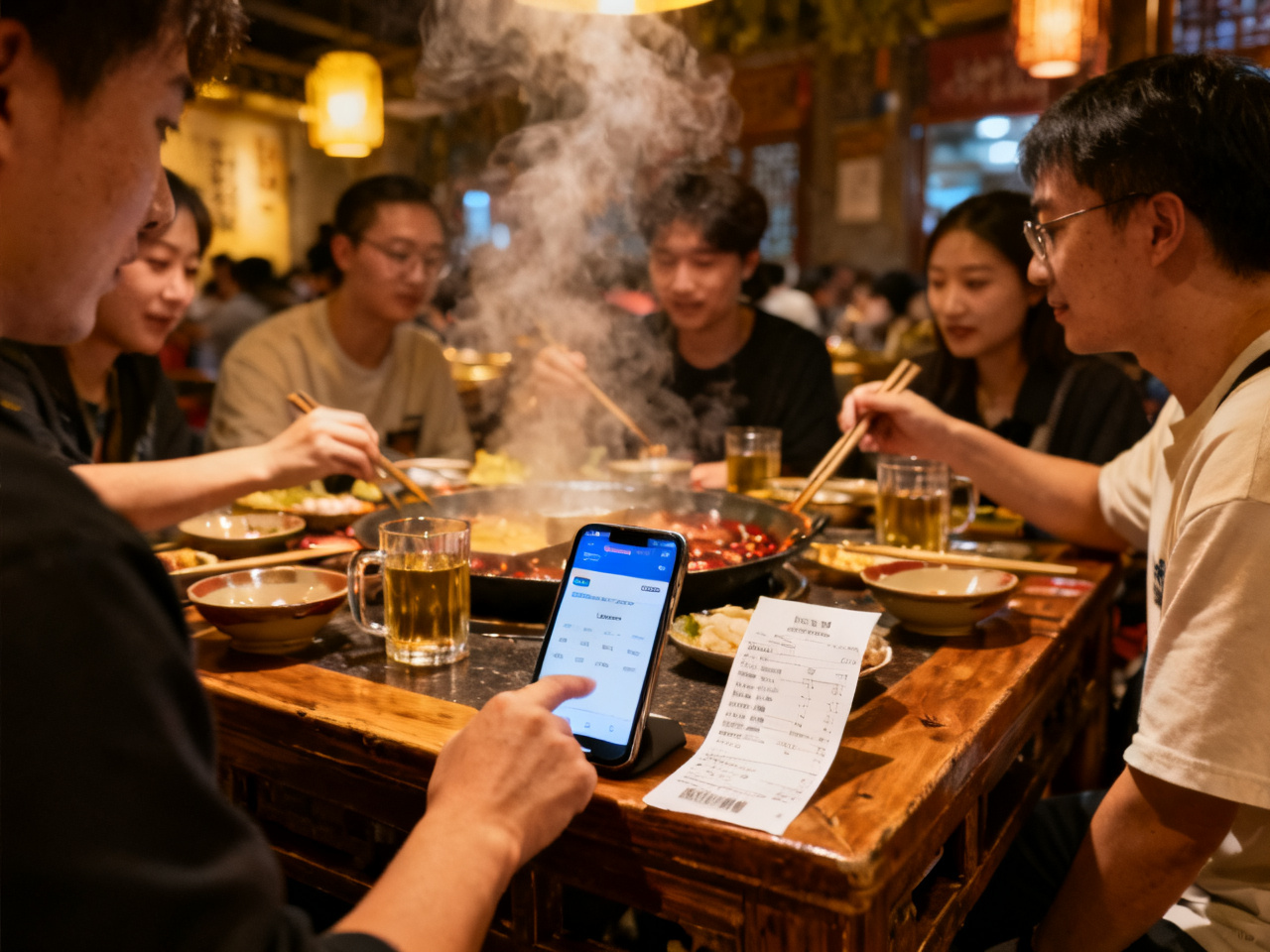
我们离开火锅店时已经接近十点。玉林街头潮热未散,路边串串香和水果摊的灯还亮着,花椒味淡了一点,空气里反而多了西瓜皮和潮湿树叶的气味。老周走在前面,边看手机边确认我们都已经转完;小唐骑上共享单车先回家,Mina站在路口把刚才的分账截图又看了一遍,然后抬头对我说:“现在我懂了,下次如果是我组局,我也会先把场面接住。”我们一起等红灯,脚边有外卖车轻轻滑过,火锅店的红招牌在身后照着一小片人行道。那一刻我明白了,中国式AA真正厉害的地方,不在于算法有多复杂,而在于它让一顿热闹的晚饭在最合适的时候完成结算,却不把热闹本身结掉。
By the time we left the hot pot restaurant, it was close to ten. The humid warmth of Yulin had not yet faded. The lights of skewer stalls and fruit stands were still on at the roadside. The scent of Sichuan pepper had softened, leaving more of watermelon rind and damp leaves in the air. Old Zhou walked ahead, checking his phone to make sure we had all transferred our shares. Xiao Tang rode home first on a shared bike. Mina stood at the corner, looked once more at the screenshot of the split, then raised her head and said to me, “Now I get it. Next time, if I’m the one organizing, I’ll catch the scene first.” We waited together at the red light while delivery scooters slid softly past our feet and the hot pot shop’s red sign glowed over a patch of sidewalk behind us. In that moment I understood the real brilliance of Chinese-style AA: not that the arithmetic is complex, but that it settles a lively dinner at exactly the right time without settling the liveliness itself.

- 我站在屋檐下面,才明白中国古建筑为什么先让人慢下来 | I Understood Why Traditional Chinese Architecture Slows the Body Only After Standing Under the Eaves
- 甘南:被遗忘的藏区秘境七日行 | Gannan: A 7-Day Journey Through Tibet's Forgotten Frontier
- 五一黄金周最热门目的地 | Top Destinations for May Golden Week
- 在地铁口停好共享单车那一刻,我才明白锁车并不等于结束 | The Moment I Properly Parked a Shared Bike Outside the Metro, I Understood That Locking It Is Not the End
- 地铁、打车、便利店:三大场景手机支付实战 | Subway, Taxi & Convenience Store: Mobile Pay in Action
- 我在武汉学会先看早餐店的节奏,再决定要不要排队 | In Wuhan I Learned to Read the Breakfast Rhythm Before Joining the Line
- 来华支付第一课:现金、银行卡、移动支付怎么搭配 | Payment Setup for China: Cash, Cards, and Mobile Wallets
- 我在苏州园林里学会先找一把椅子坐下,再开始拍照 | In Suzhou Gardens, I Learned to Find a Place to Sit Before Starting to Take Photos
- 文创好物推荐:故宫文创到地方博物馆 | Creative Souvenirs: Palace Museum to Local Museums
- 川藏线进藏路线拆解与海拔应对 | Sichuan-Tibet Highway: Route Breakdown & Altitude Tips
Comments (0)