
本人带着德国式行程表到中国后,真正救场的不是攻略,而是这份工具清单 | I Came to China With a German-Style Itinerary, but What Actually Saved Me Was This Tool Kit
本人带着德国式行程表到中国后,真正救场的不是攻略,而是这份工具清单 | I Came to China With a German-Style Itinerary, but What Actually Saved Me Was This Tool Kit
本人第一次带着德国人惯有的那种“最好把每一分钟都安排清楚”的心态来中国旅行时,以为自己准备得已经很充分。车票截图放进了单独文件夹,酒店地址打印成了纸质版,甚至还把每天可能出现的天气变化做了备注。结果真正下了高铁,站在出站大厅里,头顶广播一遍遍响,手机地图因为定位飘了一下,身边人流像潮水一样把人往前推,本人才第一次明白,在中国旅行,决定你顺不顺的,往往不是景点攻略,而是几样很实际的小工具,和你会不会在关键时刻把它们拿出来。
On my first trip to China, I arrived with the typical German habit of wanting every minute accounted for. I had train tickets saved in separate folders, the hotel address printed on paper, and even notes about possible weather changes each day. But the moment I stepped out of the high-speed rail station, with repeated announcements overhead, a drifting GPS signal on my phone, and a crowd moving like a fast tide around me, I understood something immediately: in China, what decides whether your trip runs smoothly is often not the sightseeing guide, but a handful of practical tools and whether you know how to use them at the exact moment you need them.
那天是在杭州东站。本人和伴侣刚下车时还很镇定,觉得只要顺着“出租车”“地铁”“网约车”几个指示牌走就不会出错。问题是,中国很多大型车站并不是“看见门就出去”那么简单。不同出口连着不同楼层,不同网约车上车点也分得很细。本人盯着手机地图走了三分钟,蓝点忽然跳到了马路对面,伴侣开始怀疑是不是已经走错方向。旁边一位提着奶茶的年轻姑娘看了我们一眼,直接说:“你们不要先看地图,先看出口编号,到了地面再定位。”这句话比任何长篇攻略都管用。
That happened at Hangzhou East Railway Station. My partner and I had just arrived and still felt calm, assuming that as long as we followed signs for “Taxi,” “Metro,” or “Ride-hailing,” everything would be straightforward. But many large Chinese stations are not simple “see a door and walk out” places. Different exits connect to different levels, and ride-hailing pickup zones are often divided very precisely. I followed the map for three minutes until the blue dot suddenly jumped across the road. My partner started wondering whether we had already gone the wrong way. Then a young woman carrying milk tea glanced at us and said, “Don’t trust the map first. Find the exit number first, then locate yourselves once you’re outside.” That sentence helped more than any beautifully written travel guide.
所以本人后来把“工具清单”理解成了另一回事。它不是冷冰冰的一串 App 名字,而是一套在站台、酒店前台、街角、便利店、出租车后座都能立刻派上用场的生存顺序。下面这些工具,本人不是按软件分类来写,而是按真正出状况的顺序来写。因为人在旅行里最容易犯的错误,就是把准备做得像办公室归档,却忘了现场是会动的。
So later I started thinking about a “tool checklist” in a different way. It was no longer just a cold list of app names, but a survival order for real moments at platforms, hotel counters, street corners, convenience stores, and the back seat of a taxi. I am not organizing these tools by software category, but by the order in which problems actually appear. That is because the most common travel mistake is preparing like an office archivist while forgetting that real life on the ground keeps moving.
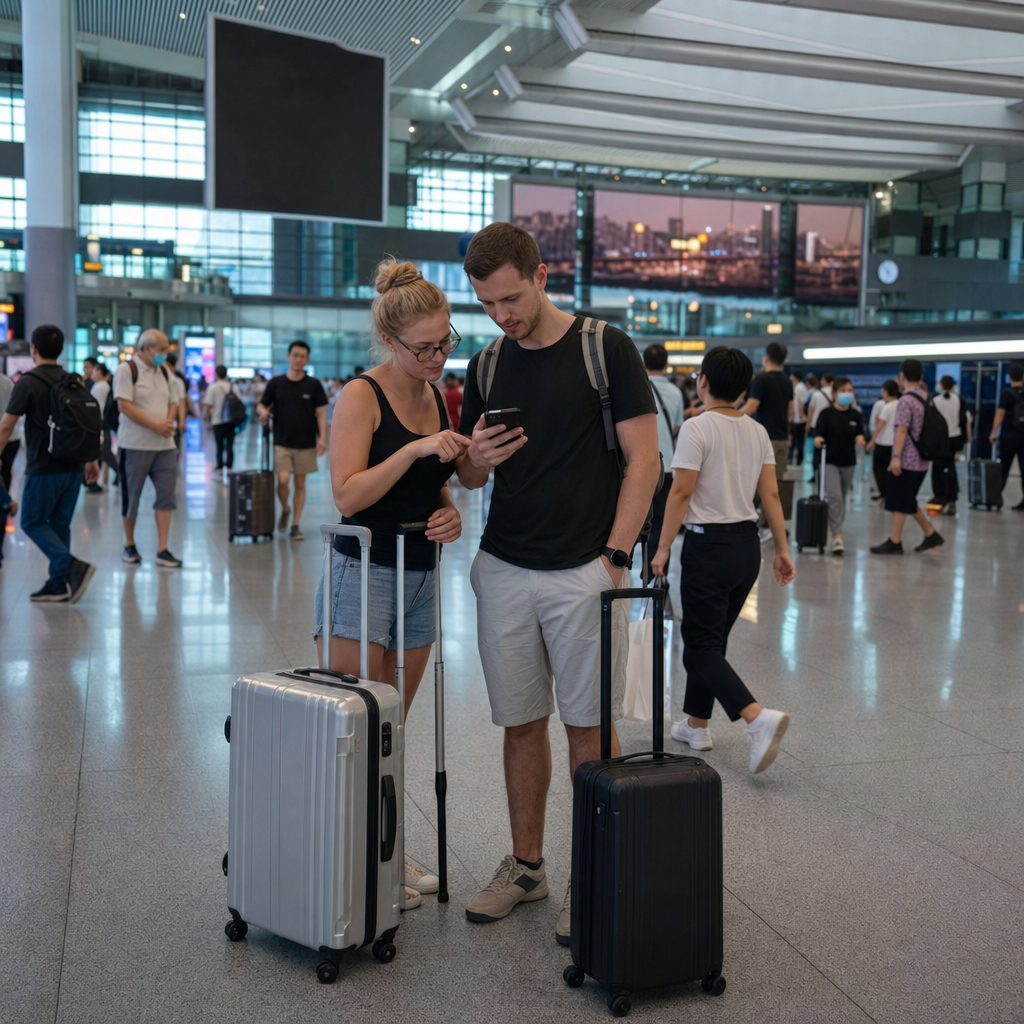
先救方向感,不要先救情绪 / Save Your Orientation Before You Save Your Mood
本人现在到中国任何一个新车站,先开的不是聊天软件,也不是翻译软件,而是地图。这里的重点不是“有没有地图”,而是你要准备两套。本人后来固定保留高德地图或百度地图中的一套,再加一个自己更熟悉的国际地图工具作对照。理由很简单,中国很多商场、地下出入口、站内通道、围栏分流、临时施工信息,本地地图通常更细,尤其是步行导航和入口判断;但当你需要把大区域位置感和英文地名联系起来时,第二套地图又会让你不至于完全失去参照。
Now, whenever I arrive at a new station in China, the first thing I open is not a messaging app or a translator, but a map. The key is not just “having a map,” but having two systems. I now always keep one local map app such as Amap or Baidu Maps, plus one international map tool that feels more familiar to me. The reason is simple: local maps in China are usually much better for shopping malls, underground exits, station corridors, temporary barriers, and construction detours, especially for walking routes and exact entrances. But when you need a broader geographical sense and want to match it with English place names, the second map keeps you from losing all reference points.
本人吃过的亏很具体。有一次在西安,酒店其实就在城墙边不远,可地图把我们导到了背街的小门,门口没有招牌灯,只有一辆正在卸矿泉水的小货车。伴侣当时已经开始怀疑是不是订到了奇怪的地方。本人没有继续在原地转圈,而是立刻做了三件事:先看酒店中文名,再看订单里的电话,最后把地址复制给本地地图重新搜。结果发现正门在另一条路,步行只差五分钟,但如果只盯着那个漂移的定位点,人会越走越慌。
The mistake I learned from was very concrete. Once in Xi’an, our hotel was actually not far from the city wall, but the map led us to a side street entrance with no lit sign, only a small delivery truck unloading bottled water. My partner had already started wondering whether we had booked some suspicious place. Instead of walking in circles, I did three things immediately: I checked the hotel’s Chinese name, then the phone number in the booking, and finally copied the address into the local map app again. It turned out the main entrance was on another street, only five minutes away on foot. But if I had kept staring at that drifting location dot, panic would have grown much faster than distance.
本人后来形成了一个很德国式、但在中国特别有用的习惯:每到一个新城市,先收藏四个点。酒店大门、最近地铁口、最近便利店、最近一个明显地标。这样即使网络抖一下、定位慢半拍、或者司机只听懂其中一个关键词,你也还有别的抓手。很多时候不是你不会看地图,而是你把希望全压在一个蓝点上了。
So I developed a very German habit that turned out to be unusually useful in China: in every new city, I save four points immediately. The hotel entrance, the nearest metro exit, the nearest convenience store, and one obvious landmark. That way, even if the network stutters, the GPS lags, or a driver only understands one keyword, I still have backup anchors. Often the problem is not that you cannot read a map, but that you placed all your hope in one blue dot.
到了酒店前台,翻译软件不是用来“聊文化”的 / At the Hotel Counter, Translation Is Not for “Cultural Exchange”
很多外国游客以为翻译工具最重要的场景,是点菜或者闲聊。本人反而觉得,酒店前台才是它最值得提前准备的地方。因为前台交流通常很短,但信息非常关键:入住人姓名、护照、早餐时间、洗衣房楼层、押金规则、外卖能不能送上楼、深夜回酒店要不要刷门禁。你如果在这个节点上听漏两句,后面一天都会被小麻烦拖着走。
Many foreign travelers assume translation tools matter most when ordering food or making small talk. I actually think the hotel front desk is where they matter most. The reason is that hotel conversations are usually short, but the information is critical: the guest name, passport, breakfast hours, laundry room floor, deposit rules, whether delivery can come upstairs, and whether you need a key card after midnight. If you miss two lines here, the rest of your day may be dragged along by avoidable problems.
本人常用的方法很简单,不追求“翻译得优美”,只追求“前台能立刻懂”。先在备忘录里存几句高频中文:我有预订、请问可以帮我看一下吗;早餐几点开始;这个地址可以帮我写给司机吗;如果我点外卖,是送到前台还是房间。需要时直接复制给翻译软件,或者直接把中文给前台看。德国人往往习惯把一句话说完整,讲背景,讲原因,讲礼貌层次,但在中国的高频服务场景里,短句反而更高效。
My method is simple. I do not aim for elegant translation, only for something the front desk can understand immediately. I keep a few high-frequency Chinese lines in my notes: I have a reservation, could you please check it for me; what time does breakfast start; could you write this address for the driver; if I order delivery, does it go to the front desk or the room. When needed, I copy them into a translator or just show the Chinese directly. Germans often like to make a sentence complete, with context, reason, and layers of politeness, but in high-frequency service situations in China, short sentences are often much more effective.
有一次在成都,前台姑娘说了一长串,本人只听懂了“早餐”和“电梯”两个词。要是硬撑着点头,后面多半就会出问题。本人把翻译软件打开,对着她说“麻烦您再说慢一点”,然后把自动转写开着。她立刻换成了更慢的语速,还把“外卖机器人晚上十一点后停止”这种细节也补充给我们。那一刻本人非常确定,翻译软件最重要的功能不是帮你显得会中文,而是帮你避免假装听懂。
Once in Chengdu, a receptionist gave me a long explanation, and I only caught the words “breakfast” and “elevator.” If I had simply nodded and pretended, a problem would almost certainly have appeared later. Instead, I opened the translation app, said, “Could you please speak a little more slowly,” and kept the live transcription running. She immediately switched to a slower pace and even added details like, “The delivery robot stops after 11 p.m.” In that moment, I became certain that the most important function of a translator is not making you appear fluent in Chinese, but helping you avoid pretending you understood when you did not.

支付这件事,别只准备一种“最先进”的办法 / For Payment, Do Not Prepare Only One “Best” Method
本人出发前看了太多“在中国必须会移动支付”的文章,看得几乎以为现金和银行卡已经完全退出舞台。结果现实比攻略柔软得多,也复杂得多。多数时候,移动支付确实非常方便,便利店、咖啡店、车站小卖部、景区检票边上的自动售货机,几乎都在鼓励你扫码。但旅行真正稳妥的方式,不是迷信单一工具,而是保留至少三层支付方案。
Before leaving for China, I read so many articles saying “you must master mobile payment in China” that I almost believed cash and cards had disappeared entirely. The reality was softer and more complicated. Most of the time, mobile payment is indeed extremely convenient. Convenience stores, coffee shops, station kiosks, vending machines near scenic entrances, almost everything encourages you to scan and pay. But the truly reliable approach is not worshiping one tool, but keeping at least three layers of payment options.
本人自己的顺序是这样的:第一层,手机里的主支付工具;第二层,一张能稳定刷的国际银行卡;第三层,少量现金,金额不用大,但必须有。很多人觉得现金用不上,本人以前也这么想,直到有天晚上在苏州一间小面馆里,支付页面因为网络切换卡住了,收银台前后面已经排了三个人,锅里汤汽往上冒,老板娘看我们有点窘,直接摆摆手说:“你们先坐,等下再试。”本人最后用一张纸币解决了问题,整间店的节奏都没被打断。那种松一口气的感觉,比任何“无现金生活”的漂亮口号都真实。
My own order now is this: first layer, the main payment tool on the phone; second layer, an international bank card that reliably works; third layer, a small amount of cash, not much, but definitely present. Many people assume cash is unnecessary. I used to think the same, until one evening in a noodle shop in Suzhou, when the payment page froze during a network switch. Three people were already waiting behind us at the register, steam was rising from the soup pots, and the owner, seeing our awkward pause, waved her hand and said, “Go sit down first and try again in a minute.” I ended up solving it with a banknote, and the whole rhythm of the shop stayed intact. That feeling of relief was more real than any polished slogan about a “cashless lifestyle.”
这里本人想说一个常被忽略的细节:在中国,支付不只是“能不能付出去”,还包括“能不能在不打断别人节奏的情况下付出去”。如果你站在早高峰咖啡店柜台前,临时找验证码、切换网络、绑卡失败、扫错码,自己会紧张,后面的人也会跟着急。所以本人现在会提前做两个动作。第一,进店前先把支付页面打开。第二,如果是地铁站、便利店、景区门口这种高流速环境,优先用自己最熟的一种方式,不要临场实验新功能。
Here is a detail people often overlook: in China, payment is not only about whether you can pay, but whether you can pay without interrupting everyone else’s rhythm. If you stand at a morning-rush coffee counter searching for a verification code, switching networks, failing to bind a card, or scanning the wrong code, you will feel stressed, and everyone behind you will feel it too. That is why I now do two things in advance. First, I open the payment page before entering the store. Second, in fast-flow settings such as metro stations, convenience stores, or scenic entrances, I use the method I know best. That is not the moment to experiment with new features.
如果本人要把支付工具归纳成一句最实用的话,那就是:在中国旅行,先进不是最重要的,顺畅才是。你不是来证明自己会不会数字生活的,你是来把车赶上,把面吃上,把房间顺利住进去的。
If I had to reduce payment advice to one practical sentence, it would be this: in China, the most advanced method is not the most important one, the smoothest one is. You are not here to prove how digitally sophisticated you are. You are here to catch the train, eat the noodles, and get into your room without friction.
车站、酒店、打车之间,截图比记忆可靠 / Between Stations, Hotels, and Taxis, Screenshots Beat Memory
本人原来很相信自己“只要看过一遍就记得住”。这也是很多计划型旅行者容易高估自己的地方。可中国旅行的信息流太快了,尤其是一旦跨城,一天里可能同时要处理车次、站名、酒店地址、入住时间、上车点、门牌、房号、付款页面、翻译记录。你以为自己记住了,实际上只是短暂记住了十分钟。
I used to trust my memory too much, believing that if I had seen something once, I would remember it. That is another classic weakness of the heavily planned traveler. But the information flow in China moves too fast, especially when crossing cities. In a single day, you may deal with train numbers, station names, hotel addresses, check-in hours, pickup points, room numbers, payment pages, and translation records all at once. You think you remembered it, but often you only remembered it for ten minutes.
所以本人现在会非常机械地截图,而且是分类截图。车票一张,酒店订单一张,酒店中文地址一张,前台名片一张,地图路线关键点再来一张。本人甚至会把“酒店大门长什么样”这种信息也保留,因为有些酒店在地图上很清楚,到了现场却可能藏在写字楼裙房或者商场侧门后面。德国式谨慎在这件事上其实没有错,只是你要把谨慎变成可调用的信息,而不是脑子里的模糊印象。
So now I screenshot almost mechanically, and I categorize those screenshots. One for the train ticket, one for the hotel booking, one for the hotel’s Chinese address, one for the hotel business card, and another for a key map route. I even keep something as simple as “what the hotel entrance looks like,” because some hotels are easy to spot on a map but hidden behind office podiums or side entrances in reality. German caution is not wrong here. You simply need to turn caution into callable information, not vague memory stored in your head.
本人和伴侣后来有个小分工,也很实用。本人负责保存正式信息,比如订单、地址、车次;伴侣负责保存现场信息,比如哪一个出口人更少、哪条街晚上更亮、哪家便利店能买到第二天早饭。这样两个人都不会只盯着同一类信息。旅行不是考试,不需要一个人把所有事都记全,能互相补位就已经很稳了。
My partner and I later developed a small division of labor, and it worked very well. I save the formal information, such as bookings, addresses, and train numbers. My partner saves the situational information, such as which exit is less crowded, which street is better lit at night, and which convenience store has breakfast for the next morning. That way, we are not both staring at the same kind of data. Travel is not an exam. One person does not need to remember everything if the two of you can cover each other intelligently.
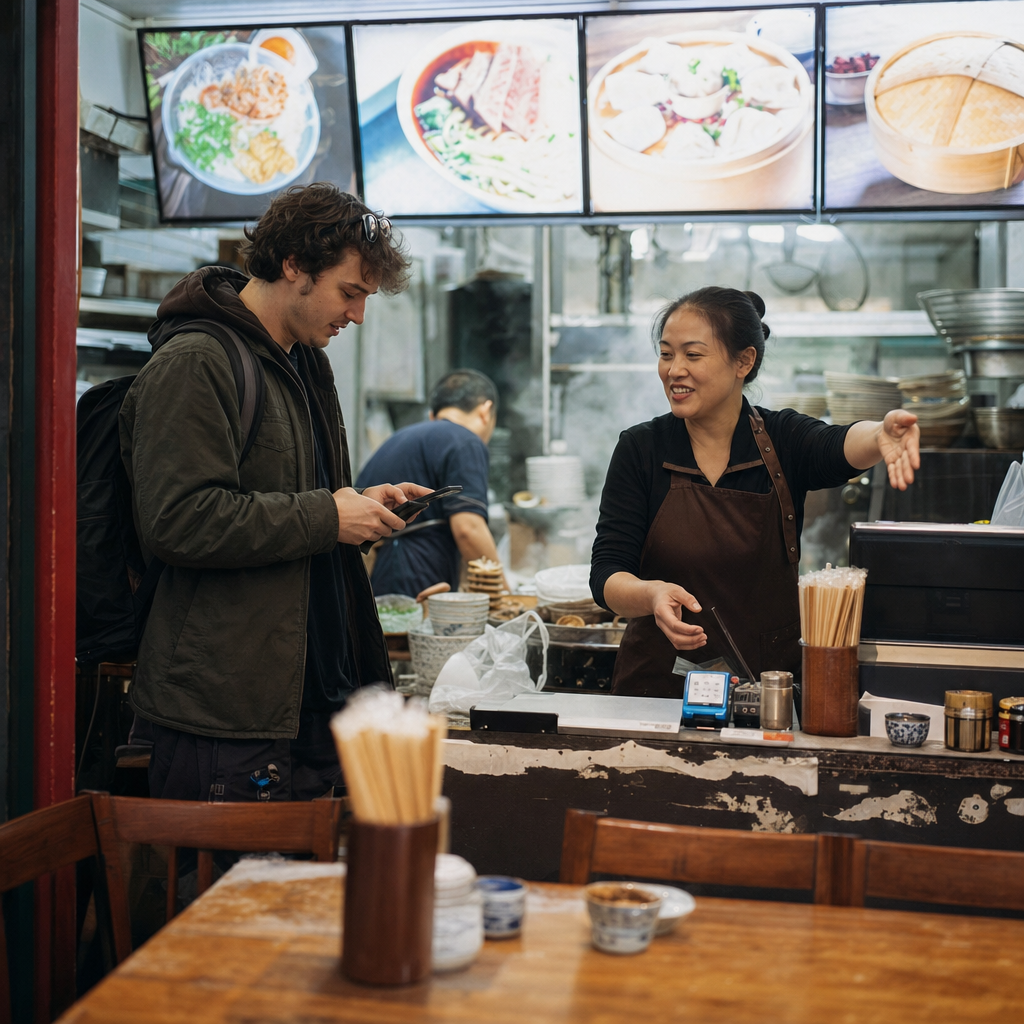
真正有用的“清单”,最后都长成了动作 / The Most Useful “Checklist” Eventually Turns Into Actions
如果只让本人留下几条最关键的动作,那它们大概是这样的:先认出口编号,再看地图;先保存中文地址,再和司机沟通;先把支付页面准备好,再走向收银台;先确认酒店最关键的规则,再上楼放行李;先截图,再相信自己记得住。你会发现,这已经不是普通意义上的工具列表了。工具本身只是壳,真正让人安心的是动作顺序。
If I were only allowed to keep a few key actions, they would probably be these: identify the exit number before checking the map; save the Chinese address before speaking to a driver; prepare the payment page before approaching the cashier; confirm the hotel’s key rules before going upstairs with your luggage; take the screenshot before trusting your memory. At that point, this is no longer a normal tool list. The tools are just the shell. What actually creates calm is the order of actions.
本人现在回头看,最初那种想把中国旅行做成一张完美时间表的念头,其实并没有错,只是少了一点现场弹性。中国很多城市的效率很高,移动支付很快,轨道交通很密,服务流程也越来越成熟,但这并不意味着你只要下载几个 App 就万事大吉。真正的顺手,来自你有没有在出站时先看牌子,在酒店前台先问清规则,在支付失败时立刻换方案,在找不到路时先抓中文地址而不是先慌。
Looking back now, my original desire to turn China travel into a perfect timetable was not wrong. It was simply missing a little on-the-ground flexibility. Many Chinese cities are highly efficient, mobile payment is fast, rail transit is dense, and service systems are increasingly smooth. But that does not mean downloading a few apps solves everything. Real ease comes from whether you look at the signs before the map when leaving a station, clarify the hotel rules before going upstairs, switch payment methods immediately when one fails, and grab the Chinese address before panic takes over when you lose your way.
那天离开杭州时,本人和伴侣提前四十分钟到了车站。我们没有再像第一天那样边走边猜,而是先看屏幕,再看出口,再看检票口。旁边有个小男孩抱着一袋热包子,袋口冒着白气,他妈妈一边拉着他,一边把车票亮给工作人员看。广播声还是一样大,人还是一样多,但本人心里已经完全不同了。不是因为这座车站忽然变简单了,而是因为手里的工具终于不再只是下载完成的图标,而是真正会在中国旅途中救场的东西。
When we left Hangzhou, my partner and I arrived at the station forty minutes early. We were no longer guessing as we walked, the way we had on the first day. We looked at the screen first, then the exit, then the gate number. Nearby, a small boy was holding a bag of hot buns with steam escaping from the top, while his mother pulled him along and held up the ticket to a staff member. The announcements were still loud, and the crowd was still thick, but inside I felt completely different. Not because the station had suddenly become simpler, but because the tools in my hand were no longer just downloaded icons. They had become things that genuinely rescue you in the middle of travel in China.

- 7天经典华东行程:上海-杭州-苏州 | 7-Day East China Itinerary: Shanghai-Hangzhou-Suzhou
- 陶艺课上的半天:我第一次知道一团泥为什么也有“火后的性格” | Half a Day in a Pottery Workshop: The First Time I Learned That Clay Has a Personality After Fire
- 中医传统疗法 | Traditional Chinese Medicine
- 我一直以为唐代早点只是“种类多”,直到我站在晨市里闻见锅边和胡饼一起冒热气 | I Thought Tang Breakfast Was Only About Variety Until I Stood in the Morning Market and Smelled Pan Steam and Sesame Flatbread Rising Together
- 沈阳的雨刚收住,街边烧烤味就把傍晚重新点亮了 | As Shenyang’s Rain Let Up, the Smell of Street Barbecue Lit the Evening Again
- 福州的榕树和路口一起告诉我,这座城是怎么往前走的 | Fuzhou’s Banyan Trees and Crossroads Showed Me How the City Moves
- 旗袍租赁体验:哪里拍照最好看 | Qipao Rental Experience: Best Photo Spots
- 新疆北疆12日深度游 | 12-Day Northern Xinjiang In-Depth Tour
- 和爸爸在周庄躲雨的半天,我第一次发现他其实比我更会旅行 | A Rainy Half Day in Zhouzhuang with My Father Showed Me He Was Better at Traveling Than I Was
- 我在杭州学会先看公交站牌再上车 | In Hangzhou I Learned to Read the Bus Stop Before Boarding
Comments (0)