
西部荒漠上的光伏海洋:中国新能源如何重塑大西北 | Oceans of Solar Panels in the Western Desert: How Renewable Energy is Reshaping China's West
西部荒漠上的光伏海洋:中国新能源如何重塑大西北 | Oceans of Solar Panels in the Western Desert: How Renewable Energy is Reshaping China's West
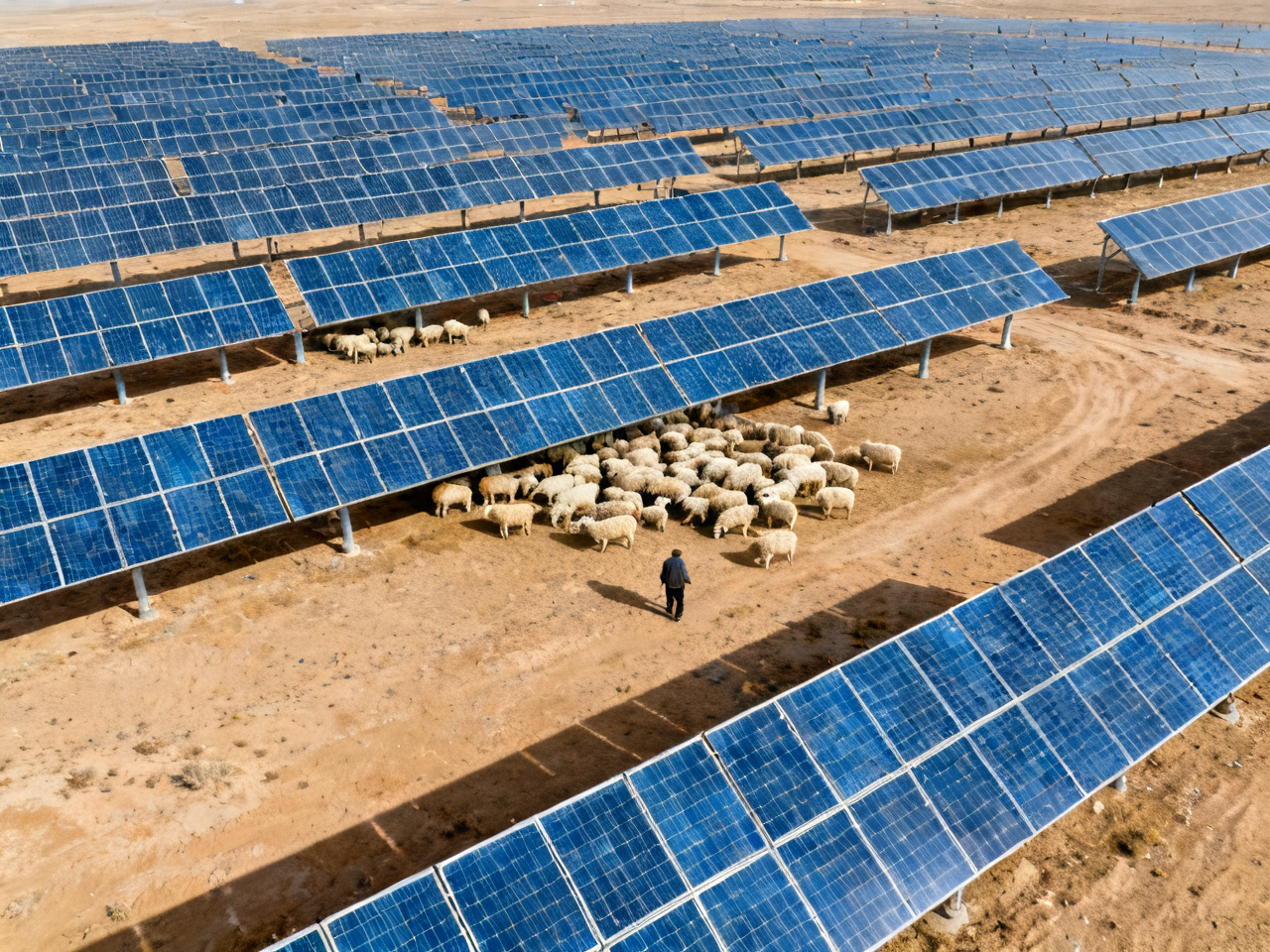
从飞机舷窗往下看,青海省海南藏族自治州的戈壁滩上,深蓝色的光伏板像一片没有尽头的海洋,铺满了你目力所及的每一寸荒地。这不是科幻电影里的场景——这是2024年的中国西部,全球最大规模的清洁能源基地正在这里拔地而起。十年前,这片土地上只有风沙和牧羊人;如今,超过千万千瓦的光伏装机容量让它成为了名副其实的"光伏海洋"。青海省海南州共和县的塔拉滩光伏产业园,总装机规模已突破16GW,面积相当于整个新加坡。阳光照在面板上,牧民在板下放羊——"光伏羊"成了当地人津津乐道的新名词。
Look down from an airplane window over the Gobi flats of Hainan Tibetan Autonomous Prefecture in Qinghai, and you'll see an endless ocean of deep-blue photovoltaic panels stretching to the horizon. This isn't science fiction — this is western China in 2024, where the world's largest clean energy bases are rising from barren land. A decade ago, there was nothing here but windblown sand and shepherds. Today, the Talatan Solar Park in Gonghe County, Hainan Prefecture, has surpassed 16GW of installed capacity, covering an area roughly the size of Singapore. Sunlight hits the panels above while herders graze sheep below — "solar sheep" has become a beloved local term.
格尔木与柴达木:高原上的太阳能先驱 | Golmud and Qaidam: Solar Pioneers on the Plateau
说起中国西部光伏的起点,绕不开格尔木这座小城。2011年,中国第一批大型并网光伏电站就落户在格尔木东郊的戈壁上,当时总装机不过200MW,很多人觉得这不过是一场"面子工程"。没人想到,十多年后,整个柴达木盆地会变成一座巨型的太阳能工厂。格尔木的年均日照时数超过3200小时,是中国日照条件最好的地区之一,光资源年辐射总量达到6800MJ/m²以上。到2023年底,仅格尔木市的光伏装机就超过了7GW,而整个海西蒙古族藏族自治州的新能源总装机已突破25GW。这些电力通过青豫直流特高压输电线路,跨越1500多公里送到河南省,点亮了中原大地的万家灯火。这条线路年输送清洁电力超过400亿千瓦时,相当于减少燃烧标准煤约1200万吨。
The story of western China's solar journey can't be told without Golmud, a small city on the Qinghai-Tibet Plateau. In 2011, China's first batch of large-scale grid-connected solar plants were built on the Gobi east of Golmud — a modest 200MW that many dismissed as a vanity project. No one imagined that within a decade, the entire Qaidam Basin would transform into a colossal solar factory. Golmud enjoys over 3,200 hours of sunshine annually, among the highest in China, with solar radiation exceeding 6,800 MJ/m² per year. By the end of 2023, Golmud alone had over 7GW of installed PV capacity, while the broader Haixi Mongolian and Tibetan Autonomous Prefecture surpassed 25GW in total renewables. This electricity travels over 1,500 kilometers via the Qinghai-Henan ultra-high-voltage DC transmission line to power homes across central China's Henan Province — delivering over 40 billion kWh of clean energy annually, equivalent to saving roughly 12 million tonnes of standard coal.
想深入了解中国特高压输电技术如何改变能源版图,可以阅读这篇关于中国电网工程的详细介绍。
For a deeper look at how China's UHV transmission technology is reshaping the energy map, check out this detailed overview of China's grid engineering.
腾格里沙漠:从不毛之地到光伏长城 | The Tengger Desert: From Barren Wasteland to a Great Wall of Solar
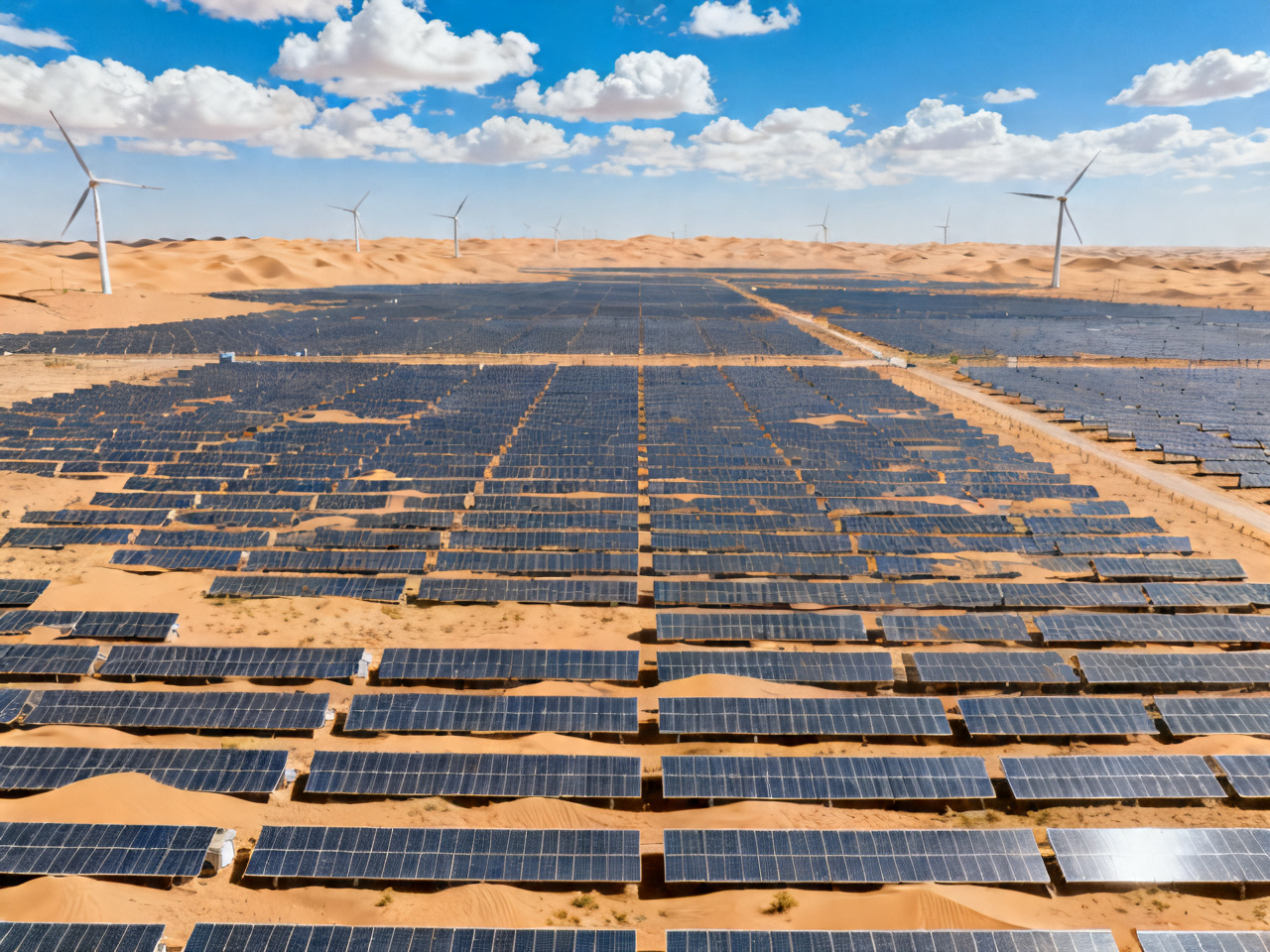
如果说青海是中国光伏的"摇篮",那么腾格里沙漠就是它最具视觉冲击力的"展厅"。在宁夏中卫市与内蒙古阿拉善左旗交界处,腾格里沙漠的边缘地带正在经历一场前所未有的变革。2023年底开工的腾格里沙漠3GW光伏基地项目,是国家"沙戈荒"大型风电光伏基地规划的重要组成部分。这个项目占地约10万亩,建成后年发电量预计超过54亿千瓦时。更让人惊叹的是,光伏板的铺设本身就在治沙——板下的阴影减少了地表水分蒸发,工人们在支架间种上了沙生植物,几年下来,曾经寸草不生的流动沙丘竟然开始长出了绿色。中卫市的沙漠光伏区域,植被覆盖率从不足5%提升到了超过40%。
If Qinghai is the "cradle" of Chinese solar, the Tengger Desert is its most visually stunning showroom. At the border of Zhongwei City in Ningxia and Alxa Left Banner in Inner Mongolia, the fringes of the Tengger Desert are undergoing an unprecedented transformation. The 3GW Tengger Desert solar base, which broke ground in late 2023, is a key piece of China's national "desert, Gobi, and wasteland" mega renewable energy plan. Spanning roughly 10,000 acres, it's projected to generate over 5.4 billion kWh annually once complete. What's even more remarkable is that the panels themselves fight desertification — their shadows reduce surface evaporation, and workers plant desert-adapted vegetation between the mounting structures. Over just a few years, once-barren shifting dunes have started turning green. In Zhongwei's solar zones, vegetation coverage has jumped from under 5% to over 40%.
新疆与内蒙古:风光互补的能源走廊 | Xinjiang and Inner Mongolia: The Wind-Solar Energy Corridor
新疆的哈密和内蒙古的鄂尔多斯,是中国西部新能源版图上另外两颗耀眼的明星。哈密市伊吾县的淖毛湖镇,年均风速超过6米/秒,同时日照时数超过3300小时,是罕见的"风光双优"区域。2024年,哈密地区新能源总装机突破了30GW,其中风电约20GW、光伏约10GW,成为新疆最大的清洁能源输出基地。这些电力通过哈密-郑州±800kV特高压直流工程,源源不断地输送到华中地区。在内蒙古,库布其沙漠的光伏治沙项目同样令人瞩目——达拉特旗的100万千瓦光伏领跑者基地,从空中俯瞰,光伏板拼出了一匹奔马的图案,成为了"网红打卡地"。鄂尔多斯市规划的风光氢储一体化项目总规模超过50GW,预计到2030年将带动超过3000亿元的投资。
Hami in Xinjiang and Ordos in Inner Mongolia are two more shining stars on western China's renewable energy map. Naomaohu Town in Yiwu County, Hami, boasts average wind speeds above 6 m/s and over 3,300 hours of annual sunshine — a rare zone blessed with both excellent wind and solar resources. By 2024, Hami's total renewable capacity exceeded 30GW (roughly 20GW wind and 10GW solar), making it Xinjiang's largest clean energy export hub. This power flows to central China via the Hami-Zhengzhou ±800kV UHV DC line. In Inner Mongolia, the Kubuqi Desert's solar-desertification project is equally impressive — the 1GW "Top Runner" solar base in Dalad Banner features panels arranged into the shape of a galloping horse when seen from above, turning it into a viral tourist attraction. Ordos has planned an integrated wind-solar-hydrogen-storage cluster exceeding 50GW, expected to attract over 300 billion yuan in investment by 2030.
关于中国如何将沙漠治理与新能源开发结合的更多故事,推荐阅读西部生态修复与绿色发展专题。
For more stories on how China combines desert restoration with renewable energy development, we recommend this feature on western ecological restoration and green development.
改变的不只是风景:能源转型背后的人 | It's Not Just the Landscape That Changed: The People Behind the Energy Transition
数据和项目名称背后,是真实的人和真实的生活变化。在青海共和县,曾经靠天吃饭的牧民扎西才让,现在是塔拉滩光伏园区的一名巡检员,月收入从过去放牧时的不到2000元涨到了5500元。他每天骑着摩托车在光伏板之间巡逻,检查设备运行状况。"以前风沙大的时候,羊都养不活,"他说,"现在板子挡了风,草也长出来了,羊比以前还肥。"在宁夏中卫,90后姑娘马晓燕从东部沿海的工厂辞职回乡,成为了一家光伏运维公司的技术主管,带领着一支20多人的团队。整个西部新能源产业链已经创造了超过150万个直接就业岗位,从组件制造到电站运维,从物流运输到生态修复,一条完整的绿色产业链正在荒漠中生长。
Behind the data and project names are real people and real changes in life. In Gonghe County, Qinghai, a herder named Tashi Cairang who once depended entirely on the weather now works as an inspection officer at the Talatan Solar Park, his monthly income rising from under 2,000 yuan to 5,500 yuan. He patrols between the panels on his motorcycle every day, checking equipment. "When the sandstorms were bad, we couldn't even keep the sheep alive," he says. "Now the panels block the wind, the grass has grown back, and the sheep are fatter than ever." In Zhongwei, Ningxia, a young woman named Ma Xiaoyan born in the 1990s quit her factory job on the eastern coast and returned home to become a technical supervisor at a solar O&M company, leading a team of over 20 people. The western renewable energy supply chain has created more than 1.5 million direct jobs — from component manufacturing to plant operations, logistics to ecological restoration — a complete green industrial chain is growing in the desert.
未来已来:西部新能源的下一个十年 | The Future is Here: The Next Decade for Western Renewables
中国已经明确提出,到2030年风电和太阳能发电总装机容量要达到12亿千瓦以上,而西部地区将承担其中超过60%的增量。"十四五"以来,国家规划的七大陆上新能源基地中,有五个位于西部——新疆、黄河上游、河西走廊、黄河几字弯、以及藏东南。青海省更是提出了到2030年建成国家清洁能源产业高地的目标,届时全省清洁能源装机将超过1亿千瓦。与此同时,储能技术的突破正在解决西部新能源最大的痛点——消纳问题。青海省已建成多个百兆瓦级储能电站,而新疆哈密正在建设全球最大的压缩空气储能项目之一,装机容量达300MW/1800MWh。从戈壁到沙漠,从高原到盆地,中国西部正在书写一部属于这个时代最壮观的能源转型史诗。
China has set a clear target of reaching over 1.2 billion kW (1,200GW) of combined wind and solar capacity by 2030, with western regions shouldering more than 60% of the growth. Since the 14th Five-Year Plan began, five of the seven planned major onshore renewable bases are in the west — Xinjiang, the upper Yellow River, the Hexi Corridor, the Yellow River's "几" bend, and southeastern Tibet. Qinghai Province has set its own goal of becoming a national clean energy highland by 2030, targeting over 100GW of clean energy capacity province-wide. Meanwhile, breakthroughs in energy storage are tackling the west's biggest renewable headache — grid absorption. Qinghai has already built multiple 100MW-class storage stations, and Hami in Xinjiang is constructing one of the world's largest compressed air energy storage facilities at 300MW/1,800MWh. From Gobi to desert, from plateau to basin, western China is writing what may be this era's most spectacular energy transition epic.
西部的阳光不会说话,但千万块光伏板正在替它讲述一个关于改变的故事。
The western sun doesn't speak, but millions of solar panels are telling its story of transformation.
- 和爸爸在周庄躲雨的半天,我第一次发现他其实比我更会旅行 | A Rainy Half Day in Zhouzhuang with My Father Showed Me He Was Better at Traveling Than I Was
- 遵义老城坡道上,我把台阶数错了 | I Lost Count of the Steps on Zunyi’s Old-Town Slopes
- 京剧昆曲观演入门:买票选座与看懂门道 | Peking Opera & Kunqu: Tickets, Seats & How to Watch
- 厦门老街小店的午饭,让我明白“本地味道”不是网红菜单 | Lunch in a Small Xiamen Old-Street Shop Taught Me Local Flavor Is Not a Viral Menu
- 一个普通工作日的公交站,让我学会了中国排队不是只看队形 | On an Ordinary Weekday Bus Stop, I Learned That Queueing in China Is Not Just About the Shape of the Line
- 中国茶文化 | Chinese Tea Culture
- 我在扬州瘦西湖边躲五月小雨,才知道一个人旅行也可以很热闹 | Hiding from a May Shower by Slender West Lake, I Learned Solo Travel Can Still Feel Full of Company
- 热海蒸汽打湿车票后,我把腾冲行程缩短了 | Steam at Rehai Wet My Ticket and Made Me Shorten the Tengchong Plan
- 两周中国行,我帮你把行程想清楚了 | A 2-Week China Itinerary That Actually Makes Sense
- 读懂中国历史 | Understanding Chinese History
Comments (0)