
黄山云海与迎客松:四季皆美 | Huangshan Sea of Clouds & Welcome Pine: Beautiful in All Seasons
黄山云海与迎客松:四季皆美 | Huangshan Sea of Clouds & Welcome Pine: Beautiful in All Seasons
黄山不需要介绍。徐霞客说"五岳归来不看山,黄山归来不看岳",这话说了400年,到今天还是对的。
Huangshan needs no introduction. Xu Xiake said "After the Five Sacred Mountains, no need to see mountains; after Huangshan, no need to see the Five" — 400 years later, still true.
但很多人不知道的是,黄山每个季节看到的是完全不同的山。
What many don't realize is that Huangshan is a completely different mountain in every season.
冬天的黄山才是真正的黄山。 游客少了90%,雾凇把每棵松树变成白色珊瑚,云海出现的概率最高(冬季约60%,夏季只有30%)。西海大峡谷在雪后像水墨画——如果你只能来一次黄山,选12月到2月。缺点是部分步道会因结冰封闭,西海大峡谷冬季不开放。
Winter Huangshan is the real Huangshan. 90% fewer tourists, rime ice turns every pine into white coral, sea of clouds probability peaks (winter ~60%, summer only ~30%). West Sea Grand Canyon after snow looks like an ink painting — if you can only visit once, choose December to February. Downside: some trails close for ice; West Sea Grand Canyon is closed in winter.
春天(3-5月) 是杜鹃花的季节。黄山的高山杜鹃从4月底开始开,玉屏楼到天海一带最密集。云海概率中等,但雨后放晴的早晨几乎必出云海。
Spring (March–May) is azalea season. Huangshan's alpine azaleas start blooming late April, densest between Yuping Tower and Tianhai. Cloud sea probability is moderate, but mornings after rain almost guarantee one.
夏天 人最多,但也是看日出最舒服的季节——凌晨4点半起床不会冻得发抖。光明顶和狮子峰是两个经典日出点。夏天的黄山经常下午有雷阵雨,雨后的云海和彩虹是意外惊喜。
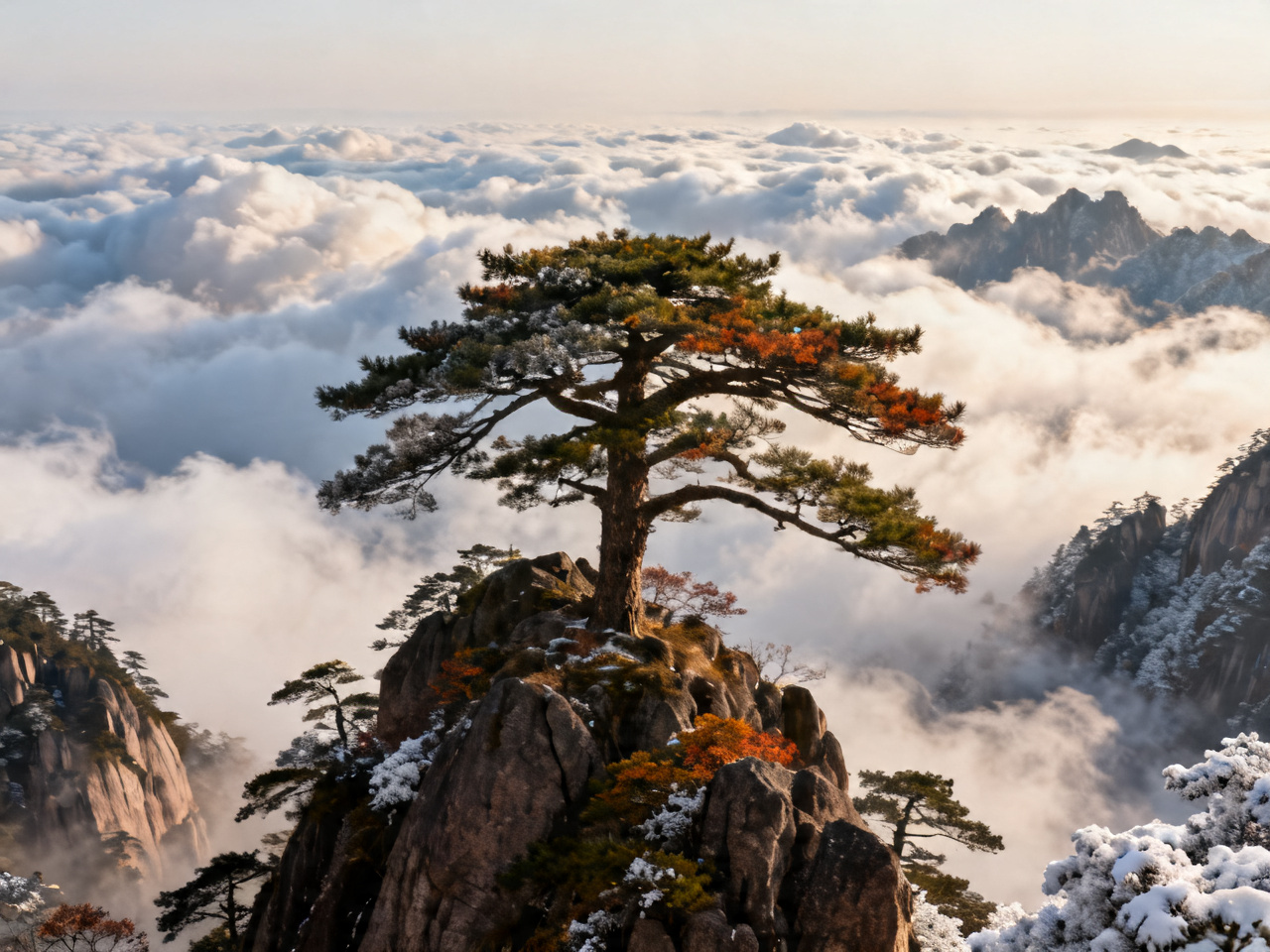
Summer has the most visitors, but is the most comfortable season for sunrise — waking at 4:30 AM won't leave you shivering. Guangming Peak and Lion Peak are two classic sunrise spots. Summer afternoons often bring thunderstorms; post-rain cloud seas and rainbows are unexpected bonuses.
秋天(10-11月) 色彩最丰富。黄山的秋叶不是单一的红色,而是黄、橙、红、绿混在一起,配上灰色花岗岩和墨绿松树,像调色盘打翻了。北海景区和西海大峡谷的秋色最好。
Autumn (October–November) has the richest colors. Huangshan's fall foliage isn't just red — yellow, orange, red, and green mix together against gray granite and dark green pines, like a spilled palette. North Sea scenic area and West Sea Grand Canyon have the best autumn colors.
关于迎客松你应该知道的事 / What You Should Know About the Welcome Pine
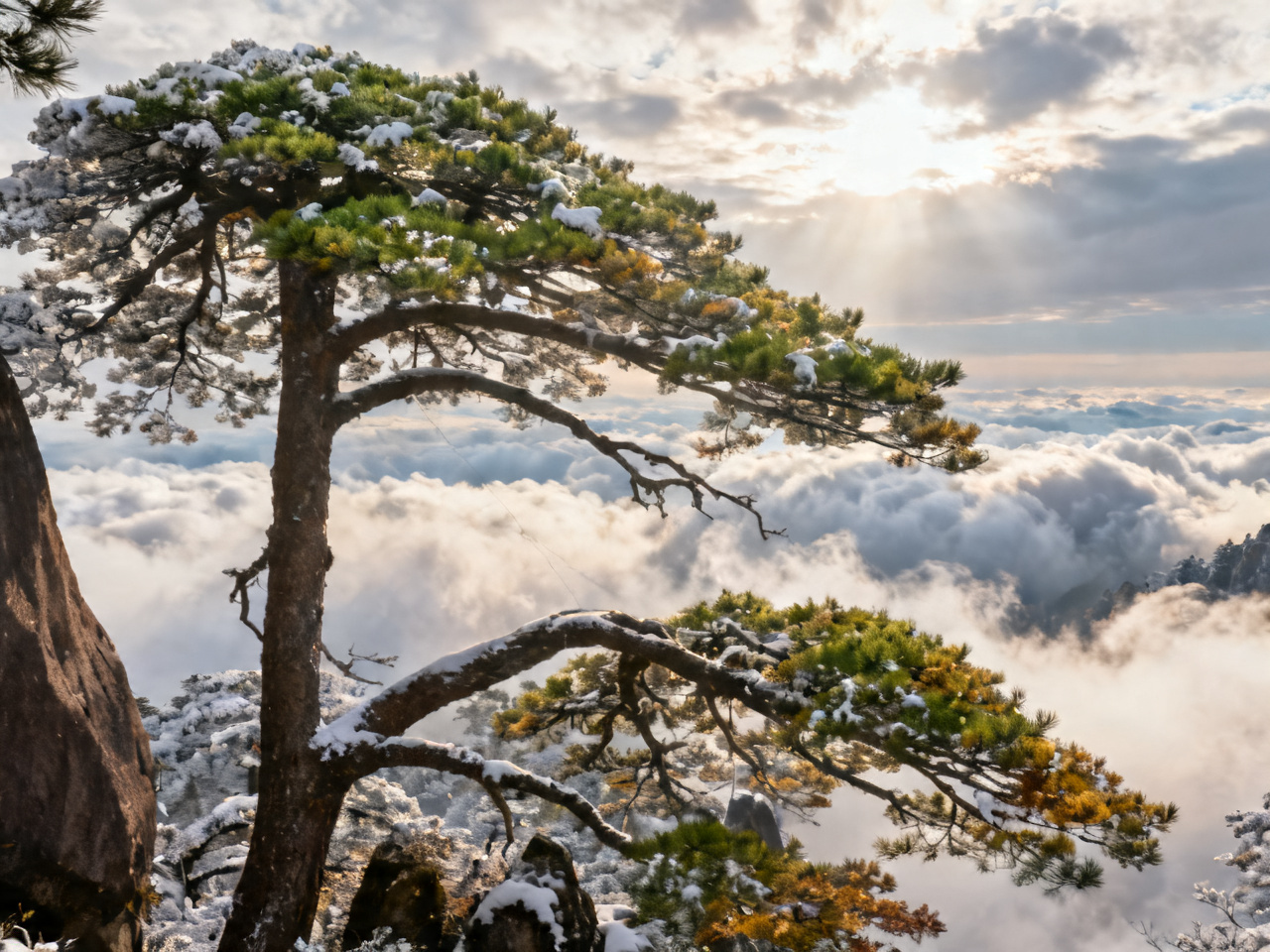
迎客松是中国最著名的一棵树——它长在玉屏楼旁边的悬崖上,一侧枝干伸出去像在欢迎客人,树龄超过800年。这棵树有专职护林员24小时守护(全中国唯一有专人看护的树),每天记录它的生长状态。
The Welcome Pine is China's most famous tree — growing on a cliff beside Yuping Tower, one side's branches extending like a welcoming gesture, over 800 years old. It has a dedicated full-time guardian on 24-hour watch (the only tree in China with a personal caretaker), with daily growth records.
但说实话,如果你是外国游客,迎客松本身可能没有想象中震撼——它是一棵长在石头上的松树,好看但不至于让你"哇"出声。它的价值更多是文化象征(出现在人民大会堂的铁画上、国礼包装上)。真正让你"哇"的是旁边的天都峰和莲花峰——天都峰的鲫鱼背是一段只有一米宽的山脊,两边都是万丈深渊,走过去腿会抖。
Honestly, if you're a foreign visitor, the Welcome Pine itself might not be as stunning as imagined — it's a pine growing from rock, beautiful but not jaw-dropping. Its value is more cultural symbolism (featured in the Great Hall of the People's iron painting, on state gift packaging). What will actually make you say "wow" is nearby Tiandu Peak and Lotus Peak — Tiandu's "Crucian Carp Back" is a ridge only one meter wide with abysses on both sides, and your legs will shake crossing it.
上山方案 / Getting Up the Mountain
门票190元(淡季150元),索道单程90元。两条索道:云谷索道(后山,到北海)和玉屏索道(前山,到迎客松)。
Ticket ¥190 (off-season ¥150), cable car ¥90 one-way. Two cable cars: Yungu (rear mountain, to North Sea) and Yuping (front mountain, to Welcome Pine).
经典两日线路:第一天云谷索道上→北海→西海大峡谷→天海住宿;第二天光明顶看日出→鳌鱼峰→迎客松→玉屏索道下。山上住宿贵(标间800-1500元/晚),但值得——你不会想一天之内赶完黄山。
Classic two-day route: Day 1 Yungu cable car up → North Sea → West Sea Grand Canyon → stay at Tianhai; Day 2 sunrise at Guangming Peak → Aoyu Peak → Welcome Pine → Yuping cable car down. Mountain accommodation is expensive (¥800–1,500/night for a standard room), but worth it — you don't want to rush Huangshan in one day.
一句话 / One Line
黄山是那种去了不会后悔、没去会一直惦记的地方。
Huangshan is the kind of place you won't regret visiting, and will always wonder about if you don't.
延伸阅读 / Related Reads
- 我在苏州学会先找一条不费力的厕所路线 | In Suzhou I Learned to Find a Low-Effort Restroom Route First
- 冬至温泉之旅:全国最佳泡汤地 | Winter Solstice Hot Spring Tour
- 带爸妈游中国七日:一份不累不赶的行程单 | 7 Days in China with Aging Parents: A No-Rush Itinerary
- 我原以为宋代喝茶最讲究的是器物,后来才发现最难学的是桌边那种慢劲 | I Thought Song Tea Culture Was Mostly About Objects Until I Realized the Hardest Thing to Learn Was the Calm Pace at the Table
- 中国街头小吃十选:从北到南,一路吃过去 | Ten Chinese Street Snacks: Eating Your Way from North to South
- 桂林漓江山水游全攻略 | Guilin Li River Scenic Tour Complete Guide
- 中文入门基础 | Chinese Language Basics
- 免签来中国前,我把这张“入境准备清单”发给了朋友 | Before Coming to China Visa-Free, I Sent This Entry Checklist to a Friend
- 十月赏银杏:满城尽带黄金甲 | October Ginkgo Season: When China Turns to Gold
- 把中国拍成高铁大线以后,最值钱的内容其实藏在换乘和转场里 | Once China Becomes a High-Speed Rail Arc on Camera, the Real Value Hides in Transfers and Transitions
Comments (0)