
福州鱼丸店门口那张小桌,让我记住了慢慢吃 | A Small Table Outside a Fuzhou Fish Ball Shop Taught Me to Eat Slowly
福州鱼丸店门口那张小桌,让我记住了慢慢吃 | A Small Table Outside a Fuzhou Fish Ball Shop Taught Me to Eat Slowly
到福州的那天,雨没有真正落下来,只是在空气里悬着。三坊七巷外的路面被潮气擦得发亮,电动车贴着巷口滑过,车铃声像从很近的地方突然冒出来。我原本只是想找一碗热汤垫肚子,地图上那些星标店铺被我看得眼花,最后却被一间没有醒目招牌的小鱼丸店留住。店门口摆着一张矮矮的小桌,桌面有旧木纹,也有被汤碗磨出的圆印。我坐下时,老板娘正在后厨捞丸子,锅里的水轻轻翻着,像这座城市把话说得很慢。
On the day I arrived in Fuzhou, the rain never quite fell; it simply hung in the air. The pavement outside Sanfang Qixiang shone with dampness, scooters slipped past the lane mouths, and bicycle bells appeared suddenly from very close by. I had only wanted a hot bowl of soup before deciding where to go next, but the starred restaurants on the map blurred together until a small fish ball shop without a loud sign held me in place. A low table stood outside the door, its wooden surface marked by old grain and pale rings left by bowls. When I sat down, the owner was lifting fish balls from the kitchen pot, and the water moved with a quiet simmer, as if the city itself preferred to speak slowly.
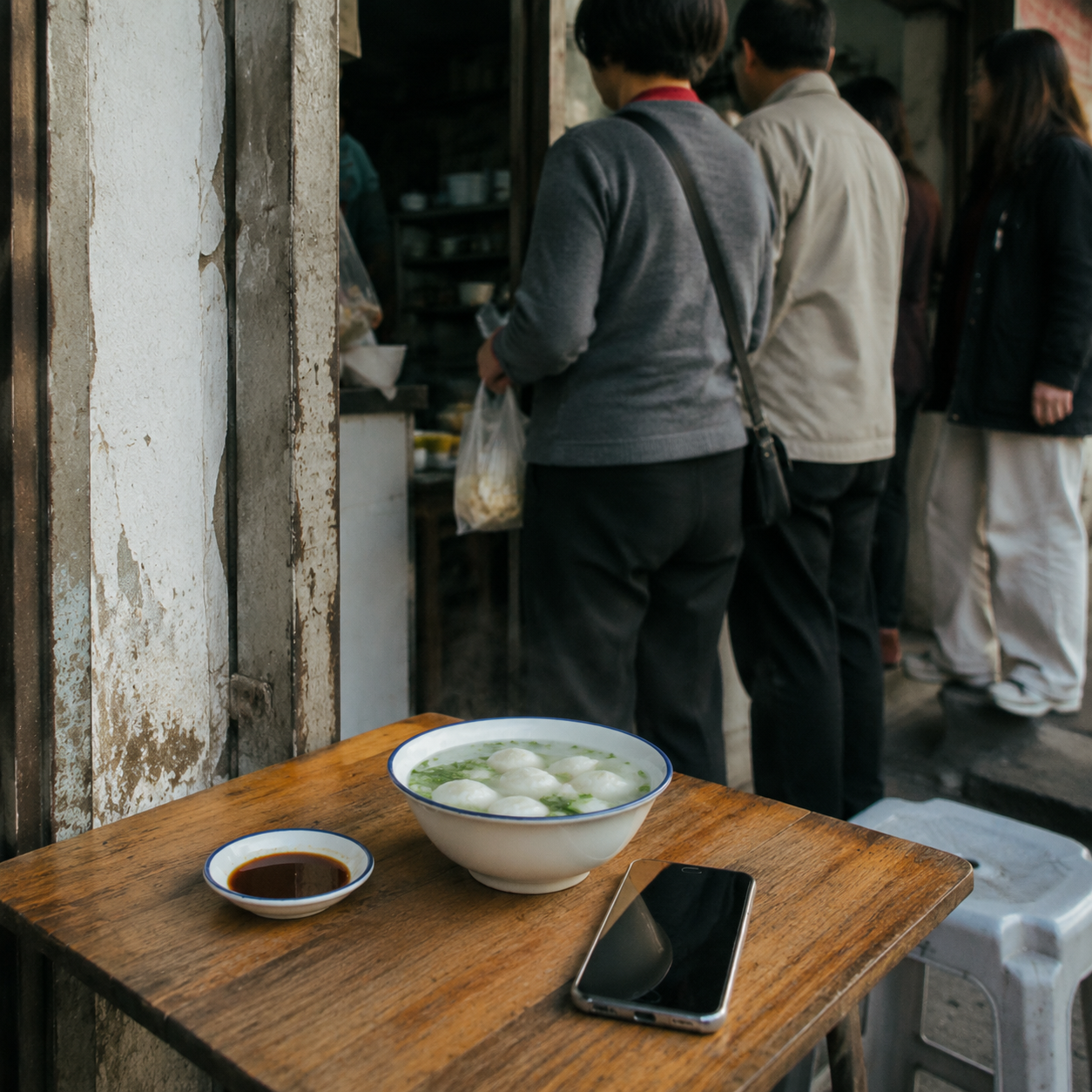
那张桌子只能放下一只汤碗、一碟醋和我的手机。旁边没有适合拍照的灯,也没有布置过的背景,只有一只塑料凳、门框上褪色的价目表、以及来买外带的街坊。我的碗端上来时,鱼丸浮在清汤上,白得不耀眼,圆得不刻意。汤面飘着一点葱花和胡椒的香气,热气扑到眼镜片上,我不得不先把手机放下。那一刻我发现,若是急着记录,第一口汤就会被耽误;若是急着评价,这碗东西也会变得太薄。
The table could hold only one soup bowl, a saucer of vinegar, and my phone. There was no flattering light for photographs, no arranged background, just a plastic stool, a faded price board on the doorframe, and neighbors buying takeaway. When my bowl arrived, the fish balls floated in clear broth, white without brightness, round without performance. A little scallion and pepper scented the steam, which fogged my glasses and made me put the phone down. In that moment I realized that if I hurried to record it, the first sip would be delayed; if I hurried to judge it, the bowl would become much thinner than it was.
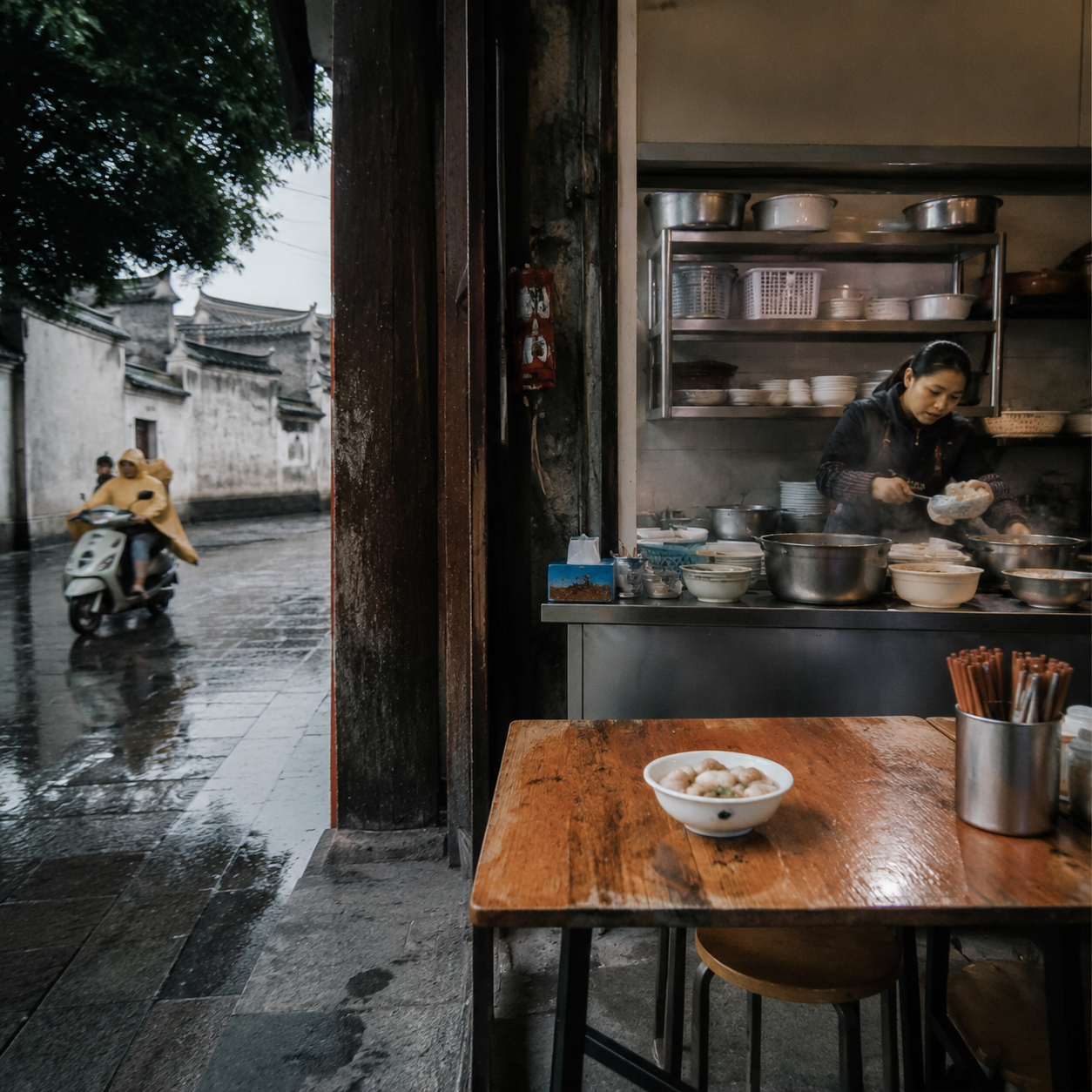
我先喝了一口汤。它不是那种立刻抓住舌头的浓,而是把海味、肉馅和锅气都藏得很轻。鱼丸咬开时,外层有弹性,里头的馅带着一点汁水,咸味不冲,甜味也不露。旁边一位阿姨拎着菜篮子,站着吃完一小碗,付钱时还问老板明天有没有扁肉。老板娘没有抬高声音,只说有的,早点来。她们说话像在补一段每天都会继续的日常,而我这个外地人只是借了几分钟坐进去。
I took a sip of broth first. It was not rich in a way that seized the tongue at once; instead, it held seafood, pork filling, and the breath of the pot in a light hand. When I bit into a fish ball, the outside bounced gently, and the filling inside released a little juice, neither too salty nor openly sweet. Beside me, an auntie with a vegetable basket finished a small bowl while standing. As she paid, she asked whether there would be bianrou wontons tomorrow. The owner answered without raising her voice: yes, come early. Their exchange sounded like a daily thread that would continue without me, and I was only borrowing a few minutes inside it.
旅行里最容易被忽略的,是一座城市怎样安排普通人的胃口。福州的鱼丸不像某些城市名菜那样把仪式感摆在前面,它更像巷子里的一句问候:先让你坐下,再慢慢把味道递过来。小店里没有催促,翻台也不靠夸张的热闹。有人吃完马上走,有人端着碗在门口吹凉,有人买一袋生鱼丸带回家。每个人都知道自己要什么,不需要把一顿饭说成一次伟大的发现。
What travel often overlooks is how a city arranges the appetite of ordinary people. Fuzhou fish balls do not place ceremony at the front the way some famous dishes do. They are more like a greeting from an alley: sit down first, then let the flavor arrive gradually. The little shop did not rush anyone, and its turnover did not depend on exaggerated bustle. Some people left as soon as they finished, some cooled their bowls by the doorway, and some bought uncooked fish balls to take home. Everyone seemed to know what they wanted without turning a meal into a grand discovery.
我本来给自己排了紧凑路线:上午走老街,下午看江,傍晚再去吃另一家推荐榜上的店。可那张小桌把时间切得很细。我看见老板把空碗收进一只塑料盆,看见门外雨点终于落到车座上,看见一位学生把书包放在脚边,边吃边回消息。慢慢吃不是为了显得有情调,而是为了让这些细节有机会被看见。很多地方并不主动展示自己,它们只在你停下来时,才把侧面转给你。
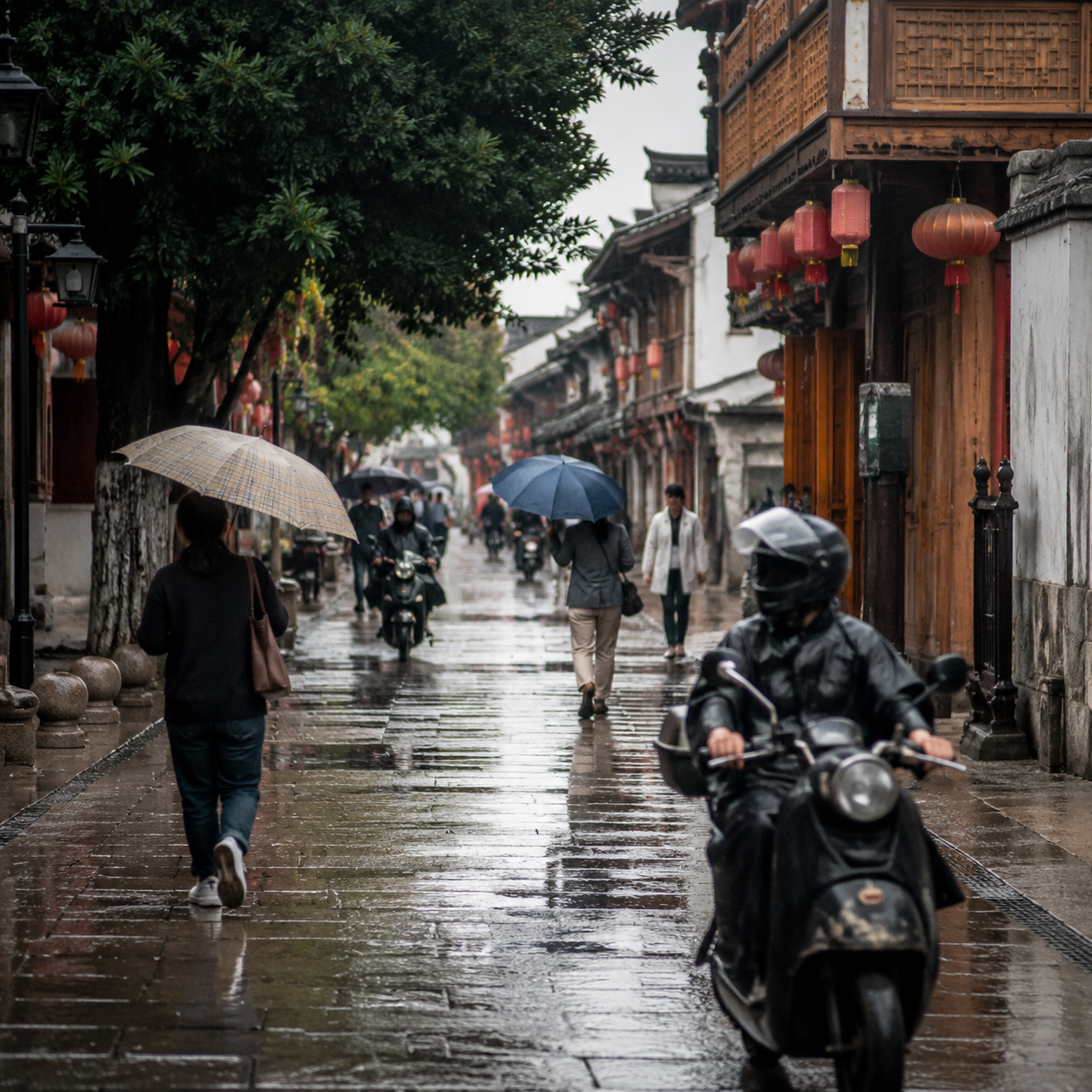
I had planned a tight route for myself: old streets in the morning, the river in the afternoon, another recommended restaurant by evening. But that little table cut time into finer pieces. I watched the owner place empty bowls into a plastic basin, watched raindrops finally land on scooter seats, and watched a student set a backpack by his feet while answering messages between bites. Eating slowly was not about appearing poetic. It was about giving these details a chance to be noticed. Many places do not present themselves directly; they turn a side of themselves toward you only after you stop.
第二只鱼丸我蘸了一点醋。酸味把肉馅的油润提起来,又很快退到后面。桌边的风吹过来,汤面上的热气歪了一下,门里有人喊加一份燕皮。福州话在我耳边起伏,我听不懂具体内容,却能听出节奏:短句、停顿、应答,像锅盖被轻轻掀开又合上。陌生城市的亲近感有时并不来自理解,而来自你愿意承认自己听不懂,然后仍然安静地坐着。
I dipped the second fish ball in a little vinegar. The sourness lifted the richness of the filling, then quickly stepped back. A breeze passed the table, bending the steam above the broth, and someone inside called for an extra order of yanpi. Fuzhou dialect rose and fell around me. I could not understand the content, but I could hear its rhythm: short phrases, pauses, answers, like a pot lid being lifted and settled again. The intimacy of an unfamiliar city does not always come from comprehension. Sometimes it comes from admitting you do not understand and still remaining quietly present.
门口那张桌子也让我重新想起“好吃”的尺度。不是每一口都要惊艳,不是每一家店都要被写成传奇。很多好吃只是可靠:汤够热,丸子够新鲜,老板记得熟客的偏好,醋瓶没有空,雨天仍有人愿意站在门口等。可靠的味道不喧哗,却会让人放松。它让旅人从寻找亮点的状态里退出来,回到最基本的身体感受:饿了,坐下,喝汤,咬开,慢慢吞下去。
That doorway table also made me reconsider the scale of “delicious.” Not every bite has to astonish, and not every shop has to be written into legend. Much good food is simply dependable: the soup is hot enough, the fish balls are fresh enough, the owner remembers regulars’ preferences, the vinegar bottle is not empty, and even on a rainy day people are willing to wait by the door. Dependable flavor does not shout, but it relaxes you. It lets a traveler step back from hunting highlights and return to the body’s basics: hungry, seated, sipping, biting, swallowing slowly.
吃到一半时,邻桌的叔叔问我是不是第一次来福州。我点头。他没有给我列一串必去地点,只说这边鱼丸有的偏清,有的偏鲜甜,要多吃几家才知道差别。他说完就继续低头喝汤,好像这句话不是建议,而是把城市的一小把钥匙推到我面前。我忽然明白,本地人的推荐往往不急着封口,他们不会告诉你唯一答案,只会把门缝打开一点,让你自己闻到里面的气味。
Halfway through the bowl, an uncle at the next table asked whether it was my first time in Fuzhou. I nodded. He did not list a string of must-see places. He only said that some fish balls here are lighter, some fresher and sweeter, and you need to eat at several shops before sensing the difference. After saying this, he lowered his head to his soup again, as if he had not offered advice but pushed a small handful of keys toward me. I suddenly understood that local recommendations often avoid finality. They do not give you the only answer; they open a door crack so you can smell what is inside.
我把最后几口汤喝得很慢。碗底有一点胡椒,舌尖微微发热。手机屏幕亮了几次,提醒我下一处景点的营业时间,可我没有马上起身。雨把街声压低,店里锅铲碰到盆沿,门口的灯管嗡嗡响。那种时刻不适合被装进攻略里的“用餐体验”四个字,它更像一段松开的绳子,把原本紧绷的行程放宽。旅行有时需要的不是更多地点,而是一个让自己恢复知觉的位置。
I drank the last sips of soup slowly. A little pepper rested at the bottom of the bowl, warming the tip of my tongue. My phone lit up several times, reminding me of the next attraction’s opening hours, but I did not stand immediately. The rain softened the street noise, a spatula touched the edge of a basin inside, and the fluorescent tube by the door hummed. That kind of moment does not fit neatly into the phrase “dining experience.” It is more like a loosened rope, widening a schedule that had been pulled tight. Sometimes travel does not require more locations; it requires a place where your senses return.
离开前,我把碗端回店里。老板娘说放着就好,我还是放到了盆边。她笑了一下,转身继续忙。那一笑没有服务业训练出来的完整弧度,只是一个人对另一个人顺手的回应。我走回巷子,嘴里还留着清汤的余味,脚步却比来时轻。福州没有因此变得完全清楚,但它多了一处可以落脚的坐标:一张小桌,一碗鱼丸,一场没有急着结束的雨。
Before leaving, I carried the bowl back inside. The owner said I could leave it there, but I still set it beside the basin. She smiled briefly and turned back to work. The smile did not have the complete curve of trained hospitality; it was simply one person’s easy response to another. I walked back into the lane with the aftertaste of clear broth still in my mouth, and my steps felt lighter than when I arrived. Fuzhou did not become completely legible, but it gained one coordinate where I could rest: a small table, a bowl of fish balls, and a rain that had not hurried to finish.
后来几天,我也吃了更有名的店,拍了更像样的照片,走过更完整的街区。可回想福州时,先浮上来的仍是那张桌子。它提醒我,美食小店的魅力不只在食物本身,也在它允许你暂时放下游客的效率。你不必证明自己吃得正确,也不必把味道总结得漂亮。只要在热汤还热的时候认真喝一口,在鱼丸仍有弹性的时候认真咬开,就已经没有辜负这一餐。
In the following days, I ate at better-known shops, took neater photographs, and walked more complete neighborhoods. Yet when I think of Fuzhou, that table still rises first. It reminds me that the charm of a small food shop is not only in the food itself, but also in its permission to set aside tourist efficiency for a while. You do not have to prove that you ate correctly, and you do not have to summarize the flavor beautifully. If you take one serious sip while the soup is still hot and bite into a fish ball while it still has its spring, you have already honored the meal.
所以我记住的不是某个完美的味道结论,而是一种吃饭的姿势:肩膀放松,碗靠近一点,先让热气上来,再让舌头判断。这样的慢并不奢侈,它只是把被行程压扁的时间重新撑开。福州鱼丸店门口那张小桌没有教我如何成为更懂行的食客,它只让我明白,在一座潮湿而温和的城市里,慢慢吃也是一种抵达。
So what I remember is not a perfect conclusion about flavor, but a posture for eating: shoulders loosened, bowl drawn closer, steam allowed to rise before the tongue decides. This slowness is not luxurious; it simply opens time that an itinerary has flattened. The small table outside the Fuzhou fish ball shop did not teach me how to become a more expert eater. It only helped me understand that in a damp and gentle city, eating slowly can also be a way of arriving.
- 我在北京胡同便利店刷不过码的那一分钟,后来成了最好用的支付预案 | The Minute My QR Code Failed in a Beijing Hutong Store Became My Best Payment Backup
- 我们带着孩子在杭州遇上五月细雨,才知道西湖不用一路赶 | Traveling Hangzhou with a Child in May Rain Taught Us West Lake Never Needed Rushing
- 数字人民币来了,外国游客到底怎么用?| E-CNY Is Here — How Does It Actually Work for Foreign Visitors?
- 第一次在中国面馆学会先看桌上调料再加辣 | The First Lesson I Learned in a Chinese Noodle Shop Was to Check the Table Seasonings Before Adding Chili
- 张家界玻璃桥与天门山攻略 | Zhangjiajie Glass Bridge & Tianmen Mountain Guide
- 从灰色水泥到绿荫长廊:中国城市道路绿化的二十年蜕变 | From Grey Concrete to Green Canopies: Two Decades of Urban Road Greening in China
- 中国早餐地图:八座城市的清晨味道 | China's Breakfast Map: Morning Flavors from Eight Cities
- 漆扇体验之后,我第一次发现“流动的颜色”也能有秩序 | After Trying Lacquer Fans, I Realized for the First Time That Flowing Color Can Also Have Order
- 北京周边3日精华短线 | 3-Day Quick Getaway Around Beijing
- 敦煌到吐鲁番:三天穿越丝绸之路 | Dunhuang to Turpan: A 3-Day Silk Road Crossing
Comments (0)