
从桂林北站到阳朔西街,我选了一条不最省钱但最顺手的慢路线 | From Guilin North Station to Yangshuo West Street, I Chose the Route That Felt Easiest, Not Cheapest
从桂林北站到阳朔西街,我选了一条不最省钱但最顺手的慢路线 | From Guilin North Station to Yangshuo West Street, I Chose the Route That Felt Easiest, Not Cheapest
下午四点零六分,你拖着箱子从桂林北站的出站口走出来,鞋底还带着高铁车厢里的凉气,广场上潮湿的热风却已经迎面扑来。你本来可以去算最便宜的方案,但那天你的目标只有一个:在天黑之前,稳稳当当地到阳朔西街,而不是把自己变成一张不断换乘、不断犹豫的路线草稿。
At 4:06 p.m., you step out of Guilin North Railway Station dragging your suitcase, the coolness of the high-speed train still clinging to your shoes while the damp heat of the square comes straight at your face. You could calculate the absolute cheapest option, but that day you want only one thing: to get to Yangshuo West Street steadily before dark, not to turn yourself into a constantly transferring, constantly hesitating route diagram.
桂林的空气跟北方城市不一样,像浸过水的布,一挨到皮肤就有分量。站前车流卷起一点尾气味,旁边奶茶店封口机啪地一声一声响,广场地砖被下午的雨洗过,反着发灰的亮。你左手手机,右手拉杆箱,肩上还有一个装了相机和薄外套的背包,任何“多走五百米更省钱”的建议,在这一刻都显得不够体贴。路线不是数学题,尤其当你刚下车,身体正在从速度里退出来的时候。
The air in Guilin feels different from that in northern cities, like cloth soaked in water: the moment it touches your skin, it has weight. Traffic at the station sends up a faint smell of exhaust. Next door, the sealing machine in a milk-tea shop snaps again and again. The square’s paving stones still gleam dull from an afternoon shower. Your phone is in your left hand, your suitcase in your right, and a backpack with a camera and a light jacket is hanging from your shoulders. At that moment, any advice that says “walk another five hundred meters to save money” feels strangely inconsiderate. A route is not just math, especially when you have just gotten off a train and your body is still slowing down from speed.
如果你是第一次走这段路,最容易犯的错不是选错车,而是太想一步到位。你会在地图上看到好几种组合:先坐公交再换大巴,先进市区再转车,或者想办法拼车直达。看起来每一种都说得过去,可一旦把时间、行李、天气、站内外步行、等车不确定性放进去,便宜未必最轻松,最快也未必最稳。那天我陪一个第一次到广西的朋友做选择,他叫阿诚,讲话不急,判断却很准。他只说了一句:别把中转当探险,今天先选顺手的。
If it is your first time doing this journey, the easiest mistake is not choosing the wrong vehicle. It is wanting a single perfect answer too quickly. On the map, you will see several combinations: bus first and then coach, into the city first and then transfer, or maybe some form of rideshare all the way. Each looks reasonable on paper. But once you include time, luggage, weather, walking in and out of the station, and the uncertainty of waiting, the cheapest option is not always the easiest, and the fastest is not always the most reliable. That day I helped a friend making the decision for his first Guangxi trip. His name was Acheng. He spoke calmly, but his judgment was sharp. He said just one thing: “Don’t turn a transfer into an adventure. Today, choose what feels easiest.”
所以这条“慢路线”的第一步,不是冲,而是停。你先别急着离开站前广场,找一块不挡人的地方,把接下来三段空间想清楚:从桂林北站出来后,你要如何到一个稳定的上车点;从桂林城区边缘到阳朔方向,你要如何减少中途解释和换乘;最后,从阳朔落地到西街,你要怎么在体力还剩下的时候把最后一公里走完。把路线拆成空间,而不是拆成票价,脑子会一下子安静很多。
So the first move on this “slow route” is not to rush. It is to pause. Do not hurry away from the station square. Stand somewhere out of the way and think through the next three spaces: after leaving Guilin North Station, how will you reach a stable boarding point; from the edge of Guilin’s urban area toward Yangshuo, how will you reduce explanations and transfers; and finally, once you arrive in Yangshuo, how will you finish the last kilometer to West Street while you still have energy left. When you break a route into spaces instead of prices, your mind gets quieter immediately.
我建议你的顺手路线是这样的:从桂林北站先用一个简单、可控的短接驳,去到更容易衔接阳朔方向班车或正规网约车的点位;中段尽量用一次性完成的大块移动;最后在阳朔把注意力留给街巷,而不是留给议价。这条思路听上去不神奇,却特别适合傍晚、带行李、第一次到达、同行人又有点疲惫的情况。它的优点不是极致省钱,而是把变量压小,把你放回能做判断的位置。
This is the route I recommend when convenience matters most: use a simple, controllable short transfer from Guilin North Station to a more reliable point for onward buses or a proper ride-hailing car toward Yangshuo; make the middle section one larger move instead of several small ones; and once you get to Yangshuo, save your attention for the lanes themselves, not for bargaining. The idea does not sound magical, but it suits an evening arrival, luggage in hand, first-time visitors, and slightly tired companions remarkably well. Its advantage is not extreme savings. It is reducing variables and putting you back into a position where you can make clean decisions.
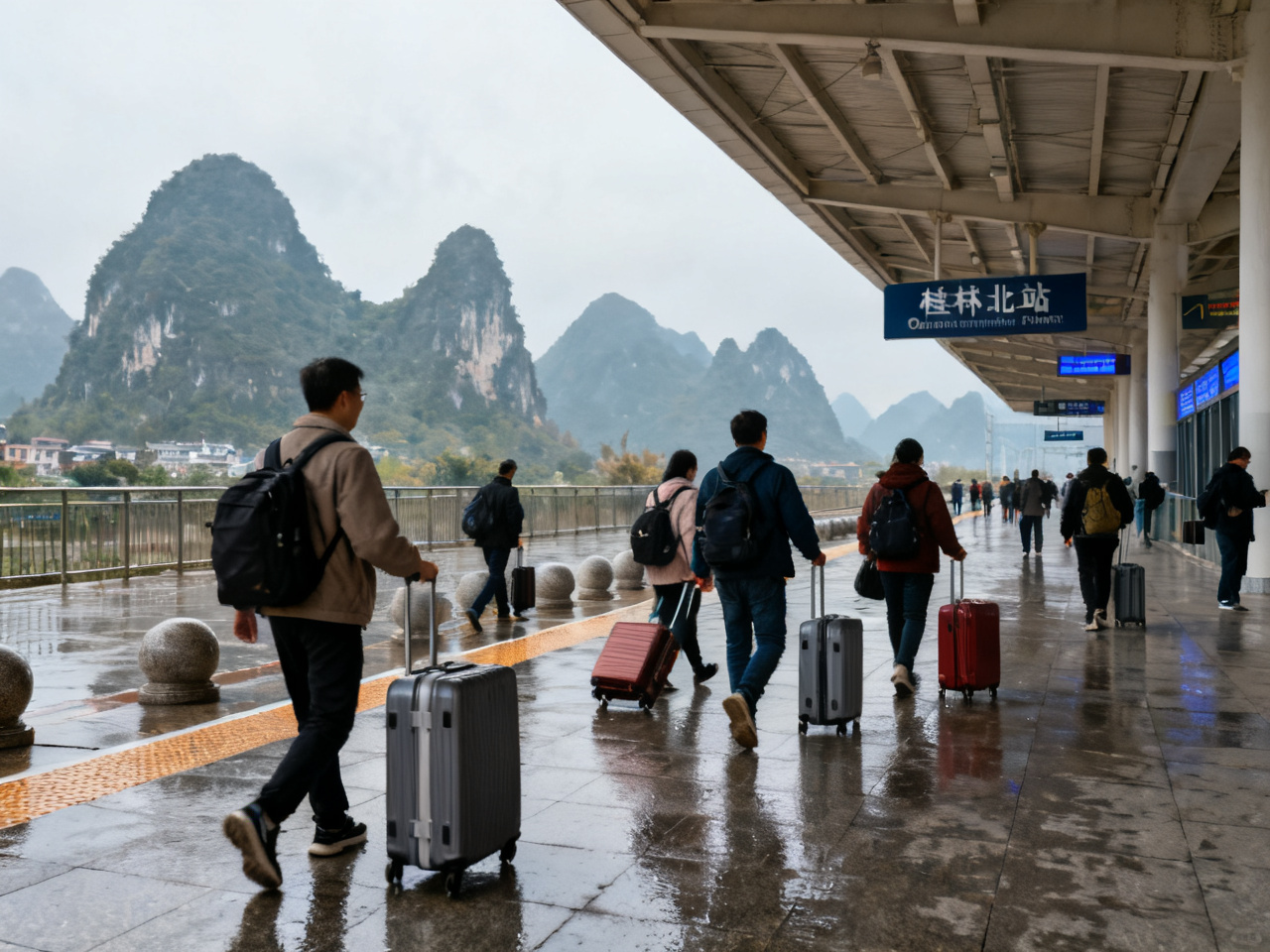
先说出站后的现实。桂林北站不算难懂,但对于刚落地的人来说,任何站前广场都会让方向感短暂失真。你看到的是连续的招牌、喊客的声音、几辆看似都能走的车,以及地图上那些彼此很近、实际要绕护栏走很远的点位。这个时候,最值钱的不是立刻出发,而是确认“我接下来十分钟不用做复杂判断”。如果你同行的人里有人容易晕车、怕热、或者拖的是很重的箱子,这一步更重要。
Now for the reality right outside the station. Guilin North is not especially confusing, but for someone who has just arrived, any station square can temporarily distort your sense of direction. What you see are rows of signs, calls from drivers, several vehicles that all seem possible, and map points that look close but actually require a long detour around barriers. At this moment, the most valuable thing is not leaving immediately. It is making sure that for the next ten minutes you do not have to make complicated decisions. If anyone in your group gets carsick easily, hates heat, or is hauling a heavy suitcase, this step matters even more.
我通常会让你先把节奏收慢到“够用”而不是“最快”。去洗手间,补水,把手机和充电宝电量看一眼,再打开地图确认目的地名的中文版本已经复制好。很多路上出问题的人,输在不是路,而是状态:又渴、又急、又没电、又怕错过,于是任何一个小变动都能把情绪拧紧。路线顺不顺,往往从站内这五分钟就开始分叉。跨城慢路线的核心,从来不是懒,而是把每个节点的摩擦降下来。
I usually tell you to slow the tempo down to “sufficient” rather than “fastest.” Use the restroom, drink water, check your phone and power bank, and make sure you have the Chinese version of your destination name copied and ready. Many people who struggle on the road are not defeated by the route itself but by their condition: thirsty, rushed, low on battery, and afraid of missing something, so every small change tightens the whole mood. Whether a route feels smooth often begins in these five minutes before you are fully gone from the station. The core of a slow intercity route is not laziness. It is lowering friction at each node.
中段为什么不建议你把自己切成很多小段?因为桂林到阳朔这条线最珍贵的,不是你在几个交通工具之间表演机动性,而是你能不能把山水前的那段过渡走得平顺。你一旦把方案拆得太碎,就会开始不停核对站牌、上车点、发车时间、落客位置,脑子全花在“别出错”上。反而是那种贵一点点、但能让你把一大段距离一次完成的方式,能保住到达后的兴致。旅游里的成本,不止是钱,还有注意力。
Why not break the middle part into too many small segments? Because on the Guilin-to-Yangshuo line, the most valuable thing is not demonstrating your flexibility across multiple transport modes. It is whether you can make the transition before the landscape opens up feel smooth. Once your plan becomes too fragmented, you start constantly checking signs, pickup points, departure times, and drop-off locations. Your entire mind gets spent on “don’t make a mistake.” A slightly more expensive option that completes a large section in one move often protects your energy for when you arrive. Travel cost is not just money. It is also attention.
阿诚那天就是在这个问题上按住了我。他看我还在比较几个差价很小、步骤却明显更碎的方案,就把我的手机往下按了按,说,省下来的不是几十块,是你到阳朔时还有没有耐心去走西街。然后他去旁边买了两杯加冰的柠檬茶,塑料杯外壁很快冒出一层细小水珠,握在手里发凉。这个动作像一个提醒:路线设计应该服务于人的状态,而不是让人去迁就路线的漂亮逻辑。
This is exactly where Acheng stopped me that day. He saw me comparing several options that saved only a little money but clearly created more fragments and more transfers. He pressed my phone down slightly and said, “What you’re saving isn’t a few dozen yuan. What you’re saving is whether you still have the patience to walk West Street when you get to Yangshuo.” Then he went to buy two iced lemon teas. Tiny beads of water quickly formed on the outside of the plastic cups, cool against the hand. The gesture worked like a reminder: route design should serve the condition of the traveler, not force the traveler to satisfy the elegant logic of a route.
如果你已经上了朝阳朔方向走的那一段,大可以允许自己不再盯着每一分钟。窗外开始出现被水汽泡软的远山,颜色不是单纯的绿,而是灰、青、墨在空气里慢慢叠起来。公路边偶尔掠过白墙黑瓦的小楼,田里有积水,反着天光。车内空调有一点重,前排有人小声打电话,司机转弯时会让悬挂轻轻一晃。你在这个时候放松下来,路线就真的开始从“完成任务”变成“进入地方”。
Once you are on that onward segment toward Yangshuo, allow yourself to stop measuring every minute. Outside the window, distant hills softened by humidity begin to appear, their colors not simply green but layered gray, blue-green, and ink-dark in the air. Small white-walled, dark-roofed buildings flash by on the roadside. The fields hold standing water that reflects the sky. The air-conditioning inside the vehicle feels a little heavy. Someone in the front speaks softly on the phone, and each turn gives the suspension a gentle sway. When you relax here, the route finally shifts from “completing transport” into “entering a place.”
这也是我喜欢慢路线的原因:它让风景有机会在你心里长出来,而不是像投影片一样从疲惫的眼前刷过去。很多人第一次去阳朔,脑子里已经有西街、啤酒鱼、漓江、骑行这些词,结果真正累坏他们的,反倒是到达前那一段不必要的折返和算计。你越早把路线定成“顺手”,越容易保住抵达后的好奇心。关于“慢走比硬赶更值”的感觉,这篇旧路线文也很接近:Shanghai to Suzhou in Two Slow Days。如果你喜欢在出发前先练习“到站后先抓大块移动、再处理细节”的思路,也可以顺手看看另一篇跨城文章:Dunhuang to Turpan。
That is also why I like a slow route: it gives the landscape a chance to grow inside you instead of flicking past tired eyes like a slideshow. Many first-time visitors to Yangshuo arrive already carrying a list of words in their head—West Street, beer fish, the Li River, cycling—but what actually drains them is the unnecessary circling and over-calculating before arrival. The earlier you define the route as “easy to handle,” the easier it is to preserve your curiosity for what comes after. The legacy route article titled Shanghai to Suzhou in Two Slow Days carries a similar feeling about why moving slower can be worth more than forcing speed. If you like practicing the idea of securing the big movement first and sorting out the details after arrival, the legacy cross-city piece titled Dunhuang to Turpan is also relevant.
真正的小问题通常出现在最后一段。你到了阳朔,心里会本能地松一口气,觉得大事已成,结果最容易在此时做出仓促决定:随便上车、没有确认下车点、让自己被放在离西街还要拐很多弯的地方。我的建议是,最后一段反而要更具体。别只说去西街,要直接拿出酒店名、门牌附近地标,最好连中文都准备好。因为“到阳朔”和“到你今晚安心放下行李的门口”之间,还是有差别。
The small problems usually happen in the final segment. Once you arrive in Yangshuo, your body relaxes instinctively and thinks the hard part is over. That is exactly when rushed decisions sneak in: getting into any vehicle, not confirming the drop-off point, or letting yourself be left somewhere that still requires too many turns to reach West Street. My advice is to become more specific, not less, for the final part. Do not simply say you are going to West Street. Show the hotel name, a nearby landmark, and ideally the Chinese text as well. Because “arriving in Yangshuo” and “arriving at the door where you can put your luggage down tonight” are still different things.
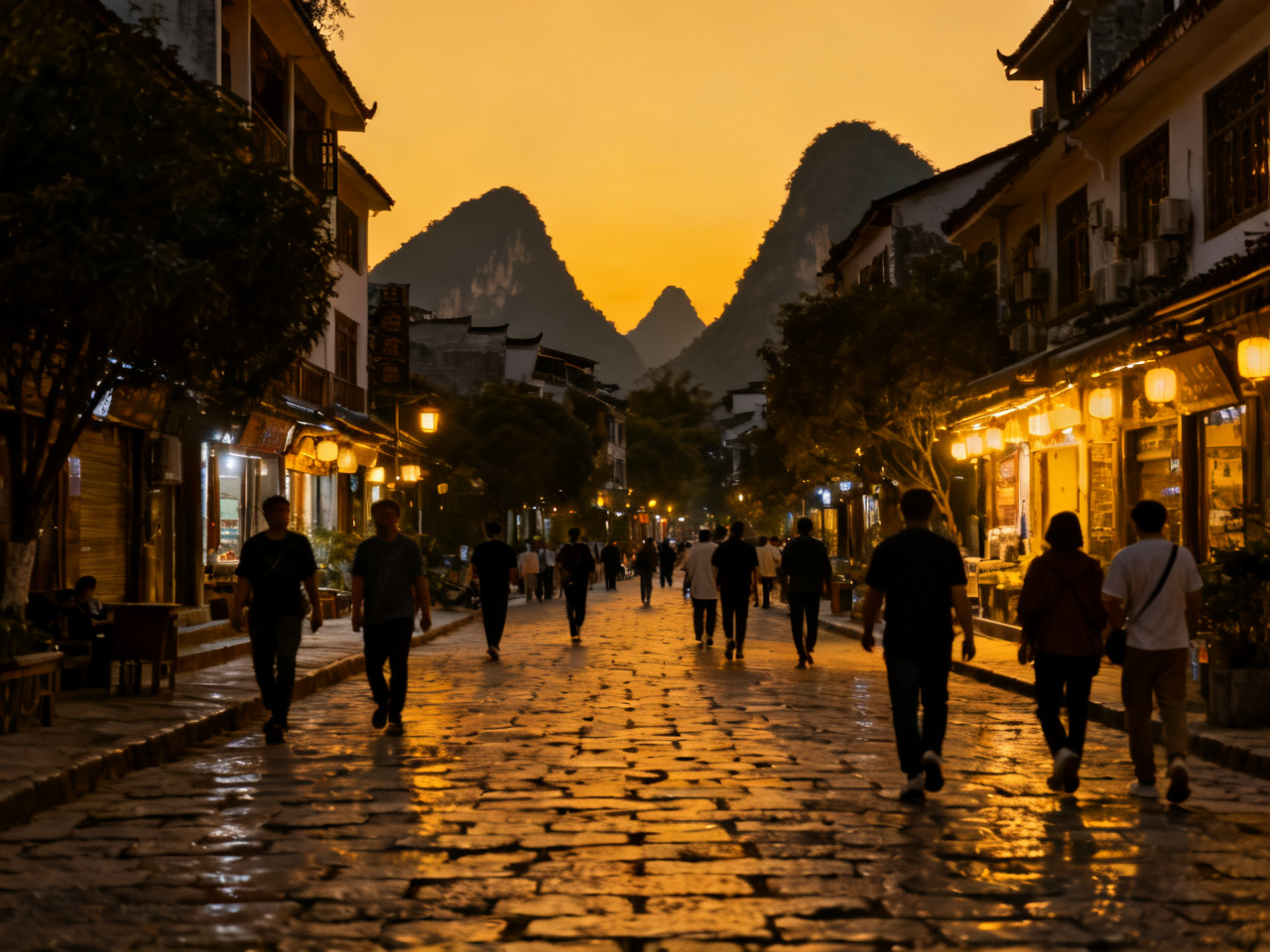
你如果傍晚到,西街周边的声音会比地图先一步迎上来。轮子压过石砖会有短促的咔啦声,店里传出锅气和唱歌声,烤肉味、甜酒味、潮湿河风会混在一起。街口常常人多,拉杆箱在脚边突然变笨,手机导航也会因为你转了几个角度而一时拿不定方向。这时别急着评价“是不是太商业”,先把自己送到落脚点,洗把脸,喝口水,再重新出来看。一个地方值不值得喜欢,最好在你不是最狼狈的时候判断。
If you arrive at dusk, the sounds around West Street often reach you before the map does. Suitcase wheels knock sharply over stone paving. Kitchens send out wok heat and singing from inside. The smell of grilled meat, sweet local alcohol, and damp river air all mix together. There are often crowds near the entrance, and your rolling suitcase suddenly becomes clumsy at your feet while the phone’s navigation hesitates because you turned a few corners. Do not rush to decide whether the place is “too commercial.” Get yourself to where you are staying first, wash your face, drink some water, and come back out. A place deserves to be judged when you are not at your most bedraggled.
我后来发现,这条不最省钱但最顺手的路线,真正买到的是一种进入感。你不是被硬塞进阳朔,而是一步步靠近它:先从高铁的速度退出来,再从站前的噪音中整理自己,再在公路的过渡里把呼吸放慢,最后带着一点余裕走进西街。对于第一次来的人,这种余裕非常重要。它让你有能力分辨什么是景区表层,什么是你愿意停下来的地方。
I later realized that what this route buys—though it is not the cheapest—is a feeling of entry. You are not shoved into Yangshuo. You approach it in stages: first by stepping down from the speed of the train, then by collecting yourself amid the noise outside the station, then by slowing your breathing during the road transition, and finally by entering West Street with a little reserve left. For a first-time visitor, that reserve matters immensely. It gives you the ability to tell the difference between a place’s tourist surface and the parts where you genuinely want to linger.
如果你愿意把“顺手”当成一次旅行里正经的评价标准,而不只是懒得折腾的借口,那么桂林北站到阳朔西街这段路会教你一件很实在的事:好路线不一定最便宜,也不一定最能炫耀技巧,但它会把人完完整整地送到目的地,而不是只把身体送到。至于中途那点多花出去的钱,往往会在你少掉的疲惫、少掉的误判、少掉的争执里悄悄赚回来。
If you are willing to treat “easy to handle” as a serious travel criterion rather than an excuse for laziness, the journey from Guilin North Station to Yangshuo West Street will teach you something practical: a good route is not always the cheapest, and it is not always the one that shows off the most technique, but it delivers the whole person to the destination, not just the body. The little extra money spent on the way often gets quietly earned back in reduced fatigue, fewer bad calls, and fewer pointless arguments.
夜里真正抵达的时候,你会看见西街口一块招牌在湿润空气里发亮,附近店家把竹椅往里收,路边盆栽的叶子还挂着雨珠。你停下脚,把箱子立正,肩膀终于轻了一点。有人从巷子深处端着一盆刚洗好的青菜走出来,远处还有乐队试音的低频震动。你知道自己不是用最省的钱到这里的,但你也知道,今晚你是带着完整的心情到的。
When you truly arrive at night, you will see a glowing sign at the entrance to West Street in the damp air. Nearby shopkeepers pull bamboo chairs inward, and raindrops still cling to the leaves of potted plants by the road. You stop, set your suitcase upright, and feel your shoulders finally lighten. Someone emerges from a side lane carrying a basin of freshly washed greens, while farther away a band’s soundcheck sends a low vibration through the street. You know this was not the cheapest way to get here. You also know you arrived with your mood intact.
- 刺绣体验:我第一次发现“安静”也可以有这么强的存在感 | Embroidery Workshop: The First Time I Realized Quietness Could Have Such a Strong Presence
- 14天丝绸之路深度行程规划 | 14-Day Silk Road In-Depth Itinerary
- 京剧昆曲观演入门:买票选座与看懂门道 | Peking Opera & Kunqu: Tickets, Seats & How to Watch
- 二月冬末旅游:南方暖意正浓 | Late Winter Travel: Warmth in Southern China
- 景德镇陶瓷伴手礼选购指南 | Jingdezhen Ceramics Souvenir Buying Guide
- 十二月的中国:北方玩雪,南方过冬 | December in China: Snow Up North, Warmth Down South
- 上海外滩与弄堂文化探索 | Shanghai: The Bund & Longtang Culture
- 中国园林美学:苏州拙政园到北京颐和园 | Chinese Garden Art: Suzhou to Beijing's Summer Palace
- 灯彩作坊里的一小时:我第一次发现光也可以被“做出来” | In a Lantern Workshop: The First Time I Realized Light Can Be Crafted by Hand
- 泉州古城的香火与街巷 | Incense and Lanes in Quanzhou Old City
Comments (0)