
我第一次看懂明代衣服,不是在博物馆,而是在裁缝铺里看人怎么站 | I First Understood Ming Clothing Not in a Museum, but in a Tailor's Shop Watching How People Stood
我第一次看懂明代衣服,不是在博物馆,而是在裁缝铺里看人怎么站 | I First Understood Ming Clothing Not in a Museum, but in a Tailor's Shop Watching How People Stood
雨停得不算干净,青石板缝里还留着一点发黑的水线。我那天是顺着城里一条卖线、卖绢、卖铜扣的小街慢慢走进去的,原本只想替同行的朋友找一块适合做礼物包布的料子,结果先被一家裁缝铺门口挂着的两件长衣拽住了脚步。风一吹,衣摆没有乱飞,只是往外轻轻张了一下,又很快自己落回去。那一下让我突然停住。它们不是我以前在画册里看过的那种“古代衣服”概念,而是很具体的:有重量,有方向,有一种人在里面站着时才会成立的秩序。
The rain had stopped, though not completely. Thin dark lines of water still rested between the stone slabs. That day I had wandered into a street that sold thread, silk, and small bronze fasteners, only intending to find a piece of cloth for a gift wrap for a friend traveling with me. But before I entered any store, two long robes hanging outside a tailor's shop caught my feet. When the wind moved them, the hems did not flap wildly. They opened slightly, then settled back into place on their own. That single motion made me stop. These were not the vague “ancient clothes” I had seen in picture books. They were specific things: weighted, directional, arranged by a logic that only fully existed when a human body stood inside them.
我在中国待久了以后,慢慢明白很多东西都不能只看“样子”。房子要看人怎么走,吃饭要看人怎么坐,衣服更不能只看花纹。我后来真正看懂一点明代服装,也不是因为记住了多少名词,而是因为在那间裁缝铺里,我看见不同身份的人穿上衣服以后,肩怎么放,腰怎么收,手怎么从袖口里出来,连转身的速度都不一样。衣服不是贴在身体表面的图案,它更像一套把人整理成某种分寸的办法。
After living in China for a longer time, I slowly learned that many things cannot be understood by appearance alone. Houses must be understood through how people move in them. Meals must be understood through how people sit. Clothing, even more than anything else, cannot be read only through pattern. I did not begin to understand Ming dress because I memorized terms. I understood a little because inside that tailor's shop I saw how different people changed once dressed: how shoulders settled, how the waistline tightened, how hands emerged from sleeves, even how quickly someone turned. Clothing was not a pattern pasted onto the body. It was more like a method for arranging a person into a certain proportion.
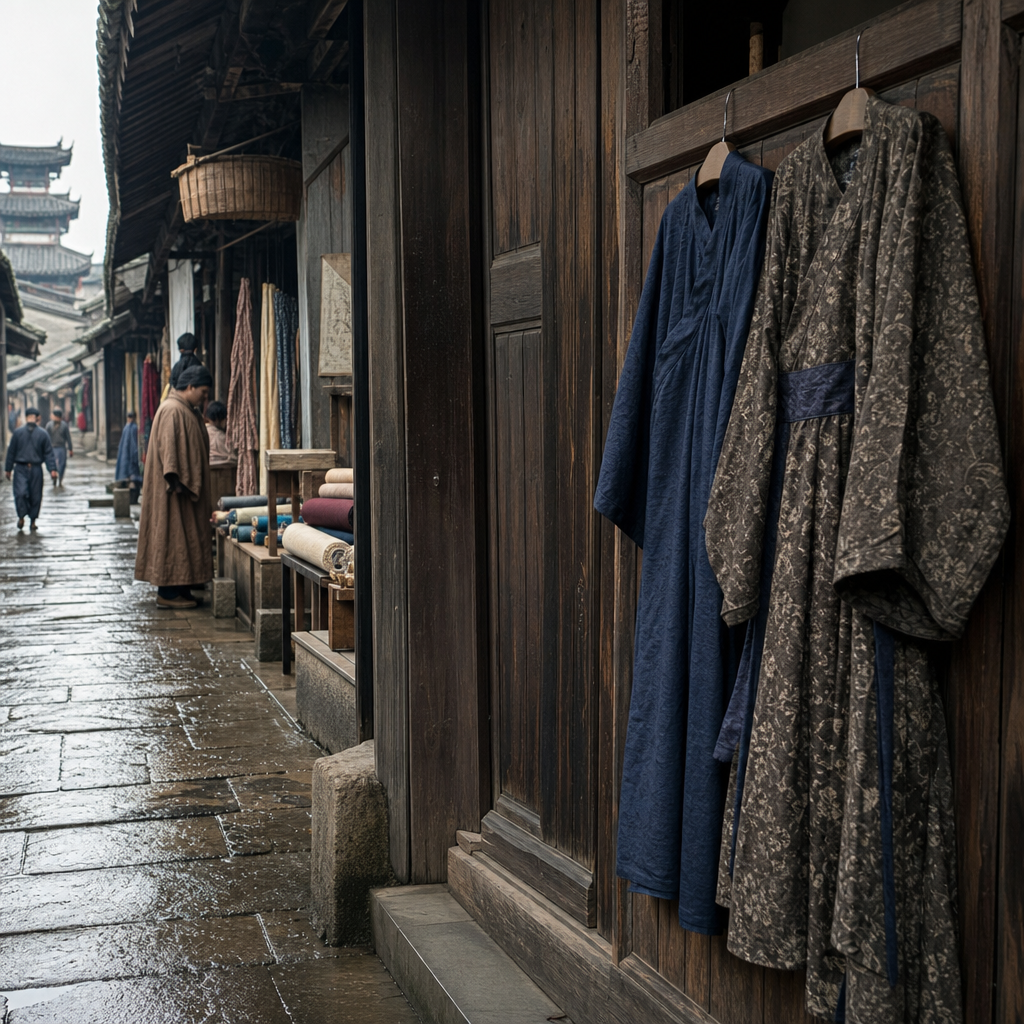
铺子主人姓顾,是个说话很慢的中年裁缝。他手里一直捏着一小截白粉线,一边量,一边抬眼看人,像不是在看尺寸,而是在看这个人到底适合被衣服收成什么样。他见我盯着挂出来的那件圆领袍看,就把它取下来,往木架上一搭,说了一句很简单的话:明代衣服要看线,不要只看花。我原本以为这只是行内人的随口总结,可后来在铺子里站了一个时辰,我才知道这句话有多准。线,真的是关键。领口怎么起,前襟怎么落,袖子怎么从肩膀垂下去,腰线在哪里开始把人往里收,最后都决定了穿的人看起来是稳,是直,还是松,是贵,是雅,还是日常。
The owner of the shop was a middle-aged tailor surnamed Gu, a man who spoke slowly. He always held a short white chalk string in his hand. While measuring, he kept lifting his eyes toward the customer, as if he were not measuring the body alone but deciding what sort of shape the clothes should bring that person into. He noticed me staring at a round-collar robe, took it down, laid it over a wooden stand, and said one simple sentence: for Ming clothing, look at the lines, not only at the decoration. At first I thought this was just trade talk. But after standing inside the shop for nearly an hour, I realized how precise it was. Line truly was the key. How the collar began, how the front panels fell, how the sleeves dropped from the shoulder, where the waist started to gather the form inward—all of it decided whether the wearer appeared steady or loose, upright or relaxed, dignified, elegant, or simply everyday.
不是“华丽”,而是“站得住” / Not Mere Splendor, but the Ability to Hold a Stance
很多外来游客第一次看中国古代服装,会先被颜色、绣纹和帽冠吸引。这很正常,我最早也是这样。可如果只停在“好看”,就会错过明代服装真正厉害的地方:它特别会处理人的竖线。那种竖,不是硬邦邦地把人压直,而是让衣领、胸前、衣摆、下垂的袖线一起把身体往中间稳稳收住。你站在那里,不需要夸张姿势,衣服自己就先替你把重心整理好了。
Many visitors from outside China are first drawn to the colors, embroidery, hats, and crowns when they encounter historical Chinese dress. That is natural. I was the same at first. But if you stop at “beautiful,” you miss what Ming clothing does best: it handles the vertical line of the body with extraordinary intelligence. This verticality is not rigid. It does not force a body stiffly straight. Instead, the collar, the chest line, the hem, and the hanging sleeve lines all gather the body gently toward its center. One does not need an exaggerated posture. The garment organizes balance before the person does.
顾裁缝拿出两件不同身份的人会穿的衣服给我看。一件颜色沉,领口收得干净,前襟下落很直,几乎没有多余晃动;另一件则在边缘和配色上更讲究,远看并不夸,可人一走起来,整件衣服会有一种更明显的层次感。两件放在木架上时我觉得差距不算大,可一旦有人穿上,区别立刻就出来了。前者让人显得谨慎、稳定、像说话有分量;后者则让人更像被礼法和审美同时扶住,连走路都像先想好再迈步。
Master Gu showed me two garments associated with different social positions. One was darker in tone, with a clean collar and a front opening that fell almost perfectly straight, with very little unnecessary movement. The other was more considered in edging and color arrangement. From afar it did not look excessive, yet once someone walked in it, the layers began to appear more clearly. When both garments were placed on wooden stands, I felt the difference was small. But the moment someone put them on, the contrast arrived at once. The first made the wearer appear cautious, steady, and weighty in speech. The second seemed to support the person at once through ritual order and aesthetic order, as though even the step of walking had been thought through before it happened.
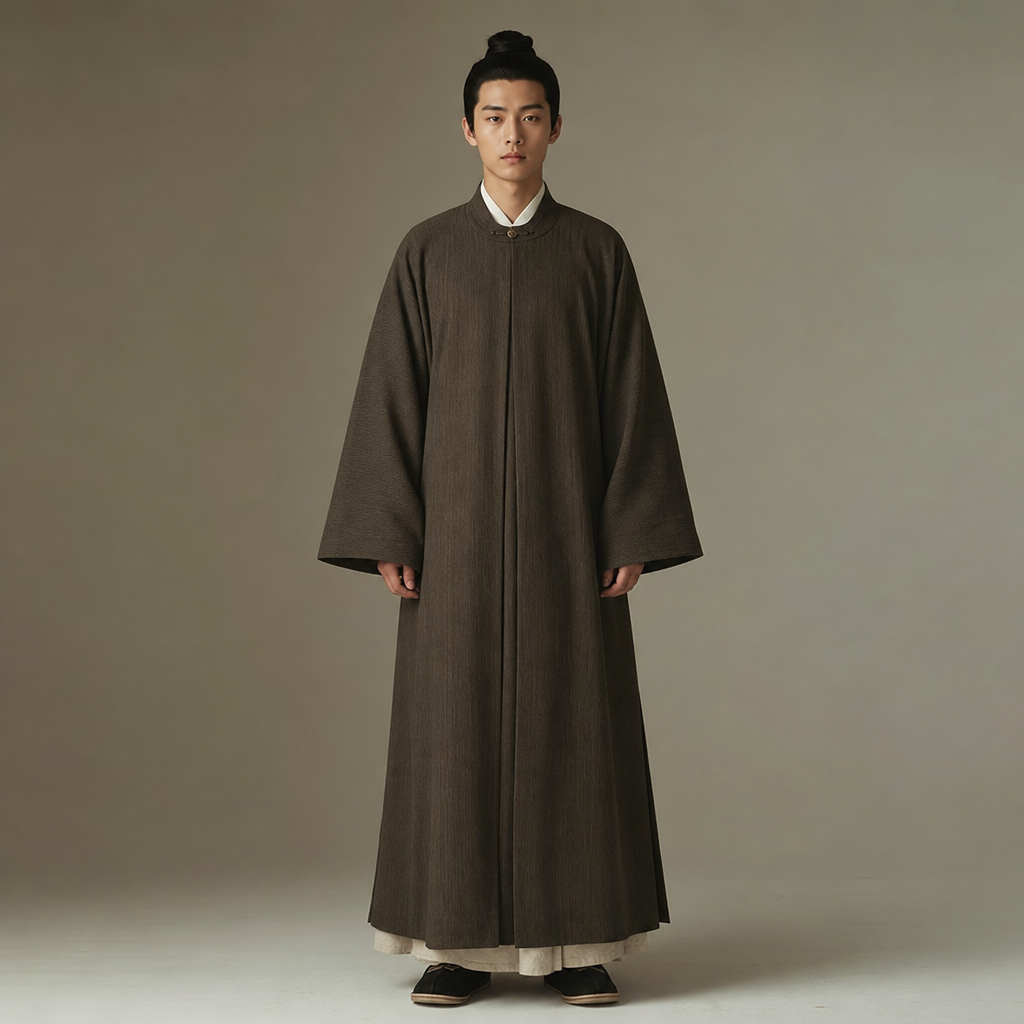
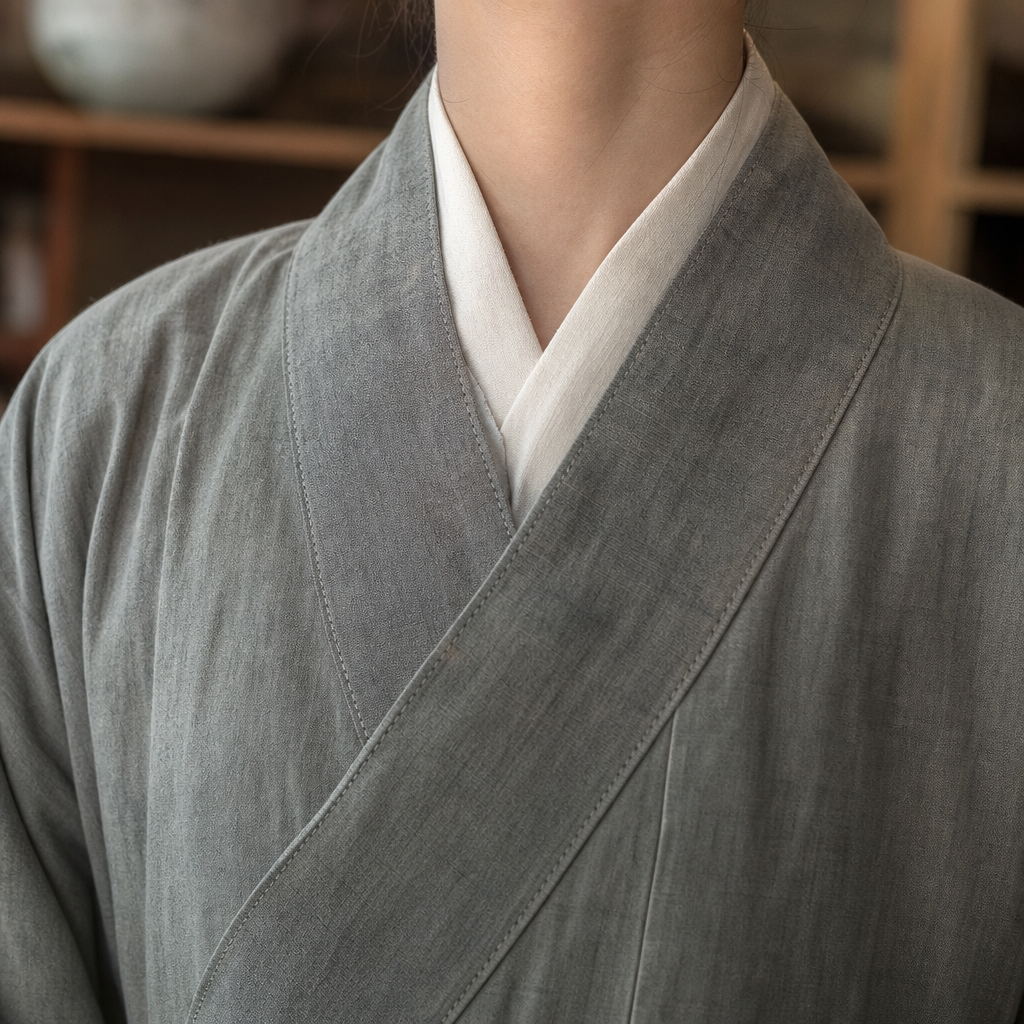
我特别记得他让我看领口。很多人看古装只看大轮廓,可领口其实最暴露一件衣服有没有骨气。明代不少衣装的领部处理是很清楚的,开合不含糊,贴近脖颈却不死板。顾裁缝用手指顺着领边慢慢划下去,跟我说,线一乱,人就先散了。这话听起来像在讲裁衣,其实也像在讲明代审美。它不喜欢软趴趴地没有中心,也不喜欢故意夸张地扬起来,而是要求一种“收得住”的体面。
I remember especially the way he asked me to study the collar. Many people look at historical dress only through outline, but the collar is often where the inner discipline of a garment is most exposed. In many Ming garments, the treatment of the neck and opening is decisively clear. It sits close to the neck without turning stiff. Master Gu ran his finger down the edge of the collar and told me that once the line is messy, the person comes apart before anything else. It sounded like advice about tailoring, yet it also sounded like a sentence about Ming aesthetics. It disliked shapeless softness, but it also disliked theatrical exaggeration. What it wanted was a form of dignity able to gather itself inward.
如果你已经看过站内那篇讲 中文入门基础 的文章,可能会理解我为什么总在意“分寸”这个词。中国很多生活判断,最后都落回边界感和合适度。明代服装也是这样。它并不是为了让人看上去“富”这么简单,而是在提醒别人:这个人知道自己怎么出现,知道身体该在哪些地方被克制,哪些地方可以自然舒展开。
If you have already read the site's article on Chinese Language Basics, you may understand why I keep returning to the word proportion. In China, many judgments about daily life eventually return to boundaries and appropriateness. Ming clothing worked in the same way. It was not simply designed to make someone look wealthy. It reminded others that this person knew how to appear in the world, where the body should be restrained, and where it could unfold naturally.
袖子、垂坠和走路时的空气 / Sleeves, Drape, and the Air Around a Walking Body
我后来对明代衣服真正上瘾,是因为袖子。不是因为袖子大,而是因为它们大得很有控制。顾裁缝让我站到门边看一个刚试完衣的年轻人走出去。那人步子不快,衣袖也没有像戏台上那样夸张地飞,可每一次摆手,袖子的末端都会比手慢半拍。这半拍特别迷人。它让动作多了一层余味,也让衣服显出布料本身的分量。你一看就知道,这不是贴身短打,不是为了立刻扑出去干活的衣服,而是一种要求动作别太碎、别太急的穿法。
What finally made me addicted to Ming clothing was the sleeves. Not because they were large, but because their largeness was so controlled. Master Gu asked me to stand by the doorway and watch a young man leave after fitting a garment. His steps were not fast, and the sleeves did not fly theatrically the way stage costumes do. Yet each time he moved his arm, the end of the sleeve arrived half a beat later than the hand. That half beat was captivating. It gave every movement an aftertaste, and it revealed the weight of the fabric itself. At a glance you knew this was not close-cut working wear, not clothing meant for lunging immediately into labor. It was a style of dress that asked movement not to fragment and not to hurry.
有些文章会把古代服装写得像只有等级,没有身体。我现在越来越不信这种写法。等级当然重要,可衣服最先碰到的还是身体。比如袖口若收得太死,人端茶时会显得紧;若放得太散,整个人又会没有骨架。再比如下摆若太轻,站着时会漂;若太重,走路时就会拖。明代服装真正耐看的地方,恰恰在这些“刚刚好”的拿捏上。它没有把身体消掉,而是让身体在礼法里面还能保留呼吸。
Some writing treats historical clothing as if it had hierarchy but no body. I believe that less and less. Social rank certainly mattered, but clothing touched the body before it touched the idea of rank. If the sleeve opening is gathered too tightly, a person looks constrained while lifting a cup. If it is left too loose, the whole frame loses structure. If the hem is too light, it floats while standing. If it is too heavy, it drags while walking. What makes Ming clothing worth looking at, again and again, is this intelligence of exact adjustment. It did not erase the body. It allowed the body to retain breath inside ritual order.
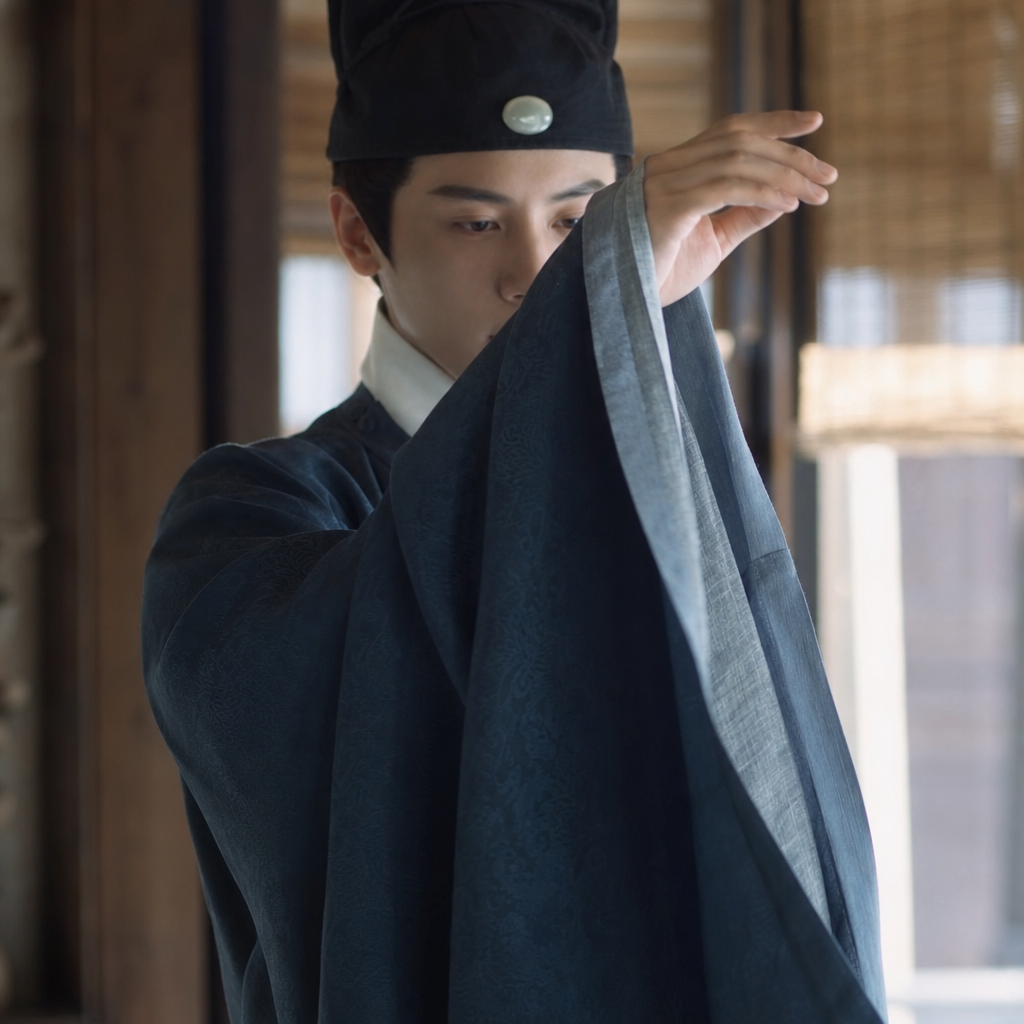
有个瞬间我一直记得。铺里一位替官宦人家送布样来的妇人,站着等顾裁缝写尺寸。她并没有刻意摆姿势,只是把手轻轻搭在身前,袖子自然垂下来,前襟和裙摆之间留下了一条很安静的中线。门外有人挑担经过,木杆撞在一起,发出干脆一声;屋里却还是稳的。那时我第一次意识到,服装不只是把人装饰成某种样子,它还会把一个人的静气往外推出来。明代的很多衣装,厉害就厉害在这里:你还没开口,衣服已经先替你把分寸说了一半。
There is one moment I still remember. A woman who had come from a household of officials to deliver fabric samples stood waiting while Master Gu wrote down measurements. She was not posing. She simply rested her hands lightly before her body, and the sleeves fell naturally while a quiet center line appeared between the front panels and lower skirt. Outside, a shoulder pole knocked sharply as someone passed in the street. Inside, the room remained steady. That was the first moment I understood that clothing does not merely decorate a person into a certain look. It can push a person's calmness outward. This is where many Ming garments are truly remarkable: before you speak, the clothes have already expressed half your sense of measure.
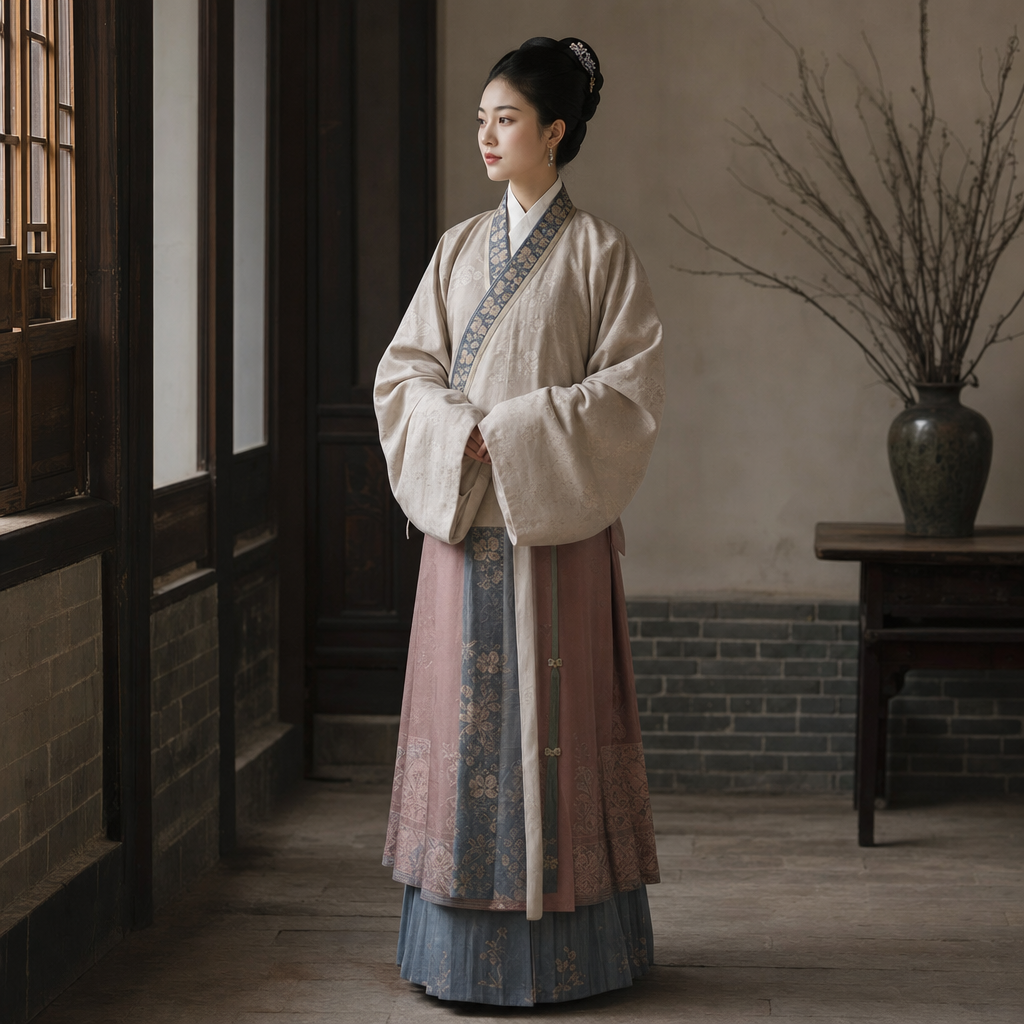
为什么我会把它和中国建筑想到一起 / Why It Keeps Making Me Think of Chinese Architecture
后来我走出裁缝铺,看见对面屋檐下的雨水还在一滴一滴往下落,忽然明白自己为什么会喜欢这种衣服。它和我后来观察中国古建筑时的感受很像。屋檐、立柱、门框、台基,都是把空间往中间收,让重心稳定下来;明代服装里的领、襟、袖、摆,也是在做差不多的事,只不过对象从房子换成了身体。如果你对这种“结构先于装饰”的感觉感兴趣,也可以顺手看看站内关于中国古代生活与空间秩序的文章,比如宋代日常起居那类题材,它们其实都在讲同一件事:真正耐看的东西,通常先把结构放对。
When I later stepped out of the tailor's shop and saw rain still dropping from the eaves opposite, I suddenly understood why I liked this clothing so much. It gave me the same feeling I later had when observing traditional Chinese architecture. Eaves, columns, door frames, and raised bases all gather space inward and stabilize its center of gravity. The collars, lapels, sleeves, and hems of Ming clothing do something very similar, except that the object is no longer a building but a body. If you are drawn to this sensation of structure before decoration, you might also enjoy the site's pieces on older Chinese domestic order, such as the Song daily-life topic. They are all, in the end, talking about the same principle: what remains worth looking at usually gets the structure right first.
我并不是说每个穿明代衣服的人都会立刻显得高贵。不是这个意思。我的意思更简单:这种衣服会逼人重新理解自己的站姿、步速和手势。它要求你别太急,要求你对身体和空间保持一点礼貌。作为一个外来者,我很难不被这种观念打动。因为在很多地方,现代衣服只负责方便;可在这里,衣服还会反过来教人怎么出现,怎么被看见,怎么把自己整理成一个不轻浮的人。
I do not mean that everyone wearing Ming clothing would suddenly appear noble. That is not my point. My point is simpler: this style of dress forces a person to rethink stance, pace, and gesture. It asks you not to hurry. It asks you to keep a certain courtesy toward your own body and the space around it. As someone from outside China, I find it hard not to be moved by that idea. In many places, modern clothing is responsible only for convenience. Here, clothing could still teach a person how to appear, how to be seen, and how to compose oneself into someone not easily made shallow.
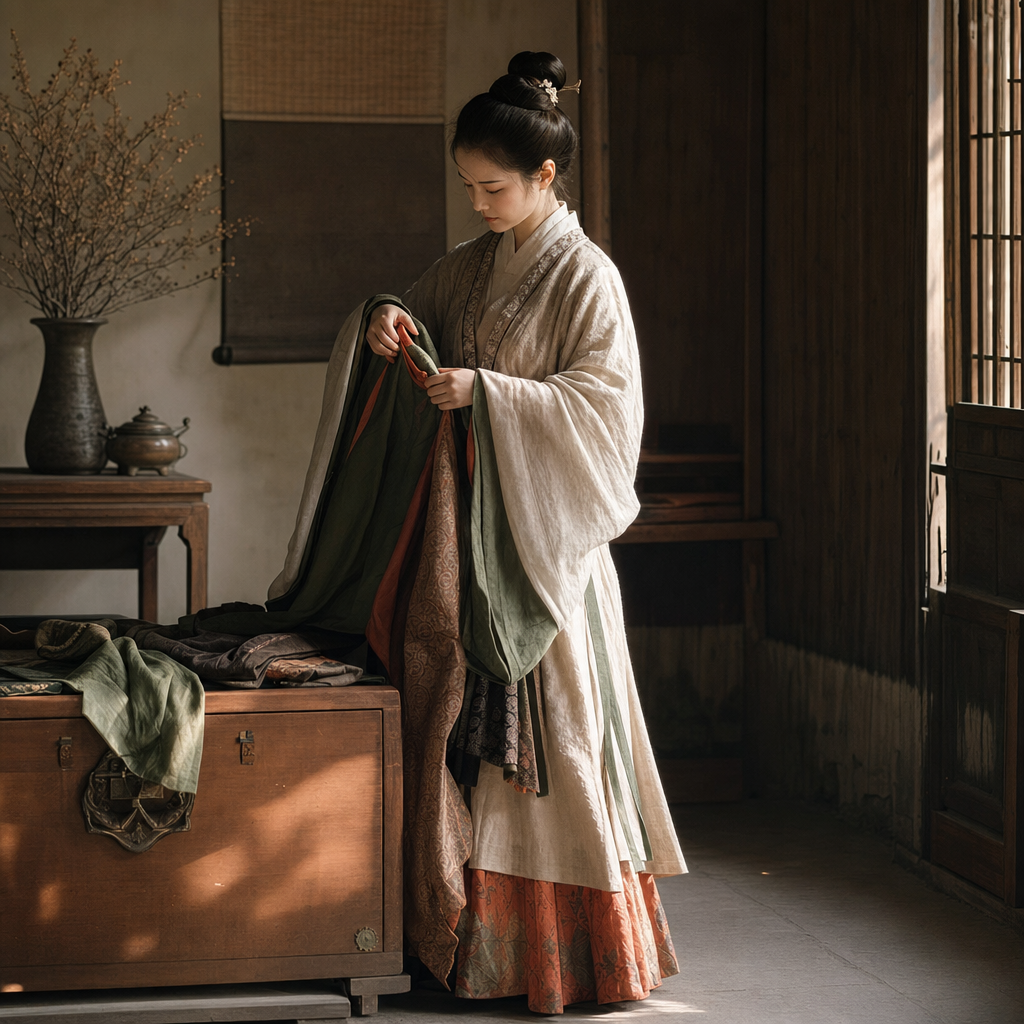
所以如果你问我,明代服装最该看什么,我不会先回答颜色,也不会先回答刺绣。我会说,先看人怎么站。再看领线怎么落,袖子怎么慢半拍,布料怎么在膝前和脚边停住。最后你会明白,明代衣服真正留下来的,不只是审美趣味,而是一整套关于身体秩序的判断。那天离开时,顾裁缝正在门口把湿了一点的下摆重新抖平。动作很轻,像是在照顾一件衣服,也像是在照顾一种已经被很多人忘记的站法。
So if you ask me what matters most in Ming clothing, I would not answer color first, and I would not answer embroidery first. I would tell you to watch how a person stands. Then watch how the collar line falls, how the sleeve arrives half a beat late, and how the fabric settles before the knees and ankles. In the end you realize that what Ming dress truly preserved was not only taste, but a whole judgment about bodily order. When I left that day, Master Gu was standing at the doorway shaking smooth a slightly damp hem. The motion was gentle. It looked as though he were caring for a garment, but also for a way of standing that many people have already forgotten.

- 逛中国博物馆前,先学会这套看展方法 | A Practical Method to Visit Museums in China
- 六月荷花观赏地全国推荐 | June Lotus Viewing Spots Across China
- 竹编小课:我第一次发现“柔软的材料也可以有骨架” | Bamboo Weaving Workshop: The First Time I Realized Soft Material Can Still Have a Spine
- 到了郑州才明白,一顿不必介绍来历的晚饭也能让人放松下来 | In Zhengzhou, I Learned That an Unpretentious Dinner Can Let the Body Unclench
- 哈尔滨冬天的第一口热汤,救了我冻僵的旅行计划 | The First Bowl of Hot Soup in Harbin Saved My Frozen Travel Plan
- 华东五城10日经典环线 | 10-Day East China Five-City Loop
- 绍兴黄酒的慢饮法:从乌篷船到晚饭桌 | A Slow Way to Drink Shaoxing Wine: From Black Canals to the Dinner Table
- 从广州吃到潮汕:一条被低估的美食公路 | Guangzhou to Chaoshan: An Underrated Foodie Road Trip
- 灯彩作坊里的一小时:我第一次发现光也可以被“做出来” | In a Lantern Workshop: The First Time I Realized Light Can Be Crafted by Hand
- 外国人在中国用高铁:从订票到进站全流程 | China High-Speed Rail for Foreign Travelers: End-to-End Guide
Comments (0)