
厦门老街小店的午饭,让我明白“本地味道”不是网红菜单 | Lunch in a Small Xiamen Old-Street Shop Taught Me Local Flavor Is Not a Viral Menu
厦门老街小店的午饭,让我明白“本地味道”不是网红菜单 | Lunch in a Small Xiamen Old-Street Shop Taught Me Local Flavor Is Not a Viral Menu
到厦门的第二天中午,我没有去排任何热门榜单上的餐厅。那时太阳正把老街的墙面晒得发白,巷口的三角梅颜色浓得像刚蘸过水,骑楼下却有一层舒服的阴影。我本来只是想找个地方躲热,顺便吃一顿不需要研究太久的午饭。拐过一间卖香烛的小店,又经过一家修钥匙的铺子,我看见一块褪色招牌,门口摆着几张塑料凳,里面有人用闽南话招呼熟客。就是那种不太会被镜头主动寻找的小店,我走了进去。
On my second noon in Xiamen, I did not join a line outside any restaurant ranked high on a travel list. The sun had bleached the walls of the old street, and the bougainvillea near the lane mouth looked as if it had just been dipped in water, while the arcade kept a layer of generous shade. I only wanted somewhere to escape the heat and eat a lunch that did not require research. After passing a shop selling incense and another cutting keys, I noticed a faded sign, a few plastic stools at the entrance, and someone inside greeting regulars in Minnan. It was the kind of place a camera might overlook. I stepped in.
店里没有精心设计的复古感,墙砖有几处裂纹,电风扇转得很卖力,桌面擦得干净却已经被岁月磨出旧光。菜单写在墙上,字不多,价格也直白。老板娘问我要不要吃沙茶面,我点头,又加了一份海蛎煎。她没有介绍“必吃套餐”,也没有提醒我哪道最适合拍照,只是问我能不能吃一点辣,汤要不要浓。这个问法让我放松下来,因为它关心的是我等会儿入口的感受,而不是这顿饭在别人眼里像不像厦门。
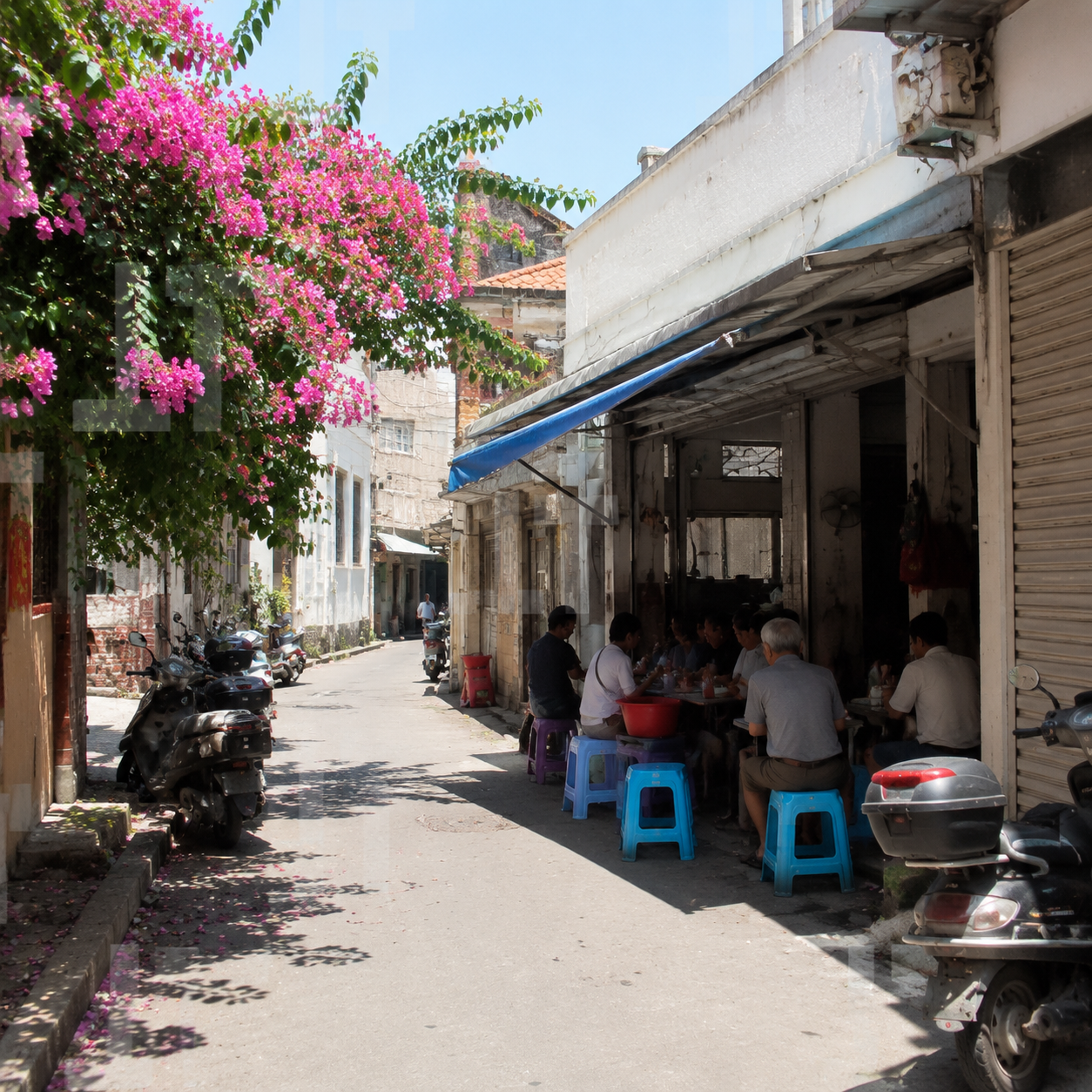
The shop had no carefully manufactured vintage mood. Some wall tiles were cracked, the electric fan worked hard, and the tabletops were clean but polished by age. The menu was written on the wall with few words and plain prices. The owner asked whether I wanted satay noodles. I nodded and added an oyster omelet. She did not recommend a must-order set or point out which dish looked best in photos. She only asked whether I could take a little heat and whether I liked the broth stronger. The question relaxed me, because it cared about how the food would feel in my mouth, not whether the meal would look like Xiamen to someone else.
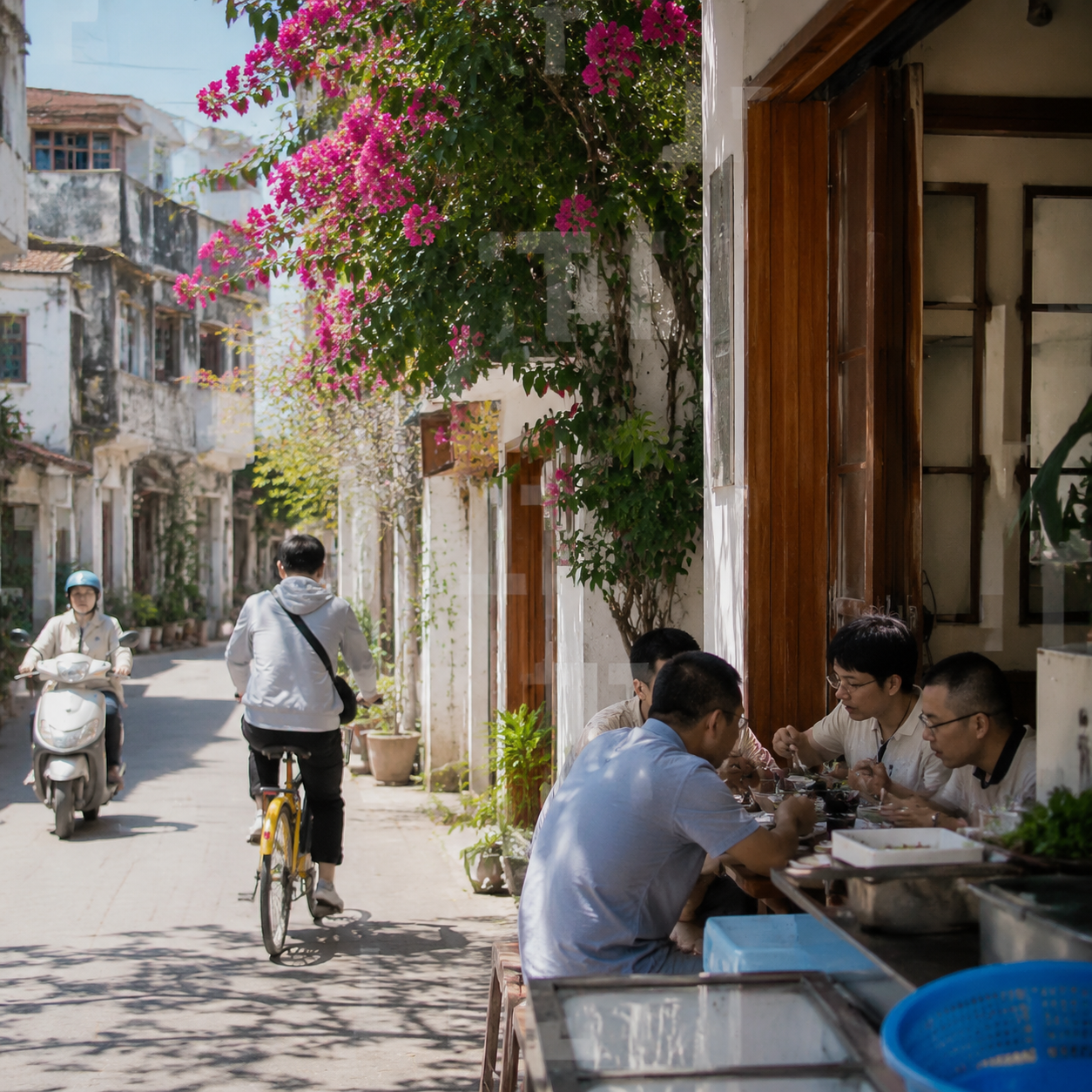
等面的时候,我看见隔壁桌的阿伯把汤匙放在碗边,先喝一口汤,再慢慢夹起面线。他的动作像有固定顺序,不急,也不表演。另一桌两个年轻人穿着工作服,饭吃到一半还在讨论下午要送的货。门口不时有人进来,问一句“还有没有饭”,老板娘回一句“有,坐”。小店的节奏不是为游客设计的,它先服务附近的人:上班的人、买菜的人、修东西的人、刚从太阳里走进来的人。游客只是临时加入这套节奏。
While waiting for the noodles, I watched an elderly man at the next table set his spoon against the bowl, take a first sip of soup, and then slowly lift the noodles. His movements followed an old order, unhurried and unperformed. At another table, two younger workers in uniforms kept discussing the deliveries they had to make that afternoon. People appeared at the doorway asking if rice was still available, and the owner answered, “Yes, sit.” The rhythm of the shop was not designed for visitors. It first served the people nearby: workers, shoppers, repairmen, anyone stepping in from the sun. A traveler merely joined the rhythm for a short while.
沙茶面的汤端上来时,香气先到。它不是单纯的甜,也不是单纯的辣,而是一种带着花生香、海味和一点烟火气的混合。面条并不追求弹到夸张,豆芽保留着脆,几片肉和丸子安静地躺在碗里。最让我意外的是汤底的分寸:浓,却没有把所有食材压住;热,却不让人觉得粗暴。我吃了几口,才明白所谓本地味道不是某种固定配方,而是一种长期被街区接受、被日常校准过的平衡。
The satay noodle soup arrived with fragrance before shape. It was not simply sweet or spicy, but a mixture of peanut aroma, seafood depth, and a little smoke from daily cooking. The noodles did not try to be dramatically springy. The bean sprouts kept their crunch, while slices of meat and fish balls rested quietly in the bowl. What surprised me most was the measure of the broth: rich without smothering the ingredients, hot without feeling aggressive. After a few bites, I understood that local flavor is not a fixed formula. It is a balance accepted by a neighborhood over time and adjusted by daily use.
海蛎煎随后上桌,边缘有一点焦,里面却仍然柔软。老板娘给我放了一小碟酱,说不够再添。我把筷子伸进去,海蛎的鲜味和蛋香混在一起,外层的微脆让口感有了转折。它没有摆成漂亮的圆形,也没有撒上刻意的装饰,甚至盘子边缘还沾了一点酱汁。可这份不规整反而让我觉得安心,因为它像是从真实厨房里出来的午饭,而不是为了证明“地道”而排练过的样子。
The oyster omelet came next, browned at the edges and still soft inside. The owner set down a small dish of sauce and said I could ask for more. I reached in with my chopsticks, and the freshness of the oysters mixed with the fragrance of egg, while the slight crispness on the outside gave the texture a turn. It was not arranged into a perfect circle, nor decorated with deliberate flourishes. A little sauce even touched the rim of the plate. That irregularity made me trust it more, because it felt like lunch from an actual kitchen, not a rehearsed performance of authenticity.
吃到一半,我听见老板娘和后厨的人商量下午要不要补海蛎。她说今天游客多,但不能备太满,天气热,东西放久就不好。这个细节比任何菜单介绍都重要。本地味道不是无限复制的商品,它受到天气、进货、客流、厨师手感和街区习惯的限制。正因为有限制,它才有性格。网红菜单常常把味道变成可传播的标签,而小店的午饭提醒我,味道真正站得住,是因为有人每天为它承担具体的判断。
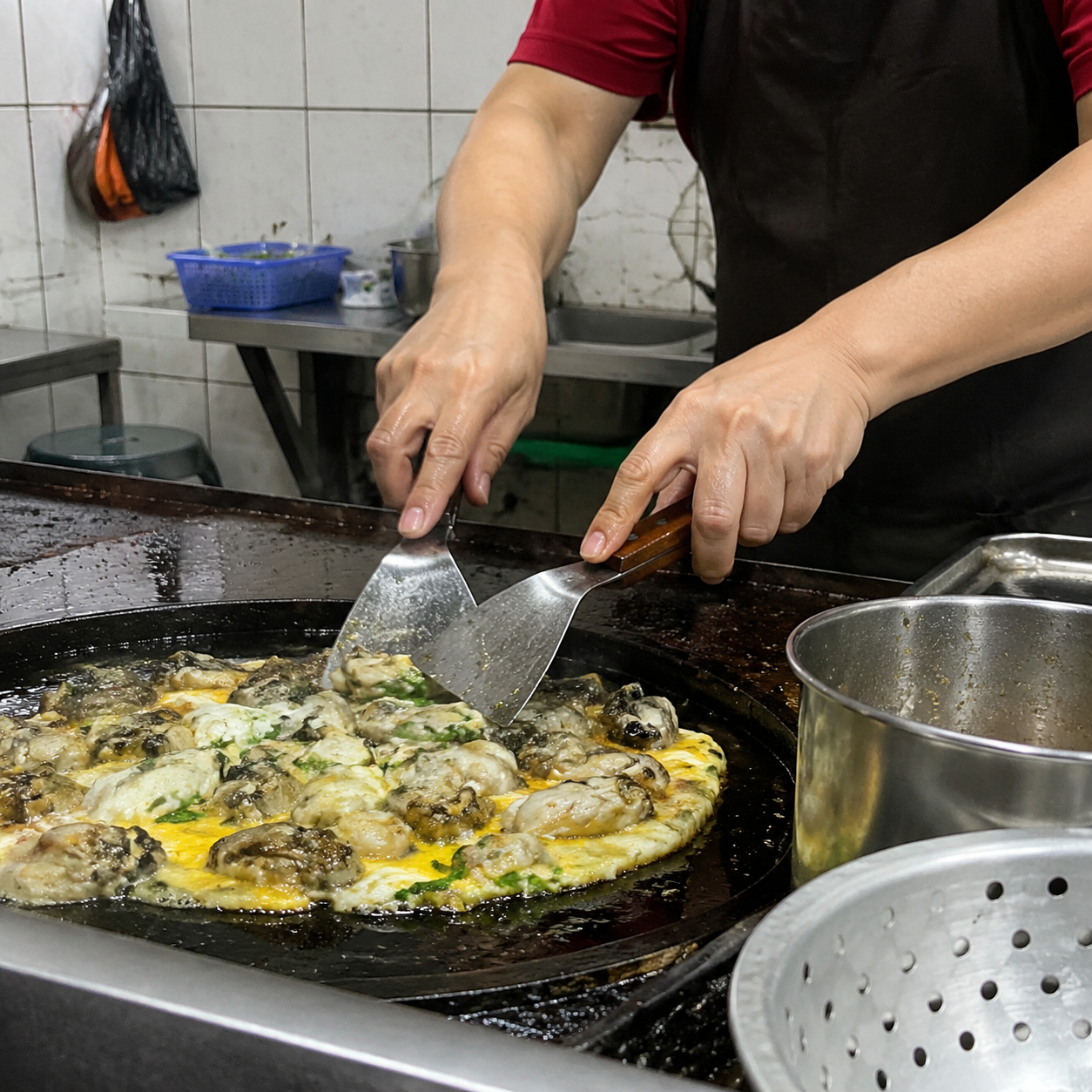
Halfway through the meal, I heard the owner discuss with someone in the kitchen whether they should buy more oysters for the afternoon. She said there were many tourists that day, but they should not stock too much; in hot weather, ingredients did not stay good for long. The detail mattered more than any menu description. Local flavor is not a product copied without limit. It is constrained by weather, supply, customer flow, the cook’s hand, and neighborhood habit. Because it has limits, it has character. Viral menus often turn taste into a shareable label. The small-shop lunch reminded me that a flavor holds because someone makes concrete judgments for it every day.
我也意识到,游客很容易用“找本地味道”的名义,要求一座城市把自己变得更清楚、更方便、更符合想象。最好招牌明显,最好排队适中,最好菜单有标准翻译,最好每一道都能对应一条推荐语。可老街小店不是为了满足这种清楚而存在的。它的清楚属于常来的人:谁喜欢汤浓,谁不吃葱,谁赶时间可以先下单,谁月底再结账。这些关系藏在招呼、眼神和习惯里,外地人只能看见一小部分。
I also realized how easily travelers, while claiming to seek local flavor, ask a city to make itself clearer, easier, and closer to expectation. Ideally the sign should be obvious, the line moderate, the menu translated, and every dish matched with a recommendation. But an old-street shop does not exist to satisfy that kind of clarity. Its clarity belongs to those who return: who likes stronger soup, who avoids scallions, who is in a hurry and can order first, who pays at the end of the month. These relationships are hidden in greetings, glances, and habits. An outsider can only see a portion.
饭后我把碗里的汤又喝了几口,热气让额头冒汗,电风扇把汗意吹散。老板娘问我是不是外地来的,我说是。她笑了笑,说老街现在变化快,有些店搬走了,有些新店开起来,吃饭的人也变了。我问她会不会担心小店被新的热闹挤掉。她没有立刻回答,只说能做就做,味道不能乱,邻居还来就有意思。这句话听起来平淡,却把小店的坚持说得很清楚:不是拒绝变化,而是不让变化把日常的尺度全部拿走。
After the meal, I drank a few more spoonfuls of broth. The heat brought sweat to my forehead, and the fan scattered it. The owner asked whether I was from out of town. I said yes. She smiled and said the old street was changing quickly: some shops had moved away, new ones had opened, and the people coming to eat were different too. I asked whether she worried that newer excitement might push the small shop aside. She did not answer immediately. She only said they would keep cooking as long as they could, the flavor should not be messed up, and it still meant something if neighbors kept coming. The sentence was plain, but it clarified the shop’s persistence: not a refusal of change, but a refusal to let change take away the scale of daily life.
走出店门时,午后的老街比进来时更亮。游客在巷口拍照,电动车贴着墙边慢慢过,楼上有人晾衣服,湿布在阳光里滴水。我回头看那块褪色招牌,突然觉得它不需要变得更醒目。它属于会寻找它的人,也属于每天经过它的人。厦门的味道当然可以出现在漂亮餐厅、精致摆盘和新潮菜单里,但在那一刻,它更像一碗热汤带来的停顿,让我从旅行的兴奋里慢下来,重新看见街区本身。
When I stepped back outside, the old street was brighter than before. Visitors took photos near the lane mouth, scooters moved slowly along the wall, and upstairs someone had hung laundry, wet cloth dripping in the sun. I looked back at the faded sign and suddenly felt it did not need to become more conspicuous. It belonged to those who knew how to find it and to those who passed it every day. Xiamen’s flavor can certainly appear in elegant restaurants, careful plating, and contemporary menus. But at that moment it was closer to the pause brought by a hot bowl of soup, slowing me down from the excitement of travel so I could see the neighborhood itself again.
如果说这顿午饭教会了我什么,那就是不要把“本地味道”理解成一张清单。清单适合出发前整理期待,却无法替代坐下来吃一口的过程。真正有生命力的味道,往往不急着解释自己:它在老板娘询问汤浓淡的时候,在熟客不用开口就被记住的偏好里,在食材不能多备的谨慎里,也在外地人愿意安静吃完的一点耐心里。离开厦门老街时,我没有得到一份标准答案,只带走了一个更可靠的提醒:好吃不是被流量证明的,本地也不是被菜单宣布的。
If that lunch taught me anything, it was not to understand local flavor as a checklist. A checklist can organize expectations before departure, but it cannot replace the act of sitting down and tasting. A living flavor is often in no hurry to explain itself. It appears when the owner asks how strong the broth should be, when a regular’s preference is remembered without words, when ingredients are not overstocked, and when an outsider has the patience to finish quietly. Leaving the old street in Xiamen, I did not carry away a standard answer. I carried a more reliable reminder: deliciousness is not proven by traffic, and locality is not announced by a menu.

- 如果八月只能挑几站,笔者会把海风、馆藏和夜路留给这三座城 | If August Only Leaves Room for a Few Stops, the Writer Would Save Sea Breeze, Museums, and Night Walks for These Three Chinese Cities
- 秦淮河灯影之外,我在夫子庙听见一堂夜课 | Beyond Qinhuai's Lantern Reflections, I Found a Night Lesson at Fuzimiao
- 我站在屋檐下面,才明白中国古建筑为什么先让人慢下来 | I Understood Why Traditional Chinese Architecture Slows the Body Only After Standing Under the Eaves
- 中医传统疗法指南 | Traditional Chinese Medicine
- 贵阳夜市里的一张塑料凳,让我放下了游客的架子 | A Plastic Stool in a Guiyang Night Market Made Me Drop My Tourist Distance
- 罗平没有油菜花的那天,我还是走上了田野公路 | I Took Luoping’s Country Road Even Without the Canola Blooms
- 在泉州看见海上丝路:寺庙、古港和街巷里的混合文化 | Quanzhou and the Maritime Silk Road: Temples, Port Traces, and Living Culture
- 桂林漓江山水游全攻略 | Guilin Li River Scenic Tour Complete Guide
- 保持联网:中国SIM卡与WiFi指南 | Staying Connected: China SIM Cards and WiFi
- 元旦跨年旅游目的地盘点 | New Year's Eve Travel Destinations Roundup
Comments (0)