
六月在中国,我会把古镇、山路和夜市拆开来走 | In June in China, I Split Old Towns, Mountain Paths, and Night Markets into Different Rhythms
六月在中国,我会把古镇、山路和夜市拆开来走 | In June in China, I Split Old Towns, Mountain Paths, and Night Markets into Different Rhythms
六月在中国旅行,最容易犯的错,就是把漂亮的地方都塞进中午。很多人一看攻略,脑子里全是白墙、河道、石板路、山里云海和夜市灯光,恨不得一整天从早拍到晚。可六月不是那种可以硬扛节奏的月份。空气开始发黏,雨说来就来,太阳一出来,青石板和台阶都会把热气往脚底反回来。所以这几年我给朋友推荐六月路线时,已经不再按“城市名单”去排,而是按一天里不同的体感来排:清晨给古镇,下午给山路,晚上给夜市。
The easiest mistake in China in June is trying to place every beautiful stop in the middle of the day. People open a guide and immediately imagine white walls, canals, stone lanes, mountain clouds, and glowing night markets, then try to squeeze all of them into one long stretch from morning to night. But June is not a month that rewards brute force. The air turns sticky, rain arrives without warning, and once the sun comes out, stone steps and pavements start sending heat back through your shoes. So when I recommend June routes now, I no longer arrange them by a list of cities. I arrange them by how the body feels across the day: old towns in the morning, mountain paths in the afternoon, night markets after dark.
我这篇最想让人记住的,不是哪座城最红,而是六月出门要学会把景点和时间拆开。你如果拆对了,江南不会只剩潮气,山里不会只剩累,夜市也不会只剩人挤人。路线一顺,六月反而是很适合慢慢看中国层次的月份,因为水、雾、树影和灯火都会比干燥季节更有味道。
What I want people to remember is not which city is the hottest destination, but that June travel in China works best when you separate places by time. If you divide them well, Jiangnan is not just dampness, the mountains are not just exhaustion, and the night market is not just a crowd. Once the rhythm is right, June can actually be one of the best months for reading China slowly, because water, mist, tree shade, and lights all gain more texture than they have in drier seasons.
我会怎么串这条六月线 / How I Would Stitch This June Route Together
如果让我给第一次六月来中国的人串一条不那么费劲、又足够有层次的线路,我会选苏州、杭州、黄山周边这一带。不是因为它们名字最响,而是因为这几个地方能把六月最常见的三种旅行情绪接起来:早晨想看安静的街巷,中段想找有树和风的坡路,晚上又想坐下来吃点热的、看一点亮的。它们之间转场也相对稳,不用把很多力气花在硬切城市节奏上。
If I had to build one June route for someone coming to China for the first time, and I wanted it to feel layered without becoming exhausting, I would choose the Suzhou–Hangzhou–Huangshan belt. Not because those names are the loudest, but because they connect three June travel moods very naturally: a quiet morning lane, a middle stretch of trees and moving air, and a night that lets you sit down for something hot and look at a little light. The transitions between them are also gentler, so you do not waste too much energy forcing abrupt changes in pace.
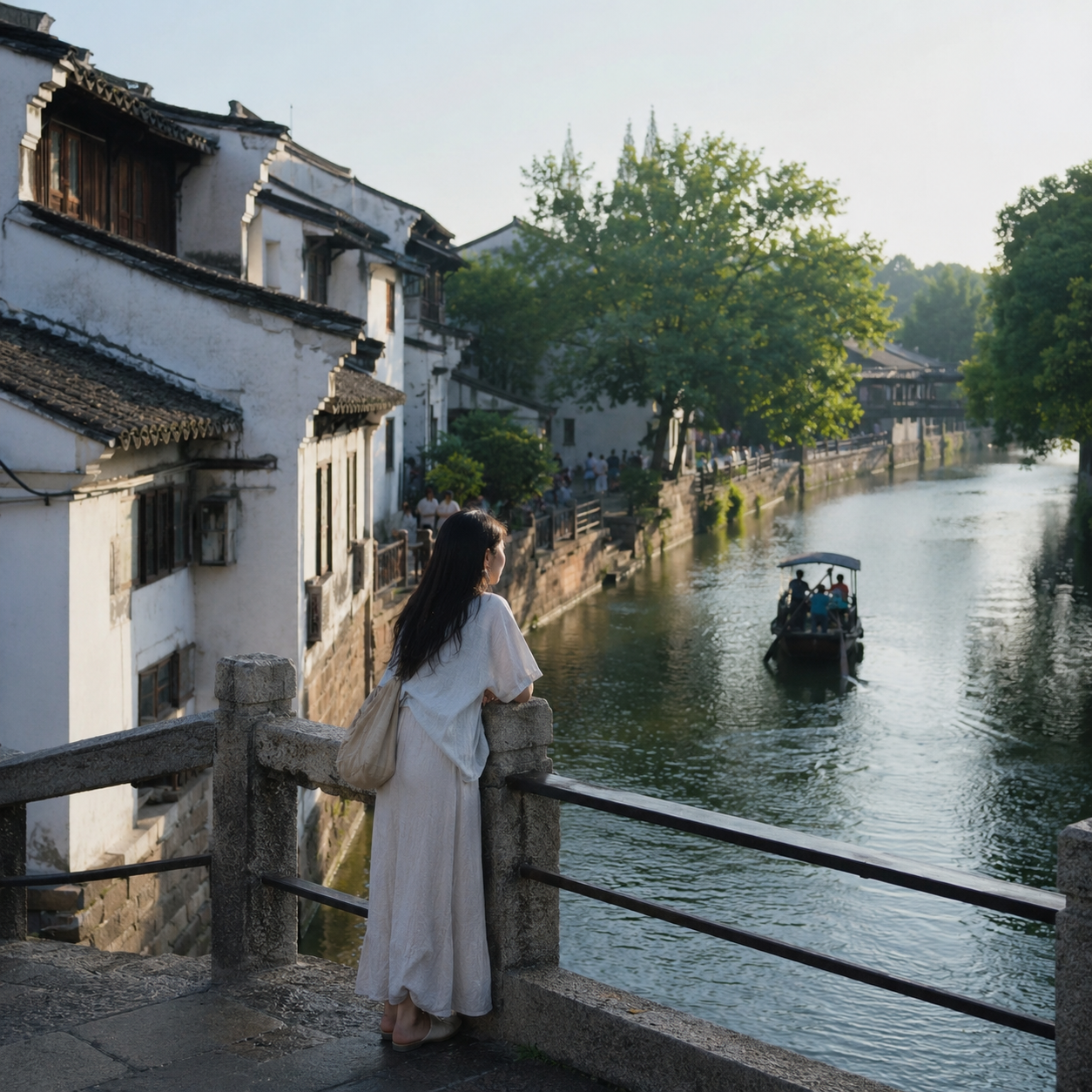
苏州适合拿来处理“第一眼的中国”。很多第一次来的朋友,会以为古镇和老城一定要在正午最亮的时候看,其实恰恰相反。六月的苏州,我更建议七点半到九点半之间走。巷子里刚有开店声,河面还没被游客船搅得太碎,白墙边的阴影是软的,连早餐铺子的蒸汽都显得特别真实。你会听见碗勺碰一下、卷闸门拉起来那种金属声,闻到豆浆和湿木头一起混着的味道。这个时间段看城,比中午顶着反光暴走舒服得多。
Suzhou is where I like people to process their “first sight of China.” Many first-time visitors assume old towns and canal streets must be seen at the brightest noon hour, but June rewards the opposite. In Suzhou, I would rather walk between seven-thirty and nine-thirty in the morning. Shops are only beginning to open, the canal surface has not yet been broken into pieces by too many boats, and the shadows against white walls are still soft. Even the steam from breakfast stalls feels unusually honest. You hear the metallic pull of rolling shutters, the tap of bowls and spoons, and you smell soy milk mixing with damp wood. At that hour, the city is far easier on the body than a reflective noon march.

到了杭州,我不会逼人把西湖当天走完。六月的杭州,最怕一种贪心:想把湖边、寺庙、茶山、商圈全压在一条腿上。我的做法通常更笨一点,也更有效一点——上午只留给一段湖边和一条树荫多的路,午后找地方躲热,等傍晚再接回去。这样走的好处,是你不会把最该细看的水面、桥影和风都走成任务。很多好看的时刻,其实不在“景点正中间”,而在你从一段阴凉走到另一段阴凉时,忽然抬头看到的那一小片亮处。
Once I reach Hangzhou, I never force people to “finish” West Lake in a single day. June in Hangzhou punishes one kind of greed especially hard: trying to stuff the lakeside, a temple, the tea hills, and the shopping area into one unbroken leg of walking. My method is simpler and more effective. I leave the morning for one lakeside section and one tree-covered road, hide from the heat in the afternoon, then reconnect with the city at dusk. The benefit is that the water, bridge shadows, and breeze do not turn into chores. Some of the best moments are not in the center of the attraction at all, but in the instant when you lift your head between two shaded stretches and find one bright opening.
黄山周边则更适合处理“六月想看山,但不想把自己走废”这个需求。很多人一提山,就自动切到硬核模式,仿佛不把自己走到腿发酸、背发粘,就不算来过。可六月山里真正珍贵的,往往不是拼命登顶,而是云气怎么在松树边慢慢换位置,石阶湿了之后脚该怎么落,什么时候该停下来等十分钟再走。雨后山路会有一股很凉的青苔味,风从护栏边过去时,能把背上的汗一下吹散一点。你只要肯放慢,山会比攻略照片里更像山。
The Huangshan area is where I answer the question, “I want mountain scenery in June, but I do not want to destroy my legs.” The moment people hear “mountain,” many switch into a hard-core mode, as if the trip only counts if their calves burn and their shirts stick to their backs. But in June, what is precious in the mountains is often not the desperate summit push. It is how the clouds change position beside the pines, how you place your steps on damp stone, and how sometimes the wiser choice is to stop for ten minutes before continuing. After rain, the path carries a cool mossy smell, and when wind slips past the railings, it can strip a layer of sweat from your back in an instant. If you slow down, the mountain looks more like a real mountain than it ever does in guide photos.
六月真正难的不是去哪儿,是中段怎么过 / In June, the Hard Part Is Not Where to Go, but How to Survive the Middle of the Day

我见过不少行程,问题都不是目的地选错,而是把中午当成了空白。六月在中国,中午不是一块可以随便填的格子。你如果在十一点半到两点半之间还坚持长距离暴走,后面半天的判断力会明显变钝。脚开始发涨,水喝得再多也觉得口腔发热,拍照的耐心会先碎,人一烦,连原本很顺的路线都容易走拧。所以我现在给六月路线做安排,都会故意塞进一个“降温段”:茶馆、书店、老商场里安静的一层、临水但不暴晒的室内餐馆,甚至只是回酒店洗把脸,效果都比硬顶强。
I have seen many itineraries fail, and the destination itself was rarely the true problem. The problem was leaving noon unplanned. In China in June, midday is not an empty box that can be filled casually. If you insist on long-distance walking between roughly eleven-thirty and two-thirty, your judgment becomes dull for the rest of the day. Your feet swell, your mouth stays warm no matter how much water you drink, and your patience for photos breaks before you notice it. Once irritation enters the route, even an easy plan starts to twist. That is why I now build a deliberate “cooling segment” into June itineraries: a teahouse, a bookstore, a quiet floor in an old mall, a waterside restaurant with shade, or even just a short return to the hotel to wash your face. All of them help more than stubbornness does.
这一段休息不是偷懒,而是为了把晚上的好时段留出来。六月很多城市真正迷人的部分,反而在太阳收掉一点之后才出来。夜市的灯、河边的风、桥下坐着聊天的人、烧烤摊前那一层薄薄的烟,都是要靠体力和心情还在线,才能觉得好看。你若白天已经被晒得只想找空调,晚上再热闹也只是路过;可若你中午收得住,晚上会真的有心思去听、去闻、去坐下来吃。
That break is not laziness. It is how you save the evening for the part that matters. In many Chinese cities in June, the most charming layer only appears once the sun gives up some of its strength. Market lights, air along the water, people sitting beneath bridges talking, and the thin veil of smoke over a barbecue stall all require a body and mood that still have something left to give. If the day has already drained you, even a lively night becomes something you merely pass through. But if you know how to hold back at noon, the night remains available to your ears, nose, and appetite.
六月夜市不要贪多,贪准 / In June Night Markets, Do Not Be Greedy for Quantity—Be Greedy for Precision

六月的夜市,我一向不建议“打卡越多越值”。夜里虽然比白天舒服,但热气并没有完全散掉,人一多,空气还是会裹在身上。最稳的办法,是只挑一个夜市或一条夜间街区,把注意力放在走法上:先看人流从哪边收紧,再决定从哪头进;先看本地人站在哪几摊前面久一点,再决定吃什么;如果有塑料凳和风扇的位置,先别嫌它不漂亮,坐下来比边走边端着更舒服。中国夜市真正好吃、好看的部分,常常不在“最火那一口”,而在你肯不肯让自己慢下来五分钟。
At June night markets, I never recommend the “the more checkpoints, the better” mentality. The night is easier than the day, but the heat has not fully disappeared, and once the crowd thickens, the air still wraps itself around you. The steadiest method is to choose one market or one evening district and focus on your approach. First watch where the crowd narrows, then decide which end to enter from. First see which stalls local people linger at, then decide what to eat. If there is a plastic stool and a fan, do not reject it just because it is not photogenic. Sitting down often feels far better than balancing food while drifting through the crowd. The true pleasure of a Chinese night market is usually not the loudest “must-eat” bite, but whether you are willing to slow yourself for five minutes.
苏州、杭州、黄山周边这条六月线,最适合的人,不是想三天刷完中国的人,而是想在短时间里把中国看出层次的人。你会看到早晨潮湿但安静的老城,下午有风但不必逞强的山路,晚上亮起来却不必用力追赶的街区。它不是那种拍完就结束的路线,而是会让人回酒店以后,脚有点酸,耳朵里还留着水声和摊主招呼声,心里却很平的路线。
The Suzhou–Hangzhou–Huangshan June line is not for someone trying to “finish China” in three days. It is for someone who wants to see layers within a short span. You get an old city that is damp yet quiet in the morning, mountain paths with moving air in the afternoon, and districts that glow at night without demanding a chase. It is not a route that ends once the photos are taken. It is a route that leaves you back at the hotel with slightly sore legs, with canal sounds and vendor calls still in your ears, but with a mind that feels unexpectedly level.

如果非要我给六月在中国的出行方式下一句结论,我会说:别跟天气硬碰,也别跟景点清单较劲。顺着体感去排,你会比顺着野心去排,看到更真实的中国。六月不是用来证明自己能走多少的,它更适合用来学会,什么时候该快,什么时候该坐,什么时候只需要站在桥边,让一阵带水气的风先过去。
If I had to leave one final conclusion for traveling in China in June, it would be this: do not fight the weather, and do not wrestle with the checklist. If you arrange the route around how the body feels, you will see a more honest China than if you arrange it around ambition. June is not the month for proving how much you can cover. It is the month for learning when to move quickly, when to sit down, and when simply standing by a bridge long enough for one damp breeze to pass is already part of the trip.
- 雨停以后,我在武夷山把茶路走成了溪边慢线 | After the Rain Stopped, I Turned Wuyi Mountain’s Tea Road into a Streamside Walk
- 乌鲁木齐老街的灯一亮,孜然和人声就把夜晚烤热了 | Once the Old-Street Lights Came On in Urumqi, Cumin and Voices Warmed the Night
- 中国地理概览 | China Geographic Overview
- 秦皇岛那晚我没去找海鲜名店,只想找一张能坐下来吃热饭的桌子 | In Qinhuangdao, I Skipped the Famous Seafood Spots and Looked for a Table Where I Could Eat Something Hot
- 十月赏银杏:满城尽带黄金甲 | October Ginkgo Season: When China Turns to Gold
- 第一次在中国社区医院挂普通门诊,我先学会的不是看病,而是先找分诊台 | The First Thing I Learned at a Chinese Community Hospital Was Not the Consultation, but Finding Triage First
- 西安和洛阳最打动人的,不是朝代名词多,而是今天还走得到那些旧年代边上 | What Makes Xi’an and Luoyang Compelling Is Not Their Dynastic Vocabulary but the Way You Can Still Walk Up to the Past Today
- 阿坝雨后的路面只给我半个答案 | Aba’s Wet Road Gave Me Only Half an Answer
- 中国手机上网指南:SIM卡、eSIM与VPN | Getting Online in China: SIM, eSIM & VPN Options
- 桂林和阳朔真正迷人的,不只是像画,而是那种愿意把人脚步放慢的山水节奏 | What Truly Charms Guilin and Yangshuo Is Not Only Their Painterly Beauty but the Way the Landscape Slows Your Pace
Comments (0)