
一顿家常饭把我教会了中国式礼貌:什么时候该夹菜,什么时候别急着说不 | One Home-Style Meal Taught Me Chinese Politeness: When to Accept Food and When Not to Refuse Too Fast
一顿家常饭把我教会了中国式礼貌:什么时候该夹菜,什么时候别急着说不 | One Home-Style Meal Taught Me Chinese Politeness: When to Accept Food and When Not to Refuse Too Fast
导语 | Lead
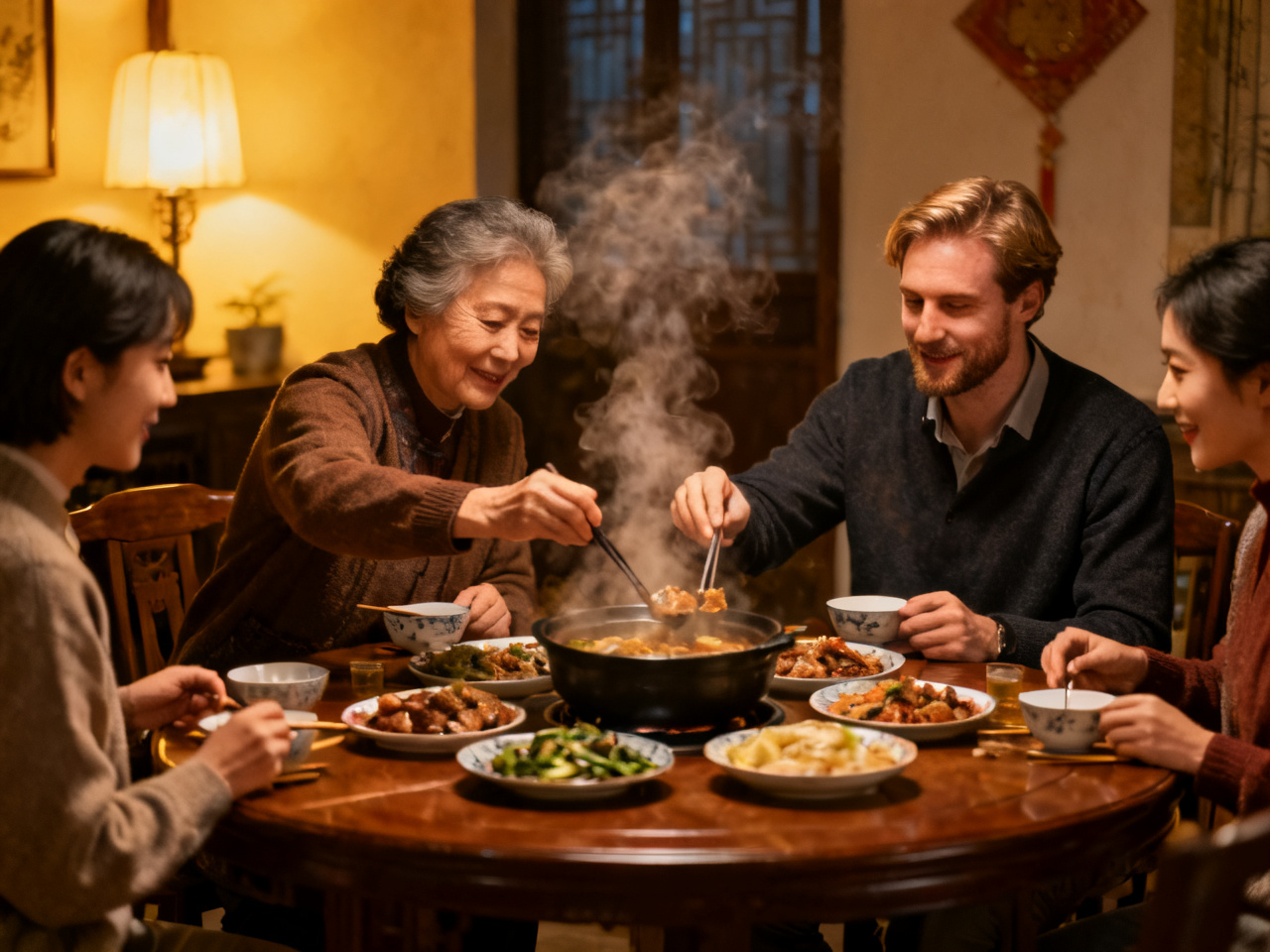
那天傍晚六点半,苏州一户人家的圆桌刚刚摆好。厨房门半开着,砂锅里还在咕嘟响,清蒸鱼上面的葱丝被热油浇得微微卷起,窗外是一条安静的小区路,树影落在玻璃上。我刚把包放到椅背上,阿姨已经端着最后一盘时蔬从厨房走出来,笑着说:“来来来,先坐,菜马上齐。”我刚坐下不到一分钟,她就把鱼肚子上最嫩的一块夹到了我碗里。
It was around 6:30 in the evening in Suzhou, and the round table in a family apartment had just been set. The kitchen door was half open. A clay pot was still bubbling. The scallions on top of the steamed fish had curled slightly under hot oil. Outside the window was a quiet residential road, with tree shadows resting against the glass. I had barely placed my bag on the back of the chair when the auntie of the family carried out the last vegetable dish from the kitchen and said with a smile, “Come, sit first, the dishes are almost all here.” Less than a minute after I sat down, she placed the tenderest piece of fish from the belly onto my rice bowl.
我的第一反应非常“外国人”:我马上抬手,说“不不不,真的不用,您吃您吃。”她愣了一下,笑容还在,但动作停了半秒。旁边带我来的朋友低头忍笑,只轻声说了一句:“你先接着。”那一秒钟很短,却让我意识到,我可能误解了一个重要的中国饭桌信号。
My first reaction was intensely foreign. I raised my hand immediately and said, “No, no, really, you don’t have to, please eat it yourself.” She paused for half a second. She was still smiling, but her movement stalled. My friend, who had brought me there, lowered his head to hide a laugh and whispered, “Just receive it first.” The moment lasted only a second, but it made me realize that I might have misunderstood an important signal at a Chinese table.
很多人以为中国式热情只是客套,也有人觉得饭桌礼貌太复杂、太容易踩雷。我后来越来越觉得,真相都没有那么夸张。中国饭桌上的礼貌当然有节奏,但它不是考试,不是让你机械背规则。它更像一段正在发生的关系:有人先表达照顾,有人再适度回应;有人递出一份热情,你不用全盘接受,但也别急着把那份心意整个打回去。
Many people assume Chinese warmth is only ritual politeness. Others think table manners in China are too complicated and full of traps. Over time, I came to believe the truth is much less dramatic. There is rhythm at a Chinese table, yes, but it is not an exam. You are not meant to mechanically recite rules. It is more like a relationship unfolding in real time: one person expresses care, another responds with some flexibility; someone offers warmth, and you do not need to accept every bit of it, but you should not reflexively bounce the whole gesture back either.
这顿饭,是我真正开始懂得这套节奏的起点。
That meal was the true beginning of my understanding of that rhythm.
第一幕:我说“不”的速度太快了 | Scene One: I Was Saying “No” Too Fast
阿姨给我夹鱼的时候,我的拒绝几乎是条件反射。因为在我成长的文化里,过快接受别人的照顾,容易被理解成不客气;而适度拒绝,往往是给对方留空间。但在那一桌苏州家常饭里,我的“不要不要”显得像是在挡住某种原本自然流动的东西。
When the auntie put fish into my bowl, my refusal was almost reflexive. In the culture I grew up in, accepting care too quickly can sometimes seem impolite, while mild refusal leaves room for the other person. But at that Suzhou family table, my “no, no” felt like I was blocking something that had been moving naturally.
朋友后来对我解释得很直接:“她不是在给你压力,她是在先告诉你,你是客人。”这句话让我一下就懂了。那块鱼,不只是鱼。它是一种位置安排,一种欢迎方式,一种“你已经被算进这顿饭里”的表示。
Later, my friend explained it to me very simply: “She’s not pressuring you. She’s telling you first that you are a guest.” That sentence made everything click. The piece of fish was not just fish. It was a positioning move, a welcome ritual, a way of saying, “You are already included in this meal.”
我第二次学聪明了一点。阿姨问我:“这个排骨你尝不尝?”我没有再立刻摆手,而是先把碗往前轻轻送了一点,说:“谢谢阿姨,我尝一块。”她明显更放松了,笑着说:“对,先尝,喜欢再多吃。”就这样,空气一下子顺了。
By the second round, I had become a little wiser. When she asked, “Do you want to try the ribs?” I did not wave it away immediately. I gently moved my bowl forward and said, “Thank you, Auntie, I’ll try one piece.” She visibly relaxed and replied, “Yes, just try one first. If you like it, eat more.” Just like that, the atmosphere smoothed out.
这里我学到的第一条饭桌礼貌,不是“必须接受别人夹菜”,而是:先接住好意,再慢慢表达边界。
The first table lesson I learned there was not “you must accept food placed into your bowl.” It was this: receive the goodwill first, then express your boundaries gradually.
第二幕:餐桌上的拒绝,不是不能有,而是要有节奏 | Scene Two: Refusal Is Allowed at the Table, but It Needs Rhythm
中国饭桌最让我着迷的一点,就是很多礼貌并不是非黑即白。不是“接受就是懂礼貌,拒绝就是不懂礼貌”,而是你怎么接受、什么时候拒绝、拒绝到什么程度,会共同构成别人对你的感受。
What fascinates me most about Chinese tables is that many manners are not binary. It is not “accepting equals politeness” and “refusing equals rudeness.” How you accept, when you decline, and how strongly you decline together shape how others experience you.
那天桌上有一道我不太敢吃的菜,是一种做法偏甜的河鲜。我平时对刺多的鱼本来就谨慎,加上口味不熟,心里已经想退。但我这次没有直接说“我不吃这个”。我先夹了一小口,认真尝了一下,然后笑着说:“味道很特别,我再慢慢试试,先多吃点青菜。”这句话其实很有用。它既没有让做菜的人下不来台,也表达了我自己的节奏。
That evening there was one dish I was not very brave about—a sweet-style freshwater fish preparation. I am generally cautious with bony fish, and the flavor profile was unfamiliar. I wanted to retreat. But this time I did not say, “I don’t eat this.” I took a small bite, tasted it seriously, and then said with a smile, “The flavor is very special. I’ll keep trying slowly—let me have more vegetables first.” That sentence turned out to be very useful. It did not embarrass the person who made the dish, and it still communicated my own pace.
叔叔在旁边点头,说:“没事,慢慢来,喜欢哪个吃哪个。”我当时心里几乎想给自己鼓掌。因为我第一次意识到,边界感和礼貌感不是敌人。你完全可以同时拥有它们。
The uncle at the table nodded and said, “No problem, take your time. Eat whichever you like.” At that moment I almost wanted to applaud myself. It was the first time I truly understood that boundaries and politeness are not enemies. You can absolutely have both.
这一点,也让我后来重新理解了中国人为什么这么在意面子里那些看似微妙的互动。很多时候,所谓面子并不是虚假,而是让彼此都能在关系里站得住。你不需要表演喜欢,但可以先给对方一个体面的落点。
This later helped me reinterpret the subtle interactions discussed in 中国人为什么这么在意面子. Very often, “face” is not fake performance. It is a way of making sure everyone can stand with dignity inside the relationship. You do not have to pretend to love something, but you can still offer the other person a graceful place to land.
第三幕:对话推进的饭桌,比我想象中更温柔 | Scene Three: A Conversation-Driven Table Was Gentler Than I Expected
那顿饭让我意外的另一点,是桌上的对话并没有我想象中那么“攻击性好奇”。很多第一次去别人家做客的外国人都会担心被连环提问:你工资多少、为什么不结婚、你们国家是不是都这样。我当然不能替所有家庭发言,但那一晚的苏州饭桌更像是一种温和推进。
Another surprise from that meal was that the conversation at the table was far less aggressively curious than I had feared. Many foreigners worry that being invited into someone’s home means facing a chain of intrusive questions: how much do you earn, why aren’t you married, are all people in your country like this? I cannot speak for every family, of course, but that Suzhou dinner felt much gentler.
阿姨先问的是:“你今天路上累不累?”然后才慢慢聊到我在中国住了多久、平时在哪里买菜、会不会做饭。朋友适时帮我补充一些词,我偶尔说得不够准确,大家也只是笑一笑,不会让我很窘。叔叔说起苏州和上海生活节奏的差别时,还故意放慢速度,像知道我要跟上他的句子一样。
The auntie’s first question was, “Were you tired on the way here today?” Only later did she move to how long I had been living in China, where I usually bought groceries, and whether I cooked. My friend filled in vocabulary when needed. When I spoke imprecisely, people just smiled without making me feel clumsy. When the uncle talked about the difference between life in Suzhou and Shanghai, he even slowed his pace deliberately, as if he knew I was trying to keep up with each sentence.
我突然意识到,中国式礼貌不只体现在“给你夹菜”这种看得见的动作里,也体现在说话时给你台阶、给你时间、不给你当众难堪。那种温柔不总是外放的,但非常实际。
I suddenly realized that Chinese politeness is not only visible in obvious gestures like placing food in your bowl. It also appears in conversation—in giving you a step to stand on, giving you time, and avoiding public embarrassment. That gentleness is not always dramatic, but it is deeply practical.
饭桌礼貌怎么学:我后来总结的三个层次 | How to Learn Table Manners: The Three Layers I Eventually Summarized
第一层:先观察谁在主导节奏 | Layer One: Observe Who Is Setting the Rhythm
在有长辈、主人、第一次见面的朋友同时在场时,通常总有人在自然地调度节奏:谁先动筷,谁先发起敬菜,谁负责转桌,谁最常开口劝你多吃一点。先看清楚这个中心是谁,你会少很多误判。
When elders, hosts, and first-time acquaintances are all present, someone is usually setting the table rhythm naturally: who begins eating first, who initiates the serving, who turns the lazy Susan, who most often urges you to eat more. Identify that center first, and you avoid many misunderstandings.
第二层:先小量接受,再决定要不要继续 | Layer Two: Accept a Small Amount First, Then Decide Whether to Continue
这几乎是我在中国饭桌上最受用的办法。别人夹来一块肉、一勺汤、一只虾,你可以先接下、先尝一口、先说谢谢。接下来如果真的不适合,再温和说明。
This is probably the most useful method I have found at Chinese tables. If someone gives you a piece of meat, a spoonful of soup, or a shrimp, you can first receive it, first taste it, and first say thank you. If it truly does not suit you, explain gently afterward.
第三层:拒绝时给出理由,但别把理由说成否定 | Layer Three: When Refusing, Give a Reason Without Turning It Into Rejection of the Person
比如“我今天已经很饱了”“这个味道很新鲜,我先慢慢吃”“我胃有点小,吃不下太多”。这些表达和“不要”“不用”“我不吃”相比,缓冲会大很多。
For example: “I’m already quite full today,” “The flavor is really interesting, let me go slowly,” or “My stomach is small, I can’t eat too much.” Compared with “No,” “No need,” or “I don’t eat that,” these phrases create far more softness.
安全感和边界感如何共存 | How Safety and Personal Boundaries Can Coexist
有些外国朋友担心,一旦接受饭桌上的热情,会不会就失去边界。我以前也这么想。但我现在的经验是,边界不是靠第一秒的强硬建立的,很多时候它靠稳定、清楚、不过度的表达建立。
Some foreign friends worry that once they accept table warmth, they will lose their boundaries. I used to think that too. But my experience now is that boundaries are not always built through immediate hardness. Very often they are built through steady, clear, and non-dramatic expression.
比如后来又有一次,阿姨第三次让我再盛一碗汤,我已经真的喝不下了。我把手轻轻放在碗边,说:“阿姨,今天真的够了,特别好喝,但我再喝就走不动路了。”这一句说完,大家都笑了,她也没再坚持。这里面最关键的,不是我有没有说“不”,而是我已经先通过前面的接受、尝试、感谢,建立了关系的顺畅感。等到我需要明确边界时,那句拒绝就不会显得突兀。
For example, later in the meal, the auntie offered to fill my soup bowl for the third time, and I genuinely could not drink more. I placed my hand lightly near the bowl and said, “Auntie, I’m really full now. It’s delicious, but if I drink more, I won’t be able to walk.” Everyone laughed, and she did not insist again. The key was not whether I said no. The key was that I had already created smoothness through earlier acceptance, trying, and thanking. So when I finally needed a clear boundary, it did not feel abrupt.
这对我来说很重要。因为我不想把中国式礼貌理解成“你必须委屈自己”,也不想把外国人的直接理解成“我只能硬碰硬”。真正成熟的跨文化吃饭经验,是两边都不夸张:既看见热情,也保留真实。
This matters a lot to me. I do not want to interpret Chinese politeness as “you must suppress yourself,” and I do not want to interpret foreign directness as “the only option is blunt resistance.” Mature cross-cultural dining means neither side becomes exaggerated: warmth remains visible, and authenticity remains intact.
给第一次去中国人家里吃饭的外国人,我会怎么建议 | What I Would Tell a Foreigner Going to a Chinese Home for Dinner for the First Time
如果你在赴约前就已经紧张,我还有一个特别实际的建议:别空腹过头,也别把自己饿到完全失去判断。很多跨文化饭桌尴尬,恰恰发生在一个人又饿、又累、又想表现礼貌的时候。你太饿,就容易吃得过快;你太累,就容易在别人说话时跟不上;你太想“做对”,反而会把每个动作都做得很僵。让自己以一个基本舒服的状态坐下,本身就是礼貌的一部分。
If you are already nervous before the invitation, I have one especially practical suggestion: don’t arrive starving, but also don’t arrive so hungry that you lose all judgment. Many awkward cross-cultural dinner moments happen when someone is hungry, tired, and trying too hard to be polite at the same time. If you are too hungry, you may eat too fast. If you are too tired, you may fail to follow the conversation. If you are too focused on “doing everything right,” every move becomes stiff. Sitting down in a basically comfortable state is itself part of good manners.
1. 别空着手,也别把礼物搞得太沉重 | Don’t Arrive Empty-Handed, but Don’t Make the Gift Too Heavy Either
水果、点心、茶、小零食都很好。重点是表示心意,而不是制造主人负担。
Fruit, pastries, tea, or small snacks are all good choices. The point is to show thoughtfulness, not create pressure for the host.
2. 坐下后先看别人怎么开始 | Once Seated, Watch How Others Begin
是不是等长辈先动筷?是不是主人先招呼?是不是桌子会转?这些都不难,但值得先看一轮。
Do elders begin first? Does the host invite everyone to start? Is there a lazy Susan to rotate? None of this is difficult, but it is worth watching one full round first.
3. 第一次被夹菜时,先说谢谢 | The First Time Someone Serves You, Say Thank You First
哪怕你只吃一小口,也比立刻挡回去更顺。
Even if you only take a small bite, it creates far more smoothness than pushing it back instantly.
4. 真吃不下时,用温和的完整句子 | If You Truly Can’t Eat More, Use a Gentle Full Sentence
“谢谢,我已经很饱了”“我先休息一下再吃”“这个我已经尝过了,很喜欢,但现在真的够了。”
“Thank you, I’m already quite full,” “Let me pause for a bit first,” or “I’ve already tried this and really liked it, but I truly have enough for now.”
5. 饭后多夸具体细节 | After the Meal, Compliment Something Specific
别只说“很好吃”,可以说“这个汤很温”和“鱼做得很嫩”“青菜很清爽”。具体的夸奖会让你的感谢更有分量。
Don’t say only “it was delicious.” Say “the soup felt so comforting,” “the fish was very tender,” or “the vegetables were so fresh and light.” Specific praise carries more weight.
结尾:我学会的不是复杂规则,而是如何让好意落地 | Ending: What I Learned Wasn’t a Complex Rulebook, but How to Let Goodwill Land
后来我去过别的中国家庭吃饭,城市不同,口味不同,家庭氛围也不同,但那顿苏州晚饭教会我的主线一直没变:先观察、先感谢、先接住一点点,然后再慢慢表达自己。这条线几乎适用于所有我经历过的场景。它让我不再把中国饭桌当成“文化考试”,而更像一场有人愿意把你拉进来的生活。
Later I ate in other Chinese homes too—different cities, different flavors, different family atmospheres—but the main thread I learned from that Suzhou dinner never changed: observe first, thank first, receive a little first, and then express yourself gradually. That thread has worked in almost every scene I’ve encountered. It stopped me from treating the Chinese dining table like a cultural exam and helped me see it instead as a form of life that people are willing to pull you into.
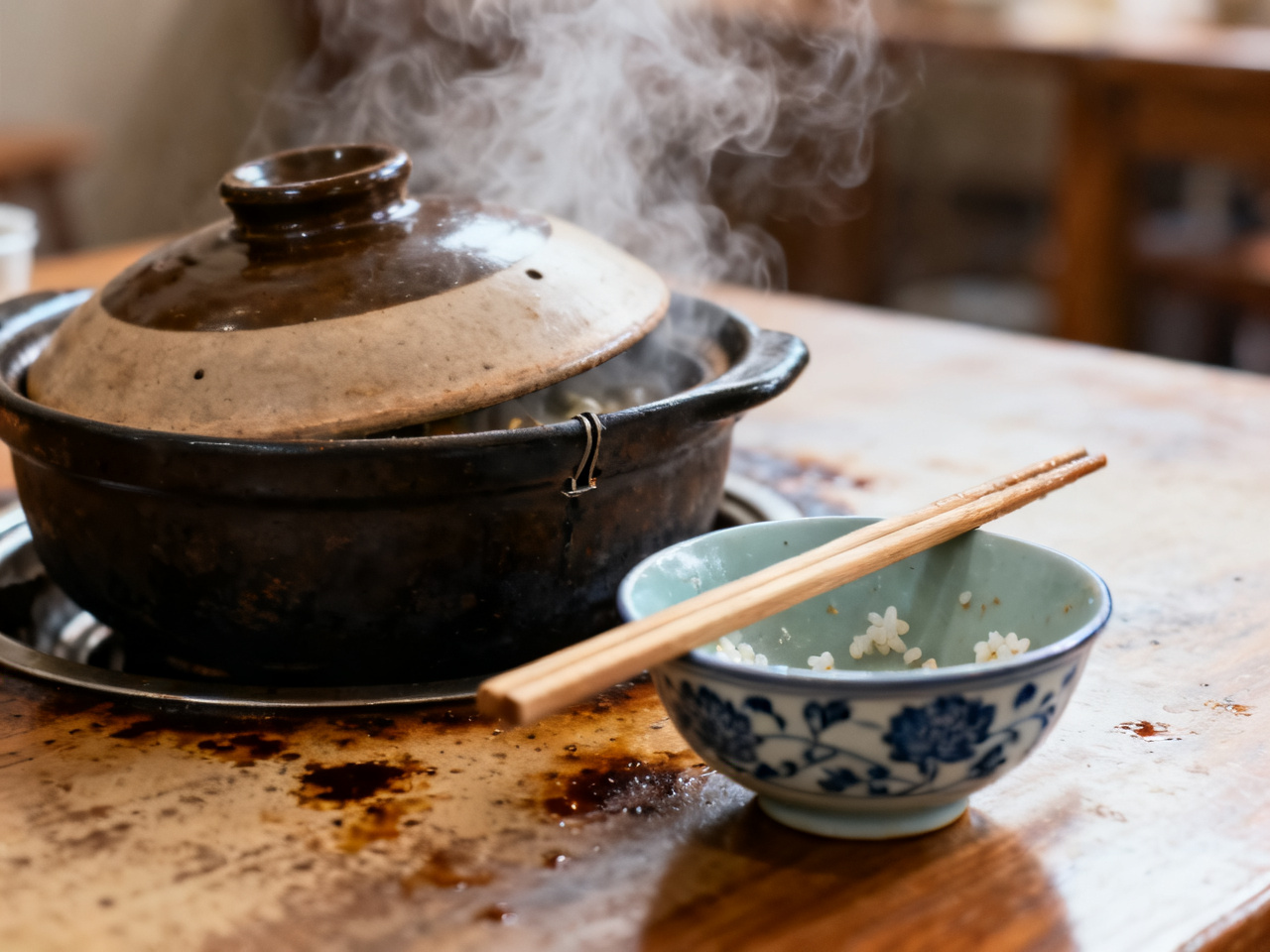
那顿苏州家常饭结束时,已经快晚上九点。桌上的砂锅只剩一点汤底,果盘摆了上来,叔叔去阳台拿晾着的花茶,阿姨还在劝我再带一点点心回去。我这次没有再慌忙推辞,而是笑着说:“那我带一点,明天早上当早餐。”她很满意地点头,像一件事情终于放在了正确的位置上。
By the time that Suzhou family dinner ended, it was close to 9 p.m. Only a little broth remained at the bottom of the clay pot. A fruit plate had appeared. The uncle went to the balcony to fetch some drying floral tea. The auntie was still urging me to take a few pastries back with me. This time I did not rush to refuse. I smiled and said, “Then I’ll take a little and have it for breakfast tomorrow.” She nodded with clear satisfaction, as if something had finally settled into the right place.
回家的路上,朋友问我:“今天感觉怎么样?”我说:“我以前总以为礼貌就是不要麻烦别人,今天才明白,有时候礼貌也是别太快挡住别人的照顾。”他说:“对,就是这个意思。”
On the way back, my friend asked, “How did it feel today?” I said, “I used to think politeness only meant not troubling other people. Today I understood that sometimes politeness also means not blocking someone’s care too quickly.” He replied, “Yes. That’s exactly it.”
从那以后,我对中国式饭桌礼貌的理解简单了很多。它不是一堆让我紧张的禁忌,而是一种关系里的呼吸。什么时候接住,什么时候放慢,什么时候明确表达自己——这些都可以学,而且并不需要你变成另一个人。你只是多学了一种让好意顺利落地的方式。
After that, my understanding of Chinese table manners became much simpler. It no longer felt like a stressful list of taboos. It felt like breathing inside a relationship. When to receive, when to slow down, and when to state yourself clearly—these things can all be learned, and they do not require you to become someone else. You are simply learning another way to let goodwill land properly.
后来每次再想起那块被夹到我碗里的鱼,我都会觉得它像一把小钥匙。它打开的不是某条死记硬背的规则,而是一个更温和的理解:中国式礼貌很多时候并不要求你立刻会说漂亮的话、做完美的动作,它更希望你先别把门关上。你先坐下来,先尝一口,先看见别人为什么这样做,很多答案都会自己出现。
Later, whenever I think again about that piece of fish placed into my bowl, it feels like a small key. What it opened was not a memorized rule, but a gentler understanding: Chinese politeness often does not demand that you instantly say perfect things or make perfect gestures. It simply hopes that you do not shut the door too quickly. Sit down first. Taste one bite first. Notice why people are doing what they are doing. Many of the answers appear on their own.
如果把这顿饭留给我的经验再说得更朴素一点,那就是:别急着把“照顾”误解成“控制”,也别急着把“客气”误解成“虚假”。很多时候,它们只是关系启动时的一种缓冲层。你愿意接住一点点,气氛就会松开;你愿意慢慢表达自己,边界也会被尊重。正因为我后来明白了这一层,我才越来越喜欢中国人家的饭桌。
If I phrase the lesson from that dinner even more simply, it would be this: don’t rush to mistake care for control, and don’t rush to mistake politeness for falseness. Very often they are simply a cushion at the beginning of a relationship. If you receive a little, the atmosphere relaxes. If you express yourself gradually, your boundaries are still respected. Understanding that layer is one reason I later grew to genuinely like eating at Chinese family tables.
说到底,饭桌礼貌最打动我的,不是规则本身,而是规则背后的心思:有人愿意照顾你,有人愿意等你适应,有人愿意把你慢慢带进一顿饭的节奏里。这种被温柔接住的感觉,是我在中国生活里非常珍惜的一部分。
In the end, what moves me most about table manners is not the rule itself, but the intention behind it: someone is willing to care for you, someone is willing to wait for you to adjust, and someone is willing to bring you slowly into the rhythm of the meal. That feeling of being gently received is one of the parts of life in China I treasure most.

- 跨境支付的隐藏成本:汇率、限额与手续费,外国游客怎么少花冤枉钱 | The Hidden Costs of Cross-Border Payment in China: Exchange Rates, Limits & Fees That Catch Tourists Off Guard
- 成都茶馆里的一下午,比三个景点更让我记住这座城 | An Afternoon in a Chengdu Teahouse Stayed With Me More Than Three Attractions
- 围炉而坐,这顿饭没有终点 | The Meal That Never Ends: China's Hot Pot Ritual
- 中国旅游最佳季节与气候指南 | Best Seasons & Climate Guide for China Travel
- 中国传统节日 | Traditional Chinese Festivals
- 青岛的啤酒不只在海边喝:一顿旧城晚饭把我留下来 | Qingdao Beer Took Me Beyond the Coast for an Old-City Dinner
- 一张桌角二维码,让我先核对店名再付款 | A Table-Corner QR Code Taught Me to Check the Shop Name Before Paying
- 中国四季节庆日历:每月最佳活动 | China Festival Calendar: Best Events by Month
- 中国地理概览 | China Geographic Overview
- 中国高铁乘车全攻略(境外游客版) | Complete HSR Guide for Foreign Tourists
Comments (0)