
如果八月只能挑几站,笔者会把海风、馆藏和夜路留给这三座城 | If August Only Leaves Room for a Few Stops, the Writer Would Save Sea Breeze, Museums, and Night Walks for These Three Chinese Cities
如果八月只能挑几站,笔者会把海风、馆藏和夜路留给这三座城 | If August Only Leaves Room for a Few Stops, the Writer Would Save Sea Breeze, Museums, and Night Walks for These Three Chinese Cities
八月在中国旅行,最容易把人推向两个极端:要么一门心思找海,要么一门心思找凉。可笔者这几年越走越觉得,八月真正适合追的,不是单一气温数字,而是一种能把白天和晚上拆开用的城市结构。白天要有地方能躲太阳、稳住体力,傍晚以后要有地方把人重新请出来,让风、灯光和街道接住旅行的后半段。若只盯着“最热门海边”或者“最冷避暑地”,反而容易把八月过成一种反复搬运自己身体的劳动。
August travel in China tends to push people toward two extremes. They either chase the sea obsessively or chase cool air obsessively. Yet after several years of moving through the country in late summer, the writer has come to feel that the true prize in August is not a single temperature number. It is a city structure that lets you split day and night into different uses. By day, you need places that can absorb heat and protect your energy. After dusk, you need places that invite you back outside and let wind, lighting, and streets carry the second half of the trip. If you stare only at “the hottest beach destination” or “the coolest escape,” August easily turns into the work of repeatedly moving your own body from one hard surface to another.
这篇想给读者留下一句很实在的话:八月挑城市,不妨优先挑“晚上会重新变好走”的地方。因为八月在中国,很多体验不是白天不好,而是白天只能拿来分段使用。真正让一趟旅行变得耐看,往往是你下午留住了体力,晚上才有余裕去看海边的风、馆里的安静、老城里亮起来的路。
The practical sentence this piece wants to leave behind is simple: in August, choose cities that become walkable again at night. In China, August does not necessarily ruin the daytime; it simply means the daytime must often be used in segments. What makes a trip memorable is usually the energy you manage to preserve in the afternoon, so that by evening you still have the patience to receive sea wind, museum quiet, and streets that begin to glow after dark.
第一站,青岛:不是只去看海,而是去学会把海边时间拆开 / First Stop, Qingdao: Not Just for Seeing the Sea, but for Learning How to Divide Seaside Time
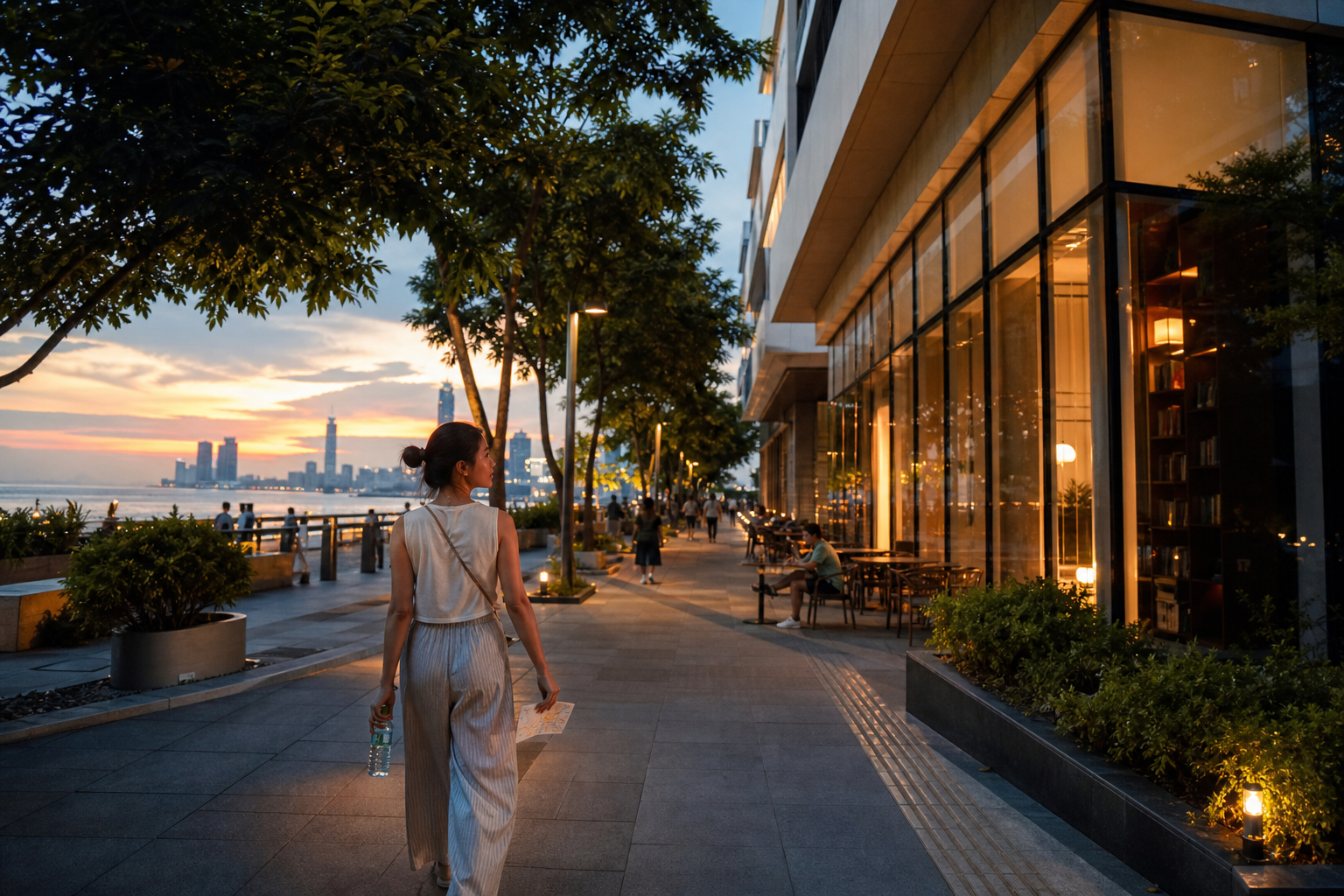
笔者若在八月给人推荐一座海边城市,青岛往往会留在名单前面,但理由并不只是“它有海”。真正关键的是,青岛适合把同一天拆成三种完全不同的走法。上午可以沿着有坡度、有树影的老城区慢慢走,海在边上,但不必一上来就把自己晒在最开阔的海岸线上;中午可以躲进馆里或老建筑群一带,让眼睛从强光里退回来;到了傍晚,再把最开阔的海边留出来,这时风才真的开始起作用。
If the writer recommends one seaside city in August, Qingdao usually stays near the top of the list, but not simply because it has water. What matters is that Qingdao allows a single day to be divided into three entirely different movements. The morning can belong to the older hilly districts, where there are trees, slopes, and glimpses of the sea without immediately exposing the body to the widest open coastline. Noon can be spent inside museums or among older architectural zones, letting the eyes retreat from harsh light. Only at dusk should the broadest section of seafront be given its full space, because that is when the wind finally starts doing real work.
青岛适合八月的另一个原因,是它不要求旅客一直“景点模式在线”。你可以在海边坐一会儿,也可以去馆里看一会儿,再回来吃一顿海鲜而不必赶时间。海边城市若只剩下拍照,会很快显得扁;可若一座城能让海风、旧街区和室内馆藏互相接力,它就会比单纯的海景更耐看。八月来这里,重点不是不停追海,而是让海在对的时段出来。
Another reason Qingdao works in August is that it does not demand a constant sightseeing performance. A traveler can sit by the coast for a while, disappear into a museum for a while, and return to dinner without racing the clock. A seaside city becomes flat very quickly if it is reduced to photographs alone. But when wind, older neighborhoods, and indoor collections take turns carrying the day, the city becomes more durable than a simple marine backdrop. In August, the point is not to chase the sea all day. It is to let the sea appear at the right hour.
第二站,大连:八月的舒服,有时候来自“边走边退热” / Second Stop, Dalian: In August, Comfort Sometimes Comes from Cooling While You Walk
笔者一直觉得,大连适合那些不想把八月过得太用力的人。它不是那种每一分钟都在向你证明“快拍我”的城市,但它的好处恰恰在这里。路可以走,风也真的会来,海边不是永远闹哄哄,城市街面也往往留得出一点喘息的空白。很多人旅行最怕一种感觉:一出门就像被热浪按住。大连的价值,在于它常常能把“出门”这件事重新做得自然。

The writer has long felt that Dalian suits travelers who do not want August to become an ordeal. It is not the kind of city that spends every minute shouting, “Photograph me now.” Its strength lies precisely there. The roads are walkable, the wind actually arrives, the seafront is not permanently loud, and the urban surface often leaves enough empty space for a traveler to breathe. Many people fear one feeling above all when traveling: stepping outside and being pinned down instantly by heat. Dalian becomes valuable because it often makes the act of going outside feel natural again.
若把大连放进八月路线,笔者会建议把它当作一种“边走边恢复”的城市,而不是密集打卡城市。上午可以给海边或有坡度的城区,午后找馆、书店或酒店休息,傍晚再把海边留出来。很多人以为这样太慢,可八月真正浪费人的,不是慢,而是白天过度暴晒以后,晚上也走不动了。大连这种城市的妙处,在于它让你有机会保留晚上的脚力和心情。
If Dalian enters an August itinerary, the writer would treat it as a city for recovery while walking rather than for dense attraction-hunting. The morning can go to the coast or a sloping district, the afternoon to a museum, bookstore, or hotel pause, and the evening back to the sea. Some travelers think that sounds too slow, but what truly wastes a person in August is not slowness. It is overexposure by day that makes even the evening unwalkable. The elegance of a city like Dalian lies in its ability to preserve both legs and mood for the night.
第三站,西安:八月也不是只能逃热,夜里的城墙和馆藏能把白天接住 / Third Stop, Xi’an: August Is Not Only for Escape—Night Walls and Museum Hours Can Carry the Day
很多人提到八月,只想着往凉快处跑,于是像西安这样的城市很容易被错过。可笔者反而觉得,八月路线里,完全可以放进一座白天有馆、晚上有路、历史层次很厚的内陆城市。西安的好,不在于它让你整天都舒服,而在于它能把“白天别硬拼”和“晚上重新出来走”这件事做得很完整。白天进馆,看文物、看石刻、看历史线索,空调和安静会把体力慢慢留住;夜里再去城墙边、老街边,把白天吸进去的东西一点点走开。
When people talk about August, many think only of escape and therefore leave out a city like Xi’an too quickly. Yet the writer would argue that an August route absolutely can include an inland city whose daylight belongs to collections and whose night belongs to long, readable streets. Xi’an is not great because it feels comfortable every hour. It is great because it completes the rhythm of “do not fight the day” and “come back out at night.” Spend the day inside museums with relics, carvings, and historical lines, where air-conditioning and quiet preserve your energy. Then use the evening around the walls or old streets to walk those absorbed impressions back out into the body.
西安这类城市还提供一种海边城市给不了的满足:你不会总觉得自己该去找风,而会开始认真看时间沉淀下来的东西。八月的旅行若全是避热,容易只剩策略;可若加入一站像西安这样白天可收、夜里可放的城市,路线就会多一层厚度。它提醒人,夏天的中国不只是天气考验,也是一种如何安排注意力的练习。

A city like Xi’an also offers a satisfaction that coastal places cannot fully replace. The traveler stops feeling that wind must always be found and begins paying attention to what time itself has deposited in the urban fabric. If an August trip becomes nothing but heat avoidance, it can shrink into pure strategy. But once a city like Xi’an enters the line—one that can gather the day and release it at night—the route gains thickness. It reminds people that summer in China is not only a weather test. It is also an exercise in how attention is arranged.
三座城怎么拼,才不会把八月走得又热又散 / How to Combine These Three Cities Without Turning August into Heat and Drift
若让笔者来排,青岛适合作为开头,因为海边会先把人从“八月一出门就发紧”的状态里拉松一点;大连适合作为中段,它不是猛冲型城市,正好把中间几天的疲惫压低;西安则适合作为后段,用白天馆藏、夜里散步的结构把旅行收住。这个顺序不是唯一答案,但它的逻辑很清楚:先让身体接受八月,再让脚步恢复耐性,最后再把注意力交给更厚的历史城市。
If the writer were arranging the sequence, Qingdao would open the route because the coast loosens the body from that immediate August tightness. Dalian would sit in the middle because it is not an aggressive city and therefore lowers the fatigue that accumulates after several days. Xi’an would come later, using museum-filled days and night walks to gather the route into something more complete. This is not the only possible answer, but the logic is clear: first help the body accept August, then restore patience to the legs, and only after that hand attention over to a heavier historical city.
这三站也各有不同的口吻。青岛像是推荐你重新理解“海边不该整天暴晒”;大连像是在告诉你“舒服也是一种路线设计能力”;西安则更像提醒你“八月并不妨碍历史城市,只要你会把时段拆开”。旅行文章若只会说哪儿好玩,最后常常只剩下名单;但若能说清楚每座城在一条线里承担什么角色,读者才真的知道该怎么选。
Each of the three cities also speaks in a different tone. Qingdao recommends a new understanding of the sea: it should not demand full-day exposure. Dalian quietly argues that comfort itself is a route-design skill. Xi’an reminds the traveler that August does not disqualify historical cities if time is divided properly. Travel writing that only says where something is “fun” usually collapses into a list. Writing that explains what role each city plays in a route gives readers something they can actually choose with.

八月真正该避开的,不是某一座城,而是一种走法 / What August Really Demands You Avoid Is Not One City, but One Style of Travel
笔者最不推荐的八月走法,是早上刚出门就想着“今天一定全拿下”。这样的念头在春秋两季都未必聪明,到了八月尤其伤人。因为八月最考验的,不是你一口气能冲多远,而是你会不会把力气留到晚上。很多中国城市的傍晚、夜路、馆外广场、河边座椅、海风和摊位灯光,都是要靠后半天还剩一点余裕,才会觉得好。你若在下午就把自己晒空,晚上再好看也只是背景板。
The style of August travel the writer least recommends is stepping outside in the morning already determined to “take everything today.” That idea is not especially wise even in spring or autumn, and in August it becomes punishing. What August tests is not how far you can charge without stopping, but whether you know how to preserve enough strength for the evening. In many Chinese cities, dusk streets, museum plazas, river benches, sea wind, and vendor lights only become beautiful when you still have a margin left in the body. If the afternoon has already emptied you, even the best night turns into a backdrop.
所以这三座城——青岛、大连、西安——在笔者眼里真正的共同点,不只是各自有景,而是它们都允许旅客把八月拆成几段来过。上午看一部分,午后收一部分,晚上再重新把城市打开。对很多第一次在中国过八月的人来说,这比追一串“最热榜”有用得多。因为榜单只告诉你去哪儿,人却还得自己决定怎么把那一天活着走完。
That is why Qingdao, Dalian, and Xi’an share something deeper than scenery in the writer’s view. All three permit August to be lived in segments. One part in the morning, one part held back in the afternoon, and the city opened again at night. For many people experiencing August in China for the first time, that is far more useful than chasing a chain of popularity rankings. Rankings tell you where to go. A traveler still has to decide how to live through the day once they get there.

如果最后要给八月选城这件事收一个口,笔者会把答案留得很简单:去那些晚上会重新温柔起来的地方,去那些白天能把你接住的地方,去那些不用你一直逞强的地方。中国八月并不总是轻松,但它也绝不是只能逃。选对了城市,海风会出现,馆藏会把中午接住,夜里的路会把人重新叫出来。到那时,八月就不只是“最热的月份”,而会变成一段有层次、有退路、也有回味的旅行。
If this piece must close with one answer on choosing cities for August, the writer would keep it simple: go to places that grow gentle again at night, places that can catch you during the day, and places that do not demand constant performance. August in China is not always easy, but it is not a month that only deserves escape. Choose well, and the sea breeze will arrive, collections will carry noon, and night streets will call you back outside. At that point, August stops being merely the hottest month. It becomes a trip with layers, with breathing room, and with something worth remembering afterward.
- 我在中国小区菜市场过了一个早晨,才明白“新鲜”原来是被声音和水气一起托出来的 | One Morning in a Neighborhood Wet Market in China Taught Me That “Fresh” Is Carried as Much by Sound and Moisture as by the Food Itself
- 桂林那晚,老板娘一句“别搜了”比榜单更会点菜 | In Guilin, the Owner’s “Stop Searching” Guided Dinner Better Than Any List
- 大盘鸡:一盘端上来,整桌人都不说话了 | Dapanji: When This Plate Arrives, the Whole Table Goes Silent
- 把重庆说成超大城市很容易,难的是教人第一晚从哪层开始不慌 | Calling Chongqing Massive Is Easy; Showing a Visitor Where to Begin on the First Night Without Panic Is Harder
- 北京最怕第一次来的人一上来就把所有重量景点挤在同一天 | Beijing Is Hardest on First-Time Visitors When They Pack All the Heaviest Sights into One Day
- 中国行政区划与城市等级一览 | China's Administrative Divisions & City Tiers Explained
- 海河风正冷的时候,一家小馆先把我的天津安顿下来了 | On a Cold Haihe Evening, a Small Eatery Settled Me into Tianjin
- 皮影戏:光与影之间的千年叙事 | Shadow Puppetry: A Thousand Years of Storytelling Between Light and Shadow
- 在南京城墙脚下,我第一次看清一座古城不是景点,是还在运转的日常 | Beneath Nanjing’s Wall, I First Saw That an Ancient City Is Not a Sight but an Ongoing Daily Life
- 中国书法用品 | Chinese Calligraphy Supplies
Comments (0)