
大盘鸡:一盘端上来,整桌人都不说话了 | Dapanji: When This Plate Arrives, the Whole Table Goes Silent
大盘鸡:一盘端上来,整桌人都不说话了 | Dapanji: When This Plate Arrives, the Whole Table Goes Silent
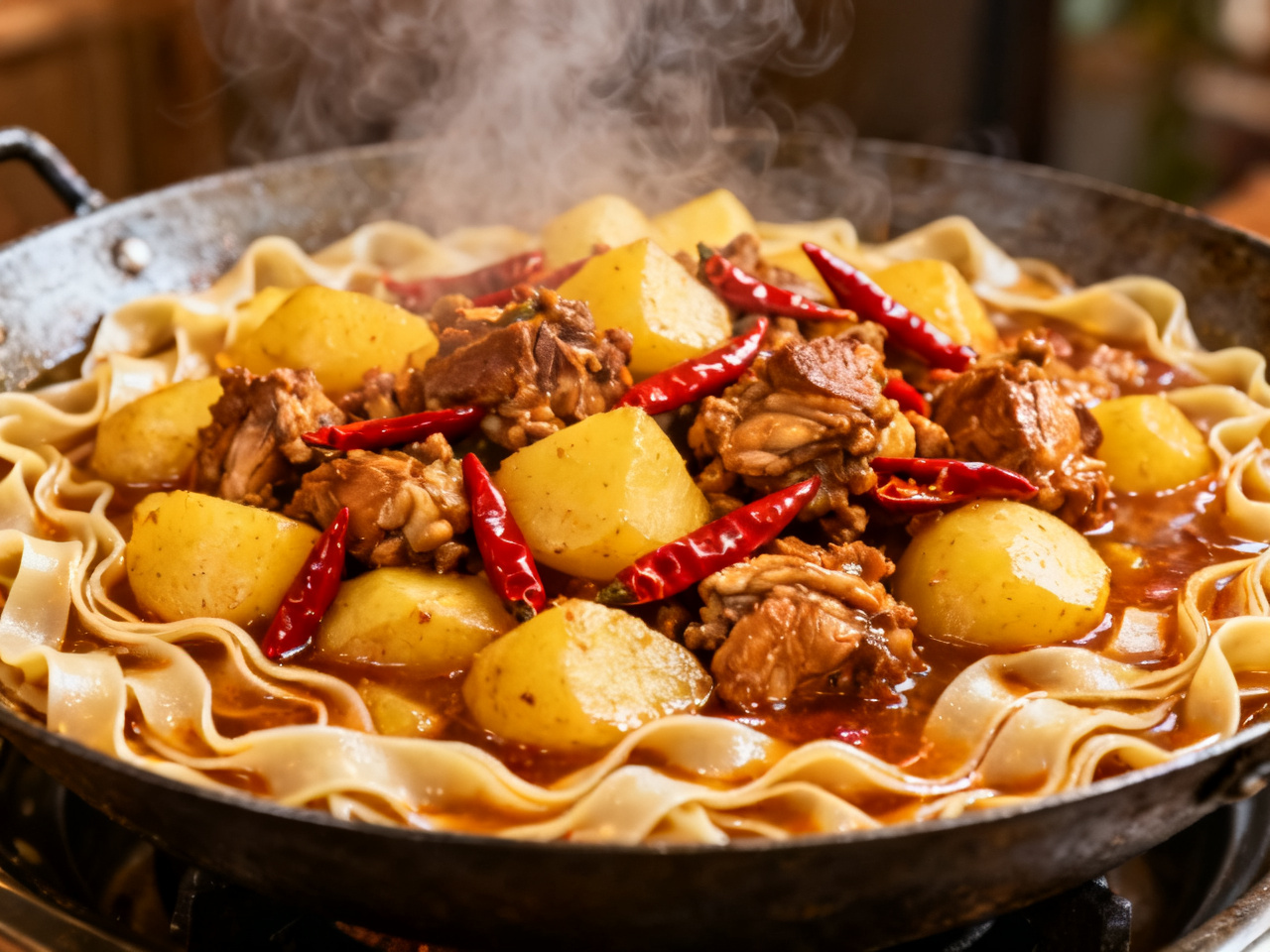
我们新疆有句话:没吃过大盘鸡,等于没来过新疆。这话当然夸张了点,但大盘鸡确实是新疆餐桌上出场率最高的菜之一——不是之一,可能就是第一。一个搪瓷大盘子,堆得冒尖,鸡块、土豆、青红椒、皮带面,浇上一层红亮亮的辣油,端上桌的那一刻,所有人都安静了,筷子比嘴快。
We have a saying in Xinjiang: if you haven't eaten dapanji, you haven't really been to Xinjiang. A bit of an exaggeration, sure, but dapanji is genuinely one of the most frequently served dishes on Xinjiang tables — maybe not one of, maybe THE most. A big enamel plate, heaped to overflowing: chicken chunks, potatoes, green and red peppers, belt-wide noodles, all drenched in a layer of glistening red chili oil. The moment it hits the table, everyone goes quiet. Chopsticks move faster than mouths.
沙湾的一个小饭馆
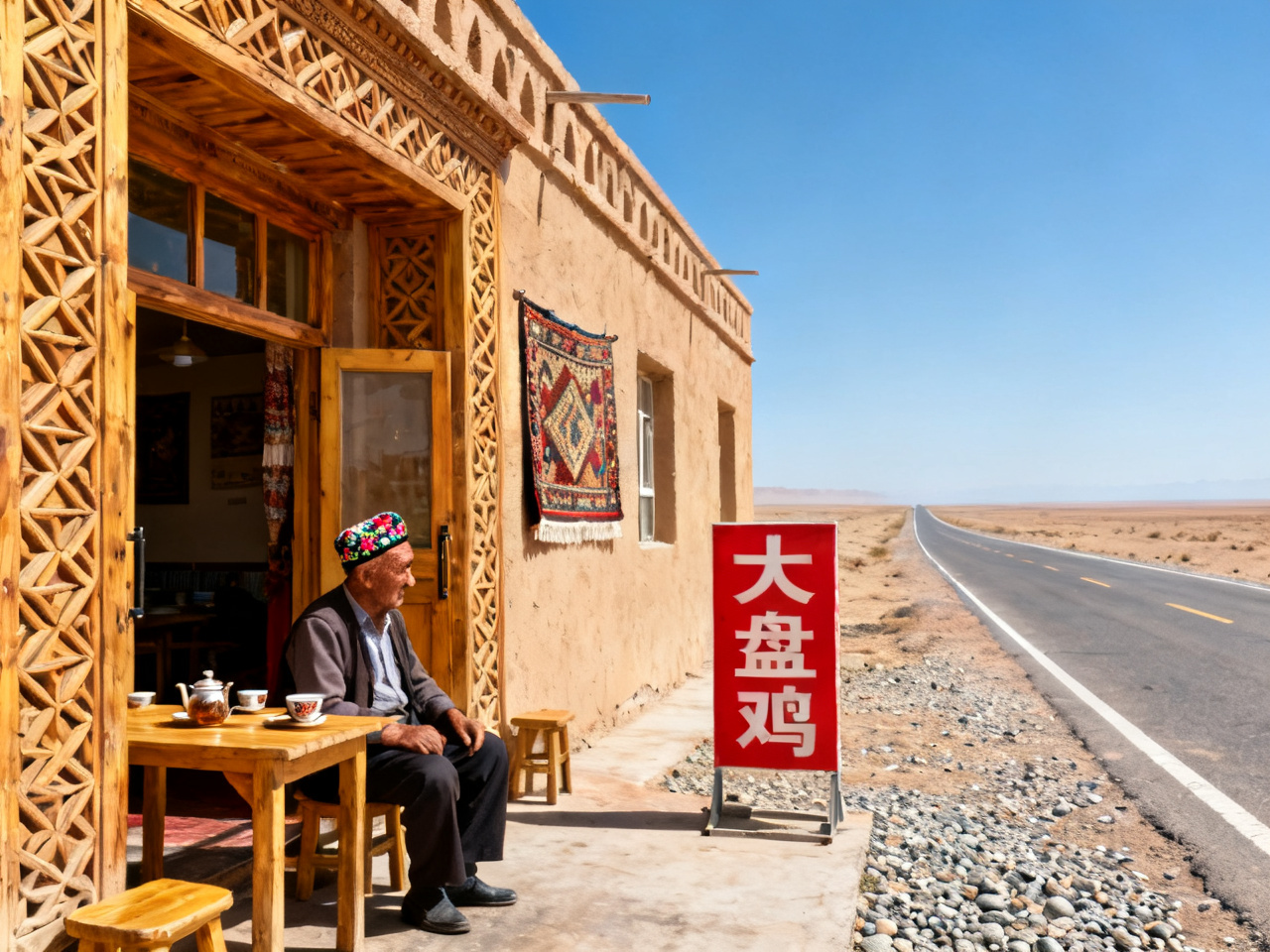
大盘鸡的起源众说纷纭,但流传最广的版本指向新疆沙湾县。上世纪八十年代,312国道旁的一家小饭馆,老板为了招待过路的卡车司机,把整只鸡剁块炖上土豆和辣椒,用大盘子装了端出来。司机们吃完觉得过瘾,口口相传,这道菜就沿着国道一路传开了。沙湾县至今仍以"大盘鸡之乡"自居,每年举办大盘鸡文化节,2024年吸引了超过15万游客。
The origins of dapanji are debated, but the most widely told version points to Shawan County, Xinjiang. In the 1980s, a small restaurant along National Highway 312 had an owner who, to feed passing truck drivers, chopped up a whole chicken, stewed it with potatoes and peppers, and served it on a big plate. The drivers loved it, word spread mouth to mouth, and the dish traveled along the highway. Shawan still calls itself "Hometown of Dapanji" and hosts an annual dapanji cultural festival — in 2024, it drew over 150,000 visitors.
这个起源故事本身就很"新疆"——豪爽、实在、不讲究摆盘只讲究分量。一份标准大盘鸡用一整只土鸡,至少一斤半土豆,配上洋葱、青椒、干辣椒和花椒,大火爆炒后加水焖煮。最关键的调味是新疆本地的辣皮子(一种风干辣椒),它给汤汁带来一种独特的焦香味,是内地辣椒替代不了的。
The origin story itself is very "Xinjiang" — bold, generous, caring about portion size not plating. A standard dapanji uses a whole free-range chicken, at least 750 grams of potatoes, plus onions, green peppers, dried chilies, and Sichuan peppercorns, flash-fried then braised. The crucial seasoning is Xinjiang's local lapi zi (a type of sun-dried chili) that gives the sauce a unique toasty fragrance no mainland chili can replicate.
从新疆到全中国
大盘鸡的扩张路线几乎可以画一张地图。九十年代先传到甘肃、青海等西北省份,然后沿着铁路线进入西安、郑州、武汉,最终在2000年代初抵达北上广深。如今在中国任何一座城市,你都能找到大盘鸡的身影。它已经不只是新疆菜,而是"中国菜"。
Dapanji's expansion route could practically be drawn on a map. In the 1990s it first spread to neighboring northwestern provinces like Gansu and Qinghai, then followed railway lines into Xi'an, Zhengzhou, and Wuhan, finally reaching Beijing, Shanghai, Guangzhou, and Shenzhen in the early 2000s. Today you can find dapanji in any Chinese city. It's no longer just Xinjiang food — it's Chinese food.
传播过程中,大盘鸡也在不断变异。四川版本加了豆瓣酱和花椒,麻辣味更重;东北版本土豆放得更多,汤汁更浓稠;沿海城市甚至出现了海鲜大盘鸡,用虾和蛤蜊替代部分鸡肉。但不管怎么变,两个核心元素不能动:鸡肉要带骨(去骨的不叫大盘鸡),最后必须下皮带面。
Along the way, dapanji kept mutating. The Sichuan version adds doubanjiang and extra Sichuan pepper for a more numbing-spicy kick. The northeastern version loads up on potatoes for thicker sauce. Coastal cities even spawned seafood dapanji, swapping in shrimp and clams for some of the chicken. But no matter the variation, two core elements are non-negotiable: the chicken must be bone-in (boneless doesn't count as dapanji), and belt noodles must go in at the end.
皮带面:大盘鸡的灵魂伴侣
我们得单独说说皮带面,因为很多外地人第一次吃大盘鸡时会忽略它。皮带面就是宽扁的手拉面,宽度能到三四厘米,像一条条小皮带。鸡吃得差不多了,把面条扯好下进剩余的汤汁里,让面条吸饱所有的味道——这一步才是大盘鸡的高潮。有经验的食客甚至会在点菜时多要一份面,因为汤汁太好,一份面根本不够拌。
We need to talk about belt noodles separately, because many first-timers overlook them. Belt noodles are wide, flat hand-pulled noodles, up to three or four centimeters across, resembling little belts. Once the chicken is mostly gone, you tear fresh noodles into the remaining sauce and let them soak up every drop of flavor — this is the real climax of dapanji. Experienced diners even order an extra portion of noodles when ordering, because the sauce is too good for just one round.
如果你走过敦煌丝路那条线,沿途几乎每个城镇都有大盘鸡店。从敦煌到乌鲁木齐,这道菜就是丝绸之路上的美食常量。
If you've traveled the Dunhuang Silk Road route, nearly every town along the way has a dapanji restaurant. From Dunhuang to Urumqi, this dish is the culinary constant of the Silk Road.
价格与吃法
在新疆本地,一份大盘鸡的价格在88-138元之间,足够三到四个人吃。到了内地城市,价格会涨到128-188元,但分量通常也不会缩水太多。性价比极高——想想看,一整只鸡加上主食,人均不到五十块钱。根据大众点评的数据,大盘鸡长期位列"新疆菜"搜索热度第一名。
In Xinjiang proper, a serving of dapanji costs 88-138 RMB, enough for three to four people. In mainland cities, prices rise to 128-188 RMB, but portions usually don't shrink much. The value is exceptional — think about it: a whole chicken plus a starch course, under 50 RMB per person. According to Dianping data, dapanji consistently ranks first in search popularity under "Xinjiang cuisine."
吃大盘鸡有个不成文的规矩:不要一个人去。这道菜天生就是为分享设计的,一个人面对那么大一盘,气势上就输了。最好的场景是三五好友围坐,先抢鸡腿,再捞土豆,最后心满意足地拌面。如果你正在做穷游预算规划,大盘鸡绝对是"花小钱吃大餐"的最佳选择之一。
There's an unwritten rule about eating dapanji: don't go alone. This dish was born for sharing — facing that enormous plate solo, you've already lost on sheer presence. The ideal scenario is three to five friends gathered around: fight over the drumsticks first, fish out the potatoes next, then contentedly toss in the noodles. If you're working on a budget travel plan, dapanji is absolutely one of the best "big meal, small bill" options out there.
一盘鸡的哲学
大盘鸡为什么能征服整个中国?我们觉得答案很简单:它满足了中国人对一顿好饭的所有想象——有肉、有菜、有主食,味道浓烈但不单调,分量大到让人有安全感。它不精致,不摆盘,不需要任何仪式感,但它让每一个坐在桌前的人都吃得开心。这大概就是中国美食最朴素的哲学:好吃,管饱,一起吃。
Why did dapanji conquer all of China? We think the answer is simple: it fulfills every Chinese expectation of a great meal — meat, vegetables, and starch, bold flavors without monotony, portions large enough to feel secure. It's not refined, not plated, requires zero ceremony, but it makes everyone at the table happy. That's perhaps the most unpretentious philosophy of Chinese food: tastes great, fills you up, eat it together.
- 桂林和阳朔真正迷人的,不只是像画,而是那种愿意把人脚步放慢的山水节奏 | What Truly Charms Guilin and Yangshuo Is Not Only Their Painterly Beauty but the Way the Landscape Slows Your Pace
- 冬季冰雪旅游完全指南 | Complete Guide to Winter Ice & Snow Tourism
- 扬州早茶不是一张菜单:我在园林之间学会给一顿饭留时间 | Yangzhou Morning Tea Is Not Just a Menu
- 糖画摊前的几分钟,让我第一次觉得“甜”也可以被画出来 | At a Sugar Painting Stall, I Realized for the First Time That Sweetness Can Be Drawn
- 五月高原旅游指南:西藏、青海、云南高原怎么玩 | May Plateau Travel Guide: Tibet, Qinghai, and Yunnan Highlands
- 中国送礼学问 | The Art of Gift Giving in China
- 沙漠变电站:中国西部的太阳能版图 | From Sand to Power: China's Solar Empire in the Western Desert
- 在景德镇看一只碗如何被做出来 | Watching a Bowl Take Shape in Jingdezhen
- 大理先让我学会的,不是看风景,而是在古城外把脚步放稳 | What Dali Taught Me First Was Not the View, but How to Steady My Steps Outside the Old Town
- 别扫那个码!外国游客在中国最容易中招的6种支付骗局 | Don't Scan That QR Code! 6 Payment Scams That Target Foreign Tourists in China
Comments (0)